Scientists reveal why walking gets so much harder with age

New Australian research is shedding light on why walking often becomes slower and more tiring with age. The findings suggest that the body gradually gives up some movement efficiency in favor of staying stable and upright.

Led by researchers at Flinders University and the University of Canberra, the study found that aging is associated with a “safety-first” walking strategy. This approach emphasizes stability instead of speed and energy efficiency, helping explain why older adults may fatigue more quickly and also face a greater risk of falling.

Researchers analyzed movement data from 107 healthy adults between the ages of 26 and 86. They found small but meaningful age-related differences in how the ankle and nearby muscles manage each step.

How the Ankle Changes With Age

Lead author and sport and exercise technology expert Dr. Cody Lindsay says the ankle is essential for maintaining balance while also helping propel the body forward.

“As we get older, the body starts to favor stability over efficiency,” says Dr. Lindsay, from the Flinders Caring Futures Institute.

“That helps keep us upright, but it also makes walking more of an effort.”

The researchers found that older adults are more likely to activate opposing muscles around the ankle at the same time. This pattern is known as co-contraction. It makes the ankle joint stiffer and can improve stability when the foot contacts the ground.

However, Dr. Lindsay says this comes at a cost.

“Stiffening the joint makes walking safer, but it also means the muscles are working harder without generating as much forward movement,” he says.

Older participants also generated less push-off power with each step. As a result, their strides were shorter, and their walking speeds were slower.

A Safety First Strategy for Walking

Co-author Associate Professor Maarten Immink says the findings point to a wider change in the way the body manages movement as people grow older.

“The nervous system adopts a safety-first approach, compensating for age-related changes by favoring stability over performance,” says Associate Professor Immink, Lead of the Active Lives Research Program within the Caring Futures Institute at Flinders University.

“These changes can also increase fatigue and make walking longer distances more challenging, while reducing the ability to recover from trips or slips — a key factor in falls among older adults.”

“Even gradual changes can affect confidence and independence, and people may notice they tire more quickly or feel less steady, especially on uneven ground.”

Exercise May Help Preserve Mobility

The findings also suggest possible ways to help people maintain mobility as they age.

Rather than focusing only on building strength, the researchers say exercise programs should also emphasize balance and coordination while paying attention to how different muscles work together during each step.

“For older Australians, simple actions can make a difference, including regular physical activity, balance exercises such as tai chi, lower-leg strengthening and activities that challenge coordination,” says Dr. Lindsay, from Flinders’ College of Health and Enablement.

“Staying active is one of the most important things people can do, and small, consistent exercises can help you stay confident, mobile and independent for longer.”

The researchers hope these findings can contribute to improved prevention and rehabilitation strategies designed to reduce falls and support healthy aging.

Share Button

Why Gen Z women know more about periods than their mums

From PMOS to cycle syncing, young women are teaching their mums about periods.

Share Button

What’s driving men to get penis fillers, despite the risks?

Men who have had the procedure can expect 10-20% more girth for the next six to nine months – but it can go wrong.

Share Button

Scientists detect a surprising shift in human blood as CO2 rises

Rising levels of carbon dioxide in the atmosphere may already be influencing human biology. New research has identified long-term changes in blood chemistry that appear to track rising atmospheric CO2, raising concerns that an important blood marker could approach the upper end of its healthy range within the next several decades.

The findings may be particularly important for children and teenagers. Because their bodies are still developing, younger generations are expected to experience the greatest lifetime exposure to elevated atmospheric CO2.

Decades of Blood Data Reveal a Shift

In a study published in Air Quality, Atmosphere and Health, scientists from The Kids Research Institute Australia, Curtin University and The Australian National University (ANU) examined more than 20 years of U.S. population health data. They found persistent changes in several measures of blood chemistry that closely followed the upward trend in atmospheric CO2.

The researchers used information from the U.S. National Health and Nutrition Examination Survey (NHANES), analyzing blood test results from roughly 7,000 people at two-year intervals between 1999 and 2020.

Since 1999, average serum bicarbonate levels have increased by about 7 percent. Bicarbonate is a blood marker closely associated with carbon dioxide in the body. During the same period, average levels of calcium and phosphorus decreased.

Those biological trends occurred as atmospheric CO2 climbed from about 369 parts per million (ppm) in 2000 to more than 420 ppm today.

Study author Associate Professor Alexander Larcombe said the results indicate that the body may already be adjusting to changes in the composition of the atmosphere.

“What we’re seeing is a gradual shift in blood chemistry that mirrors the rise in atmospheric carbon dioxide, which is driving climate change,” A/Prof Larcombe said.

How the Body Responds to More CO2

Bicarbonate is essential for regulating the body’s acid-base balance. As CO2 increases, the body can retain additional bicarbonate to help keep blood pH stable. Although this response helps preserve that balance, maintaining it over long periods could have physiological effects.

“If current trends continue, modeling indicates average bicarbonate levels could approach the upper limit of today’s accepted healthy range within 50 years,” A/Prof Larcombe said

“Calcium and phosphorus levels could also reach the lower end of their healthy ranges later this century.”

Humans evolved when atmospheric CO2 concentrations were approximately 280 to 300 ppm. During the past decade, atmospheric levels have risen by an average of about 2.6 ppm each year, while 2024 alone saw an increase of 3.5 ppm.

Fellow Author Dr Phil Bierwirth, a retired environmental geoscientist affiliated with the ANU Emeritus Faculty, emphasized that the study does not establish a direct cause-and-effect relationship. However, he said the consistency of the changes across a large population warrants attention.

“I actually think that what we are seeing is because our bodies are not adapting,” Dr Bierwirth said.

“It appears we are adapted to a range of CO2 in the air that may now have been surpassed.

“The normal range maintains a delicate balance between how much CO2 is in the air, our blood pH, our breathing rate and bicarbonate levels in the blood.

“As CO2 in the air is now higher than humans have ever experienced, it appears to be building up in our bodies. Maybe we can never adapt such that it is vitally important to limit atmospheric levels of CO2.”

A Potential New Dimension of Climate Risk

The researchers say the results suggest that rising atmospheric CO2 could represent a form of climate-related risk that is different from more familiar threats such as heatwaves, extreme weather and sea-level rise.

According to A/Prof Larcombe, increasing CO2 may need to be considered not only as an environmental concern, but also as a long-term public health factor that should be monitored.

“We’re not saying people are suddenly going to become unwell when we cross a certain threshold,” he said.

“But this suggests there may be gradual physiological changes occurring at a population level, and that’s something we should be monitoring as part of future climate change policy.”

The researchers recommend monitoring the composition of the atmosphere together with biological markers across populations. Tracking both alongside established climate indicators could help scientists determine how slow environmental changes affect human biology over periods of decades.

CO2 Reduction Could Have Health Implications

Cutting CO2 emissions remains essential for limiting global warming. The findings also raise the possibility that lowering emissions could have an additional role in protecting long-term human health.

The researchers argue that potential physiological effects from rising CO2 should therefore be considered in future discussions about climate policy, alongside its established environmental consequences.

Associate Professor Larcombe is part of the Wal-yan Respiratory Research Centre, a partnership between The Kids Research Institute Australia, Perth Children’s Hospital and Perth Children’s Hospital Foundation.

Share Button

When gut microbes run low on fiber, they may start eating you

Plant based diets support health in several ways, including benefits for the gut, immune system, metabolism, and cardiovascular system. Part of that effect comes from encouraging a diverse population of bacteria in the intestines. Scientists have long known that dietary fiber contributes to these benefits because gut microbes help break it down. Plants also contain colorful “phytochemicals” that help protect them from environmental threats and may influence human health. Even so, researchers are still working to understand exactly how gut bacteria process the many components of plant foods and how those interactions produce beneficial effects.

Two studies led by Ludwig Princeton’s Jenna AbuSalim and Director Joshua Rabinowitz offer new insight into that process. One appears in the current issue of the Proceedings of the National Academy of Sciences, while the other was published in Nature Metabolism in June. The first study found that plant fiber and certain plant proteins can change microbial metabolism in ways that increase beneficial metabolites while reducing harmful ones. The second showed that several biologically important metabolites usually credited to gut microbes can also be produced in substantial amounts by mammalian metabolism.

“There’s growing interest across medical disciplines in manipulating the human microbiome or using its metabolic products themselves for therapy,” said Rabinowitz. “Diet holds great promise for controlling the microbiome and its outputs. But to devise effective therapeutic interventions, we need to understand what aspects of the diet control which microbial outputs.”

How Plant Foods Shift Gut Metabolites

In the PNAS study, Rabinowitz, AbuSalim and their colleagues examined how plant based foods influence phenol metabolites. Gut bacteria create these compounds when they digest the amino acids tyrosine and phenylalanine, but the resulting metabolites can have very different effects on health.

Phenylpropionate and hippuric acid are produced when bacteria process phenylalanine, and they are associated with gut health and healthy body weight. By contrast, p-cresol sulfate and phenol sulfate come from tyrosine and have been linked to worse outcomes in cancer patients as well as systemic toxicity in people with kidney disease.

“Our studies showed that both the fiber and indigestible proteins from plants — which we call ‘proteins imitating fiber,’ or Prif — shift the balance of phenol metabolites from the harmful kind made from tyrosine to the healthful variety derived from phenylalanine,” said AbuSalim.

Fiber has long been recognized as an important part of a healthy diet, but indigestible plant proteins have received far less attention. AbuSalim, Rabinowitz and their colleagues found that these proteins are processed by gut microbes and can alter both the makeup of the microbiome and the host’s metabolism. Working together with indigestible plant fiber, they can also change the metabolic activity of gut bacteria in ways that favor the production of beneficial phenols.

When Gut Bacteria Turn to the Gut Lining

To trace where these compounds came from, the researchers labeled proteins with stable (non-radioactive) isotopes and followed their digestion in the mouse gut. They found that the “bad” phenols were produced when bacteria consumed proteins from the host, including proteins found in the mucus lining of the gut. The good phenols, in contrast, came almost entirely from indigestible proteins in the diet (Prif).

Fiber reduced the bacterial breakdown of the gut’s mucus lining, which in turn lowered production of the harmful phenols. Prif increased the amount of dietary protein that reached gut microbes, giving them more material to produce the beneficial phenols.

“We think Prifs represent an emerging class of dietary nutrients that shape the composition of the gut microbiome and could have a far-reaching influence on metabolic health,” said AbuSalim.

“Food packaging may eventually list Prif right below fiber,” said Rabinowitz.

Rethinking Where Gut Metabolites Come From

The Nature Metabolism study focused on the origins of phenol metabolites as well as indole metabolites, which are produced from the amino acid tryptophan. Like phenols, indoles are being studied for their possible therapeutic value.

Indole metabolites have been connected to a wide range of diseases, including inflammatory bowel disease, neurodegenerative disorders, and cancer. In cancer research, they have been found to affect processes that include cancer metastasis and anti-tumor immune responses.

Scientists had generally assumed that phenols and indoles were produced only by gut bacteria. AbuSalim, Rabinowitz and their colleagues decided to test that assumption. Researchers have been especially interested in dietary and probiotic approaches that might increase beneficial indole metabolites. But those strategies may need to be reconsidered if mammalian metabolism, rather than microbes, is responsible for much of what circulates in the body.

Using isotope tracing in mice, rats and human cells, the researchers found that mammalian metabolism can produce many indole and phenol metabolites on its own. These included important compounds such as indole-3-lactate and indole-3-acetate.

In mice, circulating levels of these metabolites remained high even after antibiotic treatment disrupted the microbiome. A similar pattern appeared in samples from patients taking antibiotics, including cancer patients. At the same time, metabolites made exclusively by microbes, including indole-3-propionate and p-cresol sulfate, declined after antibiotic treatment.

New Clues for Diet and Microbiome Therapies

Together, the two studies provide a clearer picture of where phenol and indole metabolites come from and how they are produced. The findings could influence the development of therapies designed to raise or lower specific metabolites.

They also add important detail to scientists’ understanding of how diet interacts with the microbiome. Knowing which foods influence particular microbial products could eventually help researchers design more precise dietary, probiotic, or metabolic interventions.

“Beyond that,” said Rabinowitz, “a clearer picture of how different foods interact with the microbiome to modulate the production of bacterial metabolites will help sharpen the guidance nutritionists and doctors can give to people for disease prevention and therapy.”

These studies were funded by the Ludwig Institute for Cancer Research, the National Institutes of Health, the National Institute of Diabetes and Digestive and Kidney Diseases, the Princeton Alliance for Collaborative Research and Innovation, Princeton University.

Aside from his post as Director of the Princeton Branch of the Ludwig Institute for Cancer Research, Joshua Rabinowitz is Professor in the Department of Chemistry & Lewis-Sigler Institute for Integrative Genomics and a member of the Rutgers Cancer Institute.


Share Button

Scientists solve the mystery of a brain “switch” that can trigger weight loss in opposite ways

Cambridge researchers have uncovered why both activating and blocking the same brain receptor can promote weight loss. The findings may help scientists develop obesity treatments that are more effective and potentially work better in combination.

The mouse study, published in Nature Metabolism, found that the outcome depends on which part of the brain is targeted. Activating the receptor in the brainstem reduced appetite, while blocking the same receptor in the hypothalamus produced a similar weight loss effect through a different mechanism.

More than a billion people around the world are living with obesity, a condition that raises the risk of diseases including type 2 diabetes, cardiovascular disease and cancer. Losing weight can reduce some of these risks, but achieving substantial weight loss through diet and exercise alone can be difficult.

How Modern Weight Loss Drugs Target the Brain

A new generation of weight loss medications has emerged in recent years that act on specific receptors involved in appetite. By influencing these receptors, the drugs can reduce food intake, promote weight loss, and help regulate blood sugar.

Several widely used medications, including Wegovy and Ozempic, activate a protein receptor called the glucagon-like peptide 1 receptor (GLP-1R).

Other obesity treatments act on both GLP-1R and another receptor known as the glucose-dependent insulinotropic polypeptide receptor (GIPR). This second target has presented scientists with an unusual puzzle.

Some medications, including Mounjaro and Zepbound, activate GIPR. Others, such as MariTide, block it. Despite producing opposite effects on the same receptor, both approaches can help promote weight loss.

Researchers at the Institute of Metabolic Science, University of Cambridge, set out to understand why. Their experiments in mice revealed that the two types of GIPR drugs work through different regions of the brain. The researchers also found that these approaches can increase weight loss when paired with certain GLP-1-based weight loss medicines.

Tracking GIPR Activity in Different Brain Regions

To identify the brain regions responsible for these effects, the team used genetically engineered mice in which GIPR had been selectively removed from specific areas.

One group lacked GIPR in the brainstem, the region at the base of the brain just above the spinal cord that is involved in appetite and nausea. Another group lacked the receptor in the hypothalamus, an important brain region involved in regulating hunger and body weight. A third group consisted of normal, unmodified mice that served as controls.

The scientists treated the animals with different combinations of a GIPR agonist (which activates the receptor), a GIPR antagonist (which blocks the receptor) and a GLP-1 drug. They then monitored food consumption, body weight, fat mass, blood sugar control and brain activity.

Comparing the different groups allowed the team to pinpoint where each treatment was acting.

The results showed that GIPR agonists primarily work through the brainstem. Activating GIPR in this region reduced appetite and led to lower body weight.

Blocking a Brain Brake on Fullness

GIPR antagonists followed a different route.

Instead of acting primarily through the brainstem, the researchers found that blocking GIPR promoted weight loss through the hypothalamus. In this region, GIPR appears to function as a kind of ‘brake’ that limits how strongly the brainstem responds to signals indicating that the body is full.

Blocking the receptor effectively releases that ‘brake’, allowing fullness signals to have a stronger effect.

The researchers also found evidence that blocking GIPR could enhance the effects of emerging medicines that target the amylin receptor. This suggests that GIPR antagonists might eventually be useful for strengthening several different classes of obesity treatments.

Clues to More Powerful Obesity Drug Combinations

The results help explain why treatments such as MariTide can be effective. MariTide, currently in phase 3 clinical trials, combines GIPR antagonism with GLP-1 receptor agonism.

Understanding how these separate pathways interact could also help researchers design more effective combinations of obesity medicines in the future.

Dr. Jo Lewis, the study’s first author from the Institute of Metabolic Science at the University of Cambridge, said: “Understanding which brain circuits respond to these medications – and how they do so – could help us design better drugs that produce more weight loss with fewer side effects, and which might work in combination with other obesity medicines to even greater effect.

“Our work also strengthens the idea that the brain is central to obesity treatment. Obesity drugs are not acting simply on the gut or pancreas. Instead, they have important effects on specific, identifiable brain circuits that regulate appetite and food intake.”

The research was funded by the Medical Research Council and Wellcome.

Share Button

Struggling With Balance As You Age? This $70 Find ‘Makes My Days Much Easier!’

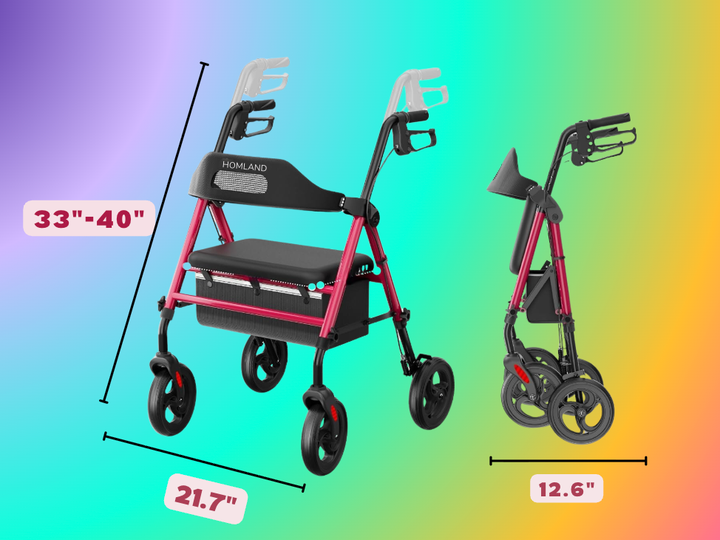
Whether your balance has declined from aging or medication, you’re recovering from injury or just need more aid while walking — it can be difficult to adopt different ways of moving. Of course, movement solutions don’t just help physically; they can help you feel more confident, independent and ultimately, like yourself. That’s certainly been the case for users of this foldable rollator from Homland. Fans say this baby “makes my days much easier,” giving them back their independence and even “saving my sanity.” Right now, you can snag the red version for under $70 — a far cry from the comparable multiple-hundred-dollar option one user saw at the medical supply store.

With durable wheels, easy-grab brakes, a wide, cushioned seat and ample storage — there’s a reason reviewers call it the “Cadillac of walkers.”

We’re not exaggerating — at least a dozen reviewers dropped the “Cadillac” comparison. With a durable alloy frame designed to be “wobble-free,” ergonomic hand grips, responsive brakes, puncture-proof wheels, a wide-set back, breathable backrest and a plush foam seat, this baby was built with you in mind. The handle and seat heights are fully adjustable, designed to fit users from 4’7” to 6’6,” with a 350-pound weight capacity, thanks to its reinforced, double support bars.

“Never in a million years did I think I would be the owner of a walker! But I am…and what a Cadillac it is,” one said. “This walker is absolutely the BEST!! I couldn’t be more thrilled with it,” another wrote. “Looked at several for over a week and kept coming back to this one! The features it has outscored all the rest.”

Shoppers particularly enjoy the strap-like backrest, saying it’s far more comfortable than metal, bar-like options on other walkers. “The hand brakes are easy on your hands, I have arthritis and it doesn’t bother me at all,” an 83-year-old reviewer said. “Easy to pull back when you are ready to walk.” Others compliment how easy the wheels move, even over uneven ground, letting the turn and pivot smoothly. And reviewers say it’s easy to assemble, complimenting the brand’s responsive customer service for help where needed.

Though, unlike a Cadillac, this option gives you all the bells and whistles on a budget.

A 35-year-old self-described “medically disabled” reviewer writes that after their doctor wrote them a prescription for a walker, their insurance co-pay was going to be $180 — for a super basic model.

“If I wanted brakes or the storage compartment it was over $400,” they said, joking, “So off to Amazon I went lol.” After getting this model, with all the perks, for well under $100, they wrote, “…I hope that others find this wonderful brand that is extremely helpful and is well made!” “Nicer than the one the hospital gave my husband and cheaper,” another said. “Sturdy and not too heavy. Easy to use-very smooth. Highly recommend!”

It doesn’t just help you move — it can help you move your things. (Plus it folds down easily.)

Whether you use it around the house or while running errands, fans say this walker really helps them take a load off — literally. Because the under-seat boasts such ample, hands-free storage, it’s almost like a walker/cart combo, letting users move around more easily on their own.

“I have my portable oxygen, tube and purse and this gives me freedom to walk and I’m able to shop, walk and just get outside,” Diane wrote. “The little storage bin under the seat is a lifesaver,” another wrote, noting they can “load it up with whatever snacks or supplies I need.” Others call it a “great looking piece of equipment that will make your coming and going so much more convenient.”

Many older reviewers say that because the walker folds down, it’s easy to take with them on the go. “Take my word for it! I myself at 83 can unfold it, fold it up and put it in the car,” one said. “Weighs about 20 pounds, I can manage it on my own!”

Plus, reviewers of all ages love it for offering comfort and confidence through a variety of body needs.

While government studies show that losing balance can be related to aging, many younger reviewers swear by this walker for giving them support and stability when they need it. Whether recovering from surgery or car accidents, navigating autoimmune diseases and chronic pain or just needing help walking, this durable, affordable walker has made a big impact for users of all ages.

“I was in a crazy accident where I needed multiple surgeries,” shopper Elizabeth wrote, describing, “my mobility, security, and independence were taken away.”

“Until you are in one of these situations, you never know exactly what you need. I should’ve bought this first because it made everything a lot easier,” she said. “…This rollator gave me back a lot of independence…I can’t stress enough the gratefulness I feel I was able to buy something that gave me comfort in security and safety when I felt alone and that I wouldn’t be able to do some of the things that I wanted to do.”

“One thing I’d like to point out is that these aren’t just for seniors,” Richard added. “If you’re recovering from an injury or surgery like I was, a quality rollator like this can give you back a lot of independence while you heal.”

Reviewers love this folding walker for giving them support wherever they go. Read more 5-star reviews and grab one for yourself for under $70.

“I’m 35 and never imagined I would have to use a walker but here we are lol. This works great for me around the house to help prevent falls. I also love that it has the storage under the seat and that it has brakes! My doctor wrote me a durable medical equipment prescription so I could go to a medical supply store and have them bill to my insurance. I’m medically disabled so I have Medicare. After my Medicare insurance paid, my portion would be $180 and it didn’t have brakes or storage under the seat. If I wanted brakes or the storage compartment it was over $400. I told the employees at the medical supply store I was medically disabled and a single mom so I was on an extremely tight budget and couldn’t afford that. They didn’t give me any advice or tell me to shop around, there only option was I could finance it with their “in house financing”. So off to Amazon I went lol. I hate the idea that our seniors are being taken advantage of and trusting that these places have their best interest in mind. I hope that others find this wonderful brand that is extremely helpful and is well made! Sorry for the rant lol” — Somebody’s Problem

“Game changer; sturdy, comfortable, maneuvers on dime, all for less than $100. Lateral break in my right patella made me purchase the Cadillac of walkers. It’s been a game changer as I must wear a brace the full length of my leg for 3 months. Sturdy, excellent maneuverability, comfortable storage seat and Sturdy back rest. The brakes lock in place.” — Martha

“This walker is absolutely the BEST!! I couldn’t be more thrilled with it! Looked at several for over a week and kept coming back to this one! The features it has outscored all the rest. The one thing I really love is the backrest! Not a covered bar that would really be uncomfortable to rest against while sitting but a nice wide mesh that feels like you are sitting in an easy chair! So easy on my back. It is wonderful! The seat is comfortable and has a great storage area beneath for my purse, water bottle and my jacket. The strap that is used to fold it up in one easy move to put it in the car is fantastic! The hand brakes are easy on your hands, I have arthritis and it doesn’t bother me at all. You can easily use full brakes just by pushing down on the handles to make sure it doesn’t roll back when you sit. Easy to pull back when you are ready to walk. The wheels are very sturdy and it just seems to glide over small bumps. Turns on a dime to change directions! I am so very happy with it. The manufacturer really took into consideration with the construction of it. Easy to use, easy to fold up and so comfortable to sit in. I highly recommend it! Take my word for it! I myself at 83 can unfold it, fold it up and put it in the car. Weighs about 20 pounds, I can manage it on my own!” — addicted to Magic Jigsaw Puzzles

“Old style walkers cannot compare to what the HOMLAND walker provides in convenience, comfort, and mobility. My grandson came over to bring the box into my foyer and began putting it together. I was overjoyed knowing I could begin using it tomorrow to go to therapy. It’s not easy to accept the fact that you need a walker, but this product is perfect. It’s very well designed. The 16” seat is a perfect size for comfort. And it’s a great looking piece of equipment that will make your coming and going so much more convenient. After my grandson finished the assembly, he showed me how to close it and put it into my trunk. He stood to the side of the car and said, ‘Pretend I’m a ghost,’ and he encouraged me to practice closing it and putting it into the trunk over and over. I highly recommend the HOMLAND walker. If you search on Amazon and compare, this is the product to consider seriously.” — Geri

The Real Deal: We use deal trackers and commerce experience to sift through “fake” hike-and-drop deals and other deceptive sales tactics. Products will usually be rated at least 4 stars with a minimum 15% discount. (And when there’s an exception, we’ll tell you why.)

Share Button

Why is Selena Gomez being sued?

BBC journalist Ana Guerra-Moore looks at why investors who backed Wondermind Global are claiming the pop star failed to fulfil promises.

Share Button

Scientists detect a nuclear reactor’s ghostly afterglow for the first time

Even after a nuclear reactor is switched off, activity continues deep inside its core. Long-lived radioactive fission products keep decaying for months or even years, releasing a weak stream of particles called antineutrinos. (Anti)neutrinos are the lightest and most elusive known particles in the Universe, and they can pass through both the reactor and its surrounding shielding with little interference.

Scientists with the Double Chooz collaboration have now measured this lingering antineutrino emission for the first time. The research, recently published in Physical Review Letters, was led by Anthony Onillon and Thierry Lassere of the Max-Planck-Institut für Kernphysik (MPIK) in Heidelberg, Germany. The findings show that antineutrino detectors can gather information about nuclear reactors even while they are shut down, potentially creating new opportunities for reactor monitoring, nuclear safety, and safeguards.

Detecting Antineutrinos From a Shutdown Reactor

The measurement took place at the Chooz nuclear power plant in northern France. The Double Chooz detector sits underground about 400 meters from the facility’s two reactor cores. Inside the detector are more than 30 cubic meters of liquid scintillator, a material that produces tiny flashes of light when an antineutrino interacts within it.

“Antineutrinos interact only extremely rarely with matter. However, when one interacts within the Double-Chooz detector, a characteristic double-light signal is produced that can be distinguished from background events,” explains Thierry Lasserre from the independent research group OMINA, also located at MPIK. This distinctive signal enables scientists to identify antineutrinos coming from the reactors.

Researchers examined 17.2 days of observations collected while both reactor units were fully shut down. Over that period, the detector recorded around 100 antineutrino candidate events linked to residual radioactivity in the reactor cores and nearby spent-fuel cooling pools.

Measurements Match Nuclear Fuel Predictions

The detected signal closely matched detailed simulations that accounted for the remaining nuclear fuel inventory and the decay of long-lived fission products. The result provides the first direct experimental confirmation of predictions describing antineutrino emissions from shut down reactors and spent fuel.

“Until now, reactor antineutrino experiments have mainly focused on operating reactors, where the antineutrino flux is much larger. Detecting the tiny residual signal after shutdown required exceptionally low backgrounds and careful analysis techniques developed by the Double Chooz collaboration over many years,” adds Dr. Onillon.

Other experiments are already beginning to explore this new area. Initial results from JUNO-TAO, presented at Neutrino 2026, show that researchers are also using reactor-off data to study the faint antineutrino signal produced by spent nuclear fuel. TAO is working to isolate that weak emission, while the Double Chooz findings now provide the first published benchmark for studying the residual signal from shut-down reactors and spent-fuel pools.

A New Tool for Nuclear Reactor Monitoring

The findings suggest that antineutrino detectors could eventually provide useful information not only while reactors are operating, but also during maintenance and after shutdown. Measurements of this kind could become valuable for independently confirming reactor status and tracking spent-fuel inventories.

Double Chooz was originally built to investigate neutrino oscillations and played a key role in measuring the neutrino mixing angle θ13, a fundamental parameter describing how neutrinos change from one type to another as they travel. That measurement helped pave the way for future research into matter-antimatter asymmetries in the neutrino sector.

Now, Double Chooz has added another first to its scientific record by detecting the faint neutrino glow that continues after a nuclear reactor goes dark.

Share Button

World’s first superconducting quantum heat engine could help unlock massive quantum computers

A newly developed superconducting quantum heat engine could deepen our understanding of thermodynamics while helping advance technologies needed for quantum computers with very large numbers of qubits.

Scientists are getting a clearer picture of how thermodynamics behaves in the quantum world, and that progress could benefit both quantum technology and our understanding of familiar thermodynamic principles. Researchers at Aalto University have now taken an important step by demonstrating the first cyclic quantum heat engine built inside a superconducting circuit.

The experiment connects two areas of physics that normally describe very different scales. Quantum mechanics explains the behavior of matter at extremely small scales, even below the size of atoms, while thermodynamics describes how heat and energy behave in much larger systems, from collections of molecules to the universe itself. Bringing the two together raises a fundamental question: what happens to familiar thermodynamic processes when quantum effects such as tunneling, entanglement, and superposition enter the picture?

A Heat Engine Built for the Quantum World

Conventional heat engines turn heat into useful work. James Watt’s steam engine is one famous example, but the same basic concept remains central to modern transportation and electricity production, powering cars, ships, planes and many power plants.

The researchers have now created the world’s first superconducting quantum heat engine. The extremely small device combines a transmon qubit, a resonator and a quantum refrigerator.

Operating under ultracold quantum conditions, the engine was able to use the tiny amount of available heat to repeatedly produce positive work. Achieving this kind of cyclic operation has been an important objective for researchers working on quantum heat engines. The result provides a proof of concept for superconducting heat engines that could eventually contribute to improved quantum computing technology.

The study, led by Academy Professor Mikko Möttönen, was published in Nature Communications.

Recreating an Otto Cycle Near Absolute Zero

To make the engine operate, the researchers reproduced an Otto cycle inside a superconducting circuit. The Otto cycle is a thermodynamic process also used in car engines and other conventional machines.

“In our experiment, we built a nanofabricated heat engine using superconducting circuits and operated it in a cryostat near absolute zero. At its heart is a transmon qubit, one of the basic building blocks of modern quantum technologies,” says Tuomas Uusnäkki, the study’s first author.

The researchers connected the transmon qubit to a quantum circuit refrigerator, allowing them to control heat flow on the quantum scale and demonstrate that this heat could be transformed into measurable work. A conventional heat engine normally relies on separate hot and cold environments. In this system, however, the same quantum refrigerator can supply both heating and cooling.

“Our quantum-circuit refrigerator can be tuned to both heat and cool the qubit on demand. Using carefully timed control pulses, we drove the engine in an Otto cycle and monitored the qubit state as the engine ran,” explains Uusnäkki.

Measurements showed that heat passing through the qubit during the cycle was producing positive work.

“This is the first experimental demonstration of a cyclic quantum heat engine in superconducting circuits. Using a single controllable quantum refrigerator as both the hot and cold environment of the engine makes it simpler and more versatile,” says Uusnäkki.

Toward Autonomous Quantum Computer Hardware

The researchers are now trying to improve the design and eventually develop a fully autonomous heat engine. One possible use would be reading out qubits without having to carry a microwave pulse from millikelvin temperatures all the way to room temperature.

That capability could become especially valuable as quantum computers grow. Autonomous devices integrated directly into superconducting circuits could reduce both the cost and complexity of machines containing very large numbers of qubits.

“Finland’s Quantum Technology Strategy envisions a quantum computer with one thousand logical qubits by 2035, which probably means hundreds of thousands of physical qubits. Doing that with current technology requires millions of microwave cables costing thousand euros each. The cables also introduce noise into the system. Using autonomous devices instead would mostly eliminate the need for those cables,” Möttönen says.

Reducing the need for those microwave connections could therefore address two challenges at once: the enormous hardware requirements of large quantum computers and the unwanted noise that cables can introduce into quantum systems.

The pioneering experiment was carried out using OtaNano, Finland’s national research infrastructure for nano, micro and quantum technology. Funding came from the Research Council of Finland and the Finnish Cultural Foundation.

Share Button