60,000-year-old ostrich eggshell engravings reveal a surprisingly sophisticated human mind

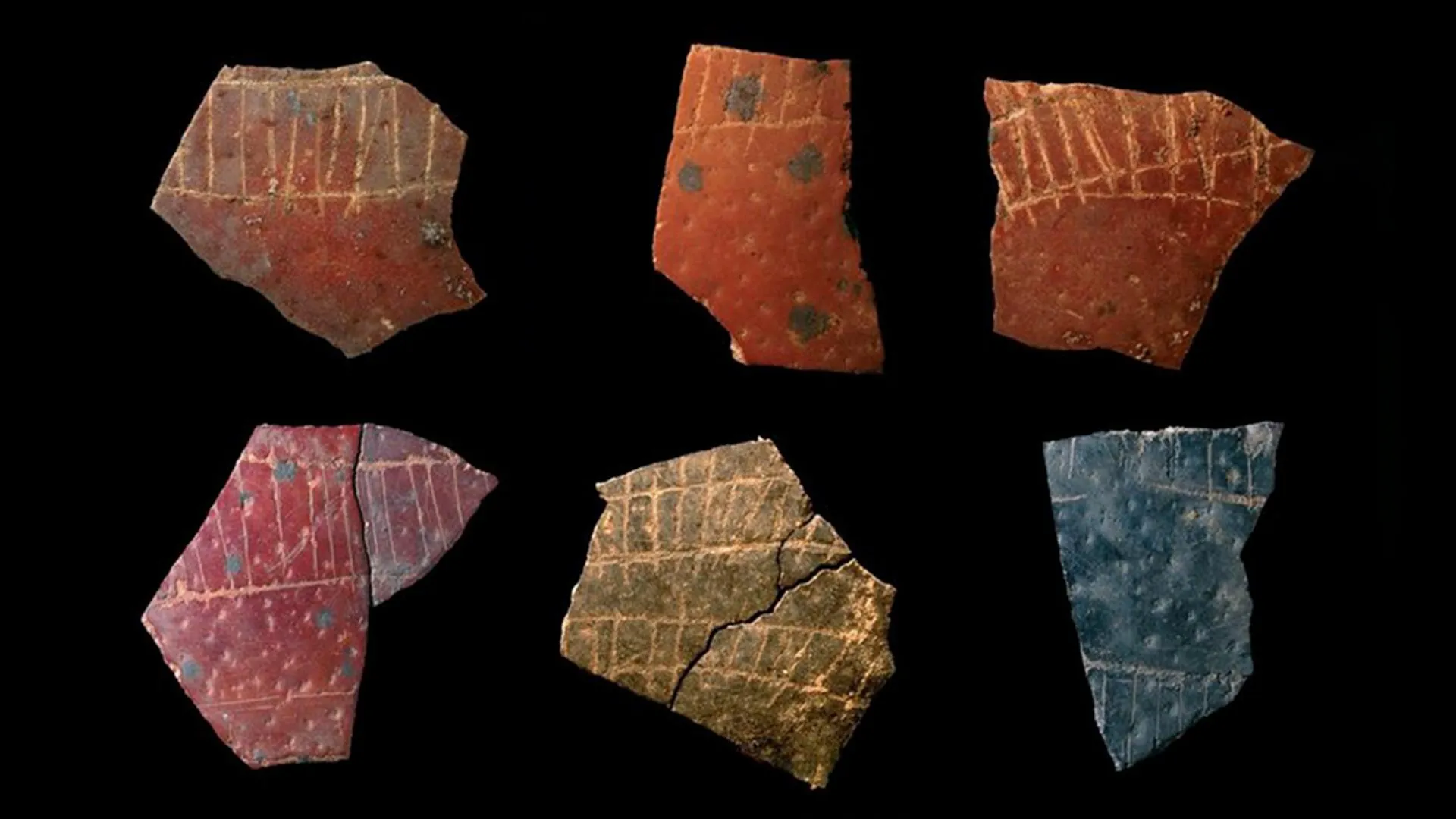
Archaeologists working at several sites in southern Africa have uncovered hundreds of unusual pieces of engraved ostrich eggshell. More than 60,000 years old, these fragments were created by groups of Homo sapiens living in the region.

A new study led by researchers at the University of Bologna suggests that the markings were far more organized than simple scratches or improvised decorations. Published in PLOS One, the research finds that the engravings followed recurring geometric principles involving parallel lines, right-angle relationships, and repeated regular patterns.

“These signs reveal a surprisingly structured, geometric way of thinking,” says Silvia Ferrara, Professor at the University of Bologna’s Department of Classical Philology and Italian Studies, who coordinated the study. “We are talking about people who did not simply draw lines, but organized them according to recurring principles — parallelisms, grids, rotations and systematic repetitions: a visual grammar in embryo.”

Ancient Eggshells Reveal Geometric Order

The ostrich eggshells were probably used as containers for carrying or storing water. To examine the engravings in detail, the researchers conducted a systematic quantitative analysis of 112 fragments recovered from two archaeological sites in South Africa (Diepkloof and Klipdrift) and one in Namibia (Apollo 11).

Using geometric and statistical techniques that had not previously been applied to these artifacts, the team reconstructed the directions, angles, and paths of the engraved lines.

Their results showed that more than 80% of the configurations contained consistent spatial patterns. Angles close to 90° appeared repeatedly, as did sets of parallel lines. More elaborate designs, including hatched bands, grids, and diamond-shaped motifs, also showed evidence of rotation, translation, repetition, and “embedding,” i.e., the ability to build hierarchical levels of signs within the same surface.

“These engravings are organized and consistent, and show mastery of geometric relationships,” Ferrara explains. “There is not only a process of repeating signs: there is real visuo-spatial planning, as if the authors already had an overall image of the figure in mind before engraving it.”

A Window Into Early Abstract Thought

The researchers emphasize that the importance of the engravings goes beyond whatever meaning the individual markings may once have carried. Their broader significance lies in the mental abilities required to create visual designs according to consistent rules.

The capacity to arrange shapes and lines in organized configurations may represent an important sign of emerging abstract thought, a major development in the evolution of human cognition.

“Our analysis shows that Homo sapiens 60,000 years ago already possessed a remarkable ability to organize visual space according to abstract principles,” notes Valentina Decembrini, PhD student at the University of Bologna’s Department of Classical Philology and Italian Studies and first author of the study. “Transforming simple forms into complex systems by following defined rules is a deeply human trait that has characterized our history over millennia, from the creation of decorations to the development of symbolic systems and, ultimately, writing.”

Studying Humanity’s Earliest Geometries

The study was published in PLOS One under the title “Earliest Geometries. A Cognitive Investigation of Howiesons Poort Engraved Ostrich Eggshells.” The authors are Valentina Decembrini, Ludovica Ottaviano, Mattia Cartolano, Enza Elena Spinapolice and Silvia Ferrara.

The research was conducted as part of the FIS Advanced project SAPIENCE — Symbols, Preliteracy and Code Evolution, directed by Professor Silvia Ferrara, in collaboration with Professor Enza Spinapolice of Sapienza University of Rome.


Share Button

A Study Revealed Doing This Highly Enjoyable Activity Every Day Could Lower Your Dementia Risk

Turn up that Zeppelin: A recent study found that older adults who regularly listen to or play music have a significantly lower risk of developing dementia.

A research team from Monash University in Australia looked at data from more than 10,800 adults over the age of 70 and found that those who listened to music most days experienced a 39% lower likelihood of developing dementia compared with those who sometimes, rarely or never listened to music.

Those frequent music listeners had a 17% lower incidence of cognitive impairment, along with higher overall cognitive scores and better episodic memory (used when we recall specific, everyday events).

Playing an instrument ― including singing ― was associated with a 35% reduction in dementia risk. Those who both listened to and played music on a regular basis had a 33% reduced risk of dementia and a 22% reduced risk of cognitive impairment.

For older adults worried about dementia ― a disease that affects 7 million people and is becoming more common as life expectancy increases ― turning on some music is an easy, low-effort way to ease a bit of that anxiety.

“We know that listening to music engages multiple brain areas at once, acting like a full-brain workout,” said Emma Jaffa, a biomedical science Monash honors student who conducted the study alongside Joanne Ryan, a professor of biological neuropsychiatry at Monash.

SolStock via Getty Images

“We know that listening to music engages multiple brain areas at once, acting like a full-brain workout,” said Emma Jaffa, a biomedical science Monash honors student who conducted the study alongside Joanne Ryan, a professor of biological neuropsychiatry at Monash.

Although the topic is still relatively underexplored, the study’s co-authors have several hypotheses — supported by earlier research — about why music might stimulate the brain.

“We know that listening to music engages multiple brain areas at once, acting like a full-brain workout,” said Emma Jaffa, a biomedical science Monash honors student who co-authored the study with Joanne Ryan, a professor of biological neuropsychiatry at Monash.

“Previous studies show it improves processing speed, language, memory and coordination,” she told HuffPost. “Plus, it often involves socializing with others, which helps protect brain health.”

As a bass player and singer herself, the findings were of particular interest to Jaffa.

She also loves the idea of tangible research ― research that you can actually do something with, that truly helps people. “I think that’s what drew me to this topic. It was the combination of a hobby and the possibility of delivering actionable insights to others,” she said.

“Previous studies show [listening to music] improves processing speed, language, memory and coordination,” Jaffa told HuffPost. “Plus, it often involves socializing with others, which helps protect brain health.”

andreswd via Getty Images

“Previous studies show [listening to music] improves processing speed, language, memory and coordination,” Jaffa told HuffPost. “Plus, it often involves socializing with others, which helps protect brain health.”

Jaffa said the question she gets most often about the study is, “Are some genres of music more beneficial than others?” Is Coltrane or Clapton superior when it comes to improving cognitive function?

While she doesn’t have the answer (participants weren’t asked about what they were listening to), she said it’s definitely something she wants to explore in future research. (That and if listening to music has any bearing on reducing the risk of cognitive decline for those younger than 70.)

It’s no surprise that researchers like Ryan and Jaffa are exploring this topic, given how devastating dementia symptoms can be. People with the condition may develop speech difficulties, memory loss, mood changes and trouble completing everyday tasks.

Another recent study, published in October in the American Journal of Geriatric Psychiatry, found that having a sense of purpose may protect against dementia by keeping the brain more resilient and is linked to a lower risk of developing it. Other research-backed ways to support cognitive resilience during the aging process? Moderate to vigorous exercise, spending time with others ― hopefully while listening to music ― and even doing chores.

Share Button

Wine, beer, or spirits? Massive study finds a surprising health divide

Heavy alcohol use has consistently been tied to poorer health, no matter what type of alcohol a person drinks. At lower levels of consumption, however, the health effects may differ depending on the beverage, according to research presented at the American College of Cardiology’s Annual Scientific Session (ACC.26).

The findings, based on data from more than 340,000 adults in Britain, support earlier evidence suggesting that lower alcohol consumption is generally better for health. They also offer a closer look at how low and moderate drinking may be associated with different outcomes depending on whether people consume wine, beer, cider or spirits.

“These results come from the general population, and in certain high-risk groups, such as people with chronic diseases or cardiovascular conditions, the risks could be even higher,” said Zhangling Chen, MD, PhD, a professor at the Second Xiangya Hospital, Central South University in China and the study’s senior author.

Tracking Alcohol Intake and Mortality

Researchers examined drinking habits and mortality data from 340,924 adults who took part in the UK Biobank study between 2006 and 2022. Participants completed a dietary questionnaire when they entered the study, and researchers placed them into four groups according to how much pure alcohol they consumed each day and week.

For reference, a 12-ounce can of beer, a 5-ounce glass of wine, and a 1.5-ounce shot of spirits each contain about 14 grams of pure alcohol. People consuming less than 20 g (about 1.5 standard drinks) per week were classified as never or occasional drinkers. Men consuming between 20 g per week and 20 g per day and women consuming between 20 g per week and 10 g per day were considered to have low alcohol consumption.

Daily consumption of 20 g to 40 g (about 1.5 to three standard drinks) for men and 10 g to 20 g for women was considered moderate. Daily consumption of more than 40 g (about three drinks) for men and 20 g (about 1.5 drinks) for women was considered high. Researchers followed participants’ health outcomes for more than 13 years on average.

Heavy Drinking Linked to Higher Death Risk

Compared with people who never drank or drank only occasionally, those in the high consumption group were 24% more likely to die from any cause. They were also 36% more likely to die from cancer and 14% more likely to die from heart disease.

At low and moderate levels of drinking, a different pattern emerged depending on the type of alcohol consumed. Spirits, beer and cider were associated with a significantly greater risk of death, while similar levels of wine consumption were associated with a significantly lower risk.

The contrast was also seen in deaths from cardiovascular disease. Moderate wine drinkers had a 21% lower risk of dying from cardiovascular disease compared with never or occasional drinkers. In contrast, even low levels of spirits, beer or cider consumption were associated with a 9% higher risk of cardiovascular death compared with drinking never or occasionally.

“Our findings help clarify previously mixed evidence on low to moderate alcohol consumption,” Chen said. “These findings can help refine guidance, emphasizing that the health risks of alcohol depend not only on the amount of alcohol consumed, but also on the type of beverage. Even low to moderate intake of spirits, beer or cider is linked to higher mortality, while low to moderate intake of wine may carry lower risk.”

Why Wine May Show a Different Pattern

Several factors could help explain why the results differed by beverage type, according to the researchers. Red wine contains compounds such as polyphenols and antioxidants, which may provide cardiovascular benefits.

Drinking habits and lifestyle may also play an important role. Wine is more often consumed with meals and tends to be favored by people with higher-quality diets and healthier behaviors overall. Spirits, beer and cider are more commonly consumed outside of meals and were associated with poorer overall diet quality and other lifestyle risk factors.

“Taken together, these factors suggest that the type of alcohol, how it is consumed and the associated lifestyle behaviors all contribute to the observed differences in mortality risk,” Chen said.

Important Limitations of the Study

The researchers adjusted their analysis for a wide range of factors, including demographics, socioeconomic status, lifestyle, cardiometabolic factors and family history of diabetes, cardiovascular disease and cancer.

Still, the study was observational, which means it cannot establish that a particular type of alcohol directly caused the differences in mortality risk. The researchers said high-quality randomized trials could help clarify the health effects of alcohol consumption.

Alcohol intake was also based on participants’ self-reported drinking habits at the beginning of the study, so the analysis did not account for changes in alcohol consumption over time. In addition, UK Biobank participants tend to be healthier than the population overall, which could limit how broadly the findings apply.

Despite those limitations, the large number of participants and the long follow-up period gave the study substantial statistical power. Researchers said the findings provide a more detailed and nuanced view of alcohol and health than many earlier studies by examining both the amount and type of alcohol consumed across several mortality outcomes.

Share Button

Meteorite that smashed through a New Jersey roof reveals clues to life’s origins

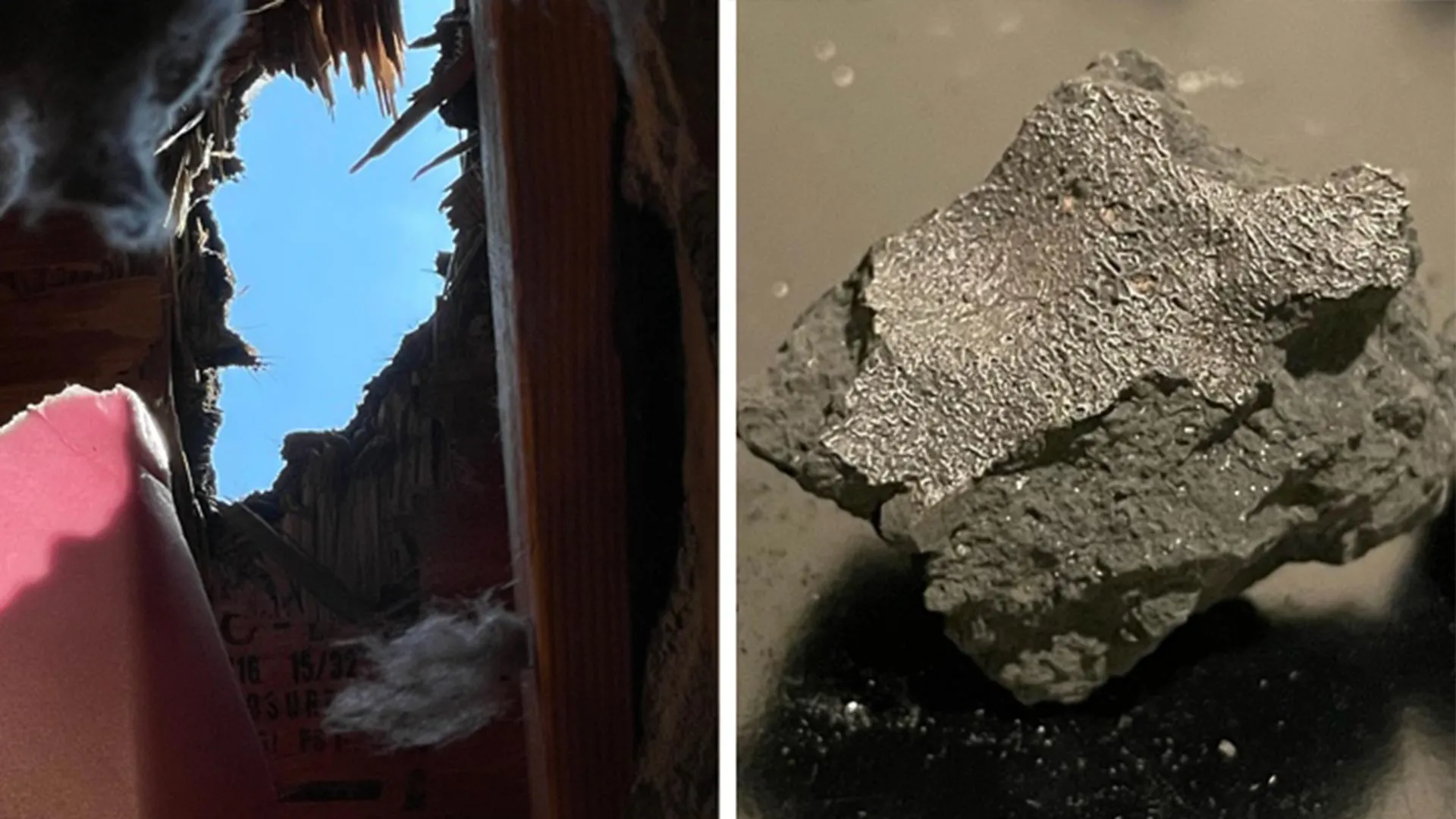
A meteor streaked across the New York City area in broad daylight on July 16, 2024, producing a sonic boom as it passed just south of the Statue of Liberty. Not long afterward, a meteorite weighing more than two pounds punched through the roof of a home in Hillsborough, New Jersey. An international research team has now analyzed the recovered material and reported its findings in Science Advances.

“A forensic study of the fragments revealed that they contained preserved bits from near the surface of a primitive asteroid where it experienced concentrated salty fluids — a process not previously known from this type of proto-planet world,” said lead author and meteor astronomer Peter Jenniskens of the SETI Institute and NASA’s Ames Research Center in California’s Silicon Valley.

A Meteor Tracked Across the Northeast

The object that entered Earth’s atmosphere that day was roughly the size of a heavy airline bag and was traveling at 32,000 miles/h (14.4 kilometers per second). Sixty people across New York, New Jersey, Connecticut, Rhode Island and Pennsylvania reported seeing the meteor to the American Meteor Society. Sixteen people in New York and New Jersey also reported feeling the shockwave.

“Our cameras in Northford, Connecticut, and Douglassville, Pennsylvania, as well as a doorbell camera in Wayne, New Jersey, captured the meteor, and from that we measured its trajectory,” said American Meteor Society operations manager Mike Hankey. “The path traced back to low in the asteroid belt.”

The incoming rock was fragile and broke apart quickly as it traveled through the atmosphere. It disappeared from view at an altitude of 22 miles (35 kilometers). Soon afterward, Doppler weather radar at Newark Airport briefly detected an elongated cloud of falling pebbles extending from Staten Island into New Jersey.

Hillsborough sat near the far end of that debris path, where the largest pieces were expected to reach the ground. Only one meteorite was recovered, largely because it made its presence impossible to miss by striking a house.

The homeowner recalled what happened: “I was at home at the time, heard a loud crash and found a hole in the ceiling of the master bedroom. I smelled a strong sulfur-like odor and saw many black fragments along with debris and black dust that covered my bed, carpet and surrounding areas.”

He quickly documented the scene and protected the material from contamination. Wearing disposable gloves, he used aluminum foil to collect the meteorite fragments and placed them in glass jars.

An Exceptionally Rare Primitive Meteorite

Laboratory analysis showed that the recovered rock belonged to a primitive meteorite family known as CM-type carbonaceous chondrites. The “M” refers to the Mighei meteorite, which fell in Ukraine in 1889.

Paper coauthor Mike Zolensky, a meteoriticist at NASA’s Johnson Space Center in Houston, found that some parts of the Hillsborough meteorite had experienced more extensive alteration by water on its parent asteroid than scientists usually observe in CM2 carbonaceous chondrites.

The meteorite was classified as a CM1/2 carbonaceous chondrite, placing it between the petrographic CM1 and CM2 categories.

The Hillsborough event is only the 22nd observed fall involving a CM-type meteorite. More remarkably, it is just the second witnessed fall of a CM1/2 carbonaceous chondrite. The first was the Kolang meteorite, which fell in North Sumatra, Indonesia, in 2020. Every other witnessed CM fall has involved CM2 material, and no CM1 meteorite fall has ever been observed.

“Thanks to the homeowner’s quick reaction, these are the most pristine CM1/2 meteorites we know of,” said Jenniskens.

Evidence of Ancient Asteroid Brines

Scientists are particularly interested in how water influenced the chemistry of primitive asteroids. Another major group of primitive carbonaceous chondrites is known as CI, with the “I” referring to the Ivuna meteorite that fell in Tanzania in 1938.

Pristine samples related to this type have also been returned directly from space. JAXA’s Hayabusa 2 mission brought material back from asteroid Ryugu, while NASA’s OSIRIS-REx mission returned samples from asteroid Bennu. Those samples contain substantial evidence that briny fluids once existed just beneath the surfaces of their parent asteroids.

Zolensky and colleague JangMi Han discovered small CM1 fragments rich in salt inside the Hillsborough meteorite. Their findings suggest that the material came from a region near the surface of its parent asteroid, where liquid water evaporated and left behind increasingly concentrated salts.

The researchers are now identifying the specific salt minerals in the meteorite so they can compare them with similar materials found in samples returned from Ryugu and Bennu.

This salty chemistry could have important implications for understanding the chemical conditions that helped produce molecules relevant to life. Highly concentrated brines can keep phosphate dissolved in solution and can promote chemical reactions involving organic compounds and minerals that precipitate from solution.

Organic Molecules and Ingredients for Life

“Isotope studies of carbon and nitrogen suggest that primitive carbonaceous chondrites, including CM-types, delivered organic matter to the early Earth,” said cosmochemist Queenie Chan of Royal Holloway University of London, England, and biogeochemist Nana Ogawa of the Biogeochemistry Research Center at the Japan Agency for Marine-Earth Science and Technology. “The Hillsborough meteorite contained 1.8% by weight of carbon and 0.07% of nitrogen, and had carbon and nitrogen isotopes typical for CM-type meteorites.”

Researchers also detected a broad range of soluble organic compounds in the meteorite. The diversity of those compounds provides further evidence that the Hillsborough material experienced more extensive alteration by water than most other CM-type meteorites.

“A high fraction of compounds were the product of organic chemistry with minerals,” said organic mass spectrometry specialist Phil Schmitt-Kopplin of Technical University Munich. “We do not know if these magnesium organic compounds were contributed by brine chemistry or were simply left over from earlier impact shock processes.”

Organometallic compounds also play important roles in living systems, including in blood and photosynthesis. Scientists found numerous amino acids among the soluble organic compounds in the Hillsborough meteorite as well. They were similar to amino acids previously detected in CM2 chondrites that experienced more moderate water alteration.

Astrobiologist Danny Glavin of NASA’s Goddard Space Flight Center in Greenbelt, Maryland, and researchers in Goddard’s Astrobiology Analytical Lab concluded that CM-type bodies could have supplied the early Earth with amino acids, carboxylic acids and other soluble organic molecules. That delivery may have contributed to the collection of prebiotic organic material that existed before life emerged.

Their analysis also indicates that the meteorite’s complex assortment of amino acids formed inside its parent body. Briny fluids likely helped drive at least some of that chemistry.

A Rare Asteroid Sample Preserved for Science

Some fragments of the Hillsborough meteorite will eventually be curated by the American Museum of Natural History in New York City, preserving the unusual material for future research.

“We are thrilled that nature delivered such a precious asteroid sample on our doorstep,” said curator Denton Ebel.

Share Button

The sun is covered in tiny whirlpools we’ve never seen before

Scientists have captured previously unseen plasma vortices swirling across the surface of the Sun, revealing tiny structures that could help explain how our star stores, moves, and releases magnetic energy.

The discovery comes from researchers at the U.S. National Science Foundation National Solar Observatory (NSF NSO), the Max Planck Institute for Solar System Research (MPS) in Germany, and the High Altitude Observatory (HAO) in the USA. The team combined observations from the NSF Daniel K. Inouye Solar Telescope, the world’s largest solar telescope, with advanced computer simulations. Built and operated by the NSO in Hawaii, the telescope provided images detailed enough to expose plasma motions that had never previously been visible.

“To detect the vortices, we needed to resolve structures on the solar surface about 20 kilometers in size. That is at the limit of what even the world’s largest solar telescope and state-of-the-art simulations can achieve,” said MPS scientist and co-author of the new publication Michiel van Noort, who contributed to the observations as well as the data reduction and image restoration. The researchers used a broadband imaging camera provided by the Max-Planck-Institute for Solar System Research (MPS).

Tiny Whirlpools Along Solar Granules

The newly detected vortices appear along the boundaries of structures known as granules, which densely cover the Sun’s visible surface. Individual granules are typically between 500 and 2,000 kilometers across.

Together, they create the Sun’s granulation, a constantly changing pattern that resembles bubbles in a boiling liquid. The comparison is fitting because granulation is produced by moving plasma. Hot plasma rises from deeper inside the Sun, cools near the surface, and then sinks back down.

For the first time, scientists were able to resolve extremely fine, fringe-like structures along the edges of these granules. The structures repeatedly develop swirling motions that resemble ocean waves as they begin to break.

Some of these “fringes” measure only slightly more than 20 kilometers across. Observing something that small on the Sun is roughly equivalent to identifying a one euro coin from 180 kilometers away.

Instabilities in the Solar Plasma

The researchers believe these swirling flows are evidence of Kelvin-Helmholtz instabilities, a familiar phenomenon in fluid dynamics.

Kelvin-Helmholtz instabilities develop when two fluids move alongside one another at different speeds. The difference in velocity produces shear forces where the two flows meet. Small disturbances at that boundary can then grow into waves or swirling vortices.

The same basic process appears in many environments and across vastly different scales — for example, on the surfaces of lakes or in ocean waves, in cloud formation, in the atmospheres of the giant gas planets Jupiter and Saturn, and in the interaction of the solar wind with planetary magnetospheres.

At the boundaries of solar granules, neighboring layers of plasma also appear to travel at different speeds. Those conditions could provide exactly what is needed for Kelvin-Helmholtz instabilities to form.

Tiny Vortices Could Twist Magnetic Fields

The newly observed plasma vortices may offer an important clue to how the Sun stores and releases energy within its magnetic field, including through tiny bursts of radiation called nanoflares.

Current theories suggest that magnetic energy builds up as the Sun’s magnetic field lines become twisted and coiled — similar to the mechanical energy stored in a tightly coiled metal spring. As the twisting increases, the magnetic configuration becomes both highly energetic and unstable.

Eventually, that stored energy can be released through a process known as “magnetic reconnection.” During reconnection, twisted magnetic field lines snap open and reconnect in a different arrangement.

One major unanswered question has been what causes those magnetic field lines to become twisted in the first place.

The newly discovered vortices could supply part of the answer. Because the researchers find that these small whirlpools appear continuously wherever the magnetic field is sufficiently strong, the vortices could provide a persistent mechanism for twisting the Sun’s magnetic field lines.

A Possible Clue to the Sun’s Magnetic Cycle

The analysis also indicates that the mini-vortices are highly effective at mixing magnetized and non-magnetized plasma at the solar surface. That mixing could help magnetic fields move quickly from the surface upward into the Sun’s atmosphere.

Changes in the Sun’s magnetic field drive its roughly eleven-year activity cycle — which is exceptionally rapid on a cosmic scale. For the Sun’s magnetic “framework” to change this quickly, magnetic flux must be transported efficiently away through the solar atmosphere.

Current models have difficulty explaining how this diffusion can happen so rapidly. The newly identified vortices could provide an important piece of that puzzle as well.

“The newly discovered plasma vortices impressively demonstrate how minute processes — at the limit of what we can resolve using all available techniques — significantly determine the nature of our star,” said Sami K. Solanki, director of the MPS and co-author of the new publication.

Share Button

Cutting sweet foods doesn’t curb cravings or improve health

A new six-month trial suggests that changing how much sweet-tasting food people eat does not alter how much they enjoy sweetness. Researchers also found no meaningful differences in several measures related to heart disease and diabetes risk among people who ate diets with high, low, or average levels of sweetness.

The findings raise questions about public health advice that encourages people to reduce sweet-tasting foods as a way to combat overweight and obesity. The researchers argue that the more important targets may be sugar intake and energy-dense foods rather than sweetness itself.

Sweetness Intake Did Not Change Taste Preferences

The study was conducted by researchers at Wageningen University and Research in the Netherlands and Bournemouth University in the UK. The findings were published in the American Journal of Clinical Nutrition.

“People have a natural love of sweet taste which has led many organizations, including the World Health Organization, to offer dietary advice on reducing the amount of sweetness in our diets altogether,” said Katherine Appleton, Professor in Psychology at Bournemouth University and corresponding author for the study. “However, our results do not support this advice, which does not consider whether the sweet taste comes from sugar, low-calorie sweeteners, or natural sources,” she added.

Researchers recruited 180 participants and divided them into three groups. One group ate a diet containing a high amount of sweet-tasting food, another ate a diet with a low amount, and the third followed a diet with an average level of sweetness.

The sweet taste in the foods came from several sources, including sugar, naturally occurring sweetness, and low-calorie sweeteners. This distinction matters because foods can taste sweet for very different nutritional reasons. Fruit, for example, contains naturally occurring sugars along with vitamins, fiber, and other nutrients, while some processed foods may contain added sugar without offering the same nutritional benefits.

Six Months of Testing Found Little Difference

After one month, three months, and six months, participants were asked whether their liking for sweet foods or their perception of sweetness had changed.

Researchers also tracked body weight and collected blood and urine samples. These samples were used to look for changes in markers associated with diabetes risk and cardiovascular health. Such markers can help researchers assess whether a dietary change is affecting processes linked to blood sugar control, metabolism, or heart health.

At the end of the six-month trial, the researchers found no significant differences among the three groups in any of the measures they examined. People who ate more sweet-tasting foods did not appear to develop a stronger preference for sweetness, while those who ate fewer sweet foods did not appear to lose their taste for it.

Participants also tended to return on their own to their previous levels of sweet food consumption after the study ended.

Researchers Question Advice to Reduce Sweet Foods

Based on the results, the research team says public health organizations may need to reconsider recommendations that broadly target sweet-tasting foods as part of efforts to address overweight and obesity.

The researchers emphasize that sweetness and sugar are not the same thing. A food can taste sweet because it contains sugar, a low-calorie sweetener, or naturally occurring sugars. At the same time, some foods that do not taste especially sweet can still contain substantial amounts of sugar.

“It’s not about eating less sweet food to reduce obesity levels,” Professor Appleton said. “The health concerns relate to sugar consumption. Some fast-food items may not taste sweet but can contain high levels of sugar. Similarly, many naturally sweet products such as fresh fruit and dairy products can have health benefits. Public advice therefore needs to concentrate on how people can reduce the amount of sugar and energy-dense foods they consume,” she concluded.

Energy-dense foods contain a relatively large number of calories in a small amount of food. Many highly processed foods fall into this category because they can be rich in added sugars, fats, or both.

The study suggests that simply reducing exposure to sweet tastes may not be enough to change people’s preferences or improve the health measures examined over six months. Instead, the researchers say dietary guidance may be more useful when it focuses on the nutritional quality of foods, particularly their sugar and calorie content, rather than whether they taste sweet.

Share Button

How a former GB Olympian curbed his porn problem – and the signs and steps to recovery

Experts share the signs to look out for if you are worried about your porn use, and how to seek help.

Share Button

I went for a full body MOT and the results came as a shock

The private body scan industry is booming, but is it doing more harm than good?

Share Button

Obesity rates have doubled in England since 1993 – what’s going on?

Around seven million more adults are living with obesity than would have been if obesity rates had stayed the same as 1993.

Share Button

Vitamin C may fight cancer — but not the way scientists once thought

Linus Pauling was one of the most brilliant scientists of the 20th century. He won two Nobel prizes and transformed our understanding of chemical bonds and the structure of proteins. Late in his career, though, he became famous for something very different: a passionate belief that very high doses of vitamin C could help people with cancer. Many doctors scoffed. When Pauling himself later died of cancer aged 93, he was held up as a classic case of the “halo effect”: being a genius in one field doesn’t guarantee wisdom in another.

Half a century on, the story looks more complicated. Pauling was wrong in important ways, but he was not entirely wrong. Modern research is giving vitamin C a second look in cancer, and it turns out that under certain conditions it can behave less like a gentle vitamin and more like a drug.

Pauling’s vitamin C story began in the 1970s, when he teamed up with the Scottish doctor Ewan Cameron and gave patients with advanced, incurable cancer very large amounts of vitamin C – first as a drip into a vein, then as tablets. Compared with similar patients who did not get vitamin C, they reported that the vitamin‑treated group lived longer and felt better. For some, they suggested, survival could be several times longer.

Two large trials, run by the Mayo Clinic, a leading non-profit medical center in the US, then put this to the test. The results were clear: there was no benefit.

Patients who took vitamin C pills lived no longer than those who didn’t. For most oncologists, that was the end of the matter. Vitamin C was filed away with other “alternative” remedies, and Pauling’s late-career crusade was widely seen as a sad mistake.

What neither trial’s critics nor defenders noticed at the time: Pauling and Cameron had started with vitamin C into a vein; the Mayo Clinic trials used tablets only. That matters because the gut can only absorb so much vitamin C. Once you reach a modest daily dose, the body simply stops taking in much more. Swallow as many tablets as you like, and the level of vitamin C in your blood levels off.

By contrast, a drip into a vein can raise blood levels to tens or even hundreds of times higher than tablets ever could. At those extreme levels, vitamin C starts to behave differently inside the body.

At everyday levels, vitamin C acts as an antioxidant: it mops up harmful molecules and protects our cells. At very high levels, especially around tumors, it can flip roles.

In laboratory studies, high-dose vitamin C helps generate hydrogen peroxide, a reactive substance that can damage cells. Cancer cells seem especially vulnerable because they are already under stress. They grow rapidly, often in areas with poor blood supply, and produce lots of reactive molecules of their own. Their internal “cleanup” systems are stretched thin.

Add a sudden pulse of hydrogen peroxide and many cancer cells tip over the edge: their DNA and energy machinery are damaged and they die. Normal cells, which are under less strain and have better defenses, are more likely to survive. In this way, very high doses of vitamin C behave less like a daily supplement and more like a weak, selective chemotherapy drug. Crucially, the doses needed for this effect cannot be reached with tablets.

What the latest evidence shows

In people, the evidence is still early and mixed. Small trials have given high-dose vitamin C through a vein to patients with hard-to-treat cancers such as ovarian, pancreatic or brain tumors. So far, many patients can receive large doses several times a week without serious side-effects. Problems can occur, especially in people with poor kidney function or rare inherited conditions, which is why this is not a harmless wellness drip to be sold on the high street.

A few studies suggest that adding vitamin C infusions to chemotherapy may help some patients live a little longer or help with side-effects, but other studies show no clear benefit. The trials are small and varied, so we cannot draw firm conclusions.

One consistent signal is quality of life: patients given vitamin C alongside chemotherapy often report less fatigue, less pain and fewer side-effects, such as nausea. For someone with advanced cancer, that matters, even if it is not the sweeping cure Pauling once promised.

Lab work also hints at subtler roles. Vitamin C is involved in enzymes that influence how our DNA is “marked” and read, and in how cells divide and respond to low oxygen – important in cancer behavior.

In some experiments, high vitamin C levels make cancer cells grow less aggressively and make them more sensitive to treatment. There are even early suggestions that vitamin C may help the immune system recognize and attack tumors, though this remains speculative.

Partly right

So, was Pauling right after all? The fairest answer is that he was partly right, for reasons he did not fully understand, and he exaggerated the promise. He was wrong to promote vitamin C tablets as a powerful cure for cancer. Large, careful trials have not found that swallowing high-dose vitamin C helps people with established cancer live longer. He was also wrong to present vitamin C as a near-universal remedy for many illnesses.

But he was not entirely wrong to suspect that vitamin C might have a special role in cancer treatment. He sensed, long before we could prove it, that very high doses given into a vein would behave quite differently from ordinary supplements.

Modern research has confirmed that intravenous vitamin C reaches much higher levels in the blood and has distinct biological effects. What we do not yet have are large, definitive randomized trials showing that high-dose intravenous vitamin C clearly prolongs life for most cancer patients. Until we do, it should be seen as experimental – promising enough to study, but not proven enough to replace standard therapies. Any use belongs in clinical trials or in carefully supervised medical settings, not in clinics selling expensive “immune boosts.”

The “vitamins in cancer” story continues to evolve. If the story of vitamin C and cancer teaches us anything, it is that science rarely moves in straight lines. A bold idea, some flawed early studies, a fierce backlash – and then, years later, a quieter, more careful return to the question.

Pauling may never be fully vindicated, but neither was he simply deluded. In his enthusiasm, he may have glimpsed a sliver of truth long before the rest of us knew how to look for it.The Conversation

Share Button