Scientists tracked 12 people in Antarctica for 10 months—what happened could shape future Mars missions

Long space missions can force small crews to endure isolation, cramped living conditions, and intense psychological pressure for months at a time. To better understand how those conditions shape teamwork, an international research group studied a ten-month overwintering mission at Concordia Station in Antarctica.

The research was led by Jan Schmutz, a professor in the Department of Psychology at the University of Zurich, and Andrea Cantisani, a psychiatrist and research associate at the University of Bern. Concordia Station is among the most remote places on Earth, with winter temperatures falling as low as minus 80 °C (-112 °F). Its isolation makes it one of the strongest real-world stand-ins for future extended missions to the Moon or Mars.

Tracking Social Changes in Extreme Isolation

The mission included 12 crew members, who completed questionnaires at four points during the ten-month period. They also wore sensors that automatically measured when they were physically close to other team members and how long those encounters lasted.

By combining the questionnaire responses with the sensor data, the researchers were able to follow changes in loneliness, trust, conflict, social relationships, team cohesion, and perceived performance throughout the mission.

More Contact Did Not Always Help

One of the most notable findings was that spending more time near other crew members was not consistently linked to better social outcomes. Participants who had more frequent contact with others were also more likely to report increased conflict, greater mistrust, and lower performance.

The results suggest that constant closeness can become another source of pressure in highly confined environments. Isolation may be difficult, but having little opportunity for privacy can also create strain.

“In small teams under extreme conditions, more contact doesn’t automatically equate to social support, but can actually increase tensions,” says Jan Schmutz.

The researchers caution that the study found correlations and cannot establish cause and effect. For instance, people who felt lonely may have sought out more interaction, even when those encounters did not provide the support they needed.

Crew Members Formed Smaller Social Groups

The wearable sensors also showed that the crew gradually separated into smaller subgroups as the mission continued. People increasingly spent time with colleagues who shared their language or nationality.

These connections may help individuals feel supported and grounded during stressful periods. However, they may also encourage social divisions and weaken unity within culturally diverse teams.

Lessons for Future Moon and Mars Missions

The findings could be especially important for future space missions in which small crews must live and work together for months or years. Astronauts on extended missions may have very little privacy and only limited communication with people outside the spacecraft or habitat.

The results may also apply to other demanding environments, including submarines, offshore oil platforms, and remote research stations.

“The results show how important it is to identify social dynamics early on and provide teams with targeted support,” says Schmutz.

Wearable Sensors Worked in Harsh Conditions

The study also showed that wearable proximity sensors can operate reliably in extreme environments. These devices allowed researchers to monitor changes in everyday social patterns without substantially disrupting the crew’s routines.

Future studies will look more closely at which types of social interaction help relieve stress and which ones may add to it.

Share Button

A New Study Says Older Adults Should Aim To Be ‘Super Movers.’ Here’s Exactly What That Means.

If you’ve ever been told you walk too fast, we have good news for you.

A recent study published in the journal Neurology found that adults 80-plus who walk as fast as adults in their 40s and 50s have less cognitive decline than slower-walking older adults.

Researchers from the Albert Einstein College of Medicine, Columbia University and Stony Brook University in New York tracked 3,989 adults, all 80 or older, for an average of 3.4 to 5.4 years. Those who had cognitive impairment at the start of the study were not included in the research.

Walking speed was measured on timed walking tests, and those who walked the fastest — referred to as “super movers” — kept up a roughly 2.9-mile-per-hour walking speed and walked at least 1.5 standard deviations above other people in their age group.

Roughly 9% of participants were categorized as super movers.

When compared to slower walkers, super movers were about 50% less likely to have cognitive impairment over the course of five years and about 60% less likely to have an Alzheimer’s disease diagnosis.

Super movers also had slower memory and thinking decline when measured on mental flexibility and memory recall tests.

While super movers were less likely to be diagnosed with Alzheimer’s disease, brain scans showed they had the same level of physical brain changes as non-super-movers. This leads researchers to believe that super movers’ brains were more resilient.

“The biggest takeaway is that mobility and brain health are deeply interconnected. Super movers appear to represent an exceptional aging phenotype, characterized by a lower disease burden, healthier lifestyles, and younger biological age. Our findings suggest that a combination of favorable biology, preserved brain health, and lifelong healthy behaviors may help some people maintain both mobility and cognition well into late life,” Dr. Joe Verghese, study author and chair of the department of neurology at Stony Brook Medicine, said in a press release.

According to Dr. Cathleen Colon-Emeric, chief of the division of geriatrics at Duke University School of Medicine, “gait speed is a really terrific indicator of the overall health of older adults. We actually use it as almost like a fifth vital sign for geriatrics.” Colon-Emeric is not affiliated with the study.

Gait speed can be a predictor of things like falls, cardiovascular events, new memory impairment and more, Colon-Emeric said.

“And that’s really because walking requires a whole lot of the systems of your body to be working well together,” she noted. You need to have healthy muscles, bones, a healthy brain that sends signals to your body, healthy lungs, a healthy heart and more, she said.

“And so when people have preserved gait speed, that’s a sign that their overall health in all of these systems is doing well,” said Colon-Emeric, “when they have a slower gait speed, that’s a sign that there might be something going on in one or more of those systems that we need to intervene on.”

If you notice yourself or a loved one slowing down, it’s worth bringing it up to a doctor who can do an overall assessment and see if there are things that can be done to help people walk more safely and be healthier overall, she said.

Older adults who walk at a speedy pace had less cognitive decline than their slower moving counterparts.

Halfpoint Images via Getty Images

Older adults who walk at a speedy pace had less cognitive decline than their slower moving counterparts.

Here’s how to either start walking for exercise or increase your walking speed.

Keeping active is an important way to age well and increase your health span.

It’s recommended that adults get at least 150 minutes of moderate exercise, such as brisk walking at 2.5 miles per hour or faster, each week, or at least 75 minutes of vigorous exercise (swimming laps, hiking uphill, running) weekly.

In addition to potential cognitive benefits, walking is also good for your cardiovascular system and can lower risk of heart disease and stroke.

“Anyone can benefit from walking,” Dr. Tamanna Singh, co-director of the sports cardiology center at Cleveland Clinic, previously told HuffPost.

If you have a goal to start a walking habit, but haven’t actually started walking yet, Singh said its helpful to invite a friend to walk with you. This can make your walk more interesting and help build up your motivation.

“You’ll each hold each other accountable to developing a walking habit and sticking to it,” Singh said.

You can also consider saving a favorite playlist, podcast or audiobook for your walk — this will give you something to look forward to when you lace up your sneakers.

If you are an avid walker but want to increase your walking speed, it can be helpful to find a playlist of music that’s set to a fast beats per minute, such as 100 or 110 beats per minute, and use the beat as your walking pace, Tyler Moldoff, a physical therapist at the Hospital for Special Surgery in New York, previously told HuffPost.

“You can simply do a Google search or even on Spotify or Apple Music, look for different genres of songs that may be enjoyable for individuals at 100 beats per minute, and then trying to sync your cadence to the beat of the song,” Moldoff said.

Working to increase your walking speed can be a good way to build strength, but doing this won’t necessarily protect your memory.

“Whether if we can do something to increase somebody’s gait speed, they do better with their memory or other outcomes, that’s really less certain,” said Colon-Emeric.

Walking at any pace is a great way to build muscle, get your heart beating and combat the sedentary lifestyle many folks have. You can slowly work to increase your pace if you aren’t a fast walker just yet, but any walking regimen is helpful for healthy aging.

“Exercise is medicine, and we preach that all the time with our patients. It’s probably the best anti-aging medicine that we have available to us,” said Colon-Emeric.

Share Button

Moment earthquake shakes hospital operating room in Japan

Security camera footage shows doctors shielding a patient on the operating table as last month’s magnitude 6.8 quake shook Kumamoto General Hospital.

Share Button

Scientists find unexpected life on Ötzi the Iceman’s 5,300-year-old body

Researchers used multiple sampling techniques to determine which microorganisms lived inside Ötzi during his lifetime and which arrived after his death. The later microbes could have colonized the body while it remained frozen in the glacier or during more than 30 years of modern conservation.

Genetic material recovered from internal tissues included bacteria that were part of Ötzi’s original gut flora. The team also made an unexpected discovery: cold-adapted yeast species that likely came from the glacier and have remained on the mummy into the present day. These organisms may eventually prove useful in industrial processes.

The findings were published in the journal Microbiome.

Tracing Ötzi’s Ancient and Modern Microbes

The investigation included a wide range of samples. Researchers studied ice collected from the mummy’s surface, meltwater from inside the body, and material gathered with numerous swabs. They also used previously available data from intestinal tissue and stomach contents.

To identify possible environmental sources, the scientists examined a soil sample taken from the discovery site during Ötzi’s recovery in 1991. The sample had remained frozen since it was collected.

Researchers found genetic evidence of Ötzi’s original gut microbiome in both his intestinal tract and stomach contents. This microbial community was first documented in a 2019 study conducted with Eurac Research.

Ötzi’s gut flora closely resembles the limited number of known microbiomes from early human populations. Many of these bacteria are rarely found in people living in modern industrialized societies. As a result, the mummy provides an unusual window into the microbial communities that once inhabited the human body.

Cold-Adapted Yeasts From the Glacier

The newly identified yeasts came from skin samples, meltwater inside the mummy, and stomach content samples. These highly specialized organisms are adapted to survive in cold environments.

Genetic testing showed that the yeasts are related to strains found in extremely cold places, including Antarctica. This connection supports the idea that they originated in the glacier and may have remained associated with Ötzi for thousands of years.

The scientists detected both heavily degraded (ancient) and well-preserved (modern) DNA. This combination suggests that the microorganisms are not simply biological remains from the distant past. They continue to exist under the mummy’s current storage conditions, which include a temperature of minus six degrees Celsius and high humidity. Some may be surviving in a dormant state.

“We see continuity here,” explains Frank Maixner, director of the Institute for Mummy Studies at Eurac Research: “These yeasts have accompanied Ötzi on his long journey through the millennia.”

According to Maixner, the results show that the mummy is “not a static relic, but a dynamic biological system.”

Past Conservation May Have Fed Some Yeasts

Earlier preservation treatments may have accidentally created favorable conditions for certain microorganisms. Three of the four yeast species have the genetic ability to break down phenol.

Phenol was used after Ötzi’s recovery to remove fungal growth from the surface of the mummy. The yeasts may have been capable of using the substance as a source of food.

“A mummy’s microbiome is unique because we are dealing with microbes that are over 5,000 years old and, at the same time, with modern microbes that have been introduced since the discovery,” says microbiologist and lead author Mohamed S. Sarhan.

Protecting Ötzi for Future Generations

The South Tyrol Museum of Archaeology oversees the preservation of the mummy and continuously monitors its condition.

“The mummy’s conservation conditions are very stable today,” comments Elisabeth Vallazza, director of the South Tyrol Museum of Archaeology that oversees the mummy’s conservation, “close microbiological monitoring ensures that the mummy suffers no damage. But further research and full conservation efforts are certainly needed to preserve it for many more generations.”

Scientists still do not completely understand how glacial mummies remain preserved over such long periods.

Conservation expert and co-author Marco Samadelli emphasizes: “The conditions under which glacial mummies are preserved are not yet fully understood. This study expands our knowledge in this area.”

Potential Uses in Low Temperature Industry

The research could contribute to improved methods for preserving Ötzi and other ancient remains. It may also lead to practical applications beyond archaeology.

Cold-adapted microorganisms can function at temperatures that would slow or stop many other species. They could therefore support industrial processes that require less energy, including fermentation performed at low temperatures.

Share Button

Those ‘Hard White Bumps’ On Your Face Have A Name — And There’s An $11 Fix

If you’ve ever noticed clusters of small, whitish bumps under the skin around your face, it’s likely an incredibly common skin condition called milia. Per Cleveland Clinic, milia is totally harmless, non-contagious (spoiler alert: it’s just dead skin cells), and though it’s distinctively not a type of acne, it can have similar OTC treatments, namely: topical adapalene, a retinoid derived from vitamin A. As luck would have it, we spotted a highly-rated, user-loved adapalene gel for a whopping 45% off, dropping it to under $11. Reviewers say it works “exactly the same” at as its brand-name counterparts, for a lot less money, crediting it for “erasing my chicken skin bumps” and much, much more.

According to dermatologists, milia is just dead skin cells trapped under skin — something more common with aging, as skin cell turnover slows with age. (Psst: this is also why exfoliation is *so* important for mature skin!)

“As we age, our natural cell turnover slows, so dead skin cells are more likely to accumulate and get trapped,” a board-certified dermatologist previously told HuffPost. “At the same time, many patients start using thicker creams for dryness, which can further occlude the skin and contribute to milia formation.” According to Cleveland Clinic, as milia isn’t harmful, you certainly don’t need to treat it. Yet, if you don’t like how the bumps look, adapalene gel can be a great OTC way to start treating them before or instead of prescription options/ professional treatments. This fragrance-free, clear gel comes in an easy-to-apply tube. The brand says you want to a pea-sized amount, spread evenly over cleansed skin once a day.

In previous HuffPost reporting on adapalene, a cosmetic surgeon called it the “gentlest in the retinoid family,” which was prescription-only until 2018, saying it works to increase the skin’s cellular turnover rate, helping remove dead cells and minimize oil glands. “Adapalene gel is a miracle worker for skin. I have used it for years,” a 74-year-old reviewer wrote. “I love that this gel is not prescription any more.”

Reviewers say this humble, prescription-strength treatment “really helps with milia” with one reporting it “worked removing the hard white bumps on my face after only 3 applications.”

Many reviewers credit the gel for helping “to slough off dead skin” — keeping skin bump-free and smooth. “Works great on the little white bumps that my daughter gets sometimes on her face,” one said. “Worked removing the hard white bumps on my face after only 3 applications,” another said.

Others call the stuff a “game changer” and “like having a magic wand for my face,” that “transformed” skin “from a battleground to a beacon of clarity.”

“I have mature skin and don’t have breakouts to speak of. I do―did―have some chicken-skin texture on my temples and under my chin,” one fan writes. After trying tretinoin and salicylic and glycolic acids, the reviewer tried this adapalene gel. “Ohhhh Myyy! It’s not as irritating as some of the other products are to me. It’s erasing my chicken skin bumps!”

It’s also celebrated for helping reviewers with their “fight against ‘old age’ face,” tackling wrinkles, dark spots, rosacea and even stubborn hormonal acne.

In this economy, we want out prodcuts to be multi-use, even when they’re only $11. (Which BTW, many point out is “the best price you’ll find for a tube this size.”) As a gentle retinoid, adapalene helps with increasing collagen production and evening skin tone and texture, offering a variety of anti-aging and generally skin-clearing benefits, too. Fans say in addition to keeping their skin smooth, it “truly helped my skin look and feel younger,” and a 45-year-old reviewer joking, “you’ll be looking 16 again!”

“The main purpose I bought this was to remove the white flakes(?) that form at the creases of my nostrils. It does this beautifully. It also prevents blackheads, making my pores virtually invisible,” one writes, calling the gel a “miracle skin healer.” “Since I have been using this regularly, my skin is smoother and fine wrinkles have disappeared. I don’t need moisturizer because it stimulates oil production. My skin is MUCH healthier when I use this daily.”

Another writes, “I use this as a wrinkle remover an age spot fader,” adding, “I’ve seen fine line wrinkles disappear along with age spots,” after about six to eight weeks of consistent use.

Reviewers love this adapalene gel for bringing major skin benefits at a minor cost. Read more 5-star reviews and grab some for yourself for under $11.

“Adapalene has been a game changer for me. I have mature skin and don’t have breakouts to speak of. I do―did―have some chicken-skin texture on my temples and under my chin. I have used retinols including tretinoin and salicylic and glycolic acids, mostly for wrinkles and some stubborn rosacea spots with good but not stellar results. One day, I watched a dermatologist’s video on the best products for aging skin, and she recommended Adapalene followed by Am-Lactin. Ohhhh Myyy! It’s not as irritating as some of the other products are to me. It’s erasing my chicken skin bumps! I’m still waiting on some of the rosacea areas to calm down, but they are much better. I’ve begun using it on my neck and decolletage, but not every day. Amazing! I have been cautious and am alternating with skin barrier protection and moisturizers (and sunscreen!). I am so pleased with my results and the improved value with this combo vs. the other products I was using. As always, your mileage may vary. Start gently and see if you have found the right product for you.” — Desert Dweller

“Such a reasonably priced product for this ingredient. Works great on the little white bumps that my daughter gets sometimes on her face.” — Kate

“This gel really helps with milia. I saw a reputable dermatologist state this too. I used it on my fever blister and it worked well. Use it sparingly. Don’t need to gob it on. Great for drying up teenage blemishes too. I would order this again.” — roberta

“I love that this gel is not prescription any more. I have used it since my dermatologist recommended when I was back in my forties and had adult acne. It doesn’t chase away all of the wrinkles, but it helps keep the skin of a 74-year-old rosy. The prices could be lower?” — RJ51

“This is the best price you’ll find for a tube this size. I’m 45 and use as part of my fight against ‘old age’ face. It’s less irritating than Retin A and of course is more convenient since it’s over the counter. This and a good moisturizer and you’ll be looking 16 again! It smooths, gets rid of acne, stimulates collagen to help with minor wrinkles and prevent as many wrinkles as you’d get if you used nothing, and it reduces dark spots. Of course this all takes consistency and time, but it’s worth it and far less expensive than doing nothing and waking up one day and forking out big bucks for cosmetic procedures. Great price. Great size. Fast delivery. Same effectiveness as any other brand of adapalene (I work in a pharmacy and have tried tons.) It also is in my teenage son and daughter’s bathrooms. Wash with gentle cleanser, add this adapalene, and moisturize. Teenagers are not good with using multiple products and being consistent. This is one easy and effective thing you can have them use.” — Ashleigh Walli

Want to make exfoliation quick and easy? Try a pre-soaked pad. Check out these favs by Senior Shopping Writer and skin care lover Lourdes Uribe.

Sephora

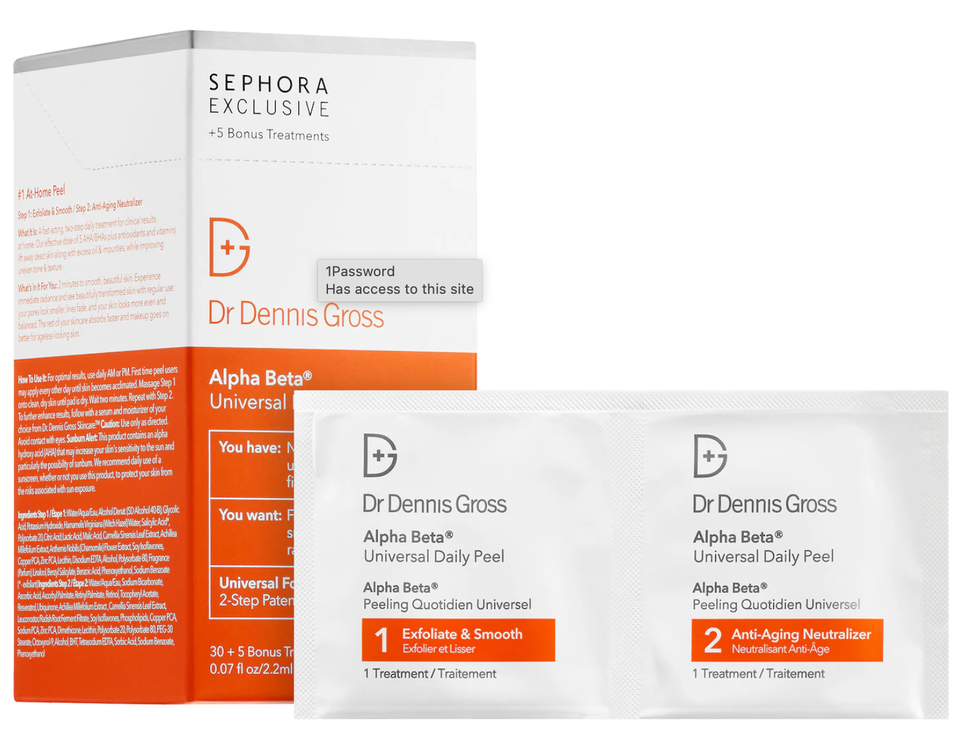
The O.G. that launched 1,000 imitators

Each Dr. Dennis Gross treatment contains two pads: one to exfoliate and smooth your skin, and one that provides anti-aging benefits. The pads are pre-dosed with five acids, including glycolic, salicylic and lactic, that each work to reduce dullness and uneven texture, pores and hyperpigmentation. They are on the stronger side, so you should work you way up to using these regularly.

Promising review: “I loved it! I started seeing a noticeable difference in just five days. My skin looks smoother, brighter, and more even. It didn’t irritate my skin, and I really feel like it’s improving my texture and giving me a healthy glow. Totally worth it!” — aroojbano

Amazon

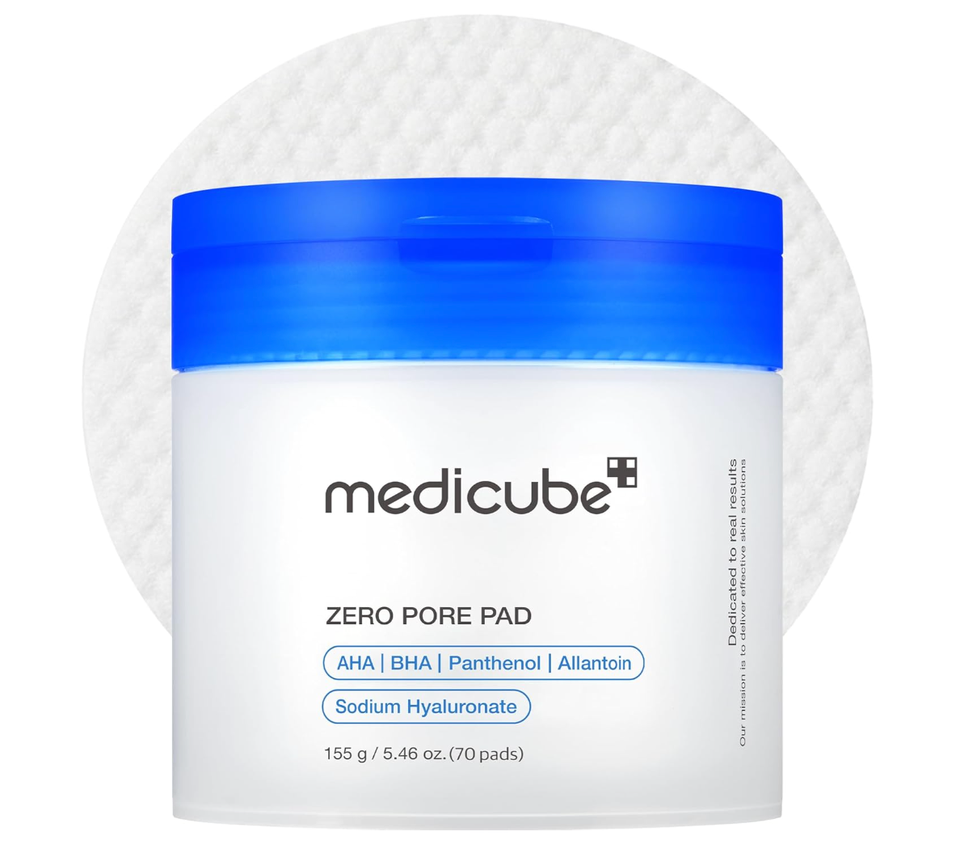
A K-beauty cult-fave

The Medicube pads are designed to help exfoliate, balance and brighten skin while reducing oil production, minimizing breakouts and refining the look of pores. They are formulated with powerful alpha and beta hydroxy acids like white willow bark, vitamin C and calming botanical extracts like lavender to soothe skin.

My skin is softer, smoother and has a really noticeable glow. Most importantly, I’ve detected a decrease in melasma, which has plagued me since my pregnancy. They’re incredibly potent, and it’s very obvious to me why they’re so popular. I’ve tried out other exfoliating pads and can confidently say that these are just as, if not more, effective at a fraction of the price. They’ve been a game-changer for my skin in the last couple of months, and I just hope they don’t sell out now that the secret’s out!

Sephora

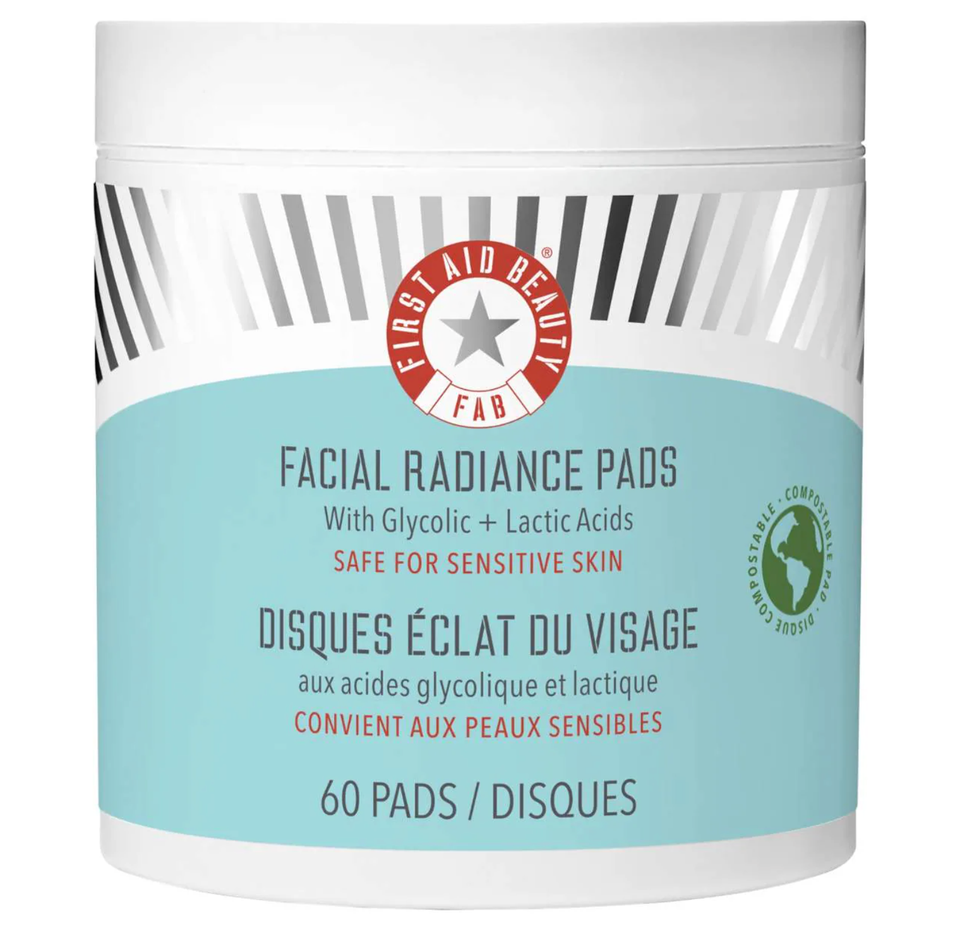
An affordable and accessible option from a dependable brand

These gentle First Aid Beauty pads are formulated with glycolic and lactic acids, so you can enjoy the many potent benefits from these trusted ingredients. Lemon peel and Indian gooseberry brighten and even tone gently, leaving skin glowing, smooth and ready for the rest of your skin care and makeup products.

Promising review: “A must have! Absolutely repurchase this over and over! The best exfoliating pads i’ve tried! Love to use this before doing my makeup and it makes my skin smooth, hydrated, and glowy. I also have sensitive skin and this actually helps my skin with breakouts and sensitivity!” — Kenz227

The Real Deal: We use deal trackers and commerce experience to sift through “fake” hike-and-drop deals and other deceptive sales tactics. Products will usually be rated at least 4 stars with a minimum 15% discount. (And when there’s an exception, we’ll tell you why.)

Share Button

Artificial Intelligence used to design brand new viruses

Scientists made 16 successful viruses that had their genetic code designed by artificial intelligence.

Share Button

Major study challenges long-held fears about acetaminophen and ibuprofen use in babies

A major new study provides strong reassurance about the use of acetaminophen (paracetamol) and ibuprofen (Advil) during a baby’s first year. Researchers found no evidence that either common pain reliever increases the risk of eczema or bronchiolitis, a respiratory illness that often affects young children.

Earlier studies had raised concerns that acetaminophen (Tylenol) given during infancy might be connected to eczema, asthma, or other health conditions later in childhood.

“Our study found that paracetamol and ibuprofen are incredibly safe to use in young children,” says lead researcher Professor Stuart Dalziel, Cure Kids Chair of Child Health Research at Waipapa Taumata Rau, University of Auckland, and Pediatrician at Starship Children’s Hospital.

Dalziel notes that acetaminophen and ibuprofen are among the medicines most often prescribed or purchased over the counter for babies around the world.

“These results give parents and health professionals high confidence to continue to use these important medications.”

Nearly 4,000 Babies Took Part

The trial followed almost 4,000 babies from birth across New Zealand. Half were randomly assigned to receive acetaminophen when medication was needed for fever or pain during the first year of life. The other half were assigned to receive ibuprofen.

At regular points throughout the study, parents were asked whether their children had experienced eczema, asthma symptoms, or bronchiolitis. The research team also reviewed prescription information and hospital records.

The findings from the first year of follow-up have now been analyzed and published in The Lancet Child & Adolescent Health.

No Significant Difference in Eczema or Bronchiolitis

About 16 percent of babies in the acetaminophen group developed eczema, compared with 15 percent in the ibuprofen group. Bronchiolitis affected about five percent of children in each group.

Researchers found that these differences were not statistically significant. Serious side effects were uncommon, and none were attributed to either medication.

Overall, the results showed no association between acetaminophen or ibuprofen and eczema or bronchiolitis. The findings also confirmed that both medicines were safe to use during infancy.

This is the first randomized controlled trial considered the gold standard for research to directly examine this question.

A Long-Term Study of Childhood Health

The findings are part of a larger research project called the ‘Paracetamol and Ibuprofen in the Primary Prevention of Asthma in Tamariki (PIPPA Tamariki)’ study.

PIPPA Tamariki is the largest clinical trial involving children ever carried out in New Zealand. Participants are being monitored from birth until they reach age six.

The research team plans to publish results from the children at age three, followed by additional findings when they reach age six.

The broader goal is to determine whether acetaminophen use during the first year of life is connected to health conditions that cannot be diagnosed reliably until children are older.

“We know that two-thirds of children who are wheezy at age three years don’t develop asthma by age six,” says Dalziel.

“Thus we need to wait until school age to ultimately test if paracetamol in the first year of life causes asthma.”

Developmental conditions such as autism and attention deficit hyperactivity disorder (ADHD) also tend to be identified more accurately as children grow older.

Lead author Dr. Eunicia Tan, a senior lecturer at the University of Auckland and emergency physician at Middlemore Hospital, says, “Ultimately, the study will provide important evidence regarding the link between paracetamol use and asthma, eczema, hay fever, and developmental disorders, such as autism and ADHD.”

The research was funded by the Health Research Council of New Zealand and Cure Kids. It was conducted by the University of Auckland and the Medical Research Institute of New Zealand, Wellington.

Share Button

A star’s violent death exposed a hidden supermassive black hole

University of Maryland astronomers have identified a dormant supermassive black hole positioned far from the center of its host galaxy. The discovery marks the first time scientists have found an inactive black hole at such a great distance from a galactic core.

Because the black hole was not actively consuming matter, it would ordinarily have remained invisible. Its location was exposed only when it tore apart a passing star, producing a brief but powerful burst of light. The findings were published in The Astrophysical Journal Letters on July 27, 2026.

“This is a novel result. What’s new is that, until now, we’ve started with the assumption that supermassive black holes reside in the centers of massive galaxies,” said study co-author Suvi Gezari, an associate professor of astronomy at UMD. “This discovery will have a huge impact. It means that we’re going to find many more examples of wandering black holes, and we can understand how galaxies and their black holes merge and build up over time.”

A Long Predicted Wandering Black Hole

Scientists have long predicted that some black holes could be displaced toward the outer regions of galaxies during galactic collisions and mergers. These objects are often described as “wandering” black holes.

Finding them is extremely difficult. Many are quiescent, meaning they are not consuming nearby material or producing detectable light. As a result, they can move through galactic outskirts without being noticed by telescopes on Earth.

Researchers first detected the quiescent black hole using the Zwicky Transient Facility (ZTF), which “searches the whole universe,” according to study lead author Robert David Stein. Stein is a Neil Gehrels Prize Postdoctoral Fellow at the Joint Space-Science Institute, a research partnership between UMD’s Departments of Astronomy and Physics and NASA’s Goddard Space Flight Center (GSFC).

Artificial Intelligence Finds a Stellar Flare

Using two telescopes at Palomar Observatory in San Diego County, California, ZTF surveys the entire northern sky once every two days. The observatory records hundreds of thousands of changing celestial events each night, making it impractical for researchers to examine every event individually for signs of a black hole.

To handle that enormous volume of data, the team created an artificial intelligence (AI) program trained to recognize the distinctive light pattern produced when a black hole destroys a star. This event, known as a tidal disruption event, occurs when a star passes close enough to be pulled apart by a black hole’s gravity.

Astronomers have documented many tidal disruption events near the centers of galaxies. The new AI system was designed to search for the same types of flares across the entire sky, including locations far from galactic centers.

The UMD researchers began operating the program in August 2025. Only three months later, it identified the event that led them to the wandering black hole.

“I remember the moment we discovered it very clearly. It was a Saturday, and everyone was very excited to be messaging. We dropped everything and started triggering all kinds of other instruments to get more data,” Stein said. “We weren’t really sure we would be successful so quickly, so it’s amazing that we found one so fast.”

A Supermassive Black Hole Far From the Galactic Center

The black hole sits 9.3 kiloparsecs (about 30,000 light-years) from the center of its galaxy. Its mass is comparable to that of the supermassive black hole located at the center of the Milky Way.

What makes the object especially puzzling is the apparent absence of a visible galaxy surrounding it, according to study co-author and UMD Astronomy Professor Sylvain Veilleux.

“To have such a big black hole outside of a galaxy is surprising to me,” he said. “There should be a Milky Way-like object around it — and that’s definitely not the case.”

Researchers believe the black hole’s unusual position is probably connected to a past collision between galaxies.

One explanation is that a large galaxy absorbed a smaller companion. Over time, the larger galaxy may have stripped away nearly all of the smaller galaxy’s stars, leaving only its dense central core and black hole behind.

Another possibility involves a more chaotic encounter among three black holes. A galaxy may already have contained two black holes orbiting closely around one another at its center, a system known as a binary black hole. If a third black hole arrived during another galactic merger, the resulting three-body interaction could have expelled the smallest black hole from the center.

Additional observations of the tidal disruption event may help researchers determine which explanation is more likely.

Dormant Black Holes Could Be Common

Understanding inactive black holes is important because most known black holes are dormant, including the one at the center of the Milky Way.

Scientists do not yet know whether wandering black holes exist in the outer regions of our own galaxy. However, Stein said there is no reason to worry about encountering one.

“We’re very unlikely to meet one, at least in our lifetime.”

The research team is continuing to search the sky for additional wandering black holes. Finding more of them could help scientists “understand how galaxies form and how many black holes are whizzing around,” Stein said.

The discovery also demonstrates that these elusive objects can be identified with conventional sky surveys combined with machine learning, rather than relying exclusively on more expensive observational methods.

“It is super exciting,” Gezari explained. “It’s an example of machine learning opening up a whole new area of research.”

New Observatories Could Find Hundreds More

Stein expects future searches with the NSF-DOE Vera C. Rubin Observatory to identify dozens or possibly hundreds of wandering black holes each year. The Chile-based observatory debuted last June and captures exceptionally detailed views of the sky with the world’s largest digital camera.

Veilleux also pointed to the Lowell Discovery Telescope and its Rapid infrared IMAger-Spectrometer, which debuted in June 2025 as a collaboration between GSFC, the UMD Department of Astronomy and Lowell Observatory. The instrument could enable scientists to detect tidal disruption events at far greater distances from Earth than previously thought possible.

“This is the strongest case of a wandering black hole that we know,” Veilleux said. “This is going to set the standard.”

UMD Astronomy Adjunct Professor Stephen Bradley Cenko and postdoctoral associate Jillian Chin Rastinejad coauthored the study with Stein, Gezari and Veilleux.

This research was funded by the U.S. National Science Foundation (Award Nos. 2407588 and 1106171); the Gordon and Betty Moore Foundation through the Data-Driven Investigator Program and a dedicated grant to SkyPortal; the W. M. Keck Foundation; the Heising-Simons Foundation; William and Marina Kast; the University of California Observatories; Google; Deutsche Forschungsgemeinschaft under Germany’s Excellence Strategy, EXC-2094/2, 390783311.939; the Australian Research Council under ARC LIEF grant LE130100104; Astronomy Australia Limited and the Australian Government through the Commonwealth’s Education Investment Fund and National Collaborative Research Infrastructure Strategy, particularly the National eResearch Collaboration Tools and Resources and the Australian National Data Service Projects. This content does not necessarily reflect the views of these parties and organizations.


Share Button

NHS must plan for heatwaves like it does for winter, health secretary says

The warning comes after the NHS sees a surge in patients and problems with equipment in high temperatures.

Share Button

Fighting the world’s most deadly animal… in an unexpected way

Mosquitoes aren’t just annoying – they kill around 700,000 people a year via the diseases they spread. But scientists are developing new, counterintuitive ways to tackle them.

Share Button