This Wagon Is A ‘Godsend’ For Back Pain If You Garden, Grocery Shop And Beyond

On a hot summer day, the last thing you need is to make multiple trips carrying heavy things on foot. Whether you’re a camper, gardener, beach bum, apartment dweller or just someone who grocery shops, adding a rolling cart to your routine may take a load off — literally. Weighing just over 10 pounds, reviewers call this collapsible, easy-to-assemble wagona true godsend for hauling the heavy stuff. To lighten the load on your wallet, you can currently snag the black option for 20% off, though the other colors (blue, pink and red) are all under $40, even at full price.

Reviewers say this lightweight wagon is “easy to put together and works perfectly” for towing everything from “Costco hauls and small furniture,” to cleaning supplies around the house.

With an accordion-style carbon steel frame and tire-like wheels designed for all terrains, this small-but-mighty wagon is ready to tackle all sorts of hauls. When extended, it measures 26.8 inches by 17.7 inches and can hold 120 liters or up to 380 pounds. As it comes partially assembled, you just need to pop in the wheels and adjustable handle and attach the tear-resistant and waterproof fabric liner with Velcro, and you’re ready to roll. The fabric lining can be easily removed and thrown in the washing machine to keep it clean.

Reviewer Romero especially appreciates the high weight capacity, which is “not flimsy like other carts I’ve tried,” making it perfect for loading “groceries, camping gear, and even heavy gardening supplies.”

Shopper Jeff initially bought the wagon to haul firewood, hoping with 360-degree wheels, it would move over “concrete, brick, gravel and grass” better than a wheelbarrow or dolly. (Spoiler alert: it did.) “This cart does it all, and it can handle a lot of weight,” Jeff said. “It’s also convenient for hauling the associated coolers, Bluetooth speakers, chairs, and everything else that comes with setting up an impromptu bonfire party!”

Others swear by it for moving stuff within their homes, with Oneher calling it a “great little helper 🥰” that offers much-welcome assistance when needed. “[It’s] able to move around easily inside my apartment,” one wrote. “ I can also load all our groceries up and wheel it into the house,” another said.

Because it’s *so* compact when folded, you can take it nearly anywhere to save your body from heavy lifting. (Or just leave it in your car.)

Deemed “perfect for apartment living” and approved by grandparents, this wagon folds down small for easy storage. When full collapsed, the wagon measures 10.6 inches by 17.7 inches, with the brand comparing it to the size of a briefcase. Because it’s so seamless to keep in a trunk or closet, reviewers say they use it a lot, especially to make consistent, weekly chores easier, like yardwork and house cleaning.

“As a 90 year old tasks such as unloading groceries can be daunting. My cart makes it easy,” Maggie wrote.

“…A chore that once took multiple trips now done in one or two,” they continued. “Cart rolls easily and holds more than I expected it to. May be my new favorite thing.

“I can easily now carry stuff like bags of donations of decluttered items to our vehicle in one trip and it lessens the tripping risk,” another said.

This baby is also loved for making special occasions easier, like setting up parties or traveling with little ones. One reviewer used the wagon when visiting friends who lived on the fourth floor of a condo building. “…It was the most effortless unpacking experience when we visited them,” they wrote. “We just put all of our bags and stuff in one trip in their cart and took the elevator and our arms weren’t hurting.”

Reviewers love this rolling wagon for taking the heavy lifting out of, well, everything! Read more 5-star reviews and grab one on sale — your back will thank you.

“As a 90 year old tasks such as unloading groceries can be daunting. My cart makes it easy. Unload groceries into the cart, wheel it into the kitchen and a chore that once took multiple trips now done in one or two. Cart rolls easily and holds more than I expected it to. May be my new favorite thing.” — Maggie

“Perfect for apartment living! I bought this to be able to haul items from my car to my building and back and forth from my garage and it doesn’t disappoint! Easy to assemble, light weight and compact! It has enough to space to hold and haul everything I need it too and I can use it for my granddaughter as well! It is very stable and sturdy and easy to maneuver in the apartment and outside. Extremely affordable and can carry decently heavy items!” — Heather Logan

“Love it! I use it for yard work to carry around gardening tools, yard waste, tarps, cords, etc. and also to help me carry in my groceries from the car quickly! It’s so easy to collapse and put up and stores so compactly.” — Crohn’s With Kids

“This works well around the house and garden as well as shopping or markets where you buy many things without the hassle of having to run back and forth to the car.” — Jason

“This wagon is a great size and holds a lot more than I expected. The quality feels solid, with a sturdy frame and durable fabric. It folds up easily for storage and doesn’t take up much space in the trunk. The all-terrain wheels roll smoothly on pavement, grass, and uneven surfaces, even when the wagon is loaded. Overall, it’s practical, easy to use, and works well for shopping, beach trips, and outdoor activities. I also uploaded a video to show how it rolls and how much it can carry. Highly satisfied with this purchase.” — Micheal

The Real Deal: We use deal trackers and commerce experience to sift through “fake” hike-and-drop deals and other deceptive sales tactics. Products will usually be rated at least 4 stars with a minimum 15% discount. (And when there’s an exception, we’ll tell you why.)


Share Button

How to advocate for your health

Dr Xand van Tulleken and Professor Sunita Sar explore why we follow advice we suspect is bad for us.

Share Button

What your summer reading list says about you

Just picked your holiday book? Our choices can subconsciously reveal important parts of our personality, studies show.

Share Button

What if the brain does not create consciousness?

Does the brain create consciousness, or is consciousness a more basic feature of reality? Christof Koch, one of the world’s most prominent neuroscientists, explored this question during the 15th “Behind and Beyond the Brain” Symposium.

The mystery reaches far beyond understanding how neurons process information. Scientists can observe which parts of the brain become active when a person sees an object, feels pain, recalls a memory, or makes a decision. Yet they still cannot explain why those physical processes are accompanied by an inner experience.

In other words, researchers can study what the brain is doing, but they do not yet know how that activity produces the feeling of being aware.

The “Hard Problem” of Consciousness

Koch’s presentation examined the limits of materialism, the dominant scientific view that everything in existence can ultimately be explained through matter, energy, and physical laws.

Neuroscience has made enormous progress in identifying brain regions and networks associated with awareness. However, it has not solved what philosophers call the “hard problem” of consciousness. The term refers to the difficulty of explaining how electrical and chemical activity in the brain gives rise to subjective experience, including sensations, emotions, thoughts, and the personal feeling of being alive.

A brain scan might show what happens when someone sees the color red, for example, but it cannot reveal why seeing red feels like anything at all.

Experiences Science Still Struggles to Explain

Koch plans to focus on three major areas of uncertainty. The first is the challenge of reducing conscious experience entirely to physical processes in the brain. The second involves questions raised by modern physics about what should be considered “real.” The third concerns unusual human experiences that remain difficult to explain using conventional scientific models.

These include near-death experiences, mystical states, and episodes of terminal lucidity. Terminal lucidity refers to an unexpected return of mental clarity shortly before death, sometimes in people who had severe dementia or other conditions that had left them unable to communicate normally.

Such experiences do not necessarily prove that consciousness can exist independently of the brain. However, Koch argues that they deserve serious investigation because they may expose gaps in current scientific explanations.

Is Consciousness a Fundamental Part of Reality?

Koch believes researchers may need to reconsider philosophical ideas such as idealism and panpsychism while continuing to apply modern scientific methods.

Idealism broadly proposes that consciousness or mind is central to the nature of reality. Panpsychism suggests that consciousness is not limited to human beings or animals, but may instead be a fundamental property found throughout nature in varying degrees.

Under these perspectives, consciousness would not simply appear once a brain became sufficiently complex. It could be an underlying feature of reality itself.

Integrated Information Theory Offers a Radical Possibility

Koch is a leading supporter of Integrated Information Theory, which attempts to describe consciousness mathematically. The theory proposes that subjective experience arises in systems that combine large amounts of information into a unified whole.

According to this view, consciousness depends not only on how much information a system contains, but also on how deeply its parts are interconnected. A system with a high degree of integrated information could therefore possess some form of subjective experience.

This idea has been described as a scientific version of panpsychism because it allows for the possibility that consciousness exists in systems other than the human brain.

Searching for Awareness in Unresponsive Patients

Koch is a researcher at the Allen Institute for Brain Science and previously served as a professor at MIT and Caltech. He has played a major role in the modern scientific study of consciousness.

His work has included the development of new approaches for detecting possible signs of awareness in patients who appear unresponsive. Some people who cannot move or communicate may still retain conscious brain activity, making reliable detection methods potentially important for diagnosis, treatment, and decisions about medical care.

By examining the limits of materialism, the unanswered questions of neuroscience, and experiences that remain difficult to classify, Koch is asking whether the brain truly creates consciousness or whether it may be connected to something more fundamental.

Share Button

Farmwatch: Farmer on mental health issues

“Tom the Young Farmer” tells BBC Radio Shropshire how it’s important to check in on his friends.

Share Button

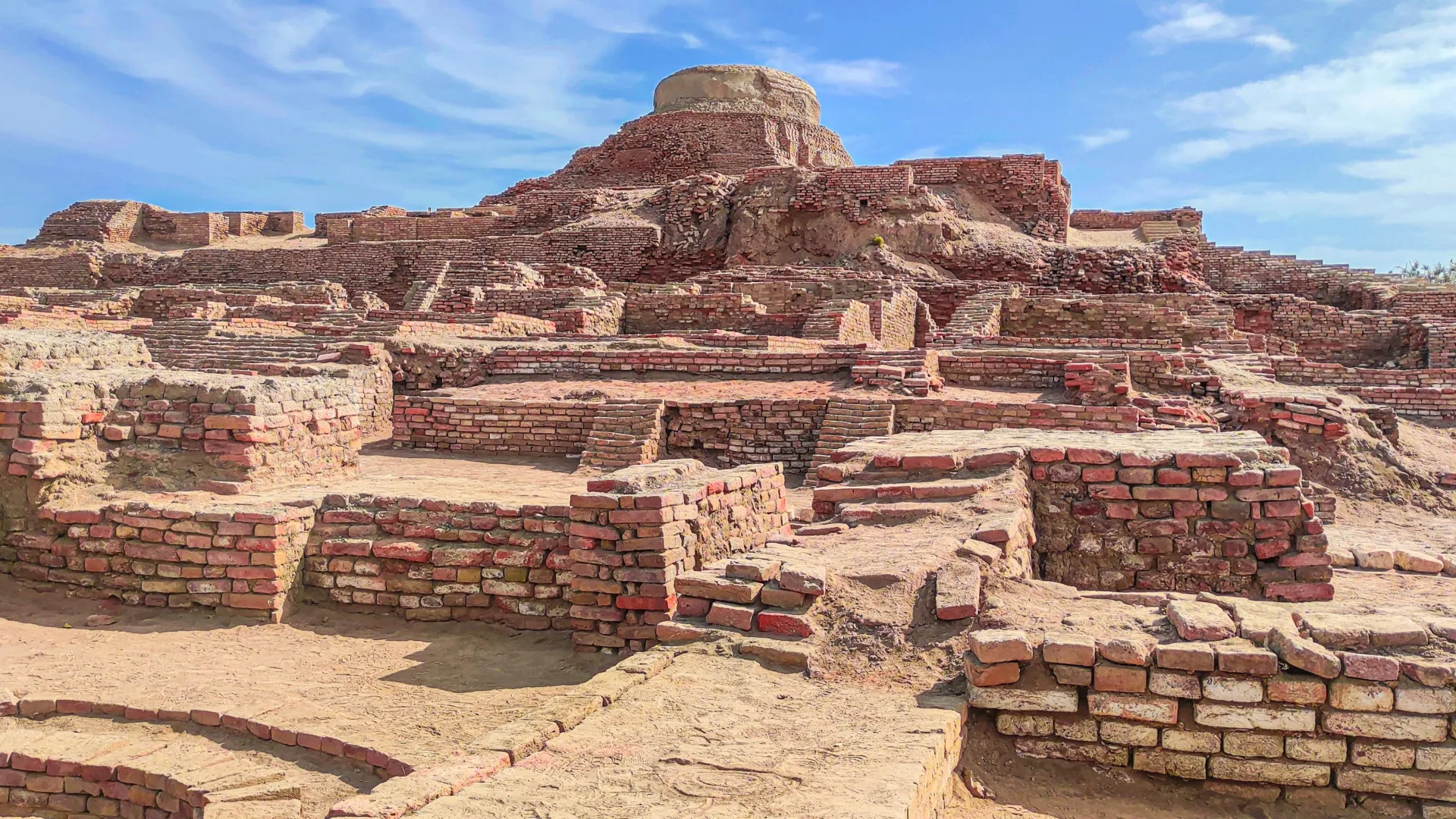
This 4,000-year-old city defied the rules of history

New research suggests that Mohenjo-daro followed a very different path from many other early cities. As the 4,000-year-old urban center became larger, more productive, and more successful, its society appears to have grown more equal rather than less.

Historians have often argued that inequality increased when small farming settlements developed into cities. Under this traditional model, kings, priests, and other powerful leaders gained control of wealth and resources, causing the divide between rich and poor to expand.

An Ancient City That Became More Equal

A University of York study of Mohenjo-daro, the largest city of the Indus civilization, points to the opposite pattern. Researchers examined differences in house sizes across the city and found that wealth became more evenly distributed as Mohenjo-daro matured.

The city also appears to have been more equal than comparable societies in Mesopotamia and Greece. Instead of producing increasingly dramatic differences between wealthy and ordinary households, Mohenjo-daro saw the size gap between its largest and smallest homes become narrower over time.

The lead author, Dr. Adam Green from the University of York’s Department of Archaeology and Department of Environment and Geography, said: “Legacy data from the ancient city shows that as the city matured, the gap between the largest and smallest homes narrowed. In fact, by its later years, the wealth gap in this massive urban center had dropped to levels typical of the first farming villages.

“While ancient Egyptians were building pyramids for god-kings, and the Greeks were constructing massive palaces at Knossos, the people of the Indus were building something entirely different.

“Instead of gold-filled tombs and huge temples, Mohenjo-daro focused on sophisticated brick-lined drains and organized street layouts. Instead of allowing the perks of society to accumulate with a tiny elite, the city’s amenities were widely distributed amongst the everyday households.”

Drains and Streets Instead of Palaces

Mohenjo-daro devoted significant effort to practical features that benefited the wider population. Its carefully planned streets and advanced brick drainage systems indicate that resources were directed toward shared infrastructure rather than monuments celebrating rulers or religious elites.

The distribution of Indus seals offers further evidence of this approach. These seals were important tools for trade and business, yet archaeologists usually find them inside ordinary homes rather than concentrated in public buildings. The city had no known palaces where a ruler or ruling class could have controlled these tools of commerce and administration.

This pattern suggests that wealth and authority were not monopolized by a single powerful leader. Instead, the residents of Mohenjo-daro may have cooperated to give households broad access to the resources needed for a comfortable standard of living.

Shared Infrastructure and Fair Trade

Continued investment in drainage, road upkeep, and other public services also reflects collective support for the city’s everyday needs. These projects improved life across Mohenjo-daro rather than primarily serving a small group at the top of society.

A standardized system of weights and measures used throughout the region may have supported fairer trade as well. By giving merchants and residents a common way to measure goods, the system helped make exchanges more consistent for everyone.

Published in the journal Antiquity, the findings challenge the belief that greater inequality must accompany economic growth. Researchers argue that Mohenjo-daro demonstrates how a technologically advanced and highly productive society could distribute prosperity broadly instead of allowing it to accumulate among a small elite.

A Lesson From the Indus Civilization

Dr. Green said: “Mohenjo-daro is often cited as being famous for what it doesn’t have, such as the absence of palaces for kings, gold-filled tombs, and no statues of rulers. But what it does have is so important.

“In the period when inequality appears to be lowest, productivity appears to rise. It challenges the idea that prosperity requires us to concentrate decision-making powers in the hands of the few.

“It is quite an interesting lesson for modern societies, as the Indus civilization demonstrates clearly that an urban society can be highly productive and inventive at scale, whilst also ensuring that resources and power are shared equitably. In fact, doing so may even have been essential to sustaining prosperity over the centuries.”

Share Button

Rice bran compound may help ease irritable bowel symptoms

A naturally occurring compound found in rice bran may influence how strongly the intestines contract, according to new research from Toho University.

The study, led by Dr. Keisuke Obara, Dr. Kento Yoshioka, and Professor Yoshio Tanaka of the Faculty of Pharmaceutical Sciences, found that ferulic acid (FA) can reduce intestinal smooth muscle contractions by blocking voltage-dependent calcium channels. The discovery could eventually support new dietary approaches for intestinal motility disorders such as irritable bowel syndrome (IBS) and inflammatory bowel disease (IBD).

A Common Compound in Whole Grains

Ferulic acid is a polyphenol found in many plant-based foods, especially whole grains and rice bran. It is already known for its antioxidant and neuroprotective effects, and previous research has largely examined how it may benefit the body more broadly.

Much less was known, however, about its effects on gastrointestinal motility, the coordinated muscle activity that moves food and waste through the digestive system.

People with IBS and IBD can experience abnormal intestinal movement. In some cases, the gut contracts too much, while in others, movement is reduced. The researchers set out to determine whether FA could directly alter these contractions.

Ferulic Acid Reduced Intestinal Contractions

The team tested FA using guinea pig ileal longitudinal smooth muscle (ILSM). The compound significantly reduced contractions triggered by several signaling molecules, including acetylcholine, histamine, prostaglandin F2α, and serotonin.

The inhibitory effect was reversible, meaning normal contractions returned after FA was removed. It was also concentration-dependent, with stronger effects appearing at higher concentrations.

The researchers found that FA acted in a noncompetitive manner. This suggests that it did not simply block the receptors used by the signaling molecules. Instead, it appeared to interfere with a shared mechanism involved in muscle contraction.

Blocking Calcium Signals in Smooth Muscle

Additional experiments using vascular smooth muscle cell models offered a possible explanation. FA reduced the rise in intracellular calcium caused by potassium chloride.

Calcium entering smooth muscle cells plays a central role in triggering contraction. The results indicate that FA suppresses this process by inhibiting voltage-dependent calcium channels, reducing the calcium signals needed for the muscles to tighten.

Possible Benefits and Risks for Gut Disorders

The findings suggest that FA may act as a natural regulator of intestinal motility. By calming excessive smooth muscle activity, it could potentially help people with diarrhea-predominant IBD.

The same effect may not be beneficial for everyone. In people with constipation-predominant IBS, or in healthy individuals, further slowing intestinal movement could make constipation or related symptoms worse.

Human Studies Are Still Needed

The researchers emphasized that the concentrations of FA that produced an effect in vitro were higher than the blood levels usually reached through normal dietary intake.

However, FA concentrations inside the intestines may be higher after food or supplements are consumed because the compound comes into direct contact with the digestive tract. More research will be needed to determine whether the laboratory findings reflect what happens in the human body.

The study provides a foundation for investigating whether ferulic acid could eventually be used in dietary interventions or supplements designed to regulate gut movement. Clinical trials will be necessary to confirm its effects in people, identify which patients might benefit, and determine safe and effective intake levels.

Share Button

Scientists found evolution repeating itself in the Galápagos Islands

The Galápagos Islands have long been one of the most important places in the study of evolution. When Charles Darwin visited the islands in 1835 aboard the HMS Beagle, he collected a variety of birds and returned with them to England. At first, he believed the specimens included sparrows, woodpeckers, finches — and a single tit. Scientists later determined that the birds were all closely related finches whose differently shaped beaks had evolved to suit different foods.

The finches eventually became powerful evidence for Darwin’s theory of evolution by natural selection. The theory explains how populations can gradually change as individuals with traits suited to their surroundings are more likely to survive and reproduce.

The birds also demonstrate a process known as parallel evolution. In this process, organisms independently develop similar solutions to environmental challenges, even though the underlying genetic changes may be different.

Darwin’s Islands Continue to Reveal Evolution

“More than 150 years after Darwin’s work on the Galápagos transformed our understanding of life on Earth, these islands continue to reveal new biology,” says Professor Michael D. Martin at the Norwegian University of Science and Technology’s (NTNU) University Museum.

Martin is part of a large international research team that includes scientists from the Royal Botanic Gardens, Kew; the University of California, Davis; the University of Copenhagen; the Charles Darwin Foundation, Galápagos; the University of Georgia, Athens; the University of British Columbia; and several other institutions.

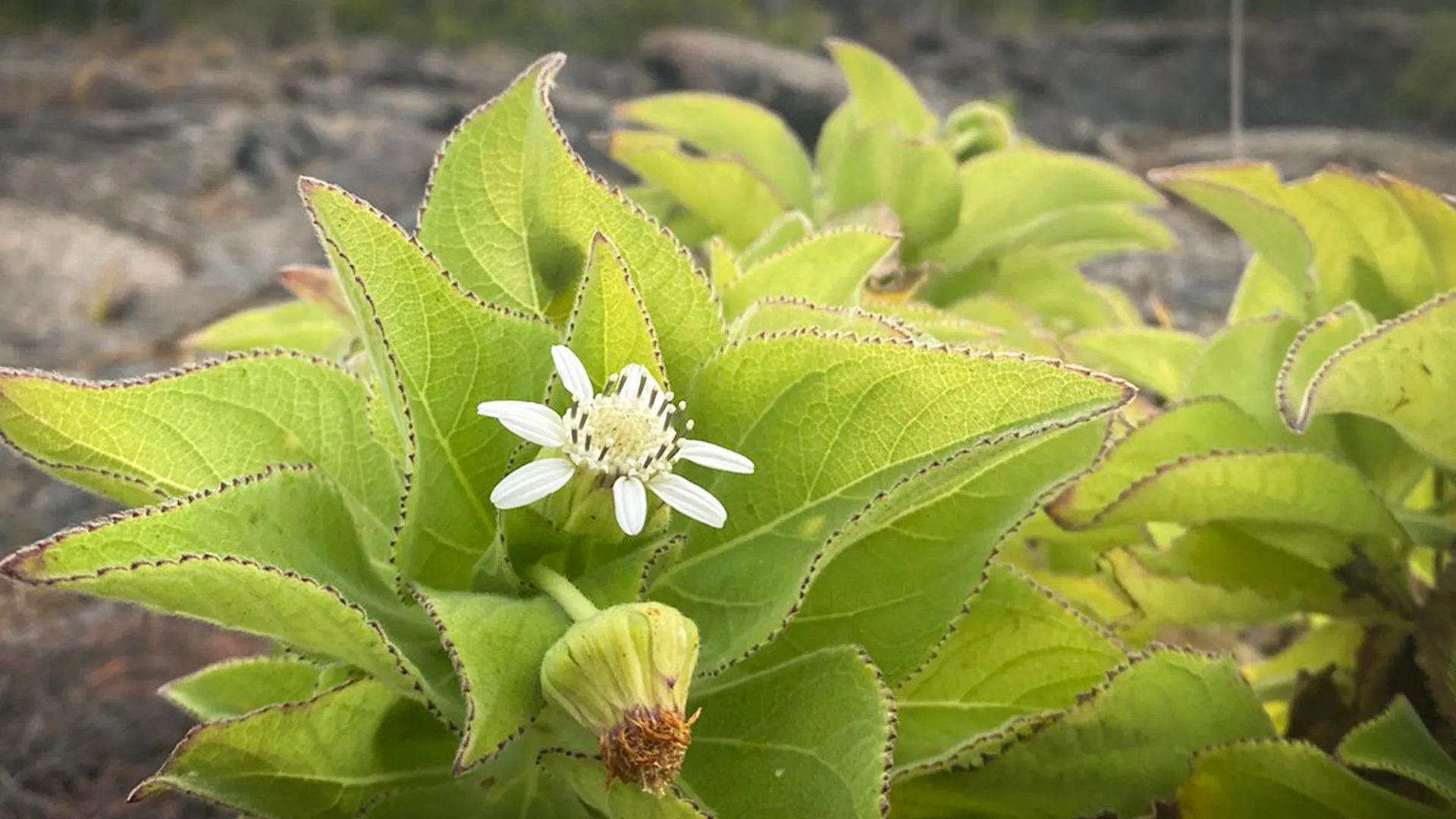
The team investigated evolution in Scalesia, a group of plants commonly called the Galápagos giant daisies. Their findings were recently published in Nature Communications.

Galápagos Giant Daisies Evolved Rapidly

“Just like Darwin’s famous finches, these plants evolved rapidly after arriving on the Galápagos from mainland South America,” explains Vanessa Bieker, a researcher at the Royal Botanic Gardens, Kew, and the first author of the new publication.

Scalesia is a relatively young plant genus. Every species that exists today emerged during the past one million years. Despite that short evolutionary history, the plants have adapted to remarkably different habitats across the islands, including humid highland forests and hot, dry lowlands.

“The appearance of different species varies dramatically, from low shrubs to tall trees. Most striking are the leaves, which range from large and entire to small and deeply lobed,” says Martin.

These lobed leaves often have intricate, serrated edges. Scientists think the shape may help plants survive dry and hot conditions by limiting water loss and releasing heat more effectively. Until now, however, the genetic changes behind this adaptation remained unclear.

Different Genes Produced the Same Leaf Shape

The researchers analyzed the complete genomes of every known Scalesia species. Their results showed that deeply lobed leaves evolved independently several times in separate branches of the Scalesia family tree.

The findings also suggest that new species may currently be developing. Numerous Scalesia populations could represent separate evolutionary lineages that scientists have not yet formally recognized.

“Even more surprising was that each time this trait evolved, it did so through different genes — even though all of them belong to the same biological system controlling leaf development,” says Bieker.

“This provides a clear example of parallel evolution: nature arriving at the same solution multiple times, but through different genetic pathways. Instead of being controlled by a single ‘master gene’, evolution appears to draw on an entire network of interacting genes, tweaking different components to produce similar outcomes.”

Rather than relying on one gene to determine leaf shape, evolution appears to modify different parts of a larger genetic network. Those separate genetic changes can ultimately produce similar physical traits.

The discovery gives scientists a clearer picture of how complex features can repeatedly emerge in unrelated populations or in different branches of the same evolutionary family.

Evolution May Still Be Creating New Species

The genetic evidence indicates that the evolutionary story of Scalesia is not finished.

“Populations within the same species show large genetic differences and have been isolated from one another for long periods. This means new species may be in the process of forming. Many Scalesia populations may represent distinct evolutionary lineages that have not yet been formally described,” says Martin.

Because these isolated populations may be following separate evolutionary paths, the researchers argue that each one should be managed as an individual conservation unit. This approach could change how conservationists protect the distinctive plants and ecosystems of the Galápagos.

The study also provides an unusually detailed view of adaptive radiation, the process through which one ancestral species rapidly gives rise to many forms suited to different habitats.

“Our findings highlight the flexibility and creativity of evolution,” says Bieker.

Darwin’s famous bird collections were not his only important discoveries on the islands. He also gathered numerous plants during his visit. Seventy-eight of those specimens were later used to identify species that were entirely new to science — including four species of Scalesia.

Share Button

Holidaymakers warned about ‘explosive diarrhoea’ cyclospora parasite infection

The UK is seeing a sharp rise in cases – 67 since April – with many of them among travellers returning from Mexico.

Share Button

‘I want to break the stigma around herpes’

The psychological effect of a herpes diagnosis can be greater than the physical symptoms, experts say.

Share Button