Rosie Stewart played for Ireland and was a founding member of Ulster Women’s Rugby but died after being diagnosed with breast cancer.


Rosie Stewart played for Ireland and was a founding member of Ulster Women’s Rugby but died after being diagnosed with breast cancer.
A force should have flagged mental health services after a family called about their son, IOPC says.
Social anxiety is more common than many think. Here’s what you need to know about the condition.
The PM was at times emotional during his conference speech in which he outlined his long-term plan for the UK.
You don’t want to forget your jawline whenever you’re upgrading a skincare routine. Without proper care, it’s an area that can begin to sag with age, ultimately forming jowls. Interestingly, smoking is also linked to premature jowls! Thankfully, we’ve found collagen chin masks reviewers love for noticeably lifting their jawline. In fact, a 58-year-old reviewer said the masks “took about 10 years off my face.” Shoppers admire the mask’s softness, lack of odor and cooling abilities, saying it’s actually comfortable to sleep in. And if you need even more reason to give them a try, ahead of next week’s October Prime Day, the 7-pack is 20% off, making it even more affordable than the 5-pack. Sounds like a steal to us!
Advertisement

Designed with power-packed Japanese hydrogel, this mask is a true treasure for folks determined to sculpt their jawlines to perfection. Unlike other V-line face masks, these masks provide a precise lift and a stretchable fit, featuring ultra-soft ear loops for seamless, non-slip wear for face shapes. “Color me surprised,” one reviewer shares. “I can’t believe this worked. I have lost 100 pounds after having gastric sleeve and my neck has noticeably been sagging and looking rough. I have only done two treatments so far, but even after one, the changes were super noticeable! I’m definitely going to add these masks to my nighttime skin routine.”
Advertisement
“It instantly made my neckline tight, smooth and younger looking,” another said. “I only wore it for an hour on the very first day and literally had my 18 year old daughter tell me she couldn’t understand how I looked SO young!”
Another shopper who used the mask before a family event says the tightening effect was so visible, “my mother asked me if I had cosmetic surgery!” “It snatches perfectly, obviously professional level,” they wrote. “It’s a staple in my skincare routine.”
And while no topical product can give you the exact results of cosmetic procedures, many compare the mask’s effects to professional treatments. “I had doubts about the product when I first ordered it, but the face masks exceeded my expectations,” one wrote, adding, “I do feel like they give you a mini facelift, however long it lasts.”
Advertisement
This beloved jaw-tightening mask also features a mix of natural ingredients — collagen, aloe vera, and hyaluronic acid — that work to deeply moisturize and refresh skin, while also boosting skin radiance. Granted, while skincare goals vary, everyone appreciates a product that can provide the basics while snatching your jawline to perfection.
“These masks really work! I can tell a huge difference in my jawline and neck,” says Cashlady. “These are much more comfortable on my ears because they stretch without breaking like some of the other brands. My face feels moisturized, soft, and smooth after each use, and I can see my jawline and neck tightening up after each use! I have tried several brands, and this is by far the best.”
Advertisement
If you’re ready to stop spending money on firming creams, painful masks, or trying to define your jawline with targeted exercises, these Stylia masks may be the missing piece to your nighttime routine.
“I came across an ad for these. I figured it was just another scam and I was going to waste my money. I am pleasantly surprised by these. I feel like these are very high-quality and fit nicely. They stretich nicely, the silicone on the inside sticks very well and the outer side is a soft, felt like material. I’ve been wearing these with an additional chin strap at night for a few hours while watching TV and doing things around the house. After I remove this, I do my normal skin care routine and I have been wearing a chin strap at bedtime. I really didn’t think I would see any results. This morning I woke up and I honestly couldn’t believe my neck skin is tighter. I also started a few facial exercises. So I believe these along with the strap at bedtime and some facial exercises are making an impact on my skin. I absolutely recommend these. I think the key is to treat before it becomes a big problem. I wish they had these 30 years ago. I would’ve started treatment when I was 20 as a preventative.” — Dobie Girl
“I love this product. I had some facial injections in my chin, lip, and jaw area, and had significant bruising. I put this on right when I go to bed, and I leave it on all night. I also store it in the refrigerator. It really helped with the bruising, the overall texture of my skin, and especially improved the hydration of my skin. I also think it helps improve the jawline. I wake up, looking so refreshed. I have worn one every night for the past week and will probably go to once or twice a week, or when I need a pick-me-up. I will continue to re-purchase.” — DRA
“I was skeptical at first. However, using it according to the directions, it actually lifted and tightened my chin. I started noticing the difference after two weeks, so please be patient. People have noticed without me saying anything. I’m about to be 58 years old, and it looks like I took about 10 years off my face. It’s very comfortable; sometimes I forget I’ve put it on. It is definitely not sticky and fits your chin perfectly. It does say to stretch it before you put it on, but I recommend stretching it as you’re going along this way; you don’t overstretch it, so it fits perfectly around the ear without missing any part behind the jaw. They have no odor. I highly recommend these because it actually works. I am very pleased with the results.” — peppercorn
“This product is really good for lifting and smoothing out wrinkles on the neck. It doesn’t just work on the double chin; it also helps with the wrinkles on the neck while lifting up the chin. I really like these chin and neck lifts.” — Josephine Harris
Advertisement
Amazon
,
Amazon
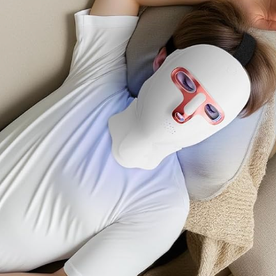
Reviewers love this on-sale LED red light mask with a neck panel for providing a spa-like experience, without paying spa-like prices. The mask offers a removable neck panel, allowing you to treat your chin and neck, as well as your face, with a variety of light color therapies.
Amazon
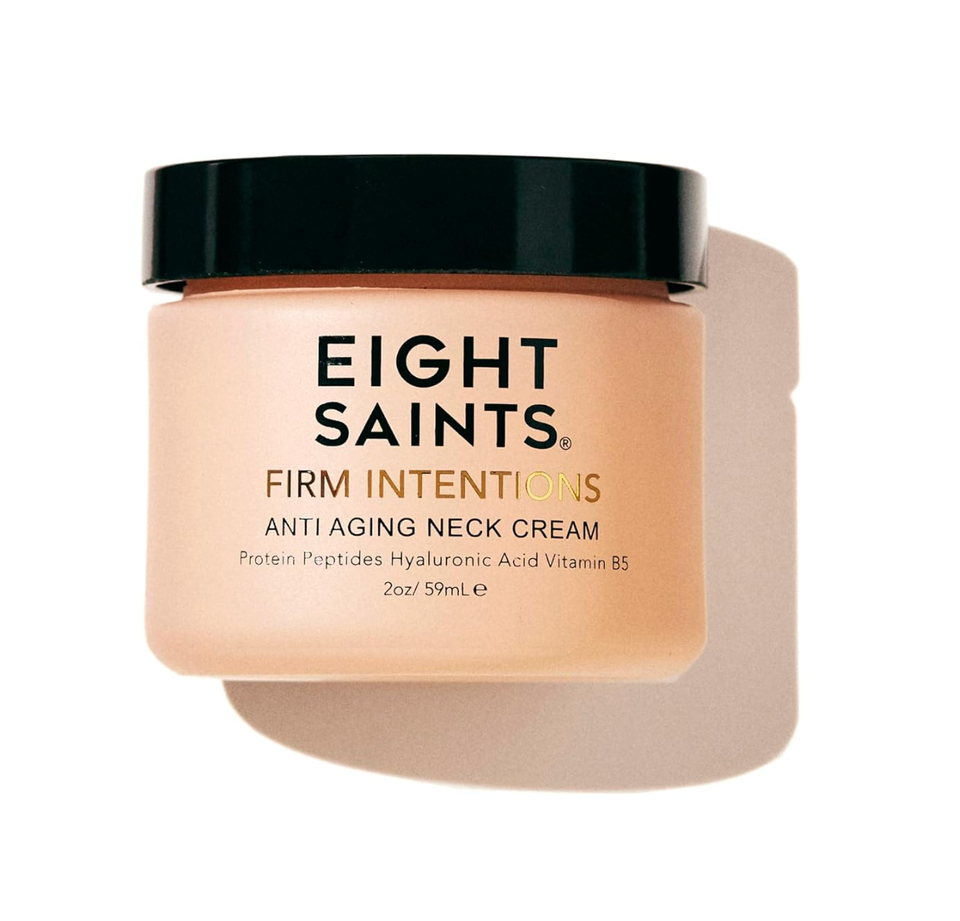
Packed with collagen-boosting protein peptides, this fragrance-free formula from Eight Saints is specially designed to boost firmness and elasticity on your neck. Made with a protein peptide blend designed to increase your skin’s collagen production and Vitamin B5 for soothing and calming, the Eight Saints cream helps your skin stay firm and soft. You’ll also get hyaluronic acid for plumping and moisture-binding and green tea antioxidant, for brightening and warding off premature signs of aging. “How something can both firm up my neck while making my skin super soft is pure magic!” Eri wrote. “This is a must have!” While it’s $44 on the Eight Saints website, you can currently find it for 23% off at Amazon.
Amazon
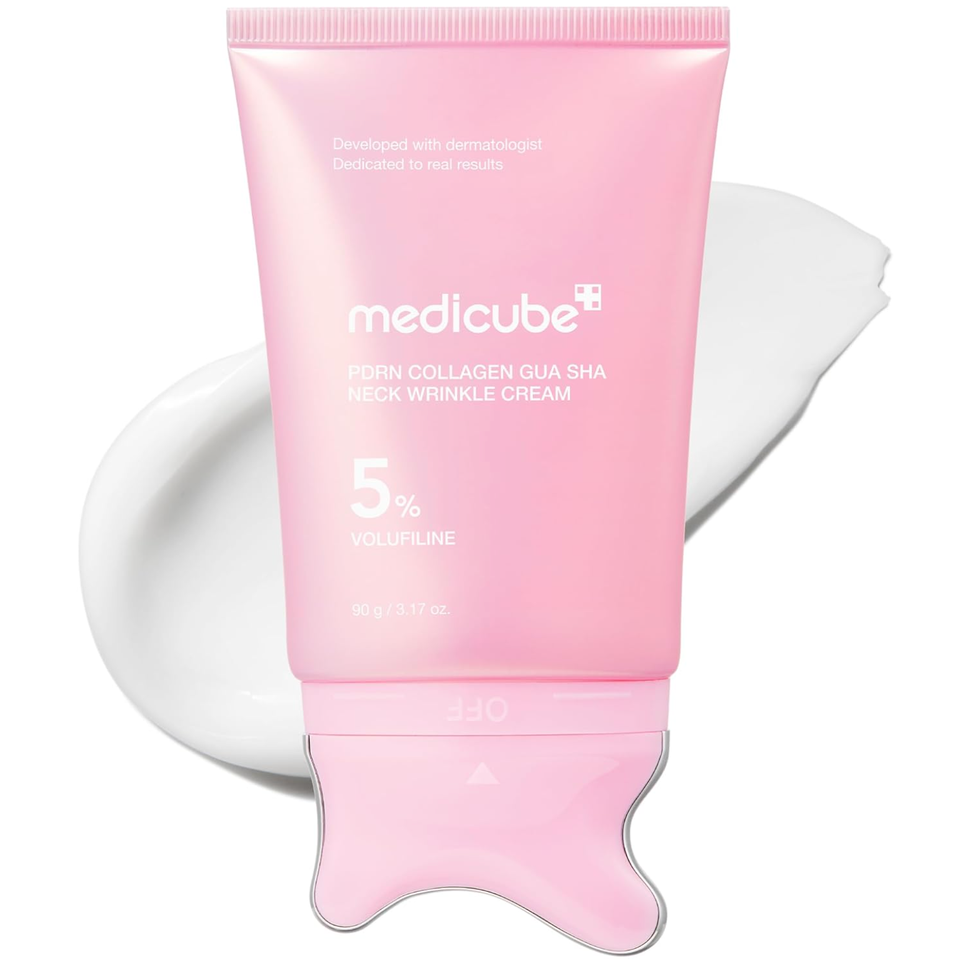
Promising review: “I’ve really been enjoying the Medicube PDRN Collagen Gua Sha Neck Wrinkle tool. It feels high-quality and comfortable to use, and it has quickly become part of my daily skincare routine. The gua sha design makes it easy to gently massage my neck area, and it feels very soothing after a long day. After consistent use, my skin feels smoother, more refreshed, and slightly firmer. I also love how relaxing it is to use, especially with my favorite serum or moisturizer. It glides well and doesn’t tug on the skin. Overall, I’m very happy with this purchase and would definitely recommend it to anyone looking to improve their neck care routine.” — Lisa
Advertisement
The Real Deal: We use deal trackers and commerce experience to sift through “fake” hike-and-drop deals and other deceptive sales tactics. Products will usually be rated at least 4 stars with a minimum 15% discount. (And when there’s an exception, we’ll tell you why.)
Advertisement
I always believed my natural hairiness was due to my Italian heritage. Every drop-dead gorgeous woman in my family spent Saturdays religiously waxing their upper lip. While it is certainly each person’s choice whether to wax and why, in my family, it was basically a rite of passage. At 10 years old, I sat at the kitchen table as my mom dripped microwaveable hot wax onto my lip, then ripped it off to searing pain. When I hit my 20′s, the hair growth was… intense. I realized that it wasn’t my heritage alone making me a little fuzzier than the average woman; it was actually a medical condition: Polycystic Ovarian Syndrome (PCOS), which causes hirsutism (the rapid growth of facial hair) in women. Now, after over 20 years of waxing, I am done: The skin damage, the pain— I am determined to find a better way. And I think I may have found it in this little-known $20 device hiding on Amazon.
Advertisement
This particular design is meant to remove facial hair closely without the risk of razor bumps or nicks. It comes with two heads: One for your delicate areas like the upper lip, chin, and neck, and another for your eyebrows and even your nose. As one reviewer put it, the design makes for “great precision and a smooth, gentle trim every time.”
Advertisement
It features a 1,000 RPM motor for “faster hair removal” and even comes with a little LED light to make visibility even easier. And with dual blades and a titanium-plated head, skin irritation should be at a minimum. Several reviewers noted how great it is for being cautious with mature and even sensitive skin.
The razor is also portable and rechargeable, so it is easy to throw in your bag for trips or take on the go to freshen up. Additionally, as a fun aside, it’s available in a multitude of colors.
While I should be above societal beauty standards, I am, alas, just a girl looking to lead a peach-fuzz-free life. This cool find can give people like me the convenience and ease of hair removal on the go. As someone who has spent many a frantic five minutes in the car plucking out rogue chin hairs before an event, something like this could be life-changing.
Advertisement
People are reporting it helping with a few different skin needs. Several reviewers also note that it helps remove dead skin.
Plus, one user shared that it also helped with their blackheads triggered by ingrown hairs.
If you wear makeup, just give this a quick swipe over your face, and your products will lay smoother and more evenly than before.
Advertisement
“As a 52 year old woman, I [have] always struggled with facial hair. I have been using these type of devices since they first came out… late 90… early 00s? Before that it was those awful smelly creams. Let me tell you ladies, this is next level holy effing grail!!!!!! My face has never, ever in my life felt so smooth, looked so nice… not a single stubble to be seen or felt. I was hesitant to buy this one for a while thinking I have tried them all and it can’t be better then the one I was currently using. Wish I had bought it sooner, it’s life changing!” — Anyasings
“As a Senior, this product was easy to assemble and to use. It is gentle to an old face and did a wonderful job on the fine peach fuzz and firmer hairs. I’d recommend this product, I’m very well pleased with it and would buy it again.” — Camille
“This face and eyebrow hair trimmer remover is absolutely the best thing in the whole world I suffered from acne my whole life now I’m 51 years old and I have very deep blackheads and I’ve tried everything to remove them and nothing worked and as a trimming my facial hair it was removing my blackheads I am like beyond happy with this product and it works perfectly to remove my facial hair I am just so happy with this product” — Alana J. Cooley
“Old crone’s delight. Just what is needed to keep looking good. A quick fix for lip/chin hairs, as well as touching up the eyebrow area. Best grooming product ever for the hair-gifted out there.” — Ragnar
Amazon
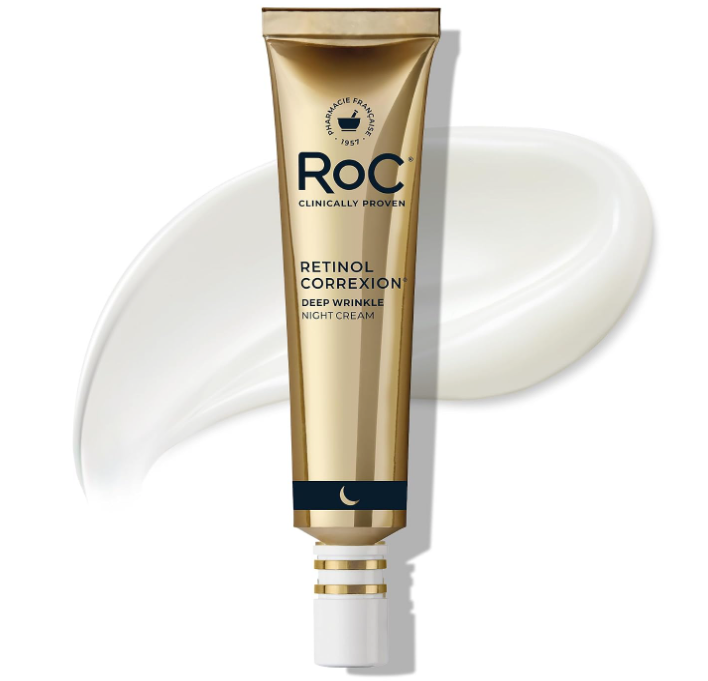
In recent coverage, HuffPost contributor Claire Gallam sang the praises of this drugstore retinol cream. After scouring reviews online, she picked this lightweight and creamy serum, delighted to find it wasn’t too harsh for her sensitive skin and visibly reduced her forehead wrinkles.
Promising review: “Excellent for senior skin. I swear this stuff works like magic!
I have it on auto delivery. My dermatologist asked what I’d been using ! Wow! Fine lines & age spots really shows big results. I’d do a commercial for this product!! It’s that good!!” — michael j murray
“It works! 50+ year old man with deep set wrinkles in the forehead and crows feet. 3 nights of use and I tell you this, the wrinkles have filled in 50-60%. Guys, yes. It’s legit shizz. Use a decent moisturizer right after. Maybe seal all the juice in place with some organic castor oil. Golden.” — Charles Shelton
Target
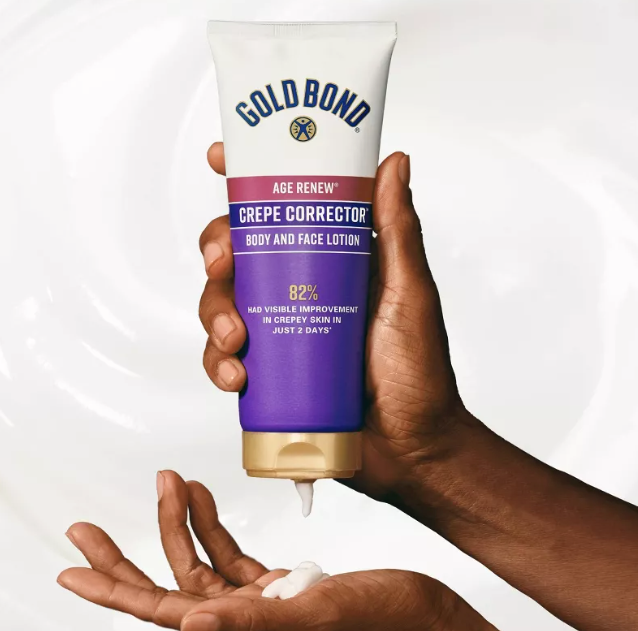
We’ve covered this affordable face and body cream from Gold Bond before, and it doesn’t seem like its popularity is going away any time soon. If you’re dealing with thin, fragile, “crepey” skin, this non-greasy, fast-absorbing product is specifically formulated to firm and hydrate the skin with seven moisturizers and three vitamins. You can use this on your face as well as your neck, arms, the backs of your hands or wherever else you notice your skin looking dry, thinner and more fragile.
Promising review: “This stuff is magic. It really does show improvement in two days. The crepe on my neck due to weight loss is 80% better. The crepe on my hands is 95% better. I started using it on my face a few times a week. It minimizes my deep set forehead lines, they are very much still there, but definitely an improvement. I need to use it at least twice a week to maintain results. Will be getting it on subscription. Wish I would have taken before and after pictures.”
Amazon
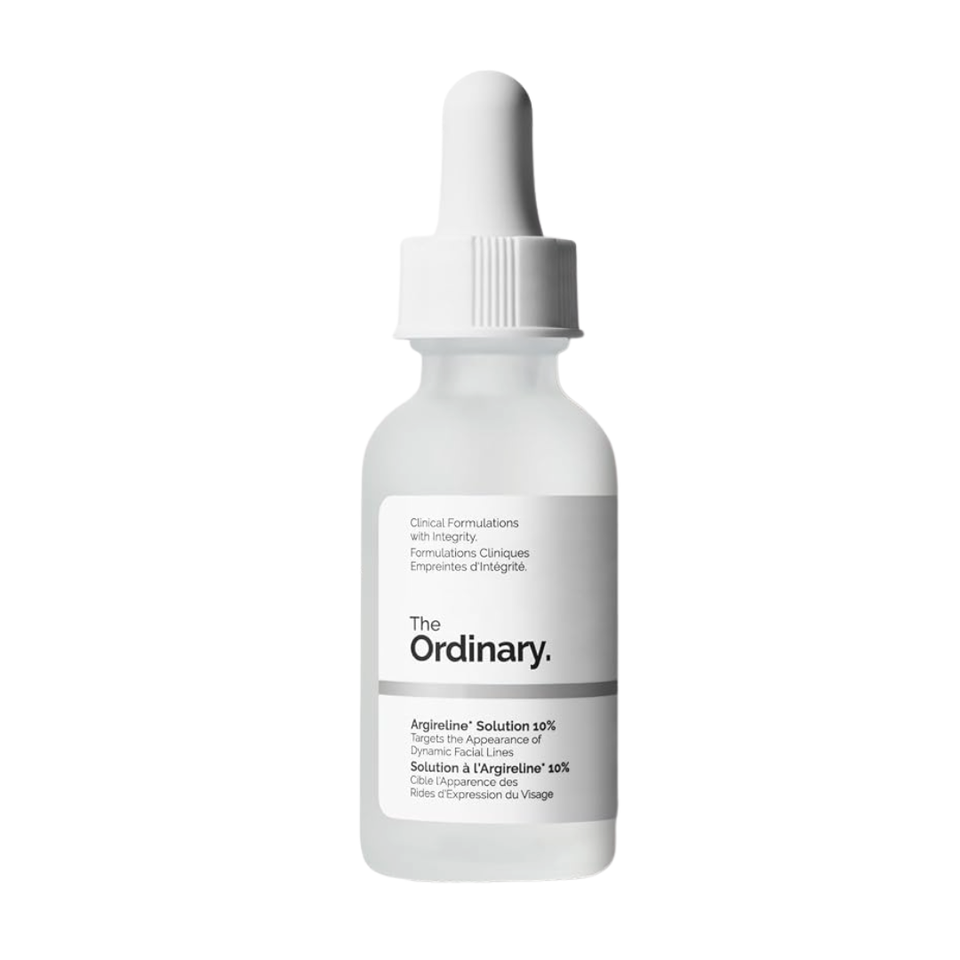
The idea that a sub-$10 skin care serum could offer the same benefits as an expensive in-office injectable sounds too good to be true. So, you can imagine my skepticism when a video on TikTok suggested The Ordinary’s 10% Argireline Solution could do just that.
The Ordinary’s lightweight and water-based solution features a 10% concentration of Argireline, otherwise known as acetyl hexapeptide-8, “a skincare ingredient that may reduce the appearance of expression lines by working as a neurotransmitter-inhibiting peptide,” a dermatologist previously told HuffPost. One Sephora reviewer corroborated Argireline’s temporary muscle-freezing potential by claiming they could finally relax their overactive forehead muscles after using the serum for just a week.
Promising review: “What can I say Botox in a bottle? They’re not joking. I’ve been using this twice a day for the past probably two years or more and my forehead wrinkles maybe are there but not visible. It’s gentle on your skin. I even use it under my eyes with no burning. And I have sensitive eyes. It might be something that you’ve not heard of or you think you don’t need but I would like to challenge you to try it for a week or two I’m telling you you’ll never stop buying it.” — K. Dietrich
“Love this stuff. It was my first time trying this type of peptide and it really works. It’s probably the closest thing to Botox you will find in the skincare aisle” — Kimberly Money
Advertisement
The Real Deal: We use deal trackers and commerce experience to sift through “fake” hike-and-drop deals and other deceptive sales tactics. Products will usually be rated at least 4 stars with a minimum 15% discount. (And when there’s an exception, we’ll tell you why.)
Advertisement

Saturn’s moon Enceladus is covered in ice, but beneath that frozen shell lies a global ocean. Near the moon’s south pole, fractures in the crust release water vapor and ice particles into space. Those particles give scientists an unusual way to study an alien ocean without having to drill through kilometers of ice.
An international team that includes researchers from the Earth-Life Science Institute (ELSI) at the Institute of Science Tokyo has now investigated what happens to that ocean water as it moves from beneath the surface and eventually becomes the tiny ice grains detected in space.
Cassini Found Surprisingly Diverse Ice Grains
Between 2004 and 2017, the Cosmic Dust Analyzer on NASA’s Cassini spacecraft measured the composition of individual ice particles in Saturn’s E-ring. That ring is continually supplied with material erupting from Enceladus.
A team led by Prof Frank Postberg at Freie Universität Berlin examined 961 mass spectra from salt-rich grains known as Type 3 particles. If the grains were simply small samples of the same ocean water, scientists might expect them to contain broadly similar mixtures of salts.
Instead, the grains varied dramatically.
Some were especially rich in sodium chloride, while others contained higher amounts of carbonates, phosphates or potassium chloride. One particularly striking pattern was that chloride and carbonate rarely appeared together in the same sodium-rich particle.
That raised a basic puzzle. If all of these grains came from the same ocean, why did their chemical compositions differ so much?
Recreating Enceladus’ Ocean Droplets in the Lab
To explore that question, Professor Yasuhito Sekine and colleagues at ELSI created laboratory droplets containing the major salts thought to be present in Enceladus’ ocean.
The researchers froze droplets of different sizes under different cooling conditions, then studied how the chemical elements were distributed once the droplets had solidified.
The results showed that the speed of freezing plays a major role.
In droplets about 200 micrometres across, salts became separated into different regions when freezing occurred relatively slowly, at approximately 10 K per minute or less. When the droplets froze more quickly, their chemical ingredients remained much more evenly mixed.
“What surprised us was that the diversity seen by Cassini could emerge from droplets originating from essentially the same ocean water,” said Sekine. “Our experiments show that when relatively large ocean droplets freeze slowly, different salts can separate within them. If those frozen droplets are later broken apart, they can produce much smaller ice grains, each with very different chemical compositions.”
A Slower Journey Through Enceladus’ Ice
The findings may also reveal something about what happens inside the moon’s icy crust.
Earlier studies generally assumed that seawater spray from Enceladus freezes quickly and moves rapidly toward space soon after leaving the ocean. The new experiments point to a different scenario.
The droplets may initially move much more slowly through the underground vent system, following complicated pathways through fractures in the ice before they approach the surface.
The researchers suggest that ocean spray first forms droplets ranging from tens to hundreds of micrometers in size. As those droplets move slowly through deeper sections of the vents, they gradually freeze, giving salts enough time to separate into different regions.
Closer to the surface, conditions change. Gas begins moving faster, and the frozen droplets can slam into the walls of narrower icy channels at high speed. Those collisions may break the droplets into much smaller pieces.
Each fragment can come from a different salt-rich region within the original frozen droplet, creating grains with very different chemical compositions. Those fragments can then escape into space and become part of Saturn’s E-ring.
“The Cassini data showed us that these salt-rich grains are far more chemically diverse than an average ocean composition would suggest,” said Postberg. “Combining those observations with the freezing experiments gives us a physical explanation: Cassini may have sampled fragments of larger frozen ocean droplets, each preserving different components that became separated during their journey towards the surface. The abundance of each individual component in the ocean is then reflected in the number of fragments in which a particular component is found.”
Enceladus May Naturally Concentrate Key Compounds
The discovery could be especially important for future missions to Enceladus.
As droplets freeze and break apart, individual compounds can become concentrated in particular grains. The process does not only separate different salts. Earlier work has also shown that organic substances can become separated from one another and appear at elevated concentrations in certain particles.
That could make future analysis considerably easier.
Compounds that are highly diluted in Enceladus’ ocean and mixed with many other substances may become much easier to detect when concentrated into individual ice grains.
On Earth, laboratories often spend considerable effort separating and concentrating chemicals before analyzing a sample. Enceladus appears to perform both of these “sample preparation” steps naturally: The chemical components become separated, and some end up concentrated within a fraction of the ice particles.
Possible Implications for Prebiotic Chemistry
Slow freezing could have another important consequence.
As ice crystals grow, small pockets of liquid brine may remain trapped between them. Salts and organic compounds can become highly concentrated inside those pockets.
That concentration could matter for prebiotic chemistry, which involves chemical processes that may precede the emergence of life. One major challenge in such chemistry is bringing molecules that are normally very dilute into close contact with one another.
Because much of the material erupted from Enceladus eventually falls back onto the moon, this freezing, concentration and recycling process could potentially happen again and again.
Understanding how Enceladus forms its ice grains therefore does more than explain Cassini’s unusual measurements. It offers new clues about the hidden environment beneath the moon’s surface and may help future spacecraft correctly interpret the particles they collect while searching for evidence of habitability and possible signs of life.
Andy Burnham wants to outline his ideas for a free-at-the-point-of-use social care system in his first speech to Labour conference as prime minister.
Plus, we reveal the All in the Mind Awards judging panel.

Most of us think of a day as a fixed 24 hours. In reality, Earth’s rotation is not perfectly constant.
The difference is tiny, measured in milliseconds, but physicists can detect it. Over time, some days become slightly shorter or longer depending on subtle changes deep inside the planet.
Earth’s Core and Mantle Trade Momentum
For roughly three decades, scientists have known that Earth’s liquid core does not always rotate at the same rate. Changes in the planet’s magnetic field have revealed that the liquid core can gradually speed up over several decades, then slow down during the following decades.
At the same time, the mantle, the roughly 3,000 kilometer thick rocky layer that includes the crust, responds in the opposite direction. When the core speeds up, the mantle slows slightly. When the core slows, the mantle speeds up.
This exchange happens because Earth’s total angular momentum must remain constant.
Even very small changes in the mantle’s rotation are enough to alter the length of a day by a few milliseconds.
A Hidden Gravitational Tug Inside Earth
Scientists have long struggled to explain exactly how the core and mantle exchange this rotational momentum.
In a new study published Sept. 23 in Nature, University of Alberta physics PhD student Huifeng Zhang and professor Mathieu Dumberry present a possible answer.
Their work shows that small changes in the rotational speed of Earth’s inner core, the solid region at the planet’s center, can create what scientists call a “gravitational torque.” Because the inner core is not perfectly spherical, changes in its motion can gravitationally interact with uneven distributions of mass in the mantle.
That interaction can slightly alter how quickly the mantle rotates, producing small changes in the length of a day.
Competing Forces Control Earth’s Rotation
Another force also acts at the boundary between the core and mantle.
Known as core mantle boundary torque, it produces friction and electromagnetic drag that oppose the gravitational pull. This resistance helps limit how much Earth’s day length can change.
According to the researchers, the small observed variations in the length of a day arise from subtle shifts in the balance between gravitational torque and core mantle boundary torque.
Earth’s Inner Core May Be More Dynamic Than Expected
Beyond helping explain a long standing mystery about Earth’s changing day length, the findings also offer new insight into what is happening deep inside the planet.
Zhang and Dumberry say the inner core appears to “deform viscously” on a time scale of about 10 years, suggesting that Earth’s deepest interior may change shape and respond to forces far more dynamically than its solid composition might imply.
