Patient watchdog calls for payouts for those left disabled by an epilepsy drug or hurt by pelvic mesh.


Patient watchdog calls for payouts for those left disabled by an epilepsy drug or hurt by pelvic mesh.
Dental leaders say new measures to improve access to care in England do not go far enough in meeting needs.

Scientists have found the strongest evidence yet that our brains can compensate for age-related deterioration by recruiting other areas to help with brain function and maintain cognitive performance.
As we age, our brain gradually atrophies, losing nerve cells and connections and this can lead to a decline in brain function. It’s not fully understood why some people appear to maintain better brain function than others, and how we can protect ourselves from cognitive decline.
A widely accepted notion is that some people’s brains are able to compensate for the deterioration in brain tissue by recruiting other areas of the brain to help perform tasks. While brain imaging studies have shown that the brain does recruit other areas, until now it has not been clear whether this makes any difference to performance on a task, or whether it provides any additional information about how to perform that task.
In a study published in the journal eLife, a team led by scientists at the University of Cambridge in collaboration with the University of Sussex have shown that when the brain recruits other areas, it improves performance specifically in the brains of older people.
Study lead Dr Kamen Tsvetanov, an Alzheimer’s Society Dementia Research Leader Fellow in the Department of Clinical Neurosciences, University of Cambridge, said: “Our ability to solve abstract problems is a sign of so-called ‘fluid intelligence’, but as we get older, this ability begins to show significant decline. Some people manage to maintain this ability better than others. We wanted to ask why that was the case — are they able to recruit other areas of the brain to overcome changes in the brain that would otherwise be detrimental?”
Brain imaging studies have shown that fluid intelligence tasks engage the ‘multiple demand network’ (MDN), a brain network involving regions both at the front and rear of the brain, but its activity decreases with age. To see whether the brain compensated for this decrease in activity, the Cambridge team looked at imaging data from 223 adults between 19 and 87 years of age who had been recruited by the Cambridge Centre for Ageing & Neuroscience (Cam-CAN).
The volunteers were asked to identify the odd-one-out in a series of puzzles of varying difficulty while lying in a functional magnetic resonance imaging (fMRI) scanner, so that the researchers could look at patterns of brain activity by measuring changes in blood flow.
As anticipated, in general the ability to solve the problems decreased with age. The MDN was particularly active, as were regions of the brain involved in processing visual information.
When the team analysed the images further using machine-learning, they found two areas of the brain that showed greater activity in the brains of older people, and also correlated with better performance on the task. These areas were the cuneus, at the rear of the brain, and a region in the frontal cortex. But of the two, only activity in the cuneus region was related to performance of the task more strongly in the older than younger volunteers, and contained extra information about the task beyond the MDN.
Although it is not clear exactly why the cuneus should be recruited for this task, the researchers point out that this brain region is usually good at helping us stay focused on what we see. Older adults often have a harder time briefly remembering information that they have just seen, like the complex puzzle pieces used in the task. The increased activity in the cuneus might reflect a change in how often older adults look at these pieces, as a strategy to make up for their poorer visual memory.
Dr Ethan Knights from the Medical Research Council Cognition and Brain Sciences Unit at Cambridge said: “Now that we’ve seen this compensation happening, we can start to ask questions about why it happens for some older people, but not others, and in some tasks, but not others. Is there something special about these people — their education or lifestyle, for example — and if so, is there a way we can intervene to help others see similar benefits?”
Dr Alexa Morcom from the University of Sussex’s School of Psychology and Sussex Neuroscience research centre said: “This new finding also hints that compensation in later life does not rely on the multiple demand network as previously assumed, but recruits areas whose function is preserved in ageing.”
The research was supported by the Medical Research Council, the Biotechnology and Biological Sciences Research Council, the European Union’s Horizon 2020 research and innovation programme, the Guarantors of Brain, and the Alzheimer’s Society.

Earth’s moon achieved its Swiss cheese appearance from celestial objects crashing into its surface, forming impact craters. But craters weren’t all that was left behind; the intense pressure and temperature of such a collision also impacts the rocks and dust covering the lunar surface, known as regolith, altering its mineral composition and structure. Analyzing the resulting minerals provides modern researchers clues to the moon’s past.
China’s Chang’e-5, the first lunar sample return mission since the Soviet Union’s Luna 24 in 1976, delivered 1.73 kilograms of regolith from the Oceanus Procellarum, a plane named for its vast size. The sample landed with Chang’e-5 (CE-5) in late 2020 and included a new mineral, Changesite-(Y), as well as a perplexing combination of silica minerals.
In Matter and Radiation at Extremes, an AIP Publishing journal, researchers from the Chinese Academy of Sciences compared CE-5’s material composition to other lunar and Martian regolith samples. They examined potential causes and origins for the lunar sample’s unique makeup.
Asteroids and comets collide with the moon at extreme velocities, causing impact (shock) metamorphism in the lunar rocks. This temperature and pressure change occurs rapidly and has distinctive features, including the formation of silica polymorphs like stishovite and seifertite, which are chemically identical to quartz but have different crystalline structures.
“Although the lunar surface is covered by tens of thousands of impact craters, high-pressure minerals are uncommon in lunar samples,” said author Wei Du. “One of the possible explanations for this is that most high-pressure minerals are unstable at high temperatures. Therefore, those formed during impact could have experienced a retrograde process.”
However, a silica fragment in the CE-5 sample contains both stishovite and seifertite, minerals that theoretically only coexist at much higher pressures than the sample seemingly experienced.
The authors determined that seifertite exists as the phase between stishovite and a third silica polymorph, α-cristobalite, also present in the sample.
“In other words, seifertite could form from α-cristobalite during the compressing process, and some of the sample transformed to stishovite during the subsequent temperature-increasing process,” said Du.
This mission also returned a new lunar mineral, Changesite-(Y), a phosphate mineral characterized by colorless, transparent columnar crystals.
The researchers estimated the peak pressure (11-40 GPa) and impact duration (0.1-1.0 second) of the collision that shaped the sample. Combining that information with shock wave models, they estimated the resulting crater to be anywhere from 3 to 32 kilometers wide, depending on the impact angle.
Remote observations show that distant ejecta in CE-5 regolith mainly come from four impact craters, and the Aristarchus crater is the youngest among the four distant craters. Because seifertite and stishovite are easily disturbed by thermal metamorphism, they inferred the silica fragment likely originated from the collision that formed the Aristarchus crater.
This sample return mission demonstrated the power of modern analysis and how it can help uncover the history of celestial bodies.

Black holes not only existed at the dawn of time, they birthed new stars and supercharged galaxy formation, a new analysis of James Webb Space Telescope data suggests.
The insights upend theories of how black holes shape the cosmos, challenging classical understanding that they formed after the first stars and galaxies emerged. Instead, black holes might have dramatically accelerated the birth of new stars during the first 50 million years of the universe, a fleeting period within its 13.8 billion — year history.
“We know these monster black holes exist at the center of galaxies near our Milky Way, but the big surprise now is that they were present at the beginning of the universe as well and were almost like building blocks or seeds for early galaxies,” said lead author Joseph Silk, a professor of physics and astronomy at Johns Hopkins University and at Institut of Astrophysics, Paris, Sorbonne University. “They really boosted everything, like gigantic amplifiers of star formation, which is a whole turnaround of what we thought possible before — so much so that this could completely shake up our understanding of how galaxies form.”
The work is newly published in the Astrophysical Journal Letters.
Distant galaxies from the very early universe, observed through the Webb telescope, appear much brighter than scientists predicted and reveal unusually high numbers of young stars and supermassive black holes, Silk said.
Conventional wisdom holds that black holes formed after the collapse of supermassive stars and that galaxies formed after the first stars lit up the dark early universe. But the analysis by Silk’s team suggests that black holes and galaxies coexisted and influenced each other’s fate during the first 100 million years. If the entire history of the universe were a 12-month calendar, those years would be like the first days of January, Silk said.
“We’re arguing that black hole outflows crushed gas clouds, turning them into stars and greatly accelerating the rate of star formation,” Silk said. “Otherwise, it’s very hard to understand where these bright galaxies came from because they’re typically smaller in the early universe. Why on earth should they be making stars so rapidly?”
Black holes are regions in space where gravity is so strong that nothing can escape their pull, not even light. Because of this force, they generate powerful magnetic fields that make violent storms, ejecting turbulent plasma and ultimately acting like enormous particle accelerators, Silk said. This process, he said, is likely why Webb’s detectors have spotted more of these black holes and bright galaxies than scientists anticipated.
“We can’t quite see these violent winds or jets far, far away, but we know they must be present because we see many black holes early on in the universe,” Silk explained. “These enormous winds coming from the black holes crush nearby gas clouds and turn them into stars. That’s the missing link that explains why these first galaxies are so much brighter than we expected.”
Silk’s team predicts the young universe had two phases. During the first phase, high-speed outflows from black holes accelerated star formation, and then, in a second phase, the outflows slowed down. A few hundred million years after the big bang, gas clouds collapsed because of supermassive black hole magnetic storms, and new stars were born at a rate far exceeding that observed billions of years later in normal galaxies, Silk said. The creation of stars slowed down because these powerful outflows transitioned into a state of energy conservation, he said, reducing the gas available to form stars in galaxies.
“We thought that in the beginning, galaxies formed when a giant gas cloud collapsed,” Silk explained. “The big surprise is that there was a seed in the middle of that cloud — a big black hole — and that helped rapidly turn the inner part of that cloud into stars at a rate much greater than we ever expected. And so the first galaxies are incredibly bright.”
The team expects future Webb telescope observations, with more precise counts of stars and supermassive black holes in the early universe, will help confirm their calculations. Silk expects these observations will also help scientists piece together more clues about the evolution of the universe.
“The big question is, what were our beginnings? The sun is one star in 100 billion in the Milky Way galaxy, and there’s a massive black hole sitting in the middle, too. What’s the connection between the two?” he said. “Within a year we’ll have so much better data, and a lot of our questions will begin to get answers.”
Authors include Colin Norman and Rosemary F. G. Wyse of Johns Hopkins; Mitchell C. Begelman of University of Colorado and National Institute of Standards and Technology; and Adi Nusser of the Israel Institute of Technology.
The team is supported by the Israel Science Foundation and the Asher Space Research Institute, as well as Eric and Wendy Schmidt by recommendation of the Schmidt Futures program.
Being diagnosed with cancer during treatment for another condition is something many experience.
Becky has spoken out as official figures show testing for HIV remains below pre-pandemic levels.
The PM is also challenged to make a bet on another of his key pledges, of sending some asylum seekers to Rwanda.
For people who grew up in the ’90s and 2000s, plastic surgery of any kind was still very much in its “hush-hush” era. While there was immense pressure to never age, it was still taboo to admit to receiving any kind of medical enhancements.
But things are different in the 2020s, the era of TikTok.
Now, celebrities and influencers are more open regarding their anti-aging treatments. On the one hand, this sheds some much-appreciated transparency that explains why so many famous people seem to age differently than the rest of us. But the greater awareness around these procedures has also normalized them, causing many viewers to wonder, “Do I need to get this procedure, too?” And it’s affecting people at a younger and younger age. (Ever heard of “baby Botox”?)
Advertisement
So, are these treatments and procedures appropriate for everyone? Considering so many followers of beauty-focused social media accounts are below the age of 25, could these young users be influenced to get anti-aging treatments that are detrimental in the long run?
We asked four dermatologists whether they think their younger patients should consider baby Botox and other trendy anti-aging procedures.
“‘Baby Botox’ refers to the use of targeted neuromodulators (such as Botox)… at lower doses than traditional dosing,” said Dr. Ahuva Cices, a cosmetic dermatologist and assistant professor of dermatology at the Icahn School of Medicine at Mount Sinai Hospital in New York. “This allows for more subtle, softer results.”
Essentially, this smaller amount of neurotoxin creates less of the “frozen” look that results from Botox’s muscle-paralyzing effect.
Advertisement
“When patients first get Botox, it’s very common for them to allude to, ‘Don’t give me too much. I still want to be able to show my expressions and smile and emote,’” said Dr. Teo Soleymani, a California-based, double board-certified dermatologist.
With the lower dosages of baby Botox, patients can enjoy the best of both worlds.
“Instead of 30 to 40 units for muscle groups, 10 to 20 units are used instead,” said Dr. Elaine Kung, a board-certified dermatologist, assistant professor of dermatology at New York Presbyterian-Weill Cornell Hospital, and founder of Future Bright Dermatology. “Baby Botox prevents lines from deepening while preserving facial expression in people who are younger.”
But these lower Botox dosages might not be suitable for all patients. If you already have prominent lines, even the full dosage of Botox will only do so much.
“We found that [Botox] doesn’t do much for [deep] wrinkles that are already formed,” Soleymani said. “What we found is that [Botox] is much better at paralyzing the muscles that form dynamic lines, or lines that show up during movement.”
That’s why many dermatologists recommend that patients interested in Botox begin treatment as early as their 20s or 30s ― whenever they first notice wrinkles and lines starting to form when their face is at rest.
Advertisement
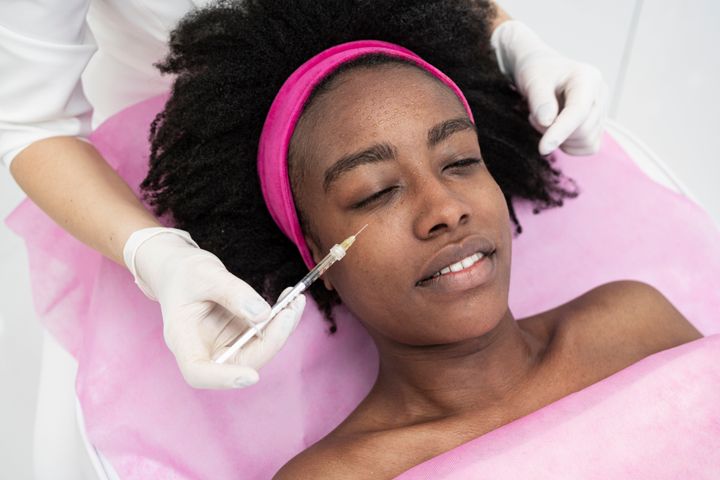
Vesnaandjic via Getty Images
“The best way to treat a wrinkle is to address it early before it permanently sets in, or to prevent it from developing at all,” said Dr. Joshua Zeichner, a New York-based board-certified dermatologist and associate professor at the Icahn School of Medicine.
But if you aren’t yet seeing the first signs of wrinkles, the dermatologists suggest skipping baby Botox. “If a patient does not have any lines, then I do not recommend getting Botox,” Zeichner said.
It’s difficult for medical professionals to determine which muscles need to receive Botox if there are no lines showing where long-term wrinkles could develop in the first place. It’s also important to remember that the facial structure you have in your teens and early 20s might not be the same structure you have later in life.
“If your facial musculature and anatomy are still developing, which is in your teenage years, then I think [Botox] is premature,” Soleymani said.
Advertisement
“There is a trend among younger patients that follow various aesthetic and beauty accounts on TikTok and Instagram requesting more invasive and advanced treatments,” Cices said. But the dermatologists we spoke with all warned against getting the following procedures at a young age.
Most of us are aware, to some extent, that many beauty standards are cyclical—the pencil-thin eyebrows of the ’90s and 2000s giving way to the thick brows of the mid-2010s before laminated eyebrows took the spot as the current eyebrow trend.
The fact that many hyaluronic fillers supposedly dissolve naturally, or could be dissolved with hyaluronidase injections, gave many people peace of mind that fillers would be a “reversible” procedure once the full-lip trend was “out.”
However, Soleymani pointed out that while these fillers may be reabsorbed and dissolved to a certain extent, the residue of fillers can remain at injection sites.
“There are many people I’ve operated on which I’ve pulled out filler from their cheek, face, or lip, and they haven’t had any injections for five, six, seven years,” Soleymani said.
Advertisement
He also noted that getting fillers too early and too often can potentially change the structure of our facial features as we inject more and more over time, as evidenced by the infamous “duck lips.”
“Over time, the weight of that filler persists in the lip, and then you get elongation and this duck billing that occurs,” Soleymani said. “Trying to correct those is so much harder than just not having it done too early in the first place.”
It’s safe to say that current beauty trends lean more “mature,” with a dramatic, angular, “snatched” look. And many people are getting procedures like cat- and fox-eye surgeries, brow and mini face lifts, and buccal fat removal to achieve this aesthetic.
However, younger patients should be cautious with these surgeries ― particularly with buccal fat removal ― as their faces haven’t fully developed yet.
“Adolescence is a rollercoaster of hormonal and physical changes, often bringing fluctuations in weight. These fluctuations can dramatically affect the size and position of the buccal fat pads, making any surgical interventions premature and unpredictable,” Kung said. “Think of it like trying to tailor a suit before you’ve finished growing ― you might end up with an ill-fitting look later on.”
Advertisement
It might be tempting to think “I can fix those issues later down the line with more surgeries.” But it’s important to remember that surgery has limitations. Every time you go under the knife, you risk further complications and the development of scar tissue.
“Any time you manipulate something, you are going to leave long-term, permanent footprints in its place,” Soleymani said. “Obviously, there’s only so much skin that can be stitched and cut.”
So if you’re young and there’s a specific feature you’re insecure about, or something you’d like to change, sometimes the best thing you can do for yourself is wait.
“Generally, the rule of thumb is anything that you want to do that can change the appearance or the structure of your face or skin, you should do when your body reaches a more static time in your life, when you’re not continually developing or [changing],” Soleymani said.
With the rise of social media and the various filters that make our favorite influencers look flawless 24/7, as well as the increased time we’ve spent staring at our faces on video calls, our standards of beauty have become warped.
Advertisement
“I had way fewer patients in their early 20s asking for filler three years ago than I do now. A lot of them complained about the way they look on Zoom or video conferencing,” Soleymani said. “They had more time to spend in front of Zoom, with virtual meetings, virtual work settings, and more time just in idling, which resulted in more scrutiny of their appearance.”
Before rushing out to get surgery, it could be a good idea to evaluate your relationship with social media and Zoom. (Rest assured, no one looks good on Zoom.)
And if you do decide to move forward with receiving any kind of treatment or procedure, remember that what worked for your friend or your favorite influencer might not be suitable for you.
“It is important to recognize that every patient is unique and can benefit from a personalized approach prior to receiving any aesthetic treatments,” Cices said. “When patients come in for cosmetic consultations, we discuss treatment goals and evaluate what can be done to achieve those long-term results.”
Advertisement
Experts highlight child obesity, tooth decay and infant deaths, saying urgent action needed in UK.
