The PM is also challenged to make a bet on another of his key pledges, of sending some asylum seekers to Rwanda.


The PM is also challenged to make a bet on another of his key pledges, of sending some asylum seekers to Rwanda.
For people who grew up in the ’90s and 2000s, plastic surgery of any kind was still very much in its “hush-hush” era. While there was immense pressure to never age, it was still taboo to admit to receiving any kind of medical enhancements.
But things are different in the 2020s, the era of TikTok.
Now, celebrities and influencers are more open regarding their anti-aging treatments. On the one hand, this sheds some much-appreciated transparency that explains why so many famous people seem to age differently than the rest of us. But the greater awareness around these procedures has also normalized them, causing many viewers to wonder, “Do I need to get this procedure, too?” And it’s affecting people at a younger and younger age. (Ever heard of “baby Botox”?)
Advertisement
So, are these treatments and procedures appropriate for everyone? Considering so many followers of beauty-focused social media accounts are below the age of 25, could these young users be influenced to get anti-aging treatments that are detrimental in the long run?
We asked four dermatologists whether they think their younger patients should consider baby Botox and other trendy anti-aging procedures.
“‘Baby Botox’ refers to the use of targeted neuromodulators (such as Botox)… at lower doses than traditional dosing,” said Dr. Ahuva Cices, a cosmetic dermatologist and assistant professor of dermatology at the Icahn School of Medicine at Mount Sinai Hospital in New York. “This allows for more subtle, softer results.”
Essentially, this smaller amount of neurotoxin creates less of the “frozen” look that results from Botox’s muscle-paralyzing effect.
Advertisement
“When patients first get Botox, it’s very common for them to allude to, ‘Don’t give me too much. I still want to be able to show my expressions and smile and emote,’” said Dr. Teo Soleymani, a California-based, double board-certified dermatologist.
With the lower dosages of baby Botox, patients can enjoy the best of both worlds.
“Instead of 30 to 40 units for muscle groups, 10 to 20 units are used instead,” said Dr. Elaine Kung, a board-certified dermatologist, assistant professor of dermatology at New York Presbyterian-Weill Cornell Hospital, and founder of Future Bright Dermatology. “Baby Botox prevents lines from deepening while preserving facial expression in people who are younger.”
But these lower Botox dosages might not be suitable for all patients. If you already have prominent lines, even the full dosage of Botox will only do so much.
“We found that [Botox] doesn’t do much for [deep] wrinkles that are already formed,” Soleymani said. “What we found is that [Botox] is much better at paralyzing the muscles that form dynamic lines, or lines that show up during movement.”
That’s why many dermatologists recommend that patients interested in Botox begin treatment as early as their 20s or 30s ― whenever they first notice wrinkles and lines starting to form when their face is at rest.
Advertisement
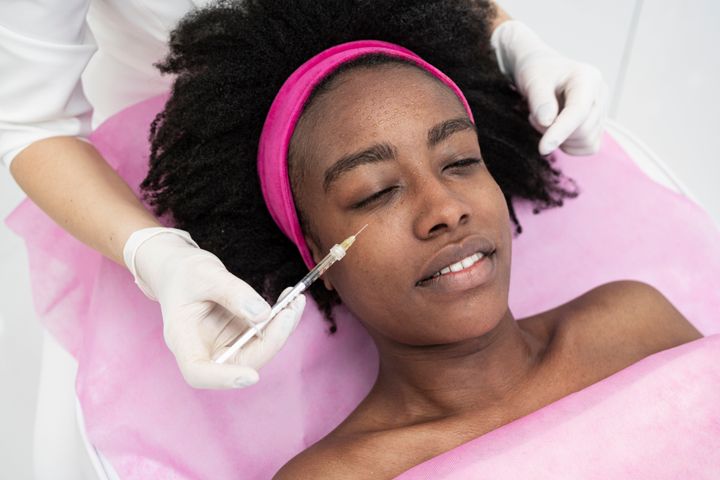
Vesnaandjic via Getty Images
“The best way to treat a wrinkle is to address it early before it permanently sets in, or to prevent it from developing at all,” said Dr. Joshua Zeichner, a New York-based board-certified dermatologist and associate professor at the Icahn School of Medicine.
But if you aren’t yet seeing the first signs of wrinkles, the dermatologists suggest skipping baby Botox. “If a patient does not have any lines, then I do not recommend getting Botox,” Zeichner said.
It’s difficult for medical professionals to determine which muscles need to receive Botox if there are no lines showing where long-term wrinkles could develop in the first place. It’s also important to remember that the facial structure you have in your teens and early 20s might not be the same structure you have later in life.
“If your facial musculature and anatomy are still developing, which is in your teenage years, then I think [Botox] is premature,” Soleymani said.
Advertisement
“There is a trend among younger patients that follow various aesthetic and beauty accounts on TikTok and Instagram requesting more invasive and advanced treatments,” Cices said. But the dermatologists we spoke with all warned against getting the following procedures at a young age.
Most of us are aware, to some extent, that many beauty standards are cyclical—the pencil-thin eyebrows of the ’90s and 2000s giving way to the thick brows of the mid-2010s before laminated eyebrows took the spot as the current eyebrow trend.
The fact that many hyaluronic fillers supposedly dissolve naturally, or could be dissolved with hyaluronidase injections, gave many people peace of mind that fillers would be a “reversible” procedure once the full-lip trend was “out.”
However, Soleymani pointed out that while these fillers may be reabsorbed and dissolved to a certain extent, the residue of fillers can remain at injection sites.
“There are many people I’ve operated on which I’ve pulled out filler from their cheek, face, or lip, and they haven’t had any injections for five, six, seven years,” Soleymani said.
Advertisement
He also noted that getting fillers too early and too often can potentially change the structure of our facial features as we inject more and more over time, as evidenced by the infamous “duck lips.”
“Over time, the weight of that filler persists in the lip, and then you get elongation and this duck billing that occurs,” Soleymani said. “Trying to correct those is so much harder than just not having it done too early in the first place.”
It’s safe to say that current beauty trends lean more “mature,” with a dramatic, angular, “snatched” look. And many people are getting procedures like cat- and fox-eye surgeries, brow and mini face lifts, and buccal fat removal to achieve this aesthetic.
However, younger patients should be cautious with these surgeries ― particularly with buccal fat removal ― as their faces haven’t fully developed yet.
“Adolescence is a rollercoaster of hormonal and physical changes, often bringing fluctuations in weight. These fluctuations can dramatically affect the size and position of the buccal fat pads, making any surgical interventions premature and unpredictable,” Kung said. “Think of it like trying to tailor a suit before you’ve finished growing ― you might end up with an ill-fitting look later on.”
Advertisement
It might be tempting to think “I can fix those issues later down the line with more surgeries.” But it’s important to remember that surgery has limitations. Every time you go under the knife, you risk further complications and the development of scar tissue.
“Any time you manipulate something, you are going to leave long-term, permanent footprints in its place,” Soleymani said. “Obviously, there’s only so much skin that can be stitched and cut.”
So if you’re young and there’s a specific feature you’re insecure about, or something you’d like to change, sometimes the best thing you can do for yourself is wait.
“Generally, the rule of thumb is anything that you want to do that can change the appearance or the structure of your face or skin, you should do when your body reaches a more static time in your life, when you’re not continually developing or [changing],” Soleymani said.
With the rise of social media and the various filters that make our favorite influencers look flawless 24/7, as well as the increased time we’ve spent staring at our faces on video calls, our standards of beauty have become warped.
Advertisement
“I had way fewer patients in their early 20s asking for filler three years ago than I do now. A lot of them complained about the way they look on Zoom or video conferencing,” Soleymani said. “They had more time to spend in front of Zoom, with virtual meetings, virtual work settings, and more time just in idling, which resulted in more scrutiny of their appearance.”
Before rushing out to get surgery, it could be a good idea to evaluate your relationship with social media and Zoom. (Rest assured, no one looks good on Zoom.)
And if you do decide to move forward with receiving any kind of treatment or procedure, remember that what worked for your friend or your favorite influencer might not be suitable for you.
“It is important to recognize that every patient is unique and can benefit from a personalized approach prior to receiving any aesthetic treatments,” Cices said. “When patients come in for cosmetic consultations, we discuss treatment goals and evaluate what can be done to achieve those long-term results.”
Advertisement
Experts highlight child obesity, tooth decay and infant deaths, saying urgent action needed in UK.
Craig Shore, who has ocular uveal melanoma, will have to pay up to £240,000 for chemosaturation.
Sudden unexplained death in childhood claims 50 lives in the UK every year – some parents get no support.
Adele Johnston was 33 when she developed painful symptoms such as heart palpitations and itchy skin.
The world’s richest man is betting heavily on his brain chip, but he has ground to make up.

Food manufacturers often add preservatives to food products to keep them fresh. A primary purpose of these preservatives is to kill microbes that could break down and otherwise spoil the food. Common additives like sugar, salt, vinegar and alcohol have been used as preservatives for centuries, but modern-day food labels now reveal more unfamiliar ingredients such as sodium benzoate, calcium propionate, and potassium sorbate.
Bacteria produce chemicals called bacteriocins to kill microbial competitors. These chemicals can serve as natural preservatives by killing potentially dangerous pathogens in food. Lanthipeptides, a class of bacteriocins with especially potent antimicrobial properties, are widely used by the food industry and have become known as “lantibiotics” (a scientific portmanteau of lanthipeptide and antibiotics).
Despite their widespread use, however, little is known about how these lantibiotics affect the gut microbiomes of people who consume them in food. Microbes in the gut live in a delicate balance, and commensal bacteria provide important benefits to the body by breaking down nutrients, producing metabolites, and — importantly — protecting against pathogens. If too many commensals are indiscriminately killed off by antimicrobial food preservatives, opportunistic pathogenic bacteria might take their place and wreak havoc — a result no better than eating contaminated food in the first place.
Effects on good and bad bacteria
A new study published in ACS Chemical Biology by scientists from the University of Chicago found that one of the most common classes of lantibiotics has potent effects both against pathogens and against the commensal gut bacteria that keep us healthy.
Nisin is a popular lantibiotic used in everything from beer and sausage to cheese and dipping sauces. It is produced by bacteria that live in the mammary glands of cows, but microbes in the human gut produce similar lantibiotics too. Zhenrun “Jerry” Zhang, PhD, a postdoctoral scholar in the lab of Eric Pamer, MD, the Donald F. Steiner Professor of Medicine and Director of the Duchossois Family Institute at UChicago, wanted to study the impact of such naturally-produced lantibiotics on commensal gut bacteria.
“Nisin is, in essence, an antibiotic that has been added to our food for a long time, but how it might impact our gut microbes is not well studied,” Zhang said. “Even though it might be very effective in preventing food contamination, it might also have a greater impact on our human gut microbes.”
He and his colleagues mined a public database of human gut bacteria genomes and identified genes for producing six different gut-derived lantibiotics that closely resemble nisin, four of which were new. Then, in collaboration with Wilfred A. van der Donk, PhD, the Richard E. Heckert Endowed Chair in Chemistry at the University of Illinois Urbana-Champaign, they produced versions of these lantibiotics to test their effects on both pathogens and commensal gut bacteria. The researchers found that while the different lantibiotics had varying effects, they killed pathogens and commensal bacteria alike.
“This study is one of the first to show that gut commensals are susceptible to lantibiotics, and are sometimes more sensitive than pathogens,” Zhang said. “With the levels of lantibiotics currently present in food, it’s very probable that they might impact our gut health as well.”
Harnessing the power of lantibiotics
Zhang and his team also studied the structure of peptides in the lantibiotics to better understand their activity, in the interest of learning how to use their antimicrobial properties for good. For example, in another study, the Pamer lab showed that a consortium of four microbes, including one that produces lantibiotics, help protect mice against antibiotic-resistant Enterococcus infections. They are also studying the prevalence of lantibiotic-resistant genes across different populations of people to better understand how such bacteria can colonize the gut under different conditions and diets.
“It seems that lantibiotics and lantibiotic-producing bacteria are not always good for health, so we are looking for ways to counter the potential bad influence while taking advantage of their more beneficial antimicrobial properties,” Zhang said.
The study, “Activity of Gut-derived Nisin-like Lantibiotics Against Human Gut Pathogens and Commensals,” was supported by the GI Research Foundation, the Howard Hughes Medical Institute, the National Institutes of Health (grants R01AI095706, P01 CA023766, U01 AI124275, and R01 AI042135) and the Duchossois Family Institute at UChicago. Additional authors include Chunyu Wu, Ryan Moreira, and Darian Dorantes from the Univeristy of Illinois Urbana-Champaign, and Téa Pappas, Anitha Sundararajan, and Huaiying Lin from UChicago.
Richard Scolyer hopes the life-saving melanoma research he pioneered could treat his brain tumour.

As the HIV virus glides up outside a human cell to dock and possibly inject its deadly cargo of genetic code, there’s a spectacularly brief moment in which a tiny piece of its surface snaps open to begin the process of infection.
Seeing that structure snap open and shut in mere millionths of a second is giving Duke Human Vaccine Institute (DHVI) investigators a new handle on the surface of the virus that could lead to broadly neutralizing antibodies for an AIDS vaccine. Their findings appear Feb. 2 in Science Advances.
Being able to attach an antibody specifically to this little structure that would prevent it from popping open would be key. Their findings appear Feb. 2 in Science Advances.
The moving part is a structure called envelope glycoprotein, and AIDS researchers have been trying to figure it out for years because it is a key part of the virus’ ability to dock on a T-cell receptor known as CD4. Many parts of the envelope are constantly moving to evade the immune system, but vaccine immunogens are designed to stay relatively stable.
“Everything that everybody’s done to try to stabilize this (structure) won’t work, because of what we learned,” said lead author Rory Henderson, a structural biologist who is an associate professor of medicine in DHVI. “It’s not that they did something wrong; it’s just that we didn’t know it moves this way.”
Postdoctoral researcher and study co-author Ashley Bennett offers a play-by-play: As the virus feels for its best attachment point on a human T-cell, the host cell’s CD4 receptor is the first thing it latches onto. That connection is what then triggers the envelope structure to pop open, which in turn, exposes a co-receptor binding site “and that’s the event that actually matters.”
Once both molecules of the virus are bound to the cell membrane, the process of injecting viral RNA can begin. “If it gets inside the cell, your infection is now permanent,” Henderson said.
“If you get infected, you’ve already lost the game because it’s a retrovirus,” Bennett agrees.
The moving structure they found protects the sensitive co-receptor binding site on the virus. “It’s also a latch to keep it from springing until it’s ready to spring,” Henderson said. Keeping it latched with a specific antibody would stop the process of infection.
To see the viral parts in various states of open, closed and in-between, Bennett and Henderson used an electron accelerator at the Argonne National Laboratory outside Chicago that produces X-rays in wavelengths that can resolve something as small as a single atom. But this expensive, shared equipment is in high demand. The AIDS researchers were awarded three 120-hour blocks of time with the synchrotron to try to get as much data as they could in marathon sessions. “Basically, you just go until you can’t anymore,” Bennett said.
Earlier research elsewhere had argued that antibodies were being designed for the wrong shapes on the virus and this work shows that was probably correct.
“The question has been ‘why, when we immunize, are we getting antibodies to places that are supposed to be blocked?'” Henderson said. Part of the answer should lie in this particular structure and its shape-shifting.
“It’s the interplay between the antibody binding and what this shape is that’s really critical about the work that we did,” Henderson said. “And that led us to design an immunogen the day we got back from the first experiment. We think we know how this works.”
This research was supported by the National Institutes of Health (UM1AI14437, R01AI145687, U54AI170752, P30 GM124169, S10OD018483), the Department of Energy (DE-AC02-06CH11357) and the DOE Office of Biological and Environmental Research.
