Thanks to its weight loss drug, Novo Nordisk briefly became Europe’s most valuable firm in 2023.


Thanks to its weight loss drug, Novo Nordisk briefly became Europe’s most valuable firm in 2023.
Reckitt are recalling batches of Nutramigen powders after finding bacteria in an “isolated overseas sample”.
A new antibiotic compound could help treat a bacterium the World Health Organization classes as a major threat.

We have two copies of each chromosome in every cell in our bodies except in our reproductive cells. Sperm and egg cells contain a single copy of each chromosome with a unique mix of genes from our parents, an evolutionary trick to give our offspring genetic variability. The sperm and egg are made during meiosis, the process by which cells with two chromosome copies reduce their chromosome numbers to one. For meiosis to work, the two chromosomes must align perfectly and exchange the correct amount of genetic information. Any deviation puts fertility at risk.
Enter the synaptonemal complex (SC), a zipper-like protein structure that lines up and anchors the two parental chromosomes together, end-to-end, to facilitate successful genetic exchanges. Failure to regulate this exchange is a leading cause of age-related infertility in humans and could compromise fertility across the tree of life. Humans, fungi, plants, worms and anything that reproduces sexually uses the SC to make reproductive cells, known as gametes. Despite its importance, we don’t understand how proteins within the SC regulate chromosomal interactions because this multi-step process happens in internal organs and has been impossible to recreate in a lab.
In a new study, University of Utah biologists developed a method for illuminating the intricate interactions of the SC in the nematode C. elegans. The authors identified a trio of protein segments that guide chromosomal interactions, and pinpointed the location where they interact with each other. Their novel method uses a technique known as genetic suppressor screening, which can serve as a blueprint for research on large cellular assemblies that resist traditional structural analysis.
“This is a way to lock in on systems in cells that are too ‘loosie-goosey’ to use methods that rely on crystallization,” said Ofer Rog, associate professor of biology at the U and senior author of the study. “A lot of the interactions in cells are loosely bonded together. The problem is that you can’t look at it under an electron microscope because nothing is stable enough — everything is constantly moving. Our approach allows you to study even the interactions that are relatively weak or transient.”
The study published on Dec. 6, 2023, in the journal Proceedings of the National Academy of Sciences (PNAS).
The birds and the bees… and the nematodes
Let’s dig into meiosis. Chromosomes are thread-like structures made of DNA that carry genetic information when cells divide and from generation to generation. Regular cells have a certain number of chromosomes; humans have 46 and C. elegans have 12. Chromosomes come in pairs called homologous chromosomes that carry the genes we inherited from each of our parents — one from our mom, one from our dad. When meiosis begins, homologous chromosomes arrange themselves into elongated structures organized along a backbone called the axis. The axes of homologous pairs are aligned lengthwise to each other while at the same time, the synaptonemal complex (SC) forms between the parallel axes. The homologous pairs have matching genes arranged in the same order, with small variations within the genes — these are the variations that make each individual unique.
“You can think of it like a zipper,” Rog explained. “The axes of the chromosomes are like the two sides of your shirt. The synaptonemal complex is kind of like the teeth of the zippers that lock onto each other and can pull and align the two sides of the shirt correctly.”
Scientist previously knew that the SC of C. elegans formed between homologs, but the U biologists are the first to pinpoint the exact position where the SC interacts with itself to facilitate genetic exchanges.
“When you exchange information between the chromosomes, you want to make sure that at the end you still have two complete chromosomes,” said Rog. “The way the cell does it is that the two chromosomes are perfectly aligned. So, when you exchange segments between them, you’re not losing any information in the process.
How to analyze loosie-goosey structures
The researchers bred 50,000 nematodes that had temperature-sensitive defects in the SC. At high temperatures, the worms were unable to form the SC protein zipper needed to join the chromosomes together. Without the zipper, the gene exchanges during meiosis either didn’t happen at all or didn’t occur at the right number. Lisa Kursel, postdoctoral researcher and lead author of the study ran the experiments.
“We grew the worms at the permissive, cooler temperature, then exposed them to a chemical that caused millions of mutations along their chromosomes and watched to see if any of the mutated worms could reproduce at the warmer temperature,” Kursel said. The chemically induced mutations that corrected the nematode’s infertility are known as suppressor mutations. “Then we’d know if the suppressor mutations restored their fertility.”
To identify the animals with mutations that made them fertile again, the researchers put the nematodes on agar plates filled with yummy bacteria. The agar plates that had fertile nematodes were soon empty as their progeny ate the food. The agar plates with sterile worms died off before they could clean their plate, allowing the bacteria to flourish.
Once they had fertile nematodes, they could test if the mutation “fixed” the protein zipper. They then screened every single base pair on the DNA — 100 million base pairs — and identified which mutations restored the worms’ ability to reproduce. They found that all the helpful mutations occurred in short segments of three proteins, SYP-1, SYP-3, SYP-4. Moreover, the mutations carried distinct signatures of interaction. For example, while the original mutations changed the electric charge from positive to negative, the helpful mutations flipped the charge back.
“This was a strong indication that SYP-1, SYP-3 and SYP-4 interact with each other like magnets, with positive and negative regions attracted to each other,” said Rog. Such “sticky” interactions could also help tether the chromosomes together.
Jesus Aguayo Martinez, a senior biology major and co-author of the study, looked at the behavior of the suppressor mutation in nematodes without the original SC-disrupting mutation.
“We thought that since the original mutation alone produced a fertility defect, then the nematodes with the suppressor mutation alone would also have a fertility defect. That wasn’t the case,” said Aguayo Martinez. “Surprisingly, normal worms and worms with only the suppressor mutations produced similar numbers of progeny.”
Next steps
Uncovering the SC’s role in meiosis may help to better understand fertility in humans. The SC has a similar role across all eukaryotes, from nematodes to fungi to plants to humans. Previous research by the Rog Lab at the U showed that the structure itself looks the same and acts similarly to bring in parental chromosomes to facilitate exchanges. However, the actual sequences of the protein components are different between organisms. Such a pattern is unusual: Most cellular structures that carry essential, basic functions like cell division, genome duplication or metabolism are highly conserved, and could in fact be swapped between different organisms.
“A question that we think a lot about is what is special about the SC? Why can it do the same thing and look the same way, but consist of different building blocks?” Rog asked.
Kursel, Aguayo Martinez, Rog and other members of the lab are doing more analysis on the evolution of the SC across species, and of other cellular structures that defy the common wisdom of evolution.
This work was funded by the National Institute for General Medical Sciences grant R35GM128804. Kursel was supported by the Developmental Biology Training Grant from the U.S. National Institute of Child Health and Human Development, and Aguayo Martinez was supported by a University of Utah Biology Research Scholar Award.

The Santa Barbara Channel’s kelp forests and its sandy beaches are intimately connected. Giant kelp, the foundation species of rocky reefs, serves as a major part of the beach food web as fronds of the giant seaweed break away from the forest and are transported to the beach. But the relationship goes deeper.
In a paper published this week in the Proceedings of the National Academy of Sciences, a team of scientists demonstrated that kelp forests can do more than supply food to tiny, hungry crustaceans living in the sand. They can also influence the dynamics of the sandy beach food web.
“The amount of kelp on the reef changes through time in a way where the peaks and low points in abundance across several kelp forests are matched together,” said lead author Jonathan Walter, a senior researcher at the University of California, Davis, and its Center for Watershed Sciences. “That’s what we refer to as synchrony. It is related to the ability of systems to persist in the face of changing environmental conditions. A little asynchrony allows systems to be resistant to fluctuations and therefore more stable.”
The study uncovers the role of synchrony in the beach food web, with broader implications as the climate shifts in ways that might change how linked ecosystems perform their functions.
Revealing synchrony’s role in these ecosystems fills a key knowledge gap in our understanding of the connection of reef and beach.
“The kelp forest and the beach are both highly dynamic ecosystems,” said co-author Jenny Dugan, a coastal marine ecologist at UC Santa Barbara. “How the dynamics of those two ecosystems interact and behave is the key question here, especially with the beach system so dependent on the kelp forest.”
In sync
Though a natural and ubiquitous phenomenon, synchrony and its implications are not yet fully understood.
The research team sought to understand whether and how kelp wrack (detritus) could affect the beach ecosystem’s dynamics. For instance, how might species respond to the changing environment, and how resilient is the beach ecosystem to disturbances?
To address these questions, the study used long-term data from UCSB’s Santa Barbara Coastal Long Term Ecological Research site, which is supported by the National Science Foundation. The team’s model was built on a time series of wind, wave, wrack, and beach-width data at five sandy beaches over 11 years.
It revealed patterns of synchrony — where the abundance of kelp wrack on beaches could be explained by kelp abundance in the forest, wave action, and beach width fluctuating together. At the longest timescales, kelp forest biomass and beach width were the biggest drivers of kelp wrack on the beaches.
Beach melodies
“We found time lags in this synchrony that were important,” Dugan said. “It wasn’t as simple as everything changing at the same time — it was like separate songs or melodies that came together in different ways. This made the patterns more complex, which is why it required the type of analyses we used.”
Importantly, the researchers found this synchrony crossed from ocean to shore. The abundance of predatory shorebirds, like sandpipers and plovers, lagged behind the deposition of wrack on beaches.
“Once on the beach, kelp wrack feeds a highly productive community of small invertebrates — crustaceans and insects — that are in turn a favorite food of shorebirds,” Dugan explained. The cross-system synchrony is particularly notable because the beach ecosystem relies so heavily on kelp subsidies, she added.
Dynamic nature
“The dynamic nature of kelp forests, in terms of their high productivity and turnover, is unique for ecosystems structured around foundation species,” said co-author and coastal ecologist Kyle Emery, a researcher in the UCSB Marine Science Institute. “It allows us to observe change many times over compared to other foundation species and gives us the ability to observe many different system states, processes and functions. This enabled us to more rapidly analyze these questions of cross-ecosystem synchrony.”
The study was funded by the Santa Barbara Coastal Long Term Ecological Research, National Science Foundation, McDonnell Foundation and Humboldt Foundation.

People who have more disrupted sleep in their 30s and 40s may be more likely to have memory and thinking problems a decade later, according to new research published in the January 3, 2024, online issue of Neurology®, the medical journal of the American Academy of Neurology. The study does not prove that sleep quality causes cognitive decline. It only shows an association.
“Given that signs of Alzheimer’s disease start to accumulate in the brain several decades before symptoms begin, understanding the connection between sleep and cognition earlier in life is critical for understanding the role of sleep problems as a risk factor for the disease,” said study author Yue Leng, PhD, of the University of California, San Francisco. “Our findings indicate that the quality rather than the quantity of sleep matters most for cognitive health in middle age.”
The study involved 526 people with an average age of 40. They were followed for 11 years.
Researchers looked at participants’ sleep duration and quality. Participants wore a wrist activity monitor for three consecutive days on two occasions approximately one year apart to calculate their averages. Participants slept for an average of six hours.
Participants also reported bedtimes and wake times in a sleep diary and completed a sleep quality survey with scores ranging from zero to 21, with higher scores indicating poorer sleep quality. A total of 239 people, or 46%, reported poor sleep with a score greater than five.
Participants also completed a series of memory and thinking tests.
Researchers also looked at sleep fragmentation, which measures repetitive short interruptions of sleep. They looked at both the percentage of time spent moving and the percentage of time spent not moving for one minute or less during sleep. After adding these two percentages together, researchers found that participants had an average sleep fragmentation of 19%.
Researchers then divided participants into three groups based on their sleep fragmentation score.
Of the 175 people with the most disrupted sleep, 44 had poor cognitive performance 10 years later, compared to 10 of the 176 people with the least disrupted sleep.
After adjusting for age, gender, race, and education, people who had the most disrupted sleep had more than twice the odds of having poor cognitive performance when compared to those with the least disrupted sleep. There was no difference in cognitive performance at midlife for those in the middle group compared to the group with the least disrupted sleep.
“More research is needed to assess the link between sleep disturbances and cognition at different stages of life and to identify if critical life periods exist when sleep is more strongly associated with cognition,” Leng said. “Future studies could open up new opportunities for the prevention of Alzheimer’s disease later in life.”
The amount of time people slept and their own reports of the quality of their sleep were not associated with cognition in middle age.
A limitation of the study was that due to the small sample size, researchers were unable to fully investigate potential race or gender differences.
The study was funded by the National Institute on Aging and the National Heart, Lung, and Blood Institute.
The longest strike in the history of the NHS is in its second day. Is there hope of a resolution?
NHS bosses say the service is under huge pressure – but junior doctors say they are misusing the system.

“Drink in moderation” is advice we hear often, but as most people can attest to after a booze-filled holiday season, it isn’t easy to stick to.
When we can stick to moderate drinking, however, we usually feel pretty good about ourselves.
According to the 2020-2025 Dietary Guidelines for Americans, moderate drinking is defined as no more than two drinks per day for men, and no more than one drink per day for women. That means if we have a glass of wine after work every day, we’re not doing much harm to our bodies and brains, right? That depends.
Advertisement
Dr. Elizabeth Landsverk, a geriatrician and dementia expert, tells HuffPost that the way alcohol impacts the body will vary based on your age. If your 2024 goals include plans to drink in moderation, here’s what she wants you to know.
Your 20s, Landsverk says, are a resilient time for the body — which is probably why hangovers aren’t nearly as bad during that decade. “The liver and brain have the most resilience during that time,” she said. “The frontal lobes (reasoning, and judgment) are not quite developed. One is more likely to be open to drinking more or taking more risks, and this can set habits that will cause problems down the line.”
You probably won’t notice a huge difference as you head into your 30s as long as you’re drinking moderately, but it’s important to keep your overall health in mind. “Ask yourself: How is your health otherwise? Obesity, which is epidemic in America, increases the risk of non-alcoholic fatty liver,” Landsverk said. “Alcohol increases the risk of liver disease and scarring (cirrhosis). As a geriatrician, I would say a glass or two a week is fine. Some doctors say one drink a day is fine, but it is also neurotoxic and that can catch up with you.”
In your 40s, more health risks begin to pop up, Landsverk explains. “Obesity, diabetes, hypertension and high cholesterol all increase the risk for heart attacks, strokes and small stroke dementia,” she said. If you’re living with any of these conditions, even a small amount of alcohol can further increase your risk of events like heart attacks or strokes, so keep that in mind.
Advertisement
Once you hit your 50s, Landsverk says, even moderate drinking can wreak havoc on the body. “Alcohol, besides the vascular damage and dementia risks, increases the risk of breast cancer, esophageal cancer and liver cancer (after disease),” she said. Because cancer risk drastically increases as we age, adding any amount of alcohol into the mix will only further increase that risk. “Plus, as we age, good sleep is more elusive,” Landsverk added. “Substances like caffeine, cigarettes and alcohol all hinder sleep”
In your 60s, you’ll likely begin to feel the effects of moderate drinking on your body. “I can speak from experience: This is the age when tolerance may decrease dramatically,” Landsverk said. “I am healthy. I can ski or swim a mile, but a glass of wine makes me feel ill and slow the next day.”
This, she says, is because older people are more likely to lose the enzyme to metabolize alcohol (alcohol dehydrogenase). “At this point, I can tolerate about one glass a week,” Landsverk noted. “If I had it daily, I would feel sick with just one glass a day. Older people have less reserve in the brain, liver and kidneys. The damage to the brain from even one glass a day is worse [when you’re over 60].”
Landsverk suggests that you think of alcoholic beverages like candy bars. “They’re nice with some meals, but they can increase your weight and blood sugar, and over decades adds to cancer risk and chronic illnesses that can lead to poor health.”
If you want to stay as healthy as possible and feel your best as you age, do you have to give up alcohol completely? No, Landsverk emphasizes, and it’s important to remember to remember that other factors influence the impact alcohol has on your health and well-being, such as if you’re living with a disease like obesity or hypertension.
Advertisement
If you’re older and in generally good health, you shouldn’t worry too much about the occasional alcoholic beverage. That’s certainly the case for Landsverk. “I have decided that a glass of wine with a nice meal is worth it,” she said. “But not every night.”

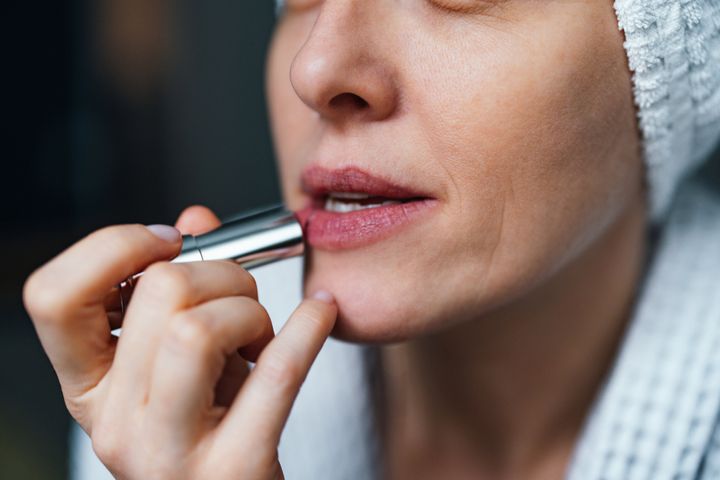
Remember when you used to slap on a coat of lipstick as you dashed out the door — and still managed to look great? If you’re anywhere north of 50, it’s likely those days are over.
You may have already noticed how lipstick tends to run into even the finest lines around your mouth, leaving you with a smeary mess that can’t be blotted away with tissues.
Advertisement
Fortunately, there are smart, savvy makeup artists who have shared their expertise with us. They offered some insight on why our lipstick seems to suddenly turn on us.
Michelle Wong, the cosmetic chemist behind the popular site Lab Muffin, said: “As you get older, your skin tends to thin and develop more lines and furrows, which act as ‘channels’ for lipstick, which has pigments that are slightly soluble in the product’s oils.”’
Is there an official name for this new indignity? “It’s called lipstick ‘feathering,’ because instead of a sharp, crisp line around the lips, it can look like a feather around the edges — a bit soft and never defined,” explained makeup artist Mila Thomas.
After all those years of aiming for moist, glossy lips, you’re going to need to transition away from those types of products. “Oily, liquid lip products are more prone to feathering,” Wong said. “Lip glosses applied on top of lipsticks are common culprits.”
Advertisement
Makeup artist Jamie Greenberg said that matte products might be a better fit for an older cosmetics user. “Anything too wet, glossy or thick will make the problem worse,” she said.
Thomas explained the reason why: “If the formula is too wet, it will more easily bleed into the skin beyond the lip line.”
There are techniques to avoid out-of-control pigment from spreading all over your face. But you’ll need to do a little pre-work before applying your favorite lippy.
It’s going to take some trial and error as you experiment with products and application methods. “I know it’s super-annoying, but there’s a technique out there for everyone,” said Jeanine Lobell, makeup artist and founder of the Neen cosmetics brand.
miniseries via Getty Images
Advertisement
“It can help to exfoliate the lips daily, and to use lip balm each day to keep lips smooth,” Thomas said. Greenberg suggested using a lip scrub on and above the lips, too. If you want to do even more to set your lips up for success, she suggested using a nighttime lip mask.
Now that you’re exfoliated, balmed and masked, here’s how to apply lipstick so it stays where you put it.
Start with a mattifier/filler. “Put it on the lip line, going on the skin and in the outer corners,” Lobell said.
Apply lip-filling primer to smooth skin and create a barrier between your lipstick and any natural oils.
Brush on lip stain for a long-lasting color base.
Outline: Greenberg recommended lining lips with a flesh-toned concealer or lip pencil to create a barrier between the lipstick and the fine lines around your lips.
Lobell outlined the process she uses: “Fill in the lip line, overdrawing very slightly. It’s very important not to draw all the way to the outer corner, because stopping a little short of the lip line is more flattering. Once you’ve applied liner, even if your lip color migrates, it will be held in place by the liner.”
Brush on lipstick: Greenburg uses a lip brush instead of applying the lipstick directly. “Brush out from the pout of your lips outwards,” she advised.
Blot: Thomas said, “Take a tissue and split it apart so it’s only one-ply. After you apply one coat of lipstick, lightly blot lips with the tissue.”
Add another coat: “The two-coat layering technique, with blotting in between, will make the color more long-lasting and help it stay in place,” Greenberg explained,
Finally, a bit of powder: “Dab the entire lip area with a bit of translucent powder and you should be ready to go,” Greenberg said.
“Use a more matte long-wear color for better control,” Lobell said. “A matte lipstick that’s full-coverage with a smudge-resistant finish is going to ‘travel’ less than other formulas.”
Advertisement
Still craving a bit of shine? “Keep gloss away from the edges of your lips, and apply it sparingly,” Wong said.
“If you need your gloss, keep it more centered on the lips when you apply it, tap lips together, and allow the extra to make it evenly shiny,” Lobell said. “If you love a creamy formula, tap the lips with blotting paper after you apply it.”
Check out the makeup artists’ top picks below.
HuffPost and its publishing partners may receive a commission from some purchases made via links on this page. Every item is independently curated by the HuffPost Shopping team. Prices and availability are subject to change.
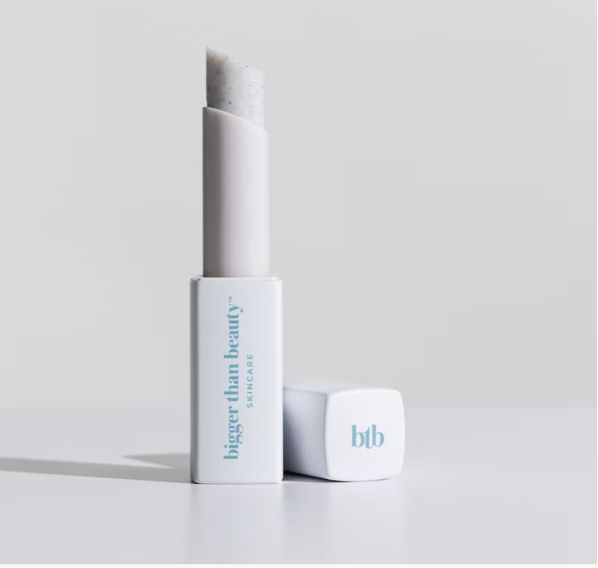
Pout Hero Exfoliating Lip Scrub
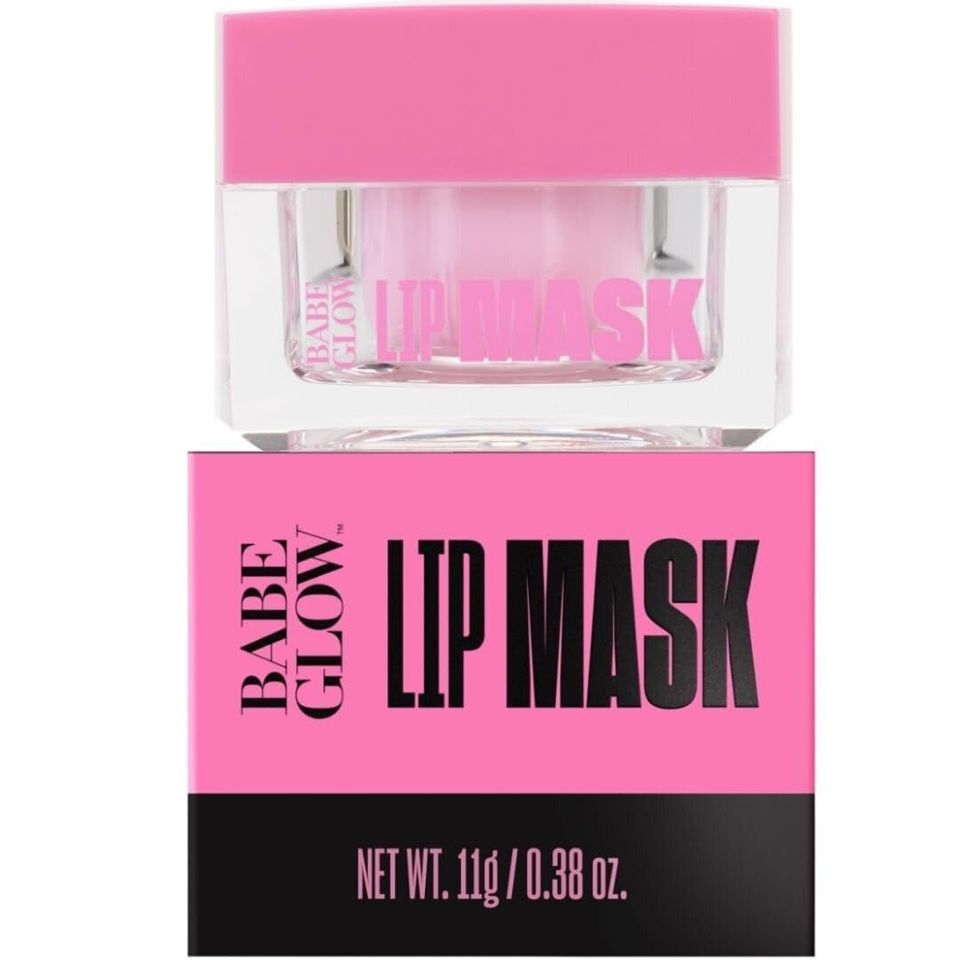
Babe Glow Lip Mask

Stila Calligraphy Lip Stain
Advertisement
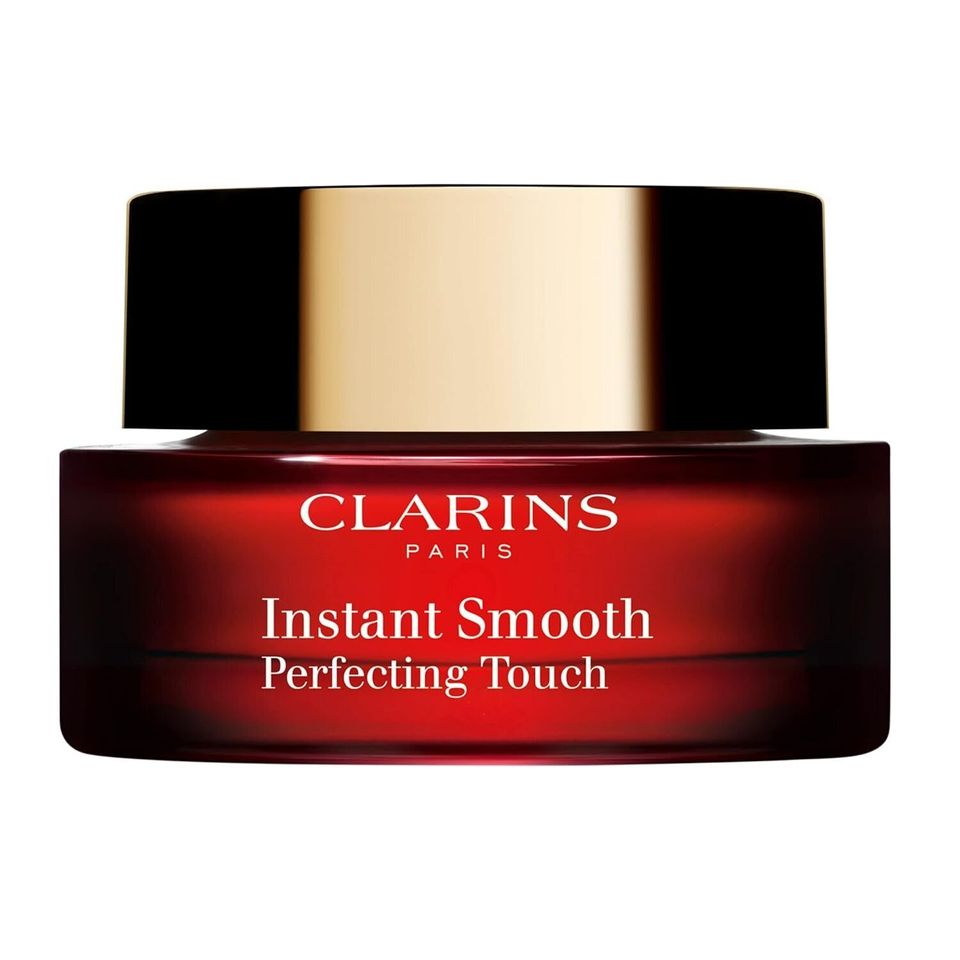
Clarins Instant Smooth Perfecting Touch Makeup Primer

MAC Retro Matte Lipstick
“MAC is a classic for gorgeous lip colors,” Greenberg said. “I highly recommend the Ruby Woo shade.”

Younique Moodstruck Opulence Lipstick
“I recommend this to clients to avoid feathering,” Thomas said. “It’s a matte formula with finely milled pigments, castor seed oil and vitamin E, and it delivers full coverage with a smudge-resistant finish.”
Advertisement