Ancient DNA reveals the mysterious collapse of Europe’s megalith builders

A genetic study of 132 people buried in a large megalithic tomb near Bury, about 50 kilometers north of Paris, has uncovered evidence of a dramatic population collapse and replacement during the Stone Age. The findings, published in Nature Ecology & Evolution, show that the burial site was used during two separate periods, divided by a major population decline around 3000 BC.

DNA analysis revealed that the people buried before and after the collapse were not closely related, indicating that the original population largely disappeared and was replaced by newcomers.

“We see a clear genetic break between the two periods,” said Frederik Valeur Seersholm, assistant professor at the Globe Institute at the University of Copenhagen and one of the lead authors of the study.

“The earlier group resembles Stone Age farming populations from northern France and Germany, while the later group shows strong genetic links to southern France and the Iberian Peninsula.”

The results suggest that the local population shrank dramatically before new groups migrated north and settled in the region.

Ancient Disease and Signs of Crisis

To investigate what may have caused the decline, the researchers used a DNA technique that examines all genetic material preserved in ancient bones. This allowed them to identify traces of several pathogens, including Yersinia pestis, the bacterium responsible for plague, and Borrelia recurrentis, which causes louse borne relapsing fever.

Although plague was present, the researchers say it does not fully explain what happened.

“We can confirm that plague was present, but the evidence does not support it as the sole cause of the population collapse,” said Martin Sikora, associate professor at the University of Copenhagen and senior author of the study. “The decline was likely driven by a combination of disease, environmental stress and other disruptive events.”

The skeletal remains also point to an unusually severe crisis. Archaeologists found exceptionally high mortality during the earlier burial period, especially among children and young people.

“The demographic pattern is a strong indicator of crisis,” said Laure Salanova, research director at France’s National Centre for Scientific Research (CNRS).

DNA Reveals Changes in Stone Age Society

The genetic evidence also shows that the population replacement was accompanied by significant social changes.

During the earlier period, the tomb contained multiple generations of the same extended families, suggesting closely connected communities that buried relatives together over time. In the later period, burials became much more selective and were dominated by a single male lineage, indicating a different social organization.

“This indicates that the population change was accompanied by a shift in how society was structured,” Seersholm said.

A Clue to the End of Europe’s Megalith Builders

The findings add to growing evidence that the Neolithic population decline affected large parts of northern and western Europe, extending well beyond Scandinavia and northern Germany.

The study may also help explain why the construction of megalithic tombs and other massive stone monuments came to an end across Europe during roughly the same period.

“We now see that end of these monumental constructions coincides with the disappearance of the population that built them,” Seersholm said.

Share Button

New weight loss pill beats oral Ozempic in major trial

A new type of daily pill has proven more effective for weight loss and blood sugar control than its currently available counterparts, according to a recent trial. The drug, known as orforglipron, could be a game-changer in the rapidly expanding oral weight-loss drug market.

The advent of the injectable weight-loss drug semaglutide (known better by its brand names Wegovy and Ozempic) marked a distinct shift in the weight-loss drugs market when it became available just a few years ago.

Semaglutide is a class of glucagon-like peptide-1 (GLP-1) medication. These drugs mimic the gut hormone GLP-1, which is released soon after eating. This hormone signals fullness to the brain, slowing digestion and stimulating the release of insulin. By replicating the action of this hormone, GLP-1 drugs have proven highly effective at managing type 2 diabetes and promoting weight loss.

Although semaglutide is widely used, a key issue with the drug is that it needs to be injected into the belly, thighs or back of the arm. This can make it difficult for patients with needle phobia or who don’t want to self-inject due to the inconvenience.

Another logistical issue with injectable GLP-1 drugs is that they require refrigeration throughout the supply chain. This can pose a challenge in low- and middle-income countries.

It’s for these reasons that researchers and developers have started investigating the efficacy of oral versions of semaglutide.

Based on current research, it appears that oral semaglutide is very effective. However, it must be taken on an empty stomach – and users must wait 30 minutes before eating or drinking.

Alongside being expensive to produce, it also has poor bioavailability compared with injectable semaglutide. This means only about 1% of the ingested drug is absorbed and able to exert its effects.

But a recent phase 3 clinical trial has shown that a new type of oral weight-loss pill may have overcome these issues – proving to be more effective than the current oral semaglutide products on the market.

Oral weight-loss pill

The recent 52-week phase 3 trial involved 1,698 adults with type 2 diabetes across six countries. It set out to compare current oral semaglutide products against orforglipron, which is also taken as a daily tablet.

The primary measure researchers were looking for was a reduction in HbA1c. This blood test reflecting average blood sugar levels over three months is the standard indicator of diabetes control. Diabetes is present if HbA1c is 6.5% or more.

From a baseline average HbA1c of 8.3%, it was found that after 52 weeks, orforglipron was able to reduce this value by an average of 1.71–1.91%. In comparison, oral semaglutide only reduced HbA1c by 1.47%.

Not only did orforglipron meet the trial’s goals of proving it was as effective to oral semaglutide, it proved it was superior for lowering blood sugar. The participants who took orforglipron also lost more weight – an average of 6.1kg-8.2kg, compared with 5.3kg in those taking semaglutide.

However, a key issue highlighted by the trial was one of tolerability.

GLP-1 drugs can cause gastrointestinal side-effects such as nausea, vomiting, diarrhea and constipation. In this latest trial, around 59% of participants on orforglipron reported such symptoms, compared with 37–45% on semaglutide.

The reason for this difference may be the more prominent, daily peak drug concentrations with orforglipron. The consequence was that around 10% of orforglipron participants discontinued treatment due to adverse effects. Just 4-5% of those taking semaglutide discontinued treatment.

No head-to-head trials have been done of injectable GLP-1 versus orforglipron. However, the weight loss seen in this study of people with type 2 diabetes is broadly comparable with that previously observed with injectable GLP-1.

Market implications

The trial’s results show that orforglipron, which was developed by Eli Lilly, can be considered one of semaglutide’s most credible challengers.

Another remarkable thing about orforglipron is that it belongs to a new category of drugs called small-molecule drugs. This means it’s a synthetic chemical compound small enough to be absorbed directly through the gut wall. There, it’s able to act on GLP-1 receptors, even though it isn’t of a similar structure to a GLP-1 hormone.

Oral semaglutide, on the other hand, is a peptide drug. This means the structure of its amino acids (one of the building blocks of protein) closely resembles that of the natural GLP-1 hormone.

As a small-molecule drug, orforglipron is cheaper and simpler to manufacture than peptide-based drugs such as semaglutide.

And as with oral semaglutide, it requires no refrigeration. This gives it a logistical advantage over injectable GLP-1 formulations – a potentially important consideration for expanding access in low- and middle-income countries, where cold chain infrastructure is unreliable.

It remains to be seen, however, how orforglipron will perform against oral semaglutide in the broader market.

Although this latest trial has shown it is superior for controlling blood sugar and aiding weight loss, its higher rate of side-effects and treatment discontinuation may temper enthusiasm. In a crowded and competitive market, long-term adherence – shaped as much by tolerability as by efficacy – is probably a critical differentiator.

Orforglipron is still undergoing trials in patients with obesity but without diabetes.The Conversation

Share Button

Incredible new material makes heat programmable

In most materials, the way heat is absorbed and the way it is emitted are inseparable. If a surface absorbs heat efficiently from a particular direction or wavelength, it also emits heat the same way. This long established principle, known as reciprocity, has made it difficult for scientists to independently control how thermal energy enters and leaves a material.

If those two processes could be separated, however, engineers could direct heat much more precisely. A material could absorb thermal energy from one direction while releasing it in another, potentially improving thermal management, energy conversion, infrared sensing, and thermal communication technologies.

A Material That Can Control Heat

To overcome this limitation, an international team led by Professor Koichi Okamoto and Dr. Shunsuke Murai of Osaka Metropolitan University’s Graduate School of Engineering developed a new type of device using magneto-optical materials. These materials change the way they interact with light when exposed to a magnetic field, making it possible to alter their thermal behavior.

The researchers paired a magneto-optical material with a phase change material known as GST. The resulting device can control the direction in which heat is radiated, switch that behavior on or off, and retain its configuration even after the power has been turned off. In effect, it allows heat to be programmed in a way that resembles how data is stored and controlled inside a computer chip.

“We made heat radiation behave in a ‘smarter’ way,” Dr. Murai explained. “Achieving these capabilities in a working model could enable a new generation of efficient infrared emitters, thermal-energy devices, sensors, and photonic memory technologies.”

Better Performance Than Earlier Designs

The team found that the device responded differently depending on the direction from which light arrived, even when the light struck it almost straight on. Earlier technologies typically required light to hit the material at very steep angles to achieve similar effects, reducing both absorption and radiation efficiency compared with normal incidence.

The new design also addressed other shortcomings of previous systems. Earlier devices produced inconsistent switching between their “on” and “off” states, and they lost their stored configuration once power was removed. In contrast, the new material can reliably switch states while preserving its memory, making it far more practical for future applications.

Toward Programmable Thermal Devices

The researchers see this technology as an important step toward devices that manage heat with the same level of precision that electronic circuits use to control electricity.

“Our ultimate goal is to develop compact devices that can actively control heat radiation, much like electronic circuits control the flow of electricity,” Professor Okamoto said. “Such devices could be used in smarter infrared sensors, more efficient energy systems, and new types of photonic memory that store information using light and heat instead of electrical charges.”

Share Button

Public to be asked who should pay for social care as part of major review

Baroness Louise Casey, who is leading the review, has called the current system “impossible”.

Share Button

Two tests GPs can soon offer to help spot endometriosis

Experts hope they will be a game-changer and cut the nine-year or longer diagnosis waits patients can currently face.

Share Button

AI just supercharged the race to find room temperature superconductors

Machine learning is giving scientists a powerful new way to search for superconductors, materials that conduct electricity with zero resistance. An international team has demonstrated that AI can rapidly narrow an almost limitless number of possible material combinations to identify the most promising candidates. According to Aalto University Professor Päivi Törmä, who leads the SuperC consortium, the approach could dramatically speed the discovery of new superconductors.

Superconductors allow electric current to flow without losing energy, but only when cooled to extremely low temperatures where quantum effects emerge. These remarkable materials are already used in technologies ranging from quantum computers and medical neuroimaging systems to fusion reactors and maglev trains.

Despite their enormous potential, superconductors remain exceptionally difficult to discover. There are virtually endless combinations of chemical elements that could form new materials, yet only a tiny fraction turn out to be superconductors. Those that have already been identified generally require costly cooling systems that bring them close to absolute zero before they exhibit their unique properties.

Scientists around the world are searching for a practical superconductor that can operate at room temperature.

“Superconductive materials that can operate at room temperature would forever change the way we consume energy,” explains Törmä. “If such a material could replace regular conductors in applications like computers and data centers, global energy consumption could be slashed and the heat footprint of the ICT sector vastly reduced.”

AI and Quantum Physics Join Forces

The SuperC consortium was established in 2023 by Professor Törmä and an international group of leading physicists who share the goal of using quantum physics to help address climate change. It is the first coordinated global collaboration dedicated to discovering new superconductors, with the ambitious objective of finding a room temperature superconductor by 2033.

According to Törmä, combining quantum geometry with machine learning provides a powerful foundation for that search. In the team’s latest work, the newly identified superconductors, YRu3B2 and LuRu3B2, owe their properties to electrons forming flat bands within a kagome lattice, a geometric arrangement inspired by traditional Japanese basket weaving patterns.

To identify these materials, researchers first used machine learning to rapidly screen enormous numbers of possible elemental combinations. A specialized algorithm selected the most promising candidates, which were then analyzed using detailed quantum calculations to determine whether they could become superconductors.

Once the predictions were confirmed theoretically, collaborators at Rice University synthesized the materials by chemically combining their constituent elements into new compounds. Led by Professor Emilia Morosan, the Rice team then experimentally verified that both materials are indeed superconductors.

The proof of concept study was recently published in Physical Review Research.

A Faster Path to New Superconductors

Developing a complete quantum mechanical understanding of superconductivity is extraordinarily challenging, making the search for new superconducting materials slow and computationally demanding.

“Over the decades researchers have recognized over 7,000 superconductors, but mostly serendipitously,” explains Törmä. “The process of identifying possible materials is so computationally heavy that, in fact, researchers have only been able to theoretically predict the viability of about 20 of these.”

Even when a material appears promising on paper, it may still prove impractical because it is too difficult to synthesize or impossible to produce at scale, Törmä notes. Traditionally, evaluating huge numbers of potential materials has required enormous computing resources. The SuperC team’s AI driven approach changes that process by focusing detailed calculations only on the strongest candidates.

“Our method uses machine-learning-based pre-screening followed by targeted calculations on the promising candidates. This approach will greatly speed up superconductor discovery in the future. With machine learning, we may be able to push the number of materials we can process into the billions,” says Törmä. “This will take us a critical step closer to finding a room-temperature superconductor.”

Looking Ahead

SuperC’s research will be featured in Aalto University’s Designs for a Cooler Planet exhibition from September 1 to October 30, 2026, in Greater Helsinki, Finland.

The SuperC consortium receives funding from The Kavli Foundation, Klaus Tschira Stiftung, Kevin Wells, the Jane and Aatos Erkko Foundation, the Keele Foundation, the Magnus Ehrnrooth Foundation, and the Neste and Fortum Foundation.

Share Button

Why some African nations are turning down Trump aid money

The Trump administration sees the aid as more transactional – but some say it is not a fair trade.

Share Button

Women face hidden fertility ceiling despite donor eggs

Age-related changes in the womb lining may be the cause and could be treatable in the future, say experts.

Share Button

Consultants in England vote in favour of NHS strikes

The senior doctors in England now have a mandate for strike action over the next 12 months.

Share Button

Reviewers In Their 70s Say This $16 Eyeshadow Stick ‘Doesn’t Crinkle Into The Wrinkles’

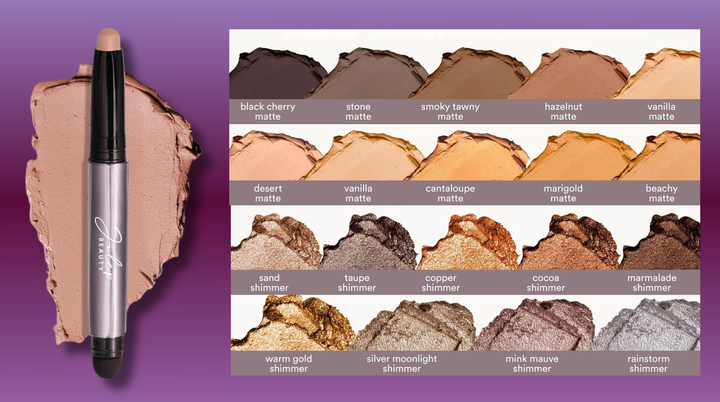
What’s better than a long-lasting eyeshadow stick that glides over lines and wrinkles without creasing? How about a long-lasting eyeshadow stick on sale? This slender stick from Julep delivers an easy-to-apply, cream-to-powder, waterproof eyeshadow LOVED by reviewers with mature skin for its seamless application, smoothness and staying power. Right now, you can snag it in dozens of shades, including mattes, shimmers, neutrals and neons, for 20% off, or just $16. This is the lowest price it’s been in weeks, so we recommend snatching one (or a few) fast!

This twistable stick comes in an abundance of colors and finishes, infused with brightening Vitamin C and hydrating Vitamin E. (Plus, a built-in smudger for easy application.)

The silky, buildable formula has a silicone base infused with Vitamin C and Vitamin E for extra nourishment around your eyes. It goes on creamy, gliding over lines and wrinkles “nicely without tugging,” then dries into a “powder finish that stays in place,” with superior color payoff. “It goes on easily, doesn’t get in creases and stays all day,” one reviewer writes.

Whether you use it as an eyeshadow, eyeliner, under-eye concealer or even a highlighter or contour stick — simply swipe it over your face, no brushes needed. (Though you do get a built-in smudging tip on the bottom, for easy blending on the go.)

Don’t be fooled by how light it feels — this stuff is waterproof, smudge-resistant and crease-proof after it dries down. “I work 10 hour days and sweat a lot…this eyeshadow stick will not budge,” shopper Catherine wrote. “Not even from the waterline.” “It is soft enough not to drag during application but once it’s on my lid it doesn’t smear,” another said. Yet, reviewers agree that when it’s time to take it off, the product comes off easily with a wipe or remover.

Reviewers call it “an imperfection eraser” for wrinkles and veins, offering even, full coverage that’s still “subtle enough for my 80-year-old eyelids!”

While these sticks are adored by users of all ages, they’ve become a fan favorite among users with mature skin. The cream-to-powder formula has been deemed “fabulous for aging eyelids” for how it slides and glides “without skipping on crepey eyelids” or bleeding into lines.

“As a mature woman, I appreciate that the product does not settle in wrinkles but glides over making a smooth looking lid,” one shopper said. “This shadow goes on smoothly and doesn’t crinkle into the wrinkles,” a 73-year-old reviewer added.

Others celebrate how full coverage the formula is, without overwhelming you with pigment. “I have a lot of purple discoloration and veins on my upper lids. I use the color putty and it actually completely covers them,” Jane wrote, calling it “a winner” product that’s worth the buy.

“Brightens and adds color and interest to my eyes without being garish or overbearing,” another said, calling it a “lovely subtle color.” It “accentuates eyes even though I wear glasses.”

Reviewers love this dreamy and creamy eyeshadow stick from Julep for gliding over their lids with ease. Read more 5-star reviews and grab one for yourself for 20% off.

“I am impressed with the Julep Eyeshadow Cream to Powder Waterproof Shadow sticks. I have tried other brands and they do not glide on as smoothly or have the rich color of the Julep brand. As a mature woman, I appreciate that the product does not settle in wrinkles but glides over making a smooth looking lid. I also find them so easy to travel with and they don’t take up much space in my make up bag, no brush or applicator needed! There are so many great colors to choose from and they are easy to remove at the end of the day with a makeup cleansing wipe.” — MD Ochoa

“This is a great product, particularly for more mature women who may worry about creasing. I used to use a very expensive cream mineral shadow but the company does not make it anymore. This is just as good at a fraction of the cost. It has full coverage and good pigment. Highly recommend.” — Karena

“If I could meet with the creator of sliced bread and the creator of Julep Eyeshadow 101 Crème-to-Powder Waterproof Eyeshadow Sticks, I would have to break the news that the Eyeshadow Sticks by Julep are my favorite invention of all time! I’ve always preferred creme eyeshadow to powder, but it tended to crease and fade after a few hours. Then I tried Julep, and it goes on as a creme but dries as a powder and stays fresh looking all day long. I was skeptical that it wouldn’t work for me because my skin and I are at a more ‘mature’ age, but it has never creased, faded or disappeared and the products are true to the colors that are advertised. Not sure I will ever go over to the ‘shimmer’ sticks since I am a matte gal, but I can say for certain that this product is made for all ages and all skin types, and it will take another awesome invention to get me to leave Julep…” — KMW

“I have numerous colors of Julep Cream-to-Powder shadow. I’m 73 years old so my eyelids have some wrinkles. This shadow goes on smoothly and doesn’t crinkle into the wrinkles. It’s stays on most of the day. For the price this is a super product.” — Amazon customer

“This goes on so smoothly and stays where I want it. The color is pretty and flattering. I am almost 70 and have hooded eyelids and this camouflages the eyelids and gives me confidence to be seen.” — Garrison

Or maybe you want eyeliners for mature skin, for under $10? Oh yeah, we got a list for that too. Check out these favs loved by reviewers with mature skin, courtesy of HuffPost Shopping.

Walmart

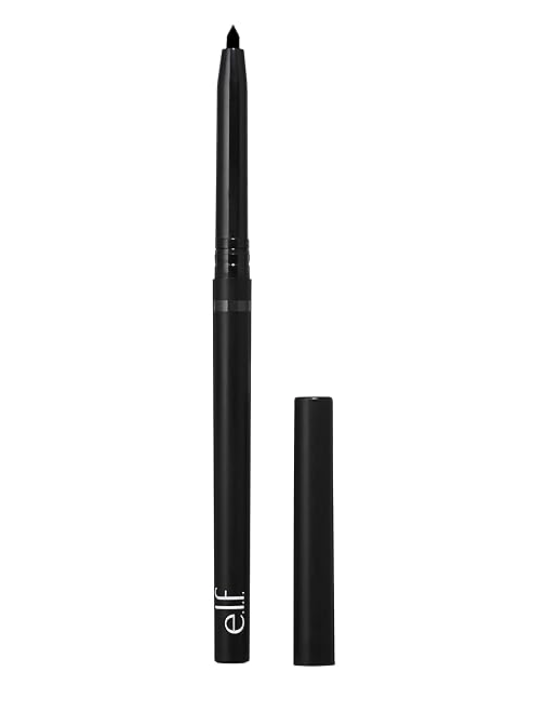
Best drugstore black: E.l.f. no-budge retractable eyeliner (17% off)

Creamy and pigmented, this retractable eyeliner is waterproof and will last for the day. It comes in a streamlined package that is easy to put on and will ensure you get the product exactly where you want it and not anywhere you don’t. Get it for 17% off.

Promising reviews: “All of ELF’s products are great, but this eyeliner is the best I’ve ever used, and I’m 50 so I have used a lot of eyeliners.” — Lara Beth

“Love it. I am an older woman, most pencil liners pull my skin and don’t produce a good continuous line. This pencil glides on and STAYS out all day long!!!!” — Kindle Customer

Amazon

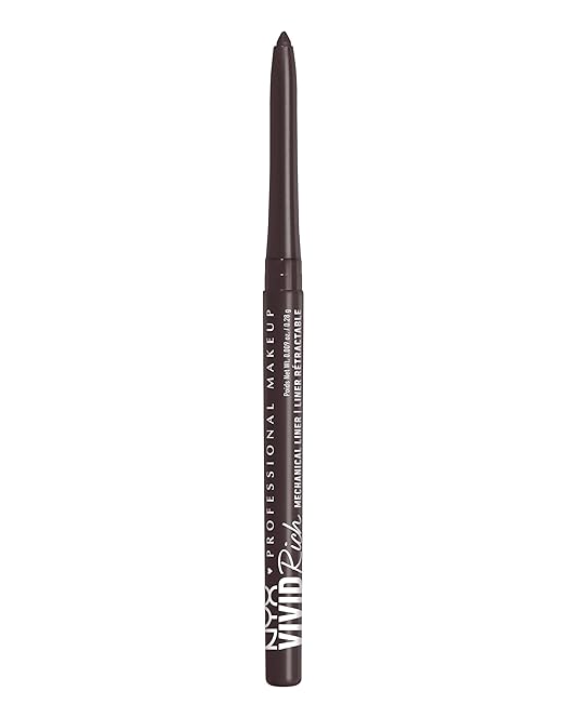
Best drugstore brown: NYX vivid rich mechanical eye pencil

With the glide of a liquid formula with the ease and precision of a stick, this twisting retractable pen is creamy and long-lasting. Heat and humidity-proof, it won’t bleed as you’re wearing it, giving you definition for hours on end.

Promising review: “The color is soft and rich. It glides on smoothly. I’m 70 years old but it’s easy to control the fine tip. The color is beautiful for an older woman. I highly recommend this color and this pencil.” — LB

“I have been wearing eyeliner since I was a teenager and I can say with 100% confidence that this is by far the best eyeliner I have ever used. I’m a pencil girl so I can’t speak much about liquid. But this goes on really nice and doesn’t pull or tear at my aging skin. It lasts all day under normal conditions and has stayed on for hours in the water. Love the bronze color with the tiny sparkles. It’s the only liner ibhave purchased in several years now. And the price… FAHGEDABOUDIT! 5 STARS across the board.” — Vanessa L. Knight

Amazon

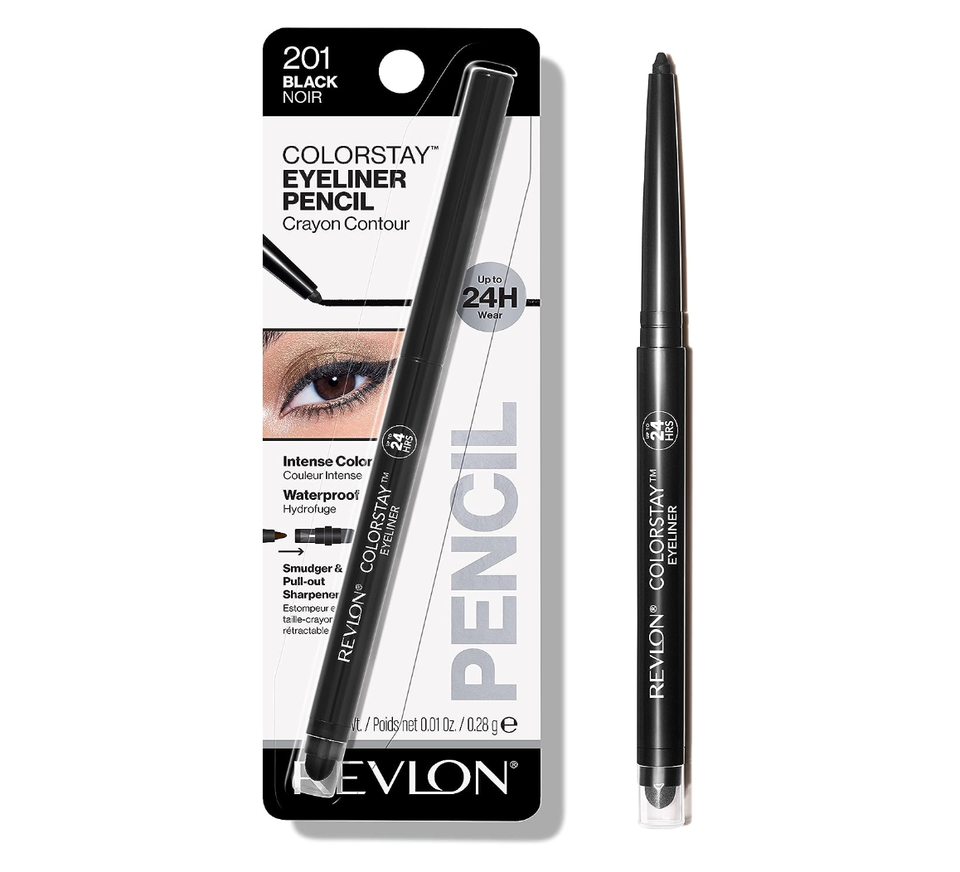
Best waterproof: Revlon pencil eyeliner

Another drug store classic that has earned plenty of praise, the Revlon Colorstay eyeliner has a built-in sharpener and smuger at the bottom to make your life even easier. It’s waterproof, creamy, easily drapes over your skin and lasts for up to 24 hours.

Promising review: “I’m old and have crepey skin everywhere including around my eyes. I needed a soft pencil as powder shadows were irritating my eyes. This pencil does the trick. It’s not smudge proof or water resistant, but I don’t care about that.” — M

“I originally purchased at Target/Walmart but found a better deal here on Amazon. I wear department store cosmetics, but none of the pencil liners compare to this one – this one really stays and does not smudge. I’ve recommended it to many of my friends who ask how my liner stays on so nicely. It’s easy to apply, and comes off easily with my face wash, but you don’t get creases and it doesn’t bleed into crows feet. Hope they never stop making this because I tried all the expensive and drug store pencils. Goes on like liner, but is a pencil with a smudger on one end.” — GOLDEN GIRL

The Real Deal: We use deal trackers and commerce experience to sift through “fake” hike-and-drop deals and other deceptive sales tactics. Products will usually be rated at least 4 stars with a minimum 15% discount. (And when there’s an exception, we’ll tell you why.)

Share Button