A study found that even a five-minute walk boosts your mood and lowers fatigue.


A study found that even a five-minute walk boosts your mood and lowers fatigue.
The euphoria from England’s dramatic victory over Mexico might not be enough to get you through Monday.
Three years ago, I stood beside my husband Al’s bed and prepared to say goodbye.
After 25 years of marriage, cancer was taking him where I could not follow. Before he died, he looked at me and said something that shocked me at the time.
“Diane, you’ll need another man.”
I immediately dismissed the idea. I was 80 years old. I had already experienced a full life. What on earth would I need another man for? I certainly wasn’t looking for one.
Advertisement
Then life did what life often does. It ignored my plans.
Just a few months after Al died, friends introduced me to a man named Bob. I welcomed it because I was experiencing what I later discovered, after many late-night Google searches, was called “widow’s fire,” a fierce longing for intimacy and closeness after losing a spouse that, despite being surprisingly common, few people talk about.
Some people, including some of my children, thought it was too soon for me to begin dating. But grief doesn’t follow a timeline.
I wasn’t looking to replace Al. No one could. But for 25 years of marriage, I had been part of a pair. Suddenly, I was standing alone. The silence and loneliness were overwhelming.
Advertisement
What I realized was that I didn’t want to spend the rest of my life alone. I wanted companionship, laughter, conversation and, yes, physical attraction. And to my surprise, I found that in Bob, a kind, funny and handsome man who understood that loving him didn’t mean I loved Al any less.
Bob and I have been together for more than two years. We are deeply committed to one another, but marriage isn’t part of our equation. At our age, we’ve learned that relationships don’t need to look a certain way to be meaningful. What works for us is love, honesty and a healthy dose of practicality.
That practicality was put to the test recently when Bob and I embarked on a 22-day adventure through Norway, France and Spain. With me at 82 and Bob at 83, traveling halfway around the world requires a little more planning than it did a few decades ago.
Advertisement
Before we left, I sent an email introducing my daughter and son-in-law to Bob’s brother and sister. Not because we were planning a family reunion. Because we were 82 and 83 years old and about to cross an ocean together.
“Should we get lost along the way and need your assistance,” I wrote, “you now can connect with one another and try to retrieve, grieve or rejoice from our far distant travels.”
I also informed everyone that I had travel insurance in case my body needed to be shipped home and that Bob had thoughtfully prepared his own end-of-life arrangements. My children thought it was hilarious. Bob’s family may have thought I was crazy. They’re not entirely wrong.
Advertisement
But if you’re going to travel the world in your 80s, you learn to laugh about the realities that come with it. Like money. People don’t like talking about finances in matters of romance, but they should.
In our case, I happen to have a larger wallet than Bob. Before we left, we talked openly about expectations. I agreed to pay for the trip itself, including the airline tickets. Bob was perfectly willing to fly economy. I was perfectly unwilling to sit in first class without him. The good Lord knows I’m spoiled, and I wasn’t going to be up front sipping champagne while the man I loved was squeezed into seat 34B. Besides, I like him next to me.
We agreed that he would cover many of the extras along the way, including meals, excursions and spontaneous treats. There were no complicated contracts. Just two adults having an honest conversation.
Advertisement
Widowhood taught me many things. Like I wish more people understood that discussing money isn’t unromantic. Avoiding it is.

Photo Courtesy Of Diane Heiler
The trip itself became a lesson in something even bigger. Standing in Norway, surrounded by glaciers that looked as though they belonged on another planet, I found myself thinking about Al. He loved to travel.
Advertisement
The glacier train rides were breathtaking. The scenery was so beautiful it almost didn’t seem real. It was colder than a witch’s teat but magnificent. Al and I had never made it to Norway together, and I couldn’t stop thinking about how much he would have loved it.
Unexpectedly, I didn’t feel guilty. For a long time, widows are made to feel that happiness somehow betrays grief. It doesn’t. Missing Al and loving Bob can occupy the same space. Both things are true.
Bob understood that. He never tried to compete with my memories. He simply stood beside me while I carried them. That’s one of the many reasons I love him.
Advertisement
Norway also introduced me to two things I never expected: iced cider and brown cheese.
The cider was delicious.
The cheese was downright addictive.
I liked it so much that I packed half a pound of it in my suitcase and hauled it through France, Spain and all the way back home to Florida.
At 82 years old, apparently, I travel internationally with contraband cheese.

Photo Courtesy Of Diane Heiler
Then there was Bergen.
The minute we arrived, I announced to Bob, “I could live here.”
It had everything I love: beauty, charm, walkability and friendly people. We spent our days wandering old streets, taking in spectacular views and pretending, just for a moment, that we belonged there.
Advertisement
Next came France.
Of all the places we visited, Normandy affected me the most.
Standing among the endless rows of white crosses at the American Cemetery overlooking Omaha Beach, I felt humbled in a way that is difficult to describe.
The older I get, the more familiar loss becomes. Friends die. My spouse died. Parents die. Even pieces of ourselves disappear. The woman I was at 40 no longer exists. Neither does the woman I was before widowhood.
Yet there I was, halfway around the world, still creating memories. Still laughing. Still planning. Still living.
Advertisement
Spain brought its own lessons.
I use wheelchair assistance because of a painful foot. Bob uses a cane. Airport assistance services managed to leave us at the wrong gate on two separate occasions, causing us to miss our flights.
After missing our second flight, I told Bob I could have learned to become a professional tango dancer in less time than it took airport personnel to move my behind through that airport. For two days we were shuffled from gate to gate while trying not to lose our sense of humor. Thankfully, we succeeded.
By the time we reached Mallorca after nearly three weeks abroad, we realized something. We may have been tourists, but we didn’t particularly want to be around tourists anymore.
Advertisement
Maybe we were tired. Maybe we missed our own beds. Or maybe we had officially become old people. Either way, home was sounding awfully good.
Traveling at 82 also comes with one unexpected advantage: I no longer care about impressing anyone.
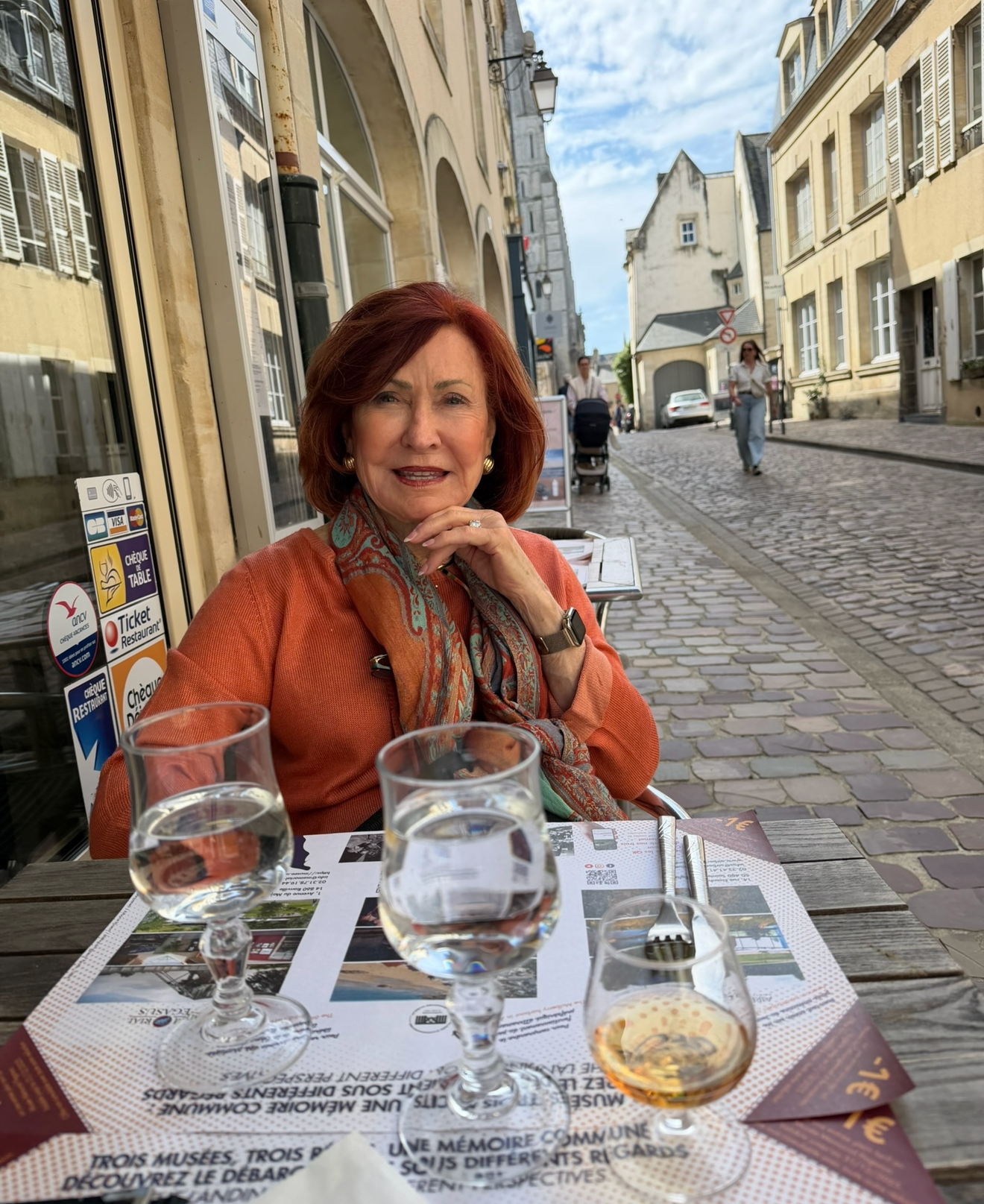
Photo Courtesy Of Diane Heiler
When I was younger, I packed as though every day required a completely different outfit, matching shoes, jewelry and accessories. These days, I pack for comfort, practicality and the occasional nice dinner. For 22 days abroad, Bob and I shared one checked suitcase, and we each carried a small bag. It wasn’t because we were trying to prove anything. It’s simply that we’ve learned what matters and what doesn’t.
Advertisement
I’ve discovered that one scarf, one pair of comfortable shoes and a little confidence can carry you remarkably far. That’s one of the gifts of aging. You spend less time worrying about how you look and more time enjoying where you are.
At this age, I’ve learned that nobody really cares what you’re wearing, whether your hair is perfect or if you’ve packed the right shoes. What people remember is whether you laughed, loved, showed up and enjoyed the journey.
And that’s true whether you’re standing on a glacier in Norway, wandering the streets of Barcelona or simply sitting beside a koi pond at home with someone you love.
Advertisement
The greatest surprise of the trip wasn’t Norway’s glaciers, Normandy’s history or Barcelona’s architecture. It was realizing how comfortable I have become with this unexpected chapter of my life.
If you had told me three years ago, while I was sitting beside Al’s hospital bed, that I’d be crossing Europe with another man, I would have told you that you were out of your mind.
If widowhood has taught me anything, it’s that we don’t honor those we’ve lost by stopping our lives. We honor them by continuing to live them.
Advertisement
When Al died, I thought my story was winding down. Instead, it simply changed genres.

Photo Courtesy Of Diane Heiler
These days, I’m perfectly content sitting beside that pond with Bob discussing books, sports, grandchildren, politics or whatever we’re streaming on Netflix. Twenty years ago, I would have called that boring. Now I call it happiness.
One of the most damaging myths about aging is that life becomes smaller. I’ve found the opposite. Life becomes more precious. At some point, every one of us realizes our time is finite. The horizon becomes visible. Oddly enough, that’s what makes each day matter more.
Advertisement
At 82, the future looks different than I imagined. It includes a new love. A few more aches and pains. Occasionally a wheelchair. And gratitude for every single day I still get to wake up and see what comes next.
Al knew all this before I did. He knew I would need companionship. He knew I would need laughter. He knew I would need someone to sit beside me on airplanes and hold my hand during life’s inevitable turbulence. Most of all, he knew I would need a future.
As it turns out, he knew me better than I knew myself.
Diane Heiler is the author of “A Widow’s Fire: An Intimate Memoir of Heartbreak, Survival and Moving On.” Widowed in 2023 after caring for her husband through his battle with cancer, she writes about grief, resilience and finding joy again after profound loss.
Advertisement
Do you have a compelling personal story you’d like to see published on HuffPost? Find out what we’re looking for here and send us a pitch at pitch@huffpost.com.

Millions of Americans have a blood test every year to measure LDL, often called “bad” cholesterol. But new research from Northwestern Medicine suggests that another test may do a better job of identifying who needs more aggressive treatment to reduce the risk of heart attacks and strokes.
The study, published in JAMA, found that measuring apolipoprotein B (apoB) was more effective than tracking LDL or non HDL cholesterol when deciding whether to intensify cholesterol lowering therapy, including statins and other medications.
“We found that apoB testing to intensify cholesterol-lowering medication would prevent more heart attacks and strokes than current practice, and that these health benefits were achieved at a cost that represents good value for U.S. healthcare payers,” said study lead author Ciaran Kohli-Lynch, assistant professor of preventive medicine in the division of epidemiology at Northwestern University Feinberg School of Medicine.
Kohli-Lynch said this is the first comprehensive analysis to show that using apoB to guide cholesterol treatment is also cost effective.
Heart disease remains the leading cause of death in the United States and is responsible for enormous healthcare spending. Over time, tiny cholesterol carrying particles can become trapped inside artery walls, where they build up into plaques that restrict blood flow and raise the risk of heart attacks and strokes.
Why ApoB May Be a Better Measure of Heart Disease Risk
Doctors have long relied on LDL cholesterol and non HDL cholesterol levels to decide when patients should begin or intensify cholesterol lowering treatment. While those tests provide useful information, they do not fully capture a person’s cardiovascular risk.
“Research strongly shows that apolipoprotein B (apoB) is better at identifying who is at risk, because it counts the total number of harmful particles in the blood,” explained Kohli-Lynch.
Unlike standard cholesterol tests, apoB measures the number of cholesterol carrying particles that can contribute to plaque buildup. Researchers say that makes it a more direct indicator of cardiovascular risk.
Even with growing evidence supporting apoB, the test is still not commonly used in routine care. Kohli-Lynch said one reason is that measuring apoB generally requires an additional blood test beyond the standard cholesterol panel, increasing both cost and inconvenience.
“Our study asked: Is it worth spending extra money to use apoB instead of LDL to guide treatment intensification?” Kohli-Lynch said.
Computer Model Compared Three Cholesterol Testing Strategies
To answer that question, the research team created a computer simulation representing 250,000 U.S. adults who were eligible for statin therapy but did not already have cardiovascular disease.
The model compared three approaches for guiding treatment:
When patients failed to meet their target, treatment was stepped up first by using stronger statins and then by adding ezetimibe if needed.
Researchers followed each strategy over a lifetime, estimating heart attacks, strokes, life expectancy, quality of life, and healthcare costs.
The results showed that using apoB to guide treatment consistently performed better than the LDL and non HDL approaches. It improved overall health outcomes, prevented more cardiovascular events, and did so in a way the researchers determined was cost effective.
New Cholesterol Guidelines Increase the Importance of Accurate Testing
The findings come as doctors have more cholesterol lowering medications available than ever before. Earlier this year, the American Heart Association and 10 other medical organizations also released updated guidelines recommending that many people begin cholesterol lowering therapy at younger ages.
“This means it is increasingly important to accurately identify who would benefit most from intensive treatment,” Kohli-Lynch said.
Other Northwestern coauthors include Drs. John Wikins and Samuel Luebbe.
The study, titled “Cost-Effectiveness of ApoB, Non-HDL-C, and LDL-C Goals for Primary Prevention Lipid-Lowering Therapy,” was supported by the American Heart Association Career Development Award 24CDA1274989 (Dr. Kohli-Lynch).

Researchers have uncovered a surprising side effect of artificial lighting: ordinary streetlights can lure thousands of tiny land dwelling isopods into giant synchronized “death spirals.” The newly documented behavior, observed in Israel, is the first of its kind and suggests that human made lighting can dramatically disrupt the instincts of small ground dwelling animals.
The study was led by PhD student Idan Sheizaf under the supervision of Prof. Ariel Chipman at The Hebrew University of Jerusalem. Published in Ecology and Evolution, the research describes how land dwelling isopods, relatives of crabs and shrimp that are better known as woodlice or pill bugs, abandon their normally solitary habits to join enormous circular formations containing more than 5,000 individuals.
A surprising discovery in northern Israel
The unusual behavior first came to light after amateur naturalist Eviatar Itzkovich noticed huge swirling groups of isopods during summer nights in the Golan Heights.
The researchers focused on the species Armadillo sordidus, a little studied isopod that typically spends its time hidden beneath rocks and damp leaf litter, where moisture helps prevent it from drying out.
Although woodlice commonly cluster together to conserve moisture, scientists had never documented coordinated movement on this scale. Before this work, very little was known about A. sordidus. The study also expanded the species’ known range. Previously, it had only been recorded in southern Syria and the Golan Heights. Researchers have now documented it in the Jezreel Valley for the first time.
Experiments reveal the role of artificial light
To determine what was causing the strange circular marches, the team tested several possible explanations, including magnetic fields and different types of lighting.
Strong magnets placed near the moving isopods had no effect, even though the Golan Heights is known for unusual magnetic properties. The animals continued circling uninterrupted.
Ultraviolet flashlights attracted only a small number of isopods and never triggered the swirling formations.
White light, however, consistently produced the dramatic behavior. When researchers positioned a white lamp so that its beam shone straight down, the isopods repeatedly gathered into large rotating circles.
The experiments showed that the shape of the illuminated area is what matters most. A vertical beam creates a circular boundary of light on the ground. Drawn toward that edge, the isopods begin walking along its perimeter. As more individuals join, the movement reaches a tipping point and develops into a large, self sustaining circular procession.
Reflecting on the findings, Idan Sheizaf said: “While collective movement is common in the animal kingdom, seeing it in this form in isopods was entirely unexpected. It appears that the geometry of our modern world — specifically the circular pools of light created by streetlights, is interacting with the natural instincts of these creatures to create a mesmerizing, yet potentially harmful, emergent phenomenon.”
Why the “death spirals” may be dangerous
Although the swirling formations are visually striking, researchers believe they represent an unintended trap created by artificial light at night (ALAN), not a natural social behavior.
Most of the participants were female, and many were carrying eggs, making it unlikely that the gatherings were related to mating. Instead, the evidence suggests that artificial lighting is disrupting the animals’ normal instincts.
The consequences could be severe. During one observation, a centipede preyed on the distracted isopods while they remained caught in the swirling formation. By pulling these animals out of their sheltered habitats and keeping them moving in circles, streetlights may leave them vulnerable to predators while also wasting energy needed for survival.
The findings highlight how even a simple change to the environment, such as installing a streetlight, can reshape ancient behaviors in small animals that often go unnoticed.
The once-a-day pill, from the makers of the Wegovy weight-loss jab, can now be bought privately in UK pharmacies.
Sandra Champkins was symptom-free but a CT scan at Banbury’s Tesco car park detected she had cancer.
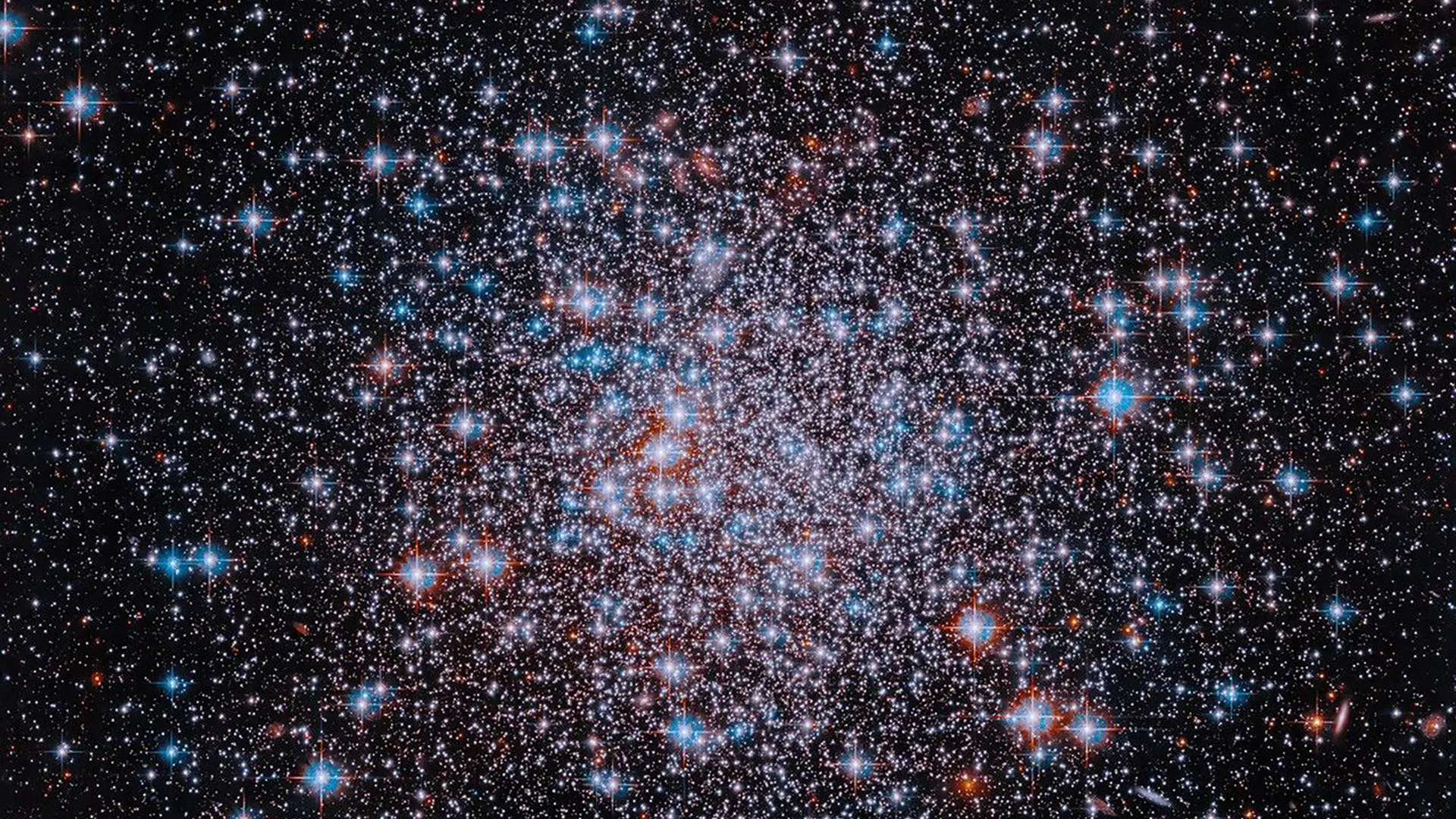
A brilliant field of red, white, and blue stars sparkles across a new image from NASA’s Hubble Space Telescope, resembling a sparkler glowing against the night sky. NASA released the image to commemorate the 250th anniversary of the United States, celebrating the nation’s long history of exploration while showcasing one of the oldest collections of stars in our galaxy.
Beyond its patriotic appearance, the image offers a rare look at a stellar system that has survived for nearly the entire history of the universe.
A 13-Billion-Year-Old Star Cluster
The featured object is NGC 6426, a globular cluster located in the outer halo of the Milky Way. Globular clusters are dense, spherical swarms of stars that remain bound together by gravity. About 150 of these ancient clusters are known to exist within our galaxy.
Most of the stars in a globular cluster are born from the same collapsing cloud of gas, so they tend to be roughly the same age. NGC 6426 is estimated to be around 13 billion years old, making it one of the oldest globular clusters in the Milky Way. Since the universe itself is about 13.7 billion years old, this cluster formed not long after the cosmos came into existence.
That extraordinary age makes NGC 6426 a valuable record of conditions in the early universe.
What the Colors in the Hubble Image Mean
The vivid colors are not simply for visual appeal. They represent different wavelengths of light collected through Hubble’s filters and processed using standard scientific techniques.
Blue highlights shorter wavelengths of visible light, while red represents longer visible wavelengths as well as some near infrared light. Because a star’s color is closely linked to its temperature, the blue stars are hotter and the red stars are cooler.
Ancient Stars Reveal the Early Universe
The stars in NGC 6426 have what astronomers call low metallicity, meaning they contain relatively small amounts of elements heavier than hydrogen and helium. This chemical makeup closely resembles the composition of the young universe, when almost all matter consisted of hydrogen and helium and heavier elements were only beginning to form inside massive stars through nuclear fusion.
Scientists have also found evidence that the cluster contains two chemically distinct populations of stars. This discovery suggests that the slightly younger stars formed after an earlier generation of massive stars ended their lives in powerful supernova explosions.
Those explosions scattered newly created heavy elements throughout the cluster, enriching the gas that later gave birth to another generation of stars. The same process gradually filled the universe with the ingredients needed to create planets and many of the elements found throughout the cosmos today.
Hubble Continues Uncovering the Milky Way’s History
NASA captured this image as part of an ongoing study of globular clusters in the Milky Way’s halo. By measuring their ages and examining their chemical composition, astronomers hope to better understand how our galaxy formed and evolved over billions of years.
For more than 30 years, the Hubble Space Telescope has transformed our view of the universe through groundbreaking discoveries. Today, its observations are complemented by NASA’s James Webb Space Telescope, which studies the cosmos in infrared light, while the Nancy Grace Roman Space Telescope, scheduled to launch in late summer, is expected to further expand our understanding of the universe.
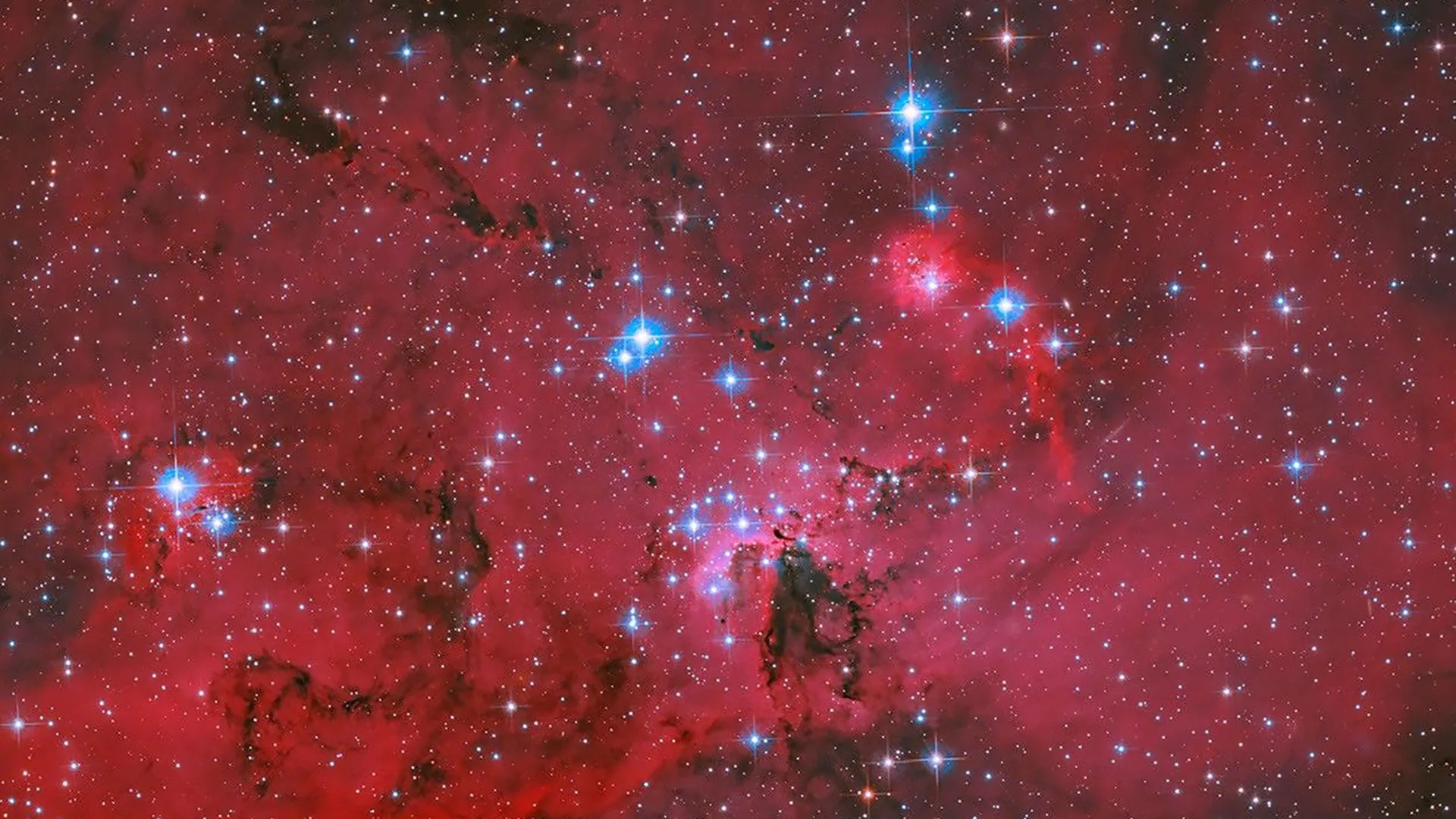
A spectacular new image from NASA’s Hubble Space Telescope offers a front row view of one of the universe’s busiest stellar nurseries. Brilliant blue and white stars sparkle against glowing crimson clouds of hydrogen gas, creating a breathtaking scene that resembles fireworks shining through drifting smoke.
The image showcases LH 95, a vast star forming region inside the Large Magellanic Cloud, a dwarf galaxy that orbits the Milky Way. This remarkable region contains both newly forming low mass stars and massive blue giants, making it one of the Large Magellanic Cloud’s many stellar associations.
Massive Stars Are Reshaping Their Surroundings
The brightest blue stars in LH 95 are also its most powerful. Each has at least three times the mass of the Sun and floods the surrounding region with intense ultraviolet radiation while blasting out powerful stellar winds.
Those energetic forces heat the surrounding hydrogen gas and gradually sculpt the nebula into its striking appearance. Thick lanes of dust stand out as dark filaments because they are dense enough to resist being worn away, creating dramatic contrast against the glowing red clouds.
The colors seen in the image represent specific wavelengths of light rather than what the human eye would naturally observe. Blue highlights shorter visible wavelengths, while red combines longer visible wavelengths with some near infrared light. The nebula’s brilliant crimson glow comes from hydrogen alpha emissions, a telltale sign that new stars are actively forming.
Thousands of Young Stars Are Still Growing
Hydrogen alpha light allows astronomers to pinpoint some of the youngest stars hidden inside the glowing gas. Hubble’s observations reveal thousands of developing stars that are still drawing in material from the surrounding disks of gas and dust that gave birth to them.
Researchers identified approximately 2,500 stars that have accumulated nearly all of the mass they need but have not yet begun nuclear fusion. These objects, known as pre-main-sequence stars, formed from collapsing clouds of gas and continue to shrink under their own gravity. Once their cores become hot and dense enough, hydrogen fusion will ignite, transforming them into fully fledged stars.
Hubble Reveals a Longer Growth Stage
Studying this enormous population of young stars has given astronomers new insight into how stars mature.
The observations confirmed that a young star’s accretion rate, or the speed at which it gathers material, naturally slows as it ages. At the same time, the research showed that this process can continue for several million years, lasting longer than some earlier assumptions suggested.
That discovery helps scientists better understand how stars continue building their final mass and how the disks surrounding them gradually evolve before eventually disappearing.
Multiple Generations of Stars Share One Cosmic Nursery
LH 95 is not producing stars in a single burst. Instead, it has been creating new stars over an extended period, leaving multiple generations living side by side.
One object especially stands out. The region’s most massive star, located slightly left of center near the top of the image, contains roughly 60 to 70 times the Sun’s mass. Despite its enormous size, it appears to be about one million years younger than most of its stellar neighbors, which are estimated to be around 4 million years old.
Stars this massive burn through their fuel quickly, meaning they will eventually end their lives in spectacular supernova explosions that help seed future generations of stars with heavy elements.
Why LH 95 Is So Valuable to Astronomers
LH 95 provides scientists with an exceptional opportunity to study stellar birth because it is both relatively nearby and less obscured by dust than similar star forming regions within the Milky Way. That clearer view allows astronomers to watch thousands of developing stars at different stages of evolution within the same cosmic neighborhood.
For more than 30 years, NASA’s Hubble Space Telescope has transformed our understanding of the universe through discoveries like this. Today, its observations are complemented by other NASA missions, including the infrared capable James Webb Space Telescope. Looking ahead, the Nancy Grace Roman Space Telescope, currently scheduled to launch in late summer, will further expand scientists’ ability to explore the cosmos.
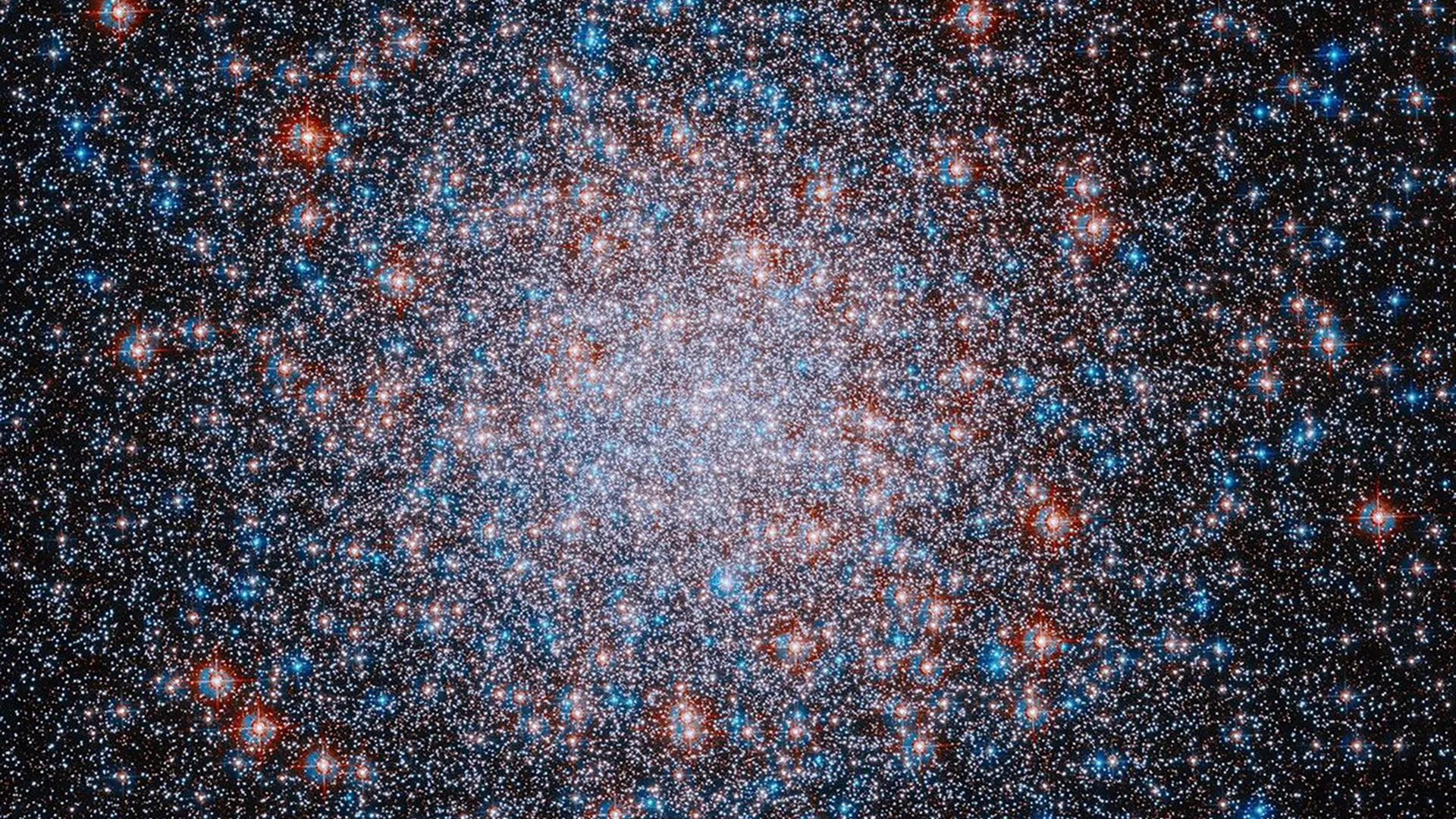
NASA’s Hubble Space Telescope has released a dazzling new image featuring more than 500,000 stars glowing in shades of red, white, and blue. The breathtaking view, shared in celebration of the United States’ 250th anniversary, highlights Messier 3 (M3), one of the largest and most impressive globular clusters in the Milky Way.
Globular clusters are tightly packed, spherical collections of stars bound together by gravity. Unlike younger star groups that continue to evolve, the stars in a globular cluster formed from the same cloud of gas at roughly the same time billions of years ago. Because of this shared origin, they preserve an ancient record of the Milky Way’s history. Astronomers have identified around 150 globular clusters orbiting the outskirts of our galaxy.
A Remarkable Star Cluster Full of Rare Stellar Objects
Messier 3 is notable for more than just its enormous size. It also sits relatively far from the center of the Milky Way and contains an extraordinary population of RR Lyrae variable stars. More than 240 of these stars have been identified in M3, more than in any other known globular cluster in our galaxy.
These ancient variable stars are especially important because they brighten and dim in a predictable pattern. That regular cycle allows astronomers to determine their true brightness. By comparing that intrinsic brightness with how bright the stars appear from Earth, researchers can accurately calculate their distance. It works much like estimating how far away a car is at night if you know how bright its headlights are.
The Mystery of the Blue Straggler Stars
M3 is also home to around 70 identified candidates for an unusual class of stars called blue stragglers. These stars shine with a bright blue color that makes them appear much younger than the older, redder stars surrounding them.
This cluster was the first place where astronomers discovered blue stragglers. Scientists believe these stars likely pulled material away from nearby companion stars through gravitational interactions. That extra mass essentially gave them a second lease on life, making them hotter, brighter, and bluer even though they are actually just as old as their neighboring stars.
Evidence of an Ancient Cosmic Collision
Astronomers suspect M3’s unusual characteristics may trace back to a dramatic event in the distant past. The cluster contains two distinct populations of stars, raising the possibility that it formed when two globular clusters merged into one.
Those original clusters are thought to have belonged to the same dwarf galaxy before that smaller galaxy was eventually absorbed by the Milky Way, leaving M3 behind as a possible relic of that ancient galactic encounter.
How Hubble Uses Color To Reveal Stellar Temperatures
Hubble has observed Messier 3, also known as NGC 5272, several times over the years, helping scientists examine its unusual stellar population and complex structure in increasing detail.
The colors in this image are not simply for visual effect. Blue represents shorter wavelengths of visible light, while red corresponds to longer visible wavelengths along with some near infrared light. Hubble images are processed using standard techniques that assign colors based on the wavelengths captured through the telescope’s filters. Because a star’s color is closely linked to its temperature, the blue stars shown here are hotter, while the red stars are cooler.
Piecing Together the Milky Way’s Past
This image is part of a Hubble Treasury program that is surveying approximately half of the Milky Way’s known globular clusters. By comparing these ancient stellar systems, astronomers hope to build a detailed timeline showing how our galaxy formed and evolved over billions of years.
After more than 30 years of groundbreaking observations, Hubble remains one of NASA’s flagship space observatories. Working alongside the infrared capable James Webb Space Telescope and the upcoming Nancy Grace Roman Space Telescope, it continues to reveal new details about the universe and helps scientists assemble an increasingly complete picture of our cosmic history.
