The Covid inquiry releases messages between civil servant Simon Case and No 10 adviser Dominic Cummings.


The Covid inquiry releases messages between civil servant Simon Case and No 10 adviser Dominic Cummings.
A judge says doctors can withdraw life support from seven-month-old Indi Gregory.

To examine the global state of AI ethics, a team of researchers from Brazil performed a systematic review and meta-analysis of global guidelines for AI use. Publishing October 13 in in the journal Patterns, the researchers found that, while most of the guidelines valued privacy, transparency, and accountability, very few valued truthfulness, intellectual property, or children’s rights. Additionally, most of the guidelines described ethical principles and values without proposing practical methods for implementing them and without pushing for legally binding regulation.
“Establishing clear ethical guidelines and governance structures for the deployment of AI around the world is the first step to promoting trust and confidence, mitigating its risks, and ensuring that its benefits are fairly distributed,” says social scientist and co-author James William Santos of the Pontifical Catholic University of Rio Grande do Sul.
“Previous work predominantly centered around North American and European documents, which prompted us to actively seek and include perspectives from regions such as Asia, Latin America, Africa, and beyond,” says lead author Nicholas Kluge Corrêa of the Pontifical Catholic University of Rio Grande do Sul and the University of Bonn.
To determine whether a global consensus exists regarding the ethical development and use of AI, and to help guide such a consensus, the researchers conducted a systematic review of policy and ethical guidelines published between 2014 and 2022. From this, they identified 200 documents related to AI ethics and governance from 37 countries and six continents and written or translated into five different languages (English, Portuguese, French, German, and Spanish). These documents included recommendations, practical guides, policy frameworks, legal landmarks, and codes of conduct.
Then, the team conducted a meta-analysis of these documents to identify the most common ethical principles, examine their global distribution, and assess biases in terms of the type of organizations or people producing these documents.
The researchers found that the most common principles were transparency, security, justice, privacy, and accountability, which appeared in 82.5%, 78%, 75.5%, 68.5%, and 67% of the documents, respectively. The least common principles were labor rights, truthfulness, intellectual property, and children/adolescent rights, which appeared in 19.5%, 8.5%, 7%, and 6% of the documents, and the authors emphasize that these principles deserve more attention. For example, truthfulness — the idea that AI should provide truthful information — is becoming increasingly relevant with the release of generative AI technologies like ChatGPT. And since AI has the potential to displace workers and change the way we work, practical measures are to avoid mass unemployment or monopolies.
Most (96%) of the guidelines were “normative” — describing ethical values that should be considered during AI development and use — while only 2% recommended practical methods of implementing AI ethics, and only 4.5% proposed legally binding forms of AI regulation.
advertisement
“It’s mostly voluntary commitments that say, ‘these are some principles that we hold important,’ but they lack practical implementations and legal requirements,” says Santos. “If you’re trying to build AI systems or if you’re using AI systems in your enterprise, you have to respect things like privacy and user rights, but how you do that is the gray area that does not appear in these guidelines.”
The researchers also identified several biases in terms of where these guidelines were produced and who produced them. The researchers noted a gender disparity in terms of authorship. Though 66% of samples had no authorship information, the authors of the remaining documents more often had male names (549 = 66% male, 281 = 34% female).
Geographically, most of the guidelines came from countries in Western Europe (31.5%), North America (34.5%), and Asia (11.5%), while less than 4.5% of the documents originated in South America, Africa, and Oceania combined. Some of these imbalances in distribution may be due to language and public access limitations, but the team says that these results suggest that many parts of the Global South are underrepresented in the global discourse on AI ethics. In some cases, this includes countries that are heavily involved in AI research and development, such as China, whose output of AI-related research increased by over 120% between 2016 and 2019.
“Our research demonstrates and reinforces our call for the Global South to wake up and a plea for the Global North to be ready to listen and welcome us,” says co-author Camila Galvão of the Pontifical Catholic University of Rio Grande do Sul. “We must not forget that we live in a plural, unequal, and diverse world. We must remember the voices that, until now, haven’t had the opportunity to claim their preferences, explain their contexts, and perhaps tell us something that we still don’t know.”
As well as incorporating more voices, the researchers say that future efforts should focus on how to practically implement principles of AI ethics. “The next step is to build a bridge between abstract principles of ethics and the practical development of AI systems and applications,” says Santos.
It is among several serious incidents recorded in July and August at two Shropshire hospitals.
Aging is a privilege, and it comes with some responsibilities — and if you’re concerned with the health of your skin, adjusting your skin care routine is one of them.
You may see some loss of volume, or more noticeable lines and wrinkles and drier skin. If you’re wondering what you can do to support and complement your skin through the various changes you will experience from age 40 onward, we have some expert suggestions. Read on to find out what products you can add to (or remove from) your skin care and makeup routines.
Advertisement
“The major changes can be described in two words ― gravity and laxity,” said Dr. Kenneth Mark, a cosmetic dermatologist. “The face begins to sag, resulting in loss of jawline definition, early jowling, loss of volume in the mid-face, and loose skin around the eyelids.”
“People in their 40s experience significant dryness of the skin, so hydration is key,” said Dr. David Kim, a board-certified dermatologist based in New York. At this age, deeper lines and wrinkles also start to develop, and collagen production slows down, resulting in decreased facial volume. “These changes occur due to aging and menopause, when you lose the ability to hold on to moisture and lipids to keep your skin hydrated,” Kim explained.
The production of collagen ― an essential part of the skin’s building blocks (together with elastin, fat cells and muscles) that gives the skin a plump appearance ― actually starts decreasing from the age of 25.
Fine lines become more prominent around the eyes, which means some changes may need to be made when it comes to your makeup routine as well, explained Elaina Badro, a celebrity makeup artist.
Advertisement
Eyelids can also become more hooded with age, noted Jamie Greenberg, a celebrity makeup artist. “I often adjust eye looks on clients based on that, too,” Greenberg said. “Skin care and prep is also important, and I always recommend a retinol among other skin care products.”
Of course, hormonal changes can’t be avoided, with perimenopause making an appearance in your early 40s. Discoloration and pigmentation can become more prominent.
“The accumulated sun damage really starts to become apparent — this might include more brown spots, textural irregularities as well as fine lines and wrinkles becoming more pronounced,” said Dr. Carmen Castilla, a board-certified dermatologist and clinical instructor at Mount Sinai Hospital in New York.
“There is also a decline in the skin’s ability to heal,” Castilla said. “Small scratches or acne that may have not left marks previously are more likely to scar or leave behind lingering dark marks.”
“The onset of perimenopause triggers fluctuations in estrogen, a vital hormone for the production of collagen, and the maintenance of the skin’s barrier,” Castilla explained. “This is what contributes to drier, lax and more thin skin.”
Advertisement
She also noted that lifestyle factors can play a huge role in how the skin ages. If you spend an excessive amount of time in the sun, the damage will accumulate. The same goes for smoking. Genetics, of course, affect how the skin ages as well.
Adding certain treatments and ingredients to your skin care routine is an important step, and dermatologists suggest that if you haven’t already, you could consider using retinol (another name for vitamin A).
“Vitamin A boosts collagen production, and helps with hyperpigmentation, fine lines, and keeps your skin cells engaged and stimulated,” Kim said. For age spots and pigmentation, pick products with vitamin C, tranexamic acid or licorice root. Castilla explained these ingredients work by “incorporating an antioxidant that can help protect the skin from free radicals and pollution damage.”
Let’s not forget the basics of the routine: moisturizing and sunscreen. You may want to opt for heavier moisturizers to support the skin, which will likely be drier because of a “natural decrease in oil production and weaker skin barrier,” Castilla suggested. And sunscreen will “help prevent UV-induced damage” and “help with hyperpigmentation and keeping the skin healthy, with an even complexion,” Kim said.
“It’s important to remember that ‘less is more’ when applying makeup to clients 40-plus,” Badro said. “Too much makeup can actually appear to age the face.”
Advertisement
The makeup artists said their over-40 clients prefer a more natural base ― think light to medium coverage, with lighter products on the face and the eyes. After all, glowing skin can give the illusion of lift and plumpness.
Shimmer can still be used, but more sparingly, as it can accentuate the fine lines and wrinkles. “Keep it on the lid of the eye, versus the crease and brow bone,” Badro said.
Creamy products and proper skin prep are your friend. Moisturizers and primers should be used before foundation, especially those containing hualuronic acid and peptides, said makeup artist Nicole Walmsley.
“The more natural eye looks also help to brighten the face up and lift the eyes a bit,” Greenberg said. “That doesn’t mean you can’t still rock a cat eye past 40, though! One tip I use is making the cat eye wing flick upwards. It has a great lifting effect for the eyes, and individual false lashes are a major game changer.”

SkinCeuticals
SkinCeuticals Discoloration Defense

Amazon
Caire Beauty Theorem Serum Boost

Dermstore
Colorescience Sunforgettable Total Protection Face Shield Flex SPF
Advertisement

Lightsaver
Lightsaver Activated Mineral Sunscreen SPF 33
“A fantastic sunscreen with a sheer tint and whipped texture that will keep your skin protected throughout the year. It’s also packed with photolyase, which has been shown to help repair UV-induced damage.” — Kim
Sephora
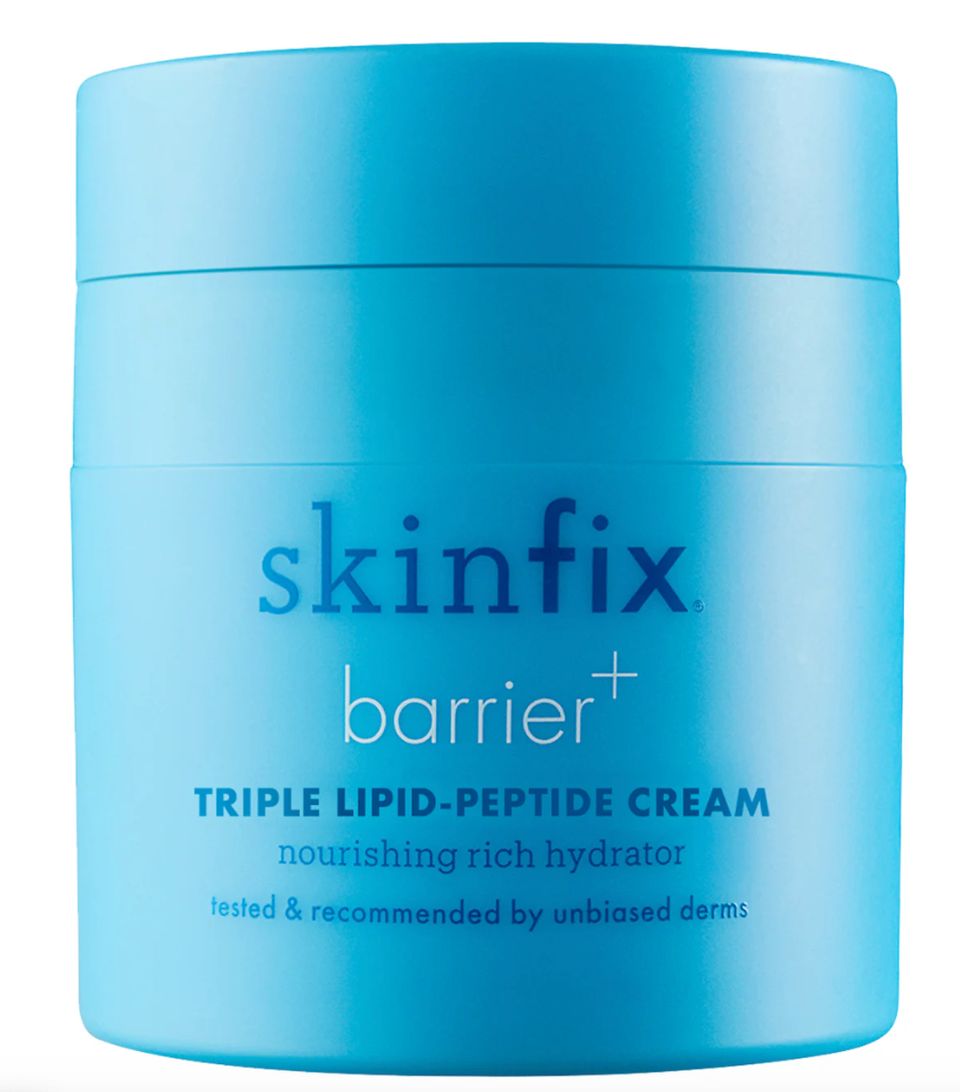
SkinFix Barrier+ Triple Lipid-Peptide Face Cream
“Super hydrating and moisturizing. This cream will keep your skin protected all year around.” — Kim

Amazon
La Roche-Posay Toleriane Ultra Face Moisturizer
“This is formulated for dry sensitive skin and helps support the skin barrier.” — Castilla
Advertisement
Macy’s
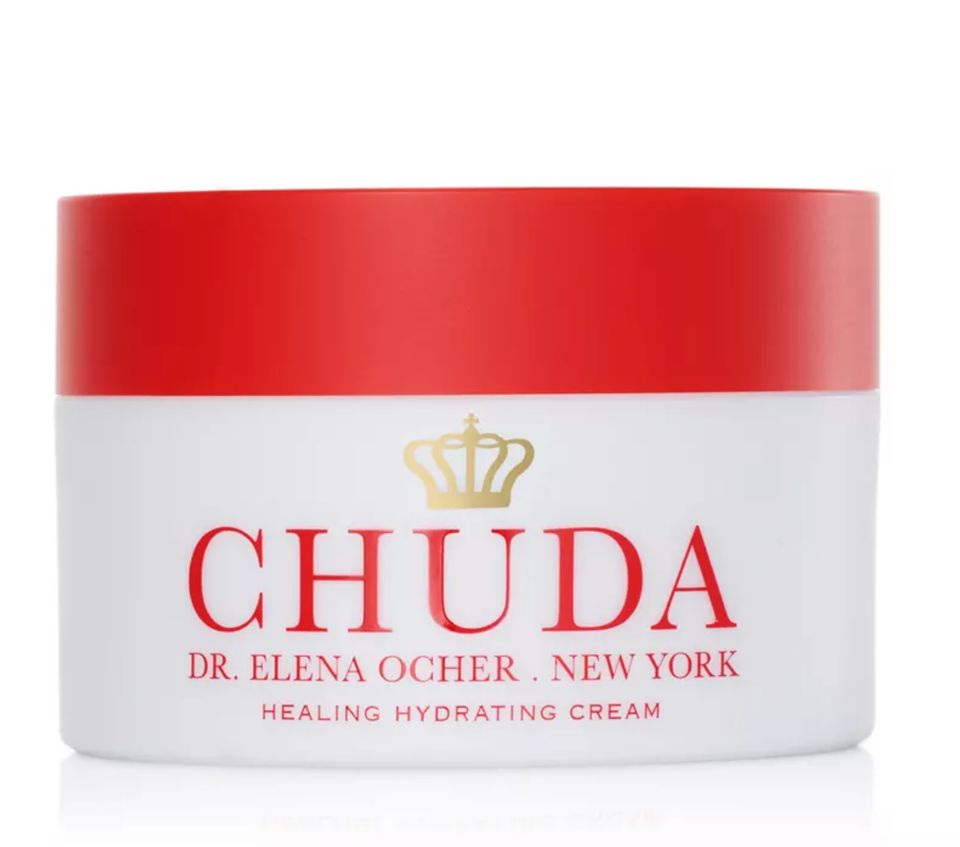
Chuda Healing Hydrating Cream

Ulta
Neutrogena Rapid Wrinkle Repair Night Moisturizer
“This is a retinol cream with added moisturizing ingredients like hyaluronic acid, so [it] works well with dry, sensitive skin types.” — Castilla

Dermstore
SkinMedica Age Defense Retinol Complex
“This gentle yet effective retinol will keep your skin cells stimulated to produce collagen, and accelerate cellular turnover so you have healthy skin cells at all times,” Kim says. Choose either the 0.5% or 1% strength, according to your needs.
Advertisement

Amazon
Eau Thermale Avène Milk Cleanser
“This is a creamy cleanser that’s gentle and does not strip skin of natural oils.” — Castilla

Target
Neutrogena Acne Wash

Sephora
Buxom, Plump Shot Collagen-Infused Lip Serum
“This is a collagen-infused plumping lip serum gloss. It helps to visibly plump [and] smooths and conditions lips. As we age, we tend to lose volume in our lips, and it’s always important to hydrate!” — Badro
Advertisement

Amazon
Mellow Liquid Lip Paint
“This has a long-wearing creamy formula, which is 100% vegan and cruelty-free. It even comes in 13 shades, and Ι always love a beauty product that Ι don’t have to keep reapplying throughout the day. ‘Auckland’ is also one of my favorite shades.” — Badro
Sephora
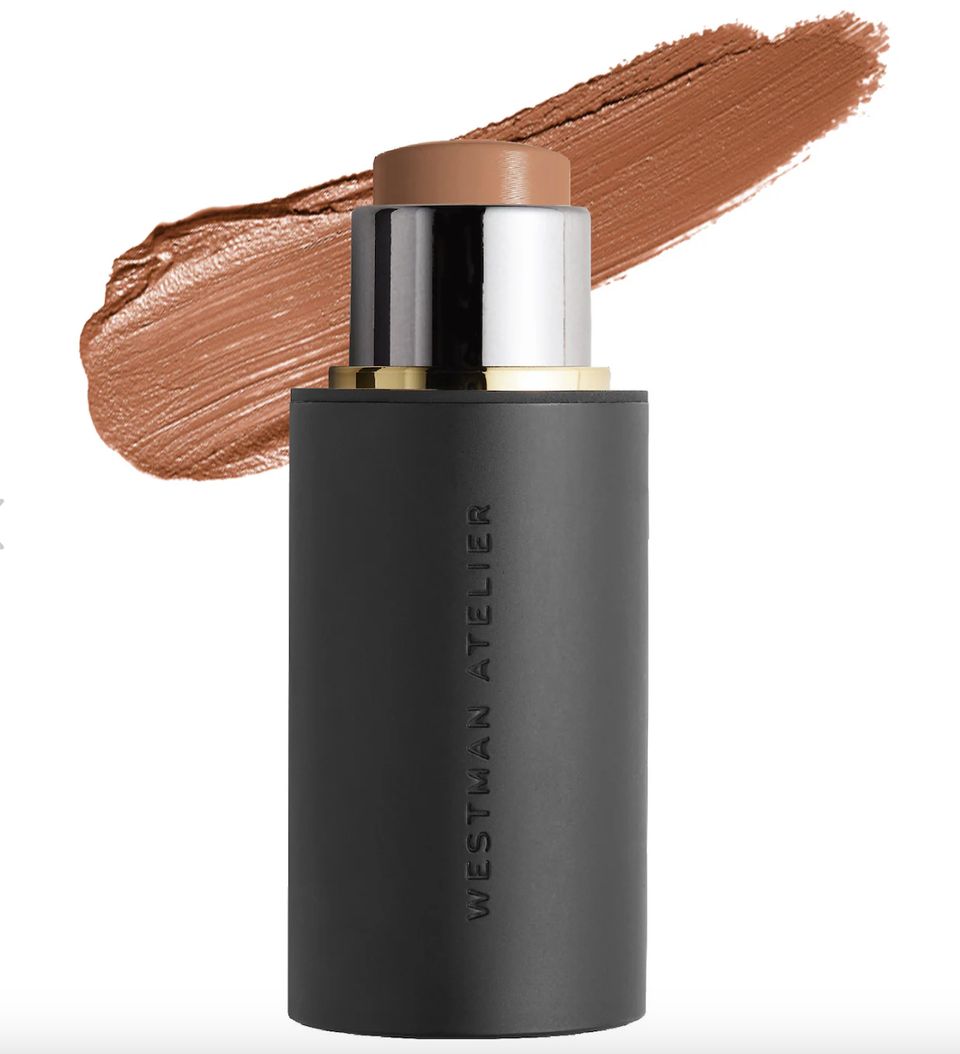
Westman Atelier, Face Trace Cream Contour Stick
“This is great if you’re looking for a great contour stick that’s also vegan. Depending on your skin type, this can last up to eight hours. Ι love a good product that keeps me from having to reapply.” — Badro

Sephora
Kosas Revealer Concealer
Advertisement

Sephora
Rare Beauty Brow Harmony Precision Eyebrow Pencil
“Eyebrows tend to thin as we age, and we lose the frame and definition that they help to provide. Finding an eyebrow pencil to enhance and define is essential. The Rare Beauty pencil is a medium-coverage, waterproof formula that can be used to draw featherlike strokes mimicking the natural brow. The attached spoolie brush can be used to shape and finish the desired look.” — Walmsley

A woman who was paid in cigarettes to do her mum’s ironing is one of the first to have a lung check.
Wheelchair users find it near-impossible to find accessible scales and keep check of their weight.
Prof Graham Medley said that civil servants would have been aware of those concerns at the time.

To study muscle diseases, scientists rely on the mouse as a model organism. Researchers at the University of Basel have now developed a new method that is not only faster and more efficient than conventional ones but also greatly reduces the number of experimental animals needed for studying the function of genes in muscle fibers.
Researchers use the mouse as a model organism to study the structure and function of skeletal muscle, neuromuscular diseases and aging processes in muscle. The scientists are aware of their responsibility in the use of animals and have committed themselves at the University of Basel to rigorously implement the so-called 3R principles — Replacement, Reduction, Refinement — in animal-assisted research and animal husbandry.
The new method developed by Professor Markus Rüegg’s research group at the Biozentrum, University of Basel, is a further step towards reducing the number of laboratory animals. This method also opens new ways to investigate several genes simultaneously or even entire signaling pathways in muscle fibers quickly, cost-effectively and efficiently. The results of the study have now been published in Nature Communications.
The difficulty of studying genes in muscle fibers
Studying gene function in muscle is challenging. On the one hand, muscle fibers are very large and very fragile when isolated. On the other hand, in humans, they are up to half a meter long and contain thousands of nuclei. In order to change and study gene function in muscle fibers, all of the muscle fiber nuclei must be changed, which is difficult to achieve.
For some years now, scientists have been using the CRISPR/Cas9 method to study gene function. This method uses a virus to introduce the so-called Cas9 protein and a specifically designed guide RNA into the organism and thus into the nuclei. The Cas9 protein cuts the genomic DNA at the site recognized by the guide RNA. This combination of Cas9 protein and guide RNA allows altering gene function in the cell.
The CRISPR-Cas9 method can be split up
However, to ensure that the virus only alters the gene expression of muscle fibers and not those of other organs at the same time, the research team combined the CRISPR/Cas9 method with another method: First, the researchers succeeded in breeding mice with the Cas9 protein already present in their muscle fibers — but only there. They then introduced the desired guide RNA into the organism with a so-called adeno-associated virus, which infects muscle.
advertisement
This combination causes the guide RNA in the muscle fibers to encounter the Cas9 protein, changing the genetic material as desired. “The method enables us to ensure that only the muscle fibers actually change their genetic material,” explains first author Marco Thürkauf.
Fewer laboratory animals and more efficient results
Since the adeno-associated virus can also transport several guide RNAs simultaneously, the team can now use the method to investigate several genes simultaneously or even entire signaling pathways. Furthermore, the method significantly reduces the number of experimental animals required.
“All animals used are suitable for studying genes and do not have to be bred over years. This makes it possible to study muscle fibers as well as neuromuscular diseases without using a large number of mice,” says Marco Thürkauf.
Other research groups have also already signaled their interest. “We already have several interested groups in our research community that would like to use our method,” says Markus Rüegg. “This is a great gain for both muscle research per se as well as for our goal of reducing animal experiments.”

Quantum computers promise to reach speeds and efficiencies impossible for even the fastest supercomputers of today. Yet the technology hasn’t seen much scale-up and commercialization largely due to its inability to self-correct. Quantum computers, unlike classical ones, cannot correct errors by copying encoded data over and over. Scientists had to find another way.
Now, a new paper in Nature illustrates a Harvard quantum computing platform’s potential to solve the longstanding problem known as quantum error correction.
Leading the Harvard team is quantum optics expert Mikhail Lukin, the Joshua and Beth Friedman University Professor in physics and co-director of the Harvard Quantum Initiative. The work reported in Nature was a collaboration among Harvard, MIT, and Boston-based QuEra Computing. Also involved was the group of Markus Greiner, the George Vasmer Leverett Professor of Physics.
An effort spanning the last several years, the Harvard platform is built on an array of very cold, laser-trapped rubidium atoms. Each atom acts as a bit — or a “qubit” as it’s called in the quantum world — which can perform extremely fast calculations.
The team’s chief innovation is configuring their “neutral atom array” to be able to dynamically change its layout by moving and connecting atoms — this is called “entangling” in physics parlance — mid-computation. Operations that entangle pairs of atoms, called two-qubit logic gates, are units of computing power.
Running a complicated algorithm on a quantum computer requires many gates. However, these gate operations are notoriously error-prone, and a buildup of errors renders the algorithm useless.
In the new paper, the team reports near-flawless performance of its two-qubit entangling gates with extremely low error rates. For the first time, they demonstrated the ability to entangle atoms with error rates below 0.5 percent. In terms of operation quality, this puts their technology’s performance on par with other leading types of quantum computing platforms, like superconducting qubits and trapped-ion qubits.
advertisement
However, Harvard’s approach has major advantages over these competitors due to its large system sizes, efficient qubit control, and ability to dynamically reconfigure the layout of atoms.
“We’ve established that this platform has low enough physical errors that you can actually envision large-scale, error-corrected devices based on neutral atoms,” said first author Simon Evered, a Harvard Griffin Graduate School of Arts and Sciences student in Lukin’s group. “Our error rates are low enough now that if we were to group atoms together into logical qubits — where information is stored non-locally among the constituent atoms — these quantum error-corrected logical qubits could have even lower errors than the individual atoms.”
The Harvard team’s advances are reported in the same issue of Nature as other innovations led by former Harvard graduate student Jeff Thompson, now at Princeton University, and former Harvard postdoctoral fellow Manuel Endres, now at California Institute of Technology. Taken together, these advances lay the groundwork for quantum error-corrected algorithms and large-scale quantum computing. All of this means quantum computing on neutral atom arrays is showing the full breadth of its promise.
“These contributions open the door for very special opportunities in scalable quantum computing and a truly exciting time for this entire field ahead,” Lukin said.
