Researchers suggest new approach for testing treatments for osteoarthritis

Osteoarthritis (OA) is the most common form of arthritis and is among the top 10 conditions contributing to Years Lived with Disability — a measure reflecting the impact an illness has on quality of life before it resolves or leads to death. To date, no treatments are approved that slow disease progression. Treatment development has been frustrating in part because animal models of disease caused by joint trauma poorly reflect human disease which usually occurs over many years and without preceding trauma.

Researchers from Boston University Chobanian & Avedisian School of Medicine now suggest studying persons after they sustain knee trauma such as anterior cruciate ligament tears (ACL).

“Given the repeated, expensive and discouraging past failures in the development of effective treatments for OA, a new approach is needed that focuses research into effective treatment on those with early disease,” said corresponding author David T. Felson, MD, MPH, professor of medicine and epidemiology at the School of Medicine and Boston University School of Public Health.

While most patients recover after sustaining a major joint injury like an ACL tear, a few experience persistent pain and develop OA. Felson suggests that sufficient numbers of such patients exist and could be identified in advance to form a high-risk group in which treatments to prevent disease could be tested.

Current options for treatments that reduce joint pain such as nonsteroidal anti-inflammatory drugs (NSAIDs) are successful in some patients but their use is limited by their toxicity . Exercise or weight loss are effective but long-term adherence is poor. Rates of total knee replacement surgeries are rising rapidly suggesting that nonsurgical treatments have not successfully alleviated patients’ pain and disability.

BU and Cleveland Clinic researchers reviewed the data from the MOON (Multicenter Orthopaedic Outcomes Network) cohort, a group of 2,340 persons undergoing ACL reconstructions (ACLR) after traumatic tears. The MOON investigators reported that 26% of the ACL reconstruction patients who responded had at least moderate knee pain on daily activities, especially stair climbing and walking. They also found that 16.6% had Knee Injury and Osteoarthritis Outcome Score (KOOS) pain scores of less than80 (0-100 scale where 100 is no pain) suggesting that mild to moderate pain is not rare after ACLR.

By using the MOON risk factors — incorporating pain and structural changes in all joint tissues, especially cartilage loss — to select persons at high risk of later pain, they could assemble a cohort at high risk of substantial post ACLR pain. “This approach offers the opportunity to prevent disease and is especially valuable in targeting young adults who, after a knee injury, may have significant joint pain and disability for many years before they become eligible for joint replacement,” he adds.

These findings appear online in the Annals of the Rheumatic Diseases.

Funding for this study was provided by the Arthritis Foundation and by the national Institutes of Health (NIH P30 AR072571).


Share Button

Cannabidiol safe daily dose limit cut by food regulator

Food-safety experts are concerned about long-term use causing liver problems.

Share Button

NHS waiting list in England rises to record 7.75m

Data shows August was a very busy month for hospitals and ambulance services.

Share Button

Derby: New anti-viral drug study aims to cure long Covid

Long Covid symptoms include extreme fatigue and breathlessness, palpitations, or brain fog.

Share Button

Schools and NHS caterers ‘must stop’ antibiotic overuse

Health and animal welfare campaigners say the overuse of antibiotics by UK farmers should be banned.

Share Button

Never start vaping, says 12-year-old girl with lung damage

Sarah had asthma and was a heavy vaper when she was rushed to hospital with breathing problems.

Share Button

NASA’s Webb captures an ethereal view of NGC 346

Filaments of dust and gas festoon this star-forming region in a new infrared image from MIRI.

One of the greatest strengths of NASA’s James Webb Space Telescope is its ability to give astronomers detailed views of areas where new stars are being born. The latest example, showcased here in a new image from Webb’s Mid-Infrared Instrument (MIRI), is NGC 346 — the brightest and largest star-forming region in the Small Magellanic Cloud.

The Small Magellanic Cloud (SMC) is a satellite galaxy of the Milky Way, visible to the unaided eye in the southern constellation Tucana. This small companion galaxy is more primeval than the Milky Way in that it possesses fewer heavy elements, which are forged in stars through nuclear fusion and supernova explosions, compared to our own galaxy.

Since cosmic dust is formed from heavy elements like silicon and oxygen, scientists expected the SMC to lack significant amounts of dust. However the new MIRI image, as well as a previous image of NGC 346 from Webb’s Near-Infrared Camera released in January, show ample dust within this region.

In this representative-color image, blue tendrils trace emission from material that includes dusty silicates and sooty chemical molecules known as polycyclic aromatic hydrocarbons, or PAHs. More diffuse red emission shines from warm dust heated by the brightest and most massive stars in the heart of the region. An arc at the center left may be a reflection of light from the star near the arc’s center. (Similar, fainter arcs appear associated with stars at lower left and upper right.) Lastly, bright patches and filaments mark areas with abundant numbers of protostars. The research team looked for the reddest stars, and found 1,001 pinpoint sources of light, most of them young stars still embedded in their dusty cocoons.

By combining Webb data in both the near-infrared and mid-infrared, astronomers are able to take a fuller census of the stars and protostars within this dynamic region. The results have implications for our understanding of galaxies that existed billions of years ago, during an era in the universe known as “cosmic noon,” when star formation was at its peak and heavy element concentrations were lower, as seen in the SMC.The James Webb Space Telescope is the world’s premier space science observatory.

Share Button

Jet lag disorder associated with shift work can lead to brain changes increasing appetite

Scientists have uncovered why night shift work is associated with changes in appetite in a new University of Bristol-led study. The findings, published in Communications Biology, could help the millions of people that work through the night and struggle with weight gain.

Scientists from Bristol and the University of Occupational and Environmental Health in Japan, sought to understand how ‘circadian misalignment’ — a phenomenon commonly associated with ‘jet-lag’ whereby the body’s biological clock is disrupted — affects the hormones responsible for regulating appetite.

Prevalent in night shift workers, in this new study, the international team reveal how circadian misalignment can profoundly alter the brain’s regulation of hormones controlling hunger to the detriment of metabolic health.

The team focused on glucocorticoid hormones in the adrenal gland which regulate many physiological functions including metabolism and appetite. Glucocorticoids are known to directly regulate a group of brain peptides controlling appetitive behaviour, with some increasing appetite (orexigenic) and some decreasing appetite (anorexigenic).

In an experiment using animal models, comprising a control group and a out-of-phase ‘jet-lagged’ group, the team found misalignment between light and dark cues led the out-of-phase group’s orexigenic hypothalamic neuropeptides (NPY) to become dysregulated, driving an increased desire to eat significantly more during the inactive phase of the day.

Strikingly, the team discovered that rats in the control group ate 88.4% of their daily intake during their active phase, and only 11.6% during their inactive phase. In contrast, the ‘jet-lagged’ group consumed 53.8% of their daily calories during their inactive phase (without an increase in activity during this time). This equated to nearly five-times more (460% more) than what the control group consumed during the inactive phase. These results show that it is timing of consumption that has been affected.

This new discovery revealed how completely, and significantly, disordered the neuropeptides become when daily glucocorticoid levels are out of synch with light and dark cues. However, the authors suggest the neuropeptides identified in this study may be promising targets for drug treatments adapted to treat eating disorders and obesity.

advertisement


Dr Becky Conway-Campbell, Research Fellow in Bristol Medical School: Translational Health Sciences (THS) and the study’s senior author, said: “For people working throughout the night, a reversed body clock can play havoc with their health.

“For those who are working night shifts long-term, we recommend they try to maintain daylight exposure, cardiovascular exercise and mealtimes at regulated hours. However, internal brain messages to drive increased appetite are difficult to override with ‘discipline’ or ‘routine’ so we are currently designing studies to assess rescue strategies and pharmacological intervention drugs. We hope our findings also provide new insight into how chronic stress and sleep disruption leads to caloric overconsumption.”

Stafford Lightman, Professor of Medicine at Bristol Medical School: THS and co-senior author on the study, added: “The adrenal hormone corticosterone, which is normally secreted in a circadian manner, is a major factor in the daily control of brain peptides that regulate appetite. Furthermore when we disturb the normal relationship of corticosterone with the day to night light cycle it results in abnormal gene regulation and appetite during the period of time that the animals normally sleep.

“Our study shows that when we disturb our normal bodily rhythms this in turn disrupts normal appetite regulation in a way that is at least in part a result of desynchrony between adrenal steroid hormone production and the timing of the light and dark cycle.”

Dr Benjamin Flynn, one of the study’s co-authors who conducted the study while at Bristol but is now based at the University of Bath, added: “This is further evidence of how phase shift ‘jet-lag’ affects feeding behaviours and neuronal gene expression — data important for shift work co-morbidity research.”

This research was funded by the Medical Research Council.

Share Button

Killer whales’ diet more important than location for pollutant exposure

Both elegant and fierce, killer whales are some of the oceans’ top predators, but even they can be exposed to environmental pollution. Now, in the largest study to date on North Atlantic killer whales, researchers in ACS’ Environmental Science & Technology report the levels of legacy and emerging pollutants in 162 individuals’ blubber. The animals’ diet, rather than location, greatly impacted contaminant levels and potential health risks — information that’s helpful to conservation efforts.

As the largest member of the dolphin family, killer whales, also known as orcas, are found worldwide. Marine vessel traffic can disturb the hunting and communication of these black-and-white marine mammals. But they face another type of human threat — legacy and emerging persistent organic pollutants (POPs) in their environments. POPs include chlorinated hydrocarbons and flame retardants, and can accumulate in animals’ fat stores as the contaminants move up the food chain though a process called biomagnification.

Previous studies have shown that some Pacific orca populations can carry POP loads in their blubber that pose potential health risks, including reduced immunity, hormonal imbalances and reproductive issues. But information on orcas living in the North Atlantic are lacking. So, Anaïs Remili, Melissa McKinney and colleagues wanted to assess the contaminants present in animals spanning from Eastern Canada to Norway.

The researchers collected skin and blubber biopsies from over a hundred free-ranging killer whales, across the North Atlantic Ocean from Canada, Greenland, Iceland to Norway. They analyzed half of each tissue sample for five classes of POPs, including polychlorinated biphenyls (PCBs). The other portion was used to evaluate the animals’ diets. Multiple features stood out in the data:

  • Specimens from orcas in the western North Atlantic contained substantially higher contaminant loads than ones from orcas on the eastern side — a pattern that contrasts with previously reported POP levels in other Arctic marine organisms.
  • The pattern could be attributed to individuals’ diet rather than location. Specifically, killer whales foraging on fish had the lowest POP levels, and animals consuming marine mammals, such as seals or other whales, had the highest.
  • PCB-associated health risks were highest for killer whales that ate primarily marine mammals, with most animals’ levels exceeding the threshold for a higher risk of female reproductive failure.
  • The levels of one POP, known as α-HBCDD, were the highest reported for any marine mammal to date, despite the fact that this brominated flame retardant was banned a decade ago.

The researchers say the findings support the need for proper waste disposal to prevent contaminants from entering the oceans’ food chains and reaching the top predators. They explain that the findings of their study underscore the need for action to protect North Atlantic killer whales and their ecosystems.

Share Button

This Wildly Effective Anti-Aging Lip Product Is 20% Off For Prime Day

HuffPost and its publishing partners may receive a commission from some purchases made via links on this page. Every item is independently curated by the HuffPost Shopping team. Prices and availability are subject to change.

Prices change quickly on Prime Day and our team is working to keep stories as up-to-date as possible. Keep checking back for all of our top picks, plus Prime Day deals from our friends at BuzzFeed. As always, don’t forget to sign up for a free 30-day trial of Amazon Prime to take advantage of the best deals.

Isn’t there something so thrilling about finding a truly stellar and game-changing beauty product? It’s a huge joy, and you want to tell everyone how great it is and use it all the time and bask in its glory and congratulate yourself for choosing it and see other people experience it, too. It’s so satisfying to see good results that make a purchase truly worth it — especially when it’s a luxury beauty product that happens to be on sale during Amazon Prime Big Deal Days.

That’s how I feel about Revision Skincare’s YouthFull Lip Replenisher, which I bought last month while on a mission to find something that would care for and address my aging lips. My lips have gotten just as much sun damage as the rest of my face over the last nearly-five decades, and it was starting to show in fine lines. I’m not overly bothered by signs of aging, but I do want to take care of my face, and lip skin is wildly delicate.

I figured one of the most promising lip-safe active ingredients would be peptides, given that certain peptides can have skin-restoring abilities and help address things like loss of firmness, dullness and fine lines, and others are solid antioxidants. Although they don’t produce quick miracles — no skin care does — peptides can be effective, and some are gentle enough to be included in lip products.

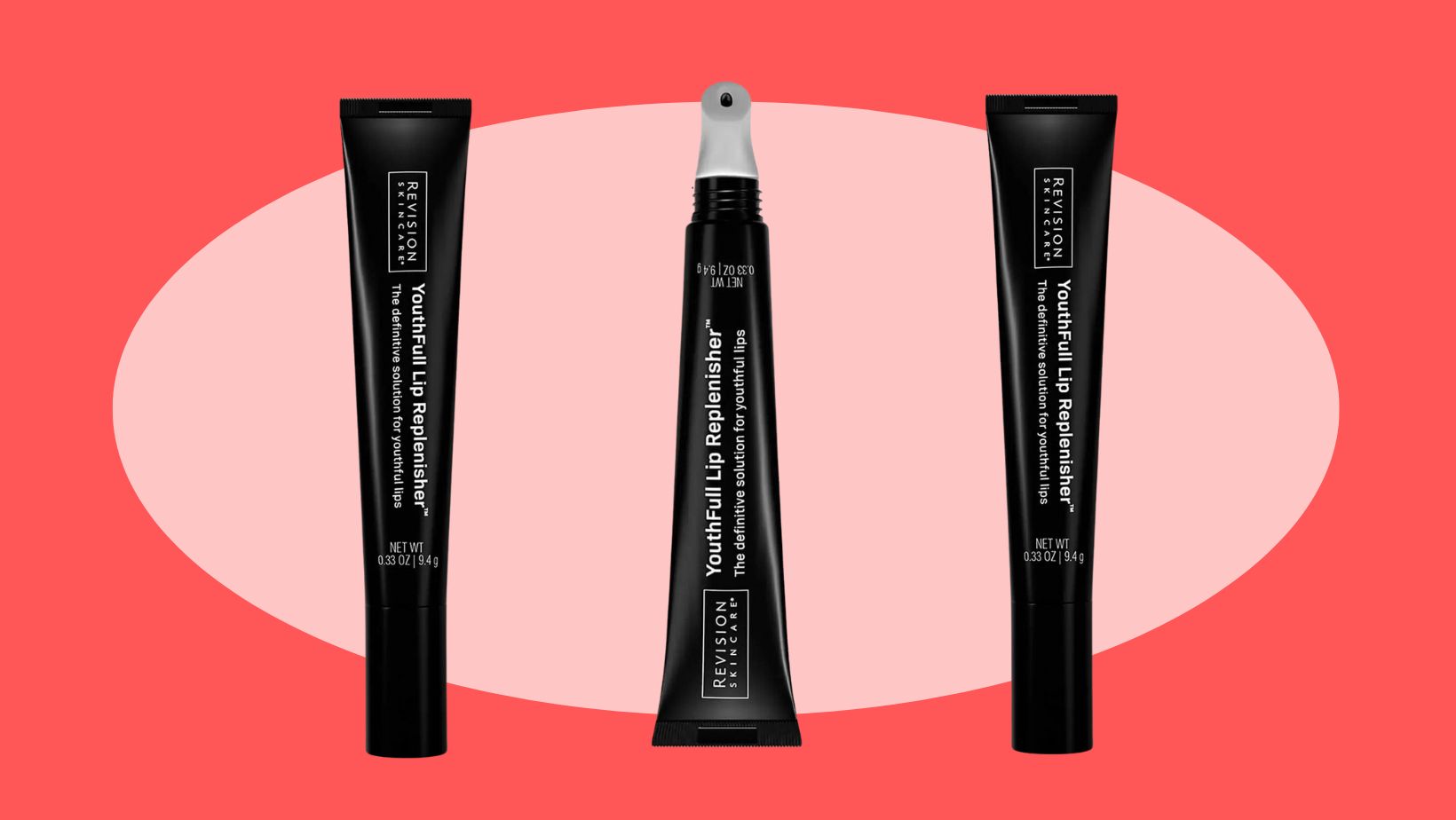
Revision’s peptide treatment is currently 20% off during Amazon’s big sales event. Designed to target visible signs of lip aging, it not only has several peptides including palmitoyl tripeptide-1 and palmitoyl tripeptide-38, but also other research-backed ingredients like vitamins E and C and green tea that can work well in tandem with peptides, plus very solid moisturizers like shea butter. I put it on overnight — more on that choice below — and let me tell you, I could actually tell a difference the very next morning.

Revision Skincare YouthFull Lip Replenisher

My lips hadn’t been in terrible shape, but they definitely seemed smoother than they’d been in years. They weren’t puckery. They didn’t look wrinkly. And they certainly felt supremely healthy. I kept going with overnight use, and within days felt like this it was making a real difference. I was honestly floored when I woke up each morning, and kept being reminded during the day when they just felt so freshly smooth all the time. And given how little of it I have to squeeze out to give my lips a solid coat, I feel like this one tube is going to last for an almost comically long time (a relief given that $40 is way more than I typically spend on a lip balm).

I will note that when I first put this on, I immediately knew it wasn’t going to be a product I’d wear much during the day, despite Revisions’s guidance of applying it three times daily. It’s pretty thick and sticky (if you are constantly pulling your hair out of your lip gloss, you know the struggle). But as one reviewer noted, this is actually the product’s superpower, because it absolutely does not budge, even if you wear it overnight. “Although some reviews complain about the tackiness of the balm, that’s actually what is so great about this product!” wrote a Dermstore customer named Lizzie. “It sticks to lips better than any other balm I’ve tried.”

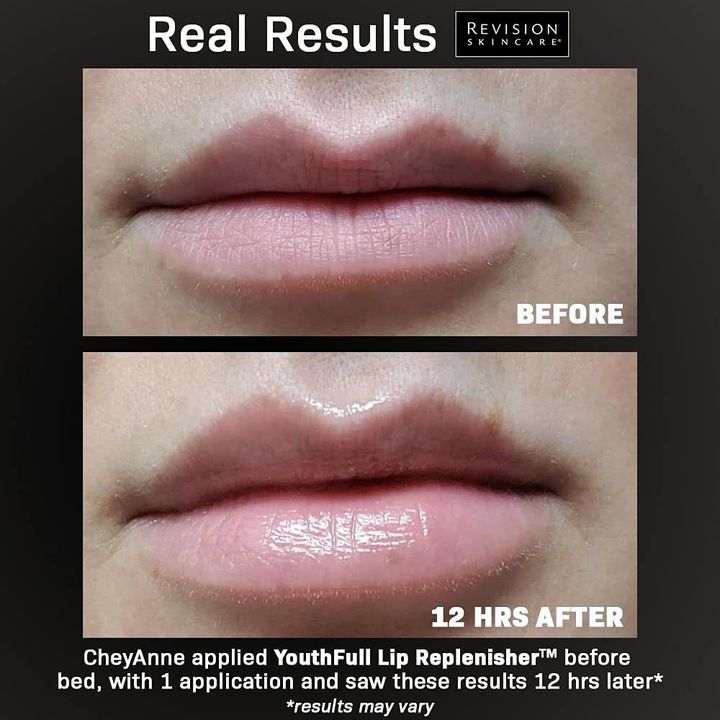
I'm only including this marketing image from the brand because I found my results to be very similar.
I’m only including this marketing image from the brand because I found my results to be very similar.

I can attest to this. Each morning when I wake up, it’s still there as if I just applied it. I sleep on my side, but it doesn’t melt off or get on my pillow. The fact that it clings so hard and lasts so long gives me some assurance that all those little peptides really are hard at work while I sleep, safely ensconced on my lips in a very stay-put formula.

Although some reviewers do enjoy it wearing this formula as a daytime gloss, many others are using it overnight only, too, and say it makes their lipstick easier to apply the next day. Some aren’t so concerned with fine lines, and simply use it for dry, cracked lips in winter or desert climates (and they say it’s hugely effective for that). Read some promising thoughts from verified Dermstore purchasers and Amazon reviewers below:

“Love this product. The day it arrived I used it twice, at noon and before bed. When I woke up in the morning I did a double take in the mirror. My 46 year old lips were reminded me of the 18 year old lips in my senior pictures! They were more defined on the edges, and a bit more plump. The results after one night were amazing!” — Julie at Dermstore

“I have a pretty epic lip balm graveyard in my beauty cabinet so I was not expecting much from this, but it knocked my socks off! It’s so good. Very thick and sticky, but that helps it stay on all night. I just wipe off the residue in the morning and my lips look amazing. I have not had a single skin flake since I started using this. I also love the smell, which is very delicate. Will definitely repurchase.” — Anonymous at Dermstore

“There are tons of lip moisturizers and masks and I’ve tried many of them. They essentially have the same end result…temporary hydration of the lips. None of them have ever really wowed me until I tried Revision! What makes it different? It adheres to the lips unlike any product that I’ve ever tried. I apply it at bedtime and it is STILL there in the morning! That kind of adherence means that the active ingredients make contact with the lips longer so they can work their magic. My lips are hydrated and plumped all day long with just a night time application so it’s very cost effective as well.” — Laura at Dermstore

“It actually works! My Dermatologist recommended this to me. Results are noticeable some in the beginning but with daily use (throughout the day) my lips are fuller, less wrinkles! (age 46)” — Amy Gragg at Amazon

“I am embarrassed to say how many of these tubes I’ve purchased since first using it after lip injections in August. There is absolutely nothing that comes close in both appearance and function. It stays on for hours and my lips are plump, hydrated and regaining their natural healthy tone and texture. My only complaint is that there isn’t a punch card because I will be buried in this lip treatment.” — Jessica at Dermstore

“I’ve tried so many lip masks. Laneige, Tatcha, First Aid Beauty (was amazing and now discontinued), Bite, Fresh, Ole Henricksen, Kiehl’s (tastes and smells fantastic, lasts on lips for 4 minutes)…Tarte, Buxom, Dior, was a Burt’s Bees fan for a decade. BB is nice and keeps the moisture in, but no active ingredients to nourish. Revision is serious business… I travel for work, am on planes and changing climates weekly. My lips are soft and nourished. I’m over 50, and no lip lines. **Can’t recommend strongly enough. 10/10**” — Kimberly S at Amazon

“Didn’t want to love this product due to the price point but it really works. Gives me a plump lip filler look when left on overnight. Definitely prefer this to the laneige lip mask. It does have a sticky/tacky feel so best to use overnight vs during the day.” — Lindsey at Dermstore

Share Button