A new Dartmouth study in the journal Science Advances suggests that how well people with diabetes manage their blood sugar depends on their experience with the condition and their overall success in controlling their glucose levels, as well as on the season and time of day. The findings could help physicians identify those patients who could benefit from more guidance in regulating their blood sugar, particularly at certain times of year.
The researchers accessed data from wearable glucose monitors that showed how 137 people in the U.S. aged 2 to 76 living primarily with type 1, aka juvenile, diabetes managed their blood sugar on a daily basis. By analyzing more than 91,000 days of data, the study provides the most detailed look yet at how diabetes management can vary by month, day, age, and even how experienced a patient is with the condition.
Patients in the study tended to maintain healthier blood sugar levels from April to September, the researchers found. In these warmer months when activity levels tend to be higher, glucose levels stayed in the healthy range through a larger part of the day than average. In the colder months from October to February, however, the time spent within the normal range was lower than average.
This effect was amplified during the holidays for participants of all ages, with New Year’s Day and Christmas topping the list of days when sugar levels strayed outside the desired target range more often. Despite being a warm-weather holiday, Independence Day was third on the list of days when poor glucose control was recorded.
“We’re looking for specific patterns that could potentially inform clinical guidelines and set the stage for targeted interventions,” says Temiloluwa Prioleau, assistant professor of computer science, one of the study co-authors. The authors note that the majority of their study participants had type 1 diabetes, so it is not clear how these findings might generalize to people with type 2 diabetes.
Some researchers and providers have hypothesized that changes in activity levels, lifestyle, and food intake during different seasons impact blood-glucose management, says co-author Prajakta Belsare, an assistant professor at James Madison University who worked on the study while she was a postdoctoral fellow in the Department of Computer Science.
Given the granularity of their data, the researchers also were able to investigate daily and weekly variations. They found that patients’ glucose levels were more likely to stay normal from Monday to Friday, and more so in the working hours from 9 a.m. to 5 p.m., than on weekends, suggesting that workweek routines have a positive effect.
advertisement
For Belsare, one of the more interesting results was how effectively different age groups manage their blood sugar.
“We found that young adults in the 19-to-34 age range were less proficient at managing blood glucose,” she says. It’s likely that this reflects the struggle that newly independent adults face in taking care of their own health without the oversight of parents or caregivers, says Belsare.
The paper doesn’t examine the factors driving the patterns they see. “I think the answer for the ‘why’ would be different for different people,” Prioleau says. “Our goal is to highlight what we’re observing at a population level. Hopefully, this will encourage people to leverage their own past data to inform and shape their future care, through behavioral changes when feasible, or through other types of intervention.”
Andrew Crawford, an assistant professor of medicine at the Geisel School of Medicine and interim section chief of endocrinology at Dartmouth Hitchcock Medical Center who was not involved in the study, says that it could help increase awareness among physicians that certain patients need more focused guidance at specific times of year.
As a physician who treats people with diabetes, Crawford said that the seasonal fluctuations described in the Dartmouth study are indeed consistent with what doctors see. People are less active in colder months and tend to consume more calories and sugary foods around year-end holidays. In warmer months, people are more physically active, which sensitizes the body to the effects of insulin and improves glycemic control, he said.
“What was most surprising to me, however, was that the seasonal variation, particularly the changes around major holidays, were not universal and differed substantially depending on the age of the patient and their general degree of glycemic control during the year,” Crawford says. “This underscores the fact that diabetes is largely a self-managed disease and that individuals with less experience managing their disease require additional education and support around major holidays to avoid hyperglycemia.”
Given the wealth of insights potentially buried in data from wearable sensors, access to real patient information is vital for research and clinical care, says Prioleau. In a previous study, she worked with Abigail Bartolome, Guarini ’23, and collaborators at Geisel to curate an anonymized dataset that the research community can now download to use in future studies intended to demystify diabetes.
“There are a lot of questions around how to personalize (diabetes) management,” she says, “and learning from each individual’s unique data can set the course towards delivering the best possible outcome for them.”
Negative pressure is a rare and challenging-to-detect phenomenon in physics. Using liquid-filled optical fibers and sound waves, researchers at the Max Planck Institute for the Science of Light (MPL) in Erlangen have now discovered a new method to measure it. In collaboration with the Leibniz Institute of Photonic Technologies in Jena (IPHT), the scientists in the Quantum Optoacoustics research group, led by Birgit Stiller, can gain important insights into thermodynamic states.
As a physical quantity pressure is encountered in various fields: atmospheric pressure in meteorology, blood pressure in medicine, or even in everyday life with pressure cookers and vacuum-sealed foods. Pressure is defined as a force per unit area acting perpendicular to a surface of a solid, liquid, or gas. Depending on the direction in which the force acts within a closed system, very high pressure can lead to explosive reactions in extrem cases, while very low pressure in a closed system can cause the implosion of the system itself. Overpressure always means that the gas or liquid pushes against the walls of its container from the inside, like a balloon expanding when more air is added. Regardless of whether it’s high or low pressure, the numerical value of pressure is always positive under normal circumstances.
However, liquids exhibit a peculiar characteristic. They can exist in a specific metastable state corresponding to a negative pressure value. In this metastable state, even a tiny external influence can cause the system to collapse into one state or another. One can imagine it as sitting at the top of a roller coaster: the slightest touch on one side or the other sends you hurtling down the tracks. In their current research, the scientists are examining the metastable state of liquids with negative pressure. To achieve this, the research team combined two unique techniques in a study published in Nature Physics to measure various thermodynamic states. Initially, tiny amounts — nanoliters — of a liquid were encapsulated in a fully closed optical fiber, allowing both highly positive and negative pressures. Subsequently, the specific interaction of optical and acoustic waves in the liquid enabled the sensitive measurement of the influence of pressure and temperature in different states of the liquid. Sound waves act as sensors for examining negative pressure values, exploring this unique state of matter with high precision and detailed spatial resolution.
The influence of negative pressure on a liquid can be envisioned as follows: According to the laws of thermodynamics, the volume of the liquid will decrease, but the liquid is retained in the glass fiber capillary by adhesive forces, much like a water droplet sticking to a finger. This results in a “stretching” of the liquid. It is pulled apart and behaves like a rubber band being stretched. Measuring this exotic state typically requires complex equipment with heightened safety precautions. High pressures can be hazardous endeavors, particularly with toxic liquids. Carbon disulfide, used by the researchers in this study, falls into this category. Due to this complication, previous measurement setups for generating and determining negative pressures have required significant laboratory space and even posed a disturbance to the system in the metastable state. With the method presented here, the researchers have instead developed a tiny, simple setup in which they can make very precise pressure measurements using light and sound waves. The fiber used for this purpose is only as thick as a human hair.
“Some phenomena which are difficult to explore with ordinary and established methods can become unexpectedly accessible when new measurement methods are combined with novel platforms. I find that exciting,” says Dr. Birgit Stiller, head of the Quantum Optoacoustics research group at MPL. The sound waves used by the group can detect temperature, pressure, and strain changes very sensitively along an optical fiber. Furthermore, spatially resolved measurements are possible, meaning that the sound waves can provide an image of the situation inside the optical fiber at centimeter-scale resolution along its length. “Our method allows us to gain a deeper understanding of the thermodynamic dependencies in this unique fiber-based system,” says Alexandra Popp, one of the two lead authors of the article. The other lead author, Andreas Geilen, adds: “The measurements revealed some surprising effects. The observation of the negative pressure regime becomes abundantly clear when looking at the frequency of the sound waves.”
The combination of optoacoustic measurements with tightly sealed capillary fibers enables new discoveries regarding the monitoring of chemical reactions in toxic liquids within otherwise difficult-to-investigate materials and microreactors. It can penetrate new, hard-to-access areas of thermodynamics. “This new platform of fully sealed liquid core fibers provides access to high pressures and other thermodynamic regimes,” says Prof. Markus Schmidt from IPHT in Jena, and Dr. Mario Chemnitz, also from IPHT in Jena, emphasizes: “It is of great interest to investigate and even tailor further nonlinear optical phenomena in this type of fiber.” These phenomena can unlock previously unexplored and potentially new properties in the unique thermodynamic state of materials. Birgit Stiller concludes: “The collaboration between our research groups in Erlangen and Jena, with their respective expertise, is unique in gaining new insights into thermodynamic processes and regimes on a tiny and easy-to-handle optical platform.”
Plenty of surprises come with the aging process (like those weird noises our joints make or the monster hangovers that follow two sips of beer). But few are more of a bummer than the way our digestive system seems to lose interest in, well, digesting things.
“Intestinal issues can arise at any age and can become more prevalent as we age,” Dr. Sara Attalla, a gastroenterologist at Inspira Health in New Jersey, told HuffPost.
Advertisement
Roughly 60 million to 70 million Americans are affected by digestive diseases, according to the National Institutes of Health. Some of the most common symptoms? Heartburn, bloating, abdominal pain and changes in bowel habits (as in constipation, diarrhea or even a combo of the two).
Nailing down what’s causing your digestive drama can be tricky since it’s a multi-faceted problem that typically stems from a highly individual combination of aging and lifestyle-related culprits.
How The Aging Process Can Affect Digestion
As we age, the nerves and muscles in the gastrointestinal (GI) tract can start to glitch, resulting in changes to how our digestive organs function individually and work together — usually, this translates into the digestion process itself becoming sluggish and communication signals between digestive organs getting haphazard.
Movement within the esophagus and muscles involved in swallowing may not be as effective or coordinated, for instance, and can lead to higher rates of esophageal reflux (known as GERD, where your stomach contents start to make a comeback), while slower motility in the stomach can cause what you’ve eaten to linger and trigger indigestion.
Advertisement
“The stomach lining can also become thinner with age, which renders you more susceptible to injury in the stomach from things like inflammation,” Attalla said.
Decreased prostaglandin production over time (a hormone-like substance that plays a role in stomach acid secretion and GI muscle functioning) means a decrease in the protective lining of the stomach, too, leaving you more prone to gastritis and ulcers.
The next stop on your food’s digestive journey is a pit stop in the small bowel. “Slower motility here can lead to higher rates of bacterial overgrowth, which can cause bloating and diarrhea,” Dr. Sunana Sohi, a board-certified gastroenterologist at Gastroenterology Health Partners in Louisville, Kentucky, told HuffPost.
And if motility screeches to a halt in your colon, get ready for possible bouts of constipation and diverticulosis (a condition where small sacs form and push against weak spots in the wall of your colon, putting you at risk of symptom flareups, such as bleeding and inflammation).
Then there’s the chronic health conditions that tend to stack up as we get older (arthritisis, cardiovascular and metabolic diseases), many of which can cause limitations to the level of movement we can tolerate, further exacerbating gut motility issues. (“If you don’t move, neither does your gut,” Dr. Pritesh Mutha, an associate professor at McGovern Medical School at UTHealth Houston, told HuffPost.)
Advertisement
As for the medications we take to manage these conditions (both prescription and over-the-counter, especially NSAID pain relievers such ad aspirin and ibuprofen), they’re known to cause gastro-themed side effects of their own. Cue nausea, constipation, diarrhea, abdominal pain, even ulcers.
Moyo Studio via Getty Images
Chewing more slowly is one way to make eating easier on your digestive tract.
The Best Ways To Optimize Your Digestion As You Get Older
All of this is understandably frustrating and concerning. But experts stress there are ways to minimize any effects from age-related stomach issues. They recommend:
Chewing Better
Better digestion begins in the mouth. “Salivary enzymes help digest starch and fat in the mouth, decreasing the GI tract’s workload,” Mutha said. “The alkaline pH of saliva also helps neutralize acid in the esophagus due to reflux and alleviate GERD symptoms.”
Bonus: Cutting your food into smaller pieces and chewing at least 15 to 20 times per bite can help mitigate any complications associated with trouble swallowing.
Advertisement
Stimulating Saliva Production
Saliva production tends to decrease as we age, which can affect chewing and swallowing, Sohi said. According to the American Dental Association, dry mouth is twice as likely to strike when you take one or more medications daily, compared with people with no medications on their roster.
Things like regularly using an over-the-counter saliva substitute or sipping water between bites can be helpful if dry mouth is a problem for you at mealtime.
Eating More Food That’s Plant-Based, Less That’s Processed
The best way to optimize digestion is to eat a diet as low in processed foods and high in plant-based diversity as possible. “Diets high in processed food can alter the gut microbiome, leading to dysbiosis,” Sohi said, an unhealthy balance of gut bacteria that’s associated with higher rates of digestive disease.
Besides keeping your gut microbiome on the rails, going plant-based is the best way to increase your fiber intake, which is crucial to the quality and consistency of your number two sessions.
Fiber — soluble and insoluble — is what bulks up your poop, Mutha explained. This not only makes your time on the throne more pleasant and efficient, but it also decreases the likelihood of fecal incontinence and even helps treat diarrhea by absorbing water.
Advertisement
Staying Hydrated
Hydration is crucial to avoid constipation, Mutha said, especially once you start upping your fiber intake. The National Council on Aging recommends drinking one-third of your weight in fluid ounces daily. That means if you weigh 150 pounds, then you should be drinking 50 ounces (or 6¼ cups) of water per day.
Moving More
“Exercise stimulates the motility of the GI tract, so this can be very helpful for digestion,” Sohi said. “Lying recumbent on the couch after eating is one of the worst things you can do because not only does it not help with GI tract motility, but it can also promote acid reflux.”
Mutha agrees and recommends walking for roughly 15 minutes after your meals to help activate your stomach and improve gastric emptying.
Getting Enough Sleep
Sleep is a healing mechanism for the body, so not getting enough quality shut-eye — the recommendation is seven to nine hours per night — can adversely affect your gut barrier and immunity, Mutha said. Researchers are still nailing down the exact mechanisms behind how, but one theory is that sleep deprivation leads to an increase in microscopic inflammation in the bowel that may domino into gastrointestinal symptoms.
Mastering Your Medications
“Any and every medicine has GI side effects — even the ones that are prescribed for GI illnesses,” Mutha said. “Making sure you take your medications exactly as prescribed decreases the risk of side effects.”
Advertisement
NSAIDs should never be consumed on an empty stomach, for instance, while acid-suppressive medicines should be taken 30 minutes before breakfast. But if side effects happen anyway, let your doctor know.
When To Check In With Your Doctor About Your Digestive Issues
Even if you’re confident the digestive drama you’re experiencing is aging-related or a sign your lifestyle needs a revamp, “it’s important to not assume” and to “share your symptoms with your doctor anyway, as sometimes there can be a more serious underlying cause,” said Dr. Neena Mohan, gastroenterologist and assistant professor of clinical medicine at the Lewis Katz School of Medicine at Temple University in Philadelphia.
If, in addition to persistent changes in bowel habits, you’re also experiencing trouble swallowing, abdominal pain, nausea and/or vomiting, unexplained weight loss or have noticed blood in your poop (or it looks black and tarry), it’s time for a consultation with a gastroenterologist.
“Depending on the issue, your doctor may start with bloodwork and prescribe medications or do further testing, such as an endoscopy or colonoscopy,” Attalla said.
While it’s not exactly accurate to say it was a voice from the grave that commanded me to drop out of the Mrs. America pageant, it’s not exactly a lie, either. The truth lies somewhere in between and involves a questionable photographer, a threat from a friend to disown me, and a dingy bra once worn by Ivana Trump. But for five days, I was Cathy Alter, your Mrs. Georgetown DC.
It started from a place of insecurity — never a good thing in competition. My 11-year-old son, Leo, and I were sharing a late lunch at a British-style pub in Washington’s Dupont Circle. As we sat demolishing our mozzarella sticks, I took a moment to check my phone for emails. Maybe it was my text neck, or maybe Leo had never seen me in severe profile, but whatever the case, he reached over and grabbed the hunk of loose flesh residing below my chin (a wattle, a friend would helpfully explain).
Advertisement
“What’s that?” he asked, tugging on it like an udder.
I don’t remember how I answered him. But I do remember trying not to cry or ask my son if he was some kind of sociopath.
“I feel bad about my neck,” Nora Ephron confessed, in the opening essay and 2006 book of the same name.
“Our faces are lies and our necks tell the truth,” she wrote. “You have to cut open a redwood tree to see how old it is, but you wouldn’t have to if it had a neck.”
These days, at 57, it’s hard not to look in the mirror without thinking about how my reflection has changed. It’s me but not me. The face is certainly mine, just more gutted, the area underneath my eyes carved out by a wood gauge. It’s less feminine, somehow, and more Founding Fathers, especially when my hair is pulled back in a Jefferson braid. We won’t discuss my burgeoning FUPA.
Advertisement
To accept this image would be the healthiest way to proceed. The most empowering thing I could do for myself would be to love the marionette mouth, the nasolabial folds, the “elevens” between my brows, the time stamps that make this face uniquely mine. To say, to sing, to emblazon on a T-shirt: Here I am, world! A middle-aged woman with declining looks and a soft body!
Instead, I went home and sobbed to my husband, Karl.
“All boys should think their mothers are the most beautiful women in the world,” I said through my tears. “And it’s clear that Leo does not.”
“Well,” Karl said, “what can you do about it?”
I couldn’t tell if he was answering me rhetorically or expecting me to come up with an action plan.
And I did have a plan. Or, more accurately, a wild impulse that stomped on any attempt at levelheadedness.
“I’ll tell you what I’m going to do,” I told him. “I’m going to enter a beauty pageant — and win.”
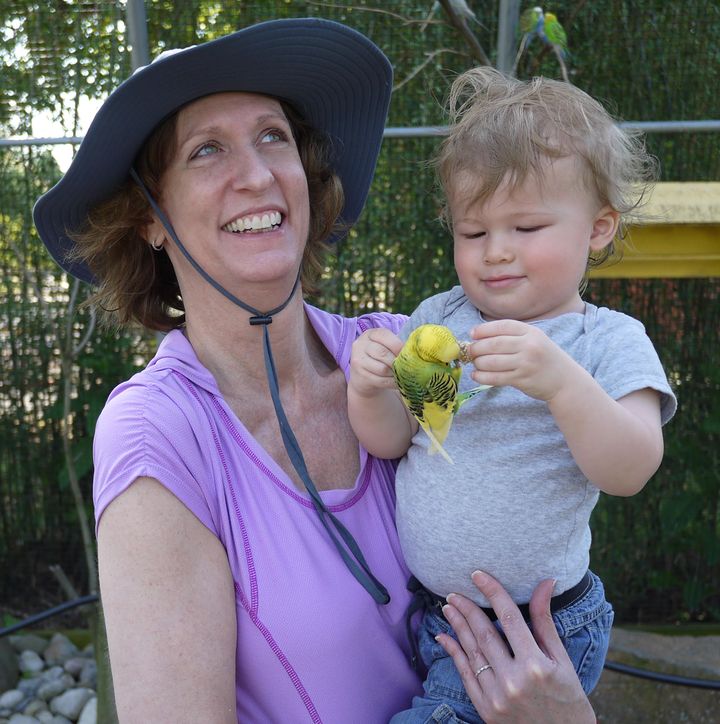
The author, who is freaked out by birds, and her son, Leo, when he was a toddler.
Courtesy of Cathy Alter
When I was growing up in Connecticut, my parents threw an annual Miss America party where guests bet on the contestants as if the young women were racehorses. It was the hottest ticket in town. Friends arrived in evening gowns and tuxedos, tossed $20 into the pot, and rooted for their “girl” while tearing down the 49 others.
Advertisement
My mother, a 6-foot-tall beauty with a penchant for red lips and backless suede dresses, could be especially vicious, taking note of a competitor’s “thunder thigh” or “unfortunate underbite” or describing a pair of straight-on nostrils as looking like “the Holland Tunnel.”
As the owner of the hippest clothing boutique the Bermuda-bag-carrying women of our sleepy town had ever seen, my mother was a true arbiter of style and presentation. By midnight, everyone was tanked and the guest who got closest to choosing the evening’s winner paraded around in a homemade sash and dime-store crown, both courtesy of my mother.
Now, decades later, I found a slew of pageants on Pageant Planet, a website that consolidates local and regional contests including Miss Earth USA, Mr. Crimson and Cream, and the pageant I wound up entering, Mrs. DC America. There were pageants for veterans, for senior citizens (I’m still a few years away from that one), for full-figured women, and one that sounds like a meta version of itself, The Empowered Woman pageant. If I were to create a montage of the contestants I saw across the site, the result would look like the b-rolls from all the Real Housewives franchises in existence.
The rules to enter the Mrs. DC America pageant were straightforward. If you were married, you could enter — which meant I could potentially be competing with child brides. Contestants are judged in three categories: the interview, the evening gown and the swimsuit. As if striding across the stage in a bathing suit and high heels wasn’t terrifying enough, there would be an opening dance number. With choreography. The winner of Mrs. DC would go on to represent the District of Columbia at the national Mrs. America Pageant in Las Vegas.
The next morning, I called one of the pageant directors. After a bit of chitchat, I learned that I had a little less than five weeks to prepare for the event, which would be held at a community center over an hour away, in Frederick, Maryland. Somehow, I’d imagined that I’d have at least a year to get ready, both physically and mentally. Now things were becoming both very real and very surreal.
Advertisement
“What do you want your sash to say?” she asked.
When I hesitated, baffled by her question, she clarified. “Where do you live in Washington?”
Which is how I appointed myself Mrs. Georgetown DC, after forking over a deposit of $250 (the entire cost of entry was $750) and promising to schedule a headshot with the official pageant photographer within the week.
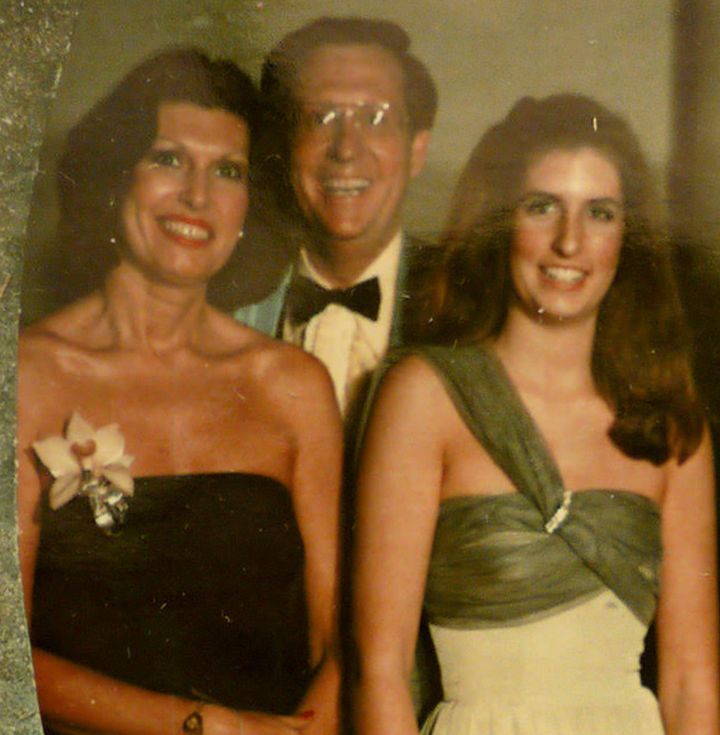
The author and her parents, Susan and Elliott Alter, in a photo taken on the author’s Sweet 16 and Susan’s 40th birthday. “The theme of the party, held in my mom’s old high school gym, was a 1950s prom,” the author writes.
Courtesy of Cathy Alter
I immediately launched into overdrive, making a to-do list like I was planning my wedding. Each action item begot new actions. I made an appointment for highlights, but did I also want to talk about hair extensions? How much were hair halos? (What were hair halos?!) There was no time to sit and reflect on who I was fast becoming.
I called the photographer and asked him what I’d need to bring to the photo shoot. Everything on his list included the word glitzy. Also, he advised, “Wear something that either shows your cleavage or your shoulders but not both. That’s just overkill.”
He suggested I buy a bag of rhinestones and glue them onto my bathing suit, which, for some reason, he kept calling a “one-piece bikini.”
Advertisement
“Are you going to photograph me in a bathing suit?” I asked him.
“No,” he said. “I just wanted to tell you about rhinestones.” His parting advice, worthy of its own bedazzled T-shirt was, “Go glam or go home.”
My friends were divided on my new title. Some had a field day at my expense. “Can your bathing suit be Victorian or come with a turtleneck?” asked one. “Does AARP have a beauty pageant?” asked another, choking back laughter. One emailed me an Amazon link for Preparation H, which has famously been used to tighten bags under the eyes. “Maybe you can use this on your butt, too,” was the subject line.
Others were more perplexed.
“It’s ironic that you’re looking for acceptance and confidence in the very place designed not to give it,” said one of my closest friends, expressing concern.
A few were outraged. When I met a friend and former editor, she pounded on the table. “You can’t do this!” she said, holding her fist up for another strike. “What does this say about the progress we’ve been making as women?”
She brought up how precarious it is to be female in the wake of Roe v. Wade and the gutting of abortion rights and the horrible message about appearance that I would be sending to Leo. She told me she wasn’t sure if she could be my friend if I went through with the pageant.
Advertisement
Still another saw me as a champion just for entering: “You’ve been given a bigger stage, to stand up for all people who feel less than. You’re saying, ‘I’m here, I made it, and so can you.’”
I had been Mrs. Georgetown for two days before the idea of competing began to seem like a genuinely half-baked idea. What the heck was I doing? And what sort of message was I sending to myself? To my husband? To Leo? (“Do you think I could win?” I had asked the poor kid, who immediately looked to Karl for a clue before answering, “It depends on the competition.”)
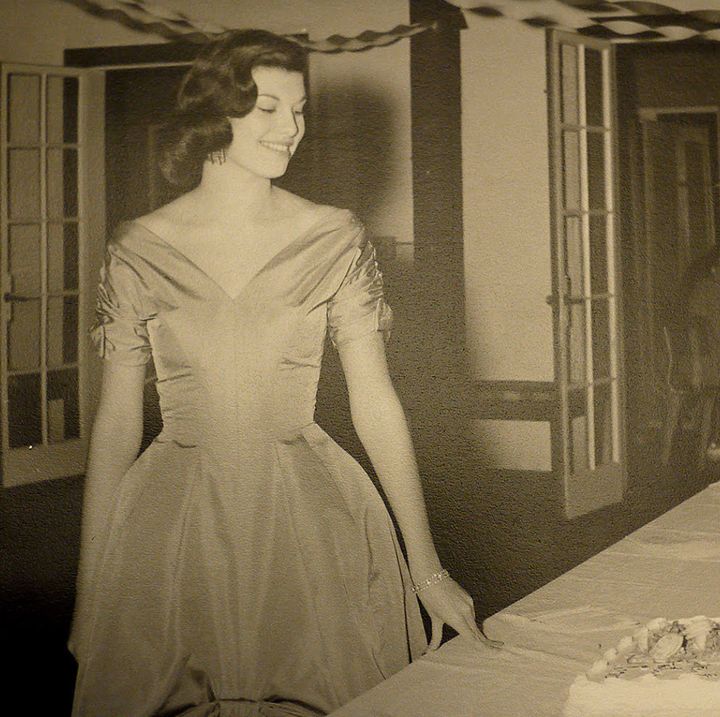
The author’s mother on the day of her Sweet 16 party. “That dress still hangs in the closet of the family home in Connecticut,” the author writes.
Courtesy of Cathy Alter
I’ve always had a complicated relationship with beauty. As their ruthless Miss America parties suggest, my parents placed great value on physical appearance. When we were little, my father used to chase my younger brother and me around our swimming pool with a spray bottle of Sun In hair lightener. After growing up poor, eating mayonnaise sandwiches and fending for himself, having golden-haired, sun-kissed children who looked like they belonged in the Kennedy compound was, for him, an emblem of success.
My mother’s guiding principle was that it was more important to look good than to feel good. When I was in high school, she sat me down and gently explained that because I was no natural beauty — “no Christie Brinkley” were her words — I’d always have to wear makeup.
Advertisement
I was on the tender cusp of womanhood, and my mother’s grim appraisal took root in my soul. Before dementia completely robbed her of the ability to speak, the last clear words my mother said to me were, “How about some blush?”
On my third day as Mrs. Georgetown, I decided it was time to try on evening gowns at my favorite consignment shop in D.C. Even though the saleswomen aren’t permitted to mention the origin stories of their merchandise, I’ve gotten in pretty good with some of the staff and have been able to wheedle out some details.
Along these lines, I wound up in the dressing room with what I knew was an evening gown once worn by Ivana Trump by a designer whose name I didn’t recognize. It was $125 and the color of tomato sauce from a can, with a mermaid silhouette, red jewels scattered down the front, and about 40 miles of tulle. When I unzipped it, I saw there was a grimy Calvin Klein strapless bra sewn inside, size 36C, and I had a sudden pang, knowing such a private detail about Ivana. My mother, too, wore a 36C. Placing my own breasts inside the bra — and being this close to its original owner — was surprisingly intimate.
I looked at myself in the dressing room mirror, trying and failing to imagine myself striding across a stage in a conference center in Frederick, Maryland, giving a royal wave, chest out, smile aided by Vaseline on my teeth, hammertoes screaming at the straps of my stilettos.
I heard a voice.
“Take it off,” it said. “It’s not you,” it said.
Whether it was my mother speaking or Ivana, it didn’t matter. The dress wasn’t me. And neither, I realized, was the pageant.
Advertisement
My mother often warned me about falling for a pretty face. “Looks fade,” she had said after a man with movie star looks obliterated my heart. She could have been talking about her own vulnerabilities around appearance and aging. It was the way I knew that, despite her critical eye, even she recognized deep down that there were things more valuable than looks. My mother would have been unsparing in her assessment of my chances in the pageant (none) and in my decision to enter it (dumb).
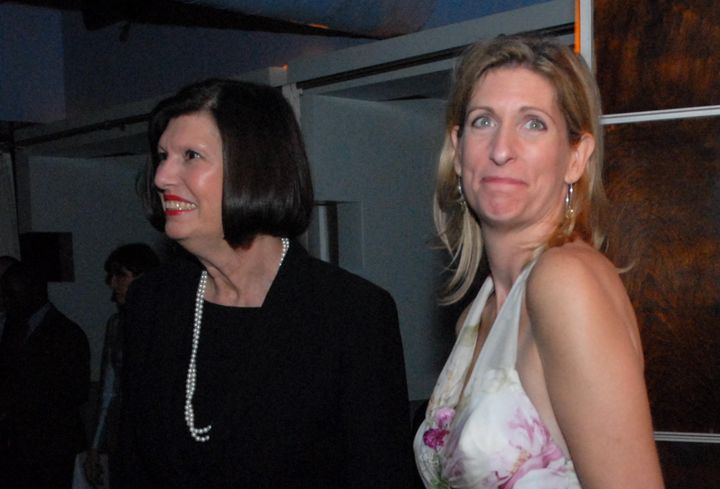
The author and her mother, taken on the author’s wedding day in 2006.
Courtesy of Cathy Alter
What good is beauty, anyway? It was surely a burden for my mother, who tried mightily to keep up appearances until that weight shifted to my father. He became her de facto makeup artist as she sat strapped in a wheelchair, unable to perform her own ministries, her hands clenched in rage.
After watching him spoon-feed her lunch (“Now, now,” he’d say whenever she tried to bite his fingers), the sight of him dabbing her lips with her trademark Love That Red made me reevaluate my own definition of devotion — of obligation. In the face of the inevitable, my father’s tacit efforts broke my heart.
On my final day as Mrs. Georgetown, I phoned the pageant director and dropped out of the race.
“Did something happen?” She sounded aghast, like maybe I had microderm-ed my face off.
“I don’t have the full support of my family and friends,” was my excuse, which approached the truth, at least partially.
Advertisement
The woman who went on to wear my Mrs. Georgetown sash, I learned later, was from Rockville, Maryland. In her official pageant headshot, she looks a little like a Facetuned Jennifer Coolidge.
The pageant fell on the same weekend as my father’s 90th birthday. Home in Connecticut, I showed my father a photo of my “replacement.”
“Good thing you dropped out,” he said. “You didn’t stand a chance.”
“Grandpa!” Leo looked at my face, concerned.
“Thanks for your vote of confidence,” I said, lightly punching his arm and reassuring myself that limitations are not heritable.
Later that night, Leo slipped me a note before bedtime. It read, in part, “I love you for yourself. I love your sweet, sweet, heart. Though you are beautiful, it’s what is inside that counts.”
It is a note I wish my mother would have written and dropped in the mail, addressed to herself.
Cathy Alter’s articles and essays have appeared in O, the Oprah Magazine, The Cut, Wired, and The Washington Post, among others. She is the author of “Virgin Territory: Stories From the Road to Womanhood,” the memoir “Up for Renewal: What Magazines Taught Me About Love, Sex, and Starting Over,” and “CRUSH: Writers Reflect on Love, Longing, and the Lasting Power of Their First Celebrity Crush.” She lives in Washington, D.C.
Like many collectors of L.P. records, James Fitzgerald’s brother-in-law has a favorite store where he consistently finds the best vinyl for his collection. But there are times when he spends hours at the store and comes up empty. He also knows that occasionally he should venture to the record store on the other side of town, where he sometimes scores a hard-to-find gem that was stocked since his last visit.
Fitzgerald’s brother-in-law is making a calculation: weighing probable outcomes to guide his behavior. His favorite record store rewards him more frequently, so he visits that store the most. The second-tier store is less likely to reward him, so he visits that store only occasionally.
Glenn Turner, who like Fitzgerald is a neuroscientist and group leader at HHMI’s Janelia Research Campus, says this “record foraging” habit is a perfect example of a type of behavior called matching that is pervasive in the animal kingdom. Instead of vinyl, non-hipster animals like mice and flies forage for food, using sensory cues like odors to evaluate food quality from a distance.
But, while matching has been observed in everything from pigeons to mice to humans, it was unclear how the brain carried out this value-based decision-making. Researchers had previously proposed a theory for how that might happen, but the idea hadn’t been tested in the real world.
Now, a team of Janelia researchers that includes Fitzgerald, Turner, Janelia Graduate Scholar Adithya Rajagopalan, former Janelia Fellow Ran Darshan and Research Specialist Karen Hibbard has confirmed that the proposed theory works. Rajagopalan’s experiments showed that, like Fitzgerald’s brother-in-law, fruit flies can make decisions based on their expectations about the likelihood of a reward. The team also pinpointed the site in the fly brain where these value adjustments are made, enabling them to directly test this theory on the level of neural circuits.
“We found that flies are using expectation to assign value to their world,” Turner says. “It also really nicely connects back to this theoretical work that was so elegant and explains this widespread phenomenon.”
Uncovering how the fly brain carries out this ubiquitous behavior could help scientists better understand how similar decision-making happens in the brains of larger animals, including humans. Decision-making goes awry in diseases like addiction, so understanding how this process works in simpler brains has broad value, according to the researchers.
advertisement
“The kinds of ideas and the theoretical framework that we have identified in this paper feel like a seed for evolution to build on in larger organisms, where more layers are added to allow for more complex behaviors,” says Rajagopalan, the first author of a new paper describing the work.
Investigating matching behavior
Fruit flies, whose brains have been well studied and mapped, were an appealing choice for examining matching and its underlying mechanisms. But first, the team had to design a way to observe fruit fly decisions.
Rajagopalan, who came to the Turner Lab through a joint graduate program with Johns Hopkins University, spearheaded the project. He designed an experiment where a single fly enters one arm of a symmetrical Y-shaped arena. Odors are pumped into the other two arms of the Y. The fly chooses to follow one odor or the other and is rewarded — in this case by having its sugar-sensing neurons activated — but with different probabilities: One odor might translate into a reward 80 percent of the time, while the other odor might yield a reward 20 percent of the time.
The researchers found that the fly learned to expect the rewards in the same proportions they were presented and then made its choice based on those expectations. These actions give the matching behavior its name: 80 percent of the time, the fly chose the odor that gives 80 percent of the rewards. And 20 percent of the time, it chose the odor that yields 20 percent of the rewards.
The team tracked the behavior to specific synapses in the mushroom body, a region of the fly brain responsible for learning and memory. This enabled them to create a model of how the brain carries out this behavior, based on the theory of matching. In this theory, the values associated with different choices are learned through changes in synaptic strength: Synaptic connections are strengthened or weakened in proportion to the difference between expected and received reward. The team’s model based on this theory and the fly’s behavior allowed them to demonstrate how individual synapses are changing to enable value-based decision-making.
The new work emphasizes the important interplay between experiment and theory, converging on a description of the rules governing how an animal learns — an outcome that the researchers say is satisfying on both a conceptual and mechanistic level.
“To be able to see that you can get these sophisticated economic decisions through this simple mechanistic explanation about how synapses are changing is a great illustration of what mechanistic cognitive neuroscience can mean,” Fitzgerald says. “We’re taking this universal property and using the strengths of these small animals to really nail it mechanistically.”
Using ancestry decomposition techniques an international research team has revealed a deeply divergent ancestry among admixed populations from the Angolan Namib desert. This unique genetic heritage brings the researchers closer to understanding the distribution of genetic variation in the broader region of southern Africa before the spread of food production.
Africa is the birthplace of modern humans and the continent with the highest level of genetic diversity. While ancient DNA studies are revealing some aspects of the genetic structure of Africa before the spread of food production, issues concerning DNA preservation have limited the insights from ancient DNA.
Hoping to find clues in modern populations, researchers from a Portuguese-Angolan TwinLab ventured into the Angolan Namib desert — a remote, multi-ethnic region where different traditions met. “We were able to locate groups which were thought to have disappeared more than 50 years ago,” states Jorge Rocha, a population geneticist from Centro de Investigação em Biodiversidade e Recursos Genéticos (CIBIO, University of Porto) who led the fieldwork, together with Angolan anthropologists Samuel and Teresa Aço from the Centro de Estudos do Deserto (CEDO).
Among the communities the team encountered are the Kwepe, a pastoral group who used to speak a language known as Kwadi. “Kwadi was a click-language that shared a common ancestor with the Khoe languages spoken by foragers and herders across southern Africa,” explains Anne-Maria Fehn, a linguist from CIBIO who participated in the fieldwork and was able to interview what may well be the last two speakers of Kwadi. “Khoe-Kwadi languages have been linked to a prehistoric migration of eastern African pastoralists,” adds Rocha, whose research focuses on southern African population history. In addition, the team contacted Bantu-speaking groups that are part of the dominant pastoral tradition of southwest Africa, as well as marginalized groups whose origins have been associated with a foraging tradition, distinct from that of the neighboring Kalahari peoples, and whose original language was supposedly lost.
Modern DNA research can complement ancient DNA studies
The team’s new study shows that the inhabitants of the Angolan Namib are quite divergent from other modern populations but also highly structured among themselves. “In agreement with our previous studies on the maternally-inherited DNA, most genome-wide diversity segregates according to socio-economic status. A lot of our efforts were placed in understanding how much of this local variation and global excentricity was caused by genetic drift — a random process that disproportionally affects small populations — and by admixture from vanished populations,” says Sandra Oliveira, a researcher at the University of Bern in Switzerland who worked with these populations during her PhD and post-doc studies with Rocha and Mark Stoneking at CIBIO and the Max Planck Institute for Evolutionary Anthropology (MPI-EVA) in Leipzig, Germany. The team demonstrated that besides the high impact of genetic drift, which contributed to differences among neighboring groups of different socio-economic status, the descendants of Kwadi speakers and the marginalized communities of the Namib Desert retain a unique Pre-Bantu ancestry that is only found in populations from the Namib desert.
Mark Stoneking, who contributed to the earliest genome-wide studies on southern African foragers and participated in this study, says: “Previous studies revealed that foragers from the Kalahari desert descend from an ancestral population who was the first to split from all other extant humans. Our results consistently place the newly identified ancestry within the same ancestral lineage but suggest that the Namib-related ancestry diverged from all other southern African ancestries, followed by a split of northern and southern Kalahari ancestries.” With this new information, the researchers could reconstruct the fine-scale histories of contact emerging from the migration of Khoe-Kwadi-speaking pastoralists and Bantu-speaking farmers into southern Africa. Moreover, the study demonstrates that modern DNA research targeting understudied regions of high ethnolinguistic diversity can complement ancient DNA studies in probing the deep genetic structure of the African continent.