Why scientists fear we’re missing evidence of extraterrestrial life

That question is at the center of a new paper published in Nature Astronomy, where researchers examine the often-overlooked problem of “false negatives” in the search for extraterrestrial life. These are cases in which life exists, or once existed, but scientists fail to detect it.

“We are currently investing a great deal of money in missions that might need to be designed differently.”

The Overlooked Challenge of Finding Alien Life

One of the primary goals of astrobiology is determining whether life exists elsewhere in the universe. Researchers search for clues that could point to living organisms, but interpreting those clues is rarely straightforward.

Scientists have long been concerned about so-called false positives, which occur when observations appear to indicate life but later turn out to have another explanation. False negatives present the opposite problem. In those cases, evidence of life is present, yet it goes unnoticed.

“We should be aware of these false-negative results,” says lead author Inge Loes ten Kate, professor of astrobiology at Utrecht University and the University of Amsterdam. “It means there are shortcomings in recognizing the existence of life. These shortcomings are not yet high on the research agenda.”

Why Signs of Life Can Be Missed

There are several reasons why evidence of life might escape detection. Traces left behind by organisms may not survive over time, observable signals may be too faint to identify, or existing technologies may simply be unable to detect them.

Ten Kate argues that these risks deserve much greater attention.

“We therefore advocate for the development of a targeted research strategy that systematically addresses these risks, in which we must combine laboratory experiments with modelling research and fieldwork. Space missions and instruments are designed to detect potential signs of life, but the risk of overlooking something is not taken into account. The search for signs of life should go hand in hand with better-defined questions and testable hypotheses to justify specific measurement or observation targets.”

The researchers also point to artificial intelligence as a potentially valuable tool. AI systems trained to identify patterns could reveal relationships or signals that human observers might never notice.

“Because then you might well uncover things that we would never be able to see on our own. And with new observations, you can then work out how and where they fit into such a pattern.”

The Cost of a False Negative

Missing evidence of life could have major consequences.

First, scientists might shift attention away from promising targets or reduce support for instruments that could detect forms of life beyond current capabilities. As a result, potentially habitable environments could be overlooked.

“A simplified example: if there is life under a rock, and you only look at that rock from above, that life will go unnoticed. So, investigate thoroughly whether the conditions for the existence of life forms are present in the environment, and whether you can recognize patterns on the surface of a celestial body.”

A second concern involves future exploration and resource extraction. If life exists on another world but remains undetected, policymakers could approve mining or other activities that unintentionally destroy it.

“Secondly, there is a danger that policymakers will approve the premature exploitation of raw materials on planets, with the risk of irreversibly destroying unnoticed life.”

Hidden Causes of False Negatives

False negatives can arise in several ways.

For example, life may be widespread and active on a planet, yet the traces it leaves behind might not be recognized. Atmospheric processes can also complicate the search. On some worlds, gases produced by living organisms may be removed or masked by other processes, making them much harder to detect.

Researchers note that these kinds of false negatives are particularly challenging because scientists often recognize them only after the fact.

Looking Beyond What We Already Know

One of the biggest challenges is searching for something that may not resemble any known form of life.

“But how do you investigate things you can’t find?” asks Ten Kate. “That question goes to the heart of our problem, because we tend to look for things we already know. We therefore need to understand very clearly what kind of life is possible in a particular place, what the conditions for that life are, and how we can recognize the traces of that life. And even then, we might overlook things.”

Ten Kate points to iron-bearing minerals discovered on Mars last year. These minerals show a type of oxidation that differs from nearby materials.

“On Earth, we only see such differing oxidation as a result of the presence of life. But does that necessarily mean that we are dealing with life in an extraterrestrial context?”

Researchers stress that these Martian minerals do not represent a known false negative. Instead, they highlight how much remains unknown.

“To be clear: these minerals do not mean that we are dealing with false-negative results in this case. We simply do not yet understand what is going on here. But if we do not investigate this further, it could indeed result in a false negative. So we need to understand even better how the geochemistry works, and how the underlying chemical reactions operate in such situations. That will also help you try to rule out false-negative results.”

The researchers conclude that careful preparation is essential before sending missions to other worlds.

And, last but not least: know what you’re getting into before you send an expedition anywhere. “So make sure you’ve studied the situation in the landing zone meticulously in advance.”

Share Button

‘We can’t continue like this’: Inquiry demands NHS maternity overhaul

An independent inquiry into England’s maternity services has found “unacceptable racism and discrimination” is affecting patient safety.

Share Button

Resident doctors in England accept pay deal and end strikes

Doctors have been locked in a three-year dispute with the government, resulting in several rounds of strikes.

Share Button

Meet The $12 Wrinkle-Smoothing Pads Making People Cancel Their Botox Plans

It’s not breaking news that exfoliating pads remove makeup and tone skin pretty well. However, we’ve spotted RoC’s Line Smoothing cleansing pads that do you one better: RoC made these babies to remove makeup and work to smooth fine lines — and shockingly, reviewers are reporting that they’re actually effective. People are literally canceling Botox appointments because these foam-infused pads are surprisingly doing quite enough. And the kicker is that they’re less than $12. An $11.97 alternative to a beauty procedure? Consider us attentive.

“I usually get Botox twice a year,” one shopper shared.

Let’s get this out of the way: Of course, the pads don’t perform an actual Botox treatment. Needles are sold separately and at a much higher price. However, reviewers say the changes they are seeing have been more than enough to pause office visits in favor of a simple tweak to their skincare routine.

“Normally I would feel the need to get botox again by this point but these really do smooth my fine lines,” they continued.

“I’m not exaggerating when I say they give you an instant facelift.”

Instant facelift is a tall order for cleansing pads, so we always raise our virtual eyebrows when anyone shares that about a skin care product — except this isn’t the only shopper who decided against a procedure after trying these specific pads.👀

No joke, reviewers call the foamy discs a “much less expensive and invasive option” than Botox, while providing the Botox-like smoothing.

“I am 53 and my concerns were forehead furrows, lip lines, marionette lines and some jowls starting to sag. I was considering looking into mini lift or maybe fillers like Botox,” another reviewer shared, noting they were concerned the pads would be “strong enough” as they don’t contain retinol.

“The results from using this product have been significant,” they wrote. “The most significant improvement is diminished appearance of lip lines…Brow furrows appear far less defined-still there but not as deep. I really hadn’t expected a change in the marionette lines or jowl thing-but they too are noticeably diminished!”

“I have found the glabellar lines between my eyebrows have become way less noticeable,” another said. “I was considering botox to help with those so I am quite happy to have found a much less expensive and invasive option. I have also noticed a considerable amount of brightening of my skin in general.”

So, how exactly are these pads this effective? Good question.

We’ve confirmed with experts just how crucial yet often forgotten the exfoliation step is to a mature skin care routine. The process helps remove dead skin to “reveal brighter and more rejuvenated skin,” and reduce the appearance of lines and wrinkles, aesthetician Sean Lundy previously told HuffPost.

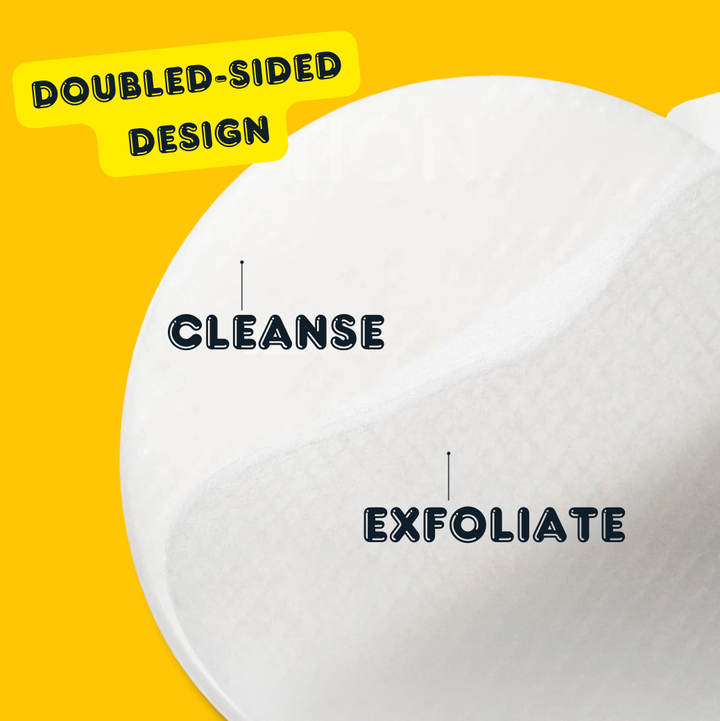
With the RoC pads, you can tackle the cleansing and exfoliation in one session. The smooth side is great for gentle cleaning, while the textured side offers physical exfoliation as you swipe. Additionally, the foam in the pads boasts ultra-hydrating ingredients like glycerin and butylene glycol to plump the skin, while the glycine soja (soybean) protein works as an antioxidant and skin-conditioner.

Beyond addressing wrinkles, reviewers report a slew of other noticeable facial improvements — making these pads a no-brainer routine upgrade.

People are sharing that their pores look smaller, makeup sits nicer and lifelong bumpy, oily skin is finally starting to look smooth and matte. Several shoppers also note that their skin has an “undeniable new glow.” That, good people, is evidence of a product that multi-tasks hard.

The brand says they’re gentle enough to be used twice daily, as you prep your face for the day and as you wind down for sleep. You get 28 pads in a pack, though many cut them in half to double the amount. Reviewers say the pads rival luxury skincare in experience and effect, at an unbeatable price.

Reviewers love these handy pads for making smoothing skin care quick and easy. Read more 5-star reviews and grab a set for yourself for under $12.

“I bought these on a whim in December when I ran out of my normal cleanser not expecting much. After 3 months I can safely say I’m amazed. This is one of my favorite skincare products and I’ve used everywhere from high end, prescription and drugstore. I’m 37 and have the start of wrinkles on my forehead. I usually get botox twice a year, normally I would feel the need to get botox again by this point but these really do smooth my fine lines. I’m not exaggerating when I say they give you an instant facelift. After 3 months I have less discoloration and my face feels fresh. I 100% recommend these. I can’t believe how affordable they are!” — BBRebBe

“These are amazing. I was contemplating botox due to lines in my forehead. I decided to try these disks and my skin was brighter and softer after using the first time. It had the kind of glow like I had been to the spa. I have been using almost daily for about 1 week and the difference is visible to me. The lines in my forehead have not vanished (it isnt magic) but they have dramatically diminished. I will continue to use all over my face. I hate I did not take before and after pictures.” — Monica

“Love, love this product. I’ve been using RoC products for 12 years, since I first read they were best all around for fighting wrinkles without draining your wallet. These remove makeup so fast and leave my face feeling incredibly refreshed. I find I sleep better too when I use these. I cut them in half to make them go further.” — Lelsie Stuart

“I will add my voice to all the happy reviewers of this product. I have been very pleased with how it has worked on my skin. I don’t have many wrinkles to contend with but I have found the glabellar lines between my eyebrows have become way less noticeable. I was considering botox to help with those so I am quite happy to have found a much less expensive and invasive option. I have also noticed a considerable amount of brightening of my skin in general.

Looking for more skin care for mature skin that reviewers say actually makes a difference? Check out this list below, courtesy of HuffPost Shopping.

Target

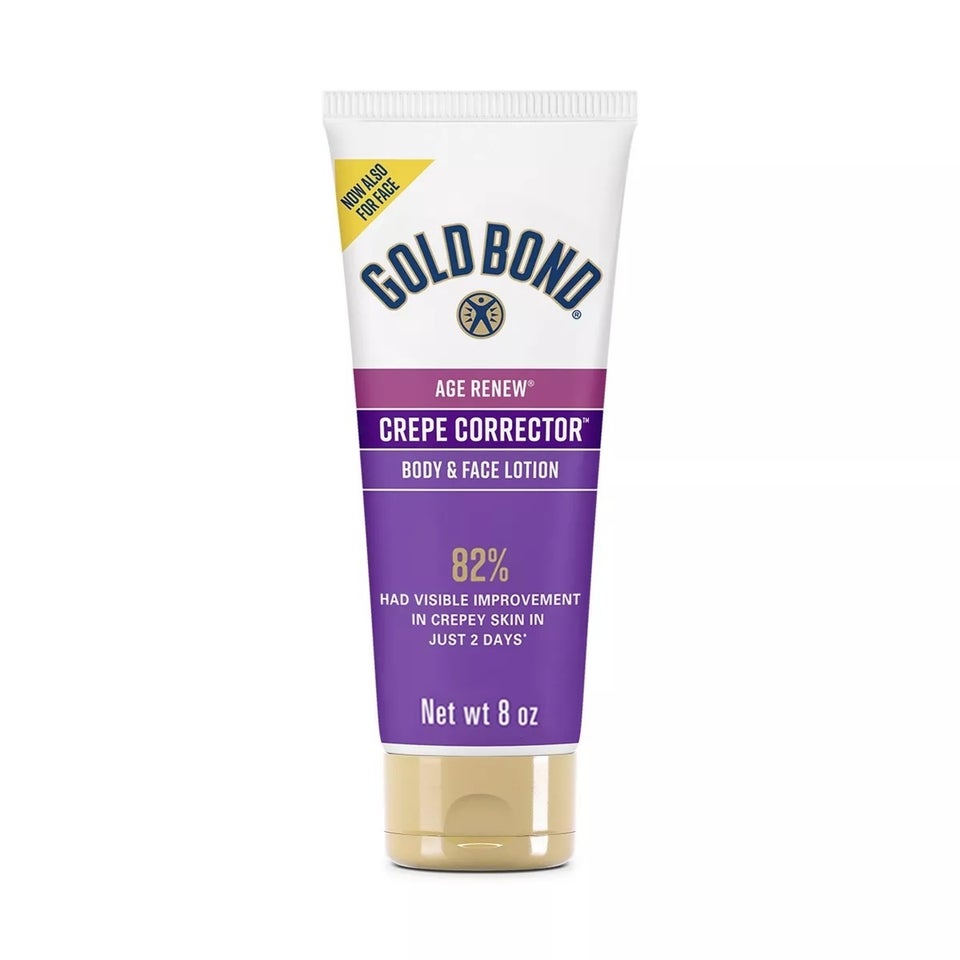
Gold Bond Age Renew Crepe Corrector body and face lotion

We’ve covered this affordable face and body cream from Gold Bond before, and it doesn’t seem like its popularity is going away any time soon. If you’re dealing with thin, fragile, “crepey” skin, this non-greasy, fast-absorbing product is specifically formulated to firm and hydrate the skin with seven moisturizers and three vitamins. You can use this on your face as well as your neck, arms, the backs of your hands or wherever else you notice your skin looking dry, thinner and more fragile.

Promising Amazon review: “If you are looking for a truly budget friendly, and exceptionally versatile line of facial & body care, this is it. I have used the Crepe erase on my arms and legs for 2 weeks and I see a real game changer. Are my arms and legs devoid of all crepiness? NO! Don’t let any brand tell you that they can make any natural aging bodily changes disappear. However, this cream, when used consistently will provide a temporary plumpness to those crinkled areas. Sufficient to give you confidence to wear short sleeves, or straps, along with shorts or swimsuit. I am 65, I am happy and grateful to have reached my mature age, nevertheless, I want and will give my skin all the effective products to keep them as supple as is possible.” — marihad t arrus

Amazon

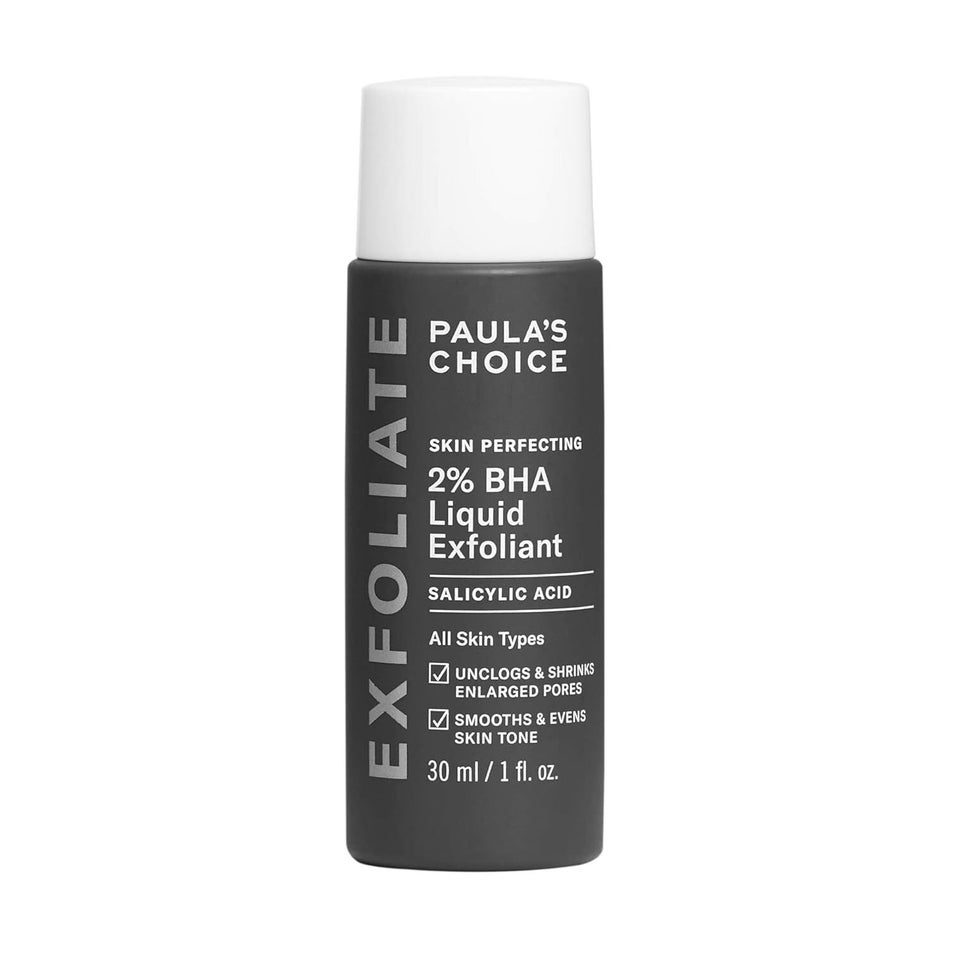
Paula’s Choice Skin Perfecting 2% BHA liquid exfoliant

Containing beta hydroxy acid (BHA) to help clear the buildup of dead skin, this Paula’s Choice exfoliant can reduce enlarged pores, as well as blackheads and whiteheads. It can also smooth your skin’s texture while improving the skin barrier. You can grab this in a travel size or a full 4-ounce bottle.

Promising Amazon review: “I’ve been using this stuff for about 6 weeks and my skin did a lot of purging for the first couple of weeks like a lot the the “bad” reviews on here said, but it was helping get all the gunk out from under my skin including some really tough white heads and hard little bumps in my skin so I was happy to ride it out. Now after six weeks of using at night, I can see a huge difference in my skin, especially in the pore size on my cheeks and nose. I’ve always had large pores and a few acne scars here and there since I was a teenager and it’s made me self conscious my whole adult life, but for the first time EVER, I look at my skin and all I see is smooth, healthy skin! I am early 40s and the fine lines in my forehead and around my eyes are virtually gone too. I’m amazed! Looks like I have a filter on! So happy I found this product!” — MF

Amazon

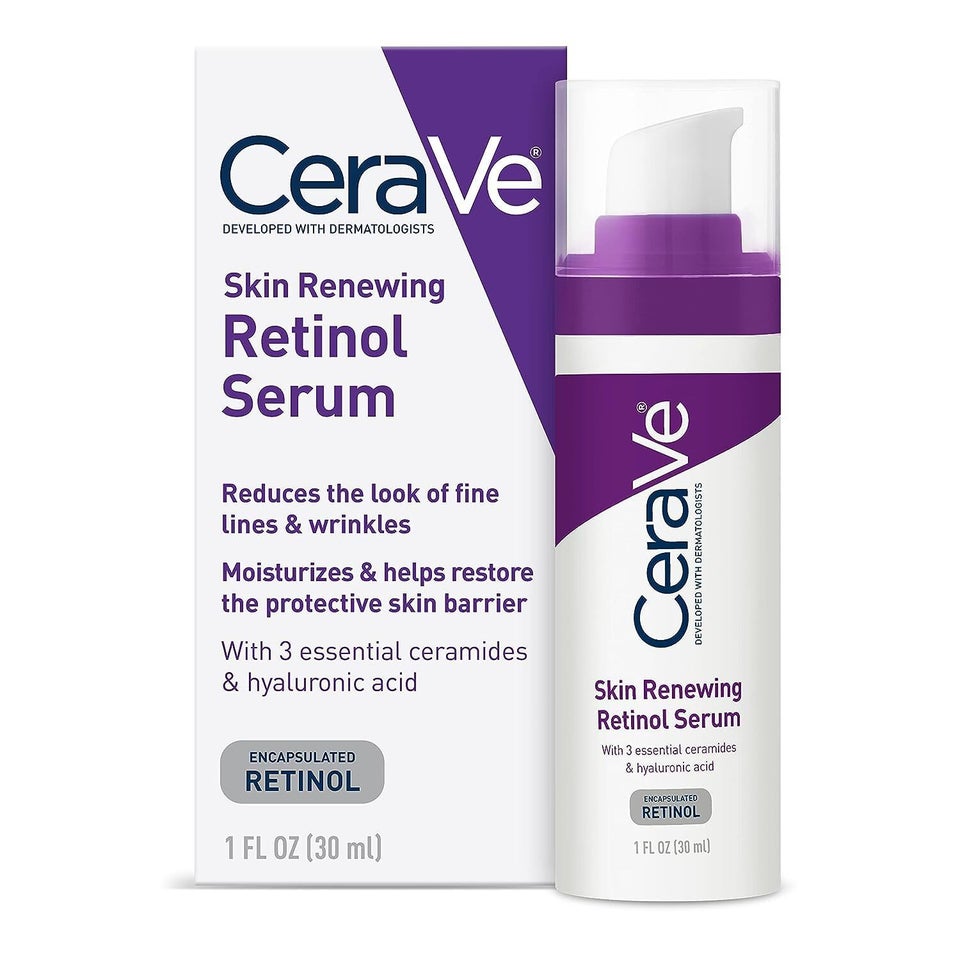
CeraVe Skin Renewing retinol serum

If you can’t stomach spending $85 on a retinoid serum, no worries — there are affordable alternatives that reviewers also love, like this retinol serum from CeraVe. In addition to retinol, it contains hyaluronic acid and niacinamide for a moisturizing boost. The retinol can help with wrinkles and fine lines, and the product is sensitive skin-friendly, as it’s fragrance-free and noncomedogenic with a gentle formula.

Promising Amazon review: “I am almost 70 and I see a noticeable difference after two weeks. I had slight flaking the first week, but that stopped. My skin is firmer, softer, and the wrinkles less noticable. I will be ordering again.” — Marilyn

The Real Deal: We use deal trackers and commerce experience to sift through “fake” hike-and-drop deals and other deceptive sales tactics. Products will usually be rated at least 4 stars with a minimum 15% discount. (And when there’s an exception, we’ll tell you why.)

Share Button

Resident doctors take strike action over pay

The BMA said there will “undoubtedly be cancellation of operations, outpatient appointments and elective care” but “patient safety will still be prioritised”.

Share Button

Why is pregnancy sickness drug not easily accessible to all?

BBC journalist Linzi Kinghorn finds out why a pregnancy sickness drug is not always accessible on the NHS.

Share Button

Brain activity under anesthesia challenges what we know about consciousness

Researchers at Baylor College of Medicine have discovered that the human brain can continue performing surprisingly advanced language tasks even when a person is fully unconscious under general anesthesia. The findings, published in Nature, challenge long held assumptions about the relationship between consciousness and cognition. They also offer new insights that could shape future research on memory, language, and brain-computer interfaces.

“Our findings show that the brain is far more active and capable during unconsciousness than previously thought,” said Dr. Sameer Sheth, professor and Cullen Foundation Endowed chair of neurosurgery and a McNair Scholar at Baylor. “Even when patients are fully anesthetized, their brains continue to analyze the world around them.”

Recording Brain Activity During Anesthesia

To investigate what the unconscious brain is capable of, Sheth and his colleagues recorded the activity of hundreds of individual neurons in the hippocampus, a brain region involved in memory. The recordings were made while patients undergoing epilepsy surgery were under general anesthesia. These procedures gave researchers a rare opportunity to study this part of the brain directly.

The team used Neuropixels probes, an advanced technology that had never before been used in the hippocampus for this type of research. This allowed them to observe how the brain responded to sounds and language even when patients had no conscious awareness.

The Brain Continued Processing Language

The first experiment exposed patients to a series of repeating tones with occasional unexpected sounds mixed in. The researchers found that neurons in the hippocampus consistently detected these unusual tones. Even more interesting, the brain became better at recognizing them over time, suggesting that learning or neural plasticity was still taking place during anesthesia.

The researchers then increased the complexity of the experiment by playing short stories while continuing to record brain activity. The hippocampus showed clear evidence of processing language in real time. Patterns of neural activity revealed that the brain could distinguish different parts of speech, including nouns, verbs, and adjectives.

The team also made another surprising discovery. Neural signals could be used to predict upcoming words before they were spoken.

“The brain appears to anticipate what comes next in a story, even without conscious awareness,” said Sheth, who is also Director of The Gordon and Mary Cain Pediatric Neurology Research Foundation Laboratories within the Duncan Neurological Research Institute at Texas Children’s Hospital.

“This kind of predictive coding is something we associate with being awake and attentive, yet it’s happening here in an unconscious state,” said Dr. Benjamin Hayden, professor of neurosurgery at Baylor.

Rethinking Consciousness

The findings suggest that important cognitive abilities, including language comprehension and prediction, may not depend on conscious awareness. Instead, consciousness itself may arise from communication across multiple brain regions rather than from activity within a single area such as the hippocampus.

The researchers also noted similarities between the brain’s predictive behavior and artificial intelligence (AI). Just as large language models generate text by anticipating the next word, the hippocampus appeared to make similar predictions during language processing. Understanding these shared principles could help scientists better understand both biological and artificial intelligence.

The work may also contribute to future communication technologies, including speech prosthetics designed for people who have lost the ability to speak.

“Can we use these signals to deploy and run a speech prosthetic for some of the parts of the brain that are damaged by stroke or injury? These are questions that we can now consider in relation to this part of the brain,” said Dr. Vigi Katlowitz, first author and a neurosurgery resident with Baylor.

More Research Is Needed

The researchers caution that the findings should be interpreted carefully. The study examined only one type of general anesthesia, so the results may not apply to other unconscious states such as sleep or coma. In addition, the research focused on a single brain region, and it remains unclear how broadly these processes occur throughout the brain.

“This work pushes us to rethink what it means to be conscious,” said Sheth. “The brain is doing much more behind the scenes than we fully understand.”

Share Button

These tiny soil microbes could rescue crops from salty farmland

Researchers have uncovered an unexpected natural ally that could help farmers tackle one of agriculture’s fastest growing challenges: salty soil.

A team including scientists from the University of East Anglia (UEA), led by Chinese researcher Dr. Yanfen Zheng, found that naturally occurring soil bacteria can significantly improve plants’ ability to survive in saline conditions.

The study also uncovered a previously unknown way these microbes protect crops such as maize, tomato, and rapeseed from salt stress. The discovery could eventually help farmers grow food on land that has become too salty for conventional agriculture.

Soil salinity threatens global agriculture

Salt buildup in farmland is becoming an increasingly serious problem because of climate change, irrigation practices, and rising sea levels. As salt accumulates in soil, it stunts plant growth, damages roots, and can sharply reduce crop yields.

Prof Jonathan Todd, from UEA’s School of Biological Sciences and the Quadram Institute on the Norwich Research Park, said: “The build-up of salt in farmland is a major and worsening problem — driven by climate change, irrigation and rising sea levels.

“Salt chokes plant growth, damages roots and severely impact entire harvests — putting global food supplies at risk.

“We know that plants rely on communities of microbes around their roots, called the root microbiome, to help them cope with environmental stress. But exactly how these relationships work, and whether they are consistent across crops and soils, has remained largely unclear.

“We found that plants appear to recruit beneficial bacteria in salty soil conditions, which in turn trigger internal changes that strengthen their physical structure and resilience.

“If scientists can harness this natural process, it could mark the beginning of a new era in climate-resilient agriculture.”

Root microbes drawn to salt stressed plants

To better understand these plant and microbe partnerships, the researchers examined root microbiomes from multiple crop species grown in different soil types.

They discovered that a group of naturally occurring bacteria known as pseudomonads consistently gathered around plant roots exposed to salt stress. The same pattern appeared across several crops, including maize, tomato, and rapeseed, suggesting this is a widespread biological response rather than something unique to a single plant.

Genetic analyses also explained why these bacteria perform so well in salty environments.

Prof Todd said: “Compared to other microbes, pseudomonads carry specialized genes that help them tolerate high salt levels, including sodium transport systems and other stress-resistance mechanisms.”

Stronger roots and higher yields

The team then introduced selected pseudomonad strains to soybean plants. In both greenhouse studies and field trials, the bacteria successfully colonized the roots and substantially improved plant growth under salty conditions.

“We found that plants treated with the microbes showed stronger root systems, better development and higher yields compared to untreated plants grown in salty soils,” said Prof Todd.

An unexpected plant defense

The researchers were surprised to discover that the bacteria were not helping plants by reducing salt levels inside their tissues.

“The most surprising thing was finding out how the bacteria helped plants cope.

“For decades, it was thought that plants survive salinity by controlling sodium levels -essentially keeping harmful salt out. But we found no evidence that bacteria influenced sodium transport or ion balance.

“Instead of helping plants manage salt directly, the bacteria stimulated the plant to produce more of a substance called lignin.

“Roots of bacteria-treated plants showed a significant increase in lignin content, with some measurements rising by over 30 percent under salt stress.”

Lignin strengthens plants naturally

Lignin is a strong, woody material that forms part of plant cell walls. It acts like a built in support system, reinforcing plant tissues and helping them withstand environmental stress.

The researchers identified the key genes responsible for increasing lignin production. When those genes were artificially overexpressed, plants performed much better in salty soil.

By contrast, plants that were unable to produce lignin did not benefit from the bacteria, showing that lignin production is essential to the newly discovered protective effect.

Prof Todd said: “We hope this discovery opens up new possibilities for agriculture.

“By harnessing naturally occurring microbes like pseudomonads, bio-based treatments could be developed that help crops grow in saline soils without heavy chemical inputs.

“With vast areas of farmland already affected by salinity and more under threat, microbial solutions could become an essential tool for maintaining crop yields and ensuring food security.”

The findings were published in the journal Science Advances in the paper, “Pseudomonads associated to salt-stressed plants facilitate stress adaption of soybean through enhanced lignin biosynthesis.”

Share Button

Over one million children referred for mental healthcare – with anxiety the main reason

Demand is soaring beyond capacity, meaning children in England wait years for help with various conditions.

Share Button

Loved and loathed: The making of India’s viral liver doctor

Dr Cyriac Abby Philips has built a large online following, but often clashes with India’s traditional medicine specialists.

Share Button