Sharon Gregg, who bleeds from her nose, eyes and fingernails, calls for understanding of her rare disorder.


Sharon Gregg, who bleeds from her nose, eyes and fingernails, calls for understanding of her rare disorder.
BBC analysis of notices issued by coroners shows repeated failings in the care of autistic people.
Fertility experts are now using artificial intelligence to help find sperm in medical samples.

Though a cornerstone of thermodynamics, entropy remains one of the most vexing concepts to teach budding physicists in the classroom. As a result, many people oversimplify the concept as the amount of disorder in the universe, neglecting its underlying quantitative nature.
In The Physics Teacher, co-published by AIP Publishing and the American Association of Physics Teachers, researcher T. Ryan Rogers designed a hand-held model to demonstrate the concept of entropy for students. Using everyday materials, Rogers’ approach allows students to confront the topic with new intuition — one that takes specific aim at the confusion between entropy and disorder.
“It’s a huge conceptual roadblock,” Rogers said. “The good news is that we’ve found that it’s something you can correct relatively easily early on. The bad news is that this misunderstanding gets taught so early on.”
While many classes opt for the imperfect, qualitative shorthand of calling entropy “disorder,” it’s defined mathematically as the number of ways energy can be distributed in a system. Such a definition merely requires students to understand how particles store energy, formally known as “degrees of freedom.”
To tackle the problem, Rogers developed a model in which small objects such as dice and buttons are poured into a box, replicating a simple thermodynamic system. Some particles in the densely filled box are packed in place, meaning they have fewer degrees of freedom, leading to an overall low-entropy system.
As students shake the box, they introduce energy into the system, which loosens up locked-in particles. This increases the overall number of ways energy can be distributed within the box.
“You essentially zoom in on entropy so students can say, ‘Aha! There is where I saw the entropy increase,'” Rogers said.
advertisement
As students shake further, the particles settle into a configuration that more evenly portions out the energy among them. The catch: at this point of high entropy, the particles fall into an orderly alignment.
“Even though it looks more orientationally ordered, there’s actually higher entropy,” Rogers said.
All the students who participated in the lesson were able to reason to the correct definition of entropy after the experiment.
Next, Rogers plans to extend the reach of the model by starting a conversation about entropy with other educators and creating a broader activity guide for ways to use the kits for kindergarten through college. He hopes his work inspires others to clarify the distinction in their classrooms, even if by DIY means.
“Grapes and Cheez-It crackers are very effective, as well,” Rogers said.

Van Andel Institute scientists and collaborators have identified a key part of a mechanism that annotates genetic information before it is passed from fathers to their offspring.
The findings, published today in the journal Science Advances, shed new light on genomic imprinting, a fundamental, biological process in which a gene from one parent is switched off while the copy from the other parent remains active. Errors in imprinting are linked to a host of diseases, such as the rare disease Silver-Russell syndrome along with certain cancers and diabetes.
“Proper imprinting is crucial for lifelong health but, despite its importance, we still lack a full understanding of the factors that regulate this vital process,” said VAI Associate Professor Piroska Szabó, Ph.D., the study’s corresponding author. “Our findings reveal an RNA mechanism that governs establishment of imprinting and illuminates why it differs between fathers and mothers.”
Our genetic information is encoded in DNA, a long, winding molecule that is tightly packed to form 23 pairs of chromosomes, half of which come from one’s father and half from one’s mother. Sperm and eggs only contain 23 single chromosomes — half of the genetic material required for life. During fertilization, they each contribute their half, resulting in a zygote with a full set of 23 pairs of chromosomes.
But not all instructions in DNA are needed at the same time or in the same places. That’s where epigenetics come in. Epigenetic mechanisms annotate DNA with special chemical tags called methyl groups, which tell certain genes when to be active and when to be silent — all without changing the sequence of DNA itself.
Imprinting occurs when methyl groups are added to certain genes during either sperm or egg formation. This, in turn, is important for determining which parental copy of that gene is expressed in the offspring.
To better understand the processes that govern imprinting, Szabó and colleagues focused on an imprinting control region in the DNA that regulates the Igf2 gene. Igf2 plays key roles in fetal growth and only is active in the chromosome inherited from the father. Too little methylation in the IGF2 control region in humans can result in Silver-Russell syndrome, which is marked by reduced growth and increased risk of metabolic disease.
advertisement
“If the IGF2 gene’s imprinting control region from one’s father is not methylated, it can result in disease,” Szabó said.
Using genetic models and in-depth genetic sequencing, the team found that the methylation of the Igf2 control region in paternally inherited DNA is governed by an underlying RNA-based process in the male germline.
“We found earlier that RNA similarly runs through other paternally marked imprinted domains in the male germ cells, suggesting that this same process is generally true for paternal imprinting,” Szabó said. “These results suggest a more broadly applicable process, which is exciting and will need to be confirmed in subsequent studies.”
Other authors include Ji Liao, Ph.D., Zhen Fu, Ph.D., Ivan VanderKolk, Brianna M. Busscher and Kin H. Lau, Ph.D., of VAI; Sangmin Song of City of Hope Cancer Center; and Samuel Gusscott, Ph.D., and Julie Brind’Amour, Ph.D., of Université de Montréal.

A study of twins shows that having a concussion early in life is tied to having lower scores on tests of thinking and memory skills decades later as well as having more rapid decline in those scores than twins who did not have a concussion, or traumatic brain injury (TBI). The study is published in the September 6, 2023, online issue of Neurology®, the medical journal of the American Academy of Neurology.
“These findings indicate that even people with traumatic brain injuries in earlier life who appear to have fully recovered from them may still be at increased risk of cognitive problems and dementia later in life,” said study author Marianne Chanti-Ketterl, PhD, MSPH, of Duke University in Durham, North Carolina. “Among identical twins, who share the same genes and many of the same exposures early in life, we found that the twin who had a concussion had lower test scores and faster decline than their twin who had never had a concussion.”
The study involved 8,662 men who were World War II veterans. The participants took a test of thinking skills at the start of the study when they were an average age of 67 and then again up to three more times over 12 years. Scores for the test can range from zero to 50. The average score for all participants at the beginning of the study was 32.5 points.
A total of 25% of the participants had experienced a concussion in their life.
Twins who had experienced a concussion were more likely to have lower test scores at age 70, especially if they had a concussion where they lost consciousness or were older than 24 when they had their concussion. Those twins with traumatic brain injury with loss of consciousness, more than one traumatic brain injury and who had their injuries after age 24 were more likely to have faster cognitive decline than those with no history of traumatic brain injury.
For example, a twin who experienced a traumatic brain injury after age 24 scored 0.59 points lower at age 70 than his twin with no traumatic brain injury, and his thinking skills declined faster, by 0.05 points per year.
These results took into account other factors that could affect thinking skills, such as high blood pressure, alcohol use, smoking status and education.
“Although these effect sizes are modest, the contribution of TBI on late life cognition, in addition to numerous other factors with a detrimental effect on cognition, may be enough to trigger an evaluation for cognitive impairment,” Chanti-Ketterl said. “With the trend we are seeing with increased emergency room visits due to sports or recreation activity injuries, combined with the estimated half million members of the military who suffered a TBI between 2000 and 2020, the potential long-term impact of TBI cannot be overlooked. These results may help us identify people who may benefit from early interventions that may slow cognitive decline or potentially delay or prevent dementia.”
A limitation of the study was that traumatic brain injuries were reported by the participants, so not all injuries may have been remembered or reported accurately.
The study was supported by the National Institute on Aging and the U.S. Department of Defense.
The research helps understanding of the earliest moments of life and the reasons behind infertility.
Shannon Meenan Browse died from malnutrition after gastric sleeve surgery in Turkey 18 months ago.
Isn’t there something so thrilling about finding a truly stellar and game-changing product? It’s a huge joy, and you want to tell everyone how great it is and use it all the time and bask in its glory and congratulate yourself for choosing it and see other people experience it, too. It’s so satisfying to see good results that make a purchase truly worth it.
That’s how I feel about Revision Skincare’s YouthFull Lip Replenisher, which I bought last month while on a mission to find something that would care for and address my aging lips. My lips have gotten just as much sun damage as the rest of my face over the last nearly-five decades, and it was starting to show in fine lines. I’m not overly bothered by signs of aging, but I do want to take care of my face, and of course I can’t just slap some retinol cream on my lips like I can on my crow’s feet. Lip skin is wildly delicate.
Advertisement
I figured one of the most promising lip-safe active ingredients would be peptides, given that certain peptides can have skin-restoring abilities and help address things like loss of firmness, dullness and fine lines, and others are solid antioxidants. Although they don’t produce quick miracles — no skin care does — peptides can be effective, and some are gentle enough to be included in lip products. I tried a few of them, including Hailey Bieber’s peptide lip gloss (what can I say? she has good skin!), but nothing was really doing it for me.
Then I took one last stab at it when I spotted Revision’s peptide treatment at Dermstore. Designed to target visible signs of lip aging, it not only has several peptides including palmitoyl tripeptide-1 and palmitoyl tripeptide-38, but also other research-backed ingredients like vitamins E and C and green tea that can work well in tandem with peptides, plus very solid moisturizers like shea butter. I put it on overnight — more on that choice below — and let me tell you, I could actually tell a difference the very next morning.
Advertisement
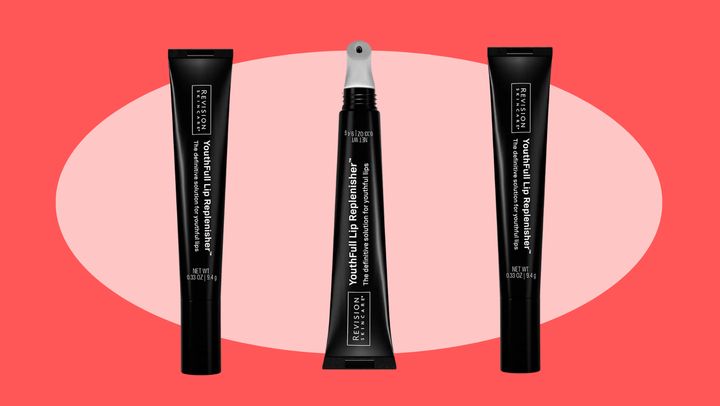
My lips hadn’t been in terrible shape, but they definitely seemed smoother than they’d been in years. They weren’t puckery. They didn’t look wrinkly. And they certainly felt supremely healthy. I kept going with overnight use, and within days felt like this it was making a real difference. I was honestly floored when I woke up each morning, and kept being reminded during the day when they just felt so freshly smooth all the time. And given how little of it I have to squeeze out to give my lips a solid coat, I feel like this one tube is going to last for an almost comically long time (a relief given that $40 is way more than I typically spend on a lip balm).
I will note that when I first put this on, I immediately knew it wasn’t going to be a product I’d wear much during the day, despite Revisions’s guidance of applying it three times daily. It’s pretty thick and sticky (if you are constantly pulling your hair out of your lip gloss, you know the struggle). But as one reviewer noted, this is actually the product’s superpower, because it absolutely does not budge, even if you wear it overnight. “Although some reviews complain about the tackiness of the balm, that’s actually what is so great about this product!” wrote a Dermstore customer named Lizzie. “It sticks to lips better than any other balm I’ve tried.”
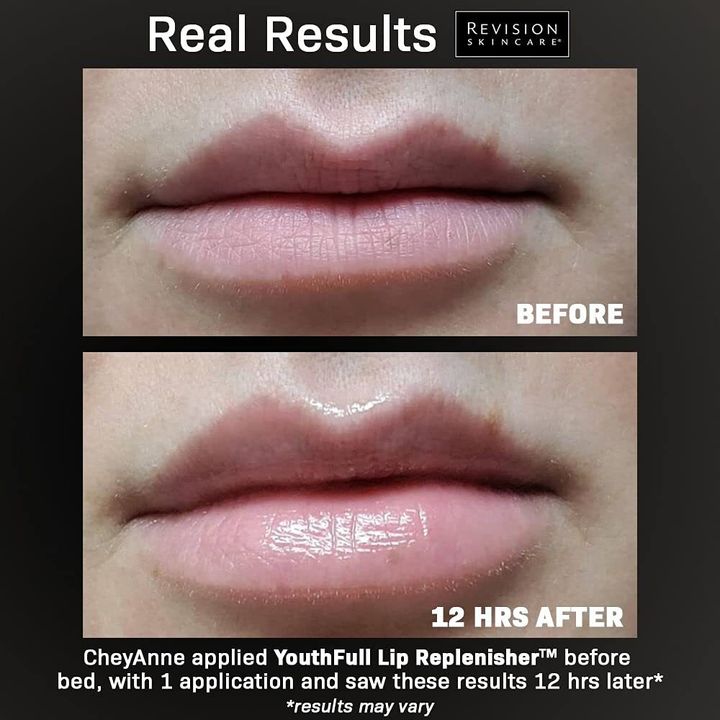
I can attest to this. Each morning when I wake up, it’s still there as if I just applied it. I sleep on my side, but it doesn’t melt off or get on my pillow. The fact that it clings so hard and lasts so long gives me some assurance that all those little peptides really are hard at work while I sleep, safely ensconced on my lips in a very stay-put formula.
Advertisement
Although some reviewers do enjoy it wearing this formula as a daytime gloss, many others are using it overnight only, too, and say it makes their lipstick easier to apply the next day. Some aren’t so concerned with fine lines, and simply use it for dry, cracked lips in winter or desert climates (and they say it’s hugely effective for that). Read some promising thoughts from verified Dermstore purchasers and Amazon reviewers below:
“Love this product. The day it arrived I used it twice, at noon and before bed. When I woke up in the morning I did a double take in the mirror. My 46 year old lips were reminded me of the 18 year old lips in my senior pictures! They were more defined on the edges, and a bit more plump. The results after one night were amazing!” — Julie at Dermstore
“I have a pretty epic lip balm graveyard in my beauty cabinet so I was not expecting much from this, but it knocked my socks off! It’s so good. Very thick and sticky, but that helps it stay on all night. I just wipe off the residue in the morning and my lips look amazing. I have not had a single skin flake since I started using this. I also love the smell, which is very delicate. Will definitely repurchase.” — Anonymous at Dermstore
“There are tons of lip moisturizers and masks and I’ve tried many of them. They essentially have the same end result…temporary hydration of the lips. None of them have ever really wowed me until I tried Revision! What makes it different? It adheres to the lips unlike any product that I’ve ever tried. I apply it at bedtime and it is STILL there in the morning! That kind of adherence means that the active ingredients make contact with the lips longer so they can work their magic. My lips are hydrated and plumped all day long with just a night time application so it’s very cost effective as well.” — Laura at Dermstore
“It actually works! My Dermatologist recommended this to me. Results are noticeable some in the beginning but with daily use (throughout the day) my lips are fuller, less wrinkles! (age 46)” — Amy Gragg at Amazon
“I am embarrassed to say how many of these tubes I’ve purchased since first using it after lip injections in August. There is absolutely nothing that comes close in both appearance and function. It stays on for hours and my lips are plump, hydrated and regaining their natural healthy tone and texture. My only complaint is that there isn’t a punch card because I will be buried in this lip treatment.” — Jessica at Dermstore
“I’ve tried so many lip masks. Laneige, Tatcha, First Aid Beauty (was amazing and now discontinued), Bite, Fresh, Ole Henricksen, Kiehl’s (tastes and smells fantastic, lasts on lips for 4 minutes)…Tarte, Buxom, Dior, was a Burt’s Bees fan for a decade. BB is nice and keeps the moisture in, but no active ingredients to nourish. Revision is serious business… I travel for work, am on planes and changing climates weekly. My lips are soft and nourished. I’m over 50, and no lip lines. **Can’t recommend strongly enough. 10/10**” — Kimberly S at Amazon
“Didn’t want to love this product due to the price point but it really works. Gives me a plump lip filler look when left on overnight. Definitely prefer this to the laneige lip mask. It does have a sticky/tacky feel so best to use overnight vs during the day.” — Lindsey at Dermstore
Advertisement
Cases in under-50s jump 79% since 1990 but population rise and better reporting are likely factors.
