After a fourth case of meningitis B has been confirmed in Reading, BBC South’s health correspondent Alastair Fee shares what you need to know.


After a fourth case of meningitis B has been confirmed in Reading, BBC South’s health correspondent Alastair Fee shares what you need to know.
One in 10 women live with adenomyosis yet sufferers say their pain is often dismissed.

New research from Edith Cowan University (ECU) may provide an important boost for efforts to save the world’s rarest marsupial.
The Gilbert’s potoroo, a critically endangered species found only in Western Australia, has fewer than 150 animals left in the wild. Scientists from ECU and the Department of Biodiversity, Conservation and Attractions (DBCA) are working together to better understand what the small marsupials eat so conservation teams can identify suitable new habitats and help secure the species’ future.
“We are looking to recover the species through translocations, which is moving organisms from one location to another to create an insurance population in case anything was to happen in their existing populations,” School of Science PhD student Rebecca Quah explains.
“In doing that, one of the challenges was trying to determine what they are eating and where those resources can be found. Mycophagus — or fungi-eating mammal diets are quite hard to study because a lot of fungi remain undescribed.”
Using DNA From Scat To Study Diets
To investigate the potoroo’s diet, researchers used environmental DNA (eDNA) metabarcoding on scat (faeces) samples. The technique is becoming increasingly popular in wildlife research because it allows scientists to study animals without disturbing them.
“Traditionally, researchers would go through undigested material in scats to study animal diets, but trying to identify fungal spores remained a challenge,” Ms. Quah said.
“This research used a molecular technique, known as eDNA metabarcoding to decipher what animals are eating. It’s a non-invasive way of studying diet and all you need are fresh scats from the environment.”
The team also examined whether the diets of more common fungi-eating mammals overlapped with the Gilbert’s potoroo. Researchers focused on species that historically shared the same habitats.
“We examined quokka, quenda and bush rat scats and found that there was some overlap in the diet of the four mammals, and that habitat use between the quokka and potoroo were also really similar,” Ms. Quah said.
“Based on our results, we recommend focusing on areas where all three species persist together as an indicator of suitable food, or habitat, for future potoroo translocation sites.”
Rediscovered After Being Thought Extinct
Gilbert’s potoroo was once believed to have disappeared entirely before being rediscovered in 1994. Since then, conservation teams have tried several approaches to increase the population.
“Soon after their rediscovery, breeding them in captivity was tried, but that didn’t work out, particularly because of how picky they are with their food resources,” she said.
“This is why wild-to-wild translocations are so important. In 2015, a bushfire destroyed 90 per cent of core potoroo habitat in Two Peoples Bay, which is home to the only natural population of Gilbert’s potoroo. Fortunately, insurance populations had been established on Bald Island and in a fenced enclosure at Waychinicup National Park by DBCA.”
DBCA Research Associate Dr. Tony Friend said researchers are now searching for another suitable mainland site to establish an additional population. The species is currently spread across four locations, including two islands off the coast of Western Australia.
“The search for new translocation sites is an important next step in the recovery of Gilbert’s potoroo from near extinction. This publication shows that examining the fungal diet of mammals that occur with the potoroo can help in deciding where to establish new populations,” Dr. Friend said.
Why Fungi-Eating Mammals Matter
Ms. Quah’s broader PhD research focuses on the conservation and relocation of fungi-eating mammals, which play an important role in maintaining healthy ecosystems.
“Fungi-eating mammals are ecosystem engineers — they dig for fungi which helps in soil turnover, and they act as vectors for fungal spore dispersal.
“Fungi have several ecological functions, including having mutually beneficial relationships with plants, so mycophagous mammals are really important in maintaining healthy ecosystems.
“Unfortunately, many of Australia’s mammals are threatened because of predation from introduced cats and foxes. That is why it is vital that we do everything we can to help protect our native wildlife, and translocations are one important way to accomplish that goal.”

The famously tiny arms of Tyrannosaurus rex may have been the result of a major shift in how giant meat eating dinosaurs hunted, according to a new study led by researchers from UCL (University College London) and the University of Cambridge.
The research, published in Proceedings of the Royal Society B, examined 82 species of theropods, a group of mostly carnivorous, two legged dinosaurs. The scientists found that reduced forelimbs evolved independently in at least five dinosaur lineages, including tyrannosaurids, the group that included T. rex.
Rather than simply being a side effect of growing larger bodies, the study suggests that shrinking arms were closely connected to the evolution of massive, powerful skulls and jaws.
Giant Skulls Took Over the Hunt
The researchers discovered that dinosaurs with shorter arms tended to have especially robust skulls. That connection was stronger than the link between tiny arms and overall body size.
According to the team, this may reflect a major evolutionary shift in hunting strategy. As giant plant eating dinosaurs such as sauropods became more common, predators may have relied less on grasping prey with claws and more on delivering devastating bites.
Lead author Charlie Roger Scherer, a PhD student at UCL Earth Sciences, said: “Everyone knows the T. rex had tiny arms but other giant theropod dinosaurs also evolved relatively small forelimbs. The Carnotaurus had ridiculously tiny arms, smaller than the T. rex.
“We sought to understand what was driving this change and found a strong relationship between short arms and large, powerfully built heads. The head took over from the arms as the method of attack. It’s a case of ‘use it or lose it’ — the arms are no longer useful and reduce in size over time.
“These adaptations often occurred in areas with gigantic prey. Trying to pull and grab at a 100ft-long sauropod with your claws is not ideal. Attacking and holding on with the jaws might have been more effective.”
Scherer added that the evidence points to skulls becoming stronger before the arms began shrinking.
“While our study identifies correlations and so cannot establish cause and effect, it is highly likely that strongly built skulls came before shorter forelimbs. It would not make evolutionary sense for it to occur the other way round, and for these predators to give up their attack mechanism without having a back-up.”
Measuring Dinosaur Skull Strength
To investigate the relationship between arm size and skull power, the researchers developed a new method for measuring skull robustness. Their approach considered several factors, including bite force, skull shape, and how tightly the bones of the skull were connected. Compact skulls were considered stronger than longer, narrower ones.
Using this system, T. rex ranked as the most robust skull in the study. Close behind was Tyrannotitan, another enormous theropod that lived in what is now Argentina more than 30 million years before T. rex during the Early Cretaceous period.
The team believes giant prey animals may have triggered an “evolutionary arms race” in which predators evolved stronger jaws and skulls to overpower increasingly massive herbivores. In many cases, these hunters also grew to enormous sizes themselves.
Multiple Dinosaur Groups Evolved Tiny Arms
The researchers compared forelimb length with skull length and identified five dinosaur groups with notably reduced forelimbs. These included tyrannosaurids, abelisaurids, carcharodontosaurids (which included Tyrannotitan), megalosaurids, and ceratosaurids.
Their analysis showed that tiny arms were more strongly associated with skull robustness than with either skull size or total body size.
The study also highlighted that not all of these predators were gigantic. Majungasaurus, for example, had a heavily built skull and extremely small arms despite weighing only about 1.6 tons, roughly one fifth the weight of T. rex. The dinosaur lived in Madagascar around 70 million years ago and was still considered an apex predator.
Different Paths to the Same Result
The scientists also found that dinosaur groups reduced their forelimbs in different ways over time.
Among abelisaurids, the hands and lower sections of the arms beyond the elbow became dramatically smaller, with later species such as Majungasaurus developing exceptionally tiny hands. Tyrannosaurids, however, showed a more balanced reduction across the entire forelimb.
The researchers concluded that separate dinosaur lineages likely reached the same outcome through different evolutionary and developmental pathways.
The study was carried out by a broader research group focused on dinosaur evolution at UCL, working closely with the Natural History Museum. The group includes research fellows, postdoctoral scientists, and more than 10 PhD students studying dinosaurs and other vertebrates such as crocodiles and birds.

Women with low vitamin D levels may face a more painful recovery after breast cancer surgery and could require significantly more opioid medication afterward, according to research published online in the journal Regional Anesthesia & Pain Medicine.
The findings suggest that breast cancer patients with vitamin D deficiency (below 30 nmol/L) might benefit from taking vitamin D supplements before undergoing a radical mastectomy.
Researchers say growing evidence points to vitamin D playing an important role in how the body senses and regulates pain. Scientists believe this may be connected to the vitamin’s anti inflammatory properties and its effects on the immune system. Vitamin D deficiency is also frequently seen in people with breast cancer.
Study Examined Pain After Breast Cancer Surgery
To explore the connection, researchers carried out a prospective observational study at Fayoum University Hospital in Egypt between September 2024 and April 2025.
The study included 184 women with breast cancer who were preparing to have surgery to remove one breast. Half of the participants had vitamin D deficiency (below 30 nmol/L), while the other half had vitamin D levels above 30 nmol/L. The two groups were otherwise similar, with average ages of 44 and 42.
Doctors and nurses caring for the patients did not know their vitamin D status. All participants received the hospital’s standard treatment before, during, and after surgery.
During the operation, patients were given fentanyl to control acute pain. After surgery, everyone received intravenous paracetamol every eight hours. Patients were also able to self administer tramadol, another opioid pain medication, by pressing a control button.
Patients With Low Vitamin D Needed More Opioids
Pain levels were recorded immediately after surgery and again at 6, 12, 18, and 24 hours later. Researchers also tracked nausea, vomiting, sedation levels, and length of hospital stay.
Patients with vitamin D deficiency were three times more likely to experience moderate to severe pain during the first 24 hours after surgery compared with patients who had adequate vitamin D levels.
Researchers noted that none of the patients in either group reported severe pain of 7 or higher on the standard 0 to 10 pain scale. The difference was entirely related to a higher number of patients experiencing moderate pain levels between 4 and 6.
The vitamin D deficient group also required more opioid medication. On average, these patients received 8 μg more fentanyl during surgery, which researchers described as a modest increase.
However, after surgery, the difference became much larger. Patients with low vitamin D used an average of 112mg more tramadol than those with sufficient vitamin D levels. The medication was patient controlled, with doses capped at 50mg per hour.
Vitamin D and Recovery Complications
Opioid medications can lead to side effects such as nausea, vomiting, drowsiness, and confusion. They also carry risks of dependence and addiction.
The study found postoperative nausea occurred more often among patients with vitamin D deficiency. Vomiting was only reported in the deficient group, although researchers said the difference was too small to be considered statistically significant.
The researchers acknowledged several limitations. Because the study was observational and conducted at a single medical center, it cannot prove that low vitamin D directly caused the increase in pain. The team also did not measure inflammatory markers that might explain how vitamin D influences pain. In addition, information about anxiety, depression, cancer stage, previous treatments, and sleep problems before surgery was not collected.
Even with those limitations, the researchers concluded, “Vitamin D deficiency is associated with a higher occurrence of moderate to severe postoperative pain and increased opioid consumption in patients undergoing unilateral modified radical mastectomy.”
They added, “Preoperative vitamin D supplementation in breast cancer patients with vitamin D levels below 30 nmol/L may have a role in modulating postoperative pain.”
Hundreds of cases are suspected in central Africa but experts fear the actual number may be much higher.
Pre-eclampsia causes more than 70,000 maternal deaths every year worldwide
Actor Helen Mirren once told People magazine that she thinks aging and all the changes that come with it are something to embrace rather than try to hide: “I think women were just so terrified of having white or gray hair because it immediately puts them into a different category. And of course, you are in that age group. I’m sorry, but you are! So, why not just embrace it, go along with it, and welcome it? Make it a positive thing as opposed to a negative thing.”
For some, it’s a tough pill to swallow, but aging is inevitable and happens to all of us. Throughout our lives, we evolve with socially constructed beauty standards that try to dictate what we’re supposed to look like at every decade. That may lead to using hair rollers daily for perfectly bouncy curls, waxing your body monthly, or indulging in new makeup trends.
But it’s not unusual to come to a point where you don’t want to deal with the upkeep, and you simply don’t care about investing so much time and money in your appearance. This can mean letting go of decades-long rituals and routines that used to boost your confidence or even feel like a necessity — and it’s incredibly freeing.
Advertisement
We spoke with six women over 50 who shared the things they just don’t care about anymore and why it’s liberating.
At 50, Lisa Richards let go of almost every beauty routine she once felt committed to. “And it’s been incredibly freeing,” she said.
In her younger years, she felt like she had to do it all, including a full face of makeup, styled hair and constant upkeep. “There was this unspoken pressure to always look ‘done.’ Now, I’ve completely stepped away from that mindset,” Richards explained, adding that what changed for her is how she defines beauty. “It’s no longer about effort or perfection, it’s about ease and confidence. Letting go of all the ‘extras’ has given me my time, energy and a sense of authenticity I didn’t have before.”
Advertisement
For Richards, the most liberating part of getting older is that she feels prettier now at 50 than she ever did when her beauty routine was lengthy. “There’s something really powerful about no longer feeling like you have to do anything to be enough.”

Courtesy of Sheree Edwards
Sheree Edwards, 56, is currently battling cancer and has shifted her perspective on beauty and the routines she keeps. “I’ve found myself moving away from some of the more time-intensive or ‘extra’ rituals that I used to prioritize,” she said. “I don’t bounce back the way I once did, so spending two-plus hours on manicures and pedicures, or even the physical toll of things like dyeing my hair, just isn’t something I do as often anymore.”
Advertisement
Her approach to makeup has evolved as well: “I used to do a full face every day, but now I focus on simplicity — if I don’t have the time or energy, I make sure I at least have my signature red lipstick on, which still makes me feel like myself. I’ve learned to embrace a little imperfection because, honestly, what’s a few extra hairs here and there?”
Karine Kazarian, 65, had always done electrolysis for hair removal; however, this is something she’s stopped as she’s gotten older. “My Armenian roots have resisted all kinds of hair removal, so I’ve surrendered and no longer care,” she explained.
She’s also moved away from heavy foundation in favor of tinted serums. In the ’90s, she would go to work with a full face of makeup, but in 2026, she prefers a fresh face with limited products.
Advertisement
“I’ve learned to embrace aging in a way that feels honest to me. I’m not interested in face-lifts or fillers. I believe in taking care of my skin and letting it reflect a life well lived,” Kazarian explained. “Beauty, to me, is about feeling confident in your own skin.”

Courtesy of Roxie Robinson
Roxie Robinson, 66, no longer straightens or flat-irons her hair daily. “Aside from the damage that comes with constant heat, I’ve really learned to embrace my natural curls,” she said.
Advertisement
“Curly hair definitely comes with its own challenges — mainly finding the right products,” she noted. “I rotate between three different product lines depending on how my hair is behaving, and every couple of months, my stylist helps reset things with deep conditioning treatments, especially when I’m coloring.”
A few years ago, Robinson experienced significant hair loss after surgery, and her hair hasn’t been the same since: “It’s not as thick, and my curl pattern changed — but I’ve found a new appreciation for it. The ease of a wash-and-go routine, the time saved, and just letting my hair be what it is … it’s been freeing.”
As Kim Ressler, 54, has gotten older, she’s learned that letting her gray hair grow out is surprisingly empowering. “For me, it’s less about ‘giving up’ and more about simplifying and embracing what feels natural at this stage. I decided to cut my hair shorter to make the transition easier and more intentional. It takes the pressure off trying to blend everything perfectly and instead makes it feel like a style choice,” she said. “It’s been a shift in how I define beauty for myself. Less about maintenance and more about confidence.”
Advertisement
Sandra Davidoff, 71, had a mother who embodied the glamour of the 1950s her entire life. She had her hair done, a full face of makeup, and perfect nails. “It wasn’t vanity. It was discipline. It was who she was,” she explained. “As an only child, I watched, I learned, and I leaned in hard.”
Growing up, Davidoff believed that showing up polished every single day mattered. She knew this required a lot of work and time, but she loved every minute of it. But as she’s gotten older, the routine has scaled back a bit. “The lashes go on. The makeup gets done. But I no longer stress if I skip a day,” she said. “Less is more now. Not because I’ve let go of myself, but because I’ve grown into myself.”
And she’s proud of the natural aging on her skin because it shows just how much she has lived, which is a liberating realization that’s only grown: “Yes, I have wrinkles. I’ve lived. I’ve laughed. I’ve loved. I’ve stressed, survived, and laughed again. Every line on my face tells a story. And I love that.”
Advertisement
Recent HuffPost reporting revealed that readers are interested in addressing a lesser-discussed phenomenon that happens to our bodies as Father Time ticks on: “old person smell.”
Also called nonenal odors, experts have previously told us that this type of smell is different from regular BO and tends to have a mild to moderate organic or musty smell that varies from person to person.
Advertisement
“It typically develops as we age through the breakdown of fatty acids in skin lipids, and its production increases in both men and women starting around age 40,” said Los Angeles-based board-certified dermatologist, Dr. Maryam Safaee.
Nonenal emissions can be significantly reduced by using soaps and other skin care topicals that contain tannins (though large randomized trials are lacking to fully prove this, according to previous guidance from experts).
″[Tannins] neutralize the odor molecule after it’s already formed, block the skin process that creates it in the first place, reduce the oily secretions that fuel it, and kill the bacteria that make it worse,” Safaee said.
Advertisement
According to our experts and other reputable sources, tannins and tannic acid can be derived from a few different ingredients, such as willow bark, witch hazel, green tea extract, and, the one we’re most familiar with, persimmon. In fact, we’ve been documenting the popularity of one highly rated Japanese persimmon soap that claims to be formulated just for this purpose.
According to Safaee, the back of the neck is a particularly high-output area for nonenal odors due to its concentration of skin glands, so she suggests taking extra care to apply and use your desired product in that area.
You can learn more about this bar soap below, as well as other tannin-containing body and skin care products recommended by Safaee and our ingredient list-scouring team.
Advertisement
The experts consulted for this story do not necessarily endorse the products ahead unless otherwise noted.

Amazon
Of course, we have to start with the soap that has been at the forefront of our nonenal odor coverage. The formula features a dense concentration of persimmon extract with more deodorizing tannins than competitors, as well as green tea extract, which is rich in antioxidants (declining skin antioxidants is one of the causes of “old person smell”). Reviewers claim that the soap’s odor elimination lasts for days, and you can use the bar on areas where nonenal odors are strongest, like the back of the neck and behind the ears.

Amazon
According to Safaee, witch hazel is one of the most popular forms of tannins and although there are a lot of toner options out there featuring this ingredient, this classic witch hazel astringent by Thayers is her favorite.
“Usually, most toners are made with alcohol, which can be very dehydrating to the skin. However, Thayers has the water-based witch hazel toner, which makes it gentle enough to be used daily,” she said.
Available in scented or unscented versions, this hydrating and irritation-free formula is also affordable enough to apply liberally not just to the face, but to key areas of the body that produce nonenal odors like the back of the neck, armpits, groin and feet.

Amazon
We’re also choosing to feature this toner, based on Safaee’s endorsement of witch hazel and the knowledge that willow bark is a rich source of tannins. The Andalou Naturals purifying toner has a pH-balanced and calming formula featuring both of the above-mentioned ingredients, as well as a fruit stem cell complex and probiotics to promote a healthy and properly functioning skin barrier.
Advertisement

Sephora
Safaee mentioned green tea as another tannin-containing ingredient useful to combat nonenal odors, so we selected Youth to the People’s Superfood body cleanser, a nourishing and gently purifying formula containing both green tea and kale extracts — both of which are rich in antioxidants. Featuring notes of fresh greens, black pepper and cedarwood, the Superfood body wash also contains niacinamide, another beloved antioxidant that can hydrate and even skin tone.
Advertisement

Amazon
“It’s rather rare to find a toner or cleanser with persimmon extract, but the Then I Met You Living Cleansing Balm has one of the highest sources of [it],” Safaee said. It’s not just persimmon extract that makes this sorbet-soft balm a concentrated source of tannins, but also a dose of grapeseed oils.
And in case you’re not familiar, cleansing balms are an effective and expert-recommended way to melt away sunscreen, stubborn makeup, oil and other impurities from the skin before using a traditional cleanser in your nightly skin care routine.
Amazon
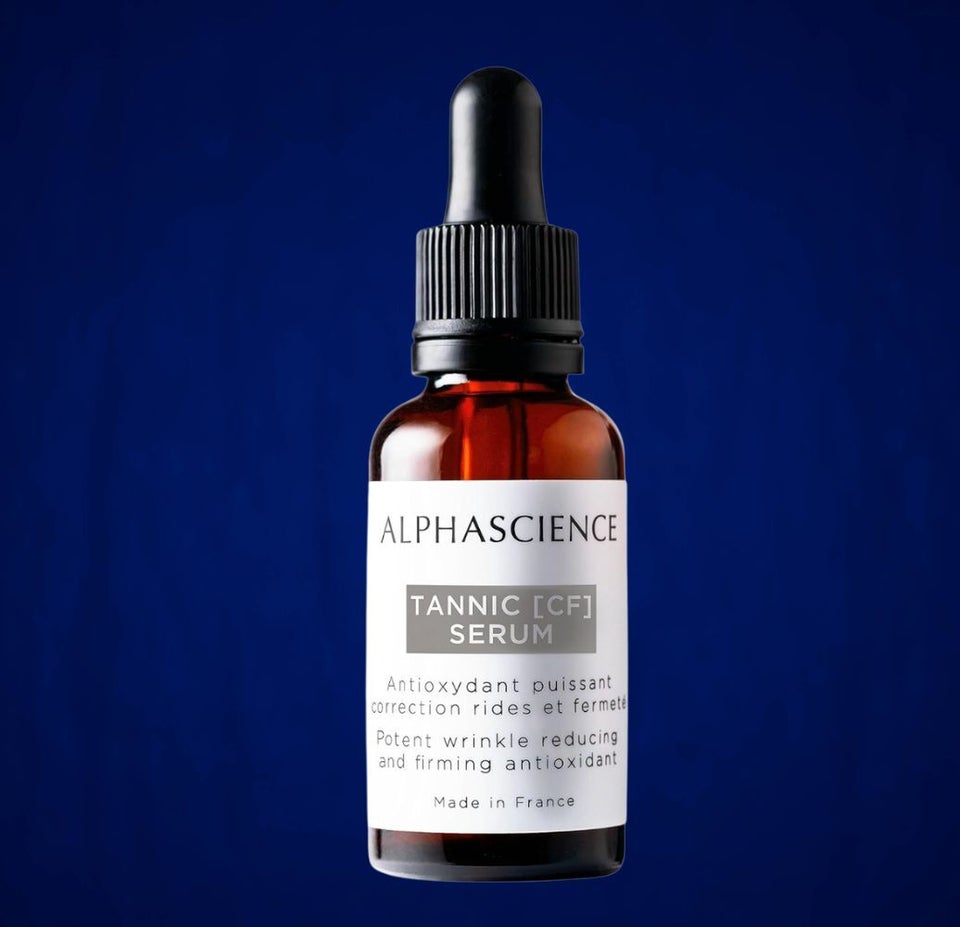
“A key point to keep in mind is that serum-based products are often more effective than wash-off options, as the serum remains on the skin to work for several hours,” Safaee said. She recommended the Alphascinence Tannic [CF] serum, which she said “stands out.”
This antioxidant-rich serum, containing 10% l-ascorbic acid (a more stabilized form of vitamin C), can help dramatically reduce melasma, sun spots, hyperpigmentation and brighten skin overall, while also preventing further skin aging by fending off environmental stressors.
Advertisement

Revolve
We chose to include the Dr. Barbara Sturm Anti-Aging body cream for its inclusion of tannic acid as well as its potential to prevent the appearance of premature skin aging, particularly loss of firmness and elasticity. The lightwieght and fast-absorbing formula contains Indian almond, hydrating shea butter and purslane extract to help support healthy skin.

PCA Skin
Another HuffPost editor pick based on Safaee’s guidance is the PCA Skin pigment bar, a corrective cleanser that can be scrubbed across the face, on the back of the neck and behind the ears, and which features both tannic acid and witch hazel in its formula. This purifying cleanser works into a rich lather and aims to reduce irregular skin texture and pigmentation.
A Mediterranean diet is already famous for its heart and metabolic benefits. But a major Spanish clinical trial suggests it may work even better against type 2 diabetes when paired with three realistic upgrades: eating fewer calories, moving more, and getting professional support for weight loss.
The PREDIMED-Plus trial found that this more structured version of Mediterranean living reduced the risk of developing type 2 diabetes by 31%. The project is the largest nutrition trial conducted in Europe and involved the University of Navarra along with more than 200 researchers from 22 other Spanish universities, hospitals, and research centers. The work was carried out in more than 100 primary care centers within Spain’s National Health System.
A Smarter Version of a Famous Diet
PREDIMED-Plus began in 2013 after the University of Navarra received an Advanced Grant from the European Research Council (ERC) worth more than €2 million. Between 2014 and 2016, additional institutions joined, bringing total funding to more than 15 million euros. Most of that support came from the Carlos III Health Institute (ISCIII) and the Center for Biomedical Research Network through its areas of Physiopathology of Obesity and Nutrition (CIBEROBN), Epidemiology and Public Health (CIBERESP) and Diabetes and Associated Metabolic Diseases (CIBERDEM ).
The results, published in Annals of Internal Medicine, were based on 4,746 adults between ages 55 and 75. All had overweight or obesity and metabolic syndrome, but none had diabetes or cardiovascular disease at the start of the study. Researchers followed participants for six years to see whether a more intensive Mediterranean based lifestyle plan could offer stronger protection against type 2 diabetes than the traditional Mediterranean diet alone.
One group followed a calorie reduced Mediterranean diet (about 600 kcal fewer per day), added moderate physical activity (brisk walking, strength and balance training), and received professional guidance. The comparison group followed a traditional Mediterranean diet without calorie restriction or exercise advice.
Small Changes, Big Diabetes Protection
The difference between the two approaches was striking. Participants in the intervention group were 31% less likely to develop type 2 diabetes than those in the comparison group.
They also lost more weight and reduced abdominal fat more effectively. On average, the intervention group lost 3.3 kg and reduced waist circumference by 3.6 cm. The control group lost only 0.6 kg and trimmed waist size by 0.3 cm.
In real world terms, the researchers estimated that the program prevented about three cases of type 2 diabetes for every 100 participants. For a condition affecting hundreds of millions of people globally, that kind of prevention could add up quickly if applied broadly among people at elevated risk.
“Diabetes is the first solid clinical outcome for which we have shown — using the strongest available evidence — that the Mediterranean diet with calorie reduction, physical activity and weight loss is a highly effective preventive tool,” said Miguel Ángel Martínez-González, Professor of Preventive Medicine and Public Health at the University of Navarra, Adjunct Professor of Nutrition at Harvard University, and one of the principal investigators of the project. “Applied at scale in at-risk populations, these modest and sustained lifestyle changes could prevent thousands of new diagnoses every year. We hope soon to show similar evidence for other major public health challenges.”
Why This Matters for a Global Health Crisis
Type 2 diabetes is one of the world’s fastest growing chronic diseases. The International Diabetes Federation estimates that more than 530 million people worldwide now live with diabetes. The rise has been fueled by urbanization, less healthy diets, more sedentary lifestyles, reduced physical activity, population aging, and increasing rates of overweight and obesity.
Spain has about 4.7 million adults with diabetes (most of them type 2), one of the highest rates in Europe. Across Europe, more than 65 million people have diabetes. In the United States, about 38.5 million people are affected, and the country has one of the highest health care costs per patient in the world. Experts warn that prevention is essential because type 2 diabetes raises the risk of cardiovascular, kidney, and metabolic complications.
“The Mediterranean diet acts synergistically to improve insulin sensitivity and reduce inflammation. With PREDIMED-Plus, we demonstrate that combining calorie control and physical activity enhances these benefits,” explained Miguel Ruiz-Canela, Professor and Chair of Preventive Medicine and Public Health Department at the University of Navarra’s School of Medicine and first author of the study. “It is a tasty, sustainable and culturally accepted approach that offers a practical and effective way to prevent type 2 diabetes — a global disease that is, to a large extent, avoidable.”
Newer Research Adds More Context
Since the PREDIMED-Plus diabetes findings were prepared, related research has continued to strengthen the broader picture. A PREDIMED-Plus body composition analysis published in JAMA Network Open found that the energy reduced Mediterranean diet plus physical activity helped reduce total and visceral fat while slowing age related loss of lean mass in older adults with overweight or obesity and metabolic syndrome. That matters because visceral fat and declining muscle are closely tied to cardiometabolic risk.
More recent PREDIMED-Plus work has also explored how sedentary time may affect cardiovascular health. A 2026 study in BMC Cardiovascular Disorders reported that replacing sedentary time with physical activity was associated with favorable five year changes in high sensitivity troponin T, a blood marker related to heart stress, although the pattern was not consistent across all atrial fibrillation related biomarkers.
Other recent Mediterranean diet research continues to support the pattern’s broader cardiovascular value. A 2025 review in Cardiovascular Research described the Mediterranean diet as one of the best studied dietary patterns for cardiovascular prevention, citing large randomized trials including PREDIMED, PREDIMED-Plus, CORDIOPREV, and the Lyon Diet Heart Study.
A 2026 analysis from the original PREDIMED trial also highlighted the possible importance of food quality within the diet. Participants with higher cumulative intake of extra virgin olive oil had a lower risk of a broad cardiovascular outcome, while common olive oil showed weaker associations. The finding supports a practical message for readers: the Mediterranean diet is not only about eating less or eating more plants. The type and quality of fats may matter too.
A Practical Strategy, Not a Fad
Annals of Internal Medicine published the study alongside an editorial by Sharon J. Herring and Gina L. Tripicchio, nutrition and public health experts at Temple University (Philadelphia, USA). They praised the clinical importance of the intervention and its potential as a model for preventing type 2 diabetes.
At the same time, they cautioned that bringing the same strategy to places outside the Mediterranean region, including the U.S., would require more than individual willpower. Barriers such as unequal access to healthy food, urban environments that make physical activity harder, and limited access to professional guidance could all stand in the way. They argued that public policies should help create healthier and more equitable environments.
That point is especially relevant now, as drugs for obesity and diabetes continue to attract major attention. PREDIMED-Plus shows that medication is not the only path with power. Sustained lifestyle changes, when supported properly, can still produce major health gains.
Built on Decades of Mediterranean Diet Research
The PREDIMED-Plus project (2013-2024), which involves different patients, builds on the earlier PREDIMED study (2003-2010). That previous trial showed that a Mediterranean diet enriched with extra virgin olive oil or nuts reduced cardiovascular disease risk by 30%.
Researchers say the updated PREDIMED-Plus strategy could be used by primary care providers as a sustainable and cost efficient way to help prevent type 2 diabetes on a broad scale. The intervention does not rely on extreme dieting. It combines familiar foods, moderate activity, gradual weight loss, and professional support.
A Nationwide Research Effort
The PREDIMED-Plus trial brought together a large network of investigators from across Spain. In order of participant numbers, participating institutions included the University of Navarra and the Navarra Health Service (2 centers), Hospital Clínic de Barcelona (2 centers), University of Valencia, Rovira i Virgili University (Reus), IMIM-Hospital del Mar, Miguel Hernández University (Alicante), Son Espases Hospital (Palma de Mallorca), University of Malaga, Reina Sofía Hospital (Córdoba) and University of Granada.
Other participants included Bioaraba and the UPV/EHU (Vitoria), the University of the Balearic Islands, the Hospital Virgen de la Victoria (Malaga), the University of Las Palmas de Gran Canaria, the University of Leon, the Primary Health Care District of Seville, the Fundación Jiménez Díaz (Madrid), the Hospital de Bellvitge, the Hospital Clínico San Carlos (Madrid), the University of Jaen, and the IMDEA Food Institute (Madrid).
The project also included international collaboration with the Harvard T.H. Chan School of Public Health. Most participating researchers are affiliated with CIBEROBN, CIBERESP, or CIBERDEM.
