An NHS close to collapse, patients failed and NHS staff put at risk – what you need to know.


An NHS close to collapse, patients failed and NHS staff put at risk – what you need to know.
Third report into the pandemic says patients and staff were failed as health service only just coped.

The first major update to resistance training recommendations in 17 years delivers a straightforward message. Even small amounts of resistance training can improve strength, increase muscle size, enhance power, and support overall physical function.
The updated guidance, released by the American College of Sports Medicine (ACSM) as a Position Stand, is built on 137 systematic reviews covering more than 30,000 participants. This makes it the most extensive and evidence-based set of resistance training recommendations to date.
“The best resistance training program is the one you’ll actually stick with,” says Stuart Phillips, distinguished professor in the Department of Kinesiology and an author on the Position Stand. “Training all major muscle groups at least twice a week matters far more than chasing the idea of a ‘perfect’ or complex training plan. Whether it’s barbells, bands, or bodyweight, consistency and effort drive results.”
Updated Guidance Reflects Surge in Strength Research
This update comes after years of growing scientific interest in muscle health and aging. The last ACSM Position Stand on resistance training for healthy adults was published in 2009, before a wave of new research on how strength impacts long term health and well-being.
“The new document reflects that surge in evidence and expands its recommendations to include more people and more types of training than ever before,” Phillips says.
A key takeaway from the updated guidelines is that the biggest benefits often come from a simple starting point. Transitioning from no resistance training to any regular activity can lead to meaningful improvements. While factors such as load, volume, and frequency can be adjusted, experts say the main priority for most adults should be building a routine they can follow consistently.
No Gym Required for Strength and Muscle Gains
Another important shift in the recommendations is the recognition that effective resistance training does not require access to a gym. Exercises using elastic bands, bodyweight movements, or simple at home routines can still produce measurable gains in strength, muscle size, and daily function.
According to Phillips, strict rules about the “ideal” training plan are no longer supported by current evidence. Instead, personal preferences, enjoyment, and the ability to maintain a routine over time are what matter most. This approach is especially important for adults who want to stay strong, healthy, and capable as they age.
Focus on Consistency Over Complexity
Athletes and highly trained individuals may still need more specialized, sport specific programs. However, for most adults, the guidance is clear. Choose a resistance training routine that fits your lifestyle and stick with it over time.
The full ACSM Position Stand is now available in Medicine & Science in Sports & Exercise.
Health workers across England are urged to look out for signs of infection as thousands have jabs.
There are growing calls for a statutory public inquiry into maternity services in Oxford.
There have been 20 cases since the weekend in one small area of Kent – but this isn’t the normal pattern, so what could have happened?
Vaccines are being offered to 5,000 students at the University of Kent, where there is a outbreak.

A large prospective cohort study conducted by researchers from Mass General Brigham, Harvard T.H. Chan School of Public Health, and the Broad Institute of MIT and Harvard examined data from 131,821 participants in the Nurses’ Health Study (NHS) and Health Professionals Follow-Up Study (HPFS). The findings showed that moderate intake of caffeinated coffee (2-3 cups a day) or tea (1-2 cups a day) was associated with a reduced risk of dementia, slower cognitive decline, and better preservation of cognitive abilities. The study was published in JAMA.
“When searching for possible dementia prevention tools, we thought something as prevalent as coffee may be a promising dietary intervention — and our unique access to high quality data through studies that has been going on for more than 40 years allowed us to follow through on that idea,” said senior author Daniel Wang, MD, ScD, associate scientist with the Channing Division of Network Medicine in the Mass General Brigham Department of Medicine and assistant professor at Harvard Medical School. Wang is also an assistant professor in the Department of Nutrition at Harvard Chan School and an associate member at the Broad Institute. “While our results are encouraging, it’s important to remember that the effect size is small and there are lots of important ways to protect cognitive function as we age. Our study suggests that caffeinated coffee or tea consumption can be one piece of that puzzle.”
Why Prevention Matters for Dementia
Preventing dementia early is especially important because current treatments are limited and generally provide only modest benefits after symptoms begin. As a result, scientists are increasingly focusing on lifestyle factors, including diet, that may influence the development of cognitive decline.
Coffee and tea contain compounds such as polyphenols and caffeine, which are thought to support brain health. These substances may help reduce inflammation and limit cellular damage, both of which are linked to cognitive decline. However, previous research on coffee and dementia has produced mixed results, often due to shorter study periods or limited data on long-term consumption patterns and different types of beverages.
Long-Term Data Offers Clearer Insights
The NHS and HPFS datasets helped address these gaps. Participants were tracked for up to 43 years, with repeated evaluations of diet, dementia diagnoses, subjective cognitive concerns, and objective cognitive performance. Researchers analyzed how consumption of caffeinated coffee, tea, and decaffeinated coffee related to long-term brain health outcomes.
Among the more than 130,000 participants, 11,033 developed dementia over the course of the study. Individuals who consumed higher amounts of caffeinated coffee had an 18% lower risk of developing dementia compared with those who rarely or never drank it. They also reported lower rates of subjective cognitive decline (7.8% versus 9.5%) and performed better on certain objective cognitive tests.
Caffeine May Play a Key Role
Similar patterns were observed among tea drinkers, while decaffeinated coffee did not show the same associations. This suggests that caffeine may be an important factor behind the observed brain-related benefits, although more research is needed to confirm the underlying mechanisms.
The strongest effects were seen in participants who drank 2-3 cups of caffeinated coffee or 1-2 cups of tea per day. Higher levels of caffeine intake did not appear to cause harm. Instead, they showed comparable benefits to the moderate intake range highlighted in the study.
“We also compared people with different genetic predispositions to developing dementia and saw the same results — meaning coffee or caffeine is likely equally beneficial for people with high and low genetic risk of developing dementia,” said lead author Yu Zhang, MBBS, MS, PhD student at Harvard Chan School and a research trainee at Mass General Brigham.
Study Authors and Funding
In addition to Wang and Zhang, Mass General Brigham contributors included Yuxi Liu, Yanping Li, Yuhan Li, Jae H. Kang, A. Heather Eliassen, Molin Wang, Eric B. Rimm, Frank B. Hu, and Meir J. Stampfer. Additional authors were Walter C. Willett and Xiao Gu.
The research was supported by National Institutes of Health grants UM1 CA186107, U01 HL145386, U01 CA167552, R01 HL60712, P30 DK46200, R00 DK119412, R01 AG077489, RF1 AG083764, and R01 NR019992. The funding organizations had no involvement in the study design, data collection, analysis, manuscript preparation, or the decision to publish.
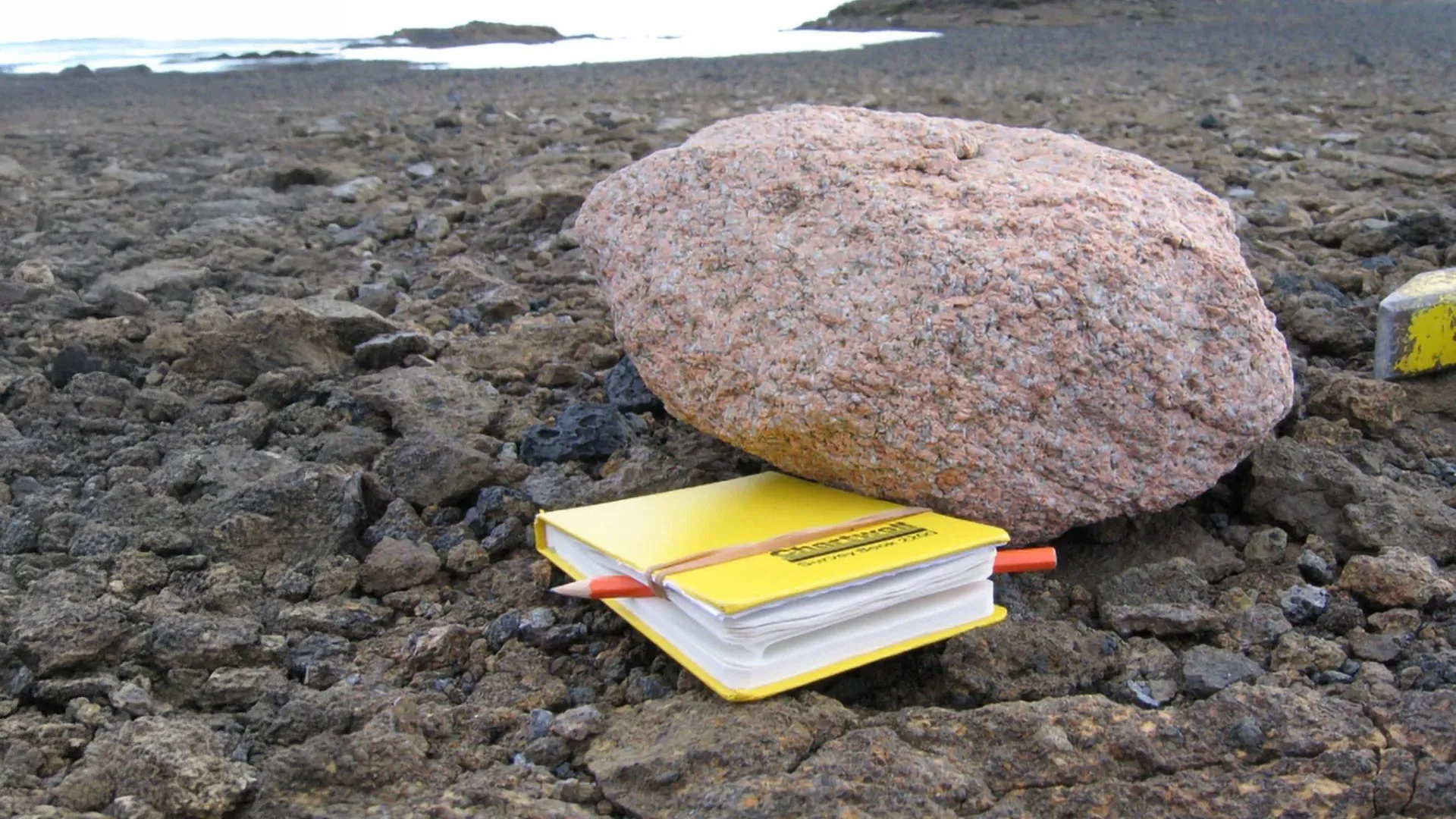
Bright pink granite boulders scattered across the dark volcanic peaks of the Hudson Mountains in West Antarctica have led scientists to a remarkable discovery. Beneath Pine Island Glacier lies an enormous buried granite mass, nearly 100 km wide and 7 km thick, roughly half the size of Wales in the UK.
For decades, these unusual rocks have puzzled researchers. Perched high on mountain ridges, they seemed out of place, raising questions about where they came from and what they might reveal about Antarctica’s past and future.
Dating Ancient Rocks From the Jurassic Period
A research team led by British Antarctic Survey (BAS) analyzed the granite by examining the radioactive decay of elements trapped inside tiny mineral crystals. This technique showed the rocks formed around 175 million years ago, during the Jurassic period.
Even with their age determined, their journey to the mountaintops remained unclear until scientists gathered new data from aircraft surveys over the region.
Airborne Surveys Reveal Buried Structure
Using highly sensitive gravity measurements collected by BAS’ Twin Otter aircraft and others, researchers detected an unusual signal beneath the glacier. The data matched what scientists would expect from a massive granite body hidden below the ice.
Connecting the surface boulders to this deep underground formation solved a long-standing mystery. It also revealed that Pine Island Glacier once moved very differently, pulling rocks from its base and carrying them uphill when the ice sheet was much thicker.
Clues to Ice Sheet Behavior and Sea Level Rise
This discovery provides important insight into how the glacier behaved during the last ice age (around 20 thousand years ago). By understanding past ice thickness and movement patterns, scientists can improve computer models used to predict how Antarctica’s ice sheets may respond to future climate change.
Dr. Tom Jordan, lead author and geophysicist at BAS, analyzed the airborne data. He said:
“It’s remarkable that pink granite boulders spotted on the surface have led us to a hidden giant beneath the ice. By combining geological dating with gravity surveys, we’ve not only solved a mystery about where these rocks came from, but also uncovered new information about how the ice sheet flowed in the past and how it might change in the future.”
Why Subglacial Geology Matters Today
The findings also highlight how the geology beneath Pine Island Glacier affects present-day conditions. This region has experienced some of the fastest ice loss in Antarctica in recent decades. The type of rock below influences how easily the ice slides and how meltwater moves underneath it.
Better understanding these processes will help refine models that estimate future sea level rise.
Rocks as Records of Antarctica’s History
Dr. Joanne Johnson, a co-author and geologist at BAS, collected the boulders during fieldwork in the Hudson Mountains as part of the International Thwaites Glacier Collaboration. She says:
“Rocks provide an amazing record of how our planet has changed over time, especially how ice has eroded and altered the landscape of Antarctica. Boulders like these are a treasure-trove of information about what lies deep beneath the ice sheet, far out of reach.
“By identifying their source, we have been able to piece together how they got to where they are today, giving us clues about how the West Antarctic Ice Sheet may change in future — information that is vital for determining the impact of sea level rise on coastal populations around the world.”
This research shows how combining geology and geophysics can uncover hidden features beneath Antarctica and deepen our understanding of the forces shaping the planet.
Dinosaur fossils preserved with their feathers suggest that some of these animals had already lost the ability to fly. As the research team explains, “Feather molting seems like a small technical detail — but when examined in fossils, it can change everything we thought about the origins of flight, highlighting how complex and diverse wing evolution truly was.”
A new study led by a researcher from the School of Zoology and the Steinhardt Museum of Natural History at Tel Aviv University analyzed rare fossils with intact feathers and found evidence that these dinosaurs were not capable of flight. This unusual discovery offers a rare look at how animals lived 160 million years ago and sheds new light on how flight evolved in both dinosaurs and modern birds. The researchers note, “This finding has broad significance, as it suggests that the development of flight throughout the evolution of dinosaurs and birds was far more complex than previously believed. In fact, certain species may have developed basic flight abilities — and then lost them later in their evolution.”
The research was led by Dr. Yosef Kiat, alongside collaborators from China and the United States, and published in the journal Communications Biology by Nature Portfolio.
How Feathers Evolved in Dinosaurs
Dr. Kiat, an ornithologist who studies feathers, explains that dinosaurs split from other reptiles about 240 million years ago. Not long after (on an evolutionary timescale), many species developed feathers, which are lightweight, protein-based structures used for flight and temperature regulation. Around 175 million years ago, a group of feathered dinosaurs known as Pennaraptora appeared. These animals are considered distant ancestors of modern birds and were the only dinosaur lineage to survive the mass extinction at the end of the Mesozoic era 66 million years ago.
Scientists believe Pennaraptora evolved feathers for flight, but environmental changes may have led some species to lose that ability over time, similar to flightless birds today such as ostriches and penguins.
Rare Fossils Preserve Feather Color and Structure
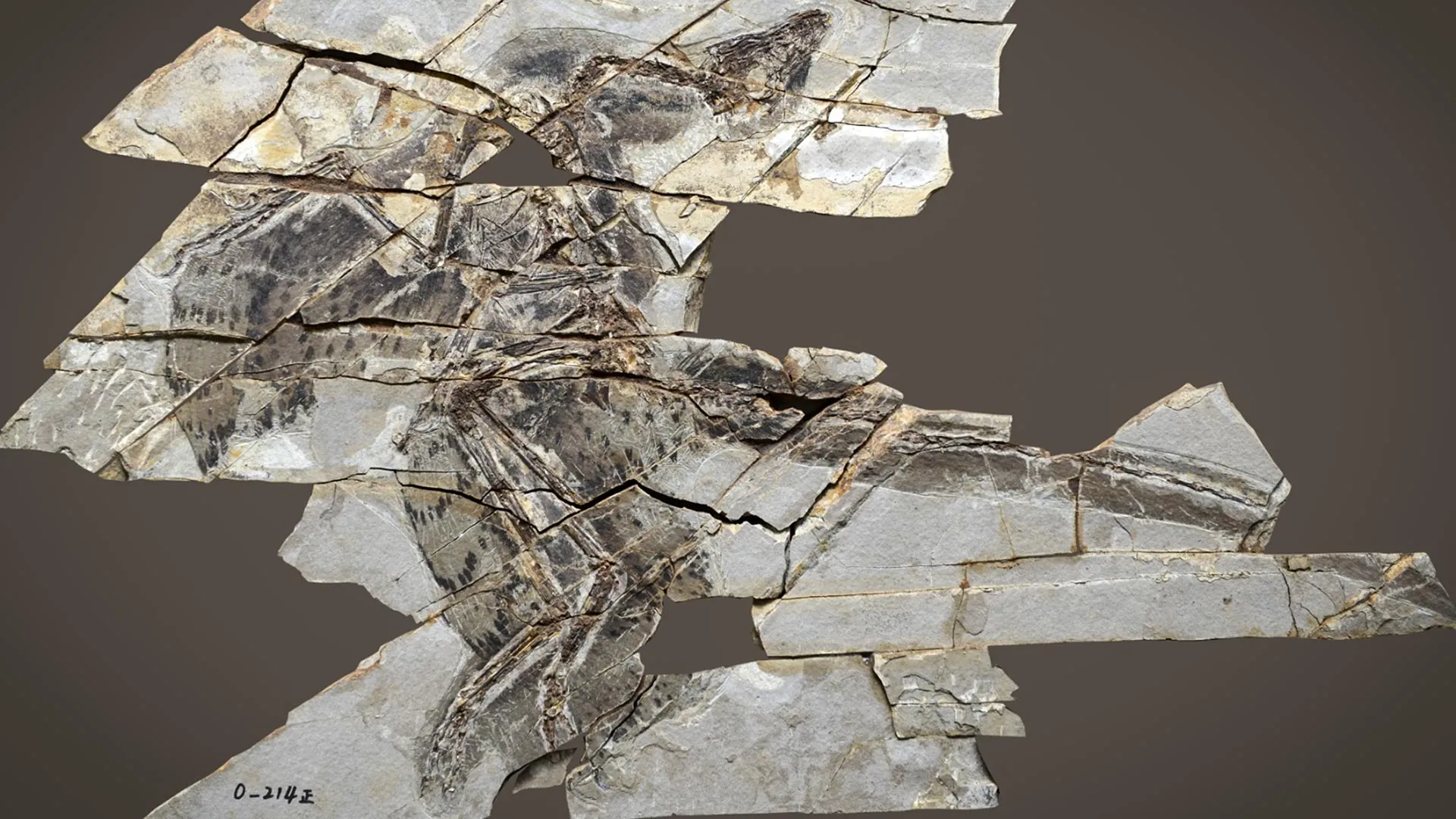
The study focused on nine fossils from eastern China belonging to Anchiornis, a feathered Pennaraptoran dinosaur. These fossils are exceptionally rare because they preserved not only the feathers but also their original coloration, thanks to unique fossilization conditions in the region. Each specimen showed wing feathers that were white with a distinct black spot at the tip.
This preserved coloration allowed researchers to closely examine the structure and growth of the feathers in ways that are usually impossible with fossils.
Molting Patterns Reveal Flight Ability
Dr. Kiat explains that feathers grow over two to three weeks before detaching from the blood supply and becoming nonliving material. Over time, they wear out and are replaced in a process known as molting. This process can reveal whether an animal could fly.
“Feathers grow for two to three weeks. Reaching their final size, they detach from the blood vessels that fed them during growth and become dead material. Worn over time, they are shed and replaced by new feathers — in a process called molting, which tells an important story: birds that depend on flight, and thus on the feathers enabling them to fly, molt in an orderly, gradual process that maintains symmetry between the wings and allows them to keep flying during molting. In birds without flight ability, on the other hand, molting is more random and irregular. Consequently, the molting pattern tells us whether a certain winged creature was capable of flight.”
By examining the fossilized feathers, researchers identified a continuous line of black spots along the wing edges. They also spotted developing feathers whose black spots were out of alignment, showing they were still growing. A detailed analysis revealed that the molting pattern was irregular rather than orderly.
Evidence That Anchiornis Could Not Fly
Dr. Kiat concluded, “Based on my familiarity with modern birds, I identified a molting pattern indicating that these dinosaurs were probably flightless. This is a rare and especially exciting finding: the preserved coloration of the feathers gave us a unique opportunity to identify a functional trait of these ancient creatures — not only the body structure preserved in fossils of skeletons and bones.”
He adds, “Feather molting seems like a small technical detail — but when examined in fossils, it can change everything we thought about the origins of flight. Anchiornis now joins the list of dinosaurs that were covered in feathers but not capable of flight, highlighting how complex and diverse wing evolution truly was.”
