Researchers in Worcestershire are using electrodes as a non-invasive diagnosis tool.


Researchers in Worcestershire are using electrodes as a non-invasive diagnosis tool.
The non-hormonal daily pill could benefit 500,000 women for whom HRT is not suitable.

A medication called sulthiame may help people with obstructive sleep apnea breathe more easily during the night and sleep better overall. The findings come from a European clinical trial in which the University of Gothenburg played an important role. Researchers say the results raise the possibility of a drug treatment for patients who struggle to tolerate breathing masks.
The study results were published in The Lancet. A total of 298 people with moderate to severe sleep apnea participated in the trial. One quarter of the participants received a placebo, while the rest were treated with different doses of sulthiame. The study took place across four European countries and followed a double blind design, meaning neither the participants nor the researchers knew who was receiving the active drug.
Study Shows Major Reduction in Breathing Pauses
Patients who received higher doses of sulthiame experienced up to 47 percent fewer breathing interruptions during sleep compared with those given a placebo. They also showed improved oxygen levels overnight.
Sulthiame appears to work by stabilizing the body’s control of breathing and increasing respiratory drive. This helps lower the likelihood that the upper airway will collapse during sleep, which is the main cause of obstructive sleep apnea. Most side effects reported during the trial were mild and temporary.
Jan Hedner, senior professor of pulmonary medicine at the Sahlgrenska Academy, University of Gothenburg, has played a leading role in the study.
“We have been working on this treatment strategy for a long time, and the results show that sleep apnea can indeed be influenced pharmacologically. It feels like a breakthrough, and we now look forward to larger and longer studies to determine whether the effect is sustained over time and whether the treatment is safe for broader patient groups,” says Jan Hedner.
Ludger Grote and Kaj Stenlöf from the University of Gothenburg also made important contributions to the research.
Many Patients Cannot Tolerate CPAP Treatment
Obstructive sleep apnea happens when the upper airway repeatedly collapses during sleep. These episodes cause breathing to stop temporarily, reduce oxygen levels, and repeatedly disrupt sleep. Over time, untreated sleep apnea raises the risk of serious health problems, including high blood pressure, cardiovascular disease, stroke, and type 2 diabetes.
Even though sleep apnea is common, there is currently no medication that directly treats its underlying cause. The most common therapy is continuous positive airway pressure (CPAP), which uses a mask to keep the airway open during sleep. While CPAP is highly effective, many patients find it difficult to use. Up to half stop using the device within a year because the mask can feel uncomfortable or interfere with sleep.
Sulthiame is an existing medication that has previously been approved to treat a form of childhood epilepsy. Researchers are now investigating whether it could also become a drug treatment for sleep apnea.
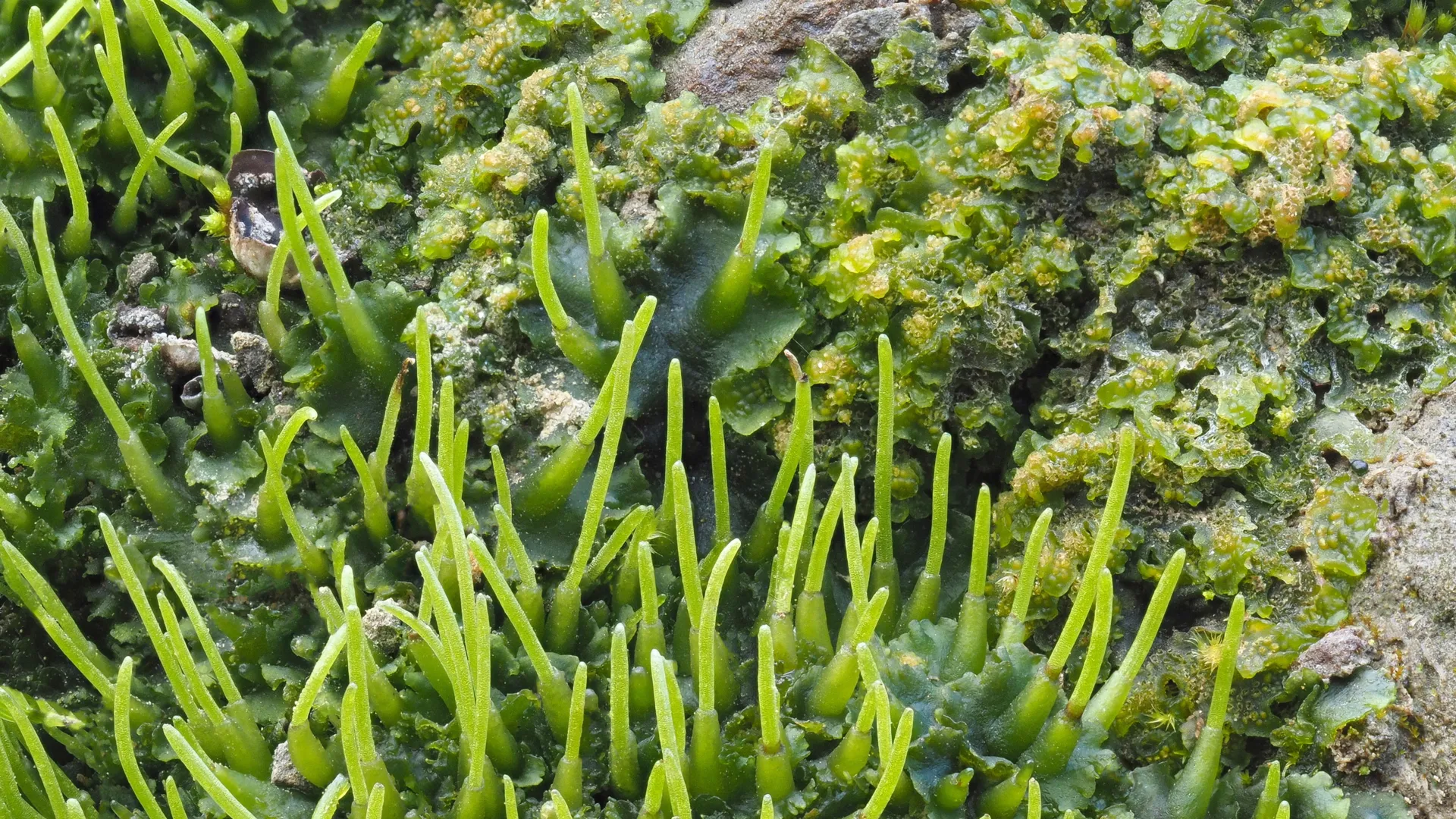
An international team of scientists has uncovered a surprising molecular strategy used by a rare group of land plants. The finding could one day help researchers redesign important crops such as wheat and rice so they convert sunlight into food far more efficiently.
The research was led by scientists at the Boyce Thompson Institute (BTI), Cornell University, and the University of Edinburgh. It addresses a major limitation in agriculture involving Rubisco, the enzyme that captures carbon dioxide from the air during photosynthesis.
Rubisco and the Limits of Photosynthesis
Rubisco plays a central role in life on Earth, but it has a major flaw. The enzyme works slowly and can easily interact with oxygen instead of carbon dioxide, which wastes energy and reduces how effectively plants grow.
“Rubisco is arguably the most important enzyme on the planet because it’s the entry point for nearly all carbon in the food we eat,” said BTI Associate Professor Fay-Wei Li, who co-led the research. “But it’s slow and easily distracted by oxygen, which wastes energy and limits how efficiently plants can grow.”
Over time, some organisms have evolved ways to overcome this inefficiency. Many types of algae, for example, place Rubisco inside small structures in their cells called pyrenoids. These microscopic compartments concentrate carbon dioxide around the enzyme, allowing it to operate more efficiently.
Researchers have long hoped to introduce this type of carbon concentrating system into food crops, which do not naturally have pyrenoids. However, transferring the complex machinery from algae into land plants has proven extremely difficult.
Hornwort Plants Reveal an Unexpected Strategy
A breakthrough came when scientists examined hornworts, the only land plants known to contain carbon concentrating compartments similar to those found in algae. Because hornworts share a closer evolutionary relationship with crop plants than algae do, researchers suspected their molecular tools might be easier to transfer.
What they discovered turned out to be very different from what they expected.
“We assumed hornworts would use something similar to what algae use — a separate protein that gathers Rubisco together,” said Tanner Robison, a graduate student working with Li and a co-first author of the paper. “Instead, we discovered they’ve modified Rubisco itself to do the job.”
The RbcS-STAR Protein and Rubisco Clustering
The key element is an unusual protein component the researchers named RbcS-STAR. Rubisco itself is built from both large and small protein pieces. In hornworts, one version of the small component includes an extra segment called the STAR region.
This additional tail behaves like molecular velcro. It causes Rubisco proteins to stick together and form clustered structures inside the cell.
To determine whether STAR could function in other plants, the researchers ran several experiments. They first introduced the RbcS-STAR component into a closely related hornwort species that does not naturally form pyrenoids. After the change, Rubisco shifted from being spread throughout the cell to forming concentrated structures resembling pyrenoids.
The scientists then tested the same idea in Arabidopsis, a plant widely used in laboratory research. Once again, Rubisco gathered into dense compartments inside the chloroplasts.
“We even tried attaching just the STAR tail to Arabidopsis’s native Rubisco, and it triggered the same clustering effect,” said Alistair McCormick, professor at the University of Edinburgh, who co-led the research. “That tells us STAR is truly the driving force. It’s a modular tool that can work across different plant systems.”
Potential Path Toward More Efficient Crops
The fact that this mechanism works across different plant species makes the discovery especially important for agriculture. It suggests that scientists may be able to trigger Rubisco clustering in crop plants simply by adding this universal velcro component.
However, researchers emphasize that more work is still needed. In addition to clustering Rubisco, plants must also efficiently deliver carbon dioxide to the enzyme.
“We have built a Rubisco house, but it won’t be an efficient house unless we update the HVAC,” said Laura Gunn, assistant professor at Cornell University, who co-led the research. The team is now working to address this challenge.
A Step Toward More Sustainable Food Production
Even so, the discovery represents an important advance in the effort to improve photosynthesis. Increasing photosynthetic efficiency even slightly could raise crop yields while reducing the environmental impact of farming. This goal is increasingly important as scientists seek ways to produce more food sustainably for a growing global population.
“This research shows that nature has already tested solutions we can learn from,” said Li. “Our job is to understand those solutions well enough to apply them where they’re needed most — in the crops that feed the world.”
The study was published in Science, with equal contributions from four early-career scientists: Tanner A. Robison, Yuwei Mao, Zhen Guo Oh, and Warren S.L. Ang. The corresponding authors were Laura H. Gunn, Alistair J. McCormick, and Fay-Wei Li.
Bank cashier Aleisha Rochester died two weeks after undergoing a routine procedure to remove an abscess.

A long running scientific dispute about the origin of the Silverpit Crater beneath the southern North Sea has now been settled.
New research shows that the structure formed when an asteroid or comet struck the region roughly 43 to 46 million years ago.
The investigation was led by Dr. Uisdean Nicholson of Heriot-Watt University in Edinburgh and supported by the Natural Environment Research Council (NERC). The team combined seismic imaging, microscopic analysis of rock fragments, and computer modeling to produce the clearest evidence yet that Silverpit is one of Earth’s rare impact craters.
The study appears in the journal Nature Communications.
A Hidden Crater Beneath the North Sea
Silverpit lies about 700 meters beneath the seabed in the North Sea, roughly 80 miles off the coast of Yorkshire.
Since geologists first identified the formation in 2002, the three kilometer wide crater and its surrounding ring of circular faults spanning about 20 km have sparked intense debate.
Early research proposed that the feature was created by a high speed asteroid impact. Supporters of that idea pointed to its round shape, central peak, and surrounding concentric faults, which are often seen in known impact craters.
Other scientists suggested different explanations. Some proposed that underground salt movement distorted the rock layers and created the structure. Others argued that volcanic activity may have caused the seabed to collapse.
In 2009, geologists even voted on the issue. According to a report in the December 2009 issue of Geoscientist magazine, most participants rejected the asteroid impact explanation at the time.
The latest findings now overturn that conclusion.
New Seismic Data Reveals Evidence of Impact
Nicholson’s team analyzed newly available seismic imaging and geological samples taken from beneath the seabed.
Dr. Uisdean Nicholson, a sedimentologist in Heriot-Watt University’s School of Energy, Geoscience, Infrastructure and Society, said: “New seismic imaging has given us an unprecedented look at the crater.
“Samples from an oil well in the area also revealed rare ‘shocked’ quartz and feldspar crystals at the same depth as the crater floor.
“We were exceptionally lucky to find these — a real ‘needle-in-a-haystack’ effort. These prove the impact crater hypothesis beyond doubt, because they have a fabric that can only be created by extreme shock pressures.”
These microscopic minerals form only under the extreme pressures generated during asteroid impacts, providing strong confirmation of the event.
Asteroid Strike Triggered a Massive Tsunami
The evidence indicates that an asteroid about 160 meters wide slammed into the seabed at a shallow angle from the west.
Dr. Nicholson said: “Our evidence shows that a 160-meter-wide asteroid hit the seabed at a low angle from the west.
“Within minutes, it created a 1.5-kilometer high curtain of rock and water that then collapsed into the sea, creating a tsunami over 100 meters high.”
The impact would have produced a violent explosion at the seafloor and sent enormous waves spreading across the region.
The “Silver Bullet” That Ended the Debate
Professor Gareth Collins of Imperial College London attended the 2009 debate about the crater’s origin and contributed the numerical simulations used in the new research.
Professor Collins said: “I always thought that the impact hypothesis was the simplest explanation and most consistent with the observations.
“It is very rewarding to have finally found the silver bullet. We can now get on with the exciting job of using the amazing new data to learn more about how impacts shape planets below the surface, which is really hard to do on other planets.”
A Rare and Well Preserved Impact Crater
Dr. Nicholson said, “Silverpit is a rare and exceptionally preserved hypervelocity impact crater.
“These are rare because the Earth is such a dynamic planet — plate tectonics and erosion destroy almost all traces of most of these events.
“Around 200 confirmed impact craters exist on land, and only about 33 have been identified beneath the ocean.
“We can use these findings to understand how asteroid impacts shaped our planet throughout history, as well as predict what could happen should we have an asteroid collision in future.”
Confirming Silverpit as an impact crater places it in the same category as well known structures such as the Chicxulub Crater in Mexico, which is linked to the dinosaur mass extinction, and the Nadir Crater off the coast of West Africa that was recently identified as another impact site.
The research was funded by the Natural Environment Research Council (NERC).
Jo-Ann Burns says her daughter Nicola wasn’t told about Sudden Unexpected Death in Epilepsy.
Donna Ockenden is appointed to lead the maternity services inquiry at Leeds hospitals.

Researchers have identified a 90 million year old fossil that helps solve a long standing mystery about a strange group of prehistoric animals. The discovery was led by University of Minnesota Twin Cities scientist Peter Makovicky along with Argentine paleontologist Sebastian Apesteguía.
Their findings, published in the peer reviewed journal Nature, describe a nearly complete skeleton of Alnashetri cerropoliciensis. This dinosaur belonged to a peculiar group of bird like theropods called alvarezsaurs. These animals are known for their tiny teeth and unusually short arms that end in a single enlarged thumb claw.
For decades, scientists struggled to understand this group because most well preserved fossils had been discovered in Asia. Fossils from South America were often incomplete, leaving major gaps in the evolutionary story.
Patagonia Discovery Provides a Crucial Specimen
The almost complete Alnashetri fossil was uncovered in 2014 in northern Patagonia, Argentina, at a fossil rich site famous for exceptionally preserved Cretaceous animals. The species had originally been named several years earlier based on fragmentary remains, but the new skeleton provided a far clearer view of the animal’s unusual body structure.
Preparing the specimen was a slow and careful process. Over the past decade, researchers meticulously cleaned and assembled the delicate bones to prevent damage to the small and fragile skeleton.
“Going from fragmentary skeletons that are hard to interpret, to having a near complete and articulated animal is like finding a paleontological Rosetta Stone,” said Peter Makovicky, lead author of the study and a professor in the University of Minnesota Department of Earth and Environmental Sciences. “We now have a reference point that allows us to accurately identify more scrappy finds and map out evolutionary transitions in anatomy and body size.”
The fossil is providing scientists with valuable insight into how this lineage of dinosaurs evolved, became smaller, and spread across ancient continents.
Insights Into the Evolution of Tiny Dinosaurs
The skeleton reveals that Alnashetri differed from its later relatives in several ways. It had longer arms and larger teeth, showing that some alvarezsaurs had already evolved very small body sizes before developing the specialized features that later species used for what scientists believe was an “ant-eating” diet.
Microscopic examination of the bones also showed that the animal was fully grown and at least four years old. These dinosaurs rank among the smallest known non avian dinosaurs, and they remained small throughout their lives. Even the largest members of the group only reached about the size of an average human, which is tiny compared with most dinosaurs. Alnashetri itself weighed less than 2 lbs, making it one of the smallest dinosaurs discovered in South America.
By studying additional alvarezsaur fossils preserved in museum collections across North America and Europe, the team also found evidence that these animals appeared much earlier than scientists previously believed. Their widespread distribution likely occurred when the continents were still connected as the supercontinent Pangaea. The later breakup of Earth’s landmasses explains how the animals became scattered across the globe rather than migrating across oceans.
Fossil Site Continues To Reveal Ancient Life
The well preserved skeleton came from the La Buitrera fossil area, a location that has produced many scientifically important discoveries. Previous finds from the site include early snakes and small saber toothed mammals.
“After more than 20 years of work, the La Buitrera fossil area has given us a unique insight into small dinosaurs and other vertebrates like no other site in South America,” said Apesteguía, a researcher at Universidad Maimónides in Buenos Aires, Argentina.
Scientists are still actively studying fossils from the same region, and more discoveries may soon add to the story of these unusual dinosaurs.
“We have already found the next chapter of the alvarezsaurid story there, and it is in the lab being prepared right now,” added Makovicky.
International Research Team and Support
The research involved an international collaboration of scientists. In addition to Makovicky and Apesteguía, the team included Jonathan S. Mitchell from Coe College in Iowa; Jorge G. Meso and Ignacio Cerda from Instituto de Investigación, Universidad Nacional de Río Negro and Museo Provincial; and Federico A. Gianechini from Instituto Multidisciplinario de Investigaciones Biológicas de San Luis.
Funding for the research was provided by the National Scientific and Technical Research Council (CONICET), The Field Museum, National Geographic, University of Minnesota, United States National Science Foundation and the Fulbright U.S. Scholar program.
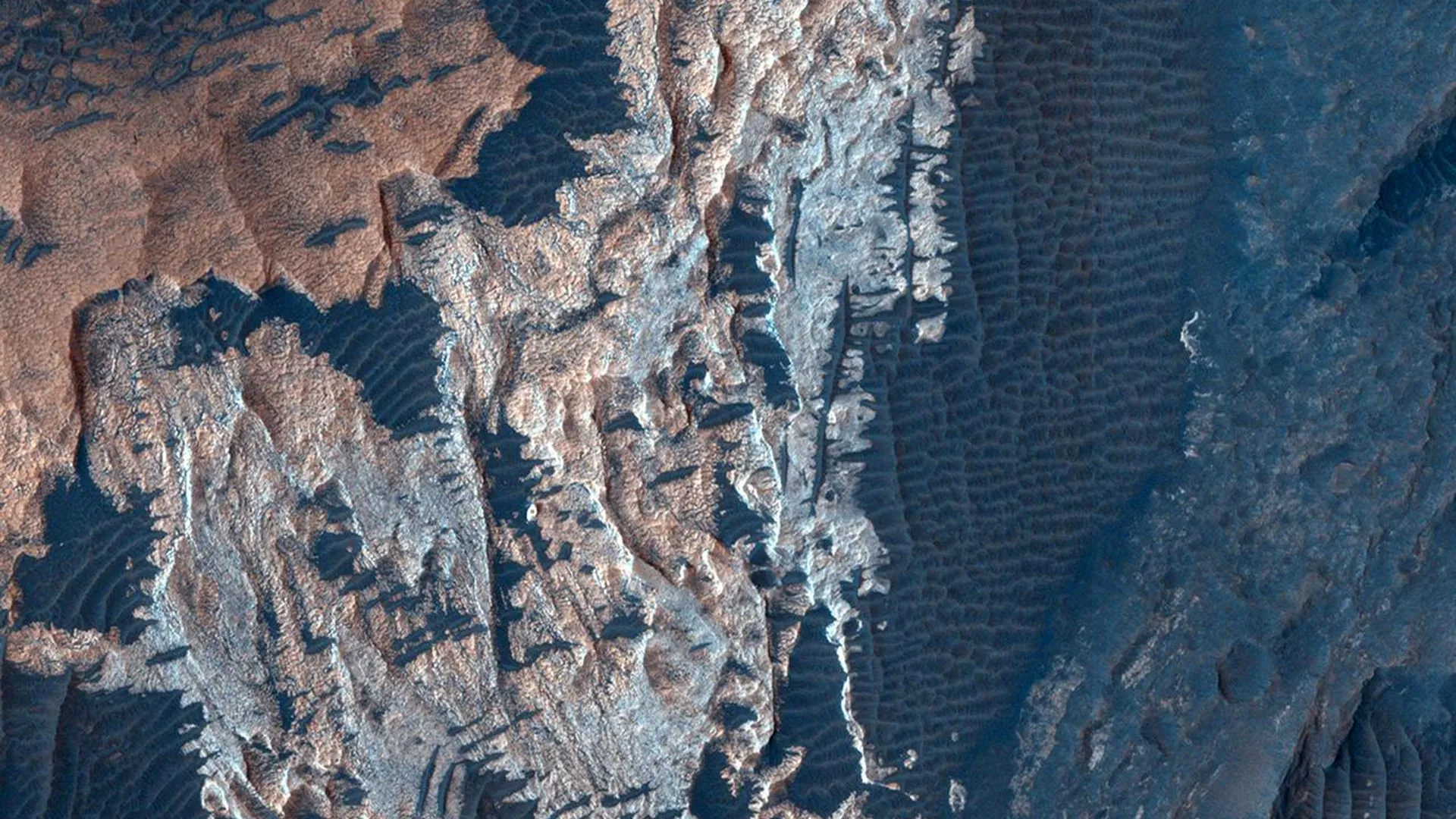
A new study published in Nature Communications reports the detection of an iron sulfate on Mars that may represent a previously unknown mineral. Sulfur is abundant on Mars and commonly combines with other elements to create sulfate minerals. On Earth, most sulfates dissolve easily in rainwater. Mars, however, is extremely dry, allowing these minerals to persist for billions of years and preserve evidence of ancient environmental conditions.
Each mineral has its own crystal structure and physical properties. Familiar examples include gypsum and hematite. Scientists analyze data from orbiting spacecraft to identify minerals on the Martian surface and reconstruct the environmental conditions that produced them. For nearly two decades, researchers have been puzzled by layered iron sulfates on Mars that show unusual spectral signals. A new investigation led by Dr. Janice Bishop, senior research scientist at the SETI Institute and NASA’s Ames Research Center in California’s Silicon Valley, has now identified and characterized an uncommon ferric hydroxysulfate phase. The team combined laboratory experiments with orbital observations of Mars to better understand these materials. Their results provide new clues about the roles of heat, water, and chemical reactions in shaping the Martian landscape.
“We investigated two sulfate-bearing sites near the vast Valles Marineris canyon system that included mysterious spectral bands seen from orbital data, as well as layered sulfates and intriguing geology,” said Bishop.
Study Sites Near Valles Marineris
The research focused on two areas close to Valles Marineris, one of the largest canyon systems in the solar system. One location is Aram Chaos, situated northeast of the canyon system where ancient water once flowed toward lower terrain to the north. The second site lies on the plateau above Juventae Chasma, a 5-km-deep canyon located just north of Valles Marineris.
Juventae Plateau (above Juventae Chasma)
This region near the cliffs of Valles Marineris preserves signs of a wetter past. Ancient channels carved by flowing water cross the landscape. Scientists found sulfate minerals concentrated in a small low area that likely formed when pools of sulfate-rich water gradually evaporated. As the water disappeared, hydrated ferrous sulfates were left behind.
These minerals, including ferric hydroxysulfate, occur in thin layers roughly a meter thick that sit both above and below basaltic materials. Their position suggests they were later exposed to heat from lava or volcanic ash after they originally formed.
“Investigation of the morphologies and stratigraphies of these four compositional units allowed us to determine the age and formation relationships among the different units,” said Dr. Catherine Weitz, a co-author on the study and Senior Scientist at the Planetary Science Institute.
Evidence From Aram Chaos
Sulfate minerals are widespread throughout the Valles Marineris region, especially in rugged landscapes called chaotic terrains. Scientists believe these areas formed when massive floods reshaped the surface long ago. As the water evaporated, it left layered deposits of iron and magnesium sulfates that provide evidence of a much wetter Mars in the past.
In one chaos terrain that formed within an ancient impact crater, the uppermost layers contain polyhydrated sulfates. Beneath them lie layers of monohydrated sulfates and ferric hydroxysulfate.
How Heat Transformed Martian Sulfates
Each of these sulfate types has a unique spectral signature that can be detected from orbit using the CRISM instrument. At first, the arrangement of these mineral layers was difficult to explain. Laboratory experiments helped solve the puzzle. Researchers found that heating polyhydrated sulfates to 50°C converts them into monohydrated forms. When temperatures exceed 100°C, ferric hydroxysulfate forms. These results indicate that geothermal heat likely altered the minerals after they were deposited.
Polyhydrated and monohydrated sulfates appear across large areas of the region. Ferric hydroxysulfate is much rarer and occurs only in a few small locations. Scientists suspect that warmer geothermal sources once existed beneath these areas, producing the conditions needed to create this mineral. Additional deposits could remain buried under layers of monohydrated sulfates.
Laboratory Experiments Reveal Mineral Transformations
Researchers at the SETI Institute and NASA Ames performed laboratory experiments to trace how these minerals evolve. The process begins with rozenite (Fe2+SO4·4H2O), which contains four water molecules in each unit cell. Heating transforms it into szomolnokite (Fe2+SO4·H2O), which contains only one water molecule. Continued heating produces ferric hydroxysulfate, where OH replaces H2O in the mineral structure.
“Our experiments suggest that this ferric hydroxysulfate only forms when hydrated ferrous sulfates are heated in the presence of oxygen,” said postdoctoral researcher Dr. Johannes Meusburger at NASA Ames. “While the changes in the atomic structure are very small, this reaction drastically alters the way these minerals absorb infrared light, which allowed identification of this new mineral on Mars using CRISM.”
Oxygen and Chemical Reactions on Mars
This chemical reaction requires oxygen gas and generates water (Equation 1). Mars currently has a thin atmosphere dominated by CO2, yet it still contains enough oxygen for this reaction to occur and for other forms of iron to oxidize as well.
Equation 1: 4 Fe2+SO4·H2O + O2 → 4 Fe3+SO4OH + 2H2O
“The material formed in these lab experiments is likely a new mineral due to its unique crystal structure and thermal stability,” said Bishop. “However, scientists must also find it on Earth to officially recognize it as a new mineral.”
Clues to Mars’ Geological Activity
The newly identified ferric hydroxysulfate has a crystal structure similar to szomolnokite, a monohydrated ferrous sulfate. However, it appears to form more readily from rozenite, which contains four water molecules.
The transformation from hydrated ferrous sulfates to ferric hydroxysulfate occurs only when temperatures exceed 100°C, far hotter than typical Martian surface conditions. The sulfates observed at Aram Chaos and Juventae, including ferric hydroxysulfate, probably formed more recently than the surrounding terrain. Researchers suggest they may date to the Amazonian period (<3 billion years ago).
The findings indicate that volcanic heat at the Juventae Plateau and geothermal energy beneath Aram Chaos could convert common hydrated sulfates into ferric hydroxysulfate. This discovery suggests that parts of Mars have remained chemically and thermally active more recently than previously believed, offering new insights into the planet’s evolving surface and its possible ability to support life.
The paper, Characterization of Ferric Hydroxysulfate on Mars and Implications of the Geochemical Environment Supporting its Formation, is published in Nature Communications.
