Upgrading My Hardware Tools

As part of my garage decluttering project this summer, I refactored and upgraded my hardware tools. I thought some readers might enjoy seeing the before and after pics of this part of the project, especially since it’s easy to see the changes visually.

I hadn’t personally selected or bought most of my old tools. They were almost entirely hand-me-downs from my dad and grandfather, most of them decades old. A few items I picked up at swap meets last century. The overall collection was a mishmash of ugly items with some redundancy, consisting of odds and ends that other people no longer wanted.

While most of these tools were technically functional (if I lower my standards for defining the word functional), my inner relationship with this assortment of tools was pretty blah. I typically saw this collection as ugly and disorderly baggage from the past.

Did these tools spark joy? That’s an easy no. Actually it’s an easy hell no. With few exceptions this felt like someone else’s tool collection, not really my own. So I saw an opportunity to remake this part of my life in a more deliberate way.

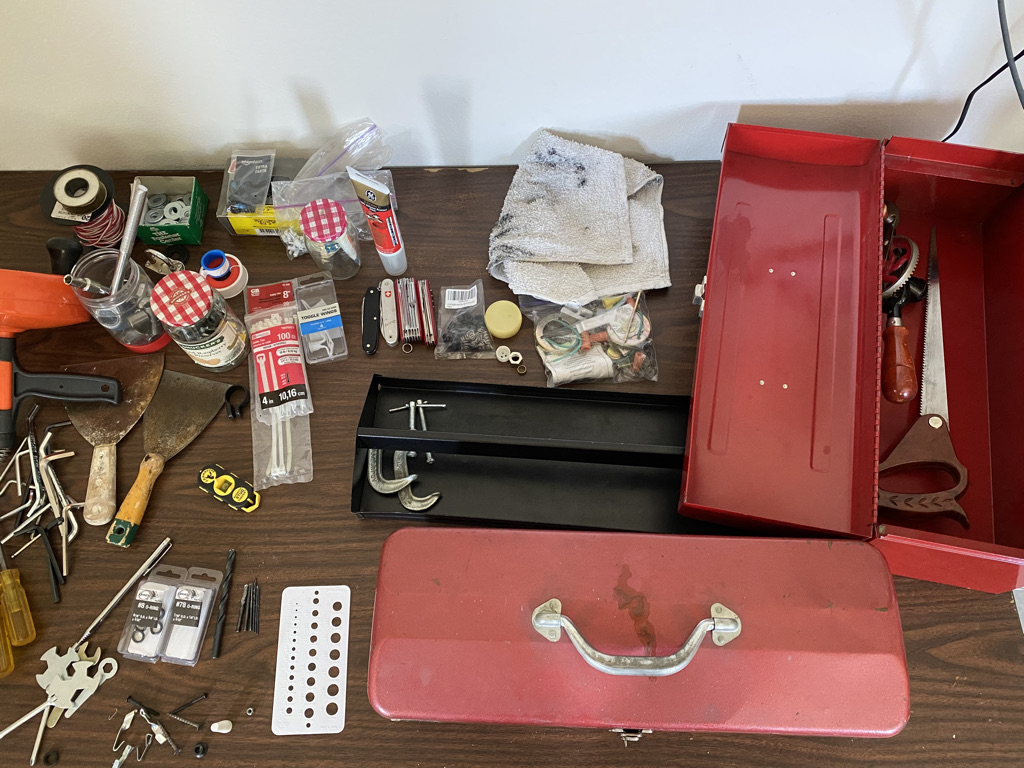
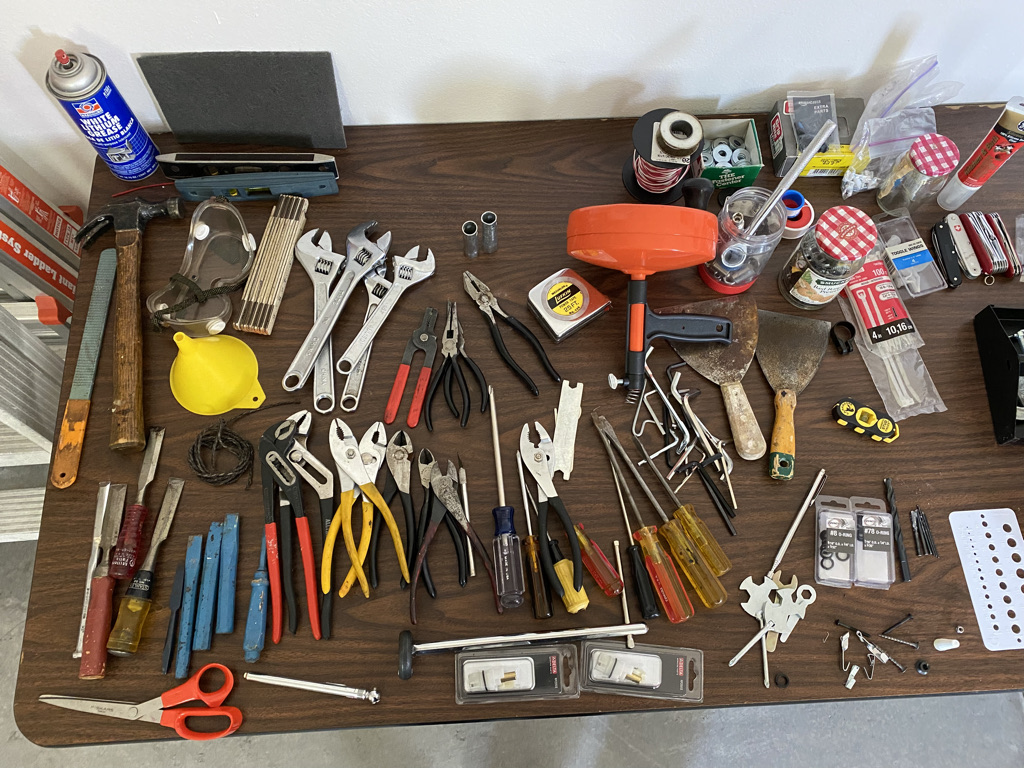
When I began sorting through these tools, I learned that I had 17 different hex wrenches (aka Allen wrenches) but only in 6 different sizes. I had two 10″ adjustable wrenches and two 8″ adjustable wrenches, none of which were good at holding their positions when used, so I had to keep my thumb on the adjuster when using them. I had a bunch of crusty wood chisels that I’ve never used in my life. In a long line of male relatives, apparently I’m the first who isn’t into making his own furniture.

Many items were coated in substances that were last seen in Voldemort’s rez pot… if you were to remove baby V and simmer the soupy remains into a thick sludge, smear it on tools, and then bake at 450º F for 35-45 minutes.

It’s possible that some of these tools might violate California’s Prop 65 if they were sold today, not necessarily from what they were originally made of but from whatever has coated them over the years.

Old Tools

Here are some pics of the old collection. Welcome to the Island of Misfit Toys!
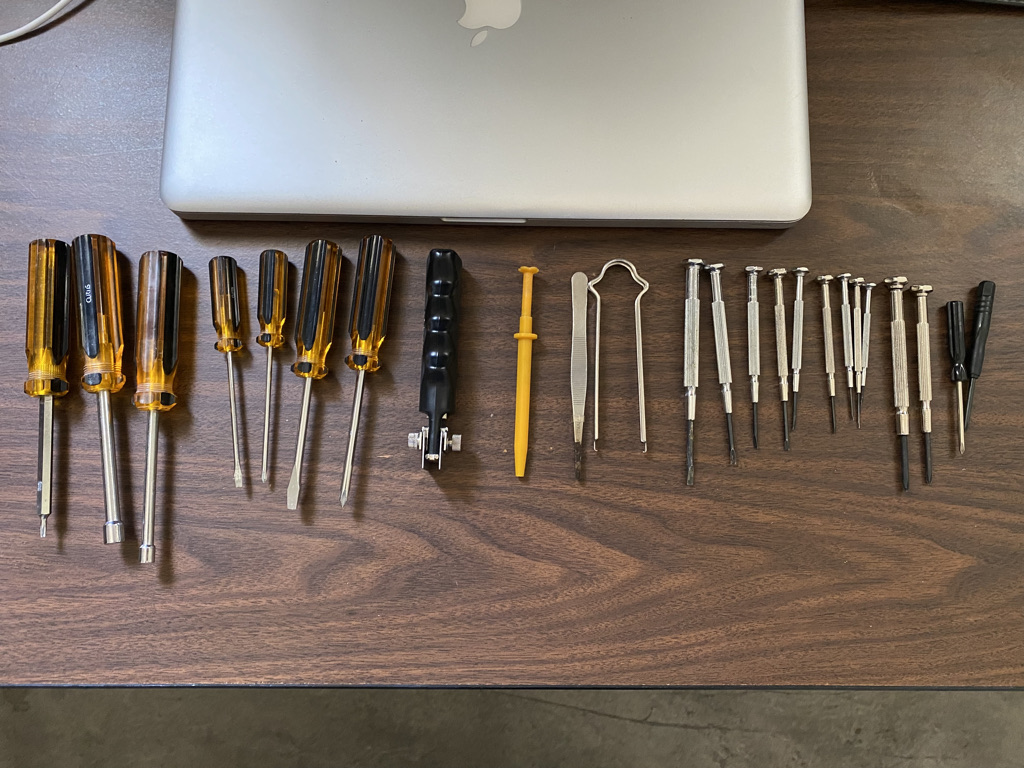
I remember using these small screwdrivers (below) when I built my own PC in 2004.
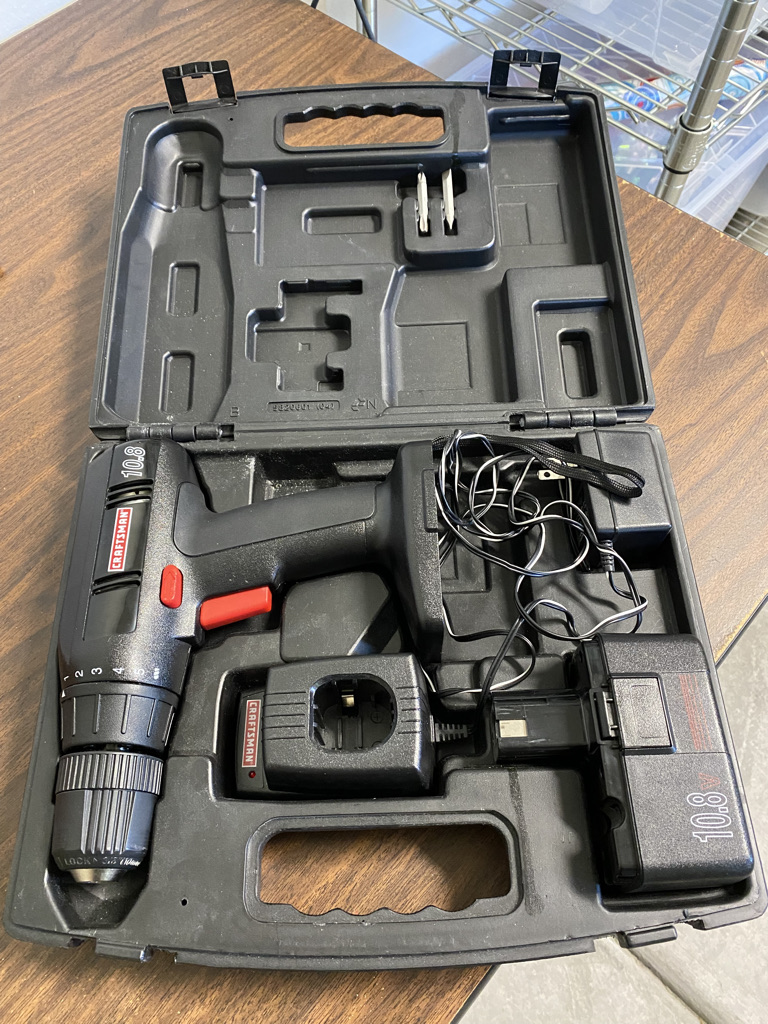
This old power drill’s battery keeps its charge for just a few minutes, and it’s so slow that I can only use it on drywall… maybe particle board on a good day. If I ever want to use it, I always have to charge the battery first since the battery won’t hold a charge in storage.

I’d normally feel a mild sense of dread whenever I had to use this drill, so sometimes I’d prefer to use an ancient hand-crank drill instead. That hand drill wasn’t a great choice either since it was designed for right-handers, and I’m a leftie, so I either have to use it right-handed or turn the drill in a way that feels unnatural for me. That isn’t so good for safety reasons.
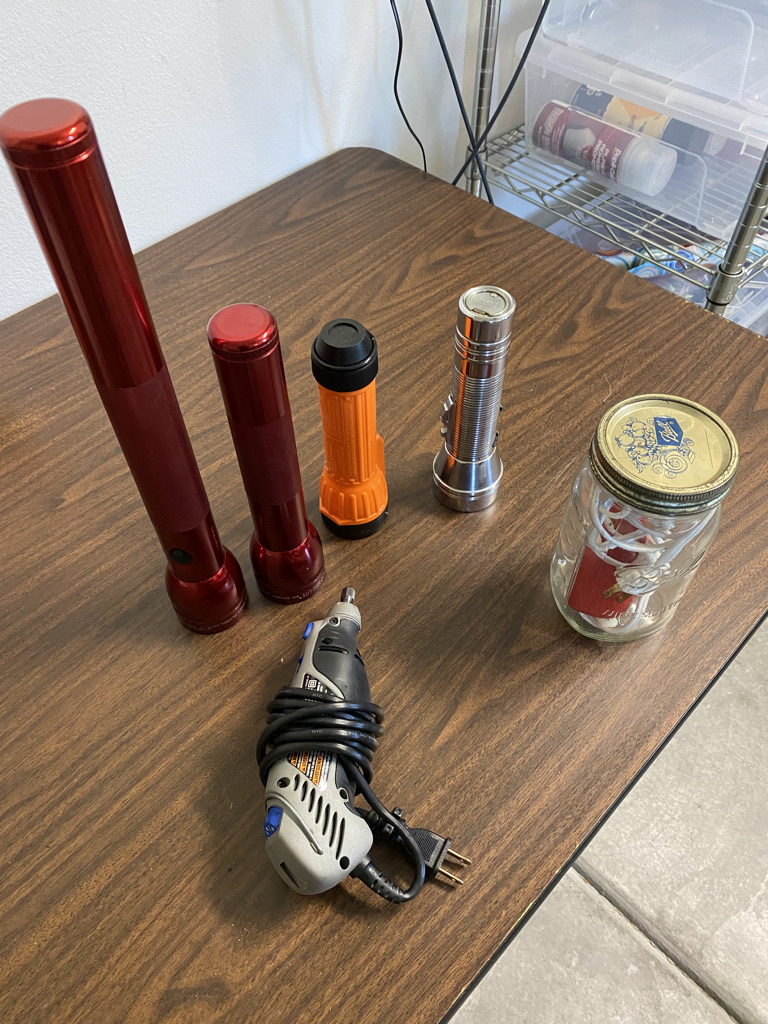
Here are some old flashlights, an etcher that I’ve never used, and a plug-in drill that only takes tiny bits.

Remember when Maglites were cool? Yes – the 80s. Admittedly I bought those myself… couldn’t resist the 2-pack. And I did at least use them a lot.
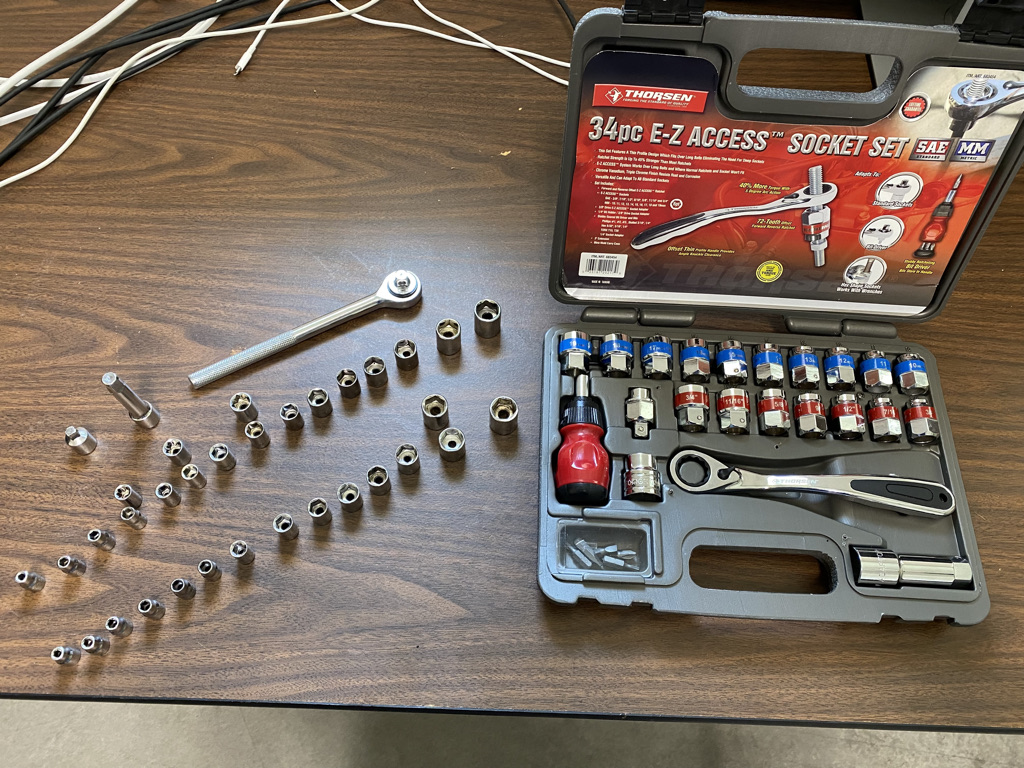
I had 2 old socket wrench sets, neither of which I liked. One had a broken extender – the small metal ball bearing fell out of it, so it wouldn’t stay in place.
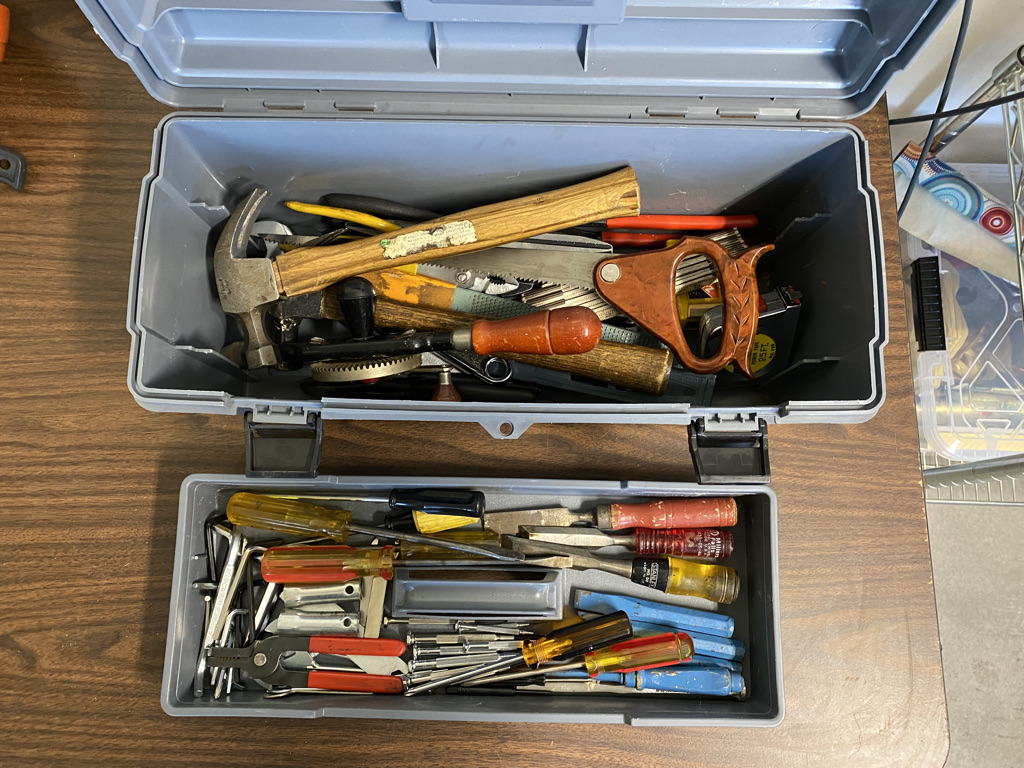
At the bottom of this toolbox was a gooey substance I couldn’t identify – I think that substance may have moved by itself one time, and I’m pretty sure it would emit light on Tuesdays.
I didn’t love these old metal toolboxes, but at least they were functional. My dad is from Indiana, so I’m sure the Indy 500 toolbox was something he bought.

Almost all of the old items have been sorted and donated (and cleaned to the extent possible without resorting to magic). Hopefully they’ll be appreciated by someone somewhere.

Starting Fresh

I decided to start fresh by building a tool collection that I would like, based on the kinds of projects I typically do around the house and garage. I spent a good bit of time researching the latest tools and decided what would be a good fit.

I’m not an auto mechanic or a carpenter, so I don’t need the most amazing or durable items, but I didn’t want dirt cheap items that were likely to disappoint me. I wanted tools that I would like and appreciate, both when I saw them and when I used them. So I used appreciation as my main standard for making selections. I kept asking, “Am I likely to appreciate this?”

I wanted to compile a set of tools that would feel abundant and empowering but not excessive for my needs. I appreciate abundance but not to the point of ridiculous excess. I didn’t replace some items with equivalent tools if I sensed that I would probably never need those types of tools (such as wood chisels). If I felt I would later regret a purchase, I avoided it.

I made a few mistakes and did some returns / exchanges, but overall I’ve been pleased with my initial picks. I’ve only had a chance to test some of these tools so far, but I look forward to a healthy relationship with them for many years to come.

I got most of these items via Amazon, and some I picked up locally at Lowe’s, Home Depot, and Costco.

New Tools

Here are some pics of the new tools I gradually acquired. After decades of used tools, I wanted to start with fresh energy.

I got new 3 new tape measures (two 16’ and one 12’), all self-locking. I tend to use these a lot, so I got one for my home office, one for the garage (toolbox), and one for upstairs.

Why aren’t all tape measures self-locking? When do you ever want to pull it out and have it immediately slide back into the housing? When I pull mine out, I want it to stay long and strong by default… till I’m ready to release it.

There are two new 12-piece ratcheting wrench sets (SAE and metric) and a new Dewalt socket wrench set (with SAE and metric sockets in a nice case). Between those is a universal socket – I tried it out, and it works surprisingly well. I love these wrench sets. This might be a tad overkill for my needs, but it’s really nice to have the perfect size for any job instead of having to over-rely on an adjustable wrench that might slip.

I got two sets of Allen wrenches (SAE and standard) that include nice rubbery holding cases to keep them organized by size. I like tools that self-organize with some sense of order or symmetry – they just seem smarter to me.

I got a new 16 oz mallet, which is nice for situations when a steel hammer might be too harsh.

I added new eye protection goggles (to replace the old ones that looked like something I used in high school chemistry). These fit nicely with or without glasses, and they’re anti-fogging.

I got two good utility knives – okay, just one knife is new, and the other I had bought previously. I liked the previous one so much that I decided to add another, so I could keep one in the house and one in the garage. I tend to use these a lot.

I got 9″ and 16″ levels, both magnetic. The smaller one has a built-in ruler. The larger one is nice for marking off spots for hanging a painting or poster. I considered getting a 24″ one, but that seemed like overkill, and I like that the 16″ one still fits in the toolbox.

In the back left, there are two LED flashlights. both of which are WAY brighter and much smaller and lighter than my old flashlights. They use AAA batteries instead of the D batteries in the Maglites, so they’re more energy efficient too. These flashlights lights have 3 brightness settings, and the beams can tighten or widen just by twisting the top. I actually got 4 of these since a 2-pack was only $10. I keep one in the garage, one in the car, and two in the house. They feel very solid, made of “military grade” aluminum (whatever that means).

There are also 2 rechargeable LED work lights (picked up at Costco on sale for $10 off the pair). These are nice and bright, and they have built in stands, hooks, and strong magnets, so they’re very versatile to position. Each light also has a built-in USB charger, so it can be used as a battery to charge a phone or other USB device as well – I don’t need that feature while at home, but it could be handy on a camping trip.

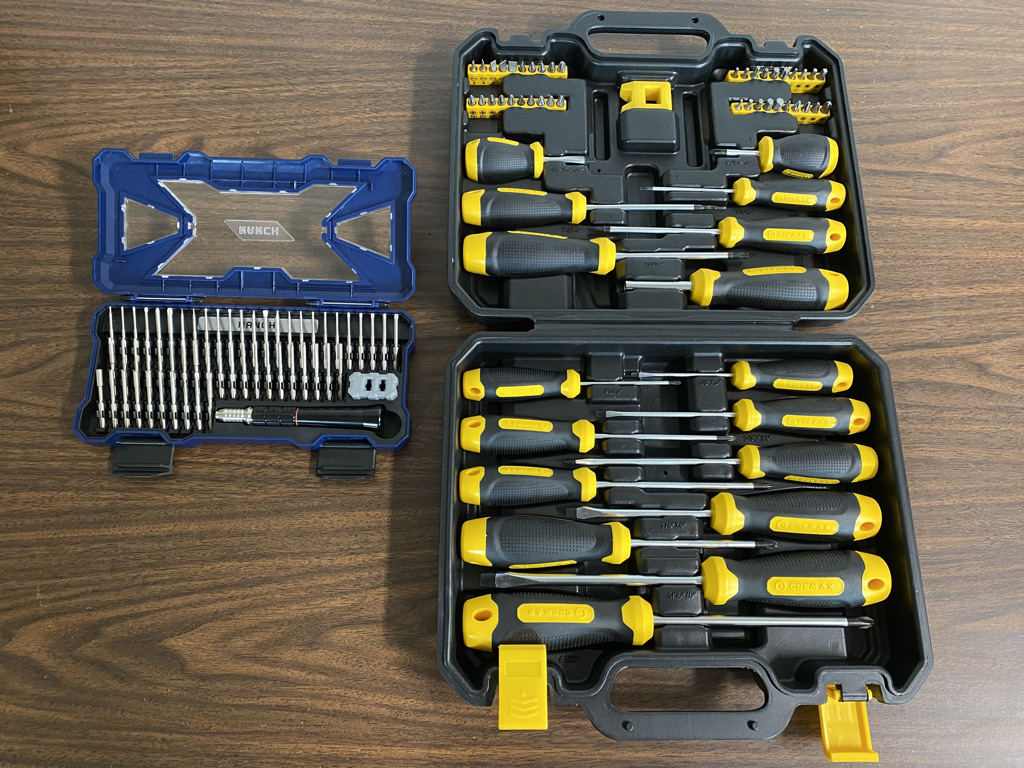
I got two new screwdriver sets, each with 57 pieces and their own storage cases. The left one is a precision set for working with small screws like on electronics or eye glasses. It has many different kinds of bits. I like that each bit has a long shaft, and the handle has a built-in extender as well, which is good for screwing in deep holes. I will never use all of these bits, but it feels nice to have such a good collection in a compact space – an excellent replacement for my old set.

The set on the right has nice grippy handles, and I like that it sorts the screwdrivers by type and size. It also includes many other assorted bits at the top of the case (which can be used with a power drill as well).

Both kits come with a magnetizer / demagnetizer, so you can magnetize or demagnetize the tips.
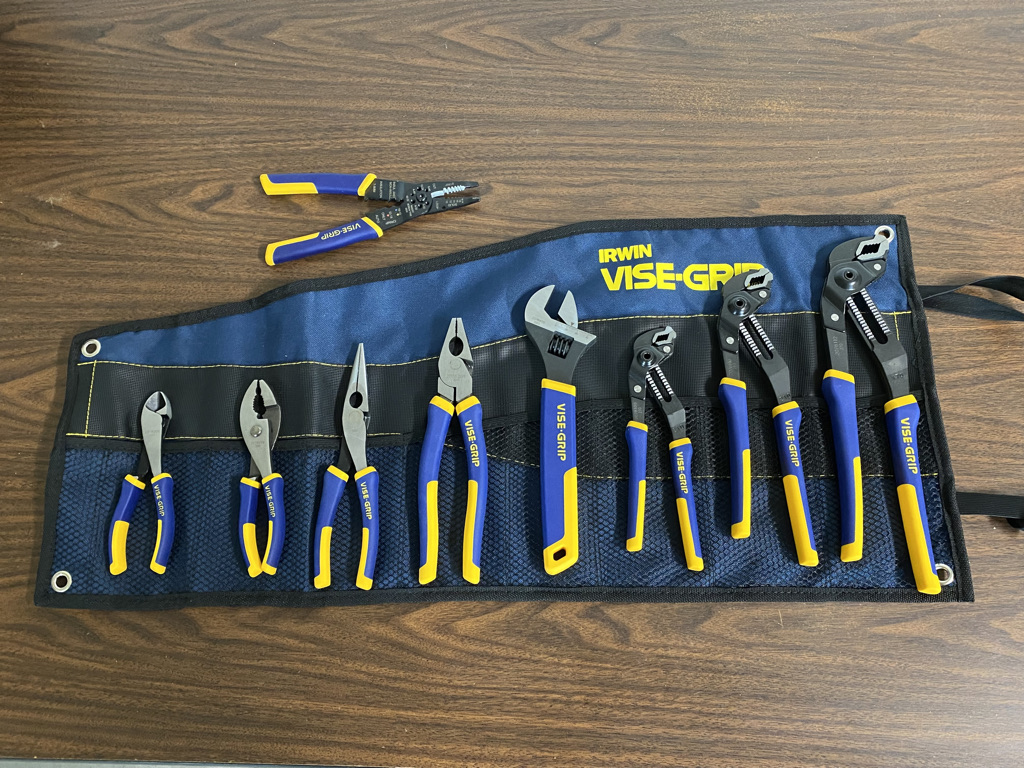
I love this set of pliers and wrenches. It comes with a strong cloth carrying case with pouches for each tool, and it easily rolls up and has elastic straps to secure it into a nice bundle. I prefer to put the tools in a toolbox though for faster access. Unlike my old adjustable wrenches, the adjustable wrench in this set is very good at holding its position.

I also added a new wire stripper, which is capable of cutting screws too.
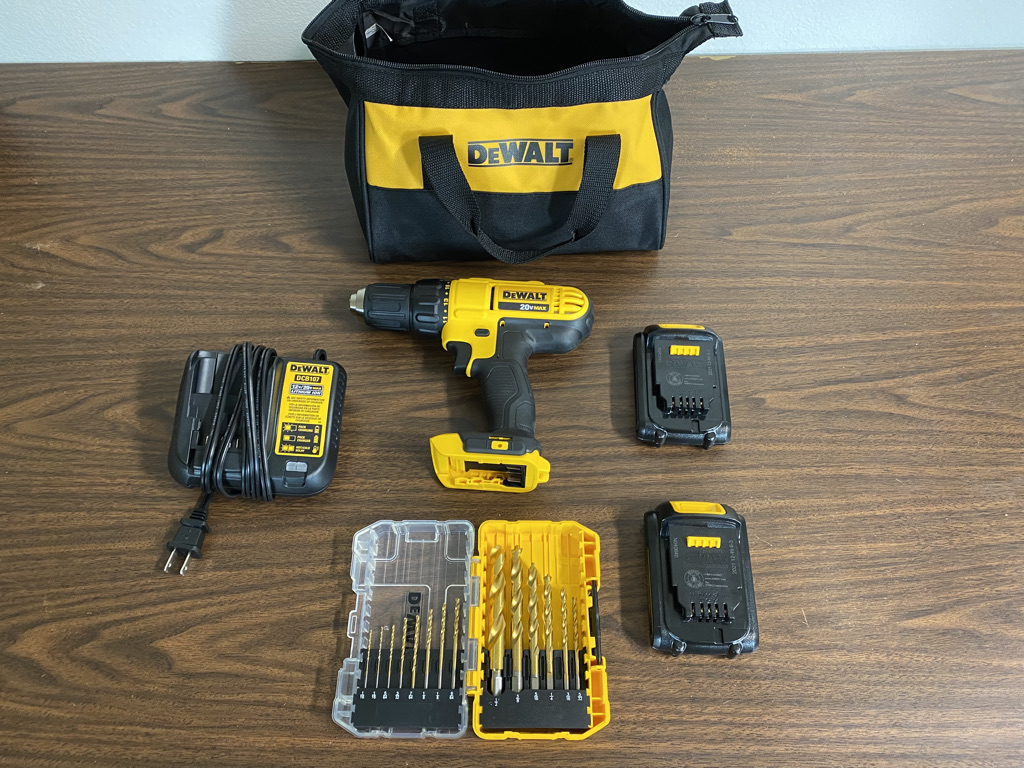
This new Dewalt power drill / driver is so nice. It comes with 2 rechargeable batteries, each of which should last for hours. Apparently these batteries can hold their charge for 18 months when not in use, so I can simply pop in a battery and use this drill without having to charge it first. Two batteries is overkill for my needs, but that’s what the set came with.

I also picked up a set of 14 titanium drill bits, which seem way nicer than the few sad drill bits I previously had.

This drill comes with a nice carrying bag that fits everything shown with room to spare.
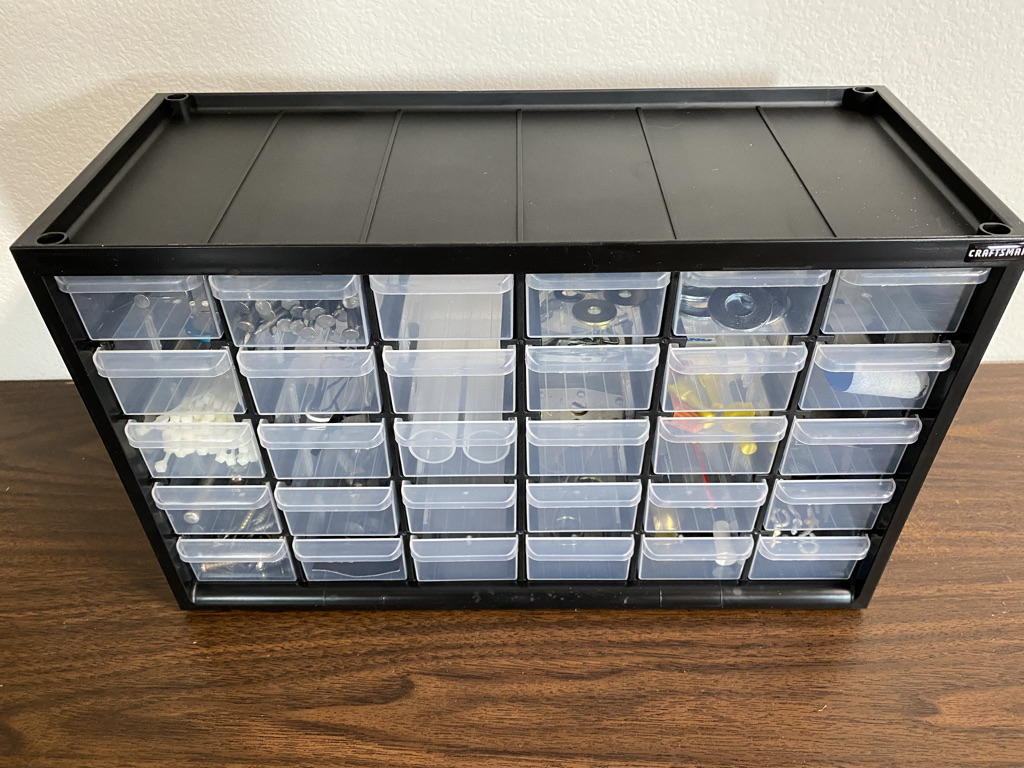
This small 30-drawer cabinet is great for storing odds and ends like nails, screws, washers, zip ties, etc. No more mega jar with everything mixed together.
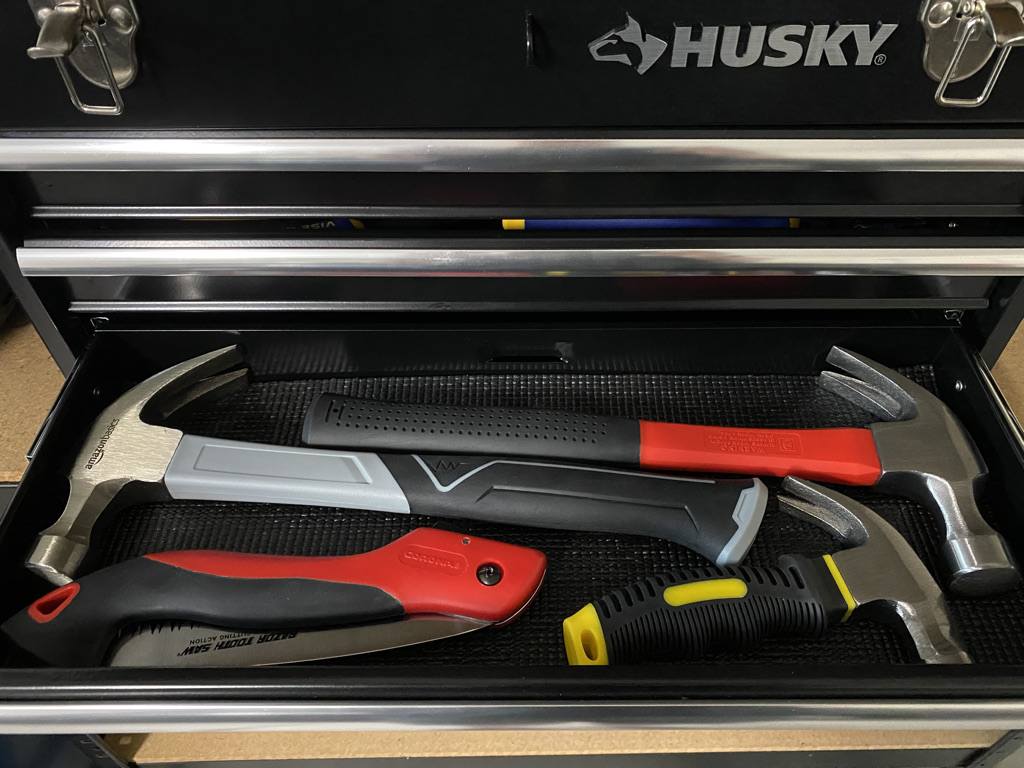
I replaced two crusty wood-handle hammers (both of which had tops that were coming loose) with these fiberglass-handle hammers: a 20-oz hammer, a 16-oz hammer, and a small stubby hammer.

In the same drawer is a 7″ folding hand saw (useful for trimming small branches). I’ve never needed a power saw or chainsaw.
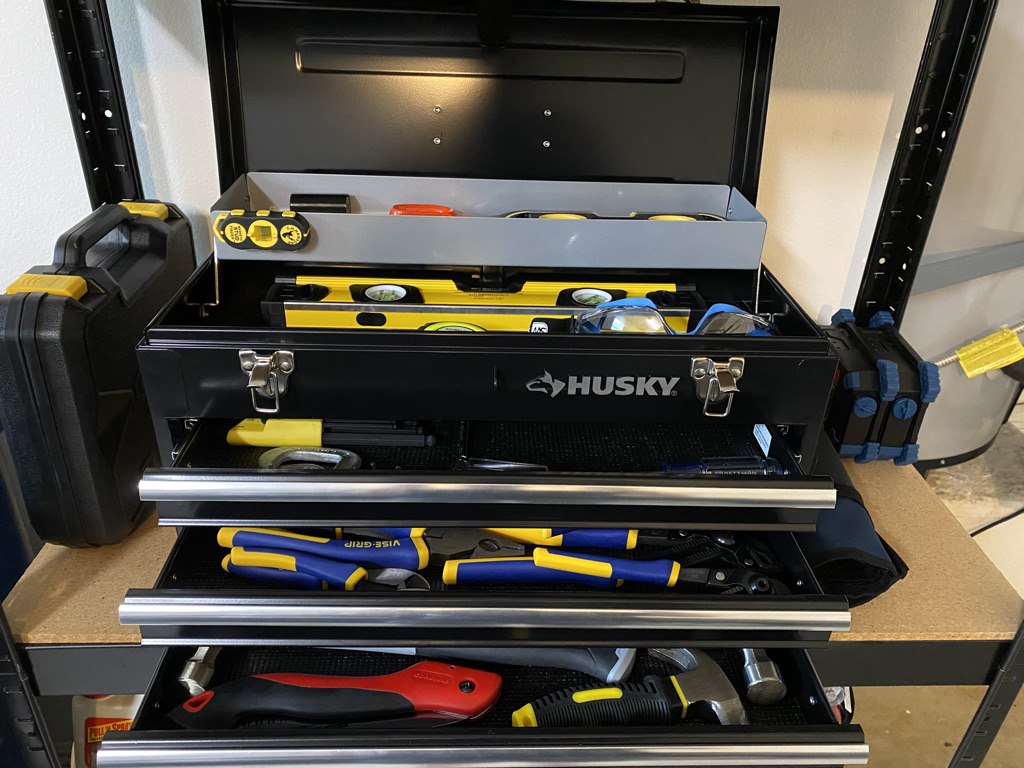
Here’s my new toolbox. I got one larger one to replace the three smaller boxes I had previously. It has a top area and 3 drawers. I added some padded drawer liners to it, so the drawers are lined with a soft but durable material. It’s like all of the tools now rest on a thin yoga mat.

Somehow it feels like giving the tools a nice home with cushy padding is a nice way to show them respect and appreciation. This is surely better than how I treated my old tools. I even talked to the new tools to welcome them into my home. In my journal this week, I wrote a private letter saying goodbye to my old tools, releasing their energy back to the simulator.
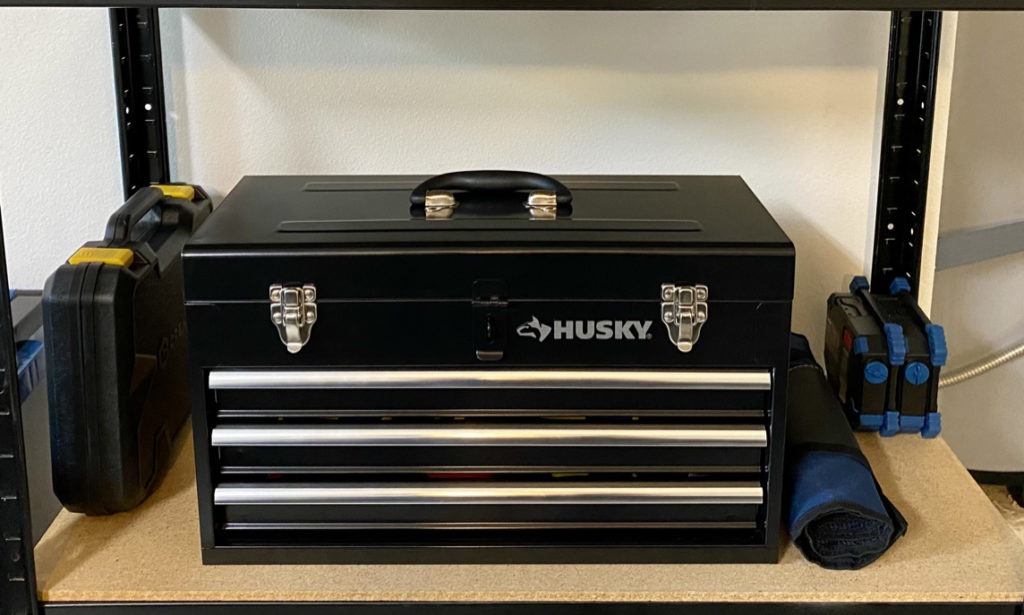
This is what the toolbox looks like when closed. It’s about 12″ tall. Not bad for $50. The drawers open and close very smoothly too. I don’t intend to carry it around, so this is its permanent home on a shelf in my garage.
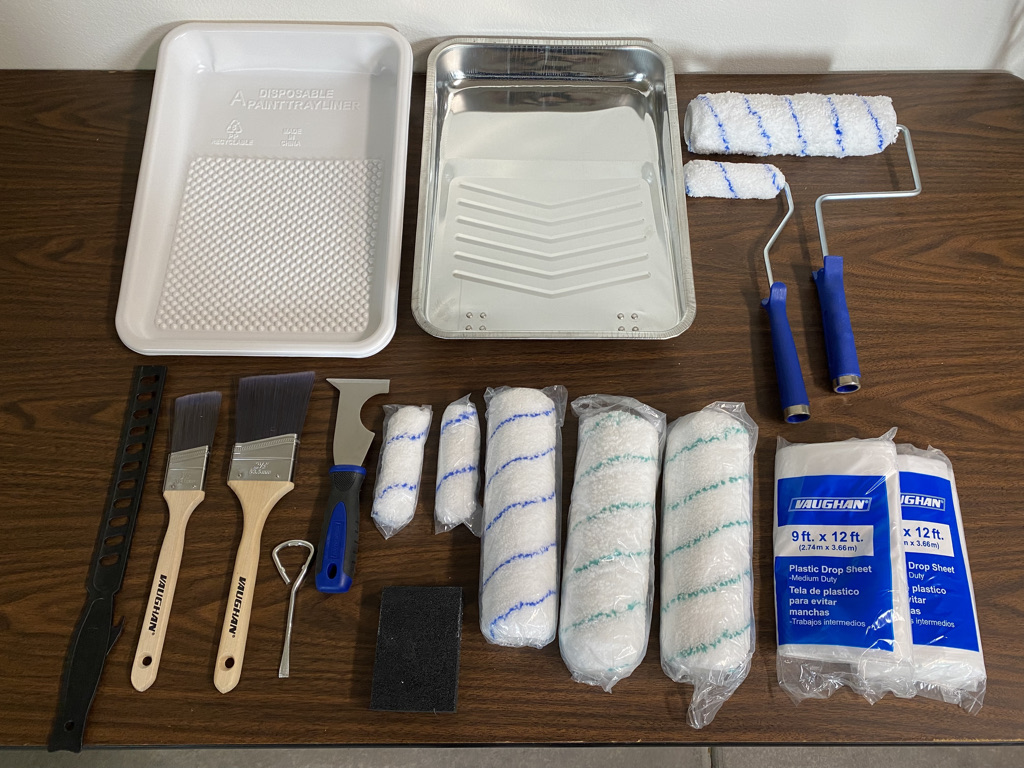
I also got this painting set, which I keep elsewhere in the garage. It’s currently $15 at Costco.
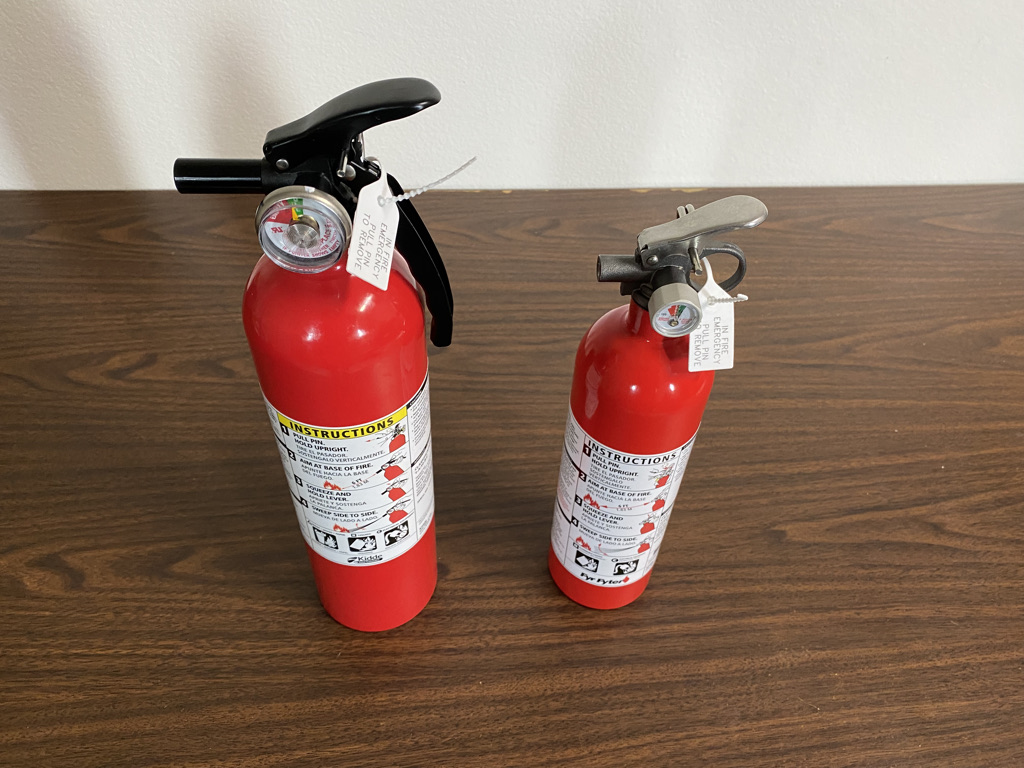
I bought two new fire extinguishers, one for the house and one for the garage as a backup. I had some old ones in my house that apparently expired in 1999 (seriously). The new ones say they’ll last for a good 12 years, so I wonder if the old ones were from the 80s – that is possible.
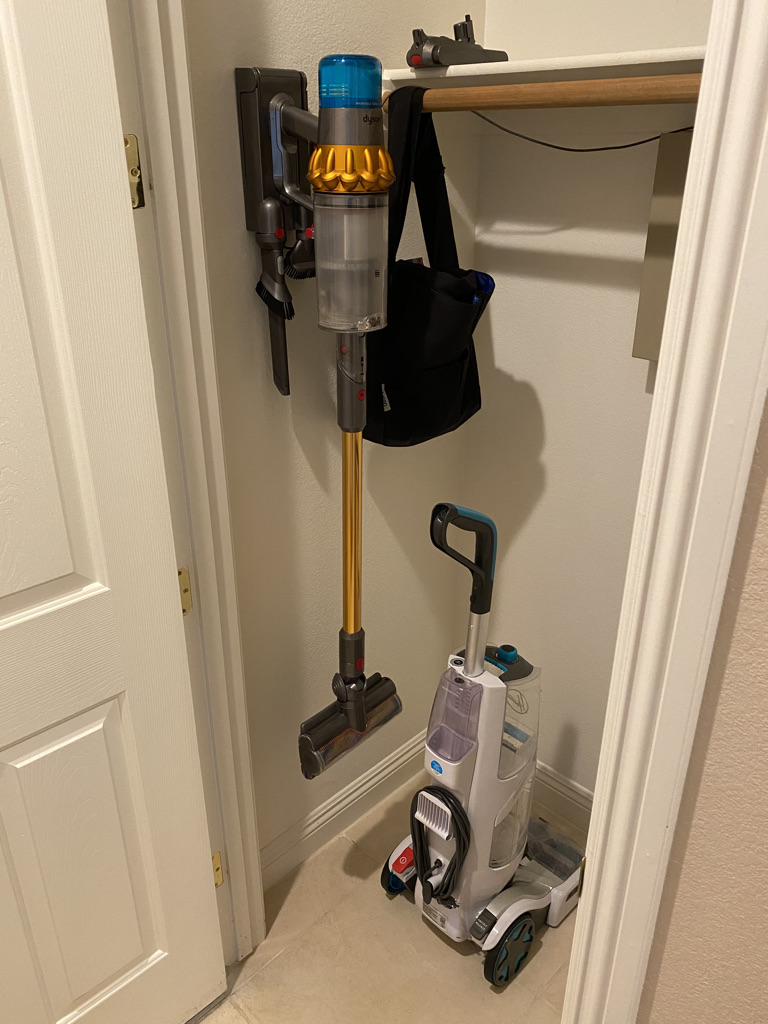
We’ve been making some other upgrades too this summer to help keep the house in better shape. Here’s a new Dyson V15 Detect vacuum that I got in June. I like it so far and picked up an extra battery for it. It’s the first Dyson I’ve ever owned, and I dare say that it’s even fun to use. Previously I was using a Roomba, but it’s not nearly as powerful as the Dyson. I like that the transparent bin easily shows what’s being sucked out of the carpet. This fairly recent model also has a display that shows the particle count of what it’s picking up (actually 3 different counts for different particle sizes). That feature seems like mostly a gimmick, but I still find it very satisfying to see the numbers go up, especially when it passes 1 billion. Having a vacuum that provides this extra visual feedback makes other vacuums seems a lot dumber… like what are they trying to hide by not sharing their performance data?

At least I now know for sure that Roomba is shit… at least as far as actual cleanliness goes.

On the floor there’s a new Hoover Smartwash+ carpet cleaner – I’ve tested it on one room so far, and it worked really well. I like that it automatically washes when I push it forward and dries when I pull it back, so there’s no need to hold down a trigger. It’s very easy to use. This combo of the new vacuum and carpet cleaner is nicely transforming the floors in my house.
This is the kind of project that I always could have put off by telling myself that there are more important things to do. But it felt good to finally do it.

I like and appreciate the new tools. I like that I no longer have to deal with the old misaligned mess of tools that I had before. I like that I took my time with this project and did it patiently, without rushing, and free of deadlines.

I especially like that I got the framing right before I started, so I was able to take action with ease. I felt nicely motivated the whole way through and even had fun with it. While doing the tools research, I learned some things I didn’t know before, so it was educational as well.

I framed this as an upgrade project – an invitation to completely transform my old tool collection into a new collection that I would henceforth appreciate. Purge the energy of disgust and irritation, and replace it with gratitude.

So there was an inner journey from having a poor relationship with my tool collection to discovering how to create a positive and healthy relationship. This permanently changes how I feel towards a small (but not insignificant) slice of my reality. Now every time I enter the garage and notice the different toolbox and tools, I feel differently. There’s a newfound sense of ease and even a little excitement. And admittedly there’s a little bit of discomfort since I’m still getting to know the new tools, but I imagine that will pass in time.

This also changes how I relate to home maintenance projects going forward. Now those projects seem a little more attractive because I look forward to using the nice new tools. Yesterday I noticed a loose screw on a towel hangar in the laundry room, and I happily grabbed one of the new screwdrivers to fix it, which felt more rewarding than I expected.

One key that I found is the importance of maintaining the right pacing. I can’t rush because that just makes such a project feel stressful, and I will doubt my decisions if I try to decide too quickly. It’s best to do the research patiently and then let my mind incubate some options till I have a strong sense of clarity. I held off on buying items when I was in doubt about what to get.

On the other hand, I can’t go too slowly either since then the energy of the project will die on me. I have to keep nudging it forward day by day to maintain a sense of progress. On a single day, I might figure out one or two items, like which screwdriver set to get. But over the course of a few weeks, all of those little decisions add up to a bigger transformation.

Think about some area of life where you’ve been tolerating misalignments. Could you undertake a complete transformation of that part of life, gradually chipping away at the misalignments one by one and upgrading or replacing them with changes that you’d appreciate?

What if you allowed such a project to take as long as it needs to take with no deadlines or time pressure? Could you approach it as an exploration and a learning experience, doing whatever you need to do to make reasonably good decisions at each step, so day by day you’re advancing towards a bigger transformation that you’ll really appreciate?

Remember that you don’t have to make perfect decisions in order to create significant improvement. I can’t say that I have the perfect tool set for me, but it’s a clear improvement over what I was dealing with before, and that’s good enough to call it done.


Share Button

Covid: Carrie Johnson urges pregnant women to get vaccinated

The PM’s wife, who is expecting a baby, says she is “feeling great” after having her second vaccine.

Share Button

Don’t ignore cancer signs, says new NHS England boss

About 10% fewer people with cancer than normal have been seen over the past year, figures show.

Share Button

Covid vaccine: Parents upset at jabs wait for high-risk children

Some families are struggling to get vaccines for vulnerable teens, nearly a month after they became eligible.

Share Button

Wildfire smoke may have contributed to thousands of extra COVID-19 cases and deaths in western U.S. in 2020

Thousands of COVID-19 cases and deaths in California, Oregon, and Washington between March and December 2020 may be attributable to increases in fine particulate air pollution (PM2.5) from wildfire smoke, according to a new study co-authored by researchers at Harvard T.H. Chan School of Public Health.

The study is the first to quantify the degree to which increases in PM2.5 pollution during the wildfires contributed to excess COVID-19 cases and deaths in the U.S. It was published online August 13, 2021, in Science Advances.

“The year 2020 brought unimaginable challenges in public health, with the convergence of the COVID-19 pandemic and wildfires across the western United States. In this study we are providing evidence that climate change — which increases the frequency and the intensity of wildfires — and the pandemic are a disastrous combination,” said Francesca Dominici, Clarence James Gamble Professor of Biostatistics, Population and Data Science at Harvard Chan School and senior author of the study.

In 2020, at the same time the nation was contending with the COVID-19 pandemic, huge wildfires swept across the western U.S., including some of the largest ever in California and Washington. Wildfires produce high levels of fine particulate matter (PM2.5), which has been linked with a host of negative health outcomes, including premature death, asthma, chronic obstructive pulmonary diseases (COPD), and other respiratory illnesses. In addition, recent studies have found a link between short- and long-term exposure to PM2.5 and COVID-19 cases and deaths.

The researchers — from Harvard Chan School, the John A. Paulson School of Engineering and Applied Sciences at Harvard University, and the Environmental Systems Research Institute in Redlands, Calif. — built and validated a statistical model to quantify the extent to which wildfire smoke may have contributed to excess COVID-19 cases and deaths in California, Oregon, and Washington, three states that bore the brunt of the 2020 wildfires. They looked at the connection between county- and daily-level data on PM2.5 air concentrations from monitoring data, wildfire days from satellite data, and the number of COVID-19 cases and deaths in 92 counties, which represented 95% of the population across the three states. The researchers accounted for factors such as weather, population size, and societal patterns of social distancing and mass gatherings.

The study found that from August 15 to October 15, 2020, when fire activity was greatest, daily levels of PM2.5 during wildfire days were significantly higher than on non-wildfire days, with a median of 31.2 micrograms per cubic meter of air (µg/m3) versus 6.4 (µg/m3). In some counties, the levels of PM2.5 on wildfire days reached extremely high levels. For instance, from September 14 to September 17, 2020, Mono County, Calif., experienced four days in a row with PM2.5 levels higher than 500 µg/m3 as a result of the Creek Fire. Such levels are deemed “hazardous” by the U.S. Environmental Protection Agency.

Wildfires amplified the effect of exposure to PM2.5 on COVID-19 cases and deaths, up to four weeks after the exposure, the study found. In some counties, the percentage of the total number of COVID-19 cases and deaths attributable to high PM2.5 levels was substantial.

On average across all counties, the study found that a daily increase of 10 µg/m3 in PM2.5 each day for 28 subsequent days was associated with an 11.7% increase in COVID-19 cases, and an 8.4% increase in COVID-19 deaths. The biggest effects for the COVID-19 cases were in the counties of Sonoma, Calif., and Whitman, Wash., with a 65.3% and 71.6% increase, respectively. The biggest effects for the COVID-19 deaths were in Calaveras, Calif., and San Bernardino, Calif., with a 52.8% and 65.9% increase, respectively.

When the researchers looked at individual wildfire days and at individual counties, they found that Butte, Calif. and Whitman, Wash. had the highest percentages of total COVID-19 cases attributable to high levels of PM2.5 during the wildfires: Among the total number of COVID-19 cases that occurred in these counties, 17.3% and 18.2%, respectively, were attributable to high levels of PM2.5. Butte, Calif. and Calaveras, Calif. had the highest percentages of total COVID-19 deaths attributable to high levels of PM2.5 during the wildfires: Among the total number of COVID-19 deaths that occurred in these counties, 41% and 137.4%, respectively, were directly attributable to high levels of PM2.5.

Across the three states studied, the cumulative number of COVID-19 cases and deaths attributable to daily increases in PM2.5 from wildfires was, respectively, 19,700 and 750, the study found.

“Climate change will likely bring warmer and drier conditions to the West, providing more fuel for fires to consume and further enhancing fire activity. This study provides policymakers with key information regarding how the effects of one global crisis — climate change — can have cascading effects on concurrent global crises — in this case, the COVID-19 pandemic,” said Dominici.

Co-first authors of the study were Xiaodan Zhou of the Environmental Systems Research Institute and Kevin Josey from the Department of Biostatistics at Harvard Chan School. Leila Kamareddine of the Department of Biostatistics at Harvard Chan School also contributed, as did Miah C. Caine and Loretta J. Mickley from Harvard’s John A. Paulson School of Engineering and Applied Sciences, and Tianjia Liu from Harvard’s Department of Earth and Planetary Sciences.

Funding for the study came from the Environmental Protection Agency (grant 83587201-0), the National Institutes of Health (grants R01ES026217, R01MD012769, R01ES028033, 1R01AG060232-01A1, 1R01ES030616, 1R01AG066793-01R01, 1R01ES029950, and 5T32ES007142), the Alfred P. Sloan Foundation, and the Vice Provost for Research-Harvard University.

Share Button

Metasurfaces control polarized light at will

For years, researchers at the Harvard John A. Paulson School of Engineering and Applied Sciences (SEAS) have engineered metasurfaces to manipulate light based on its polarization state. That research has contributed to advances in polarization technology — but metasurface technology has proven more powerful than even the researchers themselves realized.

Now, researchers have uncovered hidden potential in these metasurfaces and, in a new paper, demonstrated optical devices that manipulate light’s polarization state with an unprecedented degree of control.

“This research shows that the ability to switch between holographic images that need not be limited to just two polarization states,” said Federico Capasso, the Robert L. Wallace Professor of Applied Physics and Vinton Hayes Senior Research Fellow in Electrical Engineering at SEAS and senior author of the paper. “Our new metasurface can encode an unlimited number of holographic images or manipulate light in virtually infinite number of directions based on a very large number of polarization states.”

The research, published in Science Advances, demonstrates a new way to control polarized light with metasurfaces. This new approach — in which the researchers can engineer a holographic image with a polarization-tunable response across the image itself — could lead to applications in diverse fields including imaging, microscopes, displays, and even astronomy.

“This advancement is general and could be applied to almost any kind of optical system that uses polarized light,” said Noah Rubin, a postdoctoral fellow at SEAS and first author of the paper. “Specifically, this suggests that metasurfaces could be used in new types of laser systems whose output light could be engineered based on light’s polarization state, or perhaps even in telescope systems where similar types of optics are already being used to aid in the detection of Earth-like exoplanets.”

“Holography has always been a popular technique to record and display information,” said Aun Zaidi, a graduate student at SEAS and co-lead author of the paper. “We have taken a fundamental principle of holography and generalized it in a way that greatly expands the information capacity of this rather old technique.”

Next, the researchers aim to understand these devices better, including how they could be used in real-world applications.

The Harvard Office of Technology Development has protected the intellectual property relating to this project and is exploring commercialization opportunities.

Story Source:

Materials provided by Harvard John A. Paulson School of Engineering and Applied Sciences. Original written by Leah Burrows. Note: Content may be edited for style and length.

Share Button

Sensor spies hideouts for ?virus replication

While some types of RNA viruses cloak themselves to hide inside a cell and create copies of themselves, a “detective enzyme” might be attuned to their whereabouts. A slight variation in their genomic code gives some people’s cells the capacity to produce this sensor.

Many positive-strand RNA viruses share a strategy to avoid detection by a cell’s immune system until they can increase their numbers. Among them are the SARS-CoV-2 virus, flaviviruses such as West Nile and Zika, as well as the picornaviruses behind polio and some heart and brain inflammation.

After invading a cell, these types of viruses take over part of an intracellular membrane, within the system of membranes that form compartments within the cell. The viruses use this modified organelle as a refuge for replicating themselves. Their viral products are thereby shielded from most of the cell’s innate immune sensors.

A new study looks at how a variant of the enzyme, oligoadenylate synthetase 1, targets the hiding spots of these viruses. This isoform of the enzyme is called OAS1 p46. The OAS family of sensors are prompted by interferon to seek out RNA viruses or their locations. This reconnaissance helps the cell defend against the attack.

Although much research has documented the importance of OAS proteins in activating an enzyme that cleaves viral RNA in order to block a variety of different viruses from replicating, little is known about how individual OAS proteins contribute to this breadth of antiviral activity.

Most of a cell’s RNA virus sensors are deployed to detect viruses within the cytosol that is between the nucleus and the outer membrane of the cell. They sense viral RNA that accumulates in the cytosol during infection.

In contrast, the OAS1 p46 protein isoform homes in on the endomembrane system, particularly the endoplasmic reticulum and the Golgi apparatus. The Golgi is a cellular mailing room where proteins are packaged and dispatched.

The OAS1 p46 isoform is also prenylated, a biochemical tune up that, in this case, gives this protein the ability to traffic to the membranes. This isoform also has additional help from amino acids at the tail end of the protein that also improves its antiviral activity.

“Targeting innate RNA sensors to the endomembrane system may enhance their ability to sense RNA generated by viruses that use these compartments for replication,” the researchers noted in their paper, which appears in eLife.

The senior author of the paper is Ram Savan, an associate professor of immunology at the University of Washington School of Medicine in Seattle. His lab explores how variations in, and regulation of, innate immunity genes help determine resistance or susceptibility to serious viral infections that affects us.

The lead authors on the international, multi-institutional study are Frank W. Soveg, a recent graduate student in the Ram Savan Lab and Johannes Schwerk, acting instructor in immunology at the UW School of Medicine. All three are also members of the UW Center for Innate Immunity and Immune Disease.

The authors found that the OAS1 p46 isoform’s localization to these membranes enhances the cell’s virus sensors access the viral replication sites. This in turn results in a stronger antiviral activity against the sorts of RNA viruses that tend to use this hiding-in-a-membrane tactic to covertly multiply.

“Our virological analysis,” Ram Savan observed, “shows that OAS1 p46 isoform is pan-antiviral against multiple positive-strand RNA viruses including flavivirus, picornavirus and SARS-CoV-2.”

The scientists went on to analyze the human genetics behind the OAS1 p46 isoform, and the benefits of having this genetic variant, by examining lab samples from patients affected by COVID-19.

“In this study,” Ram Savan noted, “we identify a causal single nucleotide variant in the oligoadenylate synthetase 1 gene that predicts COVID-19 severity.”

Savan explained that the genetic data show a strong association of the A allele that produces the OAS1 p42 protein isoform with severe COVID-19 disease requiring mechanical ventilation of patients. On the other hand, the G allele producing OAS1p46 protein protects from severe COVID-19. The results from patients in the Pacific Northwest were reproduced in a larger European cohort.

In summary, the scientists noted that their findings show that targeting endomembranes is vital for the antiviral action of OAS1 against specific types of immunity-evading pathogens. The work demonstrates how critical such intracellular membrane targeting is in detecting dangerous viruses that replicate on these membranes. The results also suggest that the control of SARS-CoV-2 replication early on in infection, through the actions of the OAS1-p46 isoform, is an important factor in reducing the severity of COVID-19 disease.

This project was funded by National Institutes of Health (grants AI145974, AI108765, AI135437, AI104002, AI118916, AI145296, AI127463, AI100625, AI106677, GM007270, and AI140530; T32 HL007312); Postdoctoral Research Fellowship from the German Research Foundation and support from the Cancer Research Institute Irvington Fellowship Program.

Share Button

Cost of NHS Covid tests for UK arrivals reduced

Sajid Javid reduces the cost of NHS travel tests ahead of a review into the pricing of all test providers.

Share Button

July was Earth’s hottest month on record: NOAA

July 2021 has earned the unenviable distinction as the world’s hottest month ever recorded, according to new global data released today by NOAA’s National Centers for Environmental Information.

“In this case, first place is the worst place to be,” said NOAA Administrator Rick Spinrad, Ph.D. “July is typically the world’s warmest month of the year, but July 2021 outdid itself as the hottest July and month ever recorded. This new record adds to the disturbing and disruptive path that climate change has set for the globe.”

July 2021 by the numbers

  • Around the globe: the combined land and ocean-surface temperature was 1.67 degrees F (0.93 of a degree C) above the 20th-century average of 60.4 degrees F (15.8 degrees C), making it the hottest July since records began 142 years ago. It was 0.02 of a degree F (0.01 of a degree C) higher than the previous record set in July 2016, which was then tied in 2019 and 2020.
  • The Northern Hemisphere: the land-surface only temperature was the highest ever recorded for July, at an unprecedented 2.77 degrees F (1.54 degrees C) above average, surpassing the previous record set in 2012.
  • Regional records: Asia had its hottest July on record, besting the previous record set in 2010; Europe had its second-hottest July on record — tying with July 2010 and trailing behind July 2018; and North America, South America, Africa and Oceania all had a top-10 warmest July.

Extreme heat and global climate change

With last month’s data, it remains very likely that 2021 will rank among the world’s 10-warmest years on record, according to NCEI’s Global Annual Temperature Rankings Outlook.

Extreme heat detailed in NOAA’s monthly NCEI reports is also a reflection of the long-term changes outlined in a major report released this week by the Intergovernmental Panel on Climate Change.

“Scientists from across the globe delivered the most up-to-date assessment of the ways in which the climate is changing,” Spinrad said in a statement. “It is a sobering IPCC report that finds that human influence is, unequivocally, causing climate change, and it confirms the impacts are widespread and rapidly intensifying.”

Other notable highlights from NOAA’s July global climate report

  • Sea ice coverage varied by hemisphere: The Arctic sea ice coverage (extent) for July 2021 was the fourth-smallest for July in the 43-year record, according to analysis by the National Snow and Ice Data Center. Only July 2012, 2019 and 2020 had a smaller sea ice extent. Antarctic sea ice extent was above average in July — the largest July sea ice extent since 2015 and the eighth highest on record.
  • The tropics were busier than average: In the Atlantic basin, the season’s earliest fifth-named storm, Elsa, formed on July 1. The Eastern North and Western Pacific basins each logged three named storms. Overall, global tropical cyclone activity this year so far (through July) has been above-normal for the number of named storms.

More information

See NOAA’s July global climate report and images from the NCEI website: https://www.ncei.noaa.gov/news/global-climate-202107

Story Source:

Materials provided by NOAA. Note: Content may be edited for style and length.

Share Button

Covid booster: US approves third jab for the immunocompromised

It marks the first time US health officials have indicated that Covid booster shots may be needed.

Share Button