This tiny chip could change the future of quantum computing

Researchers have achieved a significant step forward in quantum computing by developing a device that is almost 100 times thinner than the width of a human hair. The work, published in the journal Nature Communications, introduces a new type of optical phase modulator designed to precisely control laser light. This capability is essential for running future quantum computers that may rely on thousands or even millions of qubits — the fundamental units used to store and process quantum information.

Just as important as its size is how the device is made. Instead of relying on custom-built laboratory equipment, the researchers used scalable manufacturing methods similar to those that produce the processors found in computers, smartphones, vehicles, and household appliances — essentially any technology powered by electricity (even toasters). This approach makes the device far more practical to produce in large numbers.

A Tiny Device Built for Real-World Scale

The research was led by Jake Freedman, an incoming PhD student in the Department of Electrical, Computer and Energy Engineering, alongside Matt Eichenfield, professor and Karl Gustafson Endowed Chair in Quantum Engineering. The team also collaborated with scientists from Sandia National Laboratories, including co-senior author Nils Otterstrom. Together, they created a device that combines small size, high performance, and low cost, making it suitable for mass production.

At the heart of the technology are microwave-frequency vibrations that oscillate billions of times per second. These vibrations allow the chip to manipulate laser light with remarkable precision.

By directly controlling the phase of a laser beam, the device can generate new laser frequencies that are both stable and efficient. This level of control is a key requirement not only for quantum computing, but also for emerging fields such as quantum sensing and quantum networking.

Why Quantum Computers Need Ultra-Precise Lasers

Some of the most promising quantum computing designs use trapped ions or trapped neutral atoms to store information. In these systems, each atom acts as a qubit. Researchers interact with these atoms by directing carefully tuned laser beams at them, effectively giving instructions that allow calculations to take place. For this to work, each laser must be adjusted with extreme precision, sometimes to within billionths of a percent.

“Creating new copies of a laser with very exact differences in frequency is one of the most important tools for working with atom- and ion-based quantum computers,” Freedman said. “But to do that at scale, you need technology that can efficiently generate those new frequencies.”

Currently, these precise frequency shifts are produced using large, table-top devices that require substantial microwave power. While effective for small experiments, these systems are impractical for the massive number of optical channels needed in future quantum computers.

“You’re not going to build a quantum computer with 100,000 bulk electro-optic modulators sitting in a warehouse full of optical tables,” Eichenfield said. “You need some much more scalable ways to manufacture them that don’t have to be hand-assembled and with long optical paths. While you’re at it, if you can make them all fit on a few small microchips and produce 100 times less heat, you’re much more likely to make it work.”

Lower Power Use, Less Heat, More Qubits

The new device generates laser frequency shifts through efficient phase modulation while using about 80 times less microwave power than many existing commercial modulators. Lower power consumption means less heat, which allows more channels to be packed closely together, even onto a single chip.

Taken together, these advantages transform the chip into a scalable system capable of coordinating the precise interactions atoms need to perform quantum calculations.

Built With the Same Technology as Modern Microchips

One of the project’s most important achievements is that the device was manufactured entirely in a fabrication facility, or fab, the same type of environment used to produce advanced microelectronics.

“CMOS fabrication is the most scalable technology humans have ever invented,” Eichenfield said.

“Every microelectronic chip in every cell phone or computer has billions of essentially identical transistors on it. So, by using CMOS fabrication, in the future, we can produce thousands or even millions of identical versions of our photonic devices, which is exactly what quantum computing will need.”

According to Otterstorm, the team took modulator technologies that were once bulky, expensive, and power intensive and redesigned them to be smaller, more efficient, and easier to integrate.

“We’re helping to push optics into its own ‘transistor revolution,’ moving away from the optical equivalent of vacuum tubes and towards scalable integrated photonic technologies,” Otterstorm said.

Toward Fully Integrated Quantum Photonic Chips

The researchers are now working on fully integrated photonic circuits that combine frequency generation, filtering, and pulse shaping on a single chip. This effort moves the field closer to a complete, operational quantum photonic platform.

Next, the team plans to partner with quantum computing companies to test these chips inside advanced trapped-ion and trapped-neutral-atom quantum computers.

“This device is one of the final pieces of the puzzle,” Freedman said. “We’re getting close to a truly scalable photonic platform capable of controlling very large numbers of qubits.”

The project received support from the U.S. Department of Energy through the Quantum Systems Accelerator program, a National Quantum Initiative Science Research Center.


Share Button

Light therapy boxes placed in all NI libraries

Some of the lamps – which are often used for Seasonal Affective Disorder – are available to loan for up to three weeks.

Share Button

Oceans are supercharging hurricanes past Category 5

Ocean regions that fuel the planet’s most powerful hurricanes and typhoons are heating up in the North Atlantic and Western Pacific. These changes are being driven not just by warmer surface waters, but by heat that now extends far below the ocean surface. New research suggests that human-caused climate change may account for as much as 70% of the expansion of these storm-forming hot spots.

As these hot spots grow, they increase the likelihood that exceptionally intense tropical cyclones, sometimes described as Category ‘6’ storms, could make landfall near heavily populated coastlines.

“The hot spot regions have expanded,” said I-I Lin, a chair professor in the Department of Atmospheric Science at the National Taiwan University.

Lin shared the research during an oral presentation focused on tropical cyclones at AGU’s 2025 Annual Meeting in New Orleans, Louisiana.

Why Scientists Are Calling for a New Storm Category

Lin has studied the most extreme hurricanes and typhoons for more than ten years. Her work intensified after Typhoon Haiyan — also known as Super Typhoon Yolanda — struck the Philippines at peak strength in November 2013, killing thousands of people. In 2014, Lin and her colleagues published research in the AGU journal Geophysical Research Letters arguing that storms of this magnitude warrant a new classification, Category 6.

Under their proposal, Category 6 tropical cyclones would include storms with wind speeds exceeding 160 knots. Until now, any storm stronger than 137 knots has been grouped into Category 5, which most weather agencies still consider the highest level. Lin noted that most hurricane categories span a range of about 20 knots, making a separate Category 6 more consistent with how storms are classified. Category 4, for example, includes winds between 114-137 knots.

The Strongest Storms on Record

Several well-known storms would fall into this proposed Category 6. Hurricane Wilma in 2005 remains the most intense hurricane ever measured in the Atlantic basin. Typhoon Haiyan also meets the criteria, as does Typhoon Hagibis, which hit Tokyo in 2019. Hagibis caused enormous damage from rain and wind, Lin said, even though the storm had weakened somewhat before reaching the city.

Another standout example is Hurricane Patricia, which developed in the Pacific Ocean off Mexico’s coast. Patricia holds the record as the strongest tropical cyclone ever observed, with winds reaching up to 185 knots — powerful enough to qualify as a Category 7 storm, if such a category existed, Lin said. “Patricia was the king of the world,” she added.

Burgeoning ocean hotspots feed big storms

To understand how often these extreme storms occur, Lin and her team reviewed records of major tropical cyclones from roughly the past 40 years. Their analysis shows that storms exceeding 160 knots are appearing more frequently. Between 1982 and 2011, eight such storms were recorded. From 2013 to 2023, that number rose to 10.

In total, 18 Category ‘6’ storms have occurred over the past four decades, with more than half forming in just the most recent decade.

Where the Most Dangerous Storms Are Forming

Lin’s ongoing research, which she discussed at the American Geophysical Union’s 2025 Annual Meeting, shows that nearly all Category ‘6’ tropical cyclones develop within specific ocean hot spots. The largest of these lies in the Western Pacific, east of the Philippines and Borneo. Another major hot spot stretches across parts of the North Atlantic near and east of Cuba, Hispaniola and Florida.

The study also found that these hot spots are expanding. In the North Atlantic, the region has spread eastward beyond the northern coast of South America and westward into much of the Gulf. The Western Pacific hot spot has also increased in size.

Why Deep Ocean Heat Makes Storms Stronger

The defining feature of these hot spots is not just warm surface water, but unusually deep layers of heat beneath the surface. In many parts of the ocean, strong storms stir up cooler water from below, which can weaken the storm. In hot spot regions, however, warm water extends so deep that storms do not cool as easily.

Even so, Lin emphasized that warm ocean conditions alone do not guarantee the formation of a Category ‘6’ storm. Atmospheric conditions must also align. “The hot spots are a necessary but not sufficient condition,” she said.

Climate Change Plays a Major Role

The researchers examined what is driving the expansion of these deep warm-water regions and found that both natural temperature cycles and long-term warming contribute. However, their analysis suggests that human-caused climate change is responsible for roughly 60-70% of the growth of these hot spots. This expansion, in turn, increases the likelihood of Category ‘6’ tropical cyclones.

Lin said that formally recognizing Category ‘6’ storms could help governments and communities better prepare for future impacts, especially in regions where these extreme systems are becoming more common. “We really think there is a need just to provide the public with more important information,” Lin said.

Share Button

Astronomers discover one of the Universe’s largest spinning structures

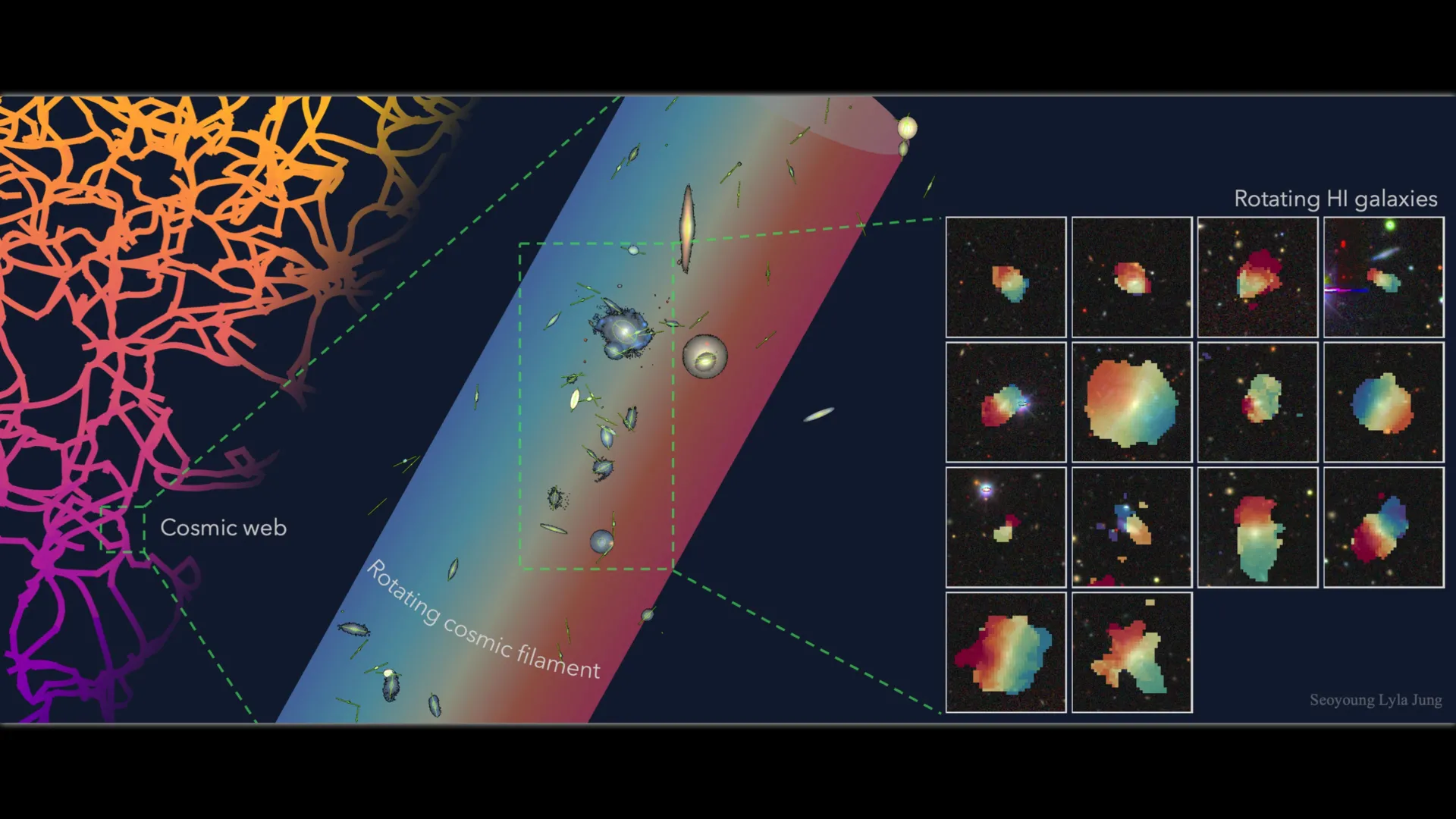
An international research team led by the University of Oxford has identified one of the largest rotating structures ever observed. The object is a razor thin chain of galaxies embedded within a vast cosmic filament located about 140 million light years from Earth. The results were published in Monthly Notices of the Royal Astronomical Society and may provide important clues about how galaxies formed in the early Universe.

Cosmic filaments are the biggest known structures in the Universe. They are enormous thread like networks of galaxies and dark matter that create the framework of the cosmic web. These filaments also act as pathways that funnel matter and angular momentum into galaxies. Nearby filaments where many galaxies spin in the same direction, and where the entire structure itself appears to rotate, are especially valuable for studying how galaxies acquired their spin and gas. They also offer a way to test ideas about how rotation develops across tens of millions of light years.

A Razor Thin Line of Gas Rich Galaxies

In this study, researchers identified 14 nearby galaxies rich in hydrogen gas arranged in a narrow, elongated line measuring about 5.5 million light years in length and roughly 117,000 light years across. This thin structure lies within a much larger cosmic filament that stretches about 50 million light years and contains more than 280 additional galaxies. Many of the galaxies in the thin strand appear to be rotating in the same direction as the filament itself, far more often than would be expected if their orientations were random. This finding challenges existing models and suggests that large scale cosmic structures may shape galaxy rotation more strongly or over longer periods than previously believed.

The team also found that galaxies on opposite sides of the filament’s central spine are moving in opposite directions. This pattern indicates that the entire filament is rotating as a single structure. By applying models of filament dynamics, the researchers estimated a rotation speed of about 110 km/s and calculated that the dense central region of the filament has a radius of approximately 50 kiloparsecs (about 163,000 light years).

Galaxies Like Teacups on a Spinning Ride

Co lead author Dr. Lyla Jung (Department of Physics, University of Oxford) explained why the discovery stands out: “What makes this structure exceptional is not just its size, but the combination of spin alignment and rotational motion. You can liken it to the teacups ride at a theme park. Each galaxy is like a spinning teacup, but the whole platform- the cosmic filament -is rotating too. This dual motion gives us rare insight into how galaxies gain their spin from the larger structures they live in.”

The filament appears to be relatively young and largely undisturbed. Its abundance of gas rich galaxies and its low internal motion, described as a so called “dynamically cold” state, suggest it is still in an early stage of development. Because hydrogen is the key ingredient for forming new stars, galaxies with large hydrogen reserves are actively collecting or holding onto the fuel needed for star formation. Studying these systems offers a valuable view into early or ongoing phases of galaxy evolution.

Tracing Gas Flows Through the Cosmic Web

Hydrogen rich galaxies also serve as effective tracers of how gas moves along cosmic filaments. Atomic hydrogen is easily influenced by motion, making it especially useful for revealing how gas flows through filaments and into galaxies. These observations help scientists understand how angular momentum moves through the cosmic web and shapes galaxy structure, rotation, and star formation.

The discovery may also help refine models of intrinsic galaxy alignments, which can interfere with measurements in upcoming weak lensing surveys. These include missions such as the European Space Agency’s Euclid spacecraft and observations from the Vera C. Rubin Observatory in Chile.

Co lead author Dr. Madalina Tudorache (Institute of Astronomy, University of Cambridge / Department of Physics, University of Oxford) said: “This filament is a fossil record of cosmic flows. It helps us piece together how galaxies acquire their spin and grow over time.”

Combining Powerful Telescopes and Surveys

The research team used data from South Africa’s MeerKAT radio telescope, one of the most powerful radio observatories in the world, made up of 64 interconnected dishes. The spinning filament was identified through a deep sky survey known as MIGHTEE, led by Professor of Astrophysics Matt Jarvis (Department of Physics, University of Oxford). The radio data were combined with optical observations from the Dark Energy Spectroscopic Instrument (DESI) and the Sloan Digital Sky Survey (SDSS), revealing a cosmic filament that shows both coordinated galaxy spin and large scale rotation.

Professor Jarvis said: “This really demonstrates the power of combining data from different observatories to obtain greater insights into how large structures and galaxies form in the Universe. Such studies can only be achieved by large groups with diverse skillsets, and in this case, it was really made possible by winning an ERC Advanced Grant/UKIR Frontiers Research Grant, which funded the co-lead authors.”

The study also included researchers from University of Cambridge, University of the Western Cape, Rhodes University, South African Radio Astronomy Observatory, University of Hertfordshire, University of Bristol, University of Edinburgh, and University of Cape Town.

Share Button

A Christmas tree 80 light-years wide appears in space

NGC 2264 is a large and active region of space where new stars are forming, located about 2,700 light years from Earth. It lies within the faint but imaginative constellation Monoceros, which represents a unicorn in star maps. Astronomers assign catalog numbers like NGC 2264 to help identify and study deep space objects, especially those made of gas, dust, and young stars. This region is positioned near the celestial equator and close to the flat disk of the Milky Way, which makes it visible from many locations on Earth during certain seasons.

Glowing Nebulae and Dark Cosmic Dust

The scene is filled with enormous clouds of interstellar gas and dust, the raw ingredients needed to form stars. As young stars ignite within these clouds, they release intense energy that causes surrounding hydrogen gas to glow red. These glowing regions are known as emission nebulae. Dark dust clouds thread through the area as well, blocking light from stars behind them and creating dramatic shadows. In places where this dust lies close to hot, newly formed stars, it reflects their light instead of absorbing it, producing soft blue regions called reflection nebulae.

The Christmas Tree Star Cluster

Near the center of NGC 2264 is S Monocerotis, a bright variable star whose brightness changes over time. This star is surrounded by a noticeable blue glow caused by reflected starlight from nearby dust. Above S Monocerotis, a group of young stars forms a simple triangular pattern. Because of this distinctive shape, the cluster has become widely known as the Christmas Tree star cluster.

The Cone Nebula and the Fox Fur Nebula

At the top of this star filled scene sits the Cone Nebula, a tall structure of gas and dust shaped by powerful radiation from nearby young stars. Beneath it spreads a tangled and glowing cloud called the Fox Fur Nebula, named for its textured, fur like appearance. These features are constantly being reshaped as energetic starlight pushes and sculpts the surrounding material.

Immense Size on a Galactic Scale

When viewed through a telescope, the entire region stretches about 1.5 degrees from top to bottom, which is roughly the width of three full moons lined up in the sky. At a distance of 2,700 light years, that apparent size corresponds to a real span of nearly 80 light years. This immense scale highlights just how vast and dynamic this stellar nursery truly is.

Share Button

Scientists reverse Alzheimer’s in mice and restore memory

A study reveals that restoring the brain’s energy balance may not just slow Alzheimer’s — but actually reverse it.

  • For more than a century, Alzheimer’s disease has been widely viewed as permanent and untreatable once it begins. As a result, most research has focused on preventing the disease or slowing its progression rather than attempting to reverse it.
  • By studying multiple mouse models of Alzheimer’s alongside human Alzheimer’s brain tissue, researchers identified a critical biological problem at the center of the disease. They found that the brain’s inability to maintain healthy levels of a vital cellular energy molecule called NAD+ plays a major role in driving Alzheimer’s.
  • In animal models, maintaining normal brain NAD+ levels prevented Alzheimer’s from developing. Even more striking, restoring NAD+ balance after the disease was already advanced allowed the brain to repair damage and fully restore cognitive function.
  • These results suggest that treatments aimed at restoring the brain’s energy balance could potentially move Alzheimer’s therapy beyond slowing decline and toward meaningful recovery.
  • The findings also open the door to further research, including the exploration of complementary strategies and carefully designed clinical trials to determine whether these results can translate to patients.

A Longstanding View of Alzheimer’s Is Being Questioned

For more than 100 years, Alzheimer’s disease (AD) has been widely viewed as a condition that cannot be undone. Because of this belief, most scientific efforts have focused on preventing the disease or slowing its progression, rather than attempting to restore lost brain function. Even after decades of research and billions of dollars in investment, no drug trial for Alzheimer’s has ever been designed with the goal of reversing the disease and recovering cognitive abilities.

That long-held assumption is now being challenged by researchers from University Hospitals, Case Western Reserve University, and the Louis Stokes Cleveland VA Medical Center. Their work set out to answer a bold question: can brains already damaged by advanced Alzheimer’s recover?

New Study Targets Brain Energy Failure

The research was led by Kalyani Chaubey, PhD, of the Pieper Laboratory and published on December 22 in Cell Reports Medicine. By examining both human Alzheimer’s brain tissue and multiple preclinical mouse models, the team identified a key biological failure at the center of the disease. They found that the brain’s inability to maintain normal levels of a critical cellular energy molecule called NAD+ plays a major role in driving Alzheimer’s. Importantly, maintaining proper NAD+ balance was shown to not only prevent the disease but also reverse it in experimental models.

NAD+ levels naturally decline throughout the body, including the brain, as people age. When NAD+ drops too low, cells lose the ability to carry out essential processes needed for normal function and survival. The researchers discovered that this decline is far more severe in the brains of people with Alzheimer’s. The same pattern was seen in mouse models of the disease.

How Alzheimer’s Was Modeled in the Lab

Although Alzheimer’s occurs only in humans, scientists study it using specially engineered mice that carry genetic mutations known to cause the disease in people. In this study, researchers used two such models. One group of mice carried multiple human mutations affecting amyloid processing, while the other carried a human mutation in the tau protein.

Amyloid and tau abnormalities are among the earliest and most significant features of Alzheimer’s. In both mouse models, these mutations led to widespread brain damage that closely mirrors the human disease. This included breakdown of the blood-brain barrier, damage to nerve fibers, chronic inflammation, reduced formation of new neurons in the hippocampus, weakened communication between brain cells, and extensive oxidative damage. The mice also developed severe memory and cognitive problems similar to those seen in people with Alzheimer’s.

Testing Whether Alzheimer’s Damage Could Be Reversed

After confirming that NAD+ levels dropped sharply in both human and mouse Alzheimer’s brains, the team explored two possibilities. They tested whether maintaining NAD+ balance before symptoms appeared could prevent Alzheimer’s, and whether restoring that balance after the disease had already progressed could reverse it.

This approach built on the group’s earlier work published in Proceeding of the National Academy of Sciences USA, which showed that restoring NAD+ balance led to both structural and functional recovery after severe, long-lasting traumatic brain injury. In the current study, the researchers used a well-characterized pharmacologic compound called P7C3-A20, developed in the Pieper laboratory, to restore NAD+ balance.

Full Cognitive Recovery Observed in Advanced Disease

The results were striking. Preserving NAD+ balance protected mice from developing Alzheimer’s, but even more surprising was what happened when treatment began after the disease was already advanced. In those cases, restoring NAD+ balance allowed the brain to repair the major pathological damage caused by the genetic mutations.

Both mouse models showed complete recovery of cognitive function. This recovery was also reflected in blood tests, which showed normalized levels of phosphorylated tau 217, a recently approved clinical biomarker used to diagnose Alzheimer’s in people. These findings provided strong evidence of disease reversal and highlighted a potential biomarker for future human trials.

Researchers Express Cautious Optimism

“We were very excited and encouraged by our results,” said Andrew A. Pieper, MD, PhD, senior author of the study and Director of the Brain Health Medicines Center, Harrington Discovery Institute at UH. “Restoring the brain’s energy balance achieved pathological and functional recovery in both lines of mice with advanced Alzheimer’s. Seeing this effect in two very different animal models, each driven by different genetic causes, strengthens the idea that restoring the brain’s NAD+ balance might help patients recover from Alzheimer’s.”

Dr. Pieper also holds the Morley-Mather Chair in Neuropsychiatry at UH and the CWRU Rebecca E. Barchas, MD, DLFAPA, University Professorship in Translational Psychiatry. He serves as Psychiatrist and Investigator in the Louis Stokes VA Geriatric Research Education and Clinical Center (GRECC).

A Shift in How Alzheimer’s Is Viewed

The findings suggest a fundamental change in how Alzheimer’s could be approached in the future. “The key takeaway is a message of hope — the effects of Alzheimer’s disease may not be inevitably permanent,” said Dr. Pieper. “The damaged brain can, under some conditions, repair itself and regain function.”

Dr. Chaubey added, “Through our study, we demonstrated one drug-based way to accomplish this in animal models, and also identified candidate proteins in the human AD brain that may relate to the ability to reverse AD.”

Why This Approach Differs From Supplements

Dr. Pieper cautioned against confusing this strategy with over the counter NAD+-precursors. He noted that such supplements have been shown in animal studies to raise NAD+ to dangerously high levels that promote cancer The method used in this research relies instead on P7C3-A20, a pharmacologic agent that helps cells maintain healthy NAD+ balance during extreme stress, without pushing levels beyond their normal range.

“This is important when considering patient care, and clinicians should consider the possibility that therapeutic strategies aimed at restoring brain energy balance might offer a path to disease recovery,” said Dr. Pieper.

Next Steps Toward Human Trials

The research also opens the door to additional studies and eventual testing in people. The technology is currently being commercialized by Glengary Brain Health, a Cleveland-based company co-founded by Dr. Pieper.

“This new therapeutic approach to recovery needs to be moved into carefully designed human clinical trials to determine whether the efficacy seen in animal models translates to human patients,” Dr. Pieper explained. “Additional next steps for the laboratory research include pinpointing which aspects of brain energy balance are most important for recovery, identifying and evaluating complementary approaches to Alzheimer’s reversal, and investigating whether this recovery approach is also effective in other forms of chronic, age-related neurodegenerative disease.”

Share Button

Flu cases falling ahead of Christmas, experts say

UK health agency says drop is encouraging news, but warns flu could still bounce back in new year.

Share Button

What you eat could decide the planet’s future

eople, the holidays often bring joyful indulgence, followed by regret and ambitious New Year’s resolutions to eat better.

A recent study from the University of British Columbia suggests moderation should not be a seasonal goal but a long-term one. The research found that 44 percent of the global population would need to change their eating habits to keep global warming below 2 °C.

The study was led by Dr. Juan Diego Martinez while he was a doctoral student at UBC’s Institute for Resources, Environment and Sustainability. He explains what the research uncovered and outlines practical diet changes that could make a real difference.

What did you find?

Half of us globally and at least 90 percent of Canadians need to change our diets to prevent severe planetary warming. And that number is conservative, because we used 2012 data. Since then, emissions and the world’s population have both increased. Looking ahead to 2050, we found that 90 percent of us will need to be eating differently.

We looked at data from 112 countries, accounting for 99 percent of food-related greenhouse gas emissions globally, and divided each country’s population into 10 income groups. We calculated a food emissions budget for each person by combining emissions from food consumption, global food production and supply chains, and compared these emissions to the total the world can afford if we want to stay below 2 °C of warming.

Why focus on dietary changes rather than, say, flying less?

The world’s food systems are responsible for more than one-third of all human greenhouse gas emissions.

We found that the 15 percent of people who emitted the most account for 30 percent of total food emissions, equaling the contribution of the entire bottom 50 percent. This select group consists of the wealthiest people in high emissions countries, including the Central African Republic, Brazil and Australia.

Even though this group is emitting a lot, there is a much higher number of people whose diets are above that cap. This is why half, not just the richest, of the global population needs to change diets. In Canada, all 10 income groups are above the cap.

Debates around flying less, driving electric and buying fewer luxury goods are valid: We need to reduce emissions any way we can. However, food emissions are not just a problem for the richest — we all need to eat, so we can all make a change. For people who are both flying frequently and eating lots of beef, it’s not an either/or: Try to reduce both.

What changes can we make to our diets?

Eat only what you need. Repurpose what you don’t. Less wasted food means fewer emissions, less cooking and more easy, tasty leftovers.

Eliminate or reduce your beef consumption — 43 percent of food-related emissions from the average Canadian come from beef alone. We could have had our beef and eaten it too if we’d followed the agreements laid out in the Kyoto Protocol, but we’re now at a point where food emissions also need to fall to avoid the worst of climate change.

I grew up in Latin America where eating a lot of beef is part of the culture, so I get how much of an ask this is. But we just can’t deny the data anymore.

Vote with your fork. This is a first step to demand change from your political leaders. The more we talk about our own dietary changes and what matters to us, the more politicians will begin to care about policies that bring positive changes to our food systems.

Share Button

Why consciousness can’t be reduced to code

Today’s arguments about consciousness often get stuck between two firm camps. One is computational functionalism, which says thinking can be fully described as abstract information processing. If a system has the right functional organization (regardless of the material it runs on), it should produce consciousness. The other is biological naturalism, which argues the opposite. It says consciousness cannot be separated from the special features of living brains and bodies because biology is not just a container for cognition, it is part of cognition itself. Both views capture real insights, but the deadlock suggests an important piece is still missing.

In our new paper, we propose a different approach: biological computationalism. The label is meant to be provocative, but also to sharpen the conversation. Our main argument is that the standard computational framework is broken, or at least poorly suited to how brains actually work. For a long time, it has been tempting to picture the mind as software running on neural hardware, with the brain “computing” in roughly the way a conventional computer does. But real brains are not von Neumann machines, and forcing that comparison leads to shaky metaphors and fragile explanations. If we want a serious account of how brains compute, and what it would take to build minds in other substrates, we first need a broader definition of what “computation” can be.

Biological computation, as we describe it, has three core features.

Hybrid Brain Computation in Real Time

First, biological computation is hybrid. It mixes discrete events with continuous dynamics. Neurons fire spikes, synapses release neurotransmitters, and networks shift through event-like states. At the same time, these events unfold within constantly changing physical conditions such as voltage fields, chemical gradients, ionic diffusion, and time-varying conductances. The brain is not purely digital, and it is not simply an analog machine either. Instead, it works as a multi-layered system where continuous processes influence discrete events, and discrete events reshape the continuous background, over and over, in an ongoing feedback loop.

Why Brain Computation Cannot Be Separated by Scale

Second, biological computation is scale-inseparable. In conventional computing, it is often possible to cleanly separate software from hardware, or a “functional level” from an “implementation level.” In the brain, that kind of separation breaks down. There is no neat dividing line where you can point to the algorithm on one side and the physical mechanism on the other. Cause and effect run across many scales at once, from ion channels to dendrites to circuits to whole-brain dynamics, and these levels do not behave like independent modules stacked in layers. In biological systems, changing the “implementation” changes the “computation,” because the two are tightly intertwined.

Metabolism and Energy Constraints Shape Intelligence

Third, biological computation is metabolically grounded. The brain operates under strict energy limits, and those limits shape its structure and function everywhere. This is not just an engineering detail. Energy constraints influence what the brain can represent, how it learns, which patterns remain stable, and how information is coordinated and routed. From this perspective, the tight coupling across levels is not accidental complexity. It is an energy optimization strategy that supports robust, flexible intelligence under severe metabolic limits.

The Algorithm Is the Substrate

Taken together, these three features point to a conclusion that can feel strange if you are used to classical computing ideas. Computation in the brain is not abstract symbol manipulation. It is not simply about moving representations around according to formal rules while the physical medium is treated as “mere implementation.” In biological computation, the algorithm is the substrate. The physical organization does not just enable the computation, it is what the computation consists of. Brains do not merely run a program. They are a specific kind of physical process that computes by unfolding through time.

What This Means for AI and Synthetic Minds

This view also exposes a limitation in how people often describe modern AI. Even powerful systems mostly simulate functions. They learn mappings from inputs to outputs, sometimes with impressive generalization, but the computation is still a digital procedure running on hardware built for a very different style of computing. Brains, by contrast, carry out computation in physical time. Continuous fields, ion flows, dendritic integration, local oscillatory coupling, and emergent electromagnetic interactions are not just biological “details” that can be ignored while extracting an abstract algorithm. In our view, these are the computational primitives of the system. They are the mechanisms that enable real-time integration, resilience, and adaptive control.

Not Biology Only, But Biology Like Computation

This does not mean we think consciousness is somehow restricted to carbon-based life. We are not arguing “biology or nothing.” Our claim is narrower and more practical. If consciousness (or mind-like cognition) depends on this kind of computation, then it may require biological-style computational organization, even if it is built in new substrates. The key issue is not whether the substrate is literally biological, but whether the system instantiates the right kind of hybrid, scale-inseparable, metabolically (or more generally energetically) grounded computation.

A Different Target for Building Conscious Machines

That reframes the goal for anyone trying to build synthetic minds. If brain computation cannot be separated from how it is physically realized, then scaling digital AI alone may not be enough. This is not because digital systems cannot become more capable, but because capability is only part of the puzzle. The deeper risk is that we may be optimizing the wrong thing by improving algorithms while leaving the underlying computational ontology unchanged. Biological computationalism suggests that building truly mind-like systems may require new kinds of physical machines whose computation is not organized as software on hardware, but spread across levels, dynamically linked, and shaped by the constraints of real-time physics and energy.

So if we want something like synthetic consciousness, the central question may not be, “What algorithm should we run?” It may be, “What kind of physical system must exist for that algorithm to be inseparable from its own dynamics?” What features are required, including hybrid event-field interactions, multi-scale coupling without clean interfaces, and energetic constraints that shape inference and learning, so that computation is not an abstract description layered on top but an intrinsic property of the system itself?

That is the shift biological computationalism calls for. It moves the challenge from finding the right program to finding the right kind of computing matter.

Share Button

What is happening to flu this winter – and should you buy a vaccine?

Flu has come early this year with a new mutated version of the virus circulating.

Share Button