Experts say there is a complex picture behind why more babies are being delivered through surgery.


Experts say there is a complex picture behind why more babies are being delivered through surgery.
The doctors’ union, the British Medical Association, said it was time the government came up with “a genuinely long-term plan” on pay and jobs.
Researchers at the University of Virginia School of Medicine have confirmed the first known death caused by the condition commonly referred to as the meat allergy, which is transmitted by ticks.
The case involved a 47 year old man from New Jersey who was previously healthy and died suddenly about four hours after eating beef. For months, the cause of his death remained unclear. That changed when Thomas Platts Mills, MD, PhD, a UVA Health physician and internationally recognized allergy specialist, took a closer look. Platts Mills originally identified the condition years ago and continues to lead research into how it affects patients.
How Lone Star Tick Bites Trigger Alpha Gal Allergy
The allergy develops after a bite from the Lone Star tick. These bites can cause the immune system to become sensitive to alpha gal, a sugar naturally found in meat from mammals. Once sensitized, people may experience allergic symptoms after eating foods such as beef, pork, or lamb. Common reactions include skin rashes, nausea, and vomiting.
Scientists have long suspected that severe cases could escalate into life threatening anaphylaxis. Until now, however, no fatal cases had been officially confirmed.
“The important information for the public is: First, that severe abdominal pain occurring 3 to 5 hours after eating beef, pork or lamb should be investigated as a possible episode of anaphylaxis; and, second, that tick bites that itch for more than a week or larvae of ticks often called ‘chiggers’ can induce or increase sensitization to mammalian-derived meat,” said Platts Mills, former chief of UVA Health’s Division of Asthma, Allergy and Clinical Immunology. “On the other hand, most individuals who have mild to moderate episodes of hives can control symptoms with an appropriate diet.”
What Happened Before the Man’s Death
The man, whose name was not made public, had gone camping with his wife and children during the summer of 2024. One evening, the family ate a late steak dinner at 10 p.m. Around 2 a.m., the man woke up with intense stomach pain, diarrhea, and vomiting. Although he felt better by morning, he later told his son that the episode had felt life threatening.
About two weeks later, still unaware that he had developed the meat allergy, he attended a barbeque and ate a hamburger. He began feeling unwell shortly after 7 p.m. At 7:37 p.m., his son found him collapsed in the bathroom.
Autopsy Raises More Questions Than Answers
An autopsy did not reveal a clear explanation for his death. The official cause was listed as “sudden unexplained death.”
His wife was not satisfied with that conclusion and asked another physician to review the findings. That doctor contacted Platts Mills and his team to explore whether alpha gal sensitivity could be involved.
Blood Tests Reveal Severe Allergic Reaction
Platts Mills obtained blood samples that had been collected after the man’s death. Testing showed that he had indeed been sensitized to alpha gal. The results also pointed to an extreme immune response consistent with fatal anaphylaxis.
When asked about recent tick exposure, the man’s wife said he had not noticed any tick bites in the past year. However, she recalled that he had suffered 12 or 13 itchy bites around his ankles earlier in the summer, which they believed were caused by chiggers. Platts Mills recognized that many bites thought to be from chiggers in the eastern United States are actually from Lone Star tick larvae.
Factors That May Have Worsened the Reaction
Platts Mills and his colleagues believe several conditions may have intensified the man’s allergic response. These include drinking a beer with the hamburger, exposure to ragweed pollen, and physical exercise earlier that day. Family members also noted that he rarely ate red meat, which may have influenced how his immune system reacted.
Growing Tick Populations Increase Risk
Following the case, Platts Mills is urging doctors to stay alert for patients who may have developed this allergy or who face higher exposure risk. He pointed out that deer populations are rapidly increasing in many states, creating ideal conditions for the Lone Star tick to spread.
“It is important that both doctors and patients who live in an area of the country where Lone Star ticks are common should be aware of the risk of sensitization,” Platts Mills said. “More specifically, if they have unexpected episodes of severe abdominal pain occurring several hours after eating mammalian meat, they should be investigated for possible sensitization to the oligosaccharide alpha-gal.”
Case Findings Published in Medical Journal
Details of the case have been published in the Journal of Allergy and Clinical Immunology: In Practice. The article is open access, meaning it is available to read for free. The authors include Platts Mills, Lisa J. Workman, Nathan E. Richards, Jeffrey M. Wilson, and Erin M. McFeely.
The research team obtained consent from the man’s widow before releasing the findings.
Resident doctors in England are striking between 17 and 22 December, the 14th walkout since 2023.
Around 7.5% of 16 to 24-year-old-men are using the small sachets that fit under the top lip, research suggests.
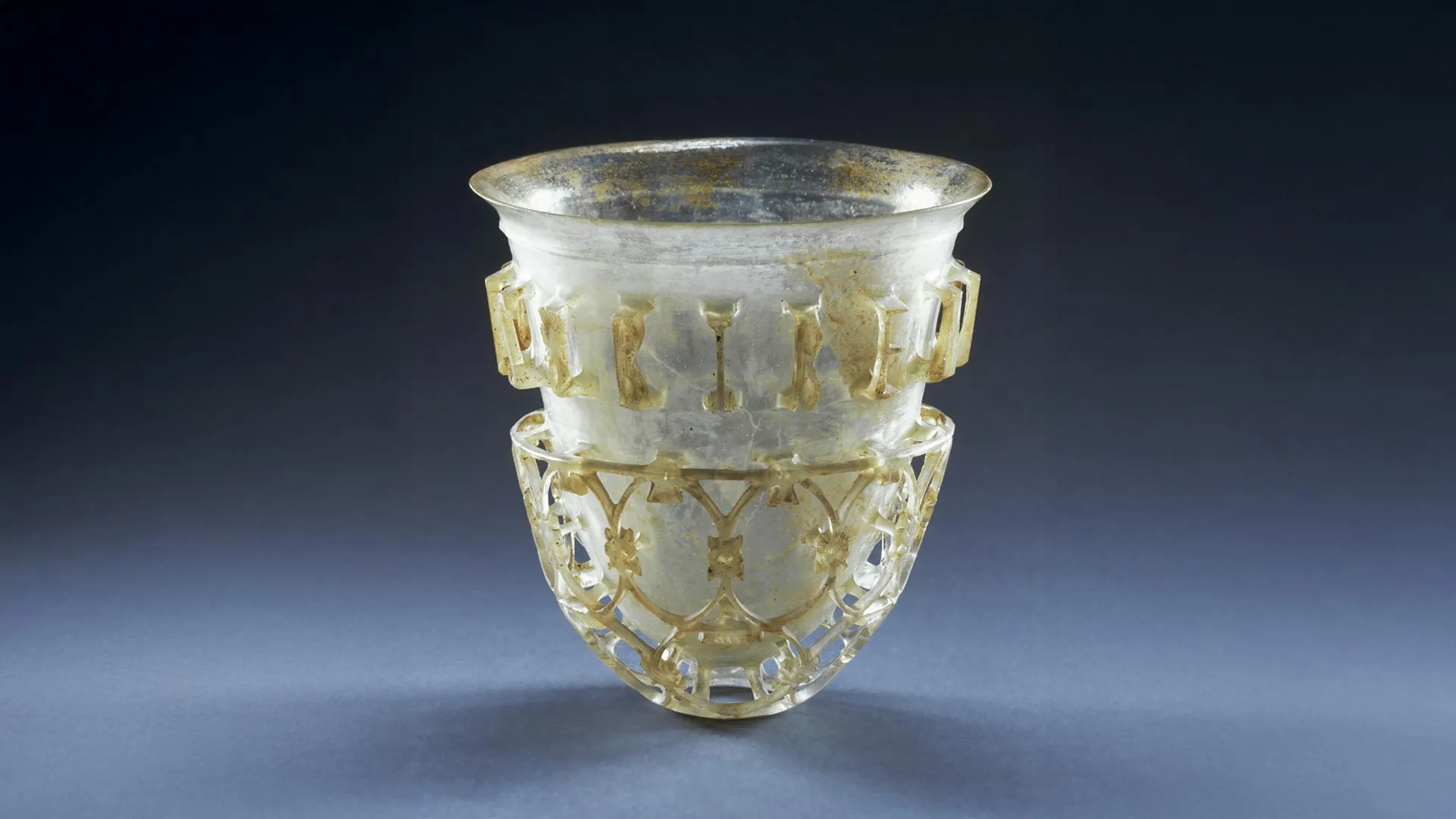
In the quiet glow of a museum gallery, Hallie Meredith noticed something unexpected about ancient Roman glass that had gone unnoticed for generations.
In February 2023, the Washington State University art history professor and practicing glassblower was studying a private collection of Roman glass cage cups at the Metropolitan Museum of Art in New York City. These rare luxury vessels, carved from a single block of glass between 300 and 500 CE, have long been admired and analyzed for their craftsmanship. Meredith’s insight did not come from new technology or specialized imaging. It came from curiosity and a simple physical action. She turned one of the cups around.
Overlooked Symbols and Ancient Makers’ Marks
On the back of the late Roman vessel, Meredith noticed abstract openwork shapes carved alongside a short inscription wishing the owner a long life. The designs included (such as, diamonds, leaves, or crosses). For decades, these elements were treated as ornamental details. Meredith’s research suggests a different interpretation. She believes these symbols functioned as makers’ marks, identifying the workshops and artisans responsible for producing some of the most complex glass objects in the Roman world.
“Because I am trained as a maker, I kept wanting to flip things over,” Meredith said. She began glassblowing as an undergraduate and has continued the practice throughout her career. “When that happens, patterns appear that everyone else has literally photographed out of the frame.”
Tracing a Network of Roman Glassworkers
That moment of observation led Meredith to a broader investigation into how Roman glassmakers organized their work. In two recent academic papers, one published in April in the Journal of Glass Studies and another in October in World Archaeology, she documented the same symbols appearing on multiple carved glass objects. The repeated marks point to a shared visual system used by glassworkers between the fourth and sixth centuries CE.
By analyzing tool marks, inscriptions, and unfinished pieces, Meredith found evidence that these vessels were created by teams rather than individual artisans. Engravers, polishers, and apprentices appear to have worked together in coordinated workshops. What began as a simple act of turning a vessel revealed a previously unrecognized community of makers whose identities had faded from view.
Rethinking How Roman Glass Was Made
For more than two centuries, scholars have debated how Roman openwork glass vessels were produced. Theories have ranged from hand carving to casting or blowing. Much of this discussion focused narrowly on manufacturing techniques and inscriptions. Meredith’s findings suggest that a fuller understanding requires attention to the people involved, not just the methods they used.
Each vessel, known as a diatretum, started as a thick-walled glass form that was carefully carved into two concentric layers connected by thin glass bridges. The finished lattice appears remarkably delicate, yet producing it demanded extraordinary time and physical endurance. Meredith’s research indicates that multiple specialists collaborated on a single cup over extended periods. She argues that the abstract symbols marked workshop identity rather than individual authorship. “They weren’t personal autographs,” she said. “They were the ancient equivalent of a brand.”
A Broader History of Ancient Craft Labor
Meredith expands on these ideas in her forthcoming book, The Roman Craftworkers of Late Antiquity: A Social History of Glass Production and Related Industries. The monograph is currently in production with Cambridge University Press and is expected to be released in 2026 or 2027.
Her hands-on experience as a glassblower strongly informs her academic work. She understands the physical demands of working molten glass and applies that practical knowledge to her study of ancient objects. At WSU, she teaches a course called Experiencing Ancient Making. Students recreate artifacts using 3D printing, attempt traditional making techniques, and use a digital app she developed to virtually disassemble historical objects. “The goal isn’t perfect replication,” she said. “It’s empathy. Ancient craftworkers can be understood differently when their production processes are experienced.”
Restoring Visibility to Ancient Artisans
That emphasis on empathy shapes Meredith’s broader goal of bringing attention back to the laborers behind ancient material culture. “There’s been a static picture of people who do the work,” she said. “We presume we understand them because we focus on elites. But when the evidence is assembled, far more is known about these craftworkers than previously thought.”
Her next research project combines art history with data science. Collaborating with WSU computer science students, Meredith is creating a searchable database that tracks unconventional writing across thousands of portable artifacts. The database includes misspellings, mixed alphabets, and coded inscriptions. She believes these features, once dismissed as meaningless errors, may reflect multilingual artisans adjusting written language for diverse audiences.
Seeing Ancient Objects Through New Eyes
Meredith’s work encourages scholars and museum visitors alike to reconsider what ancient artifacts can reveal. When light catches the lattice of a diatretum, the glass shows more than technical brilliance. It also reflects the skill, collaboration, and creativity of the people who shaped it centuries ago.
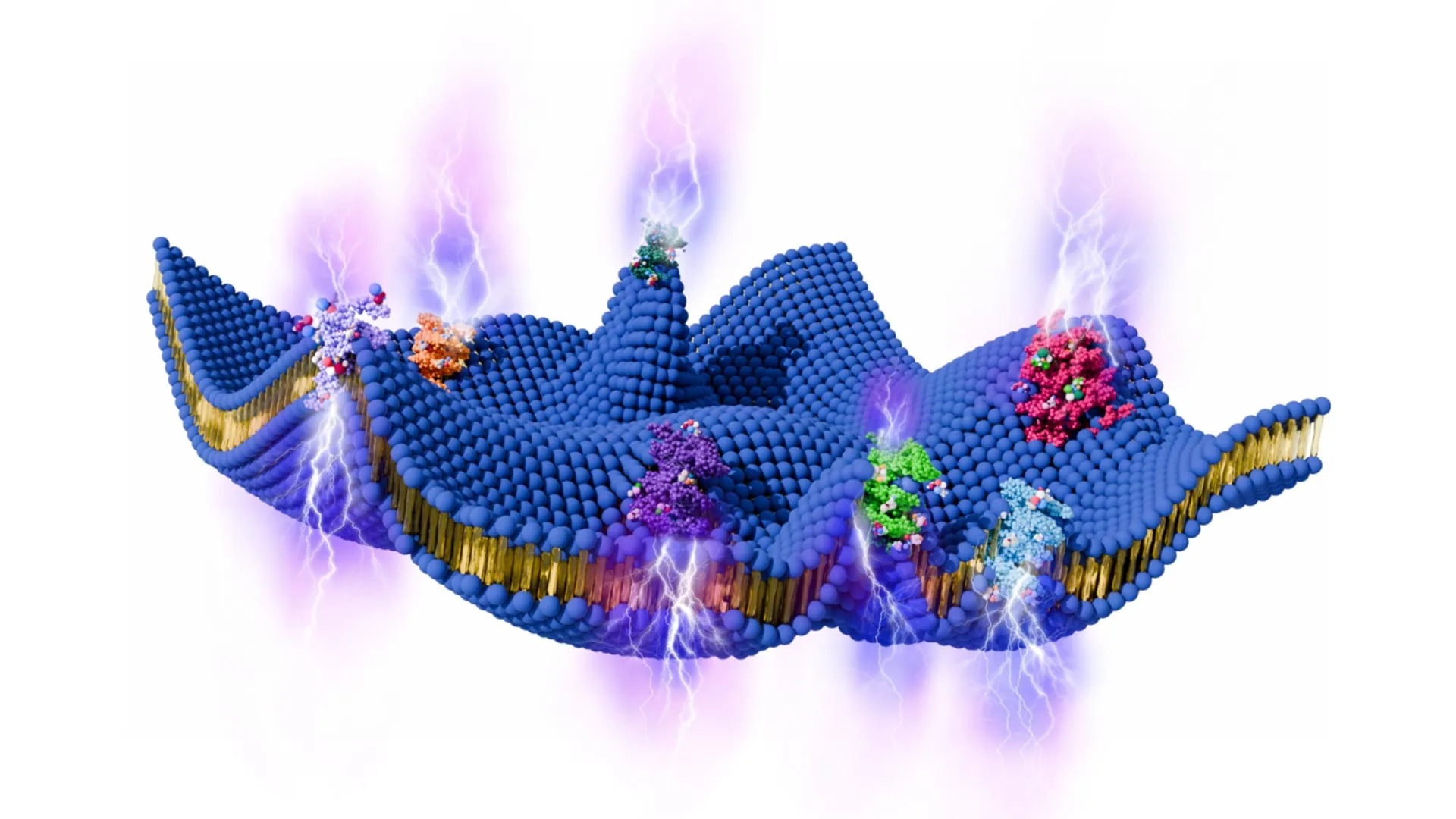
Scientists have developed a new theoretical explanation for how living cells might generate electricity on their own. At the center of the idea is the cell membrane, the thin, flexible layer that surrounds every living cell and controls what enters and leaves it. Rather than being a static barrier, this membrane is constantly moving and reshaping itself at very small scales. The new framework shows that these tiny motions can give rise to real electrical effects.
The research was led by Pradeep Sharma and his colleagues, who built a mathematical model to explore how physical forces inside cells interact with biological activity. Their work focuses on how motion at the molecular level can translate into electrical signals across the membrane.
Molecular Activity That Makes Membranes Move
Inside every cell, proteins are constantly changing shape, interacting with other molecules, and carrying out chemical reactions. One important process is ATP hydrolysis, which is how cells break down adenosine triphosphate to release energy. These active biological processes do not happen quietly. They push and pull on the cell membrane, causing it to bend, ripple, and fluctuate.
The model shows that these ongoing membrane movements can trigger a phenomenon known as flexoelectricity. Flexoelectricity occurs when bending or deformation in a material produces an electrical response. In this case, the bending of the cell membrane can create an electrical difference between the inside and outside of the cell.
Voltage Levels Comparable to Nerve Signals
According to the framework, the electrical voltages created across the membrane can be surprisingly strong. In some cases, they can reach up to 90 millivolts. That level is notable because it is similar to the voltage changes seen in neurons when they fire electrical signals.
The timing also matches what happens in the nervous system. The voltage shifts can occur within milliseconds, which aligns closely with the shape and speed of typical action potential curves for neurons. This suggests that the same physical principles could play a role in how nerve cells communicate.
Driving Ion Movement Against Natural Gradients
The theory goes further by predicting that these membrane driven voltages could actively move ions. Ions are electrically charged atoms that cells use to send signals and maintain balance. Normally, ions flow along electrochemical gradients, meaning they move from areas of high concentration to low concentration.
The new model suggests that active membrane fluctuations could push ions in the opposite direction, working against those gradients. The researchers connect this behavior to specific properties of the membrane, including how stretchy it is and how it responds to electric fields. These properties help determine which direction ions move and what type of charge they carry.
From Single Cells to Tissues and New Materials
Looking ahead, the authors suggest that this framework could be expanded beyond individual cells. By applying the same principles to groups of cells, scientists could explore how coordinated membrane activity leads to larger scale electrical patterns across tissues.
The researchers argue that this mechanism offers a physical foundation for understanding sensory perception, neuronal firing, and even how living cells might harvest energy internally. It may also help bridge neuroscience with the development of bio inspired and physically intelligent materials, offering new ways to design systems that mimic the electrical behavior of living tissue.

Most people first encounter the irrational number π (pi) — commonly approximated as 3.14 and extending infinitely without repeating — during school lessons about circles. In recent decades, advances in computing have pushed this familiar constant far beyond the classroom, with powerful supercomputers now calculating pi to trillions of decimal places.
Researchers have now uncovered an unexpected twist. Physicists at the Centre for High Energy Physics (CHEP), Indian Institute of Science (IISc) report that mathematical formulas developed a century ago to compute pi are closely linked to some of today’s most important ideas in fundamental physics. These connections appear in theoretical descriptions of percolation, fluid turbulence, and even certain features of black holes.
Ramanujan’s Remarkable Pi Formulae
In 1914, shortly before leaving Madras for Cambridge, renowned Indian mathematician Srinivasa Ramanujan published a paper presenting 17 different formulas for calculating pi. These expressions were strikingly efficient, allowing pi to be computed much faster than existing techniques of the time. Despite containing only a small number of mathematical terms, the formulas produced an impressive number of accurate digits.
Their impact has endured. Ramanujan’s methods became foundational to modern mathematical and computational approaches for calculating pi, including those used by today’s most advanced machines. “Scientists have computed pi up to 200 trillion digits using an algorithm called the Chudnovsky algorithm,” says Aninda Sinha, Professor at CHEP and senior author of the study. “These algorithms are actually based on Ramanujan’s work.”
A Deeper Question Behind the Mathematics
For Sinha and Faizan Bhat, the study’s first author and a former IISc PhD student, the mystery went beyond computational efficiency. They asked why such powerful formulas should exist in the first place. Rather than treating them as purely abstract results, the team searched for an explanation rooted in physics.
“We wanted to see whether the starting point of his formulae fit naturally into some physics,” says Sinha. “In other words, is there a physical world where Ramanujan’s mathematics appears on its own?”
Where Pi Meets Scale Invariance and Physics Extremes
Their investigation led them to a broad family of theories known as conformal field theories, and more specifically to logarithmic conformal field theories. These theories describe systems that exhibit scale invariance symmetry — meaning they look the same regardless of how closely they are examined, similar to fractals.
A familiar physical example appears at the critical point of water, defined by a precise temperature and pressure at which liquid water and water vapor become indistinguishable. At this point, water displays scale invariance symmetry, and its behavior can be captured using conformal field theory. Similar critical behavior arises in percolation (how substances spread through a material), during the onset of turbulence in fluids, and in certain theoretical treatments of black holes. These phenomena fall within the domain of logarithmic conformal field theories.
Using Ramanujan’s Structure to Solve Physics Problems
The researchers discovered that the mathematical framework at the heart of Ramanujan’s pi formulas also appears in the equations underlying these logarithmic conformal field theories. By exploiting this shared structure, they were able to compute key quantities within the theories more efficiently. Such calculations could ultimately improve scientists’ understanding of complex processes like turbulence and percolation.
The approach mirrors Ramanujan’s own method of starting from a compact mathematical expression and rapidly arriving at precise results for pi. “[In] any piece of beautiful mathematics, you almost always find that there is a physical system which actually mirrors the mathematics,” says Bhat. “Ramanujan’s motivation might have been very mathematical, but without his knowledge, he was also studying black holes, turbulence, percolation, all sorts of things.”
A Century-Old Insight With Modern Impact
The findings reveal that Ramanujan’s formulas, developed more than 100 years ago, offer a previously hidden advantage for making modern high-energy physics calculations faster and more manageable. Beyond their practical value, the researchers say the work highlights the extraordinary reach of Ramanujan’s ideas.
“We were simply fascinated by the way a genius working in early 20th century India, with almost no contact with modern physics, anticipated structures that are now central to our understanding of the universe,” says Sinha.
New incentives for dentists to offer longer-term packages of treatments for major issues such as gum disease.

Scientists at the Icahn School of Medicine at Mount Sinai have created a new artificial intelligence system that can do more than flag harmful genetic mutations. The tool can also forecast the types of diseases those mutations are most likely to cause.
The approach, known as V2P (Variant to Phenotype), is intended to speed up genetic testing and support the development of new therapies for rare and complex illnesses. The research was published in the December 15 online issue of Nature Communications.
Predicting disease from genetic variation
Most existing genetic analysis tools are able to estimate whether a mutation is potentially damaging, but they typically stop there. They do not explain what kind of disease may result. V2P is designed to overcome this limitation by using advanced machine learning to connect genetic variants with their expected phenotypic outcomes — meaning the diseases or traits a mutation may produce. In this way, the system helps predict how a person’s DNA could affect their health.
“Our approach allows us to pinpoint the genetic changes that are most relevant to a patient’s condition, rather than sifting through thousands of possible variants,” says first author David Stein, PhD, who recently completed his doctoral training in the labs of Yuval Itan, PhD, and Avner Schlessinger, PhD. “By determining not only whether a variant is pathogenic but also the type of disease it is likely to cause, we can improve both the speed and accuracy of genetic interpretation and diagnostics.”
Training the AI to find the right mutation
To build the model, the researchers trained V2P on a large dataset containing both harmful and harmless genetic variants, along with detailed disease information. This training allowed the system to learn patterns linking specific variants to health outcomes. When tested using real, de-identified patient data, V2P frequently ranked the true disease-causing mutation within the top 10 candidates, demonstrating its potential to simplify and accelerate genetic diagnosis.
“Beyond diagnostics, V2P could help researchers and drug developers identify the genes and pathways most closely linked to specific diseases,” says Dr. Schlessinger, co-senior and co-corresponding author, Professor of Pharmacological Sciences, and Director of the AI Small Molecule Drug Discovery Center at the Icahn School of Medicine at Mount Sinai. “This can guide the development of therapies that are genetically tailored to the mechanisms of disease, particularly in rare and complex conditions.”
Expanding precision medicine and drug discovery
At present, V2P sorts mutations into broad disease categories, such as nervous system disorders or cancers. The research team plans to enhance the system so it can make more detailed predictions and combine its results with additional data sources to further assist drug discovery.
The researchers say this advance marks meaningful progress toward precision medicine, where treatments are selected based on an individual’s genetic profile. By linking genetic variants to their likely disease effects, V2P could help clinicians reach diagnoses faster and help scientists uncover new targets for therapy.
“V2P gives us a clearer window into how genetic changes translate into disease, which has important implications for both research and patient care,” says Dr. Itan, co-senior and co-corresponding author, Associate Professor of Artificial Intelligence and Human Health, and Genetics and Genomic Sciences, a core member of The Charles Bronfman Institute for Personalized Medicine, and a member of The Mindich Child Health and Development Institute at the Icahn School of Medicine at Mount Sinai. “By connecting specific variants to the types of diseases they are most likely to cause, we can better prioritize which genes and pathways warrant deeper investigation. This helps us move more efficiently from understanding the biology to identifying potential therapeutic approaches and, ultimately, tailoring interventions to an individual’s specific genomic profile.”
The paper is titled “Expanding the utility of variant effect predictions with phenotype-specific models.”
The study’s authors, as listed in the journal, are David Stein, Meltem Ece Kars, Baptiste Milisavljevic, Matthew Mort, Peter D. Stenson, Jean-Laurent Casanova, David N. Cooper, Bertrand Boisson, Peng Zhang, Avner Schlessinger, and Yuval Itan.
This research was supported by National Institutes of Health (NIH) grants R24AI167802 and P01AI186771, funding from the Fondation Leducq, and the Leona M. and Harry B. Helmsley Charitable Trust grant 2209-05535. Additional support came from NIH grants R01CA277794, R01HD107528, and R01NS145483. The work also received partial support through Clinical and Translational Science Awards (CTSA) grant UL1TR004419 from the National Center for Advancing Translational Sciences, as well as support from the Office of Research Infrastructure of the NIH under award numbers S10OD026880 and S10OD030463.
