Stunning fossil discovery challenges the origins of animal life

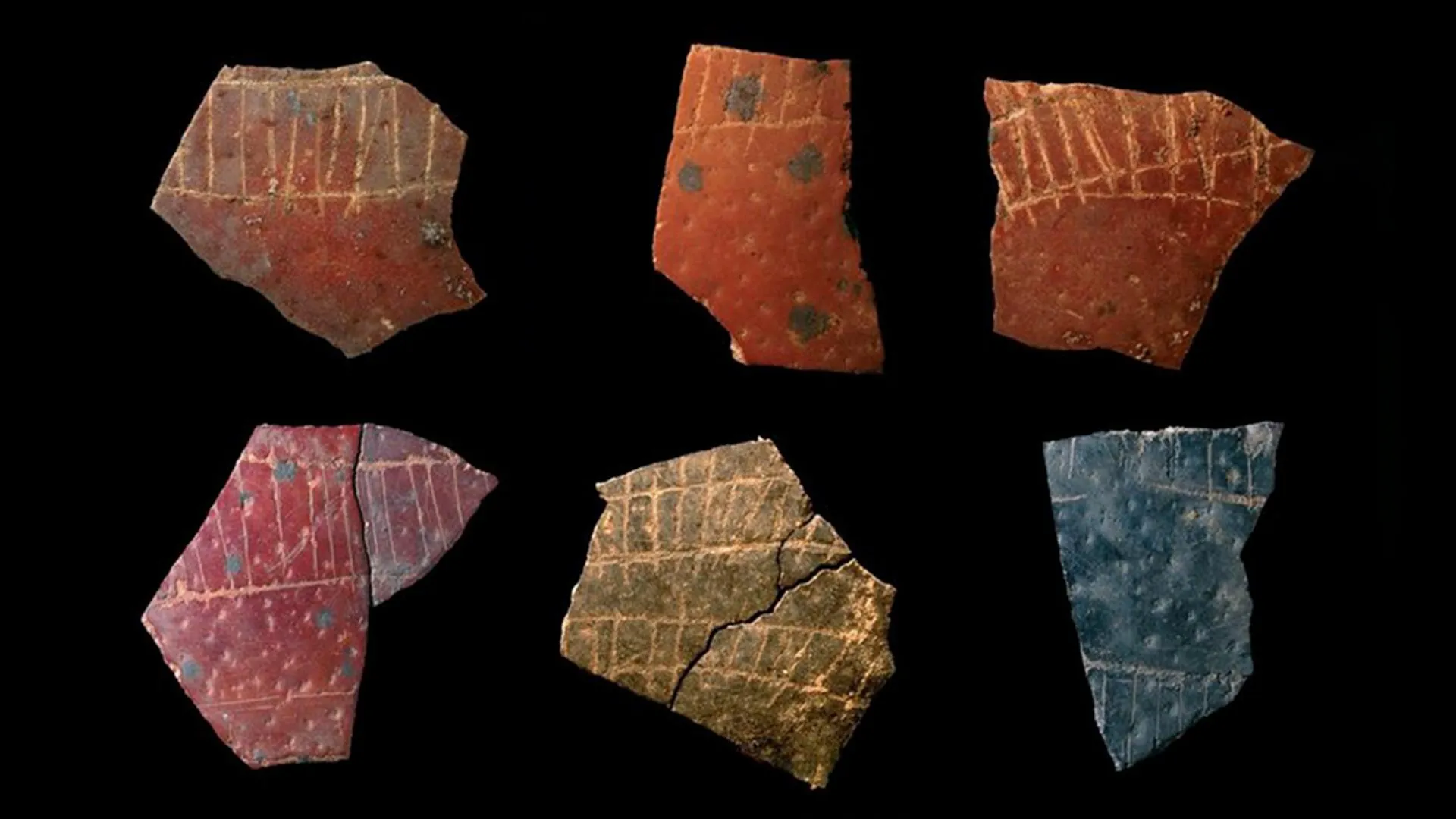
Scientists studying ancient microfossils from Brazil have discovered that structures once believed to be traces left behind by tiny animals were actually formed by communities of microscopic bacteria and algae. The findings challenge previous ideas about when small animals first appeared on Earth and suggest oxygen levels in ancient oceans may still have been too low to support certain forms of animal life around 540 million years ago.

The research focused on fossils found in the Brazilian state of Mato Grosso do Sul and was published in the journal Gondwana Research. Earlier studies had interpreted the marks as evidence of wormlike creatures or other tiny marine animals moving through seafloor sediment during the Ediacaran period, which came just before the Cambrian explosion.

“Using microtomography and spectroscopy techniques, we observed that the microfossils have cellular structures — sometimes with preserved organic material — consistent with bacteria or algae that existed during that period. These aren’t traces of animals that may have passed through the area,” says Bruno Becker-Kerber, the first author of the study. He carried out the research during postdoctoral work at the Institute of Geosciences at the University of São Paulo (USP) and at the Brazilian Center for Research in Energy and Materials (CNPEM), with support from FAPESP.

Becker-Kerber, who is now conducting postdoctoral research at Harvard University, explains that if the marks had truly been left by animals, they would represent evidence of meiofauna during the Ediacaran period. Meiofauna are tiny invertebrates measuring less than one millimeter long. Finding them in rocks this old would have pushed back the fossil record for these organisms significantly.

Ancient Oceans Before the Cambrian Explosion

The Ediacaran period occurred before the Cambrian explosion, a major evolutionary turning point when rising oxygen levels helped complex organisms diversify rapidly across Earth’s oceans. Fossil evidence clearly shows meiofauna existed during the Cambrian, but the new findings suggest they may not have been present earlier in the way some scientists proposed.

The project forms part of the “Rio de la Plata Craton and Western Gondwana” study supported by FAPESP and coordinated by Miguel Angelo Stipp Basei, a professor at IGc-USP and coauthor of the paper.

Another coauthor, Lucas Warren of São Paulo State University (IGCE-UNESP) in Rio Claro, also received support from FAPESP.

Researchers reexamined fossils collected in Corumbá and also analyzed newly studied material from Bonito in the Serra da Bodoquena region. Both sites are located in Mato Grosso do Sul within the Tamengo geological formation.

These rocks formed in a shallow marine environment along a continental shelf during the final stages of Gondwana’s formation, before the supercontinent eventually split apart to form regions that became South America and Africa.

The same research group previously identified what may be the oldest known lichen fossil, also discovered in Mato Grosso do Sul and younger than the bacteria and algae described in the current study.

High Resolution Fossil Imaging Revealed Hidden Structures

To investigate the fossils in greater detail, the team used the MOGNO beamline at Sirius, CNPEM’s particle accelerator facility in Campinas. The technology allowed researchers to study fossils ranging from only a few micrometers to a few millimeters in size.

The scientists used both microtomography and nanotomography, techniques capable of generating images at extremely small scales, including micrometers (one-thousandth of a millimeter) and nanometers (one-billionth of a meter).

“When you have a large sample and want to image a structure inside it, the resolution obtained is often insufficient. The MOGNO beamline is one of the few in the world that performs so-called zoom tomography, in which we focus on something inside the sample and analyze it at the nanoscale without destroying the sample,” says Becker-Kerber.

He notes that the earlier study interpreting the structures as animal traces did not have access to this level of imaging technology.

Researchers also used Raman spectroscopy to examine the fossils’ chemical makeup. The technique identified organic material within fossil cell walls, strengthening the interpretation that the structures were preserved microbial bodies rather than marks left behind by passing animals.

Giant Ancient Bacteria and Algae

Some fossil samples contained pyrite, a mineral made of iron and sulfur. Based on the shapes and chemistry of the specimens, researchers believe some may represent sulfur-oxidizing bacteria, organisms that use sulfur in their metabolism.

“This group of bacteria is surprising. Some of the largest ever recorded belong precisely to this category. Unlike the common image we have of microscopic bacteria, certain species can reach diameters larger than a strand of hair and are visible to the naked eye,” says Becker-Kerber.

Although the fossils do not preserve enough detail to identify exact species, the researchers found preserved cells, divisions within cell walls, and traces of organic matter across multiple collection sites. According to the team, these features would not exist if the structures were simply disturbances created by moving animals.

The fossils also appear in three different size ranges, suggesting several species may have lived together in microbial communities. The largest forms resemble green or red algae, while the smaller fossils may represent algae, cyanobacteria, or sulfur-oxidizing bacteria.

“There are concave and convex partitions, coiled filaments, cells without sediment but containing organic matter. This evidence is much closer to bacteria or algae than to mere marks of disturbance caused by animals,” the researcher concludes.

The findings provide scientists with a clearer picture of the world before the Cambrian explosion and may help researchers better understand the environmental conditions that paved the way for the rise of complex animal life.

Share Button

Scientists discover hidden chemical signature that could reveal alien life

For decades, scientists searching for life beyond Earth have focused on one central challenge: identifying the right molecules to look for on distant planets and moons.

But new research published in Nature Astronomy suggests the answer may lie not in the molecules themselves, but in the hidden patterns that connect them.

“We’re showing that life does not only produce molecules,” said Fabian Klenner, UC Riverside assistant professor of planetary sciences and co-author of the study. “Life also produces an organizational principle that we can see by applying statistics.”

Hidden Chemical Patterns May Reveal Life

The researchers discovered that amino acids found in living systems tend to be both more varied and more evenly distributed than amino acids formed through nonbiological processes. Fatty acids showed the opposite trend, with nonliving chemical processes producing more even distributions than biological ones.

According to the team, this is the first study to show that this underlying signature of life can be detected through statistics alone, without relying on any single specialized instrument. That means the approach could potentially work using data already being collected by current and future space missions.

The findings arrive at a time when planetary exploration is advancing rapidly. Missions studying Mars, Europa, Enceladus, and other worlds are producing increasingly detailed measurements of organic chemistry. However, interpreting those chemical signals remains a major challenge.

Many molecules linked to life on Earth, including amino acids and fatty acids, can also form naturally without biology. Scientists have found them in meteorites and created them in laboratory experiments designed to mimic space environments. Because of that, simply detecting these compounds is not considered strong enough evidence to confirm life.

“Astrobiology is fundamentally a forensic science,” said Gideon Yoffe, postdoctoral researcher at the Weizmann Institute of Science in Israel and first author of the study. “We’re trying to infer processes from incomplete clues, often with very limited data collected by missions that are extraordinarily expensive and infrequent.”

Borrowing a Tool From Ecology

To tackle the problem, the researchers adapted a statistical method commonly used in ecology. Ecologists measure biodiversity using two main concepts: richness, which describes how many different species are present, and evenness, which measures how uniformly they are distributed.

Yoffe first encountered this framework during doctoral studies in statistics and data science, where diversity metrics were used to uncover patterns in complicated datasets, including research involving ancient human cultures.

The team then applied the same statistical logic to chemistry associated with possible extraterrestrial life.

Using roughly 100 existing datasets, the scientists examined amino acids and fatty acids from microbes, soils, fossils, meteorites, asteroids, and synthetic laboratory samples. Again and again, biological materials displayed distinct organizational patterns that separated them from nonliving chemistry.

Fossils Still Carried Signs of Ancient Life

One of the most surprising findings was how effective the method remained despite its simplicity.

By analyzing samples through this statistical lens, the researchers could reliably distinguish biological samples from abiotic ones. They also observed that biological materials formed a continuum ranging from well preserved to heavily degraded.

“That was genuinely surprising,” Klenner said. “The method captured not only the distinction between life and nonlife, but also degrees of preservation and alteration.”

Even samples that had undergone significant degradation still preserved traces of this organizational structure. Fossilized dinosaur eggshells included in the study, for example, continued to show detectable statistical patterns connected to ancient biological activity.

A New Tool for Future Space Missions

The researchers caution that no single technique will be enough to prove the existence of extraterrestrial life.

“Any future claim of having found life would require multiple independent lines of evidence, interpreted within the geological and chemical context of a planetary environment,” Klenner said.

Even so, the team believes this framework could become a valuable addition to future planetary missions searching for evidence of life beyond Earth.

“Our approach is one more way to assess whether life may have been there,” Klenner said. “And if different techniques all point in the same direction, then that becomes very powerful.”

Share Button

NASA’s Hubble reveals a giant chaotic planet nursery unlike anything seen before

NASA’s Hubble Space Telescope has captured the most detailed visible light images ever taken of the largest known protoplanetary disk surrounding a young star. The enormous structure appears far more chaotic and turbulent than astronomers expected, with huge wisps of gas and dust extending high above and below the disk. Even more unusual, the longest filament-like structures can only be seen on one side.

The discovery, published in The Astrophysical Journal, offers scientists a rare look at how planets may form in extreme cosmic environments and highlights Hubble’s continuing role in exploring the universe.

Giant Planet-Forming Disk Unlike Any Seen Before

The system, known as IRAS 23077+6707 and nicknamed “Dracula’s Chivito,” is located about 1,000 light-years from Earth. The giant disk stretches nearly 400 billion miles across, making it about 40 times wider than our solar system out to the Kuiper Belt.

At the center of the disk is a young star hidden by thick clouds of dust and gas. Researchers think the object may be a single massive star or possibly two stars orbiting each other. Besides being the largest planet-forming disk ever identified, scientists say it may also be one of the strangest.

“The level of detail we’re seeing is rare in protoplanetary disk imaging, and these new Hubble images show that planet nurseries can be much more active and chaotic than we expected,” said lead author Kristina Monsch of the Center for Astrophysics | Harvard & Smithsonian (CfA). “We’re seeing this disk nearly edge-on and its wispy upper layers and asymmetric features are especially striking. Both Hubble and NASA’s James Webb Space Telescope have glimpsed similar structures in other disks, but IRAS 23077+6707 provides us with an exceptional perspective — allowing us to trace its substructures in visible light at an unprecedented level of detail. This makes the system a unique, new laboratory for studying planet formation and the environments where it happens.”

The unusual nickname reflects the backgrounds of the researchers involved. One scientist is from Transylvania, while another is from Uruguay, where a chivito is a popular sandwich. Viewed edge-on, the disk resembles a hamburger with a dark center surrounded by glowing layers of dust and gas above and below it.

Mysterious One-Sided Filaments

Scientists were especially intrigued by the disk’s uneven appearance. Hubble’s images revealed towering filament-like structures extending from only one side of the disk, while the opposite side appears sharply defined and lacks similar features.

Researchers believe this strange asymmetry could be caused by active processes within the system, such as fresh material falling into the disk or interactions with nearby surroundings.

“We were stunned to see how asymmetric this disk is,” said co-investigator Joshua Bennett Lovell, also an astronomer at the CfA. “Hubble has given us a front row seat to the chaotic processes that are shaping disks as they build new planets — processes that we don’t yet fully understand but can now study in a whole new way.”

Clues to How Planetary Systems Form

Planetary systems develop from massive disks of gas and dust surrounding young stars. Over time, some of the material falls into the star while the remaining matter gradually forms planets.

Scientists estimate the mass of IRAS 23077+6707 may equal 10 to 30 times the mass of Jupiter, providing more than enough material to create several giant planets. Researchers say the system could resemble an oversized version of the early solar system.

“In theory, IRAS 23077+6707 could host a vast planetary system,” said Monsch. “While planet formation may differ in such massive environments, the underlying processes are likely similar. Right now, we have more questions than answers, but these new images are a starting point for understanding how planets form over time and in different environments.”

Hubble’s Continuing Discoveries

The Hubble Space Telescope has operated for more than 30 years and continues to deliver major discoveries that expand scientists’ understanding of the cosmos. Hubble is a joint project between NASA and ESA (European Space Agency). NASA’s Goddard Space Flight Center in Greenbelt, Maryland, oversees telescope and mission operations, while Lockheed Martin Space in Denver also supports operations. The Space Telescope Science Institute in Baltimore, operated by the Association of Universities for Research in Astronomy, manages Hubble’s science operations for NASA.

Share Button

UK alcohol deaths fall for first time since Covid pandemic

Experts say the “modest reduction” is “not cause for complacency”, with calls to redouble efforts to slash deaths further.

Share Button

How are countries responding to hantavirus?

The UK, US and EU are asking all citizens returning home from the virus-hit MV Hondius to self-isolate for about six weeks.

Share Button

How is Keir Starmer getting on with his pledges to deliver change?

At the end of 2024, Keir Starmer announced key government targets including on NHS waiting lists and building new homes, how is he getting on?

Share Button

Concern ‘dangerous’ performance enhancers are being sold online

UK Anti-Doping have published research into SARMs being sold on social media platforms. The survey found a third of people aged 16-25 see ads for SARMs every week.

Share Button

Newcastle’s Burn on mental health and importance of asking for help

Newcastle United Foundation has painted benches in the city’s Leazes Park to highlight mental health and encourage fans to talk to each other.
Defender Dan Burn spoke to BBC Sport about the work being done and how important it is to “check in”.

Share Button

‘We have to respond to women’s health needs more easily’

Groups in Liverpool are trying to remedy the historical under-resourcing of women’s healthcare.

Share Button

French national shows symptoms on return from hantavirus-hit ship

Five passengers of the MV Hondius will be quarantined in Paris “until further notice”, France’s prime minister says.

Share Button