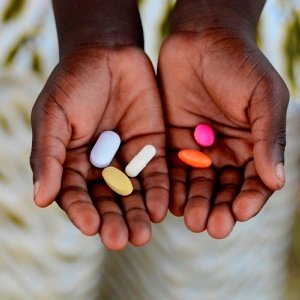
The parties say anyone who needs it should be able to access the HIV prevention drug, PrEP.


The parties say anyone who needs it should be able to access the HIV prevention drug, PrEP.

For the past few decades, myths and misinformation about HIV/Aids have put people at increased risk of infection, causing the condition to assume pandemic proportions, especially in South Africa.
Ahead of World Aids Day, South African physician Dr Sindi van Zyl, a specialist in the HIV and Aids field, spoke at the Cipla HIV/Aids press workshop about what everyone – regardless of whether you’re HIV-positive – should know.
If you have HIV, it can take up to 20 years for symptoms to show
HIV attacks the CD4 cells, a type of white blood cell, and uses them to make copies of the virus (called the viral load) and eventually destroy them.
This process can go on for many years without any symptoms, which is known as the asymptomatic phase. During this time, you have no idea the virus is in your system, although your immune system is being weakened in the process. “South Africa has a problem of what I call the ‘blind spot’,” says van Zyl. “There are groups of society in our country who believe they’re ‘immune’ to HIV, who think it happens to ‘them’ but never to ‘me’. But there’s no them or me with HIV.
“If you’re sexually active, then you’re at risk of HIV, because this is how HIV is primarily transmitted. This is why it’s crucial for everyone to test for HIV every 6–12 months, regardless of where you come from.”
There are HIV self-test kits on the market, but most people are unaware of it
There are now several approved home-testing HIV kits on the shelves. If you’re pressed for time, van Zyl says these at-home tests are a really convenient option.
Professor Ian Sanne, Founding Director and CEO of Right to Care, also told Health24 that self-testing is recommended, but one shouldn’t panic should the results indicate you’re HIV positive. “We recommend that if the result shows you’re HIV positive, you don’t get distressed and rather have a second, complementary test done at a health clinic or by a general practitioner.
“The kit works very well and the studies that we’ve done on these kits show very good results, but the prevention method still needs to be linked to the self-test kit,” Sanne explains.
U=U: Undetectable = Untransmittable
The International Aids Society endorsed the U=U consensus statement of the Prevention Access Campaign. This statement makes the critical point that not every HIV-positive person is infectious. A person living with HIV who has an ‘undetectable viral load’ will not transmit the virus to their partner. And as long as your viral load remains undetectable, your chance of passing on HIV to a sexual partner is zero.
“And this is important because not only does this prevent transmission, but it also changes the way people feel about themselves,” says van Zyl.
“When an HIV-positive person’s viral load becomes undetectable, it changes the way they live their life: they can have condomless sex, they can have babies, mothers can breastfeed, for example. If you’re ‘undetectable’, you can essentially live the life of a normal, healthy person.”
It is important to remember that having an undetectable viral load does not mean you are cured of HIV. If you quit taking treatment, your viral load will increase and become detectable.
Proxy testing is not encouraged
“Proxy testing is when you assume you’ve HIV negative because your partner tested negative, and we don’t encourage that,” says van Zyl. “Each person has to know their own status.”
You need 3 or more ARV drugs to treat HIV
Antiretroviral therapy (ART) will always include a combination of three or more ARVs which is taken to suppress the virus’s ability to make copies of itself. However, van Zyl says that the majority of people believe that two ARVs are sufficient.
“We always give more than two drugs to block the life cycle of HIV, because different drugs work at different phases of the life cycle to stop the virus from multiplying. And this is why taking medication every day is absolutely crucial.”
Side effects of current ART not that bad compared to past ART
The treatment for HIV that we have today is much superior to what we had years ago, says van Zyl.
“People’s bodies used to get deformed because of the treatment in the past. And that put people off medication. And there were a few drugs that caused lipodystrophy [abnormal distribution of fat], but we’ve moved away from those drugs and only use them if we’re absolutely desperate.
“The newer drugs, however, don’t cause that. And if the treatment you’re on brings about side effects that are unbearable, I encourage you to tell your doctor so that the medication can be changed. Don’t tell yourself to ‘just hang in there’.”
HIV prevention is really a ‘basket of things’, says van Zyl
Condoms: When used correctly and consistently, condoms are highly effective in preventing HIV.
Abstinence: It’s the only 100% effective way to prevent HIV, although it can be challenging. “We’re sexual animals, and asking us to go against something that is essentially part of our nature is really difficult.
“We’ve been preaching it, but it doesn’t always work,” said Dr Michelle Moorhouse, co-principal investigator of ADVANCE and Head of treatment strategies at Ezintsha.
This is why experts recommend that everyone is aware of all forms of prevention strategies.
Post-exposure Prophylaxis (PEP): PEP is treatment that is used for preventing HIV after exposure. However, it should only be used in emergency situations and started within 72 hours after a possible exposure to HIV. The treatment is taken for 28 days, and can only be taken if you’re HIV negative.
For this reason, your healthcare practitioner will test you for HIV before prescribing PEP, and you may be required to test for the virus for up to 6 months after you begin taking PEP to ensure you stay HIV-negative.
Pre-exposure prophylaxis (PrEP): People who are at very high risk for HIV must take PrEP daily to prevent HIV. Trials for this have shown more than a 90% success rate. Van Zyl explains that with this treatment you have to commit to three-four monthly check-ups.
“There are different regimens, but the pills work if you take them. And there are actually medical aids in South Africa that cover this. It won’t cost you more than R250 per month, considering the generic forms out there.
“South Africa is lagging behind a lot when it comes to PrEP, and we shouldn’t. It’s one pill, once a day, and it works,” says Van Zyl.
PrEP isn’t available at every clinic in South Africa. However, by March 2020, it’s expected to be rolled out at 1 000 facilities across the country.
World Aids Day has been taking place on 1 December every year since 1988, and is dedicated to raising awareness of the Aids pandemic, caused by the spread of HIV infection, and mourning those who have died of the disease.
Image: Getty


New to fitness and not sure where to begin? Women’s Health has your back! Starting a new fitness regime in a gym can be intimidating, but these home exercises are the perfect springboard.
Springbok Sevens and Fifteens Women’s Vice Captain Zinhle Ndawonde shares some of the home exercises she does to maintain her strength when she’s not training on the field. These six home exercises are a must-try if you’re a beginner looking to get your fitness journey started. The best part: you can do them at home.
Ready, steady… Sweat!
Targeted areas: Quads, hamstrings, glutes, lower back and abdominals
The move:
(a) Stand with feet hip-width apart.
(b) Lower your body into a squat/seated position by bending your knees. Keep your knees behind toes and arms in front of the chest for balance.
(c) Jump straight up and swing your arms overhead. Return to squat.
Read more: Takkies shares 4 of her ultimate total-body workouts
Targeted areas: Quads, hamstrings and glutes
The move:
(a) Begin with your feet hip-width apart and lower your body.
(b) Push your bum back and imagine you’re sitting down in a chair.
(c) Watch your knees as you lower your body – don’t let them pass your toes.
(d) Engage your core to protect your lower back and stand up straight, then repeat.
Read more: Try this full body blast workout to burn fat and build muscle
Targeted areas: Upper-body muscles: chest, biceps and triceps.
The move:
(a) Start in a high plank position, palms wider than shoulder-width apart.
(b) Keep palms pressed on the floor and keep your feet together.
(c) Engage your core as if you’re holding a plank.
(d) Bend your elbows to a 45 degree angle as you lower your entire body to allow your chest to touch the floor.
(e) Press palms onto the floor as you lift your body away from the floor.
(f) Return to starting position, then repeat.
Read more: 6 amazing things you probably didn’t know yoga can do for your body
Targeted areas: Core, arms, back and chest.
The move:
(a) Start with your hands on the floor. Place your hands directly under your shoulders.
(b) Step your feet back, while keeping your body in a straight line.
(c) Looking down at the floor, tighten your abs, quads and glutes, and hold for 30 seconds or longer.
Read more: How to ‘spring clean’ your fitness gear for better workouts
Targeted areas: Glutes and quadriceps
The move:
(a) Keep your shoulder blades flat in the floor and your arms against your sides for stability.
(b) Bend your knees to about 90 degrees, keeping your feet flat on the floor.
(c) Keep your glutes squeezed tightly, while you lift up your hips. Hold for a second or two before releasing your glutes to the ground, then repeat.

Read more: “I trained with the Blitzboks – and this is what happened”
Targeted areas: Arms, back and abdominals.
The move:
(a) Start with your body positioned on your side.
(b) Keep your feet together and one forearm directly below your shoulder.
(c) Engage your core and raise your hips until your body is in a straight line from your head to feet.
(d) Hold the position without letting your hips drop. Hold for 30 seconds, then repeat on the other side.
This article was originally published on www.womenshealth.co.za
Image credit: iStock
NEXT ON HEALTH24X


Americans eat three times as much cheese as just 50 years ago, but not because we’re enjoying careful indulgences like a cheese plate with fruit and whole grain crackers.
Experts point to the cheese overload in pizza and other Italian dishes, Tex-Mex favourites and the ubiquitous mac-and-cheese.
That’s a lot of saturated fat and calories. But most people don’t have to avoid cheese completely – it’s just a question of being more judicious in your selections.
Because the dairy fat found in cheese as well as in whole-fat milk and yogurt has been given a slight reprieve in the war on saturated fat, eating small amounts is OK. But you probably don’t want to depend on cheese alone to get in the recommended three dairy servings a day, especially if weight control is an issue for you. Because of its high fat content, cheese packs a lot of calories into a small package. A one-ounce serving is the size of two pairs of dice, so portion control is key.
A flavour enhancer
Ounce for ounce, some types of cheese naturally have less fat and therefore fewer calories than others. For instance, feta, goat and mozzarella have 70 to 75 calories per ounce compared to Brie, manchego and Swiss, to name just a few, which average between 100 and 120. If eating cheese helps you get needed calcium, know that hard cheeses have two or more times the amount in soft cheeses – about 240mg per ounce.
If you find it hard to limit nibbling once you get started, use cheese as a flavour enhancer. Sprinkle dishes with small amounts of stronger cheeses, like feta, blue and Parmesan. A tablespoon of grated Parmesan has a mere 22 calories.
Finally, be cautious about so-called low-fat cheeses. Read labels carefully – don’t buy cheeses that replace dairy fat with oil. These are just another type of processed food.
Image credit: iStock
NEXT ON HEALTH24X


Those early morning workout sessions can put the body in complete shock, more especially if you haven’t warmed up prior to your session. Group and personal trainer Renché Seyffert from FIT BEST Training tells Women’s Health why warming up is vital.
“Warming up is an essential part of your workout regime, that often gets overlooked. The purpose of a warm-up is to prepare the body for the workout that’s to follow, ” says Renché. She went on to say that warm-ups prevent injuries. “Warm-ups gradually warm the body’s temperature, while loosening the muscles,” she says.
Did you know that warm muscles increase the rate of energy production? “This means that your body’s reaction time improves and muscles contract faster. The warm-up thus increases blood circulation, to provide oxygen and energy, helping the muscles perform better,” she concludes. This warm-up routine is recommended before you start any workout. Get your blood circulation going and whip your body into shape this summer season.
Tip: Perform 20 reps of each exercise (20 right and 20 left where applicable) before moving onto the next move.
How to: Keep your spine elongated and relax the neck and shoulders. (Gently rotate the neck to the left before returning to the centre to repeat on the other side.
How to: Keeping your body straight, roll your shoulders backwards.
How to: Keeping your body straight, roll your shoulders forward.
Read more: The 12 best chest exercises to add to your workout ASAP
How to: Stretch arms out straight in front of you. Lift your legs up to a 90 degree angle, for the knee to touch the palm of your hands. Alternate legs and repeat.
How to: Extend arms straight ahead. Kick legs out straight in front of you, as you touch your toes. Alternate legs.
Extend arms straight ahead. Kick legs out straight in front of you, as you touch your toes. Rotate torso from side to side as you touch your toes.
Read more: 9 best calf exercises to give you toned legs like no other
Lunge to right side, ensuring your knee doesn’t pass your toes. Extend arms out straight to each side, before bringing arms back to centre. Repeat on the left leg.
Lunge to left side, ensuring your knee doesn’t pass your toes. Repeat on right leg.
Take a deep lunge alternating from side to side. Lift arms to create a circle and alternate arms. This move is done in unison.
Read more: The 15 inner thigh exercises your workout needs
Get into a squat position. Squat and place your elbows on your knees.
Get into a squat position. Squat and place your elbows on your knees. Do a 20 reps of pulses.
Get into a squat position. Squat and place your elbows on your knees. Hold for 20 seconds or more.
Read more: 5 quick exercises that’ll beat every post-holiday bulge on your body
Skipping for one minute
This article was originally published on www.womenshealthsa.co.za
Image credit: iStock
NEXT ON HEALTH24X

The information on Health24 is for educational purposes only, and is not intended as medical advice, diagnosis or treatment. If you are experiencing symptoms or need health advice, please consult a healthcare professional. See additional information.

This video is part of Health's My Mantra series. Follow along with new videos on our Instagram page and share your own words of wisdom using #MantraMonday.
Sarah Michelle Gellar knows what it means to be motivated. The actress become a household name in the 1990s when she landed a starring role in Buffy the Vampire Slayer, and she's continued to steadily work in TV and film since.
With a busy career and parenting duties to handle, it's no surprise that she relies on a killer mantra to keep her going. Gellar tells Health why her mantra works for her (check out the video above!), and why she continues to harness its power.
RELATED: Sarah Michelle Gellar Reveals Postpartum Depression Struggle in Health Care Plea
"There was a quote from the musical Chess, the original production, that always stuck with me: ‘You taught me baby, how the few who win acquire, it ain’t practice, it ain’t skill, they’ll help, but not as much as wanting will.’ And I think for me, it encompasses everything, which is that you have to really want something in life to make it happen," explains Gellar.
"It’s not about waiting for something to come to you," she continues. "That if there is something you’re looking to do, something you’re looking to experience, those are moments you need to make happen for yourself."
Honestly, I think I probably use it every day, I remind myself I want to be better. To accomplish different things. To want to be more patient. Whatever those moments are, for me it’s about just keep it at the back of my head," she adds.
This is the first time Gellar has touched on her personal life. In 2017, the actress opened up about her battle with postpartum depression in an emotional Instagram post, explaining how the disease impacted her daily life.
“Having kids is wonderful, and life changing, and rarely what you’re prepared for,” Gellar wrote at the time. “I love my children more than anything in the world. But like a lot of women, I too struggled with postpartum depression after my first baby was born.”
“I got help, and made it through, and every day since has been the best gift I could ever have asked for," she wrote. "To those of you going through this, know that you’re not alone and that it really does get better."
To get our top stories delivered to your inbox, sign up for the Healthy Living newsletter
Martin Hibbert was left paralysed from the waist down after the bomb blast in May 2017.

A new HIV treatment programme tailored to the needs of students was launched at the Cape Peninsula University of Technology (CPUT) earlier this year.
According to South African National Aids Council (SANAC) figures, 37% of new HIV infections in South Africa in 2016 were in women and girls between the ages of 15 and 24. The prevalence in women and girls in this age group were four times that of men and boys in the same age group.
These figures spurred CPUT into action. In July this year they rolled out an antiretroviral treatment programme with the aim of granting students easier access to treatment.
The programme is called “ART clubs” – an initiative that will ensure that students known to be living with HIV are managed and cared for locally. According to a CPUT statement, students will not have to miss out on class time due to waiting hours at offsite clinics and it is expected that adherence to treatment will improve.
Former President of the CPUT Student Representative Council Sipho Mokoena told Spotlight that the programme is progressing well, although the university was reluctant to share figures on its progress. Mokoena however said: “I was looking at the statistics and they showed at least 63% of registered CPUT-students known to be living with HIV have been collecting their medicine from the HIV-unit at the Bellville campus.”
Mokoena said at least seven students make use of this service daily.
CPUT has 8 campuses in the Western Cape. The programme is currently only available at the Bellville campus. It will be rolled out to the other 7 campuses from next year.
Spokesperson for CPUT Lauren Kansley said the ART-programme for now will inclusively deal with referrals from other CPUT campuses to the Bellville campus clinic. She said this will help to provide access to the programme.
Kansley would not be drawn on statistics relating to the project. Attempts to get information from the two nurses running the HIV unit were also unsuccessful. Kansley said: “As per instruction from our HIV/Aids unit who deals directly with Higher Education AIDS (HEAIDS) we never reveal institutional statistics on infection rates.”
(HEAIDS is a non-profit company under the leadership of the Department of Higher Education and Training that coordinates and runs health services at tertiary education institutions.)
She did say they are pleased with the uptake thus far although they expected more students. She attributed the lower than expected uptake to the unit opening during recess when there were fewer students around.
Spotlight visited the HIV unit on the Bellville campus. It is small and close to the often-crowded student centre. During the visit, a peer educator was counselling a student and the conversation was audible in the waiting area.
When approached for comment on their progress, the HIV/AIDS peer educator was reluctant to share any information. She said she was employed by HEAIDS and was told not to give any information.
Attempts to get input from the head of the HIV unit Melanie Marais was also unsuccessful.
Mokoena expressed concern over privacy at the unit. He said there is an ongoing issue of stigma that may prevent students from accessing the service.
“Some students feel that they are not as comfortable as they could have been because the HIV-unit is quite small and gets crammed but there are also others who do not mind.”
He said some students are also affected mentally because they want to be accepted rather than looked down upon.
“The SRC has tried to make treatment and counselling accessible to students and closing hours of the counselling unit have been extended from 4pm to 8pm”, he said.
According to Kansley there are resource constraints. “We do not have enough staff to support and assist in these programmes. We currently have two nursing practitioners who have successfully completed the Nurse Initiated Management of Antiretroviral Treatment (NIMART) course offered by the Department of Health and Khethi’ Impilo”, she said.
CPUT is working with the Western Cape Department of Health. “The department accredited the institution’s student health clinic as a decanting site where life-saving medication can be rolled out”, Kansley said.
The latest data available on HIV prevalence among students show a prevalence of 3,4% and among those that are sexually active, a prevalence of 3.8%. This HEAIDS study of 2008/2009 sampled 17 062 students in 21 of the 23 universities in the country. T
wo thirds of the sample was students that were sexually active, AfricaCheck reported. There has since been no new data on HIV prevalence among students in higher education institutions.
This article first appeared in Spotlight.

Babies and mothers died amid a “toxic” culture at an NHS hospital trust stretching back four decades.
