Earth’s early oceans hid the secret rise of complex life

New findings suggest that complex life began forming much earlier, and over a far longer period, than researchers previously understood. The study provides fresh insight into the environmental conditions that supported early evolution and challenges several widely accepted ideas about when advanced cellular features first appeared.

Led by the University of Bristol and published in Nature on December 3, the work shows that complex organisms started developing long before oxygen levels in the atmosphere rose to significant levels. Until now, many scientists believed that plentiful oxygen was essential for the emergence of complex life.

“The Earth is approximately 4.5 billion years old, with the first microbial life forms appearing over 4 billion years ago. These organisms consisted of two groups — bacteria and the distinct but related archaea, collectively known as prokaryotes,” said co-author Anja Spang from the Department of Microbiology & Biogeochemistry at the Royal Netherlands Institute for Sea Research.

For hundreds of millions of years, prokaryotes were the only living organisms on the planet. More complex eukaryotic cells eventually evolved, giving rise to algae, fungi, plants and animals.

Rethinking the Origins of Eukaryotes

Davide Pisani, Professor of Phylogenomics in the School of Biological Sciences at the University of Bristol and co-author, noted: “Previous ideas on how and when early prokaryotes transformed into complex eukaryotes has largely been in the realm of speculation. Estimates have spanned a billion years, as no intermediate forms exist and definitive fossil evidence has been lacking.”

To shed light on this long-debated transition, the team expanded the existing ‘molecular clocks’ method, a tool used to estimate when different species last shared an ancestor.

“The approach was two-fold: by collecting sequence data from hundreds of species and combining this with known fossil evidence, we were able to create a time-resolved tree of life. We could then apply this framework to better resolve the timing of historical events within individual gene families,” explained co-lead author Professor Tom Williams in the Department of Life Sciences at the University of Bath.

A Much Earlier Start to Cellular Complexity

The researchers examined more than one hundred gene families across multiple biological systems and focused on the traits that separate eukaryotes from prokaryotes. This allowed them to reconstruct a clearer picture of how complex cellular features developed.

Their results indicate that the shift toward complexity began nearly 2.9 billion years ago — almost a billion years earlier than some previous estimates. The evidence suggests that structures such as the nucleus emerged well before mitochondria. “The process of cumulative complexification took place over a much longer time period than previously thought,” said author Gergely Szöllősi, head of the Model-Based Evolutionary Genomics Unit at the Okinawa Institute of Science and Technology (OIST).

These findings allowed the researchers to dismiss some existing models for eukaryogenesis (the evolution of complex life). Since the results did not fully match any current explanation, the team proposed a new scenario called ‘CALM’ — Complex Archaeon, Late Mitochondrion.

Introducing the CALM Model

Lead author Dr. Christopher Kay, Research Associate in the School of Biological Sciences at the University of Bristol, said: “What sets this study apart is looking into detail about what these gene families actually do — and which proteins interact with which — all in absolute time. It has required the combination of a number of disciplines to do this: paleontology to inform the timeline, phylogenetics to create faithful and useful trees, and molecular biology to give these gene families a context. It was a big job.”

“One of our most significant findings was that the mitochondria arose significantly later than expected. The timing coincides with the first substantial rise in atmospheric oxygen,” added author Philip Donoghue, Professor of Palaeobiology in the School of Earth Sciences at the University of Bristol.

“This insight ties evolutionary biology directly to Earth’s geochemical history. The archaeal ancestor of eukaryotes began evolving complex features roughly a billion years before oxygen became abundant, in oceans that were entirely anoxic.”


Share Button

Scientists find hidden layers in brain’s memory center

Researchers at the Mark and Mary Stevens Neuroimaging and Informatics Institute (Stevens INI) at the Keck School of Medicine of USC have uncovered a previously unrecognized organizational pattern in one of the brain’s key regions for learning and memory. According to findings reported in Nature Communications, the CA1 section of a mouse’s hippocampus contains four separate layers of specialized cell types. The hippocampus plays an essential role in forming memories, guiding spatial navigation, and influencing emotions, and the discovery of these layers offers new insight into how information moves through this part of the brain. It also provides clues about why some cell types are especially vulnerable in conditions such as Alzheimer’s disease and epilepsy.

“Researchers have long suspected that different parts of the hippocampus’ CA1 region handle different aspects of learning and memory, but it wasn’t clear how the underlying cells were arranged,” said Michael S. Bienkowski, PhD, senior author of the study and assistant professor of physiology and neuroscience and of biomedical engineering.

“Our study shows that CA1 neurons are organized into four thin, continuous bands, each representing a different neuron type defined by a unique molecular signature. These layers aren’t fixed in place; instead, they subtly shift and change in thickness along the length of the hippocampus. This shifting pattern means that each part of CA1 contains its own mix of neuron types, which helps explain why different regions support different behaviors. This may also clarify why certain CA1 neurons are more vulnerable in conditions like Alzheimer’s disease and epilepsy: if a disease targets one layer’s cell type, the effects will vary depending on where in CA1 that layer is most prominent.”

High-resolution RNA imaging reveals cellular distinctions

To examine this structure, the research team used an RNA labeling technique called RNAscope together with high-resolution microscopy. This approach allowed them to observe single-molecule gene expression inside mouse CA1 tissue and identify individual neuron types based on their active genes. From 58.065 CA1 pyramidal cells, the scientists recorded more than 330,000 RNA molecules, which represent the genetic instructions that indicate when and where genes are expressed. By mapping these gene activity patterns, they produced a detailed cellular atlas outlining the boundaries between distinct nerve cell types across the CA1 region.

Their results showed that CA1 contains four continuous layers of nerve cells, each distinguished by its own pattern of active genes. When viewed in three dimensions, these layers form sheet-like structures that vary in thickness and shape along the hippocampus. This well-defined arrangement clarifies earlier studies that had described CA1 as a more blended or mosaic mixture of cell types.

Hidden “stripes” highlight internal brain architecture

“When we visualized gene RNA patterns at single-cell resolution, we could see clear stripes, like geological layers in rock, each representing a distinct neuron type,” said Maricarmen Pachicano, doctoral researcher at the Stevens INI’s Center for Integrative Connectomics and co-first author of the paper. “It’s like lifting a veil on the brain’s internal architecture. These hidden layers may explain differences in how hippocampal circuits support learning and memory.”

Because the hippocampus is one of the first regions affected in Alzheimer’s disease and is involved in epilepsy, depression, and other neurological conditions, identifying the CA1’s layered structure offers a promising guide for determining which neuron types may be most at risk as these disorders progress.

Advancing brain mapping with modern imaging and data science

“Discoveries like this exemplify how modern imaging and data science can transform our view of brain anatomy,” said Arthur W. Toga, PhD, director of the Stevens INI and the Ghada Irani Chair in Neuroscience at the Keck School of Medicine of USC. “This work builds on the Stevens INI’s long tradition of mapping the brain at every scale, from molecules to whole networks, and will inform both basic neuroscience and translational studies targeting memory and cognition.”

A new CA1 cell-type atlas available to researchers

The team compiled its findings into a new CA1 cell-type atlas using data from the Hippocampus Gene Expression Atlas (HGEA). This resource is freely available to scientists worldwide and includes interactive 3D visualizations accessible through the Schol-AR augmented-reality app developed at the Stevens INI. The tool allows researchers to explore the layered structure of the hippocampus in great detail.

Because this layered pattern in mice resembles similar arrangements seen in primates and humans, including comparable variations in CA1 thickness, the researchers believe the organization may be shared across many mammalian species. Further work is needed to determine how closely this structure in humans matches what has been observed in mice, but the findings create a strong starting point for future studies examining how hippocampal architecture supports memory and cognition.

“Understanding how these layers connect to behavior is the next frontier,” Bienkowski said. “We now have a framework to study how specific neuron layers contribute to such different functions like memory, navigation, and emotion, and how their disruption may lead to disease.”

About the study

In addition to Bienkowski and Pachicano, the study’s other authors include Shrey Mehta, Angela Hurtado, Tyler Ard, Jim Stanis, and Bayla Breningstall.

This work was supported by the National Institutes of Health/National Institute of Aging (K01AG066847, R36AG087310-01, supplement P30-AG066530-03S1), National Science Foundation (grant 2121164), and funding from the USC Center for Neuronal Longevity. Research data reported in this publication was supported by the Office of the Director, National Institutes of Health under award number S10OD032285.

Share Button

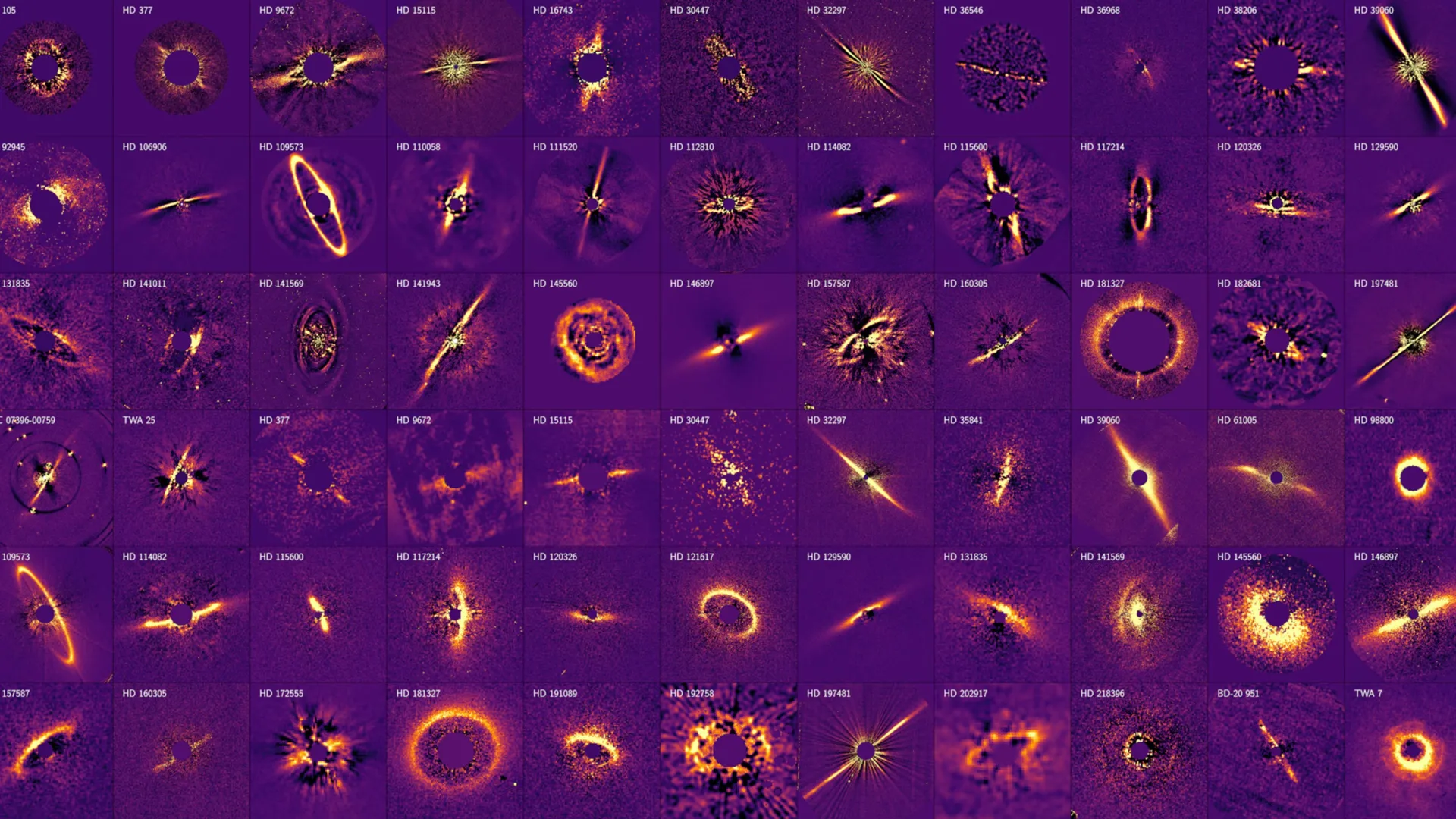
SPHERE’s stunning space images reveal where new planets are forming

Using the SPHERE instrument on ESO’s Very Large Telescope, astronomers have created an extraordinary set of images showing debris disks in a wide range of exoplanetary systems. These dusty structures reveal where small bodies orbit their stars and provide rare insights into the earliest stages of planetary development. Gaël Chauvin (Max Planck Institute for Astronomy), project scientist for SPHERE and co-author of the study, explains: “This data set is an astronomical treasure. It provides exceptional insights into the properties of debris disks, and allows for deductions of smaller bodies like asteroids and comets in these systems, which are impossible to observe directly.”

In our own solar system, once you look past the Sun, the planets, and dwarf planets such as Pluto, an enormous variety of smaller (“minor”) bodies comes into view. Scientists pay particular attention to objects ranging from about a kilometer to several hundred kilometers in size. Those that occasionally release gas and dust to form visible features like a tail are called comets, while those that do not show such activity are labeled asteroids.

These small bodies preserve clues to the solar system’s earliest days. During the long process in which tiny grains grew into planets, intermediate objects known as planetesimals formed. Asteroids and comets are remnants of that transitional phase, planetesimals that never developed into full-size planets. In this sense, they are (somewhat) altered traces of the same ingredients that once built Earth.

Searching for small bodies in exoplanetary systems

Astronomers have identified more than 6000 exoplanets (that is, planets orbiting stars other than the Sun), giving us a clearer picture of how planetary systems vary throughout the galaxy. Directly imaging these worlds is still extremely difficult. Fewer than 100 exoplanets have been photographed so far, and even the largest ones appear only as featureless points of light.

This challenge becomes even greater when searching for small bodies. As Dr. Julien Milli, astronomer at the University Grenoble Alpes and co-author of the study, notes: “Finding any direct clues about the small bodies in a distant planetary system from images seems downright impossible. The other indirect methods used to detect exoplanets are no help, either.”

Dust provides the key to detecting hidden planetesimals

The breakthrough comes not from the small bodies themselves, but from the dust created when they collide. Young planetary systems are especially active. Planetesimals frequently crash into each other, sometimes merging into larger bodies and sometimes fragmenting into smaller ones. These events release vast amounts of fresh dust.

The physics behind dust visibility is surprisingly intuitive. Breaking an object into many tiny pieces preserves its total volume, but dramatically increases its surface area. For example, if a one kilometer wide asteroid were crushed into dust grains just one micrometer across (a millionth of a meter), the overall surface area would increase by a factor of one billion. More surface area means far more light reflected from the star, which makes the dust easier to detect. By observing that dust, astronomers can infer details about the unseen small bodies producing it.

How debris disks evolve over time

Debris disks do not remain bright forever. As a young system matures, collisions become rarer. Dust can be pushed outward by radiation pressure from the central star, swept up by planets or planetesimals, or spiral inward and fall into the star.

Our solar system provides a late-stage example. After billions of years, two major planetesimal belts remain: the asteroid belt between Mars and Jupiter and the Kuiper belt beyond the giant planets. A population of smaller dust grains also persists, creating zodiacal dust. Under especially dark skies, sunlight scattered by this dust can be seen shortly after sunset or before sunrise as a faint glow called zodiacal light.

For observers studying our solar system from afar, these faint leftovers would be hard to detect. The new research, however, shows that similar dusty structures around younger systems should be visible for roughly the first 50 million years of a debris disk’s lifetime. Capturing these images is extremely challenging. The task has been compared to photographing a thin cloud of cigarette smoke beside a blinding stadium floodlight from several kilometers away. SPHERE, which began operating on one of ESO’s Very Large Telescopes (VLT) in spring 2014, was created specifically for such situations.

How SPHERE blocks starlight to reveal faint features

The fundamental idea behind SPHERE is familiar from everyday experience. If the Sun is shining directly into your eyes, you might raise a hand to shield the glare so you can see what lies around it. SPHERE uses a coronagraph to achieve the same effect when imaging exoplanets or debris disks. By inserting a small disk into the path of the star’s light, the instrument blocks most of the glare before the image is captured. This method only works if the optical system remains extremely stable and precise.

To maintain this stability, SPHERE relies on a highly advanced version of adaptive optics. Turbulence in Earth’s atmosphere distorts incoming starlight, and SPHERE continually monitors these distortions and corrects them in real time using a deformable mirror. An optional component can also isolate “polarized light,” which is characteristic of light reflected by dust rather than emitted directly from a star. This additional filtering enhances SPHERE’s ability to detect faint debris disks.

A major survey reveals 51 debris disks in sharp detail

The new study presents a unique set of debris disk images created by analyzing starlight scattered by tiny dust particles. “To obtain this collection, we processed data from observations of 161 nearby young stars whose infrared emission strongly indicates the presence of a debris disk,” says Natalia Engler (ETH Zurich), the lead author of the research. “The resulting images show 51 debris disks with a variety of properties — some smaller, some larger, some seen from the side and some nearly face-on — and a considerable diversity of disk structures. Four of the disks had never been imaged before.”

Working with such a large sample makes it possible to find broader patterns. The analysis revealed that more massive young stars tend to host more massive debris disks. Systems where dust is concentrated farther from the star also show a tendency toward more massive disks.

Rings, belts, and hints of unseen planets

One of the most compelling aspects of the SPHERE results is the wide range of structures inside the disks. Many show rings or band-like patterns, with material clustered at specific distances from the star. This arrangement resembles our own solar system, where small bodies gather in the asteroid belt (asteroids) and the Kuiper belt (comets).

These structures are thought to be shaped by planets, especially large ones that clear out paths as they orbit. Some of the planets responsible have already been detected. In other cases, sharp edges or asymmetries in the disks strongly suggest the presence of planets that have not yet been directly observed. Because of this, the SPHERE survey provides a valuable set of targets for upcoming facilities. Instruments on the James Webb Space Telescope (JWST) and the Extremely Large Telescope (ELT) under construction by ESO should be capable of directly imaging at least some of the planets that are sculpting these dusty rings and gaps.

Study authors and publication details

The results described here have been published as Natalia Engler et al., “Characterization of debris disks observed with SPHERE,” in the journal Astronomy and Astrophysics.

The MPIA researchers involved are Gaël Chauvin, Thomas Henning, Samantha Brown, Matthias Samland, and Markus Feldt, in collaboration with Natalia Engler (ETH Zürich), Julien Milli (CNRS, IPAG, Université Grenoble Alpes), Nicole Pawellek (University of Vienna), Johan Olofsson (ESO), Anne-Lise Maire (CNRS, IPAG, Université Grenoble Alpes), and others.

Share Button

Next gen cancer drug shows surprising anti aging power

Researchers at Queen Mary University of London’s School of Biological and Behavioural Sciences have demonstrated that the experimental TOR inhibitor rapalink-1 can extend the chronological lifespan of fission yeast, a simple organism widely used to explore basic biological processes.

A study published in Communications Biology by Juhi Kumar, Kristal Ng and Charalampos Rallis reports that both pharmaceuticals and naturally occurring metabolites can influence lifespan through the Target of Rapamycin (TOR) pathway.

TOR Pathway’s Central Role in Growth and Aging

The TOR pathway is an evolutionarily conserved signalling system found in organisms ranging from yeast to humans. It plays a vital part in regulating growth and aging and is closely linked to major age-related conditions, including cancer and neurodegenerative diseases. Because of its broad influence, TOR has become a major target in anti-aging and cancer research, with drugs such as rapamycin already showing an ability to extend healthy lifespan in several animal models.

Rapalink-1, the compound examined in the investigation, is a next-generation TOR inhibitor currently being studied for potential use in cancer therapy. The research team found that rapalink-1 slowed certain aspects of yeast cell growth while also extending their lifespan. The effect appears to operate through TORC1 — the growth-promoting component of the TOR pathway.

Discovery of a Metabolic Feedback Loop Involving Agmatinases

The study unexpectedly identified a significant role for a group of enzymes known as agmatinases, which convert the metabolite agmatine into polyamines. These enzymes appear to participate in a previously unrecognized “metabolic feedback loop” that helps maintain balanced TOR activity. When agmatinase activity was disrupted, yeast cells grew more quickly but showed signs of premature aging, revealing a trade-off between rapid growth and long-term cell survival.

The team also found that adding agmatine or putrescine (a related compound) supported longevity in yeast and improved growth under specific conditions.

“By showing that agmatinases are essential for healthy aging, we’ve uncovered a new layer of metabolic control over TOR — one that may be conserved in humans,” said Dr. Rallis. “Because agmatine is produced by diet and gut microbes, this work may help explain how nutrition and the microbiome influence aging.”

Caution Around Agmatine Supplementation

Rallis noted that agmatine supplements are available commercially but emphasized caution: “We should be cautious about consuming agmatine for growth or longevity purposes. Our data indicate the agmatine supplementation can be beneficial for growth only when certain metabolic pathways related to arginine breakdown are intact. In addition, agmatine does not always promote beneficial effects as it can contribute to certain pathologies.”

These findings highlight important connections between TOR signalling, metabolism and longevity. The results may help guide future strategies that pair TOR-targeting drugs with dietary or microbiome-based approaches in the study of healthy aging, cancer biology and metabolic disease.

Share Button

Scientists reveal a powerful heart boost hidden in everyday foods

People who frequently include foods and beverages rich in polyphenols, such as tea, coffee, berries, cocoa, nuts, whole grains and olive oil, may experience better heart health over time.

A team from King’s College London reported that individuals who followed dietary patterns high in polyphenols had lower predicted cardiovascular disease (CVD) risk.

Polyphenols are naturally occurring plant compounds associated with a wide range of health benefits, including support for the heart, brain, and gut.

Long-Term Findings From a Large UK Cohort

The study, published recently in BMC Medicine, tracked more than 3,100 adults from the TwinsUK cohort for more than ten years. It found that diets rich in certain groups of polyphenols were linked to healthier blood pressure and cholesterol levels, which contributed to lower CVD risk scores.

For the first time, the researchers also assessed a large set of urine metabolites that appear when the body processes polyphenols.

These biomarkers showed that people with higher levels of polyphenol metabolites (especially those linked to flavonoids and phenolic acids) had lower cardiovascular risk scores. They also tended to have higher HDL cholesterol, also known as ‘good’ cholesterol.

A New Scoring Tool to Measure Polyphenol Intake

To better understand dietary patterns, the researchers used a newly designed polyphenol dietary score (PPS). This score reflects intake of 20 common polyphenol-rich foods in the UK, including tea, coffee, berries, olive oil, nuts, and whole grains.

The PPS demonstrated stronger links to cardiovascular health than estimates of total polyphenol intake. The team suggested that this may be because the PPS captures overall eating habits rather than focusing on single compounds. This supports the idea that looking at the full diet provides a clearer picture of how polyphenol-rich foods collectively contribute to long-term heart health.

Expert Perspectives on Heart Benefits

Professor Ana Rodriguez-Mateos, senior author and Professor of Human Nutrition at King’s College London, said: “Our findings show that long-term adherence to polyphenol-rich diets can substantially slow the rise in cardiovascular risk as people age. Even small, sustained shifts towards foods like berries, tea, coffee, nuts, and whole grains may help protect the heart over time.”

Dr. Yong Li, first author of the study, added: “This research provides strong evidence that regularly including polyphenol-rich foods in your diet is a simple and effective way to support heart health. These plant compounds are widely available in everyday foods, making this a practical strategy for most people.”

Connection Between Aging and Cardiovascular Risk

The researchers noted that although cardiovascular risk naturally increases with age, participants with higher polyphenol intake experienced a slower rise in risk across the 11-year follow-up period. They also highlighted the importance of future dietary intervention trials to confirm and expand on these findings.

Share Button

Architects gain a new superpower for complex curved designs

A researcher from the University of Tokyo and a structural engineer based in the United States have created a computational form-finding method that could reshape how architects and engineers design large, lightweight structures. Their approach is particularly valuable for developing gridshells, which are curved, thin surfaces formed from an interlinked grid of structural members. The method relies on NURBS surfaces, a common format used in computer-aided design (CAD), and significantly lowers the amount of computing power needed. A task that once required 90 hours on a high-end GPU now finishes in about 90 minutes on a standard CPU.

Architects place high priority on surfaces that can bear their own load. Some visually appealing examples are known as shells, and these have traditionally been made from reinforced concrete. Modern architects, however, are interested in limiting concrete due to its cost, waste, and lack of visual transparency. This has led to growing interest in gridshells, which use intersecting curved elements of metal, glass or timber to span wide areas without interior supports.

Why Gridshells Are Gaining Interest

Gridshells are well suited for covering expansive public spaces without columns. They are found at sites such as train station entrances, restored historic courtyards, and public squares. Notable examples include the British Museum’s Great Court, the glass roof at the Dutch Maritime Museum, and New York’s Moynihan Train Hall. Although these structures showcase what gridshells can achieve, designers have lacked standard computational tools that can efficiently manage the wide range of shapes they might want to build.

Masaaki Miki of the University of Tokyo and Toby Mitchell from the engineering firm Thornton Tomasetti collaborated to address this gap. Their new algorithm identifies ideal gridshell shapes that support complex geometries while still maintaining structural reliability.

Solving Long-Standing Challenges in Gridshell Design

Even though gridshell projects exist, the many geometric, mechanical, fabrication and construction requirements have made them difficult for most clients to pursue. Miki and Mitchell had already introduced a NURBS-based system capable of addressing many of these issues within one computational framework. However, two major limitations remained: their earlier method struggled with highly irregular shapes, and the computing time required was not practical. The updated method removes these obstacles, creating a more efficient workflow and making advanced gridshell form-finding feasible for a larger group of architects and designers.

“The project began in 2020 with an interest in shell structures, often made of concrete. Traditional designs aim for shapes that carry their own weight entirely through the force of compression, but this limits how expressive or sculptural they can be,” said Miki. “We set out to find new ways to design shells that consider forces of compression as well as tension, allowing greater design freedom. We adapted our approach to more modern metal-and-glass gridshells, developing methods to balance mechanical reliability, aesthetics and ease of construction. Recent advances in computational speed have made it possible to solve such complex conditions using rigorous methods.”

Using NURBS to Improve Precision and Speed

A major strength of the new method is that it works directly with NURBS surfaces. Unlike mesh-based approaches that use thousands of triangular pieces, NURBS provide smooth, continuous and mathematically accurate representations of curved surfaces. Because NURBS are already widely used in architectural design, integrating this method into existing workflows is straightforward. The research team created a plug-in for Rhinoceros, a popular NURBS-focused CAD program, allowing architects to use the approach within familiar software.

The method represents stress distribution on a NURBS surface and uses newly developed algorithms that increase processing speed by 98%. This improvement removes the need for high-end GPUs and provides a more accessible way to generate shapes that meet both geometric and structural requirements. The resulting gridshells remain stable under gravity and support metal-and-glass construction that is practical to assemble.

“Because we are addressing a real-world problem, we have been rigorously validating our solutions by several test methods we also developed,” said Miki. “When the tests revealed failures in the method, it was stressful. However, we are now totally happy because all solutions pass the tests.”

Future Directions

While the current research focuses on metal-and-glass gridshells, the team plans to expand the technique to include composite timber gridshells in the future.

This research was partially supported by the Nomura Foundation, the JSPS Grants-in-Aid for Scientific Research (KAKENHI; grant number 23K17784), and JST ASPIRE (grant number JPMJAP2401).

Share Button

Streeting orders review into mental health and ADHD diagnoses

The health secretary says the aim is to tackle a rising demand for services and pressure on the NHS.

Share Button

Hospitals facing unprecedented flu season, say NHS bosses

Record number of patients in hospital in England with flu for this time of year, figures show.

Share Button

NHS must take elderly infections more seriously, Chris Whitty warns

England’s chief medical officer says doctors do not appreciate risk of heart attack and stroke, as flu cases rise.

Share Button

Astronomers find a planet orbiting at a wild angle no one can explain

To study the moments when the planet crossed over starspots, researchers relied on the multicolor MuSCAT3 and MuSCAT4 instruments installed on the Las Cumbres Observatory (LCO) 2-meter telescopes. During February and March 2024, they recorded three separate transits and clearly identified signals produced by the planet passing over these dark regions on the star. The way the signal changed with color offered valuable clues about the temperature of the starspots.

Analysis of the light curves showed that the starspots are approximately 200 K cooler than the surrounding stellar surface (3150 K) and cover about 15% of the visible area of the star. The three transit observations also displayed subtle differences in the shape of the spot-crossing features. Since these changes happened over a relatively short period, they are more consistent with the star rotating rather than the starspots themselves evolving.

Monitoring Brightness to Measure Stellar Rotation

To verify this idea, the team conducted an extended photometric monitoring program using LCO’s network of 1-meter telescopes around the world. From December 2024 through March 2025, they tracked the star’s brightness several times each night and identified regular, repeating variations. These measurements allowed them to determine, for the first time, that the star completes a full rotation in 11.05 days.

A Strongly Tilted Planetary System

The rotation period matched the shifts in starspot position seen in the transit data, allowing the researchers to piece together the three-dimensional layout of the system. Their analysis showed that the star’s rotation axis and the planet’s orbital axis differ by roughly 62°, meaning TOI-3884 hosts a significantly tilted planetary orbit. Such extreme misalignments are usually linked to past interactions with massive planets or stellar companions — yet none have been found here, making TOI-3884 an especially compelling system to study.

Glossary of Key Terms

Transit: A transit occurs when a planet passes in front of its star from our point of view, causing a small dip in the star’s brightness.

Spot-Crossing Signal: A change in the transit light curve that happens when a planet moves across a darker, cooler starspot on the star’s surface.

Starspot: A relatively cool, dark region on a star, similar to sunspots on the Sun.

Light Curve: A graph showing how a star’s brightness changes over time. Scientists study its shape to learn about planets, starspots, and stellar behavior.

MuSCAT3 and MuSCAT4: Specialized multicolor cameras designed to measure changes in starlight across different wavelengths to improve transit and starspot analysis.

Photometric Monitoring: Repeatedly measuring the brightness of a star to detect variations caused by rotation, starspots, or orbiting planets.

Stellar Rotation Period: The time it takes for a star to complete one full spin on its axis.

Orbital Axis: An imaginary line defining the orientation of a planet’s orbit around its star.

Stellar Spin Axis: An imaginary line that describes the direction of a star’s rotation.

Misalignment (Orbital Tilt): When the star’s rotation axis and the planet’s orbital axis do not line up. A large misalignment can provide clues about the system’s past.

LCO (Las Cumbres Observatory): A global network of telescopes used for continuous sky monitoring and time-sensitive observations such as transits.

Share Button