Health24.com | A blood test could speed up a brain cancer diagnosis – with 87% accuracy

A promising new blood test could accelerate the diagnosis of brain cancer with 87% accuracy. The technology uses infrared light to produce a “bio-signature” of a blood sample and applies artificial intelligence that looks for signs of cancer.

The research, published in Nature Communications involved the University of Strathclyde in Glasgow; Western General Hospital in Edinburg; and the University of Liverpool and the Walton Centre NHS Foundation Trust in Liverpool. 

Feasibility study

Patients with brain cancer frequently present with non-specific symptoms, and a final diagnosis can be time-consuming.

Researchers analysed samples from 104 patients  and found that the new blood test could distinguish patients with brain cancer from healthy individuals correctly 87% of the time.

Dr Matthew J. Baker, lead author and reader in Strathclyde’s Department of Pure and Applied Chemistry and Chief Scientific Officer with ClinSpec Diagnostics said, “This is the first publication of data from our clinic feasibility study and it is the first demonstration that our blood tests work in the clinic. Earlier detection of brain tumours in the diagnostic pathway brings the potential to significantly improve patient quality of life and survival, whilst also providing savings to the health services.”

According to Dr Holly Butler, Research and Development Director with ClinSpec Diagnostics, “The results presented are the beginning of a clinical roadmap of studies, that aim to bring the technology through regulatory approval, and ultimately to provide patients with rapid access to diagnosis and treatment.”

More rapid diagnosis

Dr Paul Brennan, Senior Clinical Lecturer and Consultant Neurosurgeon at the University of Edinburgh, another partner in the study, added “Diagnosing brain tumours is difficult, leading to delays and frustration for lots of patients. The problem is that symptoms of brain tumour are quite non-specific, such as headache, or memory problems. It can be difficult for doctors to tell which people are most likely to have a brain tumour.

“With this new test, we have shown that we can help doctors quickly identify which patients with these non-specific symptoms should be prioritised for urgent brain imaging. This means a more rapid diagnosis for people with a brain tumour, and quicker access to treatment,” Brennan continued. 

The findings suggest that the approach may be useful for doctors when helping to prioritise patients who need brain scans in order to diagnose tumours. The proposed system does not offer an absolute diagnosis, but it could play a significant role the diagnostic process. 

Image credit: iStock

Share Button

Health24.com | 3 things you need to know ahead of deciding on a medical scheme for the new year

Choosing a medical scheme, and the best option for you, can be tricky. Here are three things you need to know – it could influence the direction you take.

Who can be a dependant on my medical scheme?

Every principal scheme member has the right to register dependants, some of them at reduced rates. So who can and can’t you register?

If you are the principal (main) member of your medical scheme, you may register dependants, who will also be beneficiaries on your scheme. On some options and schemes, beneficiaries pay a reduced rate. Adult dependants usually pay more than child dependants.

FIND OUT MORE

All you need to know about waiting periods on your medical scheme

A waiting period refers to a set time when you have to pay contributions, but cannot access some of the benefits on your medical scheme.

When you join a scheme for the first time, there are only two types of waiting periods which are applied – and sometimes there are none at all. Here’s what you need to know.

FIND OUT MORE

10 quick questions on designated service providers (DSPs)

All medical scheme members will, sooner or later come across the term Designated Service Provider (DSP). Knowing what it means can save you a lot of money.

A DSP can be a doctor, a pharmacist, a hospital or any other registered healthcare provider that is the first choice of your medical scheme.

FIND OUT MORE 

Image credit: iStock

NEXT ON HEALTH24X

Share Button

Peanut-allergy therapy ‘protection not a cure’

Immunotherapy works by suppressing the allergic response, rather than curing it, a study suggests.

Share Button

Asthma carbon footprint ‘as big as eating meat’

Seven in every 10 inhalers prescribed in England contain propellants harmful to the environment, researchers say.

Share Button

Do open relationships really work?

Open relationships typically describe couples in which the partners have agreed on sexual activity with someone other than their primary romantic partner, while maintaining the couple bond. Can these open relationships work? It depends, concludes a team from the University of Rochester that focuses on couples research. Not surprisingly, the success of such relationships hinges on solid communication between all parties involved.

“We know that communication is helpful to all couples,” says Ronald Rogge, an associate professor of psychology and head of the Rogge Lab, where the research was conducted. “However, it is critical for couples in nonmonogamous relationships as they navigate the extra challenges of maintaining a nontraditional relationship in a monogamy-dominated culture. Secrecy surrounding sexual activity with others can all too easily become toxic and lead to feelings of neglect, insecurity, rejection, jealousy, and betrayal, even in nonmonogamous relationships.”

Past studies have attempted to gauge the success of nonmonogamous relationships. But the critical difference this time is that the Rochester team considered distinctions and nuances within various types of nonmonogamous relationships, and then assessed the success of each type independently. As a result, their findings draw no blanket conclusions about the prospects of nonmonogamous relationships; instead, the research, published in the Journal of Sex Research, suggests conditions under which nonmonogamous relationships tend to succeed, and those under which relationships become strained.

Rogge — together with his former undergraduate research assistant, Forrest Hangen ’19, now a graduate student at Northeastern University; and Dev Crasta ’18 (PhD), now a post-doctoral fellow at the Canandaigua VA Medical Center and the University of Rochester Medical Center’s Department of Psychiatry — analyzed responses from 1,658 online questionnaires. Among the respondents a majority (67.5 percent) was in their 20s and 30s, 78 percent of participants were white, nearly 70 percent identified as female, and most were in long-term relationships (on average nearly 4 ½ years). The team assessed three key dimensions for each relationship — applying what they call the “Triple-C Model” of mutual consent, communication, and comfort.

Significantly, they divided study participants into five distinct classes of relationships:

  • Two monogamous groups, representing earlier- and later-stage monogamous relationships
  • Consensual nonmonogamous (CNM) relationships, marked by low interest in monogamy and high levels of mutual consent, comfort, and communication around commitment and sexual activity with a person other than the primary partner
  • Partially open relationships, with more mixed attitudes toward monogamy and lower consent, comfort, and communication
  • One-sided sexual relationships with a person besides the primary partner, in which one partner desires monogamy while the other partner engages in sex outside the existing relationship with low levels of mutual consent, comfort, and almost no communication between the couple about sex outside the relationship.

The findings

The team discovered that monogamous and consensual nonmonogamous (CNM) groups demonstrated high levels of functioning in their relationships and as individuals, whereas the partially open and one-sided nonmonogamous groups exhibited lower functioning.

People in both monogamous groups reported relatively healthy relationships, as well as some of the lowest levels of loneliness and psychological distress. Both monogamous groups and the consensual nonmonogamous group (CNM) reported similarly low levels of loneliness and distress, and similarly high satisfaction levels in regards to need, relationship, and sex.

Moreover, both monogamous groups reported the lowest levels of sexual sensation seeking, indicating fairly restrained and mainstream attitudes towards casual sex.

Overall, people in the three nonmonogamous relationships reported high levels of sexual sensation seeking, were more likely to actively look for new sexual partners, and to have contracted a sexually transmitted disease.

Yet, each of the three nonmonogamous groups varied in significant ways.

People in the consensual nonmonogamous group (CNM) were in fairly long-term relationships (and had the highest proportion among all five groups of people living with their partner, followed closely by the monogamous group with minimal recent sex outside their relationship).

The consensual nonmonogamous group also had the highest number of heteroflexible (primarily heterosexual but open to sex with same-sex partners) and bisexual respondents, suggesting that individuals in the LGBT community might be more comfortable with non-traditional relationship structures.

By contrast, people in partially open and one-sided nonmonogamous relationships tended to be in younger relationships, reported lower levels of dedication to their relationships, and low levels of affection. Few reported high sexual satisfaction, and they had the highest rates of condomless sex with new partners.

The groups of partially open and one-sided nonmonogamous relationships also showed some of the highest levels of discomfort with emotional attachment (also called attachment avoidance), psychological distress, and loneliness.

Overall, the one-sided group fared worst of all, with the highest proportion of people significantly dissatisfied with their relationships: 60 percent — nearly three times as high as the monogamous or the consensual nonmonogamous group.

Rogge cautions that the authors looked at cross-sectional data only, which meant they were unable to directly track relationships failing over time.

While the data clearly show that not all nonmonogamous relationships are equal — one rule applies to all:

“Sexual activity with someone else besides the primary partner, without mutual consent, comfort, or communication can easily be understood as a form of betrayal or cheating,” says Hangen. “And that, understandably, can seriously undermine or jeopardize the relationship.”

Share Button

Cracking the colon code: New light shed on gut function

New insights into how the colon functions and actually expels its contents have been revealed for the first time following decades of study by Flinders University researchers.

It promises new diagnostics tools and treatments for gastrointestinal disorders to address problems with bowel movements leading to constipation, diarrhea and pain, affecting hundreds of millions of people worldwide.

Propulsion of intestinal contents is controlled by millions of neurons within the wall of the gut, known as the enteric nervous system. Capable of operating independently of the brain, a functioning enteric nervous system is essential for life — but exactly how it functions has been a mystery.

By unravelling the neural circuits of the enteric nervous system in guinea pigs and humans Professor Marcello Costa and colleagues are able to understand how the enteric nervous system ensures that food is slowly mixed and propelled along the digestive tube, allowing for absorption of nutrients and excretion of waste.

“For the first time we have combined video recording intestinal movements with a pressure-measuring manometric probe, enabling movements, pressures and electrical activities to be recorded all at the same time within the colon.

“This powerful combination of techniques applied to a guinea pig colon identified several distinct neural mechanisms involved in the propulsion of colonic contents.

“This answers the deceptively simple question of how neural mechanisms within the colon manage the propulsion of bowel contents” Professor Costa says.

“The findings also show how studies in human and animals can be complementary, identifying fundamental mechanisms that are shared across species — in this case guinea pigs and humans.

“Currently we treat intestinal disorders by addressing the symptoms, such a stopping-up diarrhea or softening stools to ease constipation, but as a result of this new understanding of the neural networks of the enteric system, clinicians may be able to develop treatments that treat the cause of the problems” Professor Costa says.

Story Source:

Materials provided by Flinders University. Note: Content may be edited for style and length.

Share Button

Health24.com | I was fit, ate healthy, and had no risk factors – yet I had a stroke at 33. Here’s what I wish I had known

It was only after taking scans that doctors diagnosed Thato Minyuku (41) with a transient ischaemic attack (TIA) or “mini stroke”, which is when the blood supply to part of the brain is briefly interrupted.

She still remembers vividly when that happened. It was 11 November 2011. She suddenly noticed that she was not fully “present” and her ability to speak was temporary compromised. She knew something was wrong. 

When she finally visited the hospital that night and was diagnosed with having suffered a TIA, she was given a few days of medical leave. But she had no idea she would suffer a more serious stroke a few months down the line – nor did her doctor pick up any signs. 

Diagnosis confirmed

The major stroke happened seven months later, on 13 June 2012. Thato suspected something was wrong because her stomach had been uneasy for a few days, and decided to take a sick day from her corporate law job.

“I was at home in my flat trying to ease my stomach. Some time that morning I fell asleep while watching a documentary. An urge to urinate woke me up and I tried to get out of bed, but I couldn’t. 

“My limbs were solid and I couldn’t lift my body out of bed. I then fell asleep again.”

Later that day Thato received a call on her cellphone, but had no idea what to do with the device. 

“Part of my brain was out of action from the stroke, especially the Broca’s and Wernicke’s areas, which affect all levels of communication,” she told us.

‘I had no idea’

The Broca’s and Wernicke’s are the two parts of the cerebral cortex that are linked to speech. Reading, writing, speaking, communication, and even thought all depend on its function.

“I had no idea something was wrong because I had no idea, which begins with a thought,” she says.

After numerous calls, she finally noticed the green and red icons and answered the call. She realised it was someone she knew, but because she was experiencing global aphasia, she couldn’t understand anything the person was saying.

Global aphasia is the most severe form of aphasia, and is caused by damage to the left side of the brain. Patients who experience this can understand little or no spoken language. Since this is what Thato was experiencing, her response was mere silence. 

She remembers putting her cellphone on the bed and going back to sleep. She woke up again to get herself a glass of juice, but when she touched the fridge door, she experienced a “massive shock”.

“It felt like I was holding hot ice,” she recalls.

When her concerned friend arrived at her complex later that day, she called for an ambulance and Thato was rushed to the nearest hospital.

Blurry sight

The damage to Thato’s brain started negatively affecting the sensory area. Her sight was blurry and her right eye could only see grey. Touch became unbearable and developed into neuropathic (nerve) pain, which has become part of her life ever since. But it wasn’t just her sense of sight and touch that was affected.

“My sense of taste could become bland with no taste, and the next day orgasmically delicious. My sense of smell was, and is, acute, but the sense of hearing can be muted because of aphasia.” 

For the first few days of the stroke Thato was in and out of consciousness. Time and space became meaningless.

Rehab and relearning

Thato was only 33 years old at the time. Risk factors for stroke include hypertension, high cholesterol, smoking, diabetes, and being overweight. But she qualified on none of those fronts, so she was unsure how this happened to her.

“One of the biggest myths about stroke is that it only happens to elderly people,” she says.

While Thato’s recovery will never end, she says, she’s progressed immensely this year. She’s gradually getting weaned off her intense stroke rehabilitation therapy which includes speech therapy, neurological therapy and occupational therapy, with the latter coming to a complete at the end of this year. 

She continues to be grateful to her speech therapist, Ingrid von Bentheim, who taught her how to pronounce, enunciate, write and speak again. 

“In effect, I was reverting to Grade R. I was learning the verbal difference between ‘d’ and ’t’, ‘b’ and ‘p’, ‘r’ and ‘v’ etc. I had to learn that ‘heaven’ is not ‘even’, ‘few’ is not ‘view’, ‘felt’ is not ‘left’.

Academic training courses

“I created a personal aphasic English list to simply laugh instead of cry from the damage to my brain. And one of my comedy favourites, which I still slip on, is that ‘marinating’ is not ‘masturbation’.”

One of the hardest parts of recovery was accepting that she could no longer be a lawyer.

“Law in itself demands near perfect use of its own legalised language and communication,” and that wasn’t going to work for her, she says. 

However, she made an effort to do at least one academic training course annually. To date, she’s completed, among many others, a sewing course, coaching course, paralegal, and a baby massage course to assist with her doula training.

Thato also still attends counselling sessions, which she says is necessary for her mental well-being. 

Some things take a knock

After seven years of using medication for neuropathic pain, she’s slowly started opting for meditation and yoga as a natural “medication”. She’s also currently pregnant, so she had to stop all the neurological medication, except for mild aspirin. 

The stroke happened shortly after her marriage, and her condition placed strain on the relationship. The marriage ended before their five year anniversary, but Thato’s not disheartened by it.

“I suppose in terms of the universal law of balance, something has to give. By the time he asked for a divorce, I was not in any way surprised.

“We were not compatible within the relationship, and the non-negotiable needs were not met. It took me about two years to become emotionally and psychologically stable again, and in the time of enjoying singlehood my loving new partner found me.”

‘We need patience’

People with aphasia do not necessarily need anyone to fill in the words for them. What they have difficulty with is brisk, fast conversations, says Thato. 

“We need patience. Take a moment to allow us to find and enunciate the word(s). Aphasic people live in different and slower time frequencies, and appreciate it when people don’t assume that the stroke made them cognitively unintelligent.

“We did not change from an intelligent person pre-stroke, to a person with scarred intelligence post-stroke. Patience and time are paramount to make us feel meaningful.”

‘What I wish I knew’

A self-confessed workaholic at the time, Thato was thrilled with her career and loved every second of it. This, in turn, meant she was often sleep deprived. 

“I would have catered more time for fitness and seeing a psychologist or coach to guide me in emotionally difficult situations, including the choices that I made pre-stroke,” she says.

Thato also neglected being conscious of her eating choices, and after the stroke she quickly understood that her fitness and dietary lifestyle could prevent another stroke. 

She gained 20kg post-stroke, and after doing research, she lost it in six months, and has maintained that weight.

As for her diet, she gradually transitioned into becoming partially vegetarian, ensuring green vegetables and gluten-free foods are part of her meals. The brain and the gut are fully connected, and Thato fully supports the saying that “you are what you eat”.

“The healthier you eat, the healthier you are. I am both lactose- and gluten-intolerant. Since removing these substances from my diet, eliminating sugar, and being partially vegetarian, I became emotionally more confident.”

An entrepreneurship company

Thato also found that indigenous sorghum is not only a preventative food for stroke, but also a natural prebiotic that assists the microbiome within the gut, assisting the brain with the body’s wellbeing.

After the experience she started funding a small black entrepreneurship company for women called Prosperity Food Co., which focuses entirely on indigenous beverages and snacks.

Fitness in itself is also part of stroke rehabilitation, she adds. Together with her fitness training, meditation, and speech therapy, she’s slowly making progress. With time and perseverance, Thato believes her efforts will bear fruit.

Since letting go of her law career, she’s stepped in as a stroke activist and volunteer for the Stroke Survivors Foundation, a national non-profit organisation that provides physical and emotional support to stroke survivors and their families and caregivers. She doesn’t want others to go through what she did, so she’s educating people about the importance of taking action when suffering a stroke.

She wants people to take away a critical lesson from her story, which is that it can happen to anyone, even those who, like her, have a seemingly healthy lifestyle.

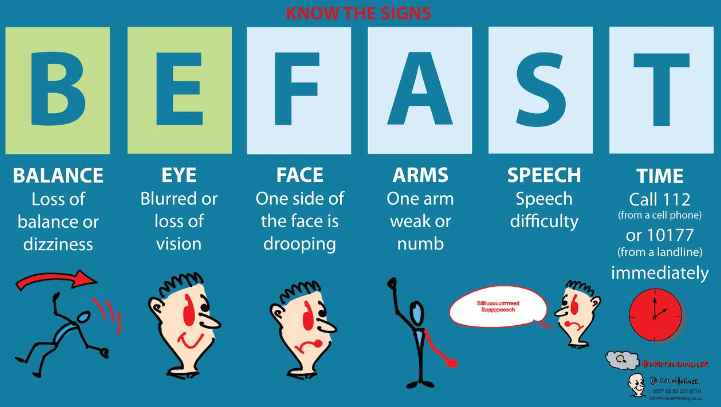
“Most of all, I would have noted the signs of a stroke and taken the time to learn the BEFAST, as at least one of the signs would’ve alerted me to the fact that I was having a mini stroke, and later a full stroke,” she says.

stroke

                                                  Source: strokesurvivors.org.za

If you suffer a stroke, remember that recovery is possible, Thato says. “With stroke rehabilitation and enough determination, you can completely repair and rebuild yourself.”

*World Stroke Day is observed on 29 October to bring global attention to stroke prevention, and to raise awareness of the treatment of the condition and ensure better care and support for survivors.

Image: Thato Minyuku

Share Button

Faith, truth and forgiveness: How your brain processes abstract thoughts

Researchers at Carnegie Mellon University have leveraged machine learning to interpret human brain scans, allowing the team to uncover the regions of the brain behind how abstract concepts, like justice, ethics and consciousness, form. The results of this study are available online in the October 29 issue of Cerebral Cortex.

“Humans have the unique ability to construct abstract concepts that have no anchor in the physical world, but we often take this ability for granted,” said Marcel Just, the D.O. Hebb University Professor of Psychology at CMU’s Dietrich College of Humanities and Social Sciences and senior author on the paper. “In this study, we have shown that newly identified components of meaning used by the human brain that acts like an indexing system, similar to a library’s card catalog, to compose the meaning of abstract concepts.”

The ability of humans to think abstractly plays a central role in scientific and intellectual progress. Unlike concrete concepts, like hammer, abstract concepts, like ethics, have no obvious home in the parts of the brain that deal with perception or control of our bodies.

“Most of our understanding of how the brain processes objects and concepts is based on how our five senses take in information,” said Robert Vargas, a CMU graduate student in Just’s lab and first author on the paper. “It becomes difficult to describe the neural environment of abstract thoughts because many of the brain’s mental tools to process them are themselves abstract.”

In this study, Just and his team scanned the brains of nine participants using a functional MRI. The team sifted through the data using machine learning tools to identify patterns for each of the 28 abstract concepts. They applied the machine learning algorithm to correctly identified each concept (with a mean rank accuracy of 0.82, where chance level is 0.50).

Just said these abstract concepts are constructed by three dimensions of meaning in the brain. The first dimension corresponds to regions associated with language. For example, the concept of ethics might be linked to other words like rules and morals. A person must first understand the words to construct the additional meaning of ethics. The second dimension defines abstract concepts in terms of reference, either to self or an external source. For example, spirituality refers to self, while causality is external to the self. The final dimension is rooted in social constructs. There is an inherent social component to the concepts of pride and gossip.

“For me, the most exciting result of this study was that we were able to predict the neural activation patterns for individual abstract concepts across people,” Vargas said. “It is wild to think that my concept of probability and spirituality is neurally similar to the next person’s, even if their experience of spirituality is different.”

During the scan, each concept was presented visually and the participant was allowed to think about this idea for three seconds. The participants saw the set of words six times.

The 28 concepts covered in the study span seven categories: mathematics (subtraction, equality, probability and multiplication); scientific (gravity, force, heat and acceleration); social (gossip, intimidation, forgiveness and compliment); emotion (happiness, sadness, anger and pride); law (contract, ethics, crime and exoneration); metaphysical (causality, consciousness, truth and necessity) and religiosity (deity, spirituality, sacrilege and faith).

The work is based on nine adult brain scans from a culturally homogenous community on the CMU campus.

“It’s flashy to call this work mind reading,” Just said. “For me, it is proof that we have identified some of the elements of the brain’s indexing system — verbal representation, externality/internality and the social dimension — that our brains use to code concepts that have no physical manifestation in the world.”

Story Source:

Materials provided by Carnegie Mellon University. Note: Content may be edited for style and length.

Share Button

Re-cracking the genetic code

Crack open a biology textbook and you will find a standard icon of molecular biology: the table summarizing the standard genetic code. This refers to the set of rules by which the cell “decodes” the information contained in DNA and “translates” it into the amino acids that make up proteins. For example, in virtually all organisms, the codon (3-letter DNA sequence) “AGA” tells the translation machinery to add the amino acid asparagine. While a few deviations in the genetic code used by various organisms are known, research published earlier this year in Molecular Biology and Evolution and in the current issue of Genome Biology and Evolution suggests that we may have only begun to scratch the surface on the number of variations present in the genetic codes of all living organisms.

In the April issue of Molecular Biology and Evolution, a group of researchers including Emmanuel Noutahi, Virginie Calderon, Mathieu Blanchette, Nadia El-Mabrouk, and Bernd Franz Lang from the Universite de Montreal, Institut de Recherches Cliniques de Montreal, and McGill University published an analysis of the mitochondrial genomes of 51 green algae and land plants (Noutahi et al. 2019). This analysis relied on a newly expanded version of the bioinformatics tool CoreTracker, which was previously developed by this group (Noutahi et al. 2017). CoreTracker identifies differences between a DNA sequence and the expected amino acid based on the amino acids often found at that position in closely related species. Using this tool, Noutahi and colleagues identified 14 new codon reassignments involving the replacement of one amino acid with another, the vast majority of which were found in a group of algae known as the Sphaeropleales. These algae have an unusual mitochondrial genome organization that appears to be intermediate between the larger, ancestral genomes and the compact, derived genomes of some of their relatives.

According to the authors, the field of genetic code evolution is being fueled by a rapid increase in genomics data (genomes plus respective transcriptomes). Because of this, “Comparative/evolutionary bioinformatics procedures such as CoreTracker are now in a position to not only predict deviations of the genetic code, but also provide clues with regard to the underlying mechanism.” Indeed, in light of their results, the researchers proposed that the genetic code deviations in the Sphaeropleales mitochondria actually contributed to their unusual genome organization. Based on this theory, after the migration of some mitochondrial genes to the nuclear genome during the genome reduction process, “UCA” (normally encoding the amino acid serine) was reassigned to a termination codon. This would have made it impossible for additional mitochondrial genes to be transferred to the nucleus, resulting in a mitochondrial genome that was intermediate in terms of size.

Before the publication of the article by Noutahi et al., researchers David Zihala and Marek Elias from the University of Ostrava had also independently discovered the large number of changes to the genetic code in the Sphaeropleales. Following the purely coincidental discovery of novel genetic codes in several protists by Elias’s research group, Zihala and Elias were motivated to “embark on a systematic screening to find possible additional cases of organisms with novel genetic code variants or previously missed departures from the standard genetic code.” Like Noutahi et al., their method involved the identification of discrepancies between DNA sequences and expected amino acids based on sequences present in related genomes, although they also performed a certain amount of manual curation. The analysis, published in the current issue of Genome Biology and Evolution (Zihala and Elias 2019), identified a few more codon reassignments in the Sphaeropleales, due to the fact that they included a broader sampling of this group. Otherwise, the results of the two studies were highly congruent, despite the somewhat different methods employed. In addition to the genetic code changes, Zihala and Elias also identified mutations in a mitochondrial release factor — a protein that recognizes termination codons — that, according to Elias, “may be linked to the intriguing ability of some sphaeroplealean mitochondria to terminate translation at codons that are normally read as coding for an amino acid. We thus offer the first specific hypothesis for the molecular underpinnings of this unusual ability.”

Overall, the findings of both studies highlight the need for a deeper awareness of genetic code discrepancies across the tree of life. Otherwise, use of an incorrect code when inferring protein sequences from DNA sequences could lead to inaccuracies in predicted protein sequences that are used for both phylogenetic and molecular biology analyses. Moreover, according to Noutahi and colleagues, “The two publications have been successful in predicting specific changes in the meaning of codons by using publicly available data, without biochemical experimentation, yet with high confidence.”

However, they also note that both studies are strictly computational in nature and that “this type of ‘paper biochemistry’ has its limitations. Only evolutionarily well-established instances of codon evolution may be inferred (i.e., not including cases of initial or incomplete stages), and although changes to the tRNA repertoire, structure, and specificity may be inferred to some degree, biochemical confirmation is critically required.” This limitation was also pointed out by Elias, who noted that his group plans to employ proteomics methods to verify some of their bioinformatic predictions concerning the various presumably reassigned codons. “Unfortunately,” continues Elias, “non-standard genetic codes are generally found in organisms that are difficult to study by direct biochemical or genetic approaches, so it remains a challenge to get a deeper understanding of the molecular mechanisms behind the observed changes in codon meaning.”

Future investigations will almost certainly uncover additional, as-yet-unidentified changes in the genetic code in various organisms. Indeed, notes Elias, “We are also analyzing some exciting new cases of genetic code modification in nuclear genomes of certain obscure protists that were uncovered by our survey of publicly available sequence data.” Furthermore, the authors of the Noutahi et al. study point out that, given “how rapidly this field is evolving, due to an ever increasing number of reports on deviations from the standard genetic code — particularly in eukaryotes and their organelles… the journey to understanding codon evolution with all of its mechanistic implications has just begun.”

Share Button

Health24.com | WATCH: 4 beverages that hydrate you more than water

29 October 2019

WATCH: 4 beverages that hydrate you more than water

These drinks get the job done.

It’s hard to believe that anything can hydrate you more than water but these drinks get the job done.

Image credit: iStock

NEXT ON HEALTH24X

Live healthier

Share Button