New resources are being designed to improve understanding of common conditions.


New resources are being designed to improve understanding of common conditions.
William Chapman only found out he had a terminal diagnosis when his GP mentioned it in passing.
The health secretary said the aim was to tackle a rising demand for services and the increased pressure on the NHS.
NHS bosses warn the public to use hospitals wisely amid concern this could be a tough winter.
The government claims that parents who cannot or chose not to breastfeed could save £500 a year.
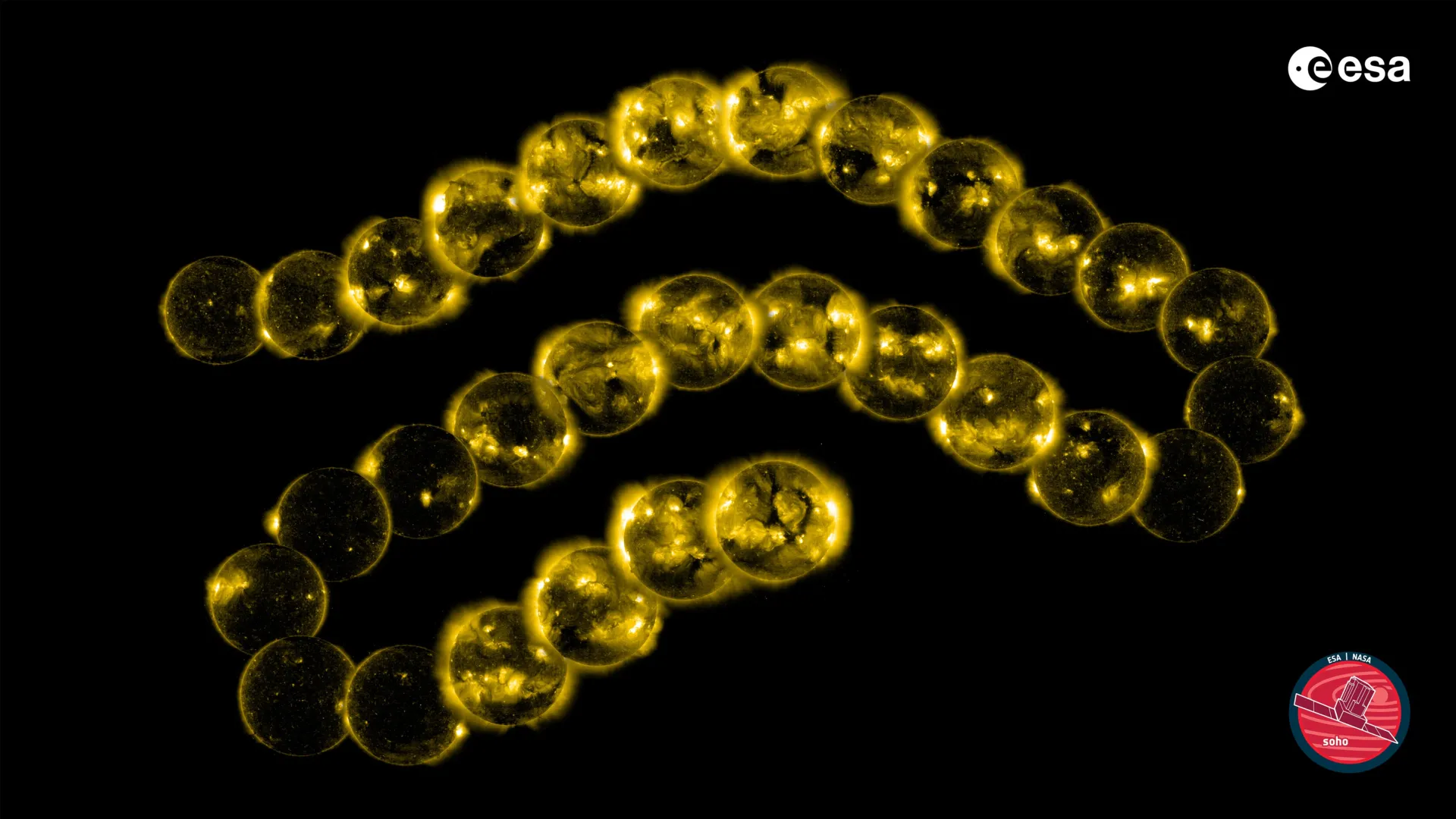
On December 2, 1995, the ESA/NASA Solar and Heliospheric Observatory (SOHO) lifted off for what was originally planned as a two-year mission.
From a position 1.5 million km away from Earth, located between our planet and the Sun, SOHO has an uninterrupted view of the solar surface. Since launch, it has provided an almost unbroken record of solar activity spanning nearly three full 11-year solar cycles.
“It is testament to the ingenuity of our engineers, operators and scientists, and to international collaboration, that this mission has exceeded all expectations,” says Prof. Carole Mundell, ESA Director of Science. “SOHO has overcome nail-biting challenges to become one of the longest-operating space missions of all time.”
“The SOHO mission is a great example of the incredible partnerships between NASA and ESA,” adds Nicky Fox, associate administrator, Science Mission Directorate at NASA Headquarters in Washington. “Congratulations to the NASA and ESA teams on an amazing thirty years working together.”
Despite its achievements, SOHO’s journey has not been smooth. About two-and-a-half years after launch, the spacecraft experienced a major malfunction that sent it into an uncontrolled spin and severed communications with Earth. For three months, an international team worked continuously to find the spacecraft and bring it back to life.
Another serious setback occurred in November and December 1998, when its stabilizing gyroscopes failed. Engineers quickly developed new software, and by February 1999, SOHO could operate without gyroscopes. This breakthrough allowed it to continue gathering data that would go on to reshape the field of solar science.
“SOHO pioneered new fields in solar science. It is a game-changer in the study of space weather, providing real-time monitoring of the Sun to forecast potentially dangerous solar storms heading towards Earth, and its legacy continues to guide future missions,” says Daniel Müller, ESA Project Scientist for SOHO and Solar Orbiter.
“SOHO is still producing high-quality data on a daily basis, and with hundreds of papers being published every year, its scientific productivity remains very high.”
Daniel’s new paper ‘SOHO’s 30-year legacy of observing the Sun’ was published in Nature Astronomy on December 2, 2025.
Here are five highlights from the last five years:
1. A single plasma conveyor belt
SOHO became a leading instrument in the development of helioseismology, which studies how sound waves move through the Sun in a way similar to how seismic waves reveal the interior of Earth. Early in the mission, SOHO captured the first images of plasma flows (electrically charged material) beneath the solar surface, giving scientists an unprecedented look inside the Sun.
Because SOHO has remained active for so long, researchers have been able to answer a long-standing question: plasma circulates in a single loop, or cell, within each hemisphere of the Sun, instead of in multiple cells as once believed.
The observations show that plasma takes roughly 22 years to complete this full circuit. It rises from regions near the equator toward the poles before sinking deep inside the Sun and moving back toward the equator. This timing matches the Sun’s magnetic cycle and helps explain why sunspots, which are produced when strong magnetic fields break through the surface, tend to appear progressively closer to the equator as each solar cycle unfolds.
2. Does the Sun shine steadily?
Measuring the energy emitted by the Sun is essential for understanding how solar heating influences Earth’s atmosphere and climate. SOHO’s long-running record, paired with earlier datasets, now provides nearly fifty years of high-quality observations.
Scientists have found that the Sun’s total energy output changes very little, varying by only about 0.06% over the solar cycle. However, its extreme ultraviolet radiation changes far more significantly, doubling between solar minimum and solar maximum. This form of radiation affects the chemistry and temperature in Earth’s upper atmosphere, but it is not a direct cause of the long-term warming trend near the planet’s surface.
3. Solar storm monitoring made law
SOHO has played such a pivotal role in the development of real-time space weather monitoring systems that it was signed into United States law in October 2020.
The ‘Promoting Research and Observations of Space Weather to Improve the Forecasting of Tomorrow’ (PROSWIFT) act specifically mentions SOHO’s Large Angle and Spectrometric Coronagraph (LASCO) instrument.
LASCO is a coronagraph, a telescope with a disc masking the centre of view. By blocking out the direct light coming from the Sun, the instrument can see light from the surrounding atmosphere, called the corona. This allows us to see coronal mass ejections — large eruptions of solar material and magnetic fields — as they set off from the Sun, providing up to three days warning of potentially disruptive incoming space weather reaching Earth.
4. 5,000 comets — and counting!
The telescope’s prowess as a comet hunter was unplanned, but turned out to be an unexpected success. Thanks to the screening effect of SOHO’s coronagraph, ‘sungrazer’ comets — those that approach the Sun at very close distances — also become visible.
Not all comets seen by SOHO are sungrazers. For example, it also beautifully captured Comet Tsuchinshan-ATLAS, also called the Great Comet of 2024, a non-periodic comet from the outer reaches of the Solar System.
SOHO discovered its 5,000th comet in March 2024, making it the most prolific comet-discoverer in history. Most of these have been found by citizen scientists worldwide through the Sungrazer Project. The observations have provided valuable data on the movement, composition and dust production of comets.
5. Enabling future discoveries
SOHO’s longevity and accomplishments have influenced the design, goals, and collaborative approach of new solar observatories. It has also helped set standards for open data and international cooperation in solar research.
For example, the ESA-led Solar Orbiter mission is imaging the solar poles from higher latitude and flying much closer to the Sun, with many of its instruments being successors of SOHO’s. Similarly, NASA’s Solar Dynamics Observatory carries improved versions of SOHO’s instruments to continue the legacy that SOHO began in areas of full-disc imaging and helioseismology. Moreover, SOHO frequently contributes to ‘multipoint’ measurements, providing essential context for Solar Orbiter and NASA’s Parker Solar Probe as they fly along their own unique orbits around the Sun.
Even more recently, ESA’s Proba-3 took to the skies to open up new views of the Sun’s faint corona, while the Agency’s upcoming Vigil mission will be the first to monitor the Sun from the ‘side’, detecting solar storms before they roll into SOHO’s line-of-sight.
“SOHO is an all-round shining success, thanks to the dedication of the teams keeping this incredible machine flying,” says Daniel. “Its science remains valuable and relevant, serving generations of scientists, and I’m certain that its legacy will continue to guide solar science for decades to come.”
Placed incorrectly, cosmetic dermal fillers can damage nearby ateries, leading to to skin loss and even blindness, experts warn.
Everything you need to know about the decision on who should be screened for prostate cancer.

Each rocket launch sends valuable materials into the sky that cannot be recovered, while also releasing large amounts of greenhouse gases and chemicals that damage the ozone layer. A new paper published December 1 in the Cell Press journal Chem Circularity examines how familiar ideas like reducing, reusing, and recycling could be built into the way satellites and spacecraft are designed, repaired in orbit, and handled at the end of their service lives.
“As space activity accelerates, from mega-constellations of satellites to future lunar and Mars missions, we must make sure exploration doesn’t repeat the mistakes made on Earth,” says senior author and chemical engineer Jin Xuan of the University of Surrey. “A truly sustainable space future starts with technologies, materials and systems working together.”
Growing debris and the problem of abandoned satellites
The environmental toll continues long after launch. Most spacecraft and satellites are never recycled, which means that large amounts of material are permanently lost when missions end. Many older satellites are shifted into “graveyard orbits,” while others become drifting orbital debris that can disrupt the operation of active systems.
The authors argue that this approach cannot continue, especially with the increasing pace of private space missions. They highlight the need for a circular space economy, a model in which materials and equipment are created with reuse, repair, and recycling in mind. They also note that industries such as personal electronics and automotive manufacturing have already adopted similar ideas with considerable success.
“Our motivation was to bring the conversation about circularity into the space domain, where it’s long overdue,” says Xuan. “Circular economy thinking is transforming materials and manufacturing on Earth, but it’s rarely applied to satellites, rockets, or space habitats.”
Applying the 3 Rs to spacecraft, satellites, and space stations
According to the team, the foundation of a circular space economy lies in the 3 Rs: reduce, reuse, and recycle. Reducing waste would begin with building satellites and spacecraft that last longer and can be fixed more easily in space. They also suggest turning space stations into multifunctional centers where spacecraft can refuel, undergo repairs, or even have new components manufactured, which could cut down on the number of launches required.
The authors add that bringing spacecraft and space stations safely back to Earth for reuse would require better recovery systems, including technologies such as parachutes and airbags. They point out that equipment in space experiences significant wear because of extreme temperatures and radiation, so any part intended for reuse would need to pass strict safety checks.
Recovering orbital debris and using advanced technology for safer space operations
The researchers also recommend new efforts to gather orbital debris, such as using robotic arms or nets to collect fragments so the materials can be recycled. This would also help prevent collisions that create even more debris.
Data-driven tools will play an important role in this transition, the authors say. Information gathered from spacecraft could guide improvements in design and help limit waste, while simulation tools may reduce the need for expensive physical testing. They add that AI systems could help spacecraft and satellites avoid dangerous debris in real time.
Transforming the entire space system through innovation and global cooperation
The authors emphasize that a circular space economy represents a major shift in how the space sector works. Instead of focusing on single pieces of hardware, the entire system needs to be considered at once, from the materials used to how spacecraft are operated and retired.
“We need innovation at every level, from materials that can be reused or recycled in orbit and modular spacecraft that can be upgraded instead of discarded, to data systems that track how hardware ages in space,” says Xuan.
“But just as importantly, we need international collaboration and policy frameworks to encourage reuse and recovery beyond Earth. The next phase is about connecting chemistry, design, and governance to turn sustainability into the default model for space.”
This research received support from the UK Engineering and Physical Sciences Research Council, the Leverhulme Trust, and the Surrey-Adelaide Partnership Fund.
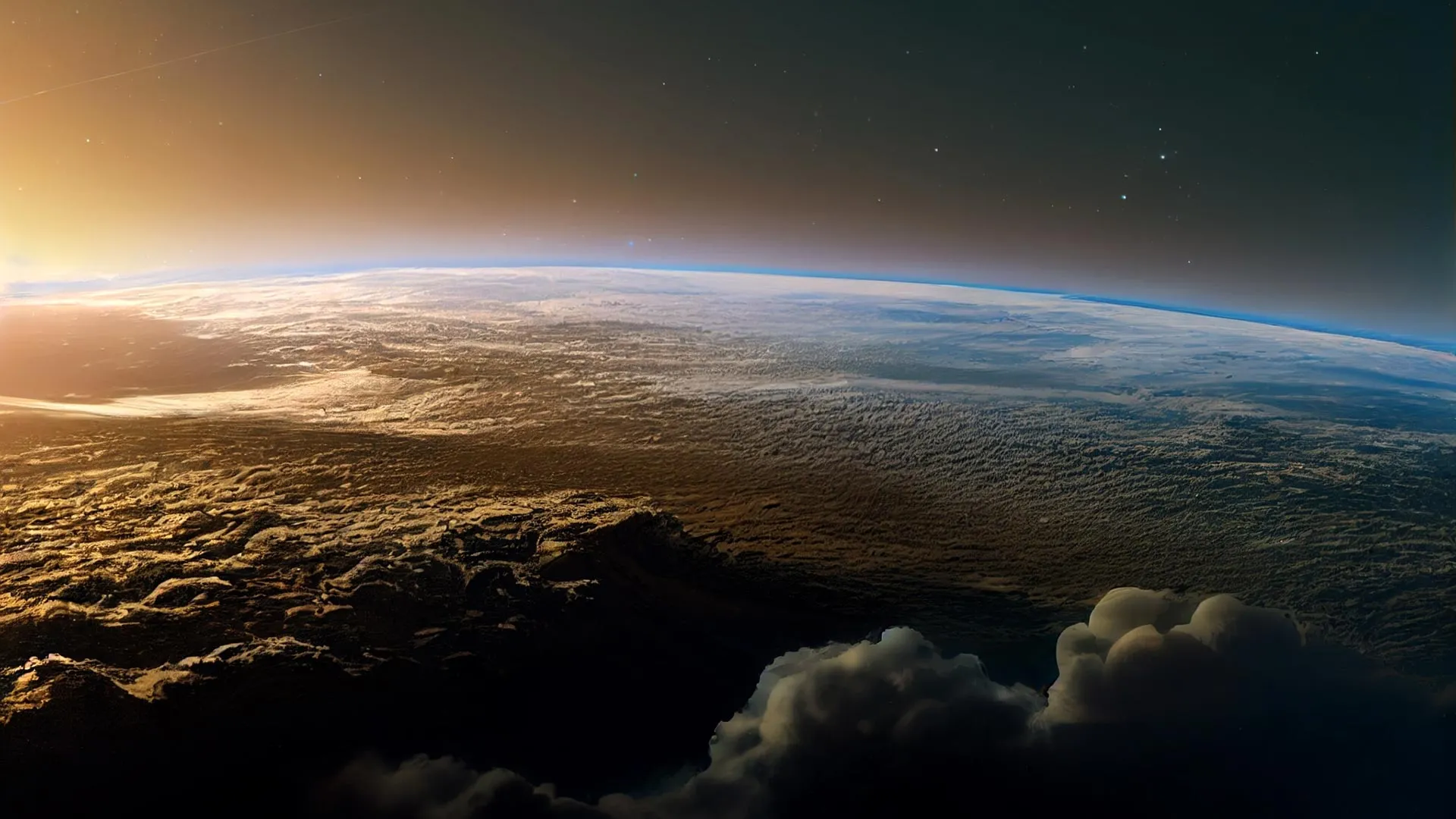
Earth’s ancient sky may have played a larger role in the beginnings of life than scientists once believed.
According to a study published Dec. 1 in the Proceedings of the National Academy of Sciences, researchers from CU Boulder and their collaborators report that billions of years ago, the young planet’s atmosphere may have been generating sulfur-based molecules that are known today as important components for life.
This discovery challenges the long-standing idea that these sulfur molecules formed only after life had already taken hold on Earth.
“Our study could help us understand the evolution of life at its earliest stages,” said first author Nate Reed, a postdoctoral fellow at NASA who conducted the research while working in the Department of Chemistry and the Cooperative Institute for Research in Environmental Sciences (CIRES) at CU Boulder.
Sulfur’s Importance and Why the Findings Matter
Sulfur, much like carbon, is a vital element found in every form of life, from bacteria to humans. It appears in certain amino acids, which serve as the basic building blocks of proteins.
Although sulfur was present in the early atmosphere, most scientists believed that organic sulfur molecules, such as amino acids, arose only after living organisms were already present and producing them.
Earlier attempts to simulate early Earth conditions often failed to generate meaningful amounts of sulfur biomolecules before life existed. When these molecules did appear, they formed only under unusual or highly specific conditions that were unlikely to have been common across the planet.
Because of this background, the scientific community reacted strongly when the James Webb Space Telescope detected dimethyl sulfide, a sulfur compound produced by marine algae on present-day Earth, in the atmosphere of an exoplanet called K2-18b. Many considered it a possible sign of life.
New Experiments Reveal Atmospheric Chemistry at Work
However, previous work by Reed and senior author Ellie Browne, a chemistry professor and CIRES fellow, showed that dimethyl sulfide could form naturally in the lab using only light and simple atmospheric gases. This indicated that the molecule might appear even on worlds without life.
In their latest experiment, Browne, Reed, and their team tested what Earth’s early sky might have been capable of producing. They illuminated a mixture of methane, carbon dioxide, hydrogen sulfide, and nitrogen to recreate atmospheric conditions from before life emerged.
Working with sulfur is challenging, Browne noted. The element sticks to laboratory equipment, and in the atmosphere, sulfur-based molecules are present at extremely low levels compared to CO2 and nitrogen. “You have to have equipment that can measure incredibly tiny quantities of the products,” she said.
Using a very sensitive mass spectrometer to identify and measure chemical compounds, the researchers discovered that their early Earth simulation produced a wide range of sulfur biomolecules. These included the amino acids cysteine and taurine, along with coenzyme M, which plays a key role in metabolism.
A Sky Capable of Supporting a Growing Ecosystem
The team then estimated how much cysteine an entire ancient atmosphere might generate. Their calculations suggested that early Earth’s sky could have produced enough cysteine to support about one octillion (one followed by 27 zeros) cells. By comparison, modern Earth contains roughly one nonillion (one followed by 30 zeros) cells.
“While it’s not as many as what’s present now, that was still a lot of cysteine in an environment without life. It might be enough for a budding global ecosystem, where life is just getting started,” Reed said.
The researchers propose that these atmospheric biomolecules may have fallen to the surface through rainfall, potentially delivering the chemistry needed to help life begin.
“Life probably required some very specialized conditions to get started, like near volcanoes or hydrothermal vents with complex chemistry,” Browne said. “We used to think life had to start completely from scratch, but our results suggest some of these more complex molecules were already widespread under non-specialized conditions, which might have made it a little easier for life to get going.”
