Health24.com | Heart attack can be more lethal if symptoms are more gradual

Heart attack patients often take longer to seek help if they have gradual symptoms, which may put them at increased risk of death, researchers say.

Gradual symptoms begin with mild discomfort that slowly worsens, while abrupt symptoms are sudden and severe pain, according to authors of a study published in the European Journal of Cardiovascular Nursing.

Maximum delay of two hours

“Both are a medical emergency and require urgent help,” said study author Sahereh Mirzaei, from the University of Illinois at Chicago. “But our study shows that gradual symptoms are not taken seriously.”

She and her team analysed data from 474 heart attack patients seen at US emergency departments. Symptoms were gradual in 44% and abrupt in 56% of these patients.

Overall, the average time between the start of symptoms and arrival at the hospital was four hours. Those with gradual symptoms waited eight hours to seek medical help, compared to 2.6 hours for those with abrupt symptoms.

A delay of no more than two hours is recommended for the best outcomes. Waiting longer increases patients’ risk of serious complications and death, according to the researchers.

Both women and men sought medical help sooner when they had abrupt symptoms.

“Nearly half of patients had a slow onset, so this is not uncommon,” Mirzaei said in a journal news release.

Uninsured patients more likely to delay

“Chest pain, chest discomfort, and chest pressure are warning signs that an artery may be blocked, and patients should call the emergency medical services immediately,” she said.

Arrival by ambulance was associated with quicker medical care, but only 45% of patients called for one; 52% used their own transportation, and 3% were transferred from another hospital.

Uninsured patients were more likely to delay calling for help, the study found.

It also found that symptoms were triggered by exertion, such as running, climbing stairs or shovelling snow, in 54% of men with abrupt onset and a diagnosis of ST-elevation myocardial infarction. Also known as STEMI, this is a particularly serious type of heart attack requiring quick restoration of blood flow to blocked arteries.

Mirzaei said men with ischaemic heart disease or multiple risk factors such as high blood pressure, diabetes, high cholesterol or a family history of heart disease should be aware that chest pain or discomfort after physical activity or exercise could be a heart attack.

“Symptoms can also include pain in the throat, neck, back, stomach or shoulders, and may be accompanied by nausea, cold sweat, weakness, shortness of breath, or fear,” she said. “Call an ambulance straight away; the sooner you get help, the better your prognosis.”

Image credit: iStock

Share Button

Wrist-worn step trackers accurate in predicting patient health outcomes

Determining how far patients with pulmonary disease can walk in six minutes has long been an effective clinical tool to help physicians determine their exercise capacity, as well as to aid in predicting health outcomes and mortality.

Now, in a new study, researchers at Intermountain Healthcare in Salt Lake City found that steps measured through a step tracker worn on the wrist can be used to estimate exercise capacity and determine the health status of patients, rather than the standardized six-minute walk distance test, which is usually conducted in a clinical setting.

Using the wrist-worn step trackers, researcher found data may be used in clinical care at higher intervals to effectively monitor patient progress and disease management. Researchers say the results are another example in how wearable and monitoring devices like Fitbits and Apple Watches can be used in patient care to improve outcomes.

“For patients, this means we can track their progress more frequently in a manner that’s less expensive and more convenient than current standardized testing,” said Denitza Blagev, MD, lead investigator of the study and pulmonary and critical care physician at Intermountain Healthcare.

The six-minute walk distance (6WMD) is an important, objective standard used to assess exercise capacity. Patients walk for six minutes and, then based on how many meters they cover in that time, physicians can predict outcomes and mortality for patients with chronic obstructive pulmonary disease (COPD) and cardiovascular diseases.

“Normally, the 6WMD test is done every few months or once a year. Now, we may be able to measure patients on a regular basis and know if we need to intervene if their estimated 6WMD by step count changes,” said Dr. Blagev.

Findings from the study were were presented at the European Respiratory Society International Congress meetings in Madrid, Spain, on Sept. 29.

In the study, researchers conducted a 12-week, blinded, randomized, cross-over trial with 52 patients, a group that included adults with a history of respiratory problems during periods of elevated air pollution. Wrist step counters tracked patient steps for those 12 weeks; and patients also filled out respiratory symptom questionnaires.

Researchers found they could effectively estimate a patient’s 6MWD results by using step counters, instead of having patients come in a clinical setting to do the 6MWD test.

“Instead of having one measurement every few months, you could have weekly measurements, and have information at disease progression at more frequent intervals. This is a significant improvement and enhanced convenience for our patients,” said Dr. Blagev.

The implications? Using wrist step counters will allow physicians to track how their patients are doing, the progression of the disease, and whether a patient requires an immediate intervention.

“Being able to distill step counts into this clinically important metric is a first step in being able to think about how to use step counters in order to better manage health and detect deterioration earlier,” Dr. Blagev added.

Funding for the study was provided by the Intermountain Research and Medical Foundation.

Story Source:

Materials provided by Intermountain Medical Center. Note: Content may be edited for style and length.

Share Button

Health24.com | Women in cardiac arrest less likely to receive help from bystanders – and more likely to die

Women who suffer a cardiac arrest in public are less likely than men to get resuscitation help from bystanders, and more likely to die, new research shows.

For the study, scientists analysed data on more than 5 700 out-of-hospital cardiac arrests that occurred in a province of the Netherlands between 2006 and 2012. Women accounted for 28% of those cases.

Cardiac arrest occurs when your heart function suddenly and unexpectedly stops, you lose consciousness and stop breathing. Your heart either stops completely or the rhythm becomes erratic, which prevents it from pumping blood effectively.

In the case of a heart attack, it occurs when the flow of blood and oxygen to the heart is blocked by a clot for example, causing damage to the heart muscle.

If the clot partially blocks the flow of blood in the arteries of the heart, it can cause a lack of oxygen to the heart muscle tissue called ischemia. If the clot completely stops the blood flow, then a heart attack develops.

Men more likely to survive

Men were more likely than women to receive resuscitation attempts by bystanders, even when a bystander saw the person collapse (about 74% versus 69%, respectively).

Men were also more likely than women to survive until hospital admission (37% versus 34%, respectively) and more likely to survive from hospital admission to discharge (55% versus 37%, respectively).

Overall, women’s chances of surviving to be discharged from hospital were about half that of men (12.5% versus 20%), according to the study, which was published in the European Heart Journal.

An important factor in the gender difference is that people were less likely to recognise that women who collapsed were having a cardiac arrest, leading to delays in calls for emergency services and delays in providing resuscitation, the researchers said.

“We found that the worse outcome in women is largely attributable to the fact that women had about half the chance of having a shockable initial rhythm compared to men,” study leader Dr Hanno Tan, from the University of Amsterdam, said in a journal news release.

Short window available

Rates of shockable initial rhythm were 33% in women and 52% in men, according to the report.

Cardiac arrest occurs when the heart goes into an irregular rhythm and then stops beating. Death occurs within minutes unless the heart can be shocked back to a normal rhythm with a defibrillator. But without a shockable initial rhythm, defibrillation is not effective.

In addition, “people may be less aware that cardiac arrest can occur as often in women as in men, and the women themselves may not recognise the urgency of their symptoms,” Tan said. “Women may have symptoms of an impending heart attack that are less easy to interpret, such as fatigue, fainting, vomiting, and neck or jaw pain, whereas men are more likely to report typical complaints such as chest pain.”

The investigators also found that women and men with cardiac arrest were treated differently in the hospital. Women were less likely to be diagnosed with a heart attack (a common cause of cardiac arrest), and less likely to undergo examination of heart arteries or procedures to clear blocked heart arteries.

“Given the short window available to save the life of the patient, every minute in this early phase counts; help, if only a call to the emergency number by a lay person, is crucial. So, raising awareness through public campaigns could make a big impact on women’s survival. The fact that in-hospital treatment also seems to be different is a finding that can be acted on now and may be easier to implement,” Tan said.

Image credit: iStock

Share Button

Government plans billions for hospital projects

The plans, unveiled at the start of the Conservative conference, include £2.7bn for six hospital trusts over five years.

Share Button

Zantac: CVS latest to suspend heartburn drug over cancer fears

CVS pharmacies become the latest to withdraw Zantac, a drug being investigated for cancer links.

Share Button

Health24.com | A dietitian gives her take on a sustainable diet

Sustainable diets? Plant-based meals? Vegetarian? Vegan? Flexitarian? You may have come across some of these terms as we become more aware of the importance of an environmentally friendly lifestyle.  

Some people brush it off as the next “health craze”, while others consider it very important to consider the impact the food industry and our eating patterns have on our planet.

What is a sustainable diet?

In 2010 researchers defined a sustainable diet as follows: “These diets have a low environmental impact; they contribute to food and nutrition security and a healthy life for both present and future generations.

“Sustainable diets are protective and respectful of biodiversity and ecosystems, culturally acceptable, accessible, economically fair and affordable, nutritionally adequate, safe and healthy, while optimising natural and human resources.”

Why do we need to be following a sustainable diet?

The current eating patterns in our country are not sustainable and we need to start making changes to our lifestyle patterns to address this problem. South Africa has undergone a nutritional transition, and we now have a problem of a double burden of disease.

This means that there is an alarming number of people that are both overweight and malnourished due to the overconsumption of nutrient poor foods such as refined carbohydrates, unhealthy fats and processed meats. The result is a high prevalence of chronic lifestyle diseases of, such as cardiovascular disease, type 2 diabetes and hypertension.

What is the carbon footprint of our food?

The environmental impact of our food systems is alarming, as 30% of all global greenhouse gas emissions originate from food systems. It is estimated that one third of all food produced is wasted, which is about 1.3 billion tons of fruit, vegetables, grains, meat, dairy or seafood that have been lost in transport, spoiled or thrown away at home, schools and restaurants.

This amount of food would be enough to feed every undernourished person on this planet. Although it may seem like it is only a humanitarian concern, it is also one that drastically impacts our environment. Not only does producing the food require energy, but the waste is dumped on landfill sites where it is left to rot and produce methane gas (one of the greenhouse gases).

Replacing beef with beans would reduce the worldwide environmental footprint: to produce 1 kg protein from kidney beans requires, 18 x less land, 10 x less water, 9 x less fuel, 12 x less fertilizer, and 10 x less pesticide in comparison with 1kg of protein from beef.

What is a plant-based diet?

A plant-based diet (PBD) seems to better fit the criteria of a sustainable diet. Often it is misunderstood as being vegan or vegetarian, yet it doesn’t need to be. A PBD is one that gives preference to plant-based proteins (e.g. legumes), sustainably sourced fish (e.g. hake, sardines and snoek) and reducing the intake of red meat, processed meat (e.g. bacon), chicken and dairy products.

Is a PBD nutritionally adequate?

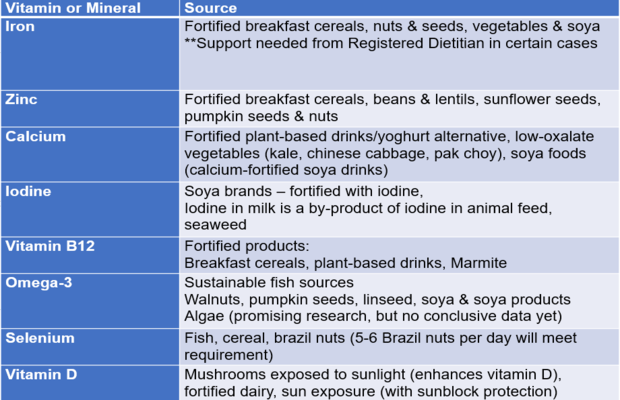
This nutritional adequacy of a PBD often gets questioned, because if you’re reducing the intake of meat and chicken then you can’t possibly be meeting your nutrient requirements. The table below shows the contrary to be true by providing a summary of the key nutrients that are often questioned when adopting a PBD:

plant based minerals, nutrition

The protein requirement for an average adult is 0.8g protein per kg body weight (0.8g/kg). This averages to roughly 56g per day for men and 45g per day for women. A 90g serving (one third of a cup) of low fat cottage cheese provides 14.1g of protein and 30g roasted edamame beans provide 13.3g protein, as examples of sources of protein.

Summary

Unfortunately, there is a lack of awareness about the huge environmental impact our food systems have on our planet. There is a misunderstanding that eating a PBD would be inconvenient, difficult and more expensive, but the real challenge is changing the entrenched food culture of millions of people.

Education on all levels of society and industry needs to happen for affordable, accessible plant-based food options to become the norm. It’s going to take time to break the habits of centuries, but the sooner this happens, the better, as animal-based foods are becoming increasingly wasteful and expensive to produce.

Image credit: iStock

NEXT ON HEALTH24X

Share Button

Health24.com | Just one pill for all your heart health needs? It’s on the way

Imagine a single pill loaded with a battery of heart medications that you take once a day to cut your chances of heart attack, stroke and heart failure.

A new clinical trial has turned that idea into reality.

Effective in preventing cardiovascular disease

The “polypill” reduced the risk of life-threatening heart health problems by more than one-third during a five-year period in a group of more than 3 400 people aged 50 to 75.

What’s more, the risk decreased by more than half when researchers narrowed their focus to just participants who faithfully took the pill as directed.

The polypill in the study contained two common blood pressure drugs, a cholesterol-lowering statin and aspirin, the researchers said.

“The results of our study suggest that the polypill is effective in preventing cardiovascular disease,” said researcher Tom Marshall, a professor of public health and primary care with the University of Birmingham, in England. “This suggests that it should be considered as part of a strategy to prevent cardiovascular disease.”

However, this one-size-fits-all approach to heart disease prevention would likely work better in less-developed countries than the United States, said Dr Ron Blankstein. He’s an associate physician of preventive cardiology with Brigham and Women’s Hospital in Boston.

US patients are often reluctant to take cholesterol or blood pressure drugs, even after risk assessments are used to dial in the specific medications that would best protect their health, Blankstein noted. A single pill loaded with meds might be even less appealing.

A simpler cost-saving approach

“It’s something I could see as a combination that’s offered and available in the US, but whether that would change adherence or if the patients would find it that much more attractive to be on such a combination is still uncertain,” Blankstein said. “I think this is an approach that is going to work well in a low- to middle-income country, in a rural population.”

Heart patients aren’t very good at sticking with the medications they’ve been prescribed, the study authors said in background notes. About one-third of patients stop taking their meds as early as 90 days after having a heart attack.

The polypill is a concept that has knocked around for two decades now, offering a simpler cost-saving approach that would make it easier for people to take their heart medications.

However, evidence supporting the use of polypills to prevent heart disease in people who haven’t suffered a heart attack or stroke is lacking, the researchers noted.

To provide more evidence, the investigators recruited more than 6 800 participants from Golestan, a province in Iran.

Half of the people were randomly chosen to take the polypill, and the rest were provided lifestyle advice for lowering their risk of heart disease.

Increased reduction in risk

Overall, participants showed high adherence to their prescription. About 63% took the polypill as recommended, at least 70% of the time.

Polypill patients experienced an overall 34% decrease in their risk of major heart events over five years, compared with those who just received lifestyle advice. These heart events included acute coronary syndrome, heart attack, sudden heart death, heart failure, stroke, and procedures to reopen clogged arteries.

Benefit increased to a 40% reduction in risk among people with no history of heart disease, and up to 57% in people who stuck with the polypill as recommended.

The researchers estimated that 35 people would need to be treated with the polypill to prevent one person from having a life-threatening event. In patients with high adherence, the number needed to treat was 21.

“This clinical trial shows that the concept of a polypill, when applied to a large rural population in a low- to middle-income country, actually works,” said Blankstein, a member of the American College of Cardiology’s Prevention Section and Leadership Council.

Instead of carefully assessing individual risk, the researchers assigned people to the polypill solely based on age – a move that greatly simplifies distribution of heart meds, Blankstein noted.

Reducing cost and lowering risk

Because of that, Marshall said, the intervention can be very low-cost, as little as a few cents a day in Iran.

It’s not clear whether an American polypill would be as affordable, Blankstein said.

“In the US, if someone creates this and they try to market it under a trade name, it would be a scenario where this could cost more, and that’s not the purpose,” Blankstein said. “The purpose is for it to cost less, especially if the whole point is to reduce cost and lower risk.”

The formulation of an American polypill would require a bit of discussion, as well. For example, it’s not clear that aspirin would be included in the pill, given recent clinical trial data and changes to US prevention guidelines, Blankstein said.

“The perfect combination of what to put in a polypill I think is something that is very much up for debate,” Blankstein said. “If you made a simple polypill that was just one agent to lower cholesterol and one agent to lower blood pressure, I think there would be many populations that would benefit from that approach.”

The new study was published in The Lancet.

Image credit: iStock

Share Button

Influencer Who Was Body-Shamed After Sexy Photo Shoot Responds With  Empowering Advice

Sharing intimate, body-positive photos on social media takes courage—and the trolls who leave hateful comments don’t make it any easier. But influencer Bethanie Garcia isn't letting that negativity stop her, she tells Health.

Garcia, along with five other Instagram influencers, recently collaborated with Health's WomenIRL on a campaign that shows how every women's body—regardless of size or shape—is sexy. On September 16, she shared a photo of herself from the campaign that received major feedback from followers. Most cheered on her post, but plenty of trolls decided to leave hurtful remarks, too.

RELATED: Influencer Shares Photo of Her Boobs to Send a Message About Embracing Bra Bulge

“Confident about this?!! No no no,” one user wrote response to her photo. 

“Omg. Either lose weight or don’t. No one cares. No naked pictures required,” another added. 

Garcia decided she wasn’t going to let these negative comments slide. In a follow-up post, she shared some of the body-shaming comments she received, adding an empowering message to all of her followers about dealing with this kind of negativity.

RELATED: This Mom Shares Unedited Photos of Her Cellulite and Stretch Marks to Send a Message About Postpartum Bodies

“For every THIS, there’s a THAT,” Garcia wrote. “And unfortunately, in this space, in order to reach as many women as possible…in order to get the THAT…there’s always going to be hundreds of the THIS.”

“So, this is me, saying I see you. And I get it. I mean, I don’t get leaving such vile comments on a stranger’s photo (and I’ve received SO much worse than the ones featured here). But I get that I was once in your shoes,” she continued. 

Garcia explains her decision to post this response, and why she addressed the meanness instead of just ignoring them.

RELATED: Plus-Size Influencer Nabela Noor Breaks Down About Body-Shaming Comments After Posting Her First-Ever Bikini Photo

"[I did it] for any women reading those comments that might take those troll’s comments to heart. It’s for the woman struggling to accept and love her body. I respond for her- so she knows that she is beautiful. The trolls won’t stop me and I won’t back down."

Garcia says that leaning on her husband and friends helps her cope with the hate. She wants women to know that standing up to haters helps other women who are experiencing the same sort of body-shaming criticism. 

"Your voice matters. If not you, then who? We need your voice in this space," says Garcia. "At the end of the day, no one else’s opinion matters. Fight for what you believe in."

To get more stories like this delivered to your inbox, sign up for the Real Wellness WomenIRL newsletter

Share Button

Ultrasound can reveal gene expression in the body

Researchers are developing a technique for imaging mammalian gene expression with ultrasound by combining human bacteria and virus DNA.

Some of the most important tools in the toolbox of modern cell biologists are special chunks of DNA that act like spies, reporting on the cell’s function. The markers, known as reporter genes, allow researchers to get a sense for what cells are doing by watching genetic programs embedded in their DNA turn on and off.

Reporter genes work by encoding proteins that can be seen from outside the cell. One particularly popular reporter gene encodes something called the green fluorescent protein (GFP), which, true to its name, is a protein that glows bright green. So, if a researcher wants to learn more about how cells become neurons, they can insert the GFP gene alongside a neuronal gene into an embryo’s DNA. When the embryo’s cells turn on the neuron gene, they will also express the GFP gene, and the cells will glow green, making it easy for the researcher to see that the genetic program that encodes neuron formation is active.

As useful as this technique has been, it has a big limitation: Because light does not penetrate well through most living tissue, the GFP gene cannot be used for monitoring the activity of cells deep inside an organism. But now, Caltech’s Mikhail Shapiro has a solution. A team consisting of Shapiro, professor of chemical engineering and investigator with the Heritage Medical Research Institute, graduate student Arash Farhadi, and their colleagues, has developed a reporter gene that allows them to see genetic activity using ultrasound, which can penetrate deeply through tissue, instead of light.

They describe the work in a paper in the journal Science.

To develop their “acoustic reporter genes,” Farhadi and Shapiro borrowed proteins from a species of buoyant bacteria that form and contain tiny air-filled protein compartments called gas vesicles.

Besides having buoyancy, the gas vesicles have another useful property: they show up strongly in ultrasound imaging, as Shapiro’s lab demonstrated in 2014. If researchers could find a way to engineer a cell to form these nanostructures when a specific genetic program was active, the cells would be highlighted when exposed to ultrasound.

To turn the genes that encode gas vesicle proteins into a reporter gene, Shapiro and Farhadi needed to do something that had never before been done: transplant a genetic program of nine genes from bacteria into mammalian cells, in this case, cells derived from human kidneys (HEK cells).

Doing this was not a straightforward process because bacteria and mammals read the genes in their DNA differently. That means that although Shapiro and Farhadi could insert the bacterial DNA into the cells, those cells would not know what to do with that DNA, similar to how a program written for an Apple computer will not run on a Windows computer.

“The translation machinery is very different in the two kinds of cells,” Farhadi says. “One of the biggest differences is that in bacteria it is common to have multiple genes arranged in the DNA such that they are transcribed into one shared piece of RNA, which is then translated into all the corresponding proteins, whereas in eukaryotes, every gene is usually on its own.”

Shapiro says the solution came from yet another source of DNA: viruses.

“Viruses also need to trick mammalian cells into expressing a bunch of proteins,” Shapiro says. “So we used viral elements to trick the cell into producing multiple genes from a shared piece of RNA.” In this way, Farhadi and colleagues combined eight genes together on a single piece of RNA.

However, even after inserting working bacterial DNA into the HEK cells, Shapiro and Farhadi still did not have a complete solution. The cells were making gas vesicle proteins, but gas vesicles were not forming. It turned out that proteins not only needed to be produced, but in the right ratios.

Shapiro likens it to a construction site. A building might be made of wood, glass, and bricks, but if workers show up with mostly windows and only a few bricks, they will not be able to construct a building.

In addition to providing the building materials, some proteins encoded by the gas vesicle genes act like construction machinery — the cranes, bulldozers, et cetera — that are used to make the gas vesicles. If a construction site has 50 cranes but only one bulldozer, the project probably will not get finished. Ratios, again, are key.

“The correct ratios of proteins are programmed into the bacterial gene clusters, but when we put them into the mammalian cells, we have to figure out what those ratios need to be and how to get the mammalian cells to make those correctly,” Farhadi says.

Figuring that out, Shapiro and Farhadi say, required a systematic process that took several years. Now that they have the genes working, they say they will be able to use them to study gene expression in tumors, immune cells, neurons, and other cell types in living organisms. With further improvements, they hope biologists around the world will be using ultrasound to peer into model organisms to study cells within their natural biological context, and that doctors may someday use ultrasound to monitor the fate of cell-based therapeutics in patients.

“There has been more than 20 years of work improving fluorescent proteins, and we probably have 20 years of work to improve what we’ve developed, but this is a key proof of concept,” Shapiro says.

Share Button

Are humans preventing flies from eavesdropping?

Today’s world is filled with background noise, whether it be from a roaring river or a well-trafficked highway. Elevated noise levels from both human-made and natural sources may interfere with animals’ listening ability and alter how they interact with other animals. A group of researchers at California Polytechnic State University investigated how background sounds affect a parasitoid fly’s eavesdropping capabilities.

Ormia flies listen for cricket calls to find their hosts for their young. When found, the flies deposit their eggs on or near the cricket. Larvae hatch and burrow inside of the cricket, eventually bursting through and killing the host. Therefore, the researchers hypothesized that noise could interfere with eavesdropping among the flies such that they have a difficult time finding their hosts.

The research was published in Royal Society Open Science, and used sticky fly traps near speakers broadcasting cricket calls across a gradient of noise. The results show that fewer parasitoid flies were caught near speakers in noisier locations. Because parasitoids end up killing their hosts, the results suggest that crickets may benefit from calling in noisy areas.

The study also found that both traffic noise and natural ocean noise inhibit fly orientation to sound, suggesting crickets could use sound as a parasite shield across different soundscapes. These results suggest that soundscapes may influence the evolution of tightly co-evolved host-parasitoid relationships.

Some questions still remain for the authors — if the parasitoid flies are less abundant in noise, might female flies have the same problem localizing male crickets calls? Author Jennifer N. Phillips stated, “Future work could investigate whether female crickets have trouble hearing and moving toward calling males in noise, which would be a fitness cost to males trying to find a mate. This could balance out the reduced risk from fly parasitism. However, if crickets are able to adjust their call or ability to find each other and the parasitoid fly does not, there may still be some benefit of noise to crickets.”

Story Source:

Materials provided by California Polytechnic State University. Note: Content may be edited for style and length.

Share Button