Those taking part in the study will be children under 16 who are going through puberty.


Those taking part in the study will be children under 16 who are going through puberty.

Around 115 million years ago, the waters north of Australia supported a massive shark that can be viewed as an early relative of the creatures made famous by “Jaws.” Newly examined fossils show that modern sharks began developing extremely large body sizes far earlier in their evolutionary timeline than scientists once thought. These remains indicate that enormous sharks shared the top of the food chain with giant marine reptiles during the Age of Dinosaurs. The research introduces a broad, interdisciplinary effort to track how shark size changed through deep time.
Modern sharks trace their roots back more than 400 million years, yet the branches that eventually produced today’s species originated during the Age of Dinosaurs. The oldest fossils representing these modern lineages date to about 135 million years ago. These early sharks, known as lamniforms, were small and may have measured only around 1 m (~3 feet) in length. Over millions of years they evolved into much larger forms, including the enormous ‘Megalodon’, which may have exceeded 17 m (56 feet), and the modern Great White shark, an apex-predator that reaches about 6 m (20 feet).
Why Shark Fossils Are Mostly Teeth
Because sharks possess skeletons made of cartilage, their bodies rarely fossilize. As a result, most of what survives are their teeth, which are shed continuously and accumulate on ancient sea floors. These teeth commonly appear in sedimentary rocks alongside the bones and teeth of fishes and the giant marine reptiles that dominated many prehistoric ocean ecosystems.
The rocky shores near today’s city of Darwin in northern Australia were once part of the mud-covered floor of the Tethys ocean, a vast body of water that extended from Gondwana (now Australia) to the island chains of Laurasia (now Europe). Numerous remains of ancient marine life have been uncovered here, including plesiosaurs (long-necked marine reptile resembling the popular image of the Loch Ness monster), ichthyosaurs (‘fish-lizards’), and large bony fish. Among the most remarkable discoveries are several huge vertebrae that indicate the presence of a very large lamniform shark.
Revealing the Early Giant: Cardabiodontid Characteristics
Five vertebrae have been recovered, each partly mineralized, which helped preserve them. Their structure is almost identical to that of today’s Great White shark. However, while adult Great Whites have vertebrae about 8 cm wide, the vertebrae from the Darwin shark exceed 12 cm in diameter. Their features clearly link them to a cardabiodontid, a group of giant predatory sharks that inhabited the oceans around 100 million years ago. The Darwin specimen is especially notable because it is roughly 15 million years older than other known cardabiodontids and had already reached the extremely large size typical of the group.
To determine the body size of this early modern shark mega-predator, a team of researchers from multiple fields collaborated on a detailed analysis. The group included paleontologists and specialists in tomography from the U.S.A. Sweden, and Australia, as well as ichthyologists from South Africa and the U.S.A.
The findings appear in the Nature portfolio journal Communications Biology. Fossils of ancient sharks from the Age of Dinosaurs can be viewed by the public at the Swedish Museum of Natural History.

Earthquake faults located deep within the planet can reconnect after a seismic disturbance, according to new research from the University of California, Davis. The study, published Nov. 19 in Science Advances and supported by National Science Foundation grants, introduces a new factor that could reshape how scientists interpret fault behavior linked to major earthquakes.
“We discovered that deep faults can heal themselves within hours,” said Amanda Thomas, professor of earth and planetary sciences at UC Davis and corresponding author on the paper. “This prompts us to reevaluate fault rheological behavior, and if we have been neglecting something very important.”
Slow Slip Events and Shifting Stress
Thomas, UC Davis colleague Professor James Watkins and their team investigated slow slip events, or SSEs, which resemble extremely slow earthquakes.
Regular earthquakes happen when stresses that accumulate as tectonic plates grind together over centuries or millennia are suddenly released, creating intense shaking that lasts only seconds.
Around 2002, Thomas said, researchers identified a different kind of seismic activity. In a slow slip event, stresses that build for months to years are relieved in movements of only a few centimeters that occur gradually over days, weeks or months.
Repeating Slip in the Cascadia Subduction Zone
To better understand these deep events, the team examined seismic data from the Cascadia Subduction Zone in the Pacific Northwest, where the Juan de Fuca plate is sliding beneath the North American plate. Slow slip events here do not behave like typical earthquakes. The same fault segment can slip again within hours or days, which indicates the fault has partially regained strength and that stress has returned very quickly.
Thomas noted that even small tidal forces reveal how rapidly stress can rebuild. The gravitational pull of the Sun and Moon affects the Earth’s crust just as it influences ocean tides. In addition, the shifting weight of seawater also applies pressure to the rocks below.
The remaining question is how the fault manages to recover so quickly.
High-Pressure Experiments Reveal Rapid Healing
Watkins, a geochemist who specializes in the behavior of minerals at high temperature and pressure, used laboratory equipment capable of simulating the conditions found deep in the crust or beneath a volcano.
To recreate the aftermath of a slow slip event, Watkins and Thomas packed powdered quartz into a silver cylinder, sealed it, and placed it under 1 Gigapascal of pressure (10,000 times atmospheric pressure) at 500 degrees Celsius.
“We’re simulating what happens in the aftermath of a slow slip event,” Watkins said. “We cook it and look at it.”
The researchers measured the speed of soundwaves traveling through the treated quartz, then opened the cylinders and examined the samples using electron microscopy.
They found that the mineral grains had welded back together during compression.
“It’s like quick set fault glue,” Thomas said. “It’s really fast and you can get significant strength recovery.”
Cohesion May Play a Larger Role Than Expected
This ability of faults to regain strength, known as cohesion, may be significant in other tectonic environments as well, including shallower systems and regions responsible for large earthquakes.
“Cohesion is neglected in most models,” Thomas said. “Under certain conditions, cohesion may be more important than we thought.”
Thomas and Watkins recently received a new National Science Foundation grant to expand their investigation of cohesion in earthquake faults.
“It links events on the microscopic scale to major thrust earthquakes on a scale of hundreds of kilometers,” Watkins said.
Additional contributors to the study include Nicholas Beeler, U.S. Geological Survey; Melodie French, Rice University; Whitney Behr, ETH Zürich, Switzerland and Mark Reed, University of Oregon.
Baroness Hallett makes her second report into the UK’s pandemic response. With Jim Reed.

An extensive review of nearly two dozen long-term studies shows that people who smoke only a small number of cigarettes still face a much higher chance of heart disease and early death than those who have never smoked. This elevated risk remains for years after quitting. Michael Blaha of the Johns Hopkins Ciccarone Center for Prevention of Cardiovascular Disease, USA, and his team published the findings on November 18th in the open-access journal PLOS Medicine.
Previous research has already established that smoking raises the likelihood of cardiovascular disease, but the connection between smoking intensity and specific health consequences has been harder to clarify, particularly for light smokers. As more individuals smoke fewer cigarettes than in past decades, understanding both the risks tied to low-intensity smoking and the long-term benefits of quitting has become increasingly important, even for people who do not consider themselves heavy smokers.
Large Multi-Study Review Reveals Long-Term Damage
Blaha’s group examined information from more than 300,000 adults who participated in 22 longitudinal studies (which follow individuals over extended periods) for as long as 19.9 years. During that time, more than 125,000 deaths and 54,000 cardiovascular events were recorded, including heart attacks, strokes and heart failure. The results showed that smoking only two to five cigarettes per day was linked to a 50 percent higher risk of heart failure and a 60 percent higher risk of death from any cause compared with people who had never smoked. The greatest reduction in cardiovascular risk occurred within the first 10 years after quitting and continued to improve the longer a person remained smoke-free. Even so, former smokers still had higher risk levels than lifelong non-smokers for as long as three decades after they quit.
Quitting Completely Offers the Strongest Protection
Because even occasional or low-level smoking can sharply increase the chance of heart disease and premature death, the researchers emphasize that stopping entirely at a younger age is the most effective way to reduce long-term harm. Simply cutting back on the number of cigarettes smoked each day does not provide the same protective benefits. These findings support long-standing public health recommendations that encourage early and complete cessation and highlight the need for robust smoking prevention efforts.
Researchers Stress the Impact of Early Cessation
The authors add, “This is one of the largest studies of cigarette smoking to date using the highest quality data in the cardiovascular epidemiology literature. It is remarkable how harmful smoking is — even low doses of smoking confer large cardiovascular risks. As far as behavior change, it is imperative to quit smoking as early in life as possible, as the among of time passed since complete cessation from cigarettes is more important prolonged exposure to a lower quantity of cigarettes each day.”
Celebs including Charlie XCX swear by them. But what are polynucleotides and do they work?
The ex-senior minister apologises for mistakes in the pandemic, but defends some of the previous government’s actions.
Jules Fielder is using Instagram to raise awareness of lung cancer in young women.
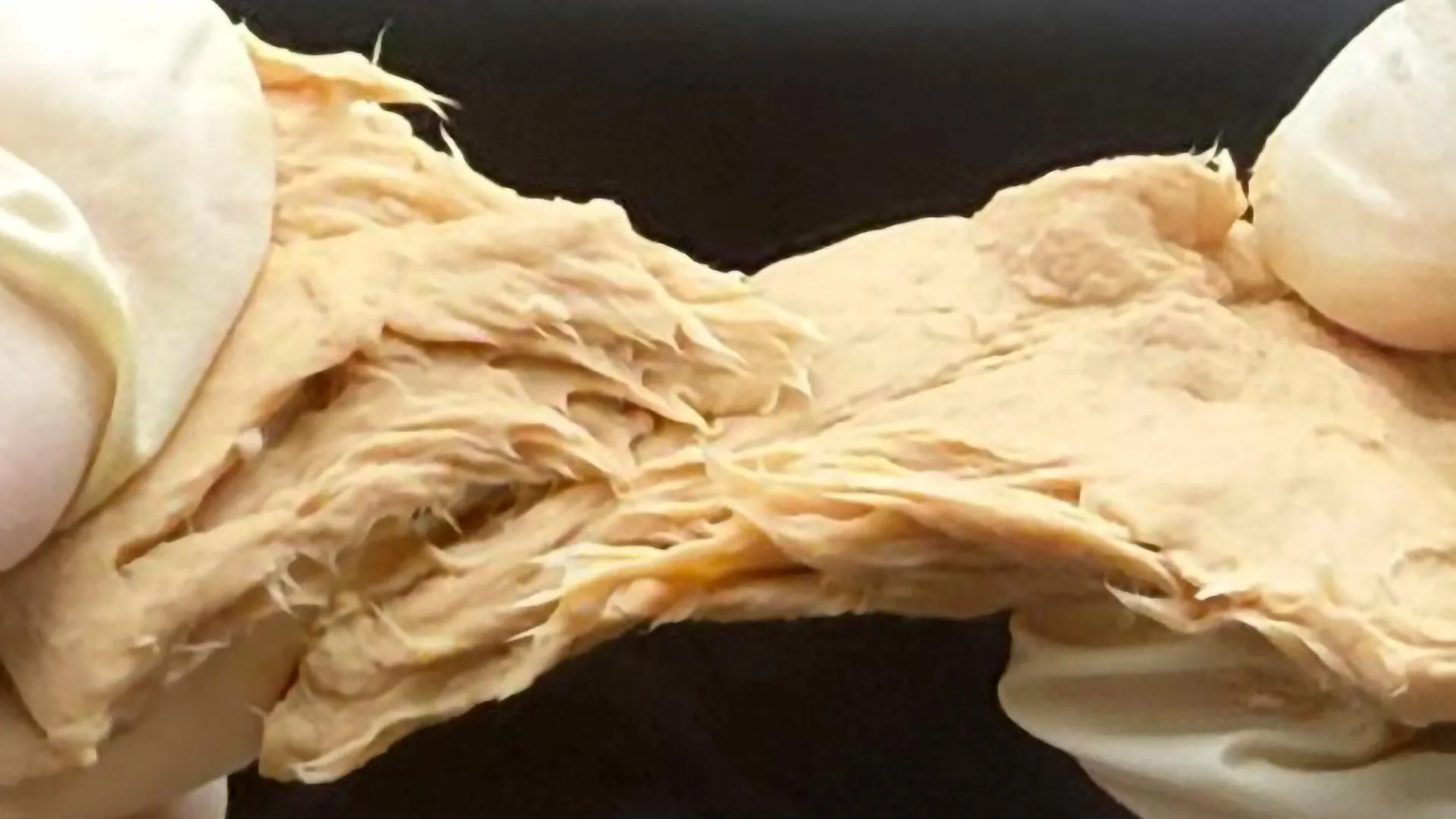
A recent study published November 19 in Trends in Biotechnology reports that scientists used the gene-editing tool CRISPR to improve how efficiently a fungus produces protein while also lowering the environmental footprint of that production by as much as 61% — all without introducing foreign DNA. The modified fungus has a meatlike flavor and is easier for people to digest than the natural strain it originated from.
“There is a popular demand for better and more sustainable protein for food,” says corresponding author Xiao Liu of Jiangnan University in Wuxi, China. “We successfully made a fungus not only more nutritious but also more environmentally friendly by tweaking its genes.”
Sustainable Protein and the Need for Alternatives
Animal agriculture accounts for about 14% of global greenhouse gas emissions. It also requires large amounts of land and fresh water, both of which are increasingly strained by climate change and human activity. Because of these challenges, microbial proteins found in yeast and fungi have gained attention as promising alternatives to meat.
Among the many mycoprotein sources studied so far, the fungus Fusarium venenatum has become a prominent choice because its natural flavor and texture closely mimic meat. It has already been approved for consumption in several regions, including the United Kingdom, China, and the United States.
Why Fusarium venenatum Needed Improvement
Even with its advantages, Fusarium venenatum has thick cell walls that limit how well humans can digest it. Producing it is also resource intensive. Growing even modest quantities of mycoprotein requires significant inputs, and the spores must be cultivated in large metal tanks filled with sugar-rich feedstock and added nutrients such as ammonium sulfate.
Liu and his colleagues wanted to determine whether CRISPR could make this fungus easier to digest and more efficient to grow while still avoiding the introduction of foreign DNA into the organism.
Key Gene Edits That Boost Efficiency
To explore this approach, the researchers removed two genes linked to the enzymes chitin synthase and pyruvate decarboxylase. Removing the chitin synthase gene resulted in a thinner cell wall, which made the internal protein more accessible for digestion. The deletion of the pyruvate decarboxylase gene fine-tuned the fungus’s metabolism, reducing the amount of nutrients needed for protein production.
Their analyses revealed that the modified strain, named FCPD, used 44% less sugar to create the same amount of protein as the original strain and did so 88% more quickly.
“A lot of people thought growing mycoprotein was more sustainable, but no one had really considered how to reduce the environmental impact of the entire production process, especially when compared to other alternative protein products” says first author, Xiaohui Wu of Jiangnan University.
Life Cycle Footprint and Global Comparisons
The team then assessed the environmental footprint of FCPD across its entire life cycle, from laboratory spores to inactivated meat-like products, at an industrial scale. They modeled production in six countries with different energy systems, including Finland, which depends largely on renewable energy, and China, which relies more heavily on coal. In every scenario, FCPD produced lower environmental impacts than conventional Fusarium venenatum. Across its full life cycle, FCPD production reduced greenhouse gas emissions by up to 60%.
How FCPD Compares to Animal Protein
The researchers also compared the impacts of FCPD production to those associated with raising animals for food. Against chicken production in China, FCPD required 70% less land and lowered the potential for freshwater pollution by 78%.
“Gene-edited foods like this can meet growing food demands without the environmental costs of conventional farming,” says Liu.
This work was supported by the Key Research and Development Program of China, the Jiangsu Basic Research Center for Synthetic Biology, the Natural Science Foundation of Jiangsu Province, and the Postgraduate Research & Practice Innovation Program of Jiangsu Province.

Move over, colonoscopies — researchers writing in ACS Sensors report that they have created tiny microspheres filled with bacteria that can sense the presence of blood, a key sign of gastrointestinal disease. These microspheres function like miniature “pills” that are swallowed and include magnetic particles so they can be easily collected from stool. After passing through mouse models with colitis, the sensors detected gastrointestinal bleeding within minutes. The team notes that the same bacterial system could eventually be engineered to identify other gut-related conditions.
“This technology provides a new paradigm for rapid and non-invasive detection of gastrointestinal diseases,” says Ying Zhou, a co-author of the study.
Why Easier, Noninvasive Gut Diagnostics Are Needed
In the U.S., millions of people live with colorectal cancer or inflammatory bowel disease, including colitis, which can lead to intestinal bleeding, diarrhea and abdominal pain. Colonoscopy remains the gold-standard diagnostic tool. It relies on an endoscope, a camera-tipped flexible device that is carefully guided through the large intestine. Although it provides valuable medical insight, many individuals hesitate to undergo the procedure because it requires extensive preparation and can feel invasive. To develop an alternative, Zhou, Bang-Ce Ye, Zhen-Ping Zou and colleagues are exploring the use of bacteria that detect biomarkers such as heme, a component of red blood cells that signals bleeding inside the gut.
Building Bacterial Sensors That Survive Digestion
The team previously designed bacteria that emit light when they encounter heme, but the early versions broke down during digestion and were difficult to retrieve afterward. In the new study, the researchers protected the bacteria by enclosing them, along with magnetic particles, inside small droplets of sodium alginate, a thickening ingredient commonly found in foods. This produced sturdy hydrogel microspheres that travel through the digestive tract and can be removed from stool with a magnet. Initial laboratory tests confirmed that the hydrogel shield allowed the bacteria to survive simulated digestive conditions while still letting heme reach the sensor and trigger a glow.
Testing the Microspheres in Mouse Models of Colitis
The researchers then gave the microspheres orally to mice with varying levels of colitis, ranging from no disease activity to severe inflammation. After the spheres moved through the gastrointestinal tract, the team retrieved them using a magnet and reported three key findings:
Future Potential for Human Testing and Disease Monitoring
Although the technology has not yet been evaluated in humans, the researchers suggest that encapsulated bacterial sensors could one day help diagnose gastrointestinal diseases, monitor treatment responses and track changes in disease over time.
The authors acknowledge funding from the National Natural Science Foundation of China, the National Key Research and Development Program of China, and the China Postdoctoral Science Foundation.
