Health24.com | Common infant vaccine may also shield kids from type 1 diabetes

Vaccinating against the common infant infection rotavirus not only cuts a child’s odds of getting sick, it might also prevent them from developing type 1 diabetes later in life, new research suggests.

Infants who got all of the recommended doses of the “stomach flu” virus vaccine had a 33% lower risk of developing type 1 diabetes compared with unvaccinated babies, according to a study led by Mary Rogers. She’s an epidemiologist at the University of Michigan, in Ann Arbor.

Takes large amounts of data

Type 1 diabetes involves the death of insulin-producing cells in the pancreas. People with the illness require daily insulin shots, and long-term effects on their health can be severe.

The new study relied on national insurance data on over 1.5 million kids born before or after the rotavirus vaccine was made available to babies in 2006.

Type 1 diabetes “is an uncommon condition, so it takes large amounts of data to see any trends across a population,” Rogers explained in a university news release.

While children who had all three doses of the vaccine seemed to be protected against type 1 diabetes, those who didn’t complete the regimen were not, the researchers noted. Rogers stressed that the study cannot prove that the vaccine prevents type 1 diabetes, only that there’s an association.

“It will take more time and analyses to confirm these findings,” she said. “But we do see a decline in type 1 diabetes in young children after the rotavirus vaccine was introduced.”

Importance of full vaccination

Getting the full, recommended dose of rotavirus vaccine was crucial, however. The US Centers for Disease Control and Prevention recommends that babies begin receiving the multidose vaccine by 15 weeks of age at the latest, and finish receiving it before eight months of age. The rotavirus vaccine is delivered via oral drops, not a needle.

An Australian study published earlier in 2019 found similar results, Rogers noted. And she estimated that if all US children were fully immunised against rotavirus, there might be eight fewer cases of type 1 diabetes per 100 000 children each year.

Right now, one in four infants don’t get all three of the recommended doses of the rotavirus vaccine, the Michigan team noted. That’s important, because being fully vaccinated reduces the chance of being hospitalised for rotavirus infection by 94%, the study authors said.

Rogers stressed that the research is still in its early stages.

“Five years from now, we will know much more,” she said. “The first groups of children to receive the rotavirus vaccine in the United States are now in grade school, when type 1 diabetes is most often detected. Hopefully, in years to come, we’ll have fewer new cases – but based on our study findings, that depends upon parents bringing in their children to get vaccinated.”

The report was published online in the journal Scientific Reports.

Image credit: iStock

Share Button

This Influencer Is Candidly Documenting Her Recovery From an Eating Disorder on Instagram

Influencer Ali Bonar says she’s putting the “Insta” back in Instagram. She makes an effort to talk to her followers about the things she’s going through in real time, rather than waiting until she’s come to terms with them. 

For the past two years, that’s meant talking about the stages of recovering from an eating disorder. 

Bonar, who’s 26, tells Health that “it started as a really innocent love of eating healthy food” and a “passion for being creative in the kitchen.” But then she left for college at University of California, Berkeley to study nutrition, and that innocent love turned into an obsession.

RELATED: This Influencer's "Before-and-After" Reveals the Problem With Butt Transformation Photos

“I think it was a combination of studying nutrition, starting college and being away from home, and just being a woman in today’s society,” she says. “It’s really freaking hard to love your body. It’s such an uphill battle.” 

Bonar recalls one night, after she got home from dinner with friends, she realized that she couldn’t remember a single thing they talked about because she was obsessing the entire time over whether her order was healthy enough. She drove herself crazy making sure everything she ate was perfectly clean. 

Another common topic of Bonar’s Instagram posts: “not feeling sick enough.” For awhile, she knew she had disordered eating habits, but she also knew she wasn’t anorexic or bulimic, which made her feel isolated. She didn’t know how to open up about what was going on because she didn’t fit the standard definition of an eating disorder patient. 

RELATED:  This Influencer Posed in Her Bra and Leggings to Prove That Social Media Doesn't Tell the Whole Story

Then Bonar found Molly Alliman, or @balancebymolly on Instagram. Alliman's message of helping women heal their relationship with food resonated with Bonar, who decided to reach out. 

“She really changed everything for me,” Bonar says. The two did therapy sessions for about six months, and Bonar eventually learned to see food as a source of enjoyment, not stress. Yet Bonar emphasizes that “recovery is up and down; it’s not a linear road.” She shares the good days and the bad, and in doing so she’s formed a community of followers. 

For those who reach out to her saying they’re going through something similar, Bonar says she always urges them to tell someone. “It’s the hardest thing, and I know people don’t want to hear it, but it can help so much.” 

To get more real-talk on health and wellness, sign up for our weekly WomenIRL newsletter

Share Button

Power and endurance training ‘key to all-round fitness’

Blend of strength and endurance training makes team sport players the fittest of all, a study finds.

Share Button

Health24.com | Lonely baby boomers driving surge in plastic surgery

Face-lifts and hair transplants. Chin implants and forehead lifts and lip augmentation…

Baby boomers hoping to retain their youth – and maybe get back into the dating scene – are seeking plastic surgery in ever-increasing numbers, according to the American Society of Plastic Surgeons.

Nearly 50 000 more cosmetic procedures were performed on Americans 55 and older in 2018 than the year before, new statistics showed.

“Older Americans are vibrant and living their lives to the fullest, and they want the way they look to reflect that,” said Dr Alan Matarasso, president of the society.

More than 4.2 million cosmetic procedures took place in 2018, including nearly 381 000 surgical procedures and 3.8 million minimally invasive ones.

Among the specific procedures and techniques:

  • Hair transplants went up 18%.
  • Lip augmentation increased 5%.
  • Liposuction and breast augmentation increased 4%.
  • Botox injections and fillers went up 3%.

Two-thirds of all face-lifts are performed on people 55 and older, along with roughly half of eyelid surgeries, forehead lifts and lip augmentations, the stats showed.

These numbers reflect what is happening in the practice of Dr Lyle Leipziger, a plastic surgeon in Great Neck, New York.

No longer taboo

“People are taking better care of themselves. They’re dieting. They’re exercising. They’re seeing their doctor for any medical indications,” said Leipziger, chief of plastic and reconstructive surgery at North Shore University Hospital in Manhasset, New York. “These same people are looking in the mirror and they really want to look as good on the outside as they feel on the inside. They want to look as young as they feel.”

On top of that, plastic surgery isn’t considered as taboo or vain among boomers as it was for previous generations, Matarasso said.

Societal changes are also at play. For example, the rise of social media and dating apps has caused boomers to take renewed interest in their appearance, Leipziger said.

“I have many patients that come to me that have either been divorced or have lost a spouse. They want to slowly get back into the dating scene, and they look in the mirror and feel that they haven’t done things to make themselves look better,” Leipziger said. “They’d like to enhance themselves just to feel better about going out into the dating scene once again.”

Changes in the economy and the US job market also are spurring interest among older Americans, Matarasso said.

“We are no longer staying in jobs for the rest of our lives. Whether we like it or not, first impressions are a big part of life,” he said. “If somebody is moving around, whether socially or economically, they may be more concerned with their appearance.”

Beware of risks

Finally, people might be considering plastic surgery because more choices are available, with advances that have improved both safety and results, Matarasso said.

“The world needs to realise that plastic surgery in the last decade or so has changed,” he said. “If we were having this conversation in the year 2000, we would only be talking about surgery. Now we have minimally invasive and even nonsurgical techniques available to us.”

However, traditional plastic surgery is still surgery, and patients should be aware of the risks if their health isn’t great.

“They key thing is that you don’t want confounding medical problems. You don’t want people who are unhealthy,” Matarasso said.

Complications of any plastic surgery can include infection, bruising, excess bleeding, difficulty with wound healing and anaesthesia problems, according to Stanford University Health.

Realistic expectations

Boomers considering plastic surgery should check first with their doctor to make sure they don’t have a health issue that could complicate either the procedure or their recovery, Leipziger said.

They also need to make sure that they follow all pre- and post-operative care recommendations, he added.

“The best patient for plastic surgery is a healthy patient with realistic expectations, for whom we’re able to perform a meticulous surgical procedure that includes conscientious pre- and post-op care,” Leipziger said.

Image credit: iStock

Share Button

Health24.com | Give up your phone for a few hours a day, it changed my damn life

Ever wanted to give up your phone? There’s much anxiety that comes with it. Here’s how it changed the life of this writer.

As a freelance writer, I’m on my phone a lot. I communicate with editors almost exclusively via email, accept last-minute assignments on-the-go, and chronicle my adventures on Instagram. Every morning, I wake up, roll over, and immediately scroll through my email before doing anything else. Being connected is a large part of what keeps my business afloat.

One day, as I was grabbing a coffee across the street from my apartment, I was standing in line when I started to feel panicked. My chest was tight, I was short of breath, and I had this unmistakable feeling of terror, even though I couldn’t really identify what I was scared of.

I was having a panic attack. And it was in part because I didn’t have my phone with me. It was a wakeup call. I knew I needed to stop letting my phone run my life.

Related: It’s International Panic Day – These Are 8 Simple Hacks Stress Experts Use to Calm Down When They’re Frazzled

It should come as no surprise that our phones stress us out. Multiple studies have shown that excessive smartphone use can lead people to experience brain changes that are linked to depression and anxiety. Although smartphone addiction is not classified as an official disorder in the latest edition of the DSM, internet addiction in general is listed as a disorder in need of further research, as well as an issue of “significant public health importance.”

But even though our phones make us miserable, we literally can’t handle being away from them. One study found that when people could hear their phones ringing but couldn’t answer them, their levels of the stress hormone cortisol spiked; another found that up to 90% of people feel “phantom vibrations,” and that we can go into “panic mode” when our phones are on low battery . There’s even a term for this: nomophobia, or the irrational fear of being without your smartphone.

What’s more, most people realise just how dependent they are on their phones. They just don’t want to do anything about it. In a 2017 study, 65% of Americans said they would benefit from a “digital detox,” or temporarily purging technology from their lives — but only 28% admitted to actually trying it themselves.

It’s a double-edged sword: constantly being on your phone is torture, but not being on your phone is worse.

Sick of waking up stressed out, anxiously awaiting an updated inbox, and going to bed with my device in hand scrolling through social media feeds, I decided to spend a month in relationship rehab with my phone.
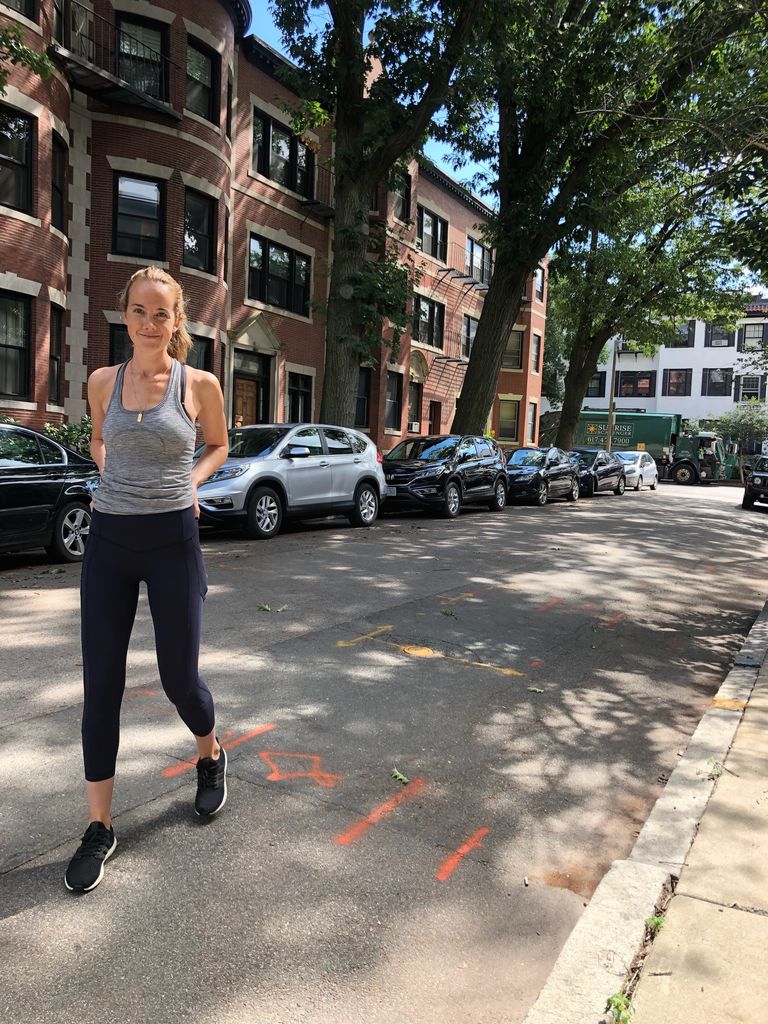
Your goal shouldn’t be to give up your phone entirely, (after all, I do really need it for my job). But I wanted to give myself some much-needed distance from my device.

Related: Here’s Something You Need To Know About Your Phone. And It’s Not Pretty

I knew I needed to start small. So for the first few days of the experiment, instead of waking up and immediately strolling through my emails, I didn’t look at my phone at all. Instead, I went for a walk outside — something I knew from my research as a health reporter helps you clear your mind and start your day off on the right foot. Then I’d go for a run or do an early a.m. workout class — no phone whatsoever (and trust me, as someone who used to Instagram a lot at the gym, this was no small feat).

Almost immediately, I noticed a difference. During that first week, as I walked down the streets, I realised I was looking around instead of down, and I saw some of what I’d been missing: morning sunshine, quiet city streets. I also realised how ridiculous other people looked when they were constantly on their phones, and how plugged in everyone else was. (The next time you find yourself on a subway car or walking down a city street, look around: almost everyone is looking down.)

After a while, everything felt a bit slower. I realised I could breathe. I could think.
The second week, I took things a bit further. I began leaving my phone behind during the day when I wasn’t working, during short walks around the block, trips to the grocery store, and coffee or lunch meetings. I even left it behind on runs.

Related: From An Unhealthy Addiction To Getting High On Running

This wasn’t easy. One day, I went to meet a friend for a run, and she was late. Unable to text her, I felt a little panicked standing there, just waiting by myself. I debated starting the run without her, or even asking a stranger for their phone to text her. But 15 minutes later, she showed up, and the anxiety went away immediately.

Over the course of a few weeks, I wasn’t as overwhelmed with the anxiety of not having my phone on me (it’s a process, people). I started to feel a little calmer and more relaxed. I realised that not constantly checking my email wasn’t going to make or break my career. If I missed a call, I could always just call the person back when I got home.

I also realised I didn’t have to document absolutely everything in my life on social media. Now, when I went somewhere, I was able to actually take in sights instead of trying to take the perfect Instagram photo.

I wouldn’t say that I officially broke up with my phone — it was more like we went to couples’ therapy. I obviously still use my phone to check my email, track my runs on Strava, and Instagram story occasionally. But I’m more aware of how my digital habits affect my mood and overall well-being.

Last week, I took my first real vacation in a year. I swam in the ocean, spent time with family, and worked out — totally unplugged. In the past, I would have been freaking out about how many emails I had in my inbox, or whether I had missed something important. But I knew the emails could wait. Everything else could wait. And for the first time in years, I truly was able to enjoy myself — phone-free.

So try to give up your phone, it could change your life.

Originally published on www.mh.co.za

Image credit: iStock

Share Button

More than 5 million cancer survivors experience chronic pain, twice the rate of the general population

More than 5 million cancer survivors in the United States experience chronic pain, almost twice the rate in the general population, according to a study published by Mount Sinai researchers in JAMA Oncology in June.

Researchers used the National Health Interview Survey, a large national representative dataset from the U.S. Centers for Disease Control and Prevention, to estimate the prevalence of chronic pain among cancer survivors. They found that about 35 percent of cancer survivors have chronic pain, representing 5.39 million patients in the United States.

“This study provided the first comprehensive estimate of chronic pain prevalence among cancer survivors,” said corresponding author Changchuan Jiang, MD, MPH, a medical resident at Mount Sinai St. Luke’s and Mount Sinai West. “These results highlight the important unmet needs of pain management in the large, and growing cancer survivorship community.”

Specific types of cancer — such as bone, kidney, throat, and uterine — also had a higher incidence of chronic and severe pain that restricted daily activity. Chronic pain was more prevalent in survivors who were unemployed and had inadequate insurance.

Chronic pain is one of the most common long-term effects of cancer treatment and has been linked with an impaired quality of life, lower adherence to treatment, and higher health care costs. This study is important because a better understanding of the epidemiology of pain in cancer survivors can help inform future health care educational priorities and policies.

Researchers from the American Cancer Society, Memorial Sloan Kettering Cancer Center, and the University of Virginia were part of the study team.

Story Source:

Materials provided by The Mount Sinai Hospital / Mount Sinai School of Medicine. Note: Content may be edited for style and length.

Share Button

Health24.com | How to pack more plant protein into your everyday diet

You don’t have to adopt a total vegetarian lifestyle to improve your health. You can get some of its advantages simply by replacing some of the animal proteins in your diet with plant-based ones.

This can be an especially important switch for people who have even one risk factor for heart disease, like smoking, excessive drinking, being overweight or being inactive.

Risk of early death

Researchers looked at 30 years of data from 131 000 participants in the landmark Nurses’ Health Study and compared the outcomes of eating different types of protein for a study published in JAMA Internal Medicine.

The investigators found that swapping just a small amount of animal-based protein – processed red meat in particular – with plant-based protein cut the risk of early death from all causes. And the greater the swap, the greater the benefits.

On the other hand, the researchers found that eating a diet high in animal protein was associated with a higher risk of death from heart disease.

Use beans

Nuts, legumes including beans and lentils, and even whole grains all contain some protein and can be quite filling. But rather than a radical shift in eating, which could be hard to maintain long-term, make small swaps on a consistent basis so that the changes will stick.

Some ideas: Use beans to replace some of the ground beef in recipes. Have oatmeal with chopped nuts instead of an egg- or sausage-based breakfast. Rather than piling on the cheese or bacon bits, top salads with lentils, and use hummus or mashed avocado on sandwiches.

Sample different kinds of nut butters instead of regular butter on whole grain bread. And when you want to have traditional protein, choose mostly poultry and fish, which were not linked to premature death in the study.

Image credit: iStock

NEXT ON HEALTH24X

Share Button

Dominican Republic Health Official Claims Cynthia Day Died from the ‘Shock’ of Seeing Fiancé Dead

An official with the Dominican Republic Ministry of Public Health is adamantly claiming that there were no mysterious circumstances around the deaths of the Maryland couple who were found dead in their hotel room last month.

On Wednesday, Ministry of Public Health spokesman Carlos Suero told Fox News that following Edward Nathaniel Holmes’ death on May 30, his fiancée Cynthia Ann Day died merely “from the shock of seeing the person beside her dead.”

Suero argued that the engaged pair, who reportedly had high blood pressure medication in the hotel room, exhibited “a lot of medical conditions” which increased their risk while traveling.

RELATED: California Man Reveals He Felt 'Sick Enough to Die' While on Dominican Republic Vacation

“They had a lot of medical conditions. There were many bottles of prescription medication in their room,” Suero told the outlet. “They practically carried around a pharmacy with them. They had pills for blood pressure, for the heart, they had anti-depressants. When you get on an airplane and travel with all that medical [baggage], this can happen.”

The island official also noted that Holmes, 63, raised concerns about not feeling well to the hotel staff just one day before he was found dead alongside his fiancée, 49.

After learning of the cost for medical attention, however, Holmes decided he would “just wait to get back to the U.S. the next day and go to his regular doctor,” Suero said.

RELATED: 47 Jimmy Buffett Fans Get Violently Sick On Group Trip to Dominican Republic

RELATED: Pa. Woman Who Died in Dominican All-Inclusive Had Heart Attack, Says Resort

He unfortunately never made it there, as Holmes and Day’s bodies were discovered in their hotel room on May 30, according to a statement released by the Grand Bahia Principe La Romana resort, where the couple had been staying since May 25.

The pair were found by hotel staff who went to check on them after they missed their scheduled check-out window that same day, according to the hotel’s statement. Their bodies showed no signs of violence, USA Today reports.

The Dominican Republic National Police later announced an autopsy found the couple died of respiratory failure and pulmonary edema. Day also reportedly suffered cerebral edema.

RELATED: Here Are the Symptoms of Salmonella–and Everything Else You Need to Know About the Cereal Recall

Earlier this month, Holmes and Day’s bodies were flown back to Temple Hills, MD, the couple’s family lawyer Steven Bullock confirmed to PEOPLE in a statement. As their families prepared funeral arrangements, Bullock said they also intend on having autopsies performed and reviewing the toxicology report when it is completed.

“The families of Cynthia Ann Day and Nathaniel Edward Holmes would like to thank the community for their condolences and support in their loss. We are continuing to investigate the exact cause of death,” Bullock said. “The families are determined to find out what happened and why.”

RELATED: A Student Died in His Sleep After Eating Leftover Pasta—Here’s How

In addition to addressing Holmes and Day’s deaths, Suero lashed out at news reports about the six other American tourists who have died on the island since last year.

“It’s all a hysteria against the Dominican Republic, to hurt our tourism, this is a very competitive industry and we get millions of tourists, we are a popular destination,” Ministry of Public Health spokesman Carlos Suero told Fox News on Wednesday. “People are taking aim at us.”

Suero told the outlet the people died of natural causes.

“The testing results are all negative, everything — the food, the alcohol, the air — is normal, there is no alteration of the alcohol,” he told Fox News. “With all the tourists we get every year, we make sure we comply with international standards for everything.”

The U.S. State Department has not publicly released any details about the investigation and did not immediately confirm or dispute Suero’s assertions about the test results.

According to the U.S. State Department, at least eight American tourists have died since the summer of 2018 after falling ill in the country — and dozens more have gotten sick.

The FBI and CDC are investigating the deaths of at least six of the deaths. Some of them died in what appeared to be bizarre — and similar — circumstances. The agencies involved are not yet releasing further details about the investigations.

Aside from Holmes and Day, the FBI has agents on the island nation to investigate two other cases: Miranda Schaup-Werner, 41, who collapsed on May 25 shortly after mixing a drink from the minibar in the Luxury Bahia Principe Bouganville in La Romana, and Pennsylvania native Yvette Monique Sport, 51, who collapsed in 2018 at the Bahia Príncipe resort in Punta Cana.

Additionally, authorities are investigating the deaths of two Americans at the Hard Rock Hotel & Casino in Punta Cana. David Harrison, 45, died in July 2018. Robert Bell Wallace, 67, died last April.

RELATED: What Is Botulism? The Facts on the Rare Illness That's Put 5 People in the Hospital in California

As the investigations continue, Suero is slamming the media reports as “fake news” and claimed that these deaths could have happened anywhere.

“People die all over the world,” Suero told Fox News. “Unfortunately, very unfortunately for us, these tourists have died here. We had about 14 deaths last year here of U.S. tourists, and no one said a word. Now everyone is making a big deal of these.”

“They were a special case as far as U.S. tourists,” he added. “They were a special medical case.”

To get our top stories delivered to your inbox, sign up for the Healthy Living newsletter

Share Button

Secrets to Sitting on an Airplane For Your Most Comfortable Flight Ever

No matter the duration of your next flight, one thing is for sure: We all want to be comfy and content while we’re stuck on an airplane. Love it or hate it, airplane travel is a necessity when it comes to both work and pleasure, and putting air travel tips to work is key to helping you make every moment as comfortable as possible. So your bags are checked, you’ve triple-checked what can be carried on an airplane, your boarding pass is scanned, and you have your travel-ready neck pillow in tow—now it’s time to study up on the right air travel tips.

Whether you’re jetting off for a bit of spring break recreation or heading somewhere for work, we have a few air travel tips to make your next flight is the most comfortable travel ride yet. Up, up, and away!

RELATED: A Passenger Charged an Obese Man $150 for Taking Up Extra Space on Their Flight—and the Internet Is Furious

Embrace your inner yogi

A plane isn’t the ideal place to unwind and relax, but there are certain things you can do while sitting to make your flight a little more tolerable.

Rachel Grice, a registered yoga teacher and a contributing editor at LiveStrong says, “The healthiest way to sit on a plane is actually to avoid sitting—or at least sitting still—for as much of the flight as you can. When you are sitting, though, you want to have good posture just like you would sitting anywhere else.”

“Just like sitting at a desk, you want to take breaks to get up and move and stretch,” she says. “Walk up and down the aisle or stretch in the aisle. You don’t have to have a full-on yoga session, but a quad stretch, arms stretch, and some side bends are good options.”

RELATED: A Mom and Her Toddler Were Kicked Off a Flight Because of This Insanely Rare Skin Condition

Dress casually and comfortably

Speaking of yoga, one wouldn’t work out in jeans. So why would you sport uncomfortable clothing on a flight? Try loose clothing such as casual joggers, a cozy pullover, slip-on shoes, and t-shirts for a wardrobe that’s well-suited to a plane ride.

Pack travel accessories

When it comes to air travel accessories, the sky is the limit. Investing in a few key plane accessories such as an eye mask, a neck-supporting travel pillow, and a travel blanket can make all the difference on board.

RELATED: Attention Passengers (and Airlines): There's a Reason Moms Breastfeed During Take Off and Landing

When in doubt, move about

In case turbulence hits and you just can’t leave your seat, Grice has a few passenger seat mobility tips:

  1. Neck circles: chin down, slowly roll your head from one shoulder to the other
  2. Wrist circles: rotate your hands to move your wrists clockwise, and then counterclockwise
  3. Shoulder circles: roll your shoulders back a few times and forward a few times
  4. Arm across chest stretch (just don’t hit your seatmates!)
  5. Knee to chest stretch
  6. Hip stretch: cross your left foot on top of your right knee and press your left knee down slightly, and then switch sides
  7. Ankle circles: rotate your feet to move your ankles clockwise, and then counterclockwise

Still feeling a little tense? Grice has one last, fail-proof plan for relaxing while in the air: “Another thing you can do while in your seat focuses on flexing and relaxing individual muscle groups—calves, quads, glutes, biceps, lats, etc. Hold each for three to five seconds, and then release. Repeat a few times, working from your feet to your head.”

Here’s to your most comfortable flight yet.

To get our top stories delivered to your inbox, sign up for the Healthy Living newsletter

This article originally appeared on RealSimple.com

Share Button

Acupuncture Gone Wrong: This Woman’s Lung Collapsed During a Routine Treatment

A recent case report details the story of everyone’s worst post-acupuncture nightmare: a collapsed lung. It featured the story of a 79-year-old woman who, two days after having an acupuncture treatment, went to her general practitioner because of sharp pain in her right shoulder that she’d felt ever since the treatment.

Her doctor ordered chest radiography, and it was revealed that the woman had a collapsed lung. She was taken to the hospital where she had a chest tube inserted to expand her lung and relieve her pain. On her second day in the hospital, the chest tube was removed, and the patient was discharged on her third day.

Health spoke with an expert to find out how patients can minimize their risks of suffering complications from acupuncture.

Juhi Singh, licensed acupuncturist and founder of the Juhi Center in New York City, recommends asking friends who have seen an acupuncturist if there is anyone they really like. “Ask friends who have gone.” she says.

RELATED: Acupuncture Is the Natural Anxiety Remedy You Might Want to Try

It also can’t hurt to quiz the practitioner before you let them do any treatments. “Call up and speak to the practitioner and ask questions. You want to make sure the person is well-versed,” Singh recommends. If you feel like they don’t know what they’re talking about when you ask them about their treatments, consider reevaluating whether or not you should see them. “Trust your instinct. If someone isn’t able to answer your questions—that’s a [bad] sign,” Singh says.

While we’re talking about your instincts, note that you shouldn’t follow through with any treatments you aren’t 110% comfortable with—even if it means leaving after you decided to be treated by a particular acupuncturist. Changing your mind is fine. “If you feel uncomfortable at any point, leave. You’re trusting this person [with your health],” Singh explains.

If you’re uncomfortable asking your acupuncturist how treatment works or asking them to clarify any details, that probably means you should think about finding a different treatment provider. Singh explains, “If you feel embarrassed, it’s probably not the right fit.”

RELATED: The Acupuncture Benefits You Should Know About Before Your First Session

Not everyone has a variety of acupuncturists at their fingertips, so we asked Singh what to do if the pickings are slim where you live. If you live in a rural area with few options, ask a local university for a recommendation And if you’re considering acupuncture but don’t know where to start, consult the nearest medical school for a name or two, she suggests.

The new case report, published in BMJ Case Reports, calls on the medical community to keep the risks associated with acupuncture in mind. “Both acupuncturists and clinicians need to be aware of the possibility of adverse events following acupuncture, especially in those who develop symptoms,” the report says. It notes that having a collapsed lung, technically called pneumothorax, is the “most common serious complication” associated with acupuncture.

RELATED: How Acupuncture Works From the Perspective of Western Medicine

Share Button