BMA Scotland says ministers went back on a pay agreement but Health Secretary Neil Gray says it is a “fair, affordable, equitable pay offer”.


BMA Scotland says ministers went back on a pay agreement but Health Secretary Neil Gray says it is a “fair, affordable, equitable pay offer”.

A new study in the journal Cell from the Chinese Academy of Sciences and Xuanwu Hospital Capital Medical University explains how exercise helps the body stay youthful. The researchers also highlight betaine — a metabolite produced in the kidney — as an oral compound that can imitate many of the rejuvenating effects normally linked to physical activity.
Betaine is a small molecule found in foods like beets and spinach, but the body also makes it on its own. In this study, it emerged as an important signal that helps coordinate the anti-aging benefits of long-term exercise.
How the Body Responds to Exercise
The research team followed 13 healthy men over six years to observe how the body reacts to both short-term and long-term exercise. Using multiomics tools that track genes, proteins, metabolites, and gut bacteria, the scientists compared the body at rest, after a single 5 km run, and after a 25-day running program.
Their results showed that the kidney plays a central role in managing the body’s response to exercise. During sustained training, the kidney produced large increases in betaine, which helped send protective, anti-aging signals throughout the body.
Solving the Exercise Paradox
The study also helps explain the “exercise paradox,” where a single intense workout causes stress but long-term training improves overall health. A short run triggered temporary inflammation and “metabolic chaos,” while regular training restored balance and strengthened the immune system.
Consistent exercise improved gut bacteria, boosted antioxidant defenses, and reversed age-related changes in T cells by stabilizing DNA and adjusting epigenetic marks such as reducing ETS1 expression. The kidney also increased its production of betaine through activity of the enzyme CHDH. Remarkably, giving betaine alone created many of the same benefits as training, including better metabolism, improved cognitive function, reduced depressive-like behavior in older mice, and lower inflammation across the body.
How Betaine Reduces Inflammation
The researchers found that betaine binds to and blocks TBK1, a kinase that drives inflammation. By suppressing TBK1 and its downstream IRF3/NF-κB pathways, betaine helps silence chronic inflammation, also known as “inflammaging.”
This mechanism ties together the exercise paradox: short-term activity triggers survival pathways (IL-6/corticosterone), while long-term training activates the kidney-betaine-TBK1 system that promotes youthfulness. Because betaine is considered safe and effective, it may be useful for people who cannot exercise regularly. “This redefines ‘exercise as medicine’,” says co-corresponding author Dr. Liu Guang-Hui. “This study gives us a fresh way to turn how our body works into something we can target with chemicals. It opens the door to geroprotective treatments that can tweak how multiple organs work together.”

When ultra-runners prepare for races that span hundreds of miles and last for days, they are not only challenging their determination and physical power. They are also exploring how far human physiology can be pushed. In a study published October 20 in the Cell Press journal Current Biology, researchers reported that even elite endurance athletes cannot consistently exceed an average “metabolic ceiling” equal to 2.5 times their basal metabolic rate (BMR) in daily energy use.
The metabolic ceiling refers to the upper limit of calories a person can burn in a sustained way. Earlier studies suggested that people might reach up to 10 times their BMR, which is the minimum amount of energy needed while resting, but only for short, intense periods.
“Every living thing has a metabolic ceiling, but exactly what that number is, and what constrains it, is the question,” says lead author and anthropologist Andrew Best of the Massachusetts College of Liberal Arts, who is also an endurance athlete.
“To find out, we asked, if we get a group of really competitive ultra-athletes, can they break this proposed metabolic ceiling?”
Tracking Energy Burn in Extreme Athletes
To explore that question, the research team monitored 14 ultra-runners, cyclists, and triathletes during both races and training blocks. Participants consumed water enriched with deuterium and oxygen-18, which are slightly heavier forms of hydrogen and oxygen. By following how quickly these isotopes left the body through urine, the scientists were able to determine how much carbon dioxide the athletes exhaled and, in turn, estimate total calorie expenditure.
In multi-day endurance events, several athletes temporarily reached energy burn levels six to seven times their BMR, which translated to roughly 7,000 to 8,000 calories per day. However, when the researchers averaged the athletes’ caloric output across much longer intervals (30 and 52 weeks), their energy use consistently fell back near the expected ceiling of about 2.4 times their BMR. According to the researchers, this pattern demonstrates that even the most highly trained athletes eventually hit a metabolic limit, and sustaining anything above that boundary is extremely difficult.
“If you go over the ceiling for short periods, that’s fine. You can make up for it later,” says Best. “But long term, it’s unsustainable because your body will start to break down its tissue, and you’ll shrink.”
How the Body Reallocates Energy Under Stress
The study also highlighted how the human body balances competing energy demands during extreme endurance efforts. As athletes directed more energy toward running, swimming, and cycling, they naturally reduced energy use in other areas without realizing it.
“Your brain has a really powerful influence on how much you fidget, how much you want to move, and how encouraged you are to take a nap,” says Best. “All these fatigues we feel save calories.”
The researchers noted that their findings reflect the physiology of the athletes who took part in the study. It is possible that unusually high-performing individuals who could exceed the identified ceiling were not included. While the results are important for understanding athletic performance, they also raise broader questions about how this metabolic cap might affect other biological processes.
A Limit Most People Will Never Reach
“For most of us, we’re never going to reach this metabolic ceiling,” says Best. “It takes running about 11 miles on average a day for a year to achieve 2.5 times BMR. Most people, including me, would get injured before any sort of energetic limit comes into play.”
This work was supported by funding from Duke University and a Massachusetts College of Liberal Arts Faculty Incentive Award.
Two mothers who experienced pelvic girdle pain say being aware of the risk will help people seek treatment.
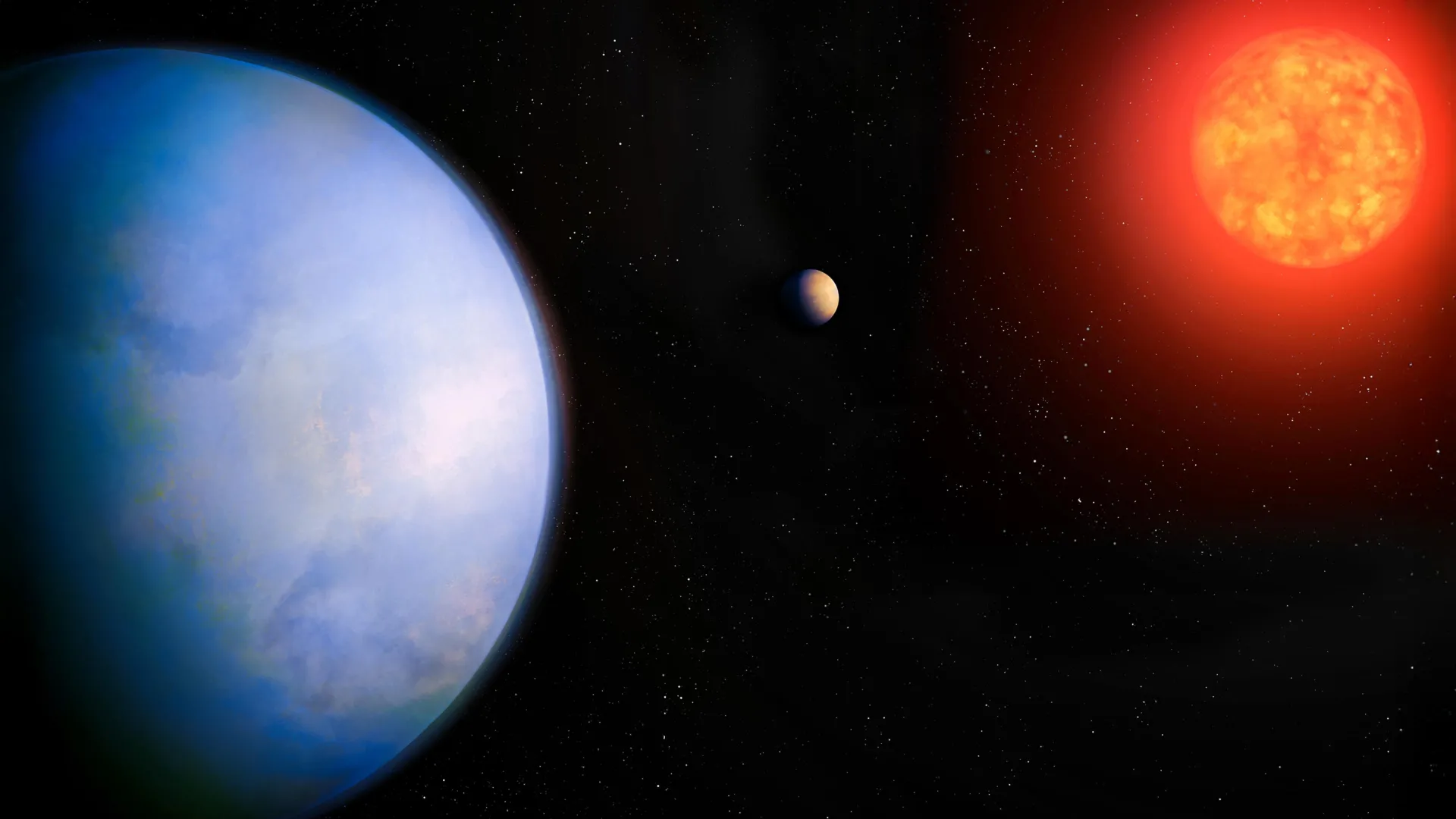
A possible “super-Earth” located less than 20 light-years from Earth is giving researchers renewed optimism in the search for planets that might host life. The newly identified world, GJ 251 c, earned its “super-Earth” label because current data indicate it is almost four times the mass of Earth and is likely a rocky planet.
“We look for these types of planets because they are our best chance at finding life elsewhere,” said Suvrath Mahadevan, the Verne M. Willaman Professor of Astronomy at Penn State and co-author of a recent paper in The Astronomical Journal. “The exoplanet is in the habitable or the ‘Goldilocks Zone,’ the right distance from its star that liquid water could exist on its surface, if it has the right atmosphere.”
Two Decades of Observations Lead to Breakthrough
For many years, astronomers searching for planets capable of hosting liquid water have developed ever more advanced telescopes and modeling tools to detect extremely faint variations in starlight. According to Mahadevan, this new result arose from more than 20 years of observations and represents one of the strongest opportunities yet to investigate a potentially habitable world.
The exoplanet was identified using data from the Habitable-Zone Planet Finder (HPF), a high-precision near-infrared spectrograph that functions as a sophisticated prism to separate starlight into its components. The HPF is installed on the Hobby-Eberly Telescope at the McDonald Observatory in Texas, and Penn State researchers led its design and construction to support the search for Earth-like planets orbiting nearby stars.
“We call it the Habitable Zone Planet Finder, because we are looking for worlds that are at the right distance from their star that liquid water could exist on their surface. This has been the central goal of that survey,” Mahadevan said. “This discovery represents one of the best candidates in the search for atmospheric signature of life elsewhere in the next five to ten years.”
Detecting a Subtle Stellar Wobble
Mahadevan and his team studied a large set of measurements collected worldwide over two decades. Their analysis focused on the small but measurable “wobble” of the host star, GJ 251, caused by gravitational pulls from orbiting planets. These motions appear as slight Doppler shifts in the star’s light.
They first refined measurements of a previously known inner planet, GJ 251 b, which completes an orbit every 14 days. By combining the long-term observations with new high-precision HPF data, the researchers detected a stronger signal repeating every 54 days, pointing to the presence of a more massive second planet. Additional confirmation came from the NEID spectrometer, another instrument built by Penn State researchers and operating at the Kitt Peak National Observatory in Arizona.
“We are at the cutting edge of technology and analysis methods with this system,” said Corey Beard, corresponding author of the paper, who carried out the research while earning his doctorate in astrophysics at the University of California, Irvine. “We need the next generation of telescopes to directly image this candidate, but what we also need is community investment.”
Overcoming Stellar Activity to Reveal Planetary Signals
One of the major difficulties in exoplanet detection is separating a planet’s signal from the star’s own magnetic activity, which Mahadevan compared to a form of stellar weather. Starspots and other surface features can mimic the periodic variations produced by orbiting planets, creating the illusion of a planetary presence. To distinguish between the two, the team used advanced modeling techniques that examine how signals behave across different colors of light.
“This is a hard game in terms of trying to beat down stellar activity as well as measuring its subtle signals, teasing out slight signals from what is essentially this frothing, magnetospheric cauldron of a star surface,” Mahadevan said.
He noted that detecting planets like GJ 251 c depends not only on sophisticated equipment but also on complex analysis and international teamwork. Such projects require long-term funding and coordination because meaningful discoveries can take decades to emerge.
Collaboration and Advanced Tools Enable Discovery
“This discovery is a great example of the power of multi-disciplinary research at Penn State,” said Eric Ford, distinguished professor of astronomy and astrophysics and director of research for Penn State’s Institute of Computational & Data Sciences (ICDS). “Mitigating stellar activity noise required not just cutting-edge instrumentation and telescope access, but also customizing the data science methods for the specific needs of this star and combination of instruments. The combination of exquisite data and state-of-the art statistical methods enabled our interdisciplinary team to transform data into an exciting discovery that paves the way for future observatories to search for evidence of life beyond our solar system.”
Although current technology cannot produce direct images of GJ 251 c, Mahadevan said that upcoming telescopes will be capable of examining the planet’s atmosphere, potentially revealing chemical traces of life.
Preparing for Next-Generation Telescopes
“We are always focused on the future,” he said. “Whether that’s making sure the next generation of students can engage in cutting-edge research or designing and building new technology to detect potentially habitable planets.”
GJ 251 c is situated in a position that future advanced telescopes will be able to study directly. Mahadevan and his students are already preparing for the era of 30-meter-class ground based telescopes, which will carry instruments capable of imaging rocky planets within their stars’ habitable zones.
“While we can’t yet confirm the presence of an atmosphere or life on GJ 251 c, the planet represents a promising target for future exploration,” Mahadevan said. “We made an exciting discovery, but there’s still much more to learn about this planet.”
The U.S. National Science Foundation, NASA and the Heising-Simons Foundation supported the Penn State aspects of this research.

Anxiety disorders affect roughly one in five people in the United States, making them among the most widespread mental health challenges. Although common, scientists still have many questions about how anxiety begins and is controlled within the brain. New research from the University of Utah has now pinpointed two unexpected groups of brain cells in mice that behave like “accelerators” and “brakes” for anxious behavior.
The team discovered that the cells responsible for adjusting anxiety levels are not neurons, which typically relay long-distance electrical signals and form circuits throughout the body. Instead, a specific class of immune cells known as microglia appears to play a central role in determining whether mice show anxious behavior. One subset of microglia increases anxiety responses, while another reduces them.
“This is a paradigm shift,” says Donn Van Deren, PhD, a postdoctoral research fellow at the University of Pennsylvania who carried out the work while at University of Utah Health. “It shows that when the brain’s immune system has a defect and is not healthy, it can result in very specific neuropsychiatric disorders.”
The findings are reported in Molecular Psychiatry.
Microglia Show a More Complex Role Than Expected
Earlier experiments had already suggested that microglia influence anxiety, but researchers initially believed that all microglia functioned in the same way. When they interfered with a particular subset known as Hoxb8 microglia, the mice began behaving as though they were anxious. However, when researchers blocked the activity of all microglia at once, including both Hoxb8 and non-Hoxb8 groups, the mice behaved normally.
These confusing results led the team to suspect that the two types of microglia might work in opposite directions. Hoxb8 microglia might help prevent anxiety, while non-Hoxb8 microglia might encourage it. To test this idea, they needed to examine each type of microglia on its own.
Testing the Brain’s Internal Anxiety Accelerator and Brake
To isolate each group, the researchers designed an unusual experiment that involved transplanting different types of microglia into mice that lacked microglia entirely.
Their tests showed that non-Hoxb8 microglia function like a gas pedal for anxiety. When the team transplanted only non-Hoxb8 microglia into the microglia-free mice, the animals displayed strong signs of anxiety. They groomed themselves repeatedly and avoided open spaces, behaviors that typically indicate heightened anxiety in mice. Without Hoxb8 microglia present, the anxiety “accelerator” remained active without any natural balancing force.
In contrast, Hoxb8 microglia acted like the braking system. Mice given only Hoxb8 microglia did not behave anxiously. Importantly, mice that received both microglial types also showed no signs of anxiety. Even though non-Hoxb8 cells encouraged anxious behavior, the presence of Hoxb8 cells neutralized those effects.
“These two populations of microglia have opposite roles,” says Mario Capecchi, PhD, distinguished professor of human genetics at University of Utah Health and senior author of the study. “Together, they set just the right levels of anxiety in response to what is happening in the mouse’s environment.”
Implications for Future Anxiety Treatments
According to the researchers, these results could reshape how scientists think about the biological roots of anxiety disorders and how they might be treated in the future. “Humans also have two populations of microglia that function similarly,” Capecchi explains. Despite this, nearly all current psychiatric medications target neurons rather than microglia.
Understanding how these immune cells influence anxiety could lead to therapies that intentionally enhance the braking effect or reduce the accelerator activity. “This knowledge will provide the means for patients who have lost their ability to control their levels of anxiety to regain it,” Capecchi says.
Van Deren adds a note of caution. “We’re far from the therapeutic side,” he says, “but in the future, one could probably target very specific immune cell populations in the brain and correct them through pharmacological or immunotherapeutic approaches. This would be a major shift in how to treat neuropsychiatric disorders.”
The study appears in Molecular Psychiatry under the title “Defective Hoxb8 microglia are causative for both chronic anxiety and pathological overgrooming in mice.”
The research was supported by the National Institutes of Health, including the National Institute of Mental Health (R01 MH093595), the Dauten Family Foundation, and the University of Utah Flow Cytometry Facility. The authors note that the content is solely their responsibility and does not necessarily represent the official views of the National Institutes of Health.
At the end of September, the backlog stood at 7.39 million in England.

A commonly used, low-cost medication for gout may help lower the chances of heart attacks and strokes in people with cardiovascular disease, according to a new Cochrane review.
Researchers evaluated the impact of taking small doses of colchicine, a standard gout treatment, and reported no rise in serious side effects.
Cardiovascular disease is often linked to long-term, low-level inflammation that increases the likelihood of repeat events such as heart attacks and strokes. Because colchicine reduces inflammation, it has emerged as a potentially useful option for people living with heart disease.
A promising effect on cardiovascular risk
The review assessed 12 randomized controlled trials that followed nearly 23,000 individuals with a history of heart disease, heart attack or stroke. Participants took colchicine for at least six months, usually at doses of 0.5 mg once or twice daily. About 80% of those enrolled were male (~80%), and their average age ranged from 57 to 74 years. Half received colchicine, while the rest were given either a placebo or no added medication on top of their typical care.
People taking low-dose colchicine experienced fewer heart attacks and strokes overall. For every 1,000 individuals treated, 9 heart attacks and 8 strokes were avoided compared with those who did not receive the drug. No serious adverse events were seen, although mild and short-lived stomach or digestive discomfort was more common among colchicine users.
“Among 200 people with cardiovascular disease — where we would normally expect around seven heart attacks and four strokes — using low-dose colchicine could prevent about two of each,” says Dr. Ramin Ebrahimi, co-lead author from the University Medicine Greifswald, Germany. “Reductions like this can make a real difference for patients who live with ongoing, lifelong cardiovascular risk.”
A new use for a long-established medicine
Since cardiovascular diseases remain the leading cause of death worldwide, colchicine offers a potentially affordable and widely available strategy for preventing additional heart problems in high-risk patients.
“These results come from publicly funded trials repurposing a very old, low-cost drug for an entirely new use,” says Lars Hemkens, senior author from the University of Bern, Switzerland. “It shows the power of academic research to reveal treatment opportunities that traditional drug development often overlooks.”
Questions still remain about whether colchicine influences overall mortality or reduces the need for procedures such as coronary revascularization. The trials also did not determine whether the drug improves quality of life or shortens hospital stays. The authors emphasize that more research is required to address these gaps.
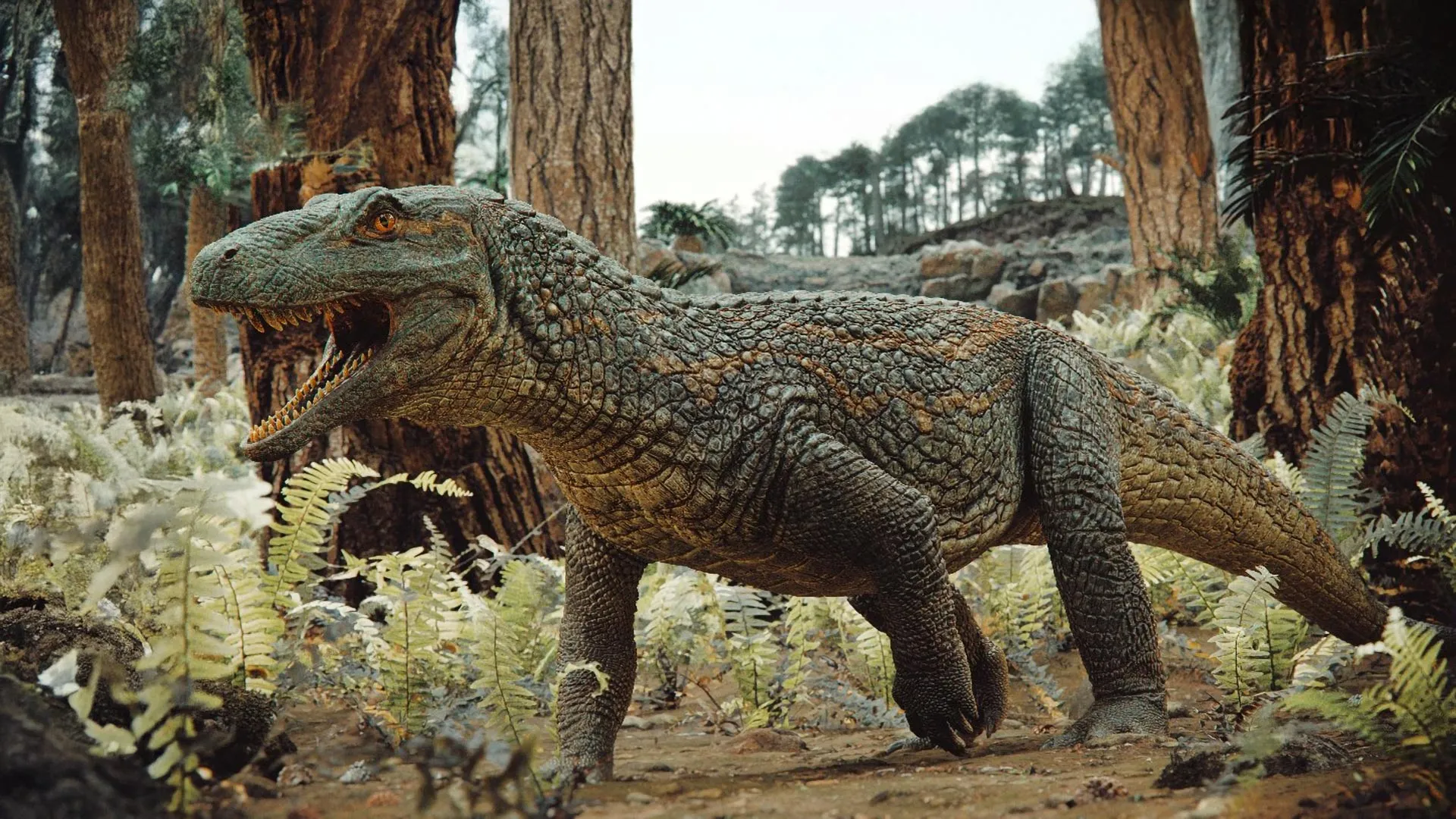
A newly identified carnivorous reptile may look like a dinosaur at first glance, but researchers have confirmed that it was actually an early relative of modern crocodiles.
The species is named Tainrakuasuchus bellator, a title partly inspired by the Latin word for “warrior” or “fighter.” This armored animal lived 240 million years ago, during a time just before dinosaurs appeared.
As a member of the Pseudosuchia (the precursors of modern crocodiles and alligators), it belonged to a dominant group of predators that thrived in the Triassic Period.
Size, Hunting Skills, and Early Ecosystem Role
Details of the discovery appear in the peer-reviewed Journal of Systematic Palaeontology. According to the study, the creature measured about 2.4m in length and weighed around 60kg.
Its long neck and agile body allowed it to strike quickly at prey. Once it closed in, it used slender jaws filled with sharp, recurved teeth to secure its target and prevent escape.
“This animal was an active predator, but despite its relatively large size, it was far from the largest hunter of its time with the same ecosystem home to giants as big as seven meters long,” explains lead author Dr. Rodrigo Temp Müller, who led the paleontology team at the Universidade Federal de Santa Maria in Brazil.
“Pseudosuchia were a diverse group of animals capable of tackling robust prey, as well as small hunters specialized in catching swift animals.
“Although its appearance superficially resembles that of a dinosaur, Tainrakuasuchus bellator does not belong to that group. One of the clearest ways for us to distinguish it from dinosaurs lies in the structure of the pelvis where the characteristics of its hip and femur joints are very different.”
A Glimpse Into Pre-Dinosaur Biodiversity
Dr. Müller notes: “Tainrakuasuchus bellator‘s discovery represents the complexity of the ecosystem at the time, with different pseudosuchia species — varying in sizes and hunting strategies — occupying specific ecological niches.
“Its discovery helps illuminate a key moment in the history of life, the period that preceded the rise of the dinosaurs.”
The fossils were uncovered during a May 2025 excavation in the municipality of Dona Francisca in southern Brazil. The team found a partial skeleton encased in rock that included portions of the lower jaw, vertebrae, and pelvic girdle.
Analysis of the bones revealed details about the animal’s behavior and confirmed that Tainrakuasuchus bellator was protected by bony plates called osteoderms, which are also found in today’s crocodiles.
Although its limbs were not preserved, the researchers believe it moved on all fours, similar to related species.
Meaning Behind the Name
The name ‘Tainrakuasuchus’ blends the Guarani words tain (“tooth”) and rakua (“pointed”) with the Greek suchus (“crocodile”), referring to its sharp teeth.
The second part, ‘bellator,’ comes from the Latin word for “warrior” or “fighter” and, according to the authors, “honors the people of Rio Grande do Sul, symbolizing their strength, resilience, and fighting spirit, especially in light of the recent floods that have affected the state.”
Rare Fossil With Links Across Ancient Pangaea
Dr. Müller describes the find as “extremely rare” and says it provides more evidence of the ancient connection between Brazil and Africa during the Triassic Period — when the world’s landmasses were joined into the supercontinent Pangaea.
“Despite the diversity of pseudosuchians, they remain poorly understood, as fossils of some their lineages are extremely rare in the fossil record,” Dr. Müller says.
“The fossils we found underwent a meticulous preparation process in the laboratory, during which the surrounding rock was carefully removed.
“Once the anatomical details were revealed, we were delighted and really excited to reveal that the specimen represented a species previously unknown to science.
“What we uncovered was a species that belongs to a predator closely related to one (Mandasuchus tanyauchen) found in Tanzania.
“This connection between animals from South America and Africa can be understood in light of the Triassic Period’s paleogeography.
“At that time, the continents were still united, which allowed the free dispersal of organisms across regions that are now separated by oceans. As a result, the faunas of Brazil and Africa shared several common elements, reflecting an intertwined evolutionary and ecological history.
“Tainrakuasuchus bellator would have lived in a region bordering a vast, arid desert — the same setting as where the first dinosaurs emerged.
“It shows that, in what is now southern Brazil, reptiles had already formed diverse communities adapted to various survival strategies. Moreover, this discovery reveals that such diversity was not an isolated phenomenon.”
They show cells that control blood sugar are more vulnerable in early childhood.
