It’s not acceptable to be displaying old guidance and putting consumers at risk, critics say.


It’s not acceptable to be displaying old guidance and putting consumers at risk, critics say.

Being an Instagram influencer isn’t always a good thing.
New research found that vulnerable young people who see online posts of self-harm – like cutting – may copy those destructive behaviours.
Almost one-third of teens and young adults who reported seeing self-harm posts on Instagram said they had performed the same or similar self-harming behaviour afterwards.
Seeing these images online “normalises” the behaviour, according study senior author Dan Romer. He’s research director of the Annenberg Public Policy Center at the University of Pennsylvania.
“Vulnerable kids think, ‘Well, maybe that’s something I should consider doing,'” he said.
Romer noted that this problem goes beyond just Instagram. “Kids who don’t have mental health problems wouldn’t repeatedly self-harm. It’s vulnerable kids trying to relieve their distress,” he explained. But he added that this study indicates that these types of social media posts can be harmful to teens and young adults.
The researchers initially became concerned about the potential effects of self-harm posts after a British father said his 14-year-old daughter had looked at explicit self-harming images on Instagram before killing herself. The social media site has since said that graphic depictions of self-harm aren’t allowed in posts.
Self-harm typically refers to cutting, but can include other behaviours such as burning, hitting or head-banging. Self-harm isn’t usually suicidal, but people who engage in self-harm are at increased risk for suicide, the researchers said. Posts depicting self-harm on Instagram commonly show mild or moderate injuries. But some posts included bleeding flesh wounds from cutting an extremity.
Instagram has more than 500 million daily active users and more than 1 billion monthly users, according to the researchers. The social media site is very popular with young people.
Accidental exposure
The study included more than 700 teens and young adults (ages 18 to 29). Eighty percent of the study volunteers were women. They were interviewed twice, a month apart. The interviews occurred in May and June 2018, before Instagram said it would try to reduce graphic self-harm posts.
Almost half – 43% – said they had seen at least one self-harm post on Instagram. Many reported seeing more than one such post. Most – 80% – of those who reported seeing these posts said their exposure to them was accidental.
Almost two out of the three people surveyed said that the self-harm posts were emotionally disturbing.
Six out of 10 who saw these posts said they thought about how it might feel to do something like that. And 33% of those exposed to the self-harm posts said at the first interview that they had done the same or similar harm to themselves as a result of seeing the post.
During the second interview a month later, people who said they’d seen a self-harm post during the first interview were more likely to have self-harmed than people who hadn’t seen such a post.
Romer noted that the study cannot prove that seeing the posts directly led people to self-harm.
But, he said, “Kids who see these posts and are vulnerable probably aren’t going to get a good message.”
Communication with parents crucial
Romer said parents need to be concerned if they notice behaviours linked to depression in their kids, such as being online all the time, isolating themselves and sadness. These are kids that might be more susceptible to things they see online.
Since it’s nearly impossible to completely ban access to social media, Romer said open communication with parents is even more crucial for today’s young people.
Dr Alan Geller, a psychiatrist at NewYork-Presbyterian’s Gracie Square Hospital in New York City, agreed that communication is key.
“Adolescents have to understand your limits and expectations,” said Geller, who wasn’t involved in the study. “It’s like limit-setting for anything – alcohol or cigarettes or, now, marijuana. Children and teens have access to these risks and parents have a responsibility to set limits and clearly communicate those limits.”
And, he said, parents need to routinely check in with their teens about these challenges. Geller suggested doing so at least once a week.
Like Romer, Geller said that parents need to be on the lookout for signs, including repeated self-harm, that a teen or young adult is depressed or suicidal. If parents or other loved ones have concerns, teens and young adults should see a psychologist or psychiatrist for help.
The study was published online in New Media and Society.
Image credit: iStock
NEXT ON HEALTH24X


In yet another sign that electronic cigarettes are far from harmless, a new lab study suggests that vaping damages the cells that line the inside walls of blood vessels and could hasten heart trouble.
Lab-grown endothelial cells were more likely to die off or suffer from impaired function when exposed to e-cigarette vapour, the researchers reported.
A critical role in heart health
If this same effect occurs in the human body, then e-cigarette users potentially could be at increased long-term risk of heart disease and stroke, said senior researcher Dr Joseph Wu. He is director of the Stanford Cardiovascular Institute, in California.
“If you’re a chronic e-cigarette [user], you’re probably going to be prone to more vascular disease in the future,” Wu said. “It doesn’t have the carcinogens associated with smoking, but don’t use e-cigarettes with the assumption that if I switch to e-cigarettes it will be good for my cardiovascular health.”
Endothelial cells lining the interior surface of blood vessels play a critical role in heart health, the researchers explained.
These cells need to be flexible to help manage blood pressure, and if damaged they could attract more cholesterol plaques that contribute to narrowing of the arteries, and stroke, Wu said.
For the study, Wu and his colleagues grew endothelial cells from blood samples drawn from five smokers, five non-smokers, two e-cigarette users and two people who use both e-cigarettes and tobacco cigarettes.
These endothelial cells then were exposed to six types of vapour from different e-liquids purchased online by the researchers.
Not perfectly safe
Following exposure, the cells were more likely to die early and showed increased levels of DNA damage, the study authors said.
The cells also were less able to help form new blood vessels or participate in wound healing, the findings showed.
“The big picture is that, contrary to what people think, e-cigarettes are not perfectly safe,” Wu said.
Exposure to cinnamon and menthol e-liquids proved particularly damaging to cells, the researchers reported. Caramel and vanilla flavours also disrupted the cells, but not as severely.
The findings were published online in the Journal of the American College of Cardiology.
Dr Rose Marie Robertson is deputy chief medical officer of the American Heart Association. She said, “The remarkable thing was there were very strong effects, both in terms of the specific mechanisms they looked at and that the effects were not very different between cells from e-cigarette smokers and cigarette smokers.”
Wu said that the researchers suspect that different components of e-cigarette vapour might harm blood vessel cells in different ways.
Serious detrimental effects on cells
The vapour includes nicotine, flavourings and solvents, and all might contribute in different ways to cell death, oxidative stress on cells and inflammation, the study authors suggested.
Part of the problem is that e-cigarettes are using flavourings that have been approved by the US Food and Drug Administration for ingestion, but not necessarily for inhalation, Robertson noted.
“Gradually, the evidence is accruing that shows these compounds have serious detrimental effects on cells,” Robertson said.
Use of e-cigarettes has skyrocketed since their introduction a decade ago.
The FDA estimates that more than 3.5 million middle and high school students used e-cigarettes in 2018, even though sales to minors are prohibited. One in five high school students has tried e-cigarettes.
There’s a lot of concern that these teens will wind up using e-cigarettes long-term, and that the damage done to their blood vessels will worsen over time, Wu and Robertson said.
“It’s important for e-cigarette users to realise that these chemicals are circulating within their bodies and affecting their vascular health,” Wu said.
Image credit: iStock


Extremely tiny bits of plastic: They’re in your food and drink, and even in the air around you.
Now, new research calculates that the average American consumes more than 70 000 particles of these “microplastics” every year – and even that’s likely an underestimation, the scientists noted.
Microplastics ubiquitous
Your microplastic intake might be even higher if you choose products that have more plastics involved in their processing or packaging – including bottled water, the research team said.
Just how harmful is all this plastic in your body? That’s still unclear, said one expert unconnected to the new study.
“It’s certainly concerning,” said Dr Kenneth Spaeth, chief of occupational and environmental medicine at Northwell Health in Great Neck, New York. “I think the best we can say is perhaps there’s minimal harm here, but I think there is a possibility the harm could be extensive.”
Other recent studies have shed light on the ubiquity of microplastics in people’s bodies.
For example, one report out of Austria found that the average human stool sample contained at least 20 bits of microplastic. In another study, microplastic was found in 90% of samples of common table salt.
However, it’s tough to accurately calculate the amount of plastic people consume, noted the lead author of the new study, Kieran Cox. That’s because the 26 studies used in the evidence review involved food sources that only reflect about 15% of people’s daily diet, he noted. Cox is a Ph.D. candidate with the University of Victoria in British Columbia, Canada.
Incredibly tiny particles
The researchers added that a person’s microplastics consumption rises based on personal food choices they make. For example, a person who only drinks bottled water could be ingesting an additional 90 000 microplastics annually, compared with just 4 000 microplastics for someone who only drinks tap water.
That shows how “simple choices may drastically alter your exposure to plastics”, Cox said.
Microplastic particles are incredibly tiny, less than 130 microns in diameter. For comparison, a human hair has a diameter of about 50 microns.
In the new study, Cox and his colleagues analysed more than two dozen studies that estimated the average microplastic content of different types of foods.
They then estimated what an average person’s microplastic intake would be if they ate the recommended daily amount of these foods.
The studies included in the review focused on such commonly consumed items as seafood, sugar, salt, honey, alcohol and bottled water, Cox said. A whole host of other common foods, including chicken, deli meats, vegetables and dairy products, have not been analysed for their microplastic content.
Effect on health unclear
“We don’t have a huge part of the puzzle,” Cox said. “We have a small portion of it. We know these are underestimates.”
Based on these studies, the researchers estimated that annual microplastic consumption ranges between 39 000 to 52 000 particles, depending on age and sex.
If microplastic particles inhaled via breathing contaminated air are included in the estimate, the annual load increases to between 74 000 and 121 000, the team said.
The numbers would likely be higher for people who eat foods and drink liquids that are processed using plastics or packaged in plastics, Cox added.
For example, studies show that tap water exposes people to between 3 000 and 6 000 microplastic particles each year, but bottled water exposes them to between 64 000 and 127 000 particles annually if that’s their only water source.
That’s because bottled water is exposed to plastic in a number of different ways, both during processing and as it sits in its plastic bottle waiting for someone to take a swig, Cox said.
Harmful chemicals
There’s no clear handle yet on how these plastic particles could affect human health, Cox and Spaeth said.
“The extent to which it is posing a health risk is uncertain at this point,” Spaeth said. “There’s very little data in the way of human studies that look at health effects in any way.”
There’s a chance that harmful chemicals in the plastic might leach out of the particles as they pass through the body, Spaeth said.
Some particles also might lodge in the body following inhalation or ingestion, causing immune system responses and cellular damage, the researchers added.
“Once in the lung, depending on the size of the particle, it could conceivably pass into the circulation and go anywhere in the body,” Spaeth said. “This study points out there’s an accumulation of these particles at pretty high numbers.”
The findings were published in the journal Environmental Science and Technology.
Image credit: iStock


Hundreds of years ago, the first people who turned simple grain into alcohol were not distillers, and there wasn’t actually a whisky industry.
Brian Cox reveals how a few farmers, who simply had surplus of barley after the harvest, turned the basic ingredient into their water of life.
He also shows how the alcohol has shaped Scotland’s hard-drinking reputation and how troubled a past the beverage had, along with how the country’s history was tangled up in it.
A simple grain was transformed by human labour and has subsequently become a hugely profitable, global commodity. See how the creation and trade of this product has transformed society, our bodies and our minds.
It has become an increasingly guilty pleasure, which many still indulge in to this day. The question is, however, how did we become so hooked in this pursuit of pleasure?
Image credit: BBC
NEXT ON HEALTH24X


Americans are making shifts in the supplements they take – fewer multivitamins and vitamins C and E, more fish oil and vitamin D. Many think of supplements as magic bullets, but studies don’t always support their supposed benefits.
Some research is positive. Vitamin D is important for good health and very hard to get naturally from foods or, if you live in northern latitudes, from the sun. So you might need a supplement to meet daily needs.
But first ask your doctor for a blood test to check your level and, if it’s low, whether it’s safe for you to sit in the sun twice a week for 15 minutes to allow your body to make vitamin D naturally.
Talk to your healthcare provider
Significant studies show that it’s better to get certain nutrients directly from food. For instance, while foods high in omega-3 fatty acids, from walnuts to oily fish, have been linked to reduced risk of heart disease, the omega-3s in fish oil capsules may not deliver the same benefits.
A 2018 study conducted by the US Department of Agriculture found that many supplements – from vitamins A and D to the minerals selenium and chromium – contain higher amounts of the nutrient than stated on the label.
That’s a concern because some good-for-you supplements can be harmful at high doses – even calcium, which is highly touted for bone health.
If you can’t get enough calcium through diet, and bone density testing shows that you need to supplement, ask your doctor about safe limits.
In fact, whether you’re thinking about an herbal supplement or a proven vitamin or mineral, talk to your health care provider first. Some may interact with medications you take or could pose a risk if you have an illness or are scheduled for surgery.
Image credit: iStock
NEXT ON HEALTH24X


Many diets are all about what you can’t eat in the name of weight loss (I’m looking at you, keto diet). But while they may work in the short-term, deprivation doesn’t necessarily lead to sustainable weight-loss results.
The macro diet is different. Instead of telling you what you can’t eat, it encourages you to count nutrients in order to help you make smart food choices for a more flexible approach to dieting. Nothing is considered off-limits, per se — you’re just looking to stock up on good foods so you get the nutrients you need.
Of course, it’s a little more complicated than that. Here’s what you need to know.
Okay, what exactly is the macro diet?
Macros, a.k.a. macronutrients, are the nutrients your body can’t live without: carbohydrates, protein, and fat. Each macro plays its own role — and each has its own weight-loss superpowers.
Macro #1: Carbs
Repeat after me: Carbs are not the enemy — even if you’re trying to lose weight. “Carbohydrates are the most important energy source for almost all human cells,” explains registered dietitian Mascha Davis, a spokesperson for the Academy of Nutrition and Dietetics.
Your body digests them quickly and turns them into sugar, or blood glucose, which you then store in your liver and muscles as glycogen. Together, blood glucose and glycogen fuel high-intensity exercise — the kind you need to burn fat and build metabolism-boosting muscle.
Carbs are also tied to your levels of the happy-maker neurotransmitter called serotonin (and, as a result, your mood).
Macro #2: Protein
You know that protein intake is used to build and maintain your body’s lean muscle, but it does a whole lot more than that. “Protein makes up the enzymes that power chemical reactions in the body,” Davis says. “It also makes the hemoglobin that transports oxygen through the body.” And if oxygen doesn’t get where it needs to go, you can forget about having the energy to take the stairs, let alone power through an hour-long run.
Plus, when it comes to boosting your satiety levels so that you can feel full on fewer calories, protein kills. (When you eat protein, your gut makes hormones that slow down the movement of food through your G.I. tract, meaning that you stay fuller, longer.) By slowing digestion, protein also slows the release of glucose into your bloodstream to prevent the blood sugar and insulin spikes that can create health issues, explains Dr Alexandra Sowa, a New York City-based internal medicine physician and a diplomate of the American Board of Obesity Medicine.
Macro #3: Fat
If the keto diet has taught us anything, it’s that fat does not make you fat — even if fat does contain more calories, gram per gram, than the other macros.
Here’s the thing: Fat makes up cell membranes, promotes nerve and brain health, and increases the absorption of the fat-soluble vitamins A, D, E, and K, all of which are crucial to healthy weight-loss efforts. And while fat doesn’t trigger the exact same satiety-boosting hormones that protein does, it is relatively slow to digest, further stabilising blood sugar levels and keeping cravings away.
READ MORE: The Best Way To Calculate Your Keto Diet Macros
Okay, so how exactly do you count those macros?
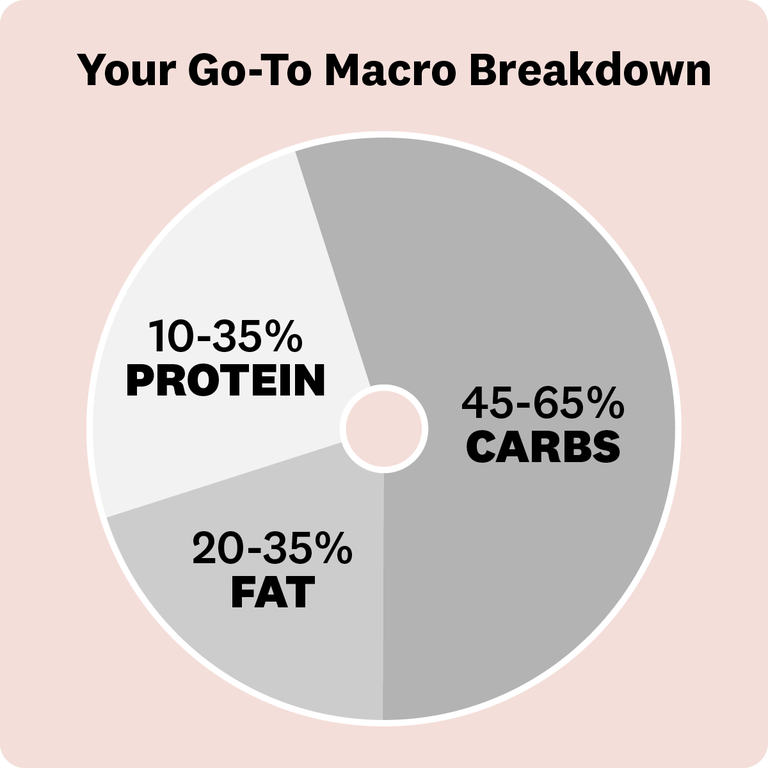
Everyone’s macro goals can vary slightly, but the National Academies of Sciences, Engineering, and Medicine says adults should try to get 45 to 65 percent of their calories from carbs, 10 to 35 percent of them from protein, and 20 to 35 percent of them from fat. This is a pretty good guideline to follow.
Btw, this is how many calories are in each gram of the three primary macronutrients (you’ll need this information later on):
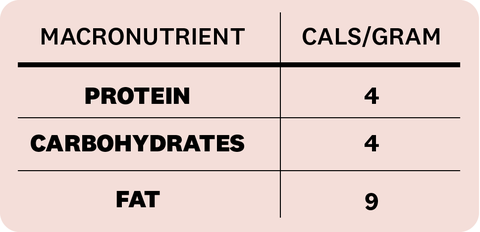
Because percentages are hard, there’s a specific formula you can follow to determine how many grams of carbs, fat, and protein you should get on a diet, according to how many calories you’re taking in. (FYI: A 1,600-calorie diet is a reasonable ballpark for active women trying to lose weight, Sonya Angelone, a registered dietician and spokeswoman for the Academy of Nutrition and Dietetics, though those calorie goals may not be accurate for everyone.)
What are the benefits of the macro diet?
Most importantly, it provides a clear roadmap to keep your nutrition on point, says Angelone. “Most people need structure to guide their eating habits,” she says. “Otherwise, people tend to eat what they want when they want it.” If you have trouble with listening to internal cues, like when you feel full, this can be helpful, she says.
The diet also forces you to pay more attention to what you’re putting in your mouth. “Just paying more attention to what you eat will have an impact on food intake and will usually result in better choices and fewer calories,” Angelone says.
Are there any downsides to counting macros to lose weight?
As you’ve probably already guessed, this diet involves a good amount of planning and math. “It’s a bit cumbersome to count macros unless you eat the same thing every day,” Angelone says. “But, then your diet becomes monotonous and probably not nutritionally adequate.” Still, she says, it gets easier to follow the diet once you get the hang of it.
Another possible issue: Some people may find themselves getting a little too focused on their daily macro counts — which could possibly lead to a form of disordered eating. Your macro goals should act as guidelines, but you shouldn’t feel obligated to hit them every single day.
Okay, I’m interested. How do I start counting macros?
The macro diet can seem a little overwhelming, but you can start pretty simply. Angelone recommends kicking things off by keeping a food diary to get an idea of what you eat on a regular basis. Track and calculate your macros (per the instructions above) and look at your food choices to see what changes you need to make based on those numbers.
“Be sure to choose less processed foods, choose whole grains and high-fibre foods, and healthy fats, limit refined sugar, and drink plenty of water,” Angelone says. “And be sure to incorporate regular exercise and more activity into your day.” After that, you should be good to go.
The bottom line: Counting macros can be a good weight-loss move for those who don’t do well with food restrictions on other diets like keto.
This article was originally published on www.womenshealthsa.co.za
Image credit: iStock
NEXT ON HEALTH24X

Researchers from Tokyo Metropolitan University have successfully found two distinct mechanisms by which foams can collapse, yielding insight into the prevention/acceleration of foam rupture in industrial materials e.g. foods, cosmetics, insulation, stored chemicals. When a bubble breaks, they found that a collapse event propagates via impact with the receding film and tiny scattered droplets breaking other bubbles. Identifying which mechanism is dominant in different foams may help tailor them to specific applications.
Foams play a key role in a wide range of industrial products, from foods, beverages, pharmaceuticals, cleaning products and cosmetics to material applications such as building insulation, aircraft interiors and flame-retardant barriers. They might also be an unwanted property of a product of e.g. frothing in stored chemicals during transit. From a scientific perspective, they also constitute a unique form of matter, a fine balance between the complex network of forces acting on the liquid film network that makes up its structure and the pressure of the gas trapped inside: understanding how foams behave may yield new physical insights as well as better ways to use them.
Naoya Yanagisawa and Associate Professor Rei Kurita set out to observe how foams collapse. They took a solution of water, glycerol and a common surfactant (a film-stabilizing agent) and created a two-dimensional foam squashed between two pieces of glass. Using an ultra-fast camera and a needle, they were able to controllably break a bubble at the edge of the foam raft and observe “collective bubble collapse” (CBC). They identified two distinct ways in which the breakage of one bubble at the edge led to a cascade of breakage events around it, a “propagating” mode due to the film of the broken bubble being absorbed into surrounding liquid film, and a “penetrating” mode due to droplets being released from the rupture event flying away and breaking other bubbles.
As the investigators changed the amount of water in the film, they identified several key trends in how the bubbles reacted at a microscopic level. For example, they found that more liquid in the foam led to the release of slower droplets, unable to penetrate surrounding films. This was correlated with a drastic drop in the number of bubbles collapsed; CBCs were thus crucially underpinned by the “penetrating” mode of collapse. Droplet speed was determined by the speed at which the film receded; this “streaming velocity” was found to be proportional to the osmotic pressure of the film i.e. the pressure at which a liquid brought into contact with the foam is driven into the film network. The team showed that the Navier-Stokes equations, key relations describing how fluids behave over time, could be used to explain these trends.
A key finding was that changing the viscosity of the fluid did not lead to a significant change in the number of bubbles broken. Methods to stabilize foams commonly rely on changing the viscosity, yet the team’s findings clearly show how both the number of bubbles collapsed and the velocity of the receding film are unaffected. Coupled with the dominant role played by the “penetrating” mode, future strategies to prevent foam collapse may instead focus on e.g. combining multiple surfactants to make the film more resistant to droplet impact.
Story Source:
Materials provided by Tokyo Metropolitan University. Note: Content may be edited for style and length.
Several US companies are already involved in small ways in the health service.
Increasing severity of sleep-disordered breathing and sleep disruption are associated with epigenetic age acceleration, according to preliminary results of a new study.
Results show that each standard deviation increase in the apnea-hypopnea index, a measure of sleep-disordered breathing severity, was associated with the equivalent of 215 days of biological age acceleration. Similarly, each standard deviation increase in the arousal index, a measure of sleep disruption, was associated with the equivalent of 321 days of age acceleration.
“People’s biological age might not be the same as their chronological age,” said lead author Xiaoyu Li, Sc.D., a postdoctoral research fellow in the Division of Sleep and Circadian Disorders in the Department of Medicine at Brigham and Women’s Hospital and the Department of Social and Behavioral Sciences at the Harvard T.H. Chan School of Public Health in Boston, Massachusetts. “Individuals whose biological age is higher than their chronological age exhibit age acceleration or fast aging. In our study, we found that more severe sleep-disordered breathing is associated with epigenetic age acceleration. Our data provide biological evidence supporting adverse physiological and health effects of untreated sleep-disordered breathing.”
Sleep-disordered breathing, such as obstructive sleep apnea, is characterized by abnormalities of respiration during sleep. Episodes often result in reductions in blood oxygen saturation and are usually terminated by brief arousals from sleep. Nearly 30 million adults in the U.S. have obstructive sleep apnea. Common warning signs include snoring and excessive daytime sleepiness.
According to the authors, epigenetic age acceleration is a DNA methylation-based marker of fast biological aging, and it is associated with modifiable lifestyle factors. Although sleep-disordered breathing is associated with multiple age-related health disorders, its relationship with epigenetic aging has not been well studied.
The study involved 622 adults with a mean age of 69 years; 53.2% were women. Participants were measured for blood DNA methylation, and their sleep was evaluated at home by polysomnography. Age acceleration measures were calculated as residuals from the regression of each epigenetic age on chronological age. The association of each sleep-disordered breathing trait with age acceleration was estimated using linear regression, controlling for socio-demographics, health behaviors, body mass index, and study site.
Another surprising finding was that the associations were stronger in women than in men, suggesting that women may be particularly vulnerable to the adverse effects of sleep-disordered breathing.
“While women are often considered to be at lower risk for health outcomes related to sleep-disordered breathing, our findings suggest increased biological susceptibility,” said Li.
The authors suggested that future work should study whether treatment reduces epigenetic age acceleration among people who have sleep-disordered breathing.
“Since sleep-disordered breathing is not only common and treatable, but often undiagnosed and under-treated, our data highlight the potential for sleep-disordered breathing treatment to improve age-related chronic conditions and longevity,” said Li. “Because epigenetic changes are reversible, epigenetic age estimators may be useful for identifying and validating anti-aging interventions.”
The research abstract was published recently in an online supplement of the journal Sleep and will be presented Wednesday, June 12, in San Antonio at SLEEP 2019, the 33rd annual meeting of the Associated Professional Sleep Societies LLC (APSS), which is a joint venture of the American Academy of Sleep Medicine and the Sleep Research Society.
The study was supported by funding from the National Heart, Lung, and Blood Institute of the National Institutes of Health.
