Nanoscale sculpturing leads to unusual packing of nanocubes

From the ancient pyramids to modern buildings, various three-dimensional (3-D) structures have been formed by packing shaped objects together. At the macroscale, the shape of objects is fixed and thus dictates how they can be arranged. For example, bricks attached by mortar retain their elongated rectangular shape. But at the nanoscale, the shape of objects can be modified to some extent when they are coated with organic molecules, such as polymers, surfactants (surface-active agents), and DNA. These molecules essentially create a “soft” shell around otherwise “hard,” or rigid, nano-objects. When the nano-objects pack together, their original shape may not be entirely preserved because the shell is flexible — a kind of nanoscale sculpturing.

Now, a team of scientists from the U.S. Department of Energy’s (DOE) Brookhaven National Laboratory and Columbia Engineering has shown that cube-shaped nanoparticles, or nanocubes, coated with single-stranded DNA chains assemble into an unusual “zigzag” arrangement that has never been observed before at the nanoscale or macroscale. Their discovery is reported in the May 17 online issue of Sciences Advances.

“Nanoscale objects almost always have some kind of shell because we intentionally attach polymers to them during synthesis to prevent aggregation,” explained co-author Oleg Gang, leader of the Soft and Bio Nanomaterials Group at the Center for Functional Nanomaterials (CFN) — a DOE Office of Science User Facility at Brookhaven Lab — and professor of chemical engineering and applied physics and materials science at Columbia University. “In this study, we explored how changing the softness and thickness of DNA shells (i.e., the length of the DNA chains) affects the packing of gold nanocubes.”

Gang and the other team members — Fang Lu and Kevin Yager of CFN; Yugang Zhang of the National Synchrotron Light Source II (NSLS-II), another DOE Office of Science User Facility at Brookhaven; and Sanat Kumar, Thi Vo, and Alex Frenkel of Columbia’s Department of Chemical Engineering — discovered that nanocubes surrounded by thin DNA shells pack in a similar way to that expected on the macroscale, with the cubes arranged in neat layers oriented directly above one another. But this simple cubic arrangement gives way to a very unusual type of packing when the thickness of the shells is increased (i.e., when the shell becomes “softer”).

“Each nanocube has six faces where it can connect to other cubes,” explained Gang. “Cubes that have complementary DNA are attracted to one another, but cubes that have the same DNA repel each another. When the DNA shell becomes sufficiently soft (thick), the cubes arrange into what looks like a zigzag pattern, which maximizes attraction and minimizes repulsion while remaining packed as tightly as possible.

“This kind of packing has never been seen before, and it breaks the orientational symmetry of cubes relative to the vectors (directions of the x, y, and z axes in the crystal) of the unit cell,” said first author Fang Lu, a scientist in Gang’s group. “Unlike all previously observed packings of cubes, the angle between cubes and these three axes is not the same: two angles are different from the other one.”

A unit cell is the smallest repeating part of a crystal lattice, which is an array of points in 3-D space where the nanoparticles are positioned. Shaped nanoparticles can be oriented differently relative to each other within the unit cell, such as the by their faces, edges, or corners. The zigzag packing that the scientists observed in this study is a kind of nanoscale compromise in which neither relative orientation “wins.” Instead, the cubes find the best arrangement to co-exist in an ordered lattice based on whether they have the same or complementary DNA (i.e., repelling or attracting each other accordingly).

In this case, two different lattice types can occur: body-centered cubic (BCC) and body-centered tetragonal (BCT). Both BCC and BCT have similar placements of particles in the center and corners of the cubes, but BCC has unit cell sides of equal length while BCT does not.

To visualize the shape of the cubes and their packing behavior, the scientists used a combination of electron microscopy at the CFN and small-angle x-ray scattering (SAXS) at the former X9 beamline of NSLS and the Complex Materials Scattering beamline of NSLS-II. The electron microscopy studies require that the materials are taken out of solution, but SAXS can be conducted in situ to provide more detailed and precise structural information. In this study, the scattering data were helpful in revealing the symmetries, distances between particles, and orientations of particles in the 3-D nanocube structures. Theoretical calculations performed by the Kumar Group at Columbia confirmed that the zigzag arrangement is possible and rationalized why this kind of packing was happening based on the properties of the DNA shells.

The team is now eager to determine whether soft-shelled nano-objects that are not cubes or have more than one shape also pack together in unexpected ways.

“An understanding of the interplay between shaped nano-objects and soft shells will enable us to direct the organization of objects into particular structures with desired optical, mechanical, and other properties,” said Kumar.

Share Button

Machine learning speeds modeling of experiments aimed at capturing fusion energy on Earth

Machine learning (ML), a form of artificial intelligence that recognizes faces, understands language and navigates self-driving cars, can help bring to Earth the clean fusion energy that lights the sun and stars. Researchers at the U.S. Department of Energy’s (DOE) Princeton Plasma Physics Laboratory (PPPL) are using ML to create a model for rapid control of plasma — the state of matter composed of free electrons and atomic nuclei, or ions — that fuels fusion reactions.

The sun and most stars are giant balls of plasma that undergo constant fusion reactions. Here on Earth, scientists must heat and control the plasma to cause the particles to fuse and release their energy. PPPL research shows that ML can facilitate such control.

Neural Networks

Researchers led by PPPL physicist Dan Boyer have trained neural networks — the core of ML software — on data produced in the first operational campaign of the National Spherical Torus Experiment-Upgrade (NSTX-U), the flagship fusion facility, or tokamak, at PPPL. The trained model accurately reproduces predictions of the behavior of the energetic particles produced by powerful neutral beam injection (NBI) that is used to fuel NSTX-U plasmas and heat them to million-degree, fusion-relevant temperatures.

These predictions are normally generated by a complex computer code called NUBEAM, which incorporates information about the impact of the beam on the plasma. Such complex calculations must be made hundreds of times per second to analyze the behavior of the plasma during an experiment. But each calculation can take several minutes to run, making the results available to physicists only after an experiment that typically lasts a few seconds is completed.

The new ML software reduces the time needed to accurately predict the behavior of energetic particles to under 150 microseconds — enabling the calculations to be done online during the experiment.

Initial application of the model demonstrated a technique for estimating characteristics of the plasma behavior not directly measured. This technique combines ML predictions with the limited measurements of plasma conditions available in real-time. The combined results will help the real-time plasma control system make more informed decisions about how to adjust beam injection to optimize performance and maintain stability of the plasma — a critical quality for fusion reactions.

Rapid evaluations

The rapid evaluations will also help operators make better-informed adjustments between experiments that are executed every 15-20 minutes during operations. “Accelerated modeling capabilities could show operators how to adjust NBI settings to improve the next experiment,” said Boyer, lead author of a paper in Nuclear Fusion that reports the new model.

Boyer, working with PPPL physicist Stan Kaye, generated a database of NUBEAM calculations for a range of plasma conditions similar to those achieved in experiments during the initial NSTX-U run. Researchers used the database to train a neural network to predict effects of neutral beams on the plasma, such as heating and profiles of the current. Software engineer Keith Erickson then implemented software for evaluating the model on computers used to actively control the experiment to test the calculation time.

New work will include development of neural network models tailored to the planned conditions of future NSTX-U campaigns and other fusion facilities. In addition, researchers plan to expand the present modeling approach to enable accelerated predictions of other fusion plasma phenomena. Support for this work comes from the DOE Office of Science.

Story Source:

Materials provided by DOE/Princeton Plasma Physics Laboratory. Original written by John Greenwald. Note: Content may be edited for style and length.

Share Button

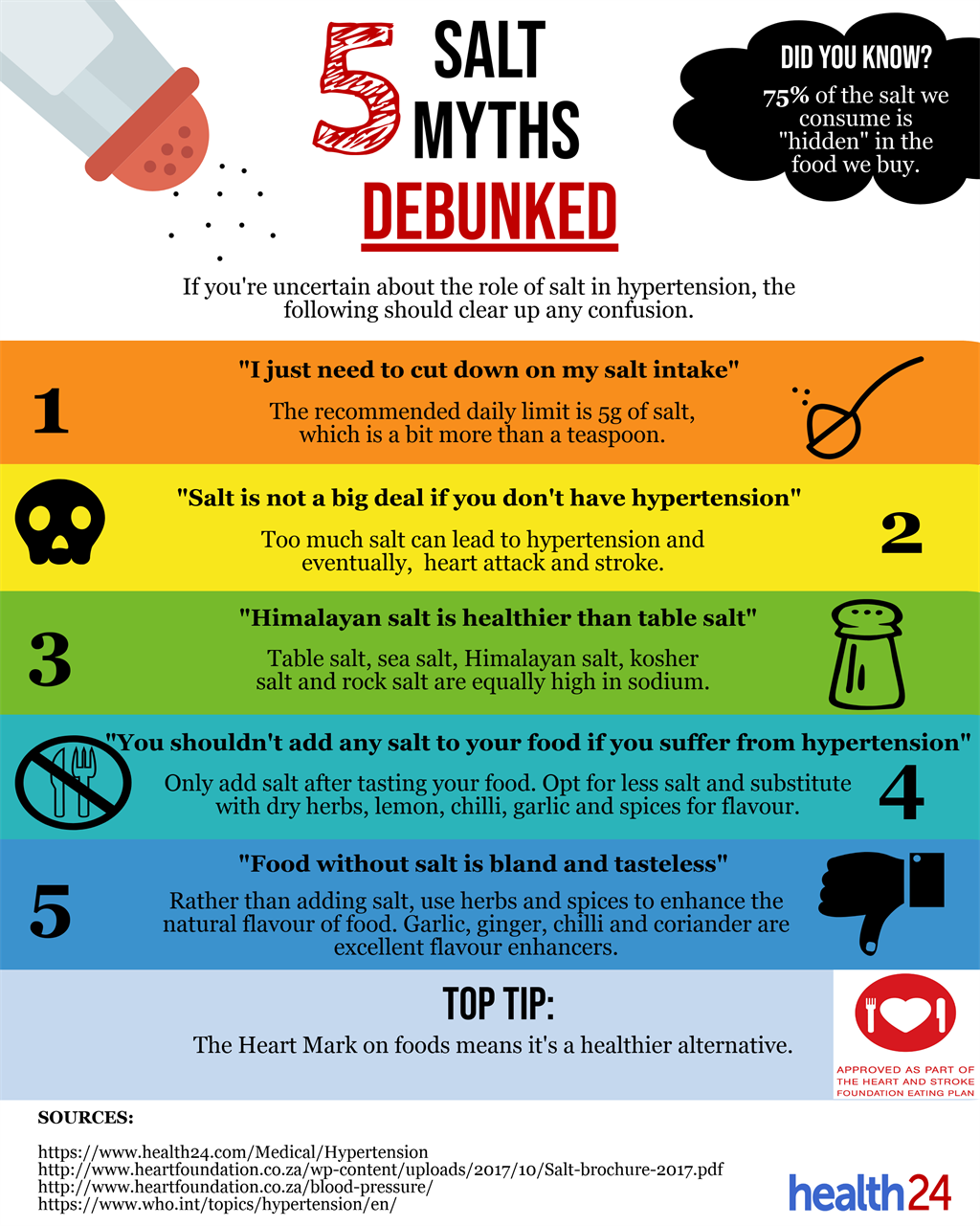
Health24.com | Salt and hypertension – 5 common myths debunked

Hypertension expert

Dr Jacomien de Villiers qualified as a specialist physician at the University of Pretoria in 1995. She worked at various clinics at the Department of Internal Medicine, Steve Biko Hospital, these include General Internal Medicine, Hypertension, Diabetes and Cardiology. She has run a private practice since 2001, as well as a consultant post at the Endocrine Clinic of Steve Biko Hospital.

Share Button

Health24.com | WATCH: Controversial surgery – doctor tells of her experience with mesh, and no longer recommends it

A urogynaecologist tells that doctors were stipulated to use mesh surgery, to maintain their accreditation, but she no longer recommends it.

Vaginal mesh implants are used to treat female patients suffering from stress incontinence or pelvic organ prolapse. These conditions are especially common in women as a result of pregnancy and childbirth.

The vaginal mesh is a net-like material made up of either polypropylene, animal tissue or a combination of both. The mesh is inserted via the abdomen or the vagina. A transvaginal insertion of the mesh is viewed by urogynaecologist as less invasive than a transabdominal insertion.

Over the last few years, thousands of women who have undergone the procedure have reported complications regarding the mesh.

These complications include burning sensations in the pelvic area and debilitating pain. In some cases, this pain has prevented some patients from returning to work, in others it has made a simple task like walking a considerable struggle.

The material of the mesh also places females at risk of organ perforation.

ALSO WATCH: Woman tells of her ordeal after mesh surgery – went from being fit young mum to suicidal

Share Button

Health24.com | WATCH: Snakebite deaths ‘one of the world’s biggest hidden health crises’

17 May 2019

WATCH: Snakebite deaths ‘one of the world’s biggest hidden health crises’

More than 120 000 people a year die from snakebites and another 400 000 are left with life-changing disabilities.

More than 120 000 people a year die from snakebites and another 400 000 are left with life-changing disabilities. Snake antivenoms have been around for 125 years, are effective and can be produced cheaply at scale. Yet places with an abundance of deadly snakes, have an alarming shortage of the life-saving medicine, and poor access to the necessary care.

Image credit: iStock

Share Button

Simon Thomas sets up blood cancer fund in memory of wife Gemma

Former Sky Sports and Blue Peter presenter Simon Thomas says he “can’t sit around and do nothing”.

Share Button

Spina bifida: Keyhole surgery repairs baby spine in womb

Doctors say the surgery could be the difference between some children learning to walk or not.

Share Button

Is It a HIPAA Violation if a Doctor’s Office Tells a 24-Year-Old’s Parents That She’s Pregnant?

Understanding HIPAA (Health Insurance Portability and Accountability Act of 1996) laws is no easy feat—but in some situations, it can be crucial to understand the rights this act grants you. In a story posted to Reddit’s r/legaladvice on Wednesday, a 24-year-old woman inquired about her HIPAA rights after a surgery assistant in her doctor's office told her parents that she was pregnant without her consent. 

The Original Poster (or OP, in Reddit lingo) explained that she found out she was pregnant after a trip to the hospital for an unrelated surgery. The woman, who said her birth control had failed, explained that she has looked into abortion options, but due to the cost and the other surgical procedure she would need, she hasn't yet figured out whether to keep the pregnancy. 

When she went in for her surgical consultation, the doctor explained that he would prefer if she terminated the pregnancy before he went ahead with the procedure. However, he told her that to schedule the procedure, she would have to make the appointment through his assistant, which she referred to as “A.”

RELATED: 23 Health Insurance Terms You Should Know

“[A] called me shortly after the surgical consultation and pressured me the entire phone call to keep the baby,” the woman explained on Reddit, adding that the assistant refused to schedule the appointment until she had an abortion. 

“I’ve had to put the appointment off and wait until then, which is fine, but my parents are in on why I need the surgery,” she wrote. “I’ve had to come up with excuses as to why I can’t schedule it yet because I don’t want them to try to pressure me to not terminate.”

Her situation took a turn for the worse when she received a text from her dad that read, “We know why you haven’t scheduled the appointment and we’re very disappointed in you.”

Apparently, the woman’s parents called to schedule the appointment for her. That's when “A” told them about her pregnancy. 

RELATED: What the Sony Hack Can Teach You About Your Health Privacy

“I never gave her or anyone else [permission] to disclose my medical status to anyone and I feel like my rights as a patient have been violated,” she wrote. “Do I have grounds for legal recourse, what would my next steps be and what should I do from here.”

The OP’s inquiry sparked dozens of responses, most asking to clarify her situation. The woman clarified that she was unsure if she filled out any specific paperwork that would have permitted her parents from seeing her medical records, but said she likely noted that didn’t want her information to be shared. Some users advised her to file a HIPAA complaint and seek legal action.

"Absolutely follow up with complaints/official grievances about the assistant who pressured you to terminate (and the women in the hospital, frankly)," one commenter responded. "Hospitals (in my area, anyway) have representatives dedicated to investigating these types of issues and they take them seriously."

HIPAA “gives you rights over your health information and sets rules and limits on who can look at and receive your health information,” according to the US Department of Health and Human Services (HHS). While HIPAA laws can vary depending on the situation, the HHS website states that once an individual turns 18, they can “exercise all rights granted by the HIPAA Privacy Rule with respect to all protected health information about him or her.”

The HHS website also states that “Generally, the parent would no longer be the personal representative of his or her child once the child reaches the age of majority or becomes emancipated, and therefore, would no longer control the health information about his or her child.”

While this woman’s situation appears to violate these important medical privacy laws, anyone in a similar situation should review their rights covered by HIPAA if they are considering seeking legal action.  

RELATED: 3 Legal Documents Caregivers Need

Share Button

4 Moms Show Off Their Postpartum Bodies in Photo: ‘If It Helped Even One Woman, We Would Be Happy’

Four mom bloggers are on a mission to change the way society views postpartum bodies.

Desiree Fortin, Katie Crenshaw, Meg Boggs and Bethanie Garcia knew each other online before meeting in person for the first time in April. That was when they decided to pose for an honest and unfiltered photo showing how their bodies had been altered by pregnancy.

In the photo they stand smiling, side-by-side, in bikini bottoms and rolled-up shirts.

They all posted the image on their Instagram accounts with the same Hanne Blanke quote: “Real women are fat and thin and both, and neither and otherwise.”

RELATED: PSA: Yes, You Still Have a Belly After You Give Birth, Even If You're Meghan Markle

While many commenters found the photo inspiring and praised the women for being open about their changing bodies, some users left nasty comments such as, “Is this an advertisement for why women should get tummy tucks?” and “Posts like this bother me. Not losing the weight is a choice.”

By May 4, Garcia had had enough, and decided to address the critics in a Facebook message.

“If you look at this photo and your first thought is ‘why are there no skinny women,’ you have bigger issues to deal with, my friend,” she wrote, sharing another picture from the same photoshoot. “You can look literally anywhere… and see skinny women. Other body types are absolutely underrepresented in media and it causes women with those body types to feel less than… to feel like they’re not good enough.”

She continued with an encouraging message to anyone who left a negative comment to “dig deeper, self-reflect, gain some perspective, [and] learn.”

RELATED: Mom Responds to Troll Who Called Her Postpartum Body Lazy and Ugly in Empowering Post

Garcia — who has four children under the age of 5 — tells PEOPLE that she didn’t anticipate so much negativity, but she’s OK with it.

“For every gross or mean comment, there’s 10 women thanking us. That means everything,” she says. “Our hope…was that it would reach women who didn’t feel that their body types were represented in media. If it helped even one woman, we would be grateful and happy.”

Fortin agreed, telling PEOPLE that Garcia’s follow-up statement “was necessary,” since the negativity surrounding the photo was undermining its message.

RELATED: Beyoncé Went on a Vegan, Alcohol and Sugar-Free Diet to Lose the Baby Weight: ‘I’m Hungry!’

For Boggs, the comments were a reminder that there is still a long way to go in changing people’s perceptions of postpartum bodies.

“This kind of message is going to make people uncomfortable because it’s not what they’re used to seeing,” she says. “But beyond that, it’s going to make people feel seen. So if that means we get heat for spreading a message that’s going to shake up a lot of people into a very uncomfortable place, so be it. This isn’t for them.”

RELATED: This Mom's Dramatic Postpartum Photos Show How Much Pregnancy Has Changed Her Body

Crenshaw had a similar explanation for PEOPLE, saying that she will continue to share her story because of the women they’ve already empowered.

“I’m giving my story to the women who saw themselves represented,” she says. “It’s for the woman who said she’d never gone to the pool without a coverup on before she saw my posts. They are my people.”

To get our top stories delivered to your inbox, sign up for the Healthy Living newsletter

Share Button

This 11-Year-Old Accidentally Lodged a Sharpened Pencil Into Her Neck at School

A recess break at school nearly turned fatal for an 11-year-old girl, whose injury and recovery is featured in a new case report from the BMJ.

The girl was playing outdoors when she fell, and a sharpened pencil accidentally became lodged into her neck. She was taken to a hospital for evaluation, but the pencil wasn’t removed at the scene of the accident. Good thing, too—if it had been, the girl could have bled out and died.

“On initial examination, there was a pencil protruding from the left side of the neck with no external bleeding or hematoma from the puncture site. Her initial vital signs were within normal range and there was no evidence of respiratory distress or stridor,” the case report says.

Since the child was stable, doctors decided to study what was happening in her neck before operating. They looked at the results of a computed tomography angiography (CTA), a diagnostic tool that allows doctors to analyze blood vessels using CT technology.

“This demonstrated that the pencil was lodged in her left common carotid artery (CCA) causing total occlusion,” the report says. (An occlusion is a closing or blockage of a blood vessel or a hollow organ.)

The girl was then taken to the operating room, where doctors clamped her arteries and removed the pencil. Remarkably, the girl recovered fully from her injury. “Ultrasound three years later demonstrated no abnormalities,” the report says.

RELATED: This 2-Year-Old Has a Grapefruit-Sized Tumor That Makes Her Look Pregnant

Penetrating neck injuries like the one this girl experienced can be more dangerous for children “due to their smaller anatomy,” the report says. “For this reason, it is important to completely evaluate and manage a child with penetrating neck trauma.”

The little girl’s story highlights the importance of making sure that if an object does penetrate the body during an accident, it isn’t immediately removed. The new report stresses that a penetrating object needs to stay put unless the affected person is “under direct surgical visualization.”

RELATED: This 8-Month-Old Was Hospitalized From Measles Before She Was Old Enough to Be Vaccinated

Share Button