8 Empowering Life Lessons I Wish Every Woman Knew

One morning a few years ago, I was in a yoga class that the instructor dedicated to "the pursuit of potential." As she guided us through the practice, she talked about the notion of inviting your best self forward, to live in the possibilities of your own potential. By the time we reached Savasana, I had reached an epiphany.

It occurred to me that my entire life, I had been working to "fix" myself, to correct all that I believed was wrong with me: Every step I took in my quest to be healthier and happier—whether it was running half-marathons, investing in a life coach, or religiously drinking green juice—was motivated by a deep-seated fear that I wasn't good enough as is. I wasn't pursuing my potential; I was trying desperately to feel worthy.

RELATED: The Benefits of Positive Thinking—and How You Can Do More of It

This thought struck me like a lightning bolt: How happy and healthy will I ever be if I don't love myself?

My epiphany led me to challenge myself to become my own best friend, after years of struggling with eating disorders, drug addiction, and depression. Rather than focusing on the parts of myself I didn't like, I committed to nurturing the parts I did. And this radical concept changed everything for me. (I wrote about the experience in my new book, The Self-Love Experiment.)

RELATED: Here’s How Feeling Grateful Can Improve Your Life

Over the next three years, I had many epiphanies like that first one. These moments of instant clarity were what inspired me to adjust the aspects of my life that were less than fulfilling. Some of my realizations were very personal, but others felt more universal—and a few were so powerful, I wish them for every woman. Below are eight such life-altering lessons:

You aren’t what people say you are

I used to spend so much time worrying about what people thought of me, without ever really asking myself how I felt about them. As a result, I wasted precious time and energy trying to please people who didn’t actually care about me.

I realized all that time and energy could be spent in more valuable ways—like taking care of myself, my family, and my true friends.

The shift for me came when I recognized that what matters most isn't how others view you, but how you view yourself.

RELATED: 6 Things That Happen When You Turn 40

And you aren't the number on the scale

At the end of your life, the weight struggles, the endless food wars you wage in your mind, and the shame and guilt you harbor about your body and habits will have absolutely no relevance. The only thing that will matter is what is in your heart. How you feel is essential to your self-worth; but how you look is not.

Plan B is often better than Plan A

The most freeing moment of your life will be when you let go of the plan you have for yourself, and accept the plan that is unfolding for you.

I spent years hating my body; I thought I needed to change my shape in order to like myself, or be liked. I would occasionally lose the weight, but my inner critic was never satisfied. I eventually realized that my weight wasn’t the issue—my attention on the weight was the problem. That's what was keeping my stuck. 

So I changed my plan. Instead of needing to lose weight to be happy, I learned how to be happy no matter what size my body is.

RELATED: 9 Ways to Silence Your Inner Critic

The journey is more important than the goal

Yes, reaching goals is important. But the process of pursuing what you want is just as important. When I stopped obsessing about getting to the elusive “there,” I was able to relax into my present life, and enjoy who I was becoming, every single moment.

Being alone doesn’t mean you are lonely

When you learn to love yourself, you'll see you actually enjoy your own company. And being by yourself doesn't have to feel lonely.

RELATED: What Does It Really Mean to Be Happy? 6 Experts Explain

It will never be all done … ever

The list of things you "need" to do is endless. You will never check off everything. It's called life.

Instead of always focusing on the end results, recognize that your life is always unfolding, so new lessons and opportunities are always occurring. The challenge is to stay present enough to see them, and appreciate them.

Emotional pain shows up to help us know what we need to change

Instead of running from the pain in my life, I decided to try something radically new. I dove headfirst into it, and embraced it. What I took away from the experience is that our emotions are always guiding us, if we let them. When you pay attention to your feelings (especially the scary ones), you learn what needs to be healed.

Look at your own life and be honest: What is not working for you? Then repeat the mantra, “I am willing to live my life in new ways.”

RELATED: 5 Powerful Mantras to Help You Quiet Anxiety, Beat Self-Doubt, Manage Stress, and More

You don’t have to find purpose; it will find you

I used to struggle so much with trying to identify my purpose in life. And in my relentless search, I felt even more stuck. Instead of trying to find the meaning in your life, invest your energy in living it. Follow your curiosity, and honor the pull from your heart. When I first left my corporate job in advertising, I had no idea what I wanted to do next. But I was drawn to writing and traveling, so I followed that instinct, and soon it became my fulfilling career.

Adapted from The Self-Love Experiment: Fifteen Principles for Becoming More Kind, Compassionate, and Accepting of Yourself by Shannon Kaiser, an international life coach and speaker.

To get our top stories delivered to your inbox, sign up for the HEALTH newsletter

Share Button

Jessamyn Stanley Poses in Lingerie to Share an Insanely Candid Close-Up of Her Stretch Marks

We've said it before, but we'll say it again: Jessamyn Stanley is our body-positivity queen. And her latest Instagram post is the perfect example of why she wears the crown. 

“The greatest g—damn gift I’ve ever received has been learning to be myself," Stanley wrote alongside a shot of her rocking a lavender lingerie set from ThirdLove (which we'll be buying in every color, BTW). 

She went on to say, "I didn’t know I could do it on my own. I always thought I needed help to know myself." We feel you, girl. Realizing your own strength is often the hardest part of the journey to self-love.

RELATED: Jessamyn Stanley's 8-Minute Yoga Flow Is All About Practicing Self-Love

Stanley admits she hasn't always loved her body. In a previous interview with Health, she said, "If I could go back and talk to myself when I was younger—because I used to have horrific body image—I’d tell myself, 'Don’t think about what other people think about you; you think about what you think about you.'"

She also said that part of the reason she loves teaching is because she's breaking yoga stereotypes. "There is this stereotypical idea, this physical picture that comes with it, which is typically a slender, white, traditionally educated, and affluent woman, and if you are not that then you are automatically different."

Yoga isn't about how you look doing it; it's about feeling good in the skin you're in. That's the message Stanley is spreading, and we're so here for it.

“I cannot be contained within a definition,” she said. “I think that it is important for other people to see that and to acknowledge that they don’t have to be contained by a definition either, and they can just be whoever they are."

To get our top stories delivered to your inbox, sign up for the WomenIRL newsletter

Share Button

Saturn’s rings coat tiny moons

New findings have emerged about five tiny moons nestled in and near Saturn’s rings. The closest-ever flybys by NASA’s Cassini spacecraft reveal that the surfaces of these unusual moons are covered with material from the planet’s rings — and from icy particles blasting out of Saturn’s larger moon Enceladus. The work paints a picture of the competing processes shaping these mini-moons.

“The daring, close flybys of these odd little moons let us peer into how they interact with Saturn’s rings,” said Bonnie Buratti of NASA’s Jet Propulsion Laboratory in Pasadena, California. Buratti led a team of 35 co-authors that published their work in the journal Science on March 28. “We’re seeing more evidence of how extremely active and dynamic the Saturn ring and moon system is.”

The new research, from data gathered by six of Cassini’s instruments before its mission ended in 2017, is a clear confirmation that dust and ice from the rings accretes onto the moons embedded within and near the rings.

Scientists also found the moon surfaces to be highly porous, further confirming that they were formed in multiple stages as ring material settled onto denser cores that might be remnants of a larger object that broke apart. The porosity also helps explain their shape: Rather than being spherical, they are blobby and ravioli-like, with material stuck around their equators.

“We found these moons are scooping up particles of ice and dust from the rings to form the little skirts around their equators,” Buratti said. “A denser body would be more ball-shaped because gravity would pull the material in.”

“Perhaps this process is going on throughout the rings, and the largest ring particles are also accreting ring material around them. Detailed views of these tiny ring moons may tell us more about the behavior of the ring particles themselves,” said Cassini Project Scientist Linda Spilker, also at JPL.

Of the satellites studied, the surfaces of those closest to Saturn — Daphnis and Pan — are the most altered by ring materials. The surfaces of the moons Atlas, Prometheus and Pandora, farther out from Saturn, have ring material as well — but they’re also coated with the bright icy particles and water vapor from the plume spraying out of Enceladus. (A broad outer ring of Saturn, known as the E ring, is formed by the icy material that fans out from Enceladus’ plume.)

The key puzzle piece was a data set from Cassini’s Visible and Infrared Mapping Spectrometer (VIMS), which collected light visible to the human eye and also infrared light of longer wavelengths. It was the first time Cassini was close enough to create a spectral map of the surface of the innermost moon Pan. By analyzing the spectra, VIMS was able to learn about the composition of materials on all five moons.

VIMS saw that the ring moons closest to Saturn appear the reddest, similar to the color of the main rings. Scientists don’t yet know the exact composition of the material that appears red, but they believe it’s likely a mix of organics and iron.

The moons just outside the main rings, on the other hand, appear more blue, similar to the light from Enceladus’ icy plumes.

The six uber-close flybys of the ring moons, performed between December 2016 and April 2017, engaged all of Cassini’s optical remote sensing instruments that study the electromagnetic spectrum. They worked alongside the instruments that examined the dust, plasma and magnetic fields and how those elements interact with the moons.

Questions remain, including what triggered the moons to form. Scientists will use the new data to model scenarios and could apply the insights to small moons around other planets and possibly even to asteroids.

“Do any of the moons of the ice giant planets Uranus and Neptune interact with their thinner rings to form features similar to those on Saturn’s ring moons?” Buratti asked. “These are questions to be answered by future missions.”

Share Button

Running upright: The minuscule movements that keep us from falling

Maybe running comes easy, each stride pleasant and light. Maybe it comes hard, each step a slog to the finish. Either way, the human body is constantly calibrating, making microscopic adjustments to keep us from falling as we weekend-warrior our way to greatness.

Runners constantly — and unconsciously — make minor corrections to their running form to keep their bodies upright, a recent study has found.

“You might think running is just a repetition of identical steps, and it might look like that to the naked eye,” said Nidhi Seethapathi, lead author of the study. “But actually, there are really small errors that happen when you run, and you have to constantly correct to avoid falling down. Our muscles and our senses are not perfect, and that leads to errors. If we didn’t correct for these self-generated errors, we would fall. Our study investigates how people correct such errors.”

The study was part of Seethapathi’s doctoral thesis in mechanical and aerospace engineering at The Ohio State University and was published earlier this month in the journal eLife. She has since accepted a postdoctoral position at The University of Pennsylvania.

“The tasks that your body does almost subconsciously have all these tiny movements behind them,” said Manoj Srinivasan, a co-author of the study and associate professor of mechanical and aerospace engineering at Ohio State. “Those little movements were what we were looking to understand.”

To understand how humans run without falling, the research team put volunteers on a treadmill and had them run at three different constant speeds. The team monitored and measured motion in each runner’s torso, the placement of each footstep and the force with which the leg pushes against the ground. The volunteers were average runners — not couch potatoes, but not marathoners, either.

They found that those runners automatically corrected for minor deviations in the movement of their torsos — their center of mass — by making slight changes to the place each footstep landed and by making miniscule adjustments to the amount of force with which their leg hit the ground. Seethapathi and Srinivasan found that they could predict how runners would change their footsteps or force by noting changes in the location of their torsos.

They also found that runners, by and large, corrected imperfections in a step by their very next step, indicating that the human body has the ability to “fix” its running gait in order to stay upright. And their research showed that imperfections in a running stride that would have caused a runner to fall to the side were corrected more quickly than errors that would have caused a runner to topple forward or backward.

None of the errors examined in this study included external factors — a crack in pavement, for example, or a tree root on a trail. But what they did show was the human body’s great capacity for keeping itself upright while moving — something that robots, in general, struggle to do.

“We try to work at the intersection of robotics and human movement,” Seethapathi said, “in that we use metrics that are traditionally used in robotics on human movement and then take inspiration from humans to inform robotic movement.”

The study’s findings could be used to engineer robots that are able to walk or run without toppling over, or to build an exoskeleton that moves more intuitively with the human body, Srinivasan said.

“In terms of movement, humans are just vastly superior to current robots,” Srinivasan said. “Our research is sort of reverse engineering the human body to understand how humans and animals control their bodies to do these amazing tasks. While walking and running maybe don’t sound amazing to people — because it is something most humans do almost every day — there have been a lot of technical challenges to making a robot that can walk or run without falling over, or to building an exoskeleton, for example, that can help a human regain movement while recovering from a stroke.”

An exoskeleton is exactly what it sounds like: A mechanical skeleton, or parts of a skeleton, that people wear to help the human body do everything from lift heavy objects to regain movement after an injury or stroke.

This study builds on previous research in Srinivasan’s lab that examined the ways humans walk.

Story Source:

Materials provided by Ohio State University. Note: Content may be edited for style and length.

Share Button

Health24.com | High-fibre diet may help gut ‘microbiome’ battle melanoma

A healthy diet may trigger a better response to a certain kind of melanoma treatment.

How?

New research suggests that a diet that’s full of fibre appears to lead to more diverse intestinal bacteria (microbiome). In turn, a thriving gut microbiome is linked to a stronger response to an immune therapy for the aggressive skin cancer.

Causes most skin cancer deaths

“We found that patients eating a high-fibre diet at the start of therapy were about five times more likely to respond to the anti-PD-1 immunotherapy,” said study author Christine Spencer. She’s a research scientist with the Parker Institute for Cancer Immunotherapy in San Francisco.

Anti-PD-1 immunotherapy helps the immune system recognise cancer cells as dangerous cells that need to be destroyed, according to the American Cancer Society (ACS). The cancer drugs Keytruda and Opdivo are examples of this type of immunotherapy.

Melanoma is a type of skin cancer. It only accounts for about 1% of all skin cancers, but is responsible for most skin cancer deaths, the ACS says.

Several recent studies have suggested that a healthy and diverse gut microbiome might improve the response to melanoma immunotherapy treatments, the researchers said. What wasn’t known was how certain diets might improve the microbiome and boost the response to melanoma treatment.

To see what difference diet might make, the researchers collected faecal samples from more than 100 people being treated for melanoma at the MD Anderson Cancer Center, in Houston. With these samples, the researchers could learn what types of bacteria people had in their gut microbiome, as well as how diverse the bacteria in the microbiome were.

Effect of high-fibre diet

The investigators then compared these findings to a previously completed diet/supplement survey to see what type of diet was linked to a more robust gut microbiome.

The findings showed that a high-fibre diet – one full of vegetables, fruits and whole grains – was associated with the types of bacteria that had already been linked to a better response to anti-PD-1 therapy.

The researchers also noted that about 40% of the people in the study were taking a probiotic supplement. Probiotics contain live bacteria believed to be helpful to maintaining the balance of the microbiome. However, the researchers found that probiotic use was actually linked to lower diversity of the gut microbiome.

And, a lower diversity of the microbiome has been linked to a poorer response to melanoma immunotherapy, the researchers noted.

The study team also looked at a group of almost 50 patients who had complete information on diet and gut microbiome, and found that those on a high-fibre diet were about five times more likely to respond to anti-PD-1 treatment than people eating a low-fibre diet.

Dr Marcel van den Brink, head of the division of hematologic malignancies at Memorial Sloan Kettering Cancer Center in New York City, said, “This study found a high-fiber diet would lead to better diversity in the gut flora, and greater diversity gave you better outcomes,” at least for anti-PD-1 immunotherapy.

“In clinical medicine, we do a great job of monitoring a lot of parameters. But when it comes to monitoring what people eat and effects of diet, we’re doing a lousy job,” he added.

‘Research is early’

“Patients and family members ask about diet, and we say, ‘Just eat healthy’, and we don’t have much more specific guidelines,” van den Brink explained.

“So, these types of studies are intriguing. Diet may work in a collaborative way with immune therapy. But, we’re not there yet. This was a small study. The research is early,” he noted.

Still, van den Brink said that he suspected – from this study and others, including his own research on the microbiome in blood cancers – that the gut microbiome likely influences the immune system throughout the body, and he thinks the microbiome “will be relevant for most, if not all, immune therapies in cancer”.

Spencer said hers was the first study on diet and melanoma immunotherapy. She agreed more research is needed before doctors can make specific recommendations on diet.

The findings were scheduled for presentation at the American Association for Cancer Research annual meeting, in Atlanta, 29 March to 3 April. Research presented at meetings should be viewed as preliminary until published in a peer-reviewed journal.

Image credit: iStock

Share Button

Novel study links fetal exposure to nicotine and sudden infant death syndrome

Fetal exposure to tobacco smoke in utero is associated with sudden infant death syndrome (SIDS) and cardiac arrhythmias in newborns. In a novel study in rabbits, investigators provide the first evidence linking fetal exposure to nicotine to long-term alterations of the cardiac sodium current. These changes may impair adaptation of the cardiac sodium current to sympathetic tone and prevent awakening from sleep apnea, leading to arrhythmias that could potentially be involved in SIDS. They report their findings in HeartRhythm, the official journal of the Heart Rhythm Society and the Cardiac Electrophysiology Society, published by Elsevier.

SIDS, or crib death, is the leading cause of death in the first year of life. In utero exposure to tobacco smoke remains the highest risk factor in 85 percent of cases. It therefore seems logical to prescribe nicotine replacement therapies (NRTs) to pregnant women who wish to quit smoking. Tobacco smoke contains over 3,000 toxic compounds identified so far, but out of all the toxic compounds found in smoke, only nicotine is associated with cardiac arrhythmias in newborns.

“Clinicians often prescribe NRTs to pregnant women who wish to quit smoking in order to reduce the number of crib deaths,” explained lead investigator Robert Dumaine, PhD, Department of Pharmacology and Physiology, Faculty of Medicine and Health Sciences, University of Sherbrooke, Sherbrooke, QC, Canada. “However, our data show that nicotine alone is sufficient to alter electrical currents within the heart and generate arrhythmias leading to crib death.”

In the womb, the fetus cannot breathe on its own and its heart reacts to a reduction in oxygen by slowing the beating rate and its metabolism to preserve energy. This fetal adaptation is known as “diver reflex.” On the other hand, when an infant suffocates during sleep, the brain senses the reduction of oxygen in the blood and will trigger secretion of adrenalin (epinephrine) to accelerate heart rhythm. Once cardiac rhythm accelerates, in part due to increased excitability (sodium current) in the heart, the baby wakes up. This “resuscitation reflex” seems to be absent in babies with SIDS. Instead, those infants display a slowing of heart rate when lacking oxygen, as if their postnatal cardiac development had been delayed and still in a fetal state.

“The importance of this study is that, for the first time, we provide direct evidence that in utero exposure to nicotine has postnatal effects on the development of the heart and its response to adrenalin and may provide a basis to explain why some babies do not wake up during sleep apnea,” commented Dr. Dumaine. “Therefore, it might be worthwhile to revisit the clinical practice of prescribing the nicotine patch and other NRTs to pregnant women.”

Investigators measured the effect of nicotine on the response of cardiac sodium current (INa) to adrenergic stimulation in isolated cardiomyocytes in rabbits. They mated New Zealand female rabbits and after 14 days of gestation, implanted them subcutaneously with two osmotic pumps, each containing 2 ml of nicotine solution. The control group was exposed to saline solution instead of nicotine. Serum concentration of cotinine (nicotine metabolite) was measured every two days.

Results showed that isoproterenol, an analog of epinephrine (adrenaline) and a potent beta-adrenergic agonist, increased INa by 50 percent in newborn rabbits in the control group but had no effect in newborn rabbits that were exposed to nicotine in utero. Exposure of rabbit fetuses to nicotine while still in the womb reduced the response of their heart to adrenalin after birth. More specifically, they observed that the cardiac electrical current carried by sodium and responsible for excitability within the heart did not respond to adrenalin. Therefore, nicotine will impair acceleration of heart rate when adrenalin is released at the onset of sleep apnea, which is a potential mechanism leading to SIDS.

Story Source:

Materials provided by Elsevier. Note: Content may be edited for style and length.

Share Button

Jump in antidepressant prescriptions in England

The number of prescriptions were dispensed last year exceeded 70 million for the first time.

Share Button

Dogs can smell epileptic seizures

Researchers hope to be able to predict a seizure before it happens.

Share Button

Health24.com | Man donates part of his liver to girlfriend’s grandmother in lifesaving operation

An American man has given his girlfriend’s grandmother a new lease of life.

Last month, Cody Corwin (26) from Michigan in the US decided to donate part of his liver to Bernice Ramsey who was diagnosed with a form of liver disease five years ago, People reports.

“I’m speechless! For him to step up and do something for someone I love so much . . . I just love him so much more for it,” Cody’s girlfriend and Bernice’s granddaughter, Shelby Platt (26), said in a recent interview.

“When she got sick I selfishly kept thinking about her missing my wedding. Cody saved her life and I’m forever thankful.”

The grandmother of four has steatohepatitis – a nonalcoholic fatty liver disease, according to the MSD Manual.

Bernice needed a liver transplant but none of her family members was a match.

On discovering that the 71-year-old needed the urgent transplant, Cody, who’s been dating Shelby for three years, didn’t think twice about getting himself tested to see if he’s a match, Good Morning America reports.

“She got really sick and she’s always been one of the sweetest ladies I’ve ever met,” Cody told the morning talk show.

Bernice Ramsey

“When I found out no [family member] was a match I called the Cleveland Clinic and found out I was. I felt like it’s something I had to do for her.”

The surgery took place on 25 February at the Cleveland Clinic in Ohio and Bernice’s liver is now fully functioning. Cody, who hopes to go back to work soon, is recovering well, ABC News reports.

“How do you thank somebody?” Shelby’s mom, Heather, asked.

Shelby Platt and Cody Corwin

“For Cody, he had so much to lose. There’s a lot that can go wrong. There’re no guarantees and for him to be so selfless and say, ‘I’ll do this for you’, it just means the world to us.”

Sources: People, Good Morning America, ABC News

Images: GoFundMe page

Share Button

Health24.com | 19-year-old contracts TB from biological dad she hadn’t seen in 18 years

When Jade October from Kuils River, Cape Town, met her biological dad again after 18 years, she didn’t realise her life would change drastically.

The 19-year-old was diagnosed with tuberculosis (TB) in September 2018 after she visited her biological dad, Elroy October, when he was in hospital. Elroy suffered from TB and died from the disease in April of that year.

After experiencing a persistent fever and chronic cough, doctors at Melomed Bellville Private Hospital diagnosed the second-year criminology student with the infectious disease.

On Sunday, 24 March, also world TB day, the ESL (English as a Second Language) teacher completed her last round of medication and is feeling positive about her recovery.

Despite the stigma around the disease, Jade, who recently joined the organisation TBproof, has decided to share her journey with TB to bring awareness to the debilitating disease.

Here’s her story:

“I’m a 19-year-old female, a daughter, sister and partner. I’m also a teacher and student who contracted pulmonary TB.

In April 2018 I lost my biological father, whom I never had contact with for 18 years of my life, to my TB.

In the final stages of his life, I went to visit him at the hospital and this is how I contracted the disease. Because I wasn’t educated about what TB and its symptoms were, I lived with a disease which I had no clue about for months.

Many days I felt weak but I kept pushing. I completed my first semester of studies, I worked two jobs as per usual but deep down I knew something wasn’t right.

My energy levels were low and I had terrible symptoms which only became worse.

In September 2018 due to chronic coughing and three misdiagnoses I was sent by my GP to have an X-ray performed.

The results were handed to me and because of my curiosity I opened it and the closing statement ended in “features highly suspicious for P TB”.

I remember crying for that entire day because of my fear that my life would be taken from me.

I was too ashamed to share my story, not even with those closest to me because I feared the stigma that would be placed on me.

I started my treatment later that month and in the beginning, I took six tablets daily for two months.

It was an unforgettable experience. Many mornings I sobbed because of the struggle I faced to digest the medication, I struggled to eat, I was so weak I slept for hours and hours on end.

Many days I found myself bent over the toilet seat unable to stomach a meal. I just had one thing in mind: to never allow others to see my struggle.

My family was my greatest support system, my partner pushed me to believe that I could conquer my TB.

After two months my medication was reduced to three pills a day. Good and bad days came, there were times my partner would beg me to take just one more bite of my food, so I could gain energy.

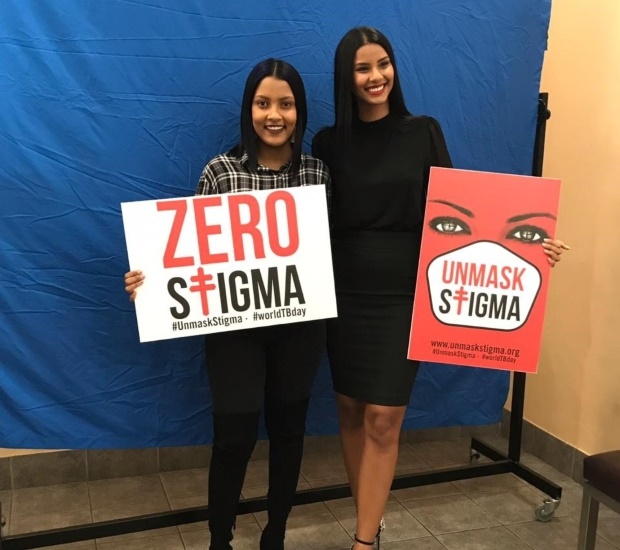
Jade October and Tamaryn Green

This journey left me with two decisions: either you become a victim of your circumstance or you soldier through your battle.

I decided that even if my story just changed the mindset of one person, educated just one person it would be worth sharing.

There’s hope, it’s curable and you can maintain a healthy and balanced lifestyle.

In the words of TB advocate, Dr Zolelwa Sifumba ‘TB makes us all a demographic, as it lives in the air and anyone can breathe it in, so speak your truth as you never know who you could be helping.’

My name is Jade October and I’m a TB survivor.”

Image credit: Supplied

Share Button