Signs of 1906 earthquake revealed in mapping of offshore northern San Andreas Fault

A new high-resolution map of a poorly known section of the northern San Andreas Fault reveals signs of the 1906 San Francisco earthquake, and may hold some clues as to how the fault could rupture in the future, according to a new study published in the Bulletin of the Seismological Society of America.

Samuel Johnson of the U.S. Geological Survey and Jeffrey Beeson of Fugro USA Marine Inc. compiled the map for the 35-kilometer-long section of the fault between Tomales Point and Fort Ross, California. They discovered two large zones, each covering about two square miles, of slope failure on the seafloor offshore of the Russian River, marked by lobes that appear to have formed when the intense shaking of the 1906 earthquake caused sand liquefaction.

The mapping also demonstrates that there are two active strands of the fault within the northern part of Bodega Bay, each of which has moved tens of meters within the past 10,000 years.

The findings “are not going to affect what we know about the recurrence interval or slip rate” on the Northern San Andreas Fault, “but it will affect what we know about how the northern San Andreas fault ruptures,” Johnson said.

“Normally if you were studying a fault zone on land and found a prominent fault strand, you would probably assume that was the strand that has most recently ruptured,” he explained. “Because we found two here, it’s a cautionary tale for earthquake geologists to comprehensively map fault zones. You may only capture part of the earthquake history or slip rate along a fault if you only know about one strand in a multi-strand zone”

The northern offshore areas of the fault have been intensively studied only within the past eight years, said Johnson. While much of the rest of the San Andreas fault has become a natural laboratory for studying earthquakes, “it’s a major geoscience oversight that these northern areas have not been studied before,” said Johnson. “We have been waiting for technology to produce the tools to look at these areas in high resolution.”

The researchers used data drawn from several techniques, including high-resolution seismic reflection profiles and multibeam bathymetry, both of which use multiple directed sound waves to image layers on or below the seafloor. Collection of some of the bathymetry data was funded by the California Ocean Protection Council as part of its work to designate and develop monitoring strategies for Marine Protected Areas, and by the National Oceanic and Atmospheric Administration (NOAA) to improve nautical charts.

The liquefaction lobes, which are similar to the ground failure seen offshore of the Klamath River delta during the magnitude 7.2 Eureka earthquake in northern California in 1980, were one of the surprises uncovered during the mapping, said Johnson.

The researchers were lucky to have caught a glimpse of the lobes before they disappeared, as some of the features are already being smoothed over by sediments deposited after 1906, Johnson said. “If you came back in another 50 to 100 years, you might not see these features because they would be all covered up. You can see their lifespan in the data and images we have now.”

Other insights from the map include a look at how movement along this portion of the fault has affected the onshore landscape, including the uplift of marine terraces and rapid formation of beaches and coastal sand dunes. For instance, the researchers noted that uplift west of the Northern San Andreas Fault has blocked the southward drift of sediment from the Russian River and Salmon Creek, leading to the swiftly growing South Salmon Creek Beach and its background of high coastal sand dunes.

Story Source:

Materials provided by Seismological Society of America. Note: Content may be edited for style and length.

Share Button

The salt-craving neurons

Potato chips, French fries, popcorn — whichever your preference, we all know that salt is a key component of many tasty foods. But eating too much salt has potential health risks and can lead to cardiovascular and cognitive disorders. Now, Caltech researchers have identified neurons that drive and quench salt cravings in the mouse brain. The findings are an entry point into regulating sodium cravings in humans.

The work was done in the laboratory of Yuki Oka, assistant professor of biology and Chen Scholar. A paper describing the research appears online on March 27 ahead of publication in the journal Nature. Oka is an affiliated faculty member of the Tianqiao and Chrissy Chen Institute for Neuroscience at Caltech.

Sodium — an ion found in table salt — plays a critical role in various body functions, such as cardiovascular activity, fluid balance, and nerve signaling. In every animal species, the body strictly regulates and maintains sodium levels. Because animals cannot metabolically create sodium themselves, the ions have to be ingested from external food sources. When the body is low on sodium, the brain triggers specific appetite signals that drive the consumption of sodium. Though the mechanisms of these appetite signals are not fully understood, a team of researchers has now discovered a small population of neurons in the mouse hindbrain that controls the drive to consume sodium.

Led by graduate student Sangjun Lee, the team used genetic tools to manipulate the activity of these neurons so that they could be stimulated with light. The researchers observed that artificially stimulating these neurons caused mice to lick a piece of rock salt repeatedly, even when their bodies were completely sated with sodium.

Next, the researchers measured the activity of these neurons while mice ate sodium. Within several seconds of sodium hitting the animal’s tongue, the activity of the sodium-appetite neurons was inhibited. However, a direct infusion of sodium into the stomach of these mice did not suppress the neural activity. This neural suppression also did not occur when sodium receptors on the tongue were pharmacologically blocked. Taken together, the research shows that oral sodium signals, likely mediated by the taste system, are necessary to inhibit the sodium-appetite neurons.

“The desire to eat salt is the body’s way of telling you that your body is low on sodium,” says Oka. “Once sodium is consumed, it takes some time for the body to fully absorb it. So, it’s interesting that just the taste of sodium is sufficient to quiet down the activity of the salt-appetite neurons, which means that sensory systems like taste are much more important in regulating the body’s functions than simply conveying external information to the brain.”

Interestingly, in many species, including humans, consuming sodium can drive the desire to eat even more. In future work, Oka and his collaborators would like to understand how sodium-appetite neurons are modulated over time. Answering this question may open up avenues to help people with health issues to eat less sodium in their diets.

Story Source:

Materials provided by California Institute of Technology. Original written by Lorinda Dajose. Note: Content may be edited for style and length.

Share Button

Health24.com | Walk, dance or clean — just a bit of physical activity helps you live longer

Want a reason to get out of your comfy armchair? Even low levels of regular physical activity — brisk walking, dancing or gardening — can reduce your risk of premature death, a new study finds.

Americans who got in just 10 to 59 minutes of moderate physical activity every week had an 18% lower risk of death from any cause, compared with couch potatoes, the researchers found.

A little more vigour

Those benefits continued to mount with longer periods of activity.

The message is clear, said Dr Mary Ann McLaughlin, a cardiologist with the Mount Sinai Hospital in New York City. “If you’re completely sedentary, you have to start moving, even if it’s 10 minutes a day,” she said.

“If you’re already moving a little bit, going a little bit further, with a little more vigour, really reduces the risk of death even greater. You don’t have to be a marathon runner to have these good effects,” added McLaughlin, who wasn’t involved with the study.

People who met the US guideline of at least 150 minutes of moderate-intensity activity a week reduced their overall risk of death by 31%, and those who clocked in 1 500 minutes weekly nearly cut their risk in half, the results showed.

Exercise also cut the risk of dying specifically from heart disease and cancer, the study authors noted.

The research provides further confirmation of the health benefits of exercise, and shows how physical activity could directly affect your risk of death, said Dr Joseph Herrera. He is chair of the Mount Sinai Health System department of rehabilitation and human performance, and was not involved with the study.

Routine housework and gardening

“If I could write a prescription for every single one of my patients and it said ‘Exercise’ on it, and they took it like they would take a pill, I don’t think they would be seeing me as often as they do,” Herrera said.

The new report comes days after a study from the US National Heart, Lung, and Blood Institute found that routine housework and gardening could benefit older women’s hearts.

Even light physical activity – gardening, going for a stroll, folding clothes – appeared to reduce the risk of stroke or heart failure by up to 22%, and the risk of heart attack or coronary death by as much as 42%, that study found.

For this latest study, Dr Bo Xi, of Shandong University School of Public Health in China, and colleagues relied on health surveys conducted annually between 1997 and 2008 by the US Centers for Disease Control and Prevention. The analysis included more than 88 000 survey participants, aged 40 to 85.

Participants estimated their amount of leisure-time physical activity. The researchers then compared those responses to mortality data from 2011 to see if being active had any impact on risk of death during the study period.

McLaughlin said that “when the data was evaluated, those patients who got just 10 to 59 minutes a week of moderate physical activity really reduced their risk of death from any cause.”

An eventual plateau

The researchers only counted exercise that had been done in increments of at least 10 continuous minutes, which matched the US physical activity guidelines of the time, she noted. Since then, the federal government has said that any activity, no matter how brief, counts toward your weekly total, McLaughlin explained.

Along with the overall reduction in risk of death during the study period, the investigators found that 10 to 59 minutes of exercise reduced heart-related death risk by 12% and cancer-related risk by 14%.

Heart risk declined by as much as 37% as minutes of activity went up, and cancer risk declined up to 47% with more activity, the findings showed.

Eventually, the benefits of physical activity appeared to plateau. People who exercised more than 1 500 minutes a week had about the same risk of death, or slightly higher, than those who worked out a little less than that, according to the report.

This makes sense given what we know about elite athletes and how they hit certain plateaus in their training, Herrera said.

“We do know that the body does require some sort of recovery as well,” he said.

Increase in metabolism

This also has implications for people who are weighing moderate exercise versus more intense workouts, such as vigorous running or bicycling, Herrera said.

Essentially, people who engage in vigorous workouts don’t necessarily gain additional health benefits, but they do cut the amount of time they have to put in, Herrera said. For example, 75 minutes of vigorous activity a week has effects similar to 150 minutes of moderate activity.

Exercise likely affects risk of heart-related death by strengthening the heart, lowering blood pressure and reducing stress levels, McLaughlin said.

The impact of physical activity on cancer is a little tougher to determine. Herrera said it might be due to the increase in body metabolism associated with exercise, which could help clear out diseased old cells before they become cancerous.

The new study was published online in the British Journal of Sports Medicine.

Image credit: iStock

Share Button

Take over pharma to create new medicines, says top adviser

Bits of the industry could be taken over as no new drugs are being made, says Lord Jim O’Neill.

Share Button

City air pollution ‘link to teenage psychotic experiences’ explored

The research may show why children in urban areas are more likely to get psychotic disorders as adults.

Share Button

Health24.com | 7 warning signs that you have something more than ‘just a cold’

We all often suffer from the common cold, and we tend to push through the lousy symptoms and still function.

Sometimes we don’t even treat our symptoms as we feel that it’s nothing to worry about or nothing serious. But symptoms of the common cold can have grey areas and can often be misdiagnosed, and an allergy or sinusitis can be mistaken for the common cold.

How do we tell the difference between the common cold and something more serious? Here are seven signs:

1. Your symptoms last for longer than five days

The common cold usually starts with a scratchy throat, develops into congestion, then a runny nose and a cough. These symptoms usually pass within three to five days, even though a nasal drip and cough may last a bit longer. If your symptoms do last longer than five days and you still feel lousy, it’s time to see a doctor, as you might have flu or a viral infection.

Here is a guide on the length of flu vs the common cold and how long you should take sick leave.  

sick woman with nasal congestion on couch

2. You vomit and feel nauseous

Vomiting and nausea are not standard symptoms of the common cold and might signal an underlying digestive issue, or flu. It’s important to visit your doctor and treat any stomach issues as well, as they may lead to dehydration.

Woman vomiting in toilet

3. You have a fever

During a common cold you might feel a bit flustered and you might run a slight temperature, but a high body temperature could signal an underlying infection such as strep throat, or flu.

A fever is your body’s natural reaction to an acute viral or bacterial infection. Visit your doctor for a further diagnosis and treatment and keep hydrated.

Woman measuring her temperature

4. You have a severe headache

A severe headache might signal sinusitis — you will feel pressure around your eyes and nose, and the headache will be worse if you bend down. In this case, you will need to take a decongestant to relieve sinusitis and monitor your symptoms to make sure that it doesn’t turn into a full-blown infection.  

An extreme headache accompanied with a stiff neck and high fever may be meningitis — speak to your doctor immediately if you experience this.

Not sure what your headache is telling you? Find out if it’s a migraine or sinus headache here.

woman holding her sore head

5. You have an achy body

The common cold may make you feel lousy, but when each joint in your body feels on fire, it’s flu. If you feel like you simply can’t function, it’s not a common cold, but the influenza virus.

Sick woman in bed

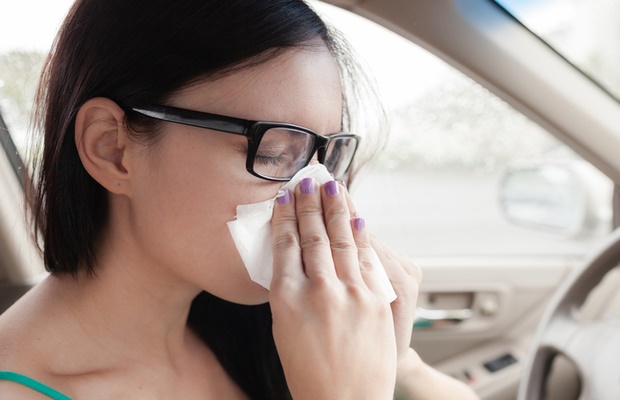
6. Your mucus is yellow or green

More mucus than usual and a stuffy nose is part and parcel of the common cold, but as soon as your mucus turns into a strange, vivid colour, this may signal an infection, especially when you run a fever as well. But quite contrary to popular belief, the yellow or green colour is not caused by bacteria — it usually signifies a response from your immune system, where your body produces more white blood cells, giving the mucus a tinge other than clear or white.

Woman blowing her nose in car

7. You struggle to breathe

A cold can cause congestion which can wreak havoc on a good night’s sleep and make you feel like you want to stick dynamite up your nostril, but if you also experience wheezing and a tight chest, you need to go to a doctor as you might be suffering from an upper respiratory infection or bronchitis.

Sick man coughing and struggling to breathe

Image credit: iStock

Share Button

Life expectancy drops among poorer women in England

It fell by 100 days in recent years in England, widening the gap between rich and poor, official data shows.

Share Button

My Daughter Nearly Died of Sepsis. Here’s How You Can Stay Safe

We thought it was the flu. On a bleak winter afternoon, my 16-year-old daughter came home early from school, complaining of a fever and sore throat. Less than 48 hours later, I was sitting next to her in an ambulance, careening toward the nearest emergency room.

It wasn't the flu. An underlying urinary tract infection and a nascent case of strep throat had combined forces to create a perfect storm in my daughter’s body, and she had gone into septic shock—the most severe stage of sepsis, a potentially fatal condition and a leading cause of all in-hospital deaths.

What is sepsis?

Sepsis is an extreme bodily response to infection, in which inflammation throughout the body can lead to organ damage and even organ failure. It’s often characterized by fever, a high heart rate, low blood pressure, confusion, and dizziness.

Sepsis doesn't have a particular season of the year, and it can hit almost anyone, regardless of age or prior health. In March, Oscar-winning actress Patty Duke died of sepsis from a ruptured intestine at the age of 69. In 2009, 20 year-old Brazilian model Mariana Bridi da Costa died within days after a UTI turned into an aggressive case of sepsis.

"People with sepsis can slip from what seems like routine infection into a systemic situation very quickly,” warns Anthony Fiore, MD, chief of Epidemiologic Research and Innovations in the Division of Healthcare Quality Promotion at the Centers for Disease Control and Prevention (CDC).

RELATED: Should You Go to the ER?

If it's such a big deal, why haven't I heard of it?

Because there currently isn't a single standard methodology for assessing sepsis, hard statistics on its prevalence and mortality rates can be hard to pin down. But according to the CDC, over 1.7 million cases of sepsis occur each year, and it’s a leading cause of “disease-related deaths." Sepsis kills more people in the U.S. than prostate cancer, breast cancer, and AIDS combined.

Yet while less common conditions like Ebola and Zika garner big headlines, you may not have ever even heard of sepsis before. Donald Landry, MD, chair of medicine at New York-Presbyterian/Columbia University Medical Center, has a theory about that. "It's a syndrome, not a disease," he says. "It gets buried in other conditions. It doesn't register with the public as something identifiable."

RELATED: 7 Conditions That Feel Like the Flu—but Aren't

How can I recognize the symptoms?

Fortunately, once you know the warning signs, sepsis can be recognized and effectively treated—and often with no further long term consequences.

"If you get an infection, you're likely to have a fever and likely going to feel somewhat lousy,” explains Craig M. Coopersmith, MD, a past president of the Society of Critical Care Medicine. “But if you feel there's anything above and beyond that—if you feel your heart racing, if you're breathing fast, if your family recognizes that you're confused, if it feels like you're making less urine than usual—anything that feels abnormal to yourself or your loved ones might be a warning sign that not only might you have an infection, you might have an organ dysfunction. And if you do, that is a true medical emergency, because your health and potentially the life of yourself or of your loved one might be at stake."

If you suspect sepsis in yourself or a loved one (besides those listed above, other signs include pale or discolored skin and a rash) the CDC recommends heading to the emergency room and saying directly, “Could this be sepsis?”

RELATED: I Thought I Had the Flu—but It Turned Out to Be Sepsis

My daughter's story has a happy ending. After a terrifying 36 hours in the ER and a potent mix of antibiotics, fluids, and dopamine, her condition stabilized. She spent a few days in the intensive care unit and another week recovering, then returned to school with no other ill effects than falling behind on her math homework.

That's the easily achieved outcome I now want for so many more families like mine. Simple awareness can make all the difference. As Dr. Coopersmith says, "If sepsis is recognized in every patient and treated rapidly and appropriately, we can save multiple thousands of lives a year."

To get our top stories delivered to your inbox, sign up for the Healthy Living newsletter

This post was originally published on April 25, 2016 and updated for accuracy.

Share Button

7 Sneaky Reasons Your Vagina Itches

Sure, not every woman is walking around with an itchy vagina, but many are. Below-the-belt itching is “a common symptom that we see as gynecologists. It can be so bothersome that even mild symptoms will bring women in,” says Julianna Schantz-Dunn, MD, an ob-gyn at Brigham and Women’s Hospital in Boston. And the reasons why can range from benign (your choice of undies) to more worrisome (an STI). That’s why it’s important to figure out what the heck’s going on. That, and it’s not like you can go around scratching your crotch all day.

While you don’t have to run to the doc for every unusual itch, she recommends making an appointment if symptoms stick around for more than two days or if, along with the scratchiness, you have unusual bleeding or lesions in the area.

Here are 7 possible causes, plus the best advice for fixing each one.

RELATED: Everything You Ever Wanted to Know About Your Vagina

Yeast infection

We'll start with the most obvious one: yeast. These infections are so common that three-fourths of women will get one at some point. The hallmark symptom is extreme itchiness, along with an odorless thick, white discharge. “We suggest you at least call your doctor to discuss your symptoms rather than going to the drugstore to buy an OTC treatment,” says Dr. Schantz-Dunn. “If you randomly self-treat and it’s not a yeast infection, you can make the problem worse,” she says.

Trichomoniasis

This common sexually transmitted infection (STI) is caused by a parasite called Trichomonas vaginalis. The U.S. Centers for Disease Control and Prevention (CDC) notes that while 3.7 million people are infected (more of them women), only 30% know it. That’s because it often causes no symptoms. But when it does, it causes itching, burning, a change in discharge, or external white cracking in the skin, Dr. Shantz-Dunn says. “You may assume it's a yeast infection and try an OTC antifungal, and it doesn't work. Then you try douching, [which is never a good idea], and that makes it worse,” she adds. That’s all the more reason to see your doc first. If tests come back positive, it’s very easy to cure with an antibiotic, but the catch is both you and your partner have to be treated, otherwise, you can easily re-infect each other.

RELATED: Am I Normal 'Down There'?

Irritation

Rounding out the top three most common causes, Schantz-Dunn says, is irritation caused by certain fabrics or products. “We often talk to patients about good vulvar hygiene,” she says. That includes not wearing scented panty liners (and not wearing panty liners too much overall), avoiding scented soaps for down-there cleaning, and absolutely never douching or using scented feminine sprays or powders. These can kickstart the problem; then, scratching can lead to infection, making things worse. Besides, these can also change up the pH of the vagina, making you more susceptible to an infection called bacterial vaginosis (BV). (More on that later.)

Also, your vagina needs to breathe. Suffocating it with synthetic underwear traps moisture against your skin, which can be an irritant. Switch to cotton, Dr. Schantz-Dunn recommends. And be sure you're gently washing up with regular, unscented soaps around the outside only.

RELATED: 14 Fascinating Things All Women Should Know About Orgasms

Bacterial vaginosis

While this vaginal infection can cause some itching, Dr. Schantz-Dunn swarns that more often the hallmark symptom of BV is a foul-smelling discharge. If you call your doc and explain that you itch like crazy, he or she will more likely think it points to a yeast infection, trichomoniasis, or irritation, she says. So be sure to make note of all your symptoms, including details about discharge, which can go a long way in identifying your issue.

Herpes

You may think you could spot genital herpes, but not everyone gets big lesions that are easy to see. “You may feel some itching or painful urination, but the symptoms may not be as severe as you’d think,” Dr. Schantz-Dunn says. “I’ve seen people try to treat herpes with a topical yeast medication—and that doesn’t do much.”

A shaving disaster

When you shave down there, it may feel smooth in the moment, but when the hair grows back it’s itchy city. In fact, in a 2014 study published in the American Journal of Obstetrics and Gynecology about problems women experience ridding public hair, 20% said they’ve felt severe itching. “Women know their bodies well and if they know they get irritated from shaving, I say don’t do it,” Dr. Schantz-Dunn notes. A vagina-friendlier way: trim the hair or get a bikini wax.

RELATED: The Gross Reason You Should Think Twice About Getting a Full Brazilian Wax

Hormones

If you’re post-menopausal, the source of the itch could be that your vagina is changing along with your changing hormones. Namely, a drop in estrogen can thin the mucosal lining in your vagina. But don't fret: after ruling out other causes, “we can treat this with a vaginal estrogen cream or tablet," Dr. Schantz-Dunn says.

To get our top stories delivered to your inbox, sign up for the Healthy Living newsletter

Share Button

New tool maps a key food source for grizzly bears: huckleberries

Grizzly bears depend on huckleberries as a critical food source to fatten up before winter hibernation. When berries reach peak ripeness in mid-July, they make up about half of the diet for the hundreds of grizzly bears that live in and around Montana’s Glacier National Park.

Despite the importance of huckleberries to grizzly bears, listed as threatened in the lower 48 states, there is no comprehensive way to know where the shrubs are located across the park’s vast terrain. Tracking where huckleberry plants live now — and where they may move under climate change — would help biologists predict where grizzly bears will also be found.

The University of Washington and U.S. Geological Survey have developed an approach to map huckleberry distribution across Glacier National Park that uses publicly available satellite imagery. Their new method is described in a recent paper in the International Journal of Remote Sensing.

“The inspiration behind the research was to map huckleberry patches to identify and protect areas of prime grizzly bear habitat. Grizzlies depend on huckleberries as a main source of food in late summer, and huckleberry distribution may be shifting with climate change,” said lead author Carolyn Shores, a doctoral student in the UW School of Environmental and Forest Sciences who also works as a caribou biologist for British Columbia’s fish and wildlife agency.

Huckleberry plants are an important cultural and economic resource for people, as well, particularly indigenous communities in the U.S. and Canada. Given the significance this plant plays in the life history of people, bears and dozens of other species, biologists need to be able to map and assess changes to the distribution of huckleberries to learn how to conserve them, said senior author Tabitha Graves, a research ecologist with U.S. Geological Survey who is based in the national park.

“This tool will be combined with future models of the timing and productivity of berries to inform managers of options for protecting food for bears, birds, pollinators, small mammals and humans,” Graves said.

While Glacier National Park was used as a test site for mapping huckleberries, this approach could be used around the world to map other important shrub and tree communities, or track the progression of disease or insect outbreaks, the authors said.

The research team used satellite and aerial imagery from two different sources — NASA’s Landsat images and the U.S. Department of Agriculture’s National Agriculture Imagery Program — to examine patterns in huckleberry plants that turn a brilliant red color each fall. Those plants’ bright, distinguishable color makes it possible to pick it out seasonally among other plants in the landscape.

Landsat satellites have taken regular photos of the Earth’s surface down to 30 meters (100 feet) resolution for more than four decades. These aerial images helped the research team pick out the unique visual patterns of huckleberries in areas where the plants are known to live, then use modeling to predict their distribution across the entire park.

The National Agriculture Imagery Program images were taken less frequently, but at a higher resolution of 1 meter (3 feet). Researchers used these images to train a computer to recognize huckleberries, then map the entire park with that learned information. Both methods rely on the bright red color in autumn that distinguishes huckleberries from most other plants.

The team tested the accuracy of each approach by hiking to areas in Glacier National Park where huckleberries live, making sure that the plants were in fact living where the aerial photos showed they were. In total, their mapping techniques were about 80 percent accurate, they found. The methods worked less well for mapping huckleberry plants that are under tree cover, but the plants are often in open areas.

This technique will also help to answer questions about the impacts of wildfire or other disturbances on huckleberry distribution, the researchers said.

“Our approach is the first we know of that attempts to distinguish an individual understory species based on color change,” Shores said. She noted that satellite imagery has been used to identify taller species, such as trees killed by beetles in Canada.

During the mapping project, they found that most huckleberry plants in Glacier National Park are more than 100 meters (328 feet) away from hiking trails, which bodes well for grizzly bears to be able to feed with little disturbance from humans, Shores said.

While this study focused on mapping the distribution of huckleberry shrubs in the national park, the next step is to complete several other studies aiming to understand the huckleberry lifecycle and predict the timing of berries. That information will help grizzly bear managers consider where human-bear conflicts might occur and work to minimize them.

“My vision is to have a real-time prediction of potential human-bear conflict areas,” Graves said.

Share Button