Botched insulation damaged many homes and left a legacy of health problems for residents.


Botched insulation damaged many homes and left a legacy of health problems for residents.
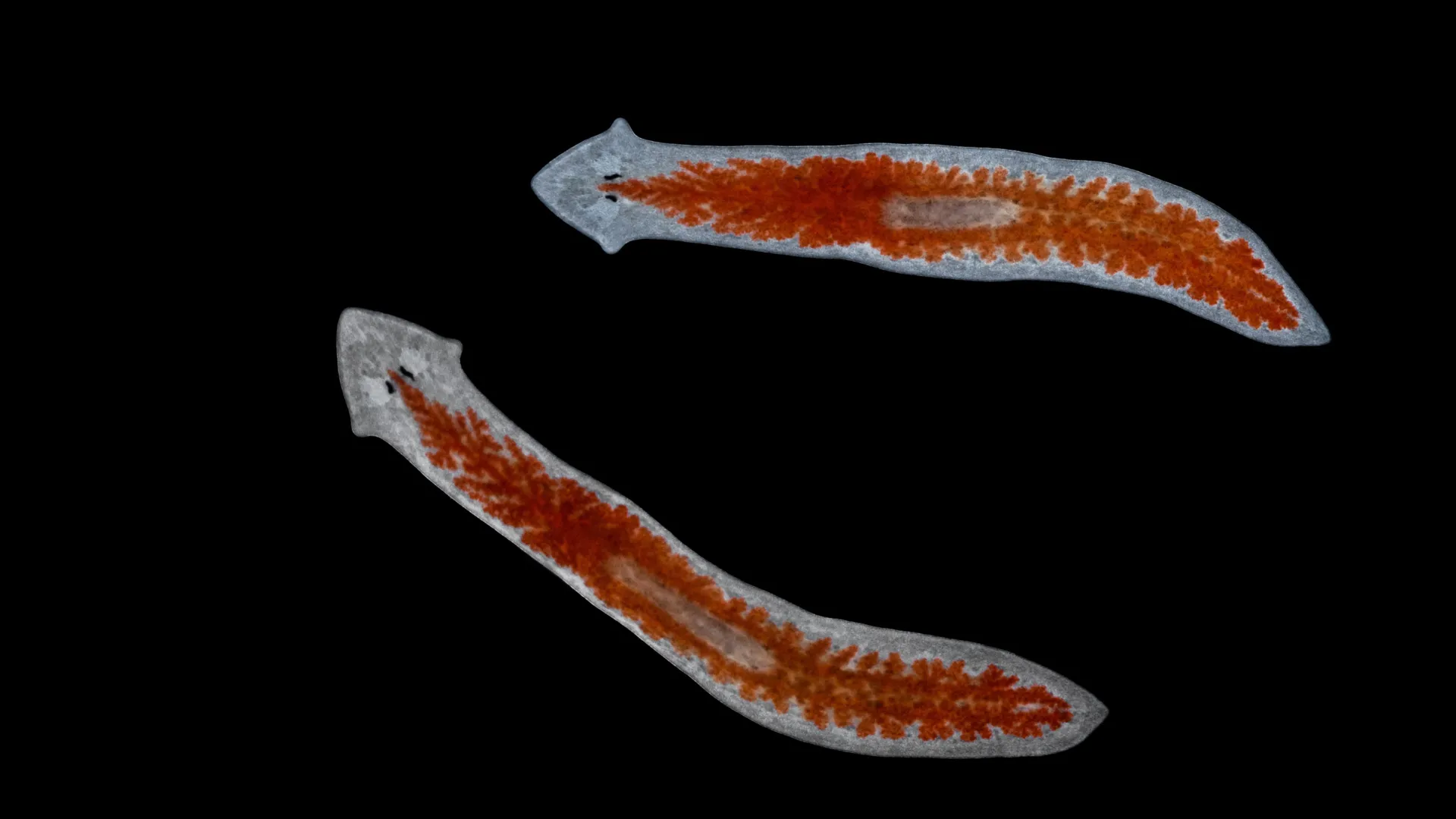
In most animals, stem cells rely on nearby cells to tell them what to do. However, new research from the Stowers Institute for Medical Research shows that flatworm, or planarian, stem cells behave differently. Instead of listening to their immediate neighbors, they take their instructions from cells located farther away in the body. This surprising behavior may explain how flatworms can regrow missing parts so effectively and could reveal new ways to repair or replace human tissues in the future.
The findings, published in Cell Reports on October 15, 2025, come from a study led by Postdoctoral Research Associate Frederick “Biff” Mann, Ph.D., in the laboratory of Stowers President and Chief Scientific Officer Alejandro Sánchez Alvarado, Ph.D. The work challenges a long-held biological principle: that most stem cells live in a fixed “niche,” a physical location where neighboring cells dictate when to divide and what to become.
“For instance, human blood-forming stem cells reside in niches within bone marrow where they divide to self-renew and make new blood cells,” said Mann.
Flatworms Rewrite the Rules of Regeneration
The researchers discovered that flatworms’ extraordinary ability to rebuild lost parts — whether an amputated head or an entire body from a fragment — is tied to stem cells that operate more freely than those in most other animals.
“Understanding how stem cells are regulated in living organisms is one of the great challenges in the fields of stem cell biology and regenerative medicine,” said Sánchez Alvarado. “This finding challenges our concept of a stem cell ‘niche’ and may significantly advance our understanding of how to control stem cells’ abilities to restore damaged tissues.”
Adult planarian stem cells can transform into any type of cell, unlike most animals’ stem cells, which are carefully restricted to forming only a few cell types. That tight control helps prevent uncontrolled growth — a process that can lead to cancer.
“Our hope is to uncover the basic rules that guide stem cells to become specific tissues as opposed to going rogue, as most tumors in humans begin when stem cells stop following these rules,” said Sánchez Alvarado.
“The role of a traditional niche may be more in line with a micromanager — instructing cells, ‘You can be a stem cell, but only one particular type’,” explained Mann. “However, we’ve now shown having a normal niche may not be essential for stem cells to work. Some stem cells, like those in the planarian flatworm, have figured out a way to be independent and can turn into any type of cell without needing a nearby niche.”
Discovering a New Cell Type: The Hecatonoblast
Using an advanced technique called spatial transcriptomics, the team examined which genes were active in individual cells and their surroundings. This revealed unexpected neighboring cells, including one never described before — a large cell with many fingerlike projections extending from its surface. The researchers named these cells “hecatonoblasts,” after Hecatoncheires, a many-armed giant from Greek mythology.
“Because they were located so close to stem cells, we were surprised to find that hecatonoblasts were not controlling their fate nor function, which is counterintuitive to a typical stem cell-niche connection,” said Mann.
Instead of nearby cells taking charge, the strongest instructions for the stem cells came from intestinal cells — the next most common type found in the dataset. These distant cells appeared to influence the planarian stem cells’ position and function during regeneration, even from afar.
“I tend to think about this as local versus global communication networks,” said co-corresponding author Blair Benham-Pyle, Ph.D., an Assistant Professor at the Baylor College of Medicine in Houston, Texas, and former Stowers Postdoctoral Research Associate. “While interactions between stem cells and their neighboring cells influence how a stem cell reacts immediately, distant interactions may control how that same stem cell responds to big changes in an organism.”
Rethinking the Nature of a Stem Cell Niche
The research revealed that planarian stem cells operate without a fixed, contact-based niche. “We found that there isn’t a specific cell type or factor right next to stem cells that is controlling their identity,” said Benham-Pyle. The team believes this unique independence may explain why planarians can regenerate so completely when most animals cannot.
“The big discovery is a property of the whole planarian permitting both subtle local interactions and global signaling events that allow stem cells to achieve these remarkable feats of regeneration,” said Benham-Pyle.
“The most surprising finding is that, at least in planarians, the environment in which the stem cells reside is not fixed. Instead, it’s dynamic — where stem cells reside is essentially made up by ‘friends’ that the stem cells and their progeny make along the way to differentiation,” said Sánchez Alvarado. “The more we understand how nearby cells and overall signals in the body work together to boost the ability and power of our stem cells, the better we’ll be at creating ways to improve the body’s natural healing. This knowledge could help develop new treatments and regenerative therapies for humans in the future.”
Additional authors include Carolyn Brewster, Ph.D., Dung Vuu, Riley Galton, Ph.D., Enya Dewars, Mol Mir, Carlos Guerrero-Hernández, Jason Morrison, Mary KcKinney, Ph.D., Lucinda Maddera, Kate Hall, Seth Malloy, Shiyuan Chen, Brian Slaughter, Ph.D., Sean McKinney, Ph.D., Stephanie Nowotarski, Ph.D., and Anoja Perera.
This work was funded by the National Institute for General Medical Sciences of the National Institutes of Health (NIH) (award: R37GM057260) and by institutional support from the Stowers Institute for Medical Research. The content is solely the responsibility of the authors and does not necessarily represent the official views of the NIH.
A review said staffing shortages also contributed to delays and patients being harmed at the Royal Infirmary of Edinburgh.
An NHS trust failed to act upon recommendations made in 2016, a report into child surgeries finds.
The test detects compounds in the breath which are detectable in cancer patients, say scientists.

Detecting dark matter, the invisible substance thought to keep galaxies intact, remains one of the most enduring mysteries in physics. Although it cannot be directly observed or touched, researchers suspect that dark matter leaves behind faint traces. These subtle signals might be detectable using advanced quantum technologies that can sense extremely small disturbances.
A team at Tohoku University has proposed a new strategy to make quantum sensors more powerful by linking them together in carefully designed networks. These sensors rely on the principles of quantum physics to measure minute fluctuations that ordinary instruments would miss. By connecting them in optimized patterns, the researchers believe it may be possible to detect the elusive fingerprints of dark matter with unprecedented precision.
Superconducting Qubits Become Cosmic Detectors
The research centers on superconducting qubits, tiny electronic circuits kept at extremely low temperatures. These qubits are typically used in quantum computers, but in this case they act as ultrasensitive detectors. The concept is similar to teamwork — while a single sensor might struggle to pick up a weak signal, a coordinated network of qubits can amplify and identify it far more effectively.
To test this concept, the team experimented with several types of network structures, including ring, line, star, and fully connected configurations. They built systems using four and nine qubits and then applied variational quantum metrology (a technique that works much like training a machine-learning algorithm) to fine-tune how quantum states were prepared and measured. To further improve accuracy, they used Bayesian estimation to reduce noise, similar to sharpening a blurred photograph.
Strong Results Show Real-World Potential
The optimized networks consistently outperformed conventional approaches, even when realistic noise was added. This result suggests that the method could already be implemented on existing quantum devices.
“Our goal was to figure out how to organize and fine-tune quantum sensors so they can detect dark matter more reliably,” explained Dr. Le Bin Ho, the study’s lead author. “The network structure plays a key role in enhancing sensitivity, and we’ve shown it can be done using relatively simple circuits.”
Beyond the hunt for dark matter, these quantum sensor networks could drive major advances in technology. Potential applications include quantum radar, gravitational wave detection, and highly accurate timekeeping. In the future, the same approach could help improve GPS precision, enhance MRI brain scans, and even reveal hidden underground structures.
“This research shows that carefully designed quantum networks can push the boundaries of what is possible in precision measurement,” Dr. Ho added. “It opens the door to using quantum sensors not just in laboratories, but in real-world tools that require extreme sensitivity.”
Next Steps for Quantum Research
Looking ahead, the Tohoku University team plans to expand this method to larger sensor networks and develop techniques to make them more resilient against noise.
Their findings were published in Physical Review D on October 1, 2025.

A team led by Rice University physicist Frank Geurts has achieved a major milestone in particle physics by measuring the temperature of quark-gluon plasma (QGP) at different stages of its evolution. This plasma is a form of matter thought to have filled the universe only millionths of a second after the big bang, the event that marks the universe’s origin and expansion. The results, published Oct. 14 in Nature Communications, offer a rare look at the extreme conditions that shaped the early cosmos.
Tracking Heat in the Early Universe
Measuring temperatures in environments where no instrument can physically survive has long challenged scientists. The team overcame this by studying thermal electron-positron pairs released during high-speed collisions of atomic nuclei at the Relativistic Heavy Ion Collider (RHIC) at Brookhaven National Laboratory in New York. These emissions provided a way to reconstruct how hot the plasma became as it formed and cooled.
Earlier temperature estimates had been uncertain, often distorted by motion within the plasma that created Doppler-like shifts or by confusion about whether the readings reflected the plasma itself or later stages of its decay.
“Our measurements unlock QGP’s thermal fingerprint,” said Geurts, a professor of physics and astronomy and co-spokesperson of the RHIC STAR collaboration. “Tracking dilepton emissions has allowed us to determine how hot the plasma was and when it started to cool, providing a direct view of conditions just microseconds after the universe’s inception.”
Opening a New Thermal Window
The quark-gluon plasma is a unique state of matter where the basic building blocks of protons and neutrons, quarks and gluons, exist freely rather than being confined inside particles. Its behavior depends almost entirely on temperature. Until now, scientists lacked the tools to peer into this hot, fast-expanding system without distorting the results. With QGP reaching temperatures of several trillion Kelvins, the challenge was to find a “thermometer” capable of observing it without interference.
“Thermal lepton pairs, or electron-positron emissions produced throughout the QGP’s lifetime, emerged as ideal candidates,” Geurts said. “Unlike quarks, which can interact with the plasma, these leptons pass through it largely unscathed, carrying undistorted information about their environment.”
Detecting these fleeting pairs among countless other particles required extremely sensitive equipment and meticulous calibration.
Experimental Breakthrough at RHIC
To achieve this, the team refined RHIC’s detectors to isolate low-momentum lepton pairs and reduce background noise. They tested the idea that the energy distribution of these pairs could directly reveal the plasma’s temperature. The approach, known as a penetrating thermometer, integrates emissions across the QGP’s entire lifetime to produce an average thermal profile.
Despite challenges in distinguishing genuine thermal signals from unrelated processes, the researchers obtained highly precise measurements.
Distinct Temperature Stages Revealed
The results showed two clear temperature ranges, depending on the mass of the emitted dielectron pairs. In the low-mass range, the average temperature reached about 2.01 trillion Kelvin, consistent with theoretical predictions and with temperatures observed when the plasma transitions into ordinary matter. In the higher mass range, the average temperature was around 3.25 trillion Kelvin, representing the plasma’s earlier, hotter phase.
This contrast suggests that low-mass dielectrons are produced later in the plasma’s evolution, while high-mass ones come from its initial, more energetic stage.
“This work reports average QGP temperatures at two distinct stages of evolution and multiple baryonic chemical potentials, marking a significant advance in mapping the QGP’s thermodynamic properties,” Geurts said.
Mapping Matter Under Extreme Conditions
By precisely measuring the temperature of the QGP at different points in its evolution, scientists gain crucial experimental data needed to complete the “QCD phase diagram,” which is essential for mapping out how fundamental matter behaves under immense heat and density, akin to conditions that existed moments after the big bang and are present in cosmic phenomena like neutron stars.
“Armed with this thermal map, researchers can now refine their understanding of QGP lifetimes and its transport properties, thus improving our understanding of the early universe,” Geurts said. “This advancement signifies more than a measurement; it heralds a new era in exploring matter’s most extreme frontier.”
Contributors to the study include former Rice postdoctoral associate Zaochen Ye (now at South China Normal University), Rice alumnus Yiding Han (now at Baylor College of Medicine), and current Rice graduate student Chenliang Jin. The work was supported by the U.S. Department of Energy Office of Science.
A BBC investigation finds kits on sale containing more than 500 times the legal limit of bleach.

Across nearly every country and historical era, women tend to live longer than men. While medical advances and improved living standards have reduced this gap in some places, new findings suggest the difference is deeply rooted in evolution and unlikely to vanish. Similar patterns appear across many animal species, hinting that the roots of longevity go far beyond modern life.
A team of scientists led by the Max Planck Institute for Evolutionary Anthropology in Leipzig, working with 15 collaborators around the world, carried out the largest and most detailed analysis ever of lifespan differences between male and female mammals and birds. Their results offer fresh insight into one of biology’s most enduring questions: why do the sexes age at different rates?
Longevity: A question of chromosomes?
In most mammal species, females live longer — for example, female baboons and gorillas often surpass males in age. But this pattern reverses in other groups. In many birds, reptiles, and insects, it is the males that have longer lifespans. One possible explanation, known as the heterogametic sex hypothesis, links these differences to sex chromosomes. Mammalian females possess two X chromosomes, while males have one X and one Y (making them the heterogametic sex). Having a pair of X chromosomes may shield females from harmful mutations and extend their lifespan. In birds, the system is reversed: females are the heterogametic sex.
Using data from more than 1,176 mammal and bird species in zoos around the world, researchers observed a striking contrast that supported this hypothesis. In most mammals (72 percent), females lived longer, by an average of twelve percent. In most bird species (68 percent), males were the longer-lived sex, averaging five percent longer lifespans. Yet the pattern was far from universal. “Some species showed the opposite of the expected pattern,” explained lead author Johanna Stärk. “For example, in many birds of prey, females are both larger and longer-lived than males. So sex chromosomes can only be part of the story.”
How mating and parenting shape longevity
In addition to genetics, reproductive strategies also play a role. Through sexual selection, males in particular develop conspicuous characteristics such as colorful plumage, weapons, or large body size, which increase reproductive success but can shorten lifespan. The new study supports this assumption: In polygamous mammals with strong competition, males generally die earlier than females. Many birds, on the other hand, are monogamous, which means that competitive pressure is lower and males often live longer. Overall, the differences were smallest in monogamous species, while polygamy and pronounced size differences were associated with a more pronounced advantage for females.
Parental care also plays a role. The researchers found evidence that the sex that invests more in raising offspring — in mammals, this is often the females — tends to live longer. In long-lived species such as primates, this is likely to be a selective advantage: females survive until their offspring are independent or sexually mature.
Zoo life reduces — but does not erase — lifespan gaps
A long-held idea suggests that environmental pressures, such as predators, disease, and harsh weather, drive differences in male and female lifespan. To test this, the scientists turned to zoo populations, where such risks are minimal. Even in these safe conditions, lifespan gaps persisted. Comparing zoo and wild data showed that while the differences were smaller in captivity, they rarely disappeared altogether. This pattern mirrors the human experience: better healthcare and living conditions may shrink the gap between men and women, but do not erase it.
Taken together, the findings indicate that lifespan differences between males and females are deeply embedded in evolution. They are shaped by sexual selection, parental care, and genetic factors linked to sex determination. The environment influences how large these gaps become but cannot remove them entirely. These contrasts between the sexes are not simply a product of circumstance — they are woven into our evolutionary past and are likely to persist far into the future.
Terry White’s sister is giving evidence to the Lampard Inquiry into mental health deaths.
