Biology teacher Emily Henders says she understands the “scientific rationale” behind the treatment.


Biology teacher Emily Henders says she understands the “scientific rationale” behind the treatment.

Imagine being able to alter a material so that it seems to transform into an entirely different one. No magic wand or special potion is needed — only light. When light interacts with the material, it excites its magnetic states, setting off collective magnetic vibrations. These vibrations can transmit and store information at terahertz speeds. The entire process happens at room temperature and produces almost no heat. Even better, it doesn’t rely on rare or exotic materials. Researchers observed the effect in common, naturally grown crystals that are widely available. Now imagine using the same approach to tap into quantum effects — phenomena so delicate they are typically observed only near absolute zero (around -270 degrees Celsius) — but doing it at room temperature, with no costly cooling systems required.
It might sound like science fiction, yet this breakthrough is real. A team of physicists at the University of Konstanz, led by Davide Bossini, has developed an experimental technique that makes it possible. By using laser pulses to coherently excite pairs of magnons (quanta of spin waves), the researchers achieved remarkable effects that could influence both information technology and quantum research. Their findings were published in Science Advances.
Technology based on magnons
Before diving deeper, it helps to understand what magnons are and why they matter. The modern world generates enormous amounts of data through artificial intelligence and the “Internet of Things.” Our current information systems are already straining under the pressure, and a data bottleneck threatens to slow technological progress.
One proposed solution is to use electron spins — or even better, waves of many spins moving together — to carry information. These collective spin oscillations are called magnons. They behave like waves and can be manipulated by lasers, potentially allowing data transmission and storage at terahertz frequencies.
So far, however, scientists have only been able to excite magnons at their lowest frequencies using light, which limits their potential. To harness magnons for future technologies, researchers must be able to tune their frequency, amplitude, and lifetime. The team at Konstanz has now found a way to do exactly that. By directly exciting pairs of magnons — the highest-frequency magnetic resonances in a material — they discovered a powerful new form of control.
A huge surprise
“The result was a huge surprise for us. No theory has ever predicted it,” says Davide Bossini. Not only does the process work — it also has spectacular effects. By driving high-frequency magnon pairs via laser pulses, the physicists succeeded in changing the frequencies and amplitudes of other magnons — and thus the magnetic properties of the material — in a non-thermal way. “Every solid has its own set of frequencies: electronic transitions, lattice vibrations, magnetic excitations. Every material resonates in its own way,” explains Bossini. It is precisely this set of frequencies that can be influenced through the new process. “It changes the nature of the material, the ‘magnetic DNA of the material’, so to speak, its ‘fingerprint’. It has practically become a different material with new properties for the time being,” says Bossini.
“The effects are not caused by laser excitation. The cause is light, not temperature,” confirms Bossini: “We can change the frequencies and properties of the material in a non-thermal way.” The advantages are obvious: The method could be used for future data storage and for fast data transmission at terahertz rates without the systems being slowed down by the pileup of heat.
No spectacular high-tech materials or rare earths are required as the basis for the process, but rather naturally grown crystals — namely the iron ore haematite. “Haematite is widespread. Centuries ago, it was already used for compasses in seafaring,” explains Bossini. It is perfectly possible that haematite will now also be used for quantum research in the future. The results of the Konstanz team suggest that, using the new method, researchers will be able to produce light-induced Bose-Einstein condensates of high-energy magnons at room temperature. This would pave the way to researching quantum effects without the need for extensive cooling. Sounds like magic, but it is just technology and cutting-edge research.
The project was carried out in the context of the Collaborative Research Centre SFB 1432 “Fluctuations and Nonlinearities in Classical and Quantum Matter beyond Equilibrium.”
Care Quality Commission warns GP, mental health and social care services lacking staff and capacity.
A boat designed for wheelchair users took on water and flipped, trapping the victims.
More 16-24 year olds in England say they have symptoms of obsessive compulsive disorder – BBC analysis finds.
How linked are financial worries and health? GPs in London are trialling a financial support scheme.
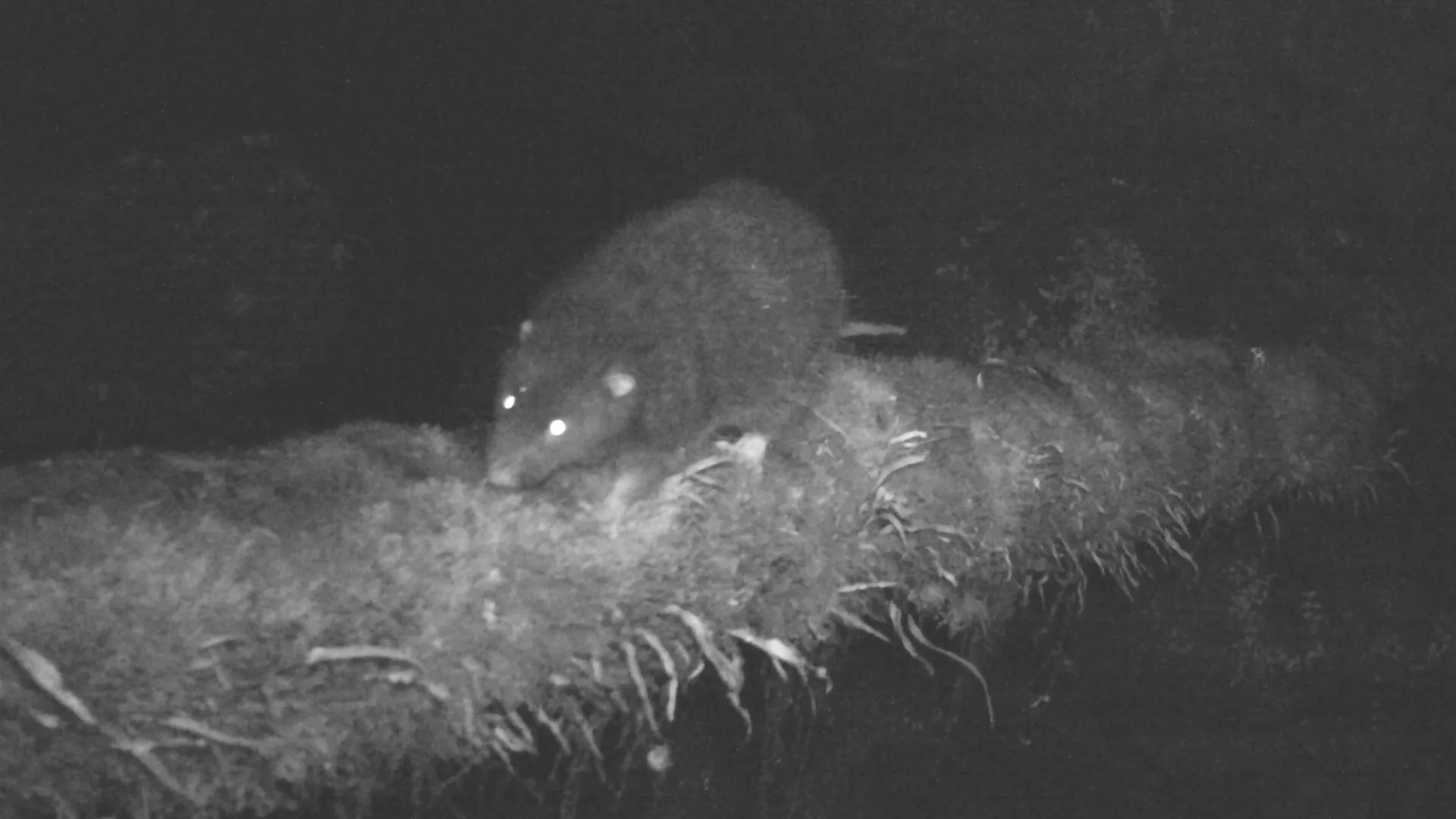
After spending six months exploring the rugged landscapes of New Guinea, a young Czech doctoral student from the Biology Centre of the Czech Academy of Sciences and the University of South Bohemia has made an extraordinary find. František Vejmělka is the first researcher to observe and scientifically document Mallomys istapantap in its natural environment. This enormous nocturnal rodent, one of the largest in the world, lives high in the cool, mist-covered forests and grasslands around 3,700 meters above sea level. Until now, scientists knew the species only from a few preserved museum specimens. For the first time, photographs and video footage now reveal the animal alive in its native mountain habitat.
Bringing a Lost Species Back Into View
The Subalpine Woolly Rat (Mallomys istapantap) was first identified in 1989 from museum samples and had not been recorded in the wild for three decades. It had never been photographed until now. The new field data and imagery collected by Vejmělka provide crucial insight into this rarely seen species and shed new light on the extraordinary mammalian biodiversity of New Guinea’s remote highlands.
A Mysterious Giant of the Highlands
“It’s astonishing that such a large and striking animal has remained so poorly studied. How much more is there to discover about the biodiversity of tropical mountains?” says Vejmělka. Alongside the groundbreaking photos and videos, he obtained the first biometric measurements of male specimens and documented details about the animal’s diet, parasites, movements, and daily behavior.
New Guinean woolly rats, related to the giant cloud rats of the Philippines, rank among the largest murine rodents on Earth. They live only in the steep, rainforest-covered highlands of New Guinea. In the absence of other competing placental mammals, these rodents have diversified over roughly five million years into a surprising array of distinct forms and species.
Life of the Subalpine Woolly Rat
The thick-furred Mallomys istapantap leads a secretive life in isolated, high-altitude regions. Active at night, it climbs trees in search of food and takes shelter during the day in burrows or among tree branches. Feeding exclusively on plant material, it has sharp incisors, dense fur, 8 cm-long paws, and a total body length (including tail) of about 85 cm. Weighing up to 2 kg, it is both imposing and elusive. Its nocturnal behavior and inaccessible habitat have made direct observation extremely rare.
Science Meets Traditional Knowledge
“If it weren’t for the indigenous hunters who accompanied me in the mountains and helped me locate the animals, I would never have been able to collect this data,” says Vejmělka. During his six-month expedition, he worked closely with several local tribes while surveying the mammalian diversity of Mount Wilhelm (4,509 m), the highest peak in Papua New Guinea, from base to summit. He documented and genetically identified 61 species of non-flying mammals (rodents and marsupials) found along the mountain.
This fieldwork deepens scientific knowledge of the incredible but still underexplored wildlife of New Guinea’s tropical mountains. While similar habitats in regions such as the Americas, Africa, and Southeast Asia have been studied extensively, the Australasian highlands remain far less known. Collaboration with local communities is a vital part of this progress.
Through these shared research efforts, indigenous groups gain awareness of their region’s unique natural heritage and the importance of protecting it from increasing threats, including mining.
The findings have been published in the scientific journal Mammalia.

Scientists at Cedars-Sinai have developed “young” immune cells from human stem cells that reversed signs of aging and Alzheimer’s disease in the brains of laboratory mice, according to findings published in Advanced Science. The breakthrough suggests these cells could eventually lead to new treatments for age-related and neurodegenerative conditions in people.
Clive Svendsen, PhD, executive director of the Board of Governors Regenerative Medicine Institute and senior author of the study, explained the team’s innovative approach. “Previous studies have shown that transfusions of blood or plasma from young mice improved cognitive decline in older mice, but that is difficult to translate into a therapy,” Svendsen said. “Our approach was to use young immune cells that we can manufacture in the lab — and we found that they have beneficial effects in both aging mice and mouse models of Alzheimer’s disease.”
Creating Youthful Immune Cells From Stem Cells
The cells, known as mononuclear phagocytes, normally circulate through the body to clear harmful substances. However, their function diminishes as organisms age. To produce youthful versions, researchers used human induced pluripotent stem cells — adult cells reprogrammed to an early embryonic-like state — to generate new, young mononuclear phagocytes.
When these lab-grown immune cells were infused into aging mice and mouse models of Alzheimer’s disease, the scientists observed remarkable improvements in brain function and structure.
Improved Memory and Brain Cell Health
Mice that received the young immune cells outperformed untreated mice on memory tests. Their brains also contained more “mossy cells” within the hippocampus, a region essential for learning and memory.
“The numbers of mossy cells decline with aging and Alzheimer’s disease,” said Alexendra Moser, PhD, a project scientist in the Svendsen Lab and lead author of the study. “We did not see that decline in mice receiving young mononuclear phagocytes, and we believe this may be responsible for some of the memory improvements that we observed.”
In addition, the treated mice had healthier microglia — specialized immune cells in the brain responsible for detecting and clearing damaged tissue. Normally, microglia lose their long, thin branches as the brain ages or in Alzheimer’s disease, but in treated mice, these branches remained extended and active, suggesting preserved immune and cognitive function.
How the Treatment Might Work
The exact mechanism behind these benefits is not yet clear. Because the young mononuclear phagocytes did not appear to cross into the brain, researchers believe they may influence brain health indirectly.
The team proposes several possibilities: the cells could release antiaging proteins or tiny extracellular vesicles capable of entering the brain, or they might remove pro-aging factors from the bloodstream, protecting the brain from harmful effects. Ongoing studies aim to identify the precise mechanism and determine how best to translate these findings into human therapies.
Toward Personalized Anti-Aging Therapies
“Because these young immune cells are created from stem cells, they could be used as personalized therapy with unlimited availability,” said Jeffrey A. Golden, MD, executive vice dean for Education and Research. “These findings show that short-term treatment improved cognition and brain health, making them a promising candidate to address age- and Alzheimer’s disease-related cognitive decline.”
Additional authors include Luz Jovita Dimas-Harms, Rachel M. Lipman, Jake Inzalaco, Shaughn Bell, Michelle Alcantara, Erikha Valenzuela, George Lawless, Simion Kreimer, Sarah J. Parker,andHelen S. Goodridge.
Funding: This work was supported by the Universal Sunlight Foundation, the Cedars-Sinai Center for Translational Geroscience, and the Cedars-Sinai Board of Governors Regenerative Medicine Institute.
However, Donna Ockenden’s offer to get involved in other inquiries is rejected by the health secretary.
Walkout will be the 13th of long-running dispute between government and British Medical Association.
