Health24.com | Why hearing aid upkeep is often out of reach for the poor

If you’re poor, you’ll likely have less success with your hearing aid, a new study finds.

A survey of more than 1 100 Medicare recipients with hearing aids found that 27% of low-income users still had a lot of trouble hearing. That compared with just 11% of the wealthiest users.

The reason, the study authors suggested, is that poorer seniors have insufficient access to ongoing care to keep the devices functioning properly.

Ongoing maintenance and counselling

While 42% of the wealthiest hearing aid patients sought out expert audiology advice each year, only about 30% of the poorest users did so, the study found.

“As Medicare does not cover hearing aids or hearing care services, beneficiaries must therefore pay for them out of pocket,” said study lead author Amber Willink. “The cost of these services is a significant barrier to access, particularly for low-income beneficiaries.”

But even for patients of means, “the value of hearing care services is not widely known or appreciated,” said Willink, an assistant scientist at the Johns Hopkins Bloomberg School of Public Health in Baltimore.

Given the complexity of hearing aid use, hearing care services provide “a necessary value-add”. They offer proper fitting and device customisation as well as ongoing maintenance and counselling to ensure continued use, she explained.

Two-thirds of Americans over the age of 70 have some degree of hearing loss, which affects their quality of life, the researchers noted. But most don’t use hearing aids, often because of the price.

New law

Willink’s team pegs the expense at about $2 000 (±R28 000) for a single unit. But a study published last July placed the overall figure at about $7 000 (±R98 000). That report, led by Dr Michael McKee of the University of Michigan, suggested that high prices (alongside hearing loss shame) keep many seniors from seeking hearing devices.

Some low-income seniors can obtain partial Medicaid coverage, but it’s only available in 28 states, the researchers reported.

The situation might ease somewhat in 2020 when a new law takes effect allowing consumers to buy hearing aids directly from approved manufacturers instead of an audiologist or licensed dispenser.

However, while hearing aids may become more affordable, McKee cautioned that “this may also exacerbate hearing health disparities among those who can’t afford them in the first place, or may not be as technologically savvy as others”.

It will be important for audiologists to help guide consumers on these choices, he said.

Jackie Clark, past president of the American Academy of Audiology, said that getting Medicare to cover costs in full would go a long way to ensuring that those at all income levels get the devices and continuous care they need.

Optimal performance

“It would certainly be a whole new ballgame if Medicare would cover hearing aids,” said Clark, who is also a clinical professor at the University of Texas at Dallas.

Willink and her colleagues also suggested that the federal government expand Medicare and/or Medicaid coverage of hearing care services.

But with or without such a major funding change, Clark said hearing aid users must be educated about the importance of regular consultations.

The audiologist is critical in determining what technology is best, and knowing how to programme the device to ensure optimal performance, she explained.

Study participants were aged 65 and older, and drawn from a 2013 survey pool of nearly 9 100 Medicare recipients.

The report was published in Health Affairs.

Image credit: iStock

Share Button

Health24.com | Look to your aunts, uncles and parents for clues to your longevity

Your chances of inheriting genes linked to longevity are highest if you come from a family with many long-lived members, researchers say.

And that includes aunts and uncles, not just parents.

‘Top survivors’

Using databases at the University of Utah and in the Dutch province of Zeeland, investigators analysed the genealogies of nearly 315 000 people from over 20 000 families dating back to 1740.

“We observed … the more long-lived relatives you have, the lower your hazard of dying at any point in life,” said study lead author Niels van den Berg. He is a doctoral student in molecular epidemiology at Leiden University in the Netherlands.

“For example, someone whose parents are both ‘top survivors’ has a 31% lower hazard of dying than someone of the same age without such parents,” van den Berg said in a University of Utah news release.

“Top survivors” refers to people in the top 10% age-wise of a group of people born within a given time period.

“Moreover, that person’s hazard of dying is reduced, even if the parents themselves did not live to be extremely old but aunts and uncles were among the top survivors,” van den Berg said.

Genes associated with longevity

“In long-lived families, parents can therefore pass on longevity genes to their children, even if external factors prohibited them from reaching the top survivors,” he explained.

The findings reinforce the idea that “there really are longevity genes to be discovered in humans”, van den Berg said.

The study was published online in the journal Nature Communications.

Researchers have long searched for genes associated with longevity, but those genes have been much more difficult to pinpoint than genes for disease, said study co-author Eline Slagboom, a professor of molecular epidemiology at Leiden University.

“This research has led us to be far stricter in selecting the people in whom you have to look for those genes,” Slagboom said.

“If you investigate a random group of people aged over 100, however exceptional they may be, it’s highly likely that many of them do not in fact belong to a family in which longevity is heritable,” Slagboom said. “Their age is probably a matter of chance, the result of a healthy lifestyle or healthy circumstances, for example during childhood, and isn’t therefore reflected in their DNA.”

Image credit: iStock

Share Button

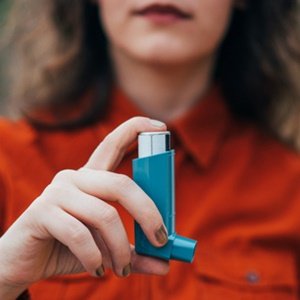
Health24.com | SEE: This condition can be deadly – but it can be managed

Asthma Expert

Professor Keertan Dheda has received of several prestigious awards including the 2014 Oppenheimer Award, and has published over 160 peer-reviewed papers and holds 3 patents related to new TB diagnostic or infection control technologies. He serves on the editorial board of the journals PLoS One, the International Journal of Tuberculosis and Lung Disease, American Journal of Respiratory and Critical Medicine, Lancet Respiratory Diseases and Nature Scientific Reports, amongst others.Read his full biography at the University of Cape Town Lung Institute

Share Button

Teenage cancer survival ‘on the up’ in England, report finds

But youngsters living in poorer areas of England had lower chances of survival, cancer data found.

Share Button

The diet to save lives, the planet and feed us all?

And you don’t have to be vegan to follow the “planetary health diet”.

Share Button

Footballers in new concussion study

Premier League footballers are taking part in a “ground-breaking” new concussion study this season that could lead to pitch-side diagnosis.

Share Button

Water, not temperature, limits global forest growth as climate warms

The growth of forest trees all over the world is becoming more water-limited as the climate warms, according to new research from an international team that includes University of Arizona scientists.

The effect is most evident in northern climates and at high altitudes where the primary limitation on tree growth had been cold temperatures, reports the team this week in the online journal Science Advances.

“Our study shows that across the vast majority of the land surface, trees are becoming more limited by water,” said first author Flurin Babst, who conducted the research at the UA Laboratory of Tree-Ring Research and the Swiss Federal Research Institute WSL in Zurich.

“This is the first time that anybody has projected the tree growth responses to climate at a near-global scale,” Babst said.

The researchers compared the annual growth rings of trees during two time periods, 1930-1960 and 1960-1990. The growth rings are wider when conditions are better, narrower when conditions are worse. The ring-width measurements were taken from trees at about 2,700 sites spanning every continent except Antarctica.

For those two time periods, the team also mapped average temperature, precipitation and measures of drought stress on plants onto a grid covering the world’s temperate and boreal regions.

Adding tree-ring data to the map allowed scientists to see whether the changes in climate during the 20th century corresponded to the changes in growth of the world’s trees.

UA co-author David Frank said, “We saw areas where, in the earlier part of the 20th century, temperature limited growth. But now we are seeing shifts towards moisture-drought limitation.”

Comparing 1930-1960 with 1960-1990, the average temperature increased 0.9 degrees F (0.5 degrees C) and the land area where tree growth was primarily limited by temperature shrank by 3.3 million square miles (8.7 million square kilometers), an area about the size of Brazil.

Babst was surprised that such a small change in temperature would shift such a large area of trees from being temperature-limited to being water-limited.

“That’s much more than I expected,” said Babst, who is now a research scientist at the Swiss Federal Research Institute WSL.

The finding has implications for future forest and tree growth and for forest management, said Frank, director of the Laboratory of Tree-Ring Research and professor of dendrochronology at the UA.

“Reduced growth is indicative of increased stress on plants — which can be linked to mortality,” he said.

The team’s paper “Twentieth century redistribution in climatic drivers of global tree growth” is scheduled for online publication in Science Advances on January 16. More information on co-authors and funding agencies is at the bottom of this news release.

Since the advent of systematic satellite observations in the late 1970s, scientists can now study changes in vegetation growth over large areas by comparing satellite images of the same place over time and measuring “greenness” in the images. Greenness is a measure of how leafy the plants are and how fast they are growing.

However, satellite observations weren’t available for most of the 20th century. Moreover, measuring “greenness” in a satellite image can’t tell how much individual plants grew from year to year.

“Satellites only see the leaves — they don’t see the wood where the carbon is stored,” Babst said. “We wanted to provide a wood perspective.”

He and his colleagues wanted on-the-ground measurements of tree growth to compare to the data from satellites. By using several databases of tree-ring measures from all over the world for the time periods 1930-1960 and 1960-1990, the researchers could see whether the average growth of trees had changed.

In addition, because the team’s research combines the substantial database of growth data from tree rings all over the world with global climate data for the same time period, the new results will help test and improve computer models of how climate affects vegetation, Frank said.

Babst and Frank’s co-authors are Valerie Trouet of the UA; Olivier Bouriaud of Strada Universit?t in Suceava, Romania; Benjamin Poulter of the NASA Goddard Space Flight Center in Greenbelt, Maryland; and Martin P. Girardin of Natural Resources Canada in Quebec and the Université du Québec à Montréal, Canada.

The European Union-Horizon 2020 program and the Swiss National Science Foundation funded the research.

Share Button

Feathers: Better than Velcro?

You may have seen a kid play with a feather, or you may have played with one yourself: Running a hand along a feather’s barbs and watching as the feather unzips and zips, seeming to miraculously pull itself back together.

That “magical” zipping mechanism could provide a model for new adhesives and new aerospace materials, according to engineers at the University of California San Diego. They detail their findings in the Jan. 16 issue of Science Advances in a paper titled “Scaling of bird wings and feathers for efficient flight.”

Researcher Tarah Sullivan, who earned a Ph.D. in materials science from the Jacobs School of Engineering at UC San Diego, is the first in about two decades to take a detailed look at the general structure of bird feathers (without focusing on a specific species). She 3D-printed structures that mimic the feathers’ vanes, barbs and barbules to better understand their properties — for example, how the underside of a feather can capture air for lift, while the top of the feather can block air out when gravity needs to take over.

Sullivan found that barbules — the smaller, hook-like structures that connect feather barbs — are spaced within 8 to 16 micrometers of one another in all birds, from the hummingbird to the condor. This suggests that the spacing is an important property for flight.

“The first time I saw feather barbules under the microscope I was in awe of their design: intricate, beautiful and functional,” she said. “As we studied feathers across many species it was amazing to find that despite the enormous differences in size of birds, barbules spacing was constant.”

Sullivan believes studying the vane-barb-barbule structure further could lead to the development of new materials for aerospace applications, and to new adhesives — think Velcro and its barbs. She built prototypes to prove her point, which she will discuss in a follow up paper. “We believe that these structures could serve as inspiration for an interlocking one-directional adhesive or a material with directionally tailored permeability,” she said.

Sullivan, who is part of the research group of Marc Meyers, a professor in the Departments of Nanoengineering and Mechanical and Aerospace Engineering at UC San Diego, also studied the bones found in bird wings. Like many of her predecessors, she found that the humerus — the long bone in the wing — is bigger than expected. But she went a step further: using mechanics equations, she was able to show why that is. She found that because bird bone strength is limited, it can’t scale up proportionally with the bird’s weight. Instead it needs to grow faster and be bigger to be strong enough to withstand the forces it is subject to in flight. This is known as allometry — the growth of certain parts of body at different rates than the body as a whole. The human brain is allometric: in children, it grows much faster than the rest of the body. By contrast, the human heart grows proportionally to the rest of the body — researchers call this isometry.

“Professor Eduard Arzt, our co-author from Saarland University in Germany, is an amateur pilot and became fascinated by the ‘bird wing’ problem. Together, we started doing allometric analyses on them and result is fascinating,” said Meyers. “This shows that the synergy of scientists from different backgrounds can produce wonderful new understanding.”

Story Source:

Materials provided by University of California – San Diego. Original written by Ioana Patringenaru. Note: Content may be edited for style and length.

Share Button

Full carbonate chemistry at the site of calcification in a tropical coral

Coral reefs are made up of massive calcium carbonate skeletons. The present study, published in Science Advances on January 16th 2019, reveals insights into the process of calcification, namely the process that leads to the formation of these skeletons. Elucidating coral calcification is key to a deeper understanding and better predictions of how and why coral reefs respond to environmental changes, such as ocean acidification.

“By combining microscopy and microsensor measurements, we were able to directly measure calcium, carbonate and pH at the site of calcification in coral microcolonies of Stylophora pistillata and derive important carbonate chemistry parameters from it. We show that all measured and derived parameters are higher at the coral than in the surrounding seawater. This points to the importance of calcium and carbon concentrating mechanisms that are actively regulated by the coral to form its skeleton,” says lead author Duygu Sevilgen, scientist at the CSM and former PhD-student at the Max-Planck-Institute for Marine Microbiology.

Measuring these key parameters at the site of calcification in live coral samples (where the first crystals are formed before they fuse to build the massive skeleton) is technically highly challenging. Previous studies using microelectrodes have been carried out “blind” and were hampered by uncertainty over correct placement of the microelectrodes in the calcifying medium. As such, most of today’s knowledge is based on geochemical signatures in dead skeletons, rather than measurements in live corals. Sevilgen and her colleagues overcame these difficulties by using in vivo microscopy to orientate the microelectrodes into the calcifying medium, minimizing disturbance to coral physiology. “Since many years, one of our strengths at the CSM has been to culture corals under controlled conditions and develop cutting edge techniques to analyse the physiology of living corals,” says Sylvie Tambutté, research director at the CSM.

Alexander Venn, senior scientist at the CSM, further explains: “Lots of important data on the calcifying fluid are available in the literature on corals. However, values obtained by different methods show great variability. As a first step in our study, we combined two methods to measure pH (a pH sensitive fluorescent dye and pH microsensors) and optically verified that we measure at the same spot and at the same time. By doing this we could show that when measured at the same time and place, methods indeed agree, clarifying differences in previous findings. This highlights the usefulness and importance of optical verification during the use of microsensors to ensure proper placement within the coral.”

The study presents important insights that are relevant for future microsensor and modeling approaches addressing the carbonate chemistry and dynamics during carbonate crystal formation in corals.

Story Source:

Materials provided by Max Planck Institute for Marine Microbiology. Note: Content may be edited for style and length.

Share Button

Health24.com | Friends’ vaping could pose danger to kids with asthma

Add another danger that e-cigarettes pose to teenagers: A new study finds second hand exposure to vaping may raise the chances of asthma attacks in adolescents with the respiratory condition.

Middle school and high school students with asthma were 27% more likely to have suffered an asthma attack if they’d been exposed to vapour from someone else’s e-cigarette use, the researchers found.

Not harmless

“While we cannot definitively say these products worsen asthma, I think if I was a parent, I wouldn’t want to risk my kids being around people using these products,” said lead researcher Jennifer Bayly. She is a student at Rutgers Robert Wood Johnson Medical School in New Brunswick, New Jersey.

These findings and others belie the general perception that e-cigarette emissions carry no risk, said Dr Karen Wilson, chief of general paediatrics at the Icahn School of Medicine at Mount Sinai in New York City.

“Contrary to the idea that it’s a harmless water vapour, it actually contains some of the same chemicals that we find in tobacco smoke, along with particulate matter that can be very irritating to people with asthma,” Wilson said.

There is moderate scientific evidence that e-cigarette use causes increased cough and wheeze in teenagers, and an increase in asthma symptoms, according to a recent National Academies of Sciences, Engineering and Medicine report cited by the study authors.

For their research, Bayly and her colleagues gathered data from the 2016 Florida Youth Tobacco Survey. It included about 33 500 high school students and just over 36 000 middle school students, aged 11 to 17. The study focused on 11 830 students who reported having asthma.

Significantly increased risk of asthma attack

Overall, 21% of kids with asthma said they’d had an asthma attack during the previous year, and 33% said they’d been exposed to second hand vapour from an e-cigarette.

This exposure to second hand vapour was tied to a significantly increased risk of an asthma attack, even after researchers accounted for other factors, such as whether the teens used an e-cigarette themselves or had been exposed to tobacco smoke.

The report was published in the journal Chest.

“The authors did a nice job of controlling for other sources” of exposure to lung-irritating substances, said Dr Christy Sadreameli, a paediatric pulmonologist at Johns Hopkins Hospital in Baltimore and a spokeswoman for the American Lung Association.

If anything, the new study probably understated the effect second hand e-cigarette vapour has on kids, Wilson and Sadreameli said.

That’s partly because the study focused on adolescents, Wilson said. “I’d be very worried to think about the impact on small children who can’t escape these second hand aerosols,” she explained.

Inflammation and irritation

It’s also because the survey data is now years old, Sadreameli added, and e-cigarette use has surged even more since the advent of Juul, a leading e-cig brand that is popular with young people.

“We know that uptake of electronic cigarettes is happening at a pretty rapid rate,” Sadreameli said. “If anything, there may be even more students, if they did the study today, who are being exposed to [electronic nicotine delivery systems] or possibly using them.”

E-cigarette vapour contains propylene glycol, vegetable glycerine, nicotine and many different flavouring agents, the researchers noted. Each has been linked to inflammation and irritation in the lungs that could impact asthma sufferers.

Parents should limit kids’ exposure to second hand vapour, particularly if they have asthma, Wilson and Sadreameli said.

But Gregory Conley, president of the American Vaping Association, a non-profit that advocates for sensible regulation of vaping products, took issue with the findings.

“Unfortunately, the authors of this study failed to disclose what percentage of vapour-exposed youth were also exposed to cigarette smoke – despite having that data available to them – therefore making it impossible for a reader to determine whether any effect remains if cigarette smoke exposure is eliminated,” Conley said.

Image credit: iStock

NEXT ON HEALTH24X

Share Button