Ministers hail the UK’s “world leading” pollution plan, but green groups call it a missed opportunity.


Ministers hail the UK’s “world leading” pollution plan, but green groups call it a missed opportunity.
Nobel Prize-winning scientist James Watson has repeated remarks about race and intelligence.

The exercise theory behind the acronym promises major results from mini time slots – but what’s actually going on beneath the Lycra when you hit a HIIT class hard?
1. Your lungs
The clue is in the name. Moving at max intensity is the only way this will work – which is why you’re out of breath. “You need to be at 90 to 100% effort for 15 to 30 seconds,” says sports therapist Barry Sigrist. “By working anaerobically (sans oxygen for fuel), you’ll produce lactic acid, which releases adrenaline, helping to move fat around the body.”
Read more: The best exercise for your body in your 20s, 30s and 40s
2. Your muscles
You need the power, but mini-breaks are just as important. A rest is as good as a rep. Yes, really. “The ideal ratio for a 20-minute session is 30 seconds on, 60 seconds off. Resting for so long might feel like cheating, but your muscles need time to renew their oxygen and glycogen levels,” says Sigrist. “Too little rest and your body becomes catabolic, breaking down muscle tissue.” You don’t need to tell us twice.
3. Your skin
Sweating so much your moisture-wicking leggings can’t cope? It’s all part of the HIIT experience. But don’t reach for a towel between sets. “For the body to lose heat through sweat, it must evaporate from the skin, so wiping it off will likely just increase overall sweat production.” explains Dr John Dickinson, a lecturer in sports and exercise science. Wear that glow with pride.
Read more: This is the best alternative to a personal trainer – and it’s way cheaper
4. Your hormones
To power a HIIT session, your body taps into muscle glycogen, not fat stores – calm down, if your goals include weight loss, this is a good thing. “HIIT triggers a release of human growth hormone and testosterone – both play a key role in metabolising fat,” Sigrist explains. For best results, elicit a peak hormone response by incorporating compound movements into your session – think squats, lunges and (sorry) burpees.
5. Your pudge
Boom – your body is still burning kilojoules while you’re busy shovelling in post-workout chocolate Superfoods Super Oats. “The magic of HIIT takes place after your session,” says Sigrist. “Your body has an ‘oxygen debt’ to repay and this creates something called excess post-exercise oxygen consumption.” Simply put, you’re still burning kilojoules for hours after you stop. You can amplify this effect by staying active, so consider HIITing it in the morning before work.
This article was originally published on www.womenshealthsa.co.za
Image credit: iStock
NEXT ON HEALTH24X


Gogos in Mpheni Village say they suffer from sore joints and chronic illnesses because they don’t get enough exercise or do enough hobbies. But days of sitting at home drinking traditional beer are over after football for the elderly in the village was launched. The pensioners have praised the initiative, saying it has given them something to do and it keeps them healthy and fit.
Mpheni resident Selina Sadiki, 69, said she finds the exercise relaxing because it allows her to forget about her problems. “I feel like a new person. It keeps me busy, healthy and happy.”
A popular form of exercise
She said the exercise has also cut down her visits to the clinic. “I used to visit the local clinic very often but now I only go once a month to collect my medicine.” Although she is happy playing football, Sadiki feels that more still needs to be done to empower elderly people.
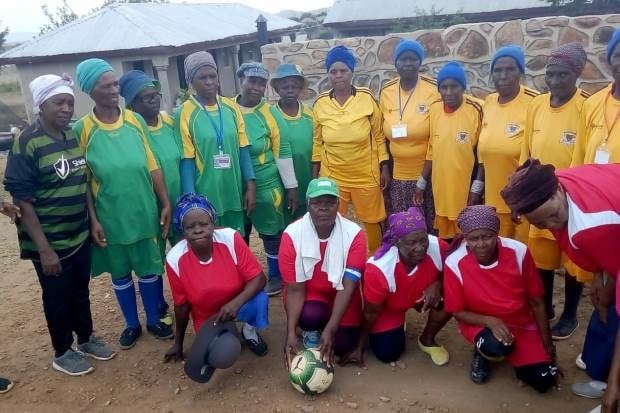
Tackling old age: Grannies from various football teams in Mpheni village during a recent tournament
“We only play football twice a week which is not enough. On days we don’t exercise we get bored and sometimes end up drinking traditional beer again, though we know that it is not good for our health and wellbeing,” she said.
Playing football for elderly residents, especially women, has become a popular form of exercise in most villages within the Vhembe district and teams host tournaments and play against each other.
Grace Makushu, 52, plays football to lose weight and become healthy. “I am on the right path to have a healthy body which will be ready to fight against old age diseases,” she said. – Health-e News
Image credit: Health-e News
NEXT ON HEALTH24X


We know that early learning can set up a child for success.
A study done by researchers at Penn State University found out just how early that learning should start – by age two.
For this study, parents filled out surveys about how many words their 2-year-olds knew, and then the researchers checked in with them three years later when their children were in kindergarten.
The toddlers with a large vocabulary were more likely to start kindergarten ready to read and learn maths.
Reading to babies
It turned out that they also paid more attention in class and were better behaved. This may also be why some kids do better than others in school.
Building that vocabulary stems from very early and frequent interactions with mom and dad. It takes only simple things to engage baby, such as talking and reading. In fact, it’s hard to over-stress the importance of reading to babies.
A separate study done at the University of Iowa found that babies respond more to reading than to even toy- or puppet-play and, in turn, learn more from it.
A love for books
A very young baby may only babble in response to hearing your voice as you read, but when you respond back by repeating or expanding on his or her sound or offering a word with that sound, this back-and-forth interaction helps with language development.
Another important difference maker for a child’s early development is to read books with bright pictures and simple sentences rather than single words.
Be engaged as you to read so that baby will develop not only a great vocabulary, but also a love for books that will serve him or her well throughout life.
Image credit: iStock
NEXT ON HEALTH24X


Mercy Old Age Home Community Project has been established to tackle alcohol abuse by the elderly. According to project manager Jack Moseamedi, many of the elderly residents of Topanama Village outside Tzaneen indulge excessively in alcohol because they have nothing to keep them busy.
“There are no activities around for old people and there is no project in the community that caters for them, which is why we established this one,” said Moseamedi.
Dealing with daily stress
The project, which was launched in December, seeks to protect the elderly by educating them about their roles, rights and responsibilities and also by providing them with meaningful and productive activities.
“This project is not only going to assist the elderly, it will also assist the youth. The elderly have a fountain of wisdom about the indigenous ways of doing things, which they can pass on to the younger generation,” he said.
Moseamedi said the project teaches elderly to sew, small scale farming and offers other activities. He said the project had 75 new members and he hoped numbers would increase.
One of the members, 78-year-old Rosina Ramaila, said she appreciated the initiative and believed it would help pensioners deal with daily stress and give them something worth waking up for.
“It will keep us busy and we won’t be sitting at home and stressed. We will be keeping each other company and reminiscing about old times,” said Ramaila.
Image credit: Istock
NEXT ON HEALTH24X


1. Make a promise
It’s hard to cancel a commitment you’ve made to lots of people. “Join an athletic event to raise money so if you default on training, you’re not just letting yourself down, but also the charity and everyone who sponsored you,” says Dr Daniel Hammer, author of Peak Energy.
Read more: Exactly how to find the right exercise for your goals
2. Rock out
A recent study by the North American Association for the Study of Obesity found that women are more likely to stick to an exercise programme if they listen to music when working out. Try Virgin Active’s Pound workout – it’s the world’s first cardio jam session inspired by the infectious, sweat-dripping fun of playing the drums. Besides rockin’ out, you’ll burn kilojoules, strengthen and sculpt those muscles and drum your way to a leaner, slimmer physique – all while jamming to your favourite music!
3. Get your money’s worth
Buy a package of personal training sessions, yoga or dance classes and schedule all your appointments now. Or join FitKey and book all your classes in advance. If you don’t show up, you could be charged the full amount – definite motivation to get to class!
Read more: 6 tricks that will help you to fire up your willpower
4. Look in the mirror
A study in the International Journal of Eating Disorders found that staring at your body in the mirror and stifling the usual criticisms can improve your body image, which can keep you committed to healthy eating. Avoid using any negatively charged words. For example, instead of saying to yourself, “I have a huge bum,” say, “My waist looks small thanks to my curves.”
5. Become a regular
Join a group exercise class or running club and make friends with fellow regulars. Seeing your mates will inspire you to attend even when you’d rather stay at home. The guilt factor can help here too. After all, in a place where everybody knows your name, they’ll also know when you’ve missed a workout. Busted! Try a Red Sock Run or go to ParkRun.co.za to find your closest running group.
Read more: 9 pairs of sneakers that will make you want to work out this winter
6. Get a cheer squad
Surround yourself with people who’ll encourage you. A study by the University of NSW in Australia found that overweight people are more likely to avoid exercise if their loved ones tease them. So ditch the downers and you might ditch a few kilos too.
This article was originally published on www.womenshealthsa.co.za
Image credit: iStock
NEXT ON HEALTH24X

Photographs show piles of clinical waste following the collapse of processing firm HES in North Lanarkshire.
A new computational model could potentially boost efficiencies and profits in natural gas production by better predicting previously hidden fracture mechanics. It also accurately accounts for the known amounts of gas released during the process. “Our model is far more realistic than current models and software used in the industry,” said Zden?k Bažant, McCormick Institute Professor and Walter P. Murphy Professor of Civil and Environmental Engineering, Mechanical Engineering, and Materials Science and Engineering at Northwestern’s McCormick School of Engineering. “This model could help the industry increase efficiency, decrease cost, and become more profitable.”
Despite the industry’s growth, much of the fracking process remains mysterious. Because fracking happens deep underground, researchers cannot observe the fracture mechanism of how the gas is released from the shale.
“This work offers improved predictive capability that enables better control of production while reducing the environmental footprint by using less fracturing fluid,” said Hari Viswanathan, computational geoscientist at Los Alamos National Laboratory. “It should make it possible to optimize various parameters such as pumping rates and cycles, changes of fracturing fluid properties such as viscosity, etc. This could lead to a greater percentage of gas extraction from the deep shale strata, which currently stands at about 5 percent and rarely exceeds 15 percent.”
By considering the closure of preexisting fractures caused by tectonic events in the distant past and taking into account water seepage forces not previously considered, researchers from Northwestern Engineering and Los Alamos have developed a new mathematical and computational model that shows how branches form off vertical cracks during the fracking process, allowing more natural gas to be released. The model is the first to predict this branching while being consistent with the known amount of gas released from the shale during this process. The new model could potentially increase the industry’s efficiency.
The results were published in the Proceedings of the National Academy of Sciences on January 11, in a paper titled “Branching of Hydraulic Cracks in Gas or Oil Shale with Closed Natural Fractures: How to Master Permeability.”
Understanding just how the shale fractures form could also improve management of sequestration, where wastewater from the process is pumped back underground.
To extract natural gas through fracking, a hole is drilled down to the shale layer — often several kilometers beneath the surface — then the drill is extended horizontally, for miles. When water with additives is pumped down into the layer under high pressure, it creates cracks in the shale, releasing natural gas from its pores of nanometer dimensions.
Classic fracture mechanics research predicts that those cracks, which run vertically from the horizontal bore, should have no branches. But these cracks alone cannot account for the quantity of gas released during the process. In fact, the gas production rate is about 10,000 times higher than calculated from the permeability measured on extracted shale cores in the laboratory.
Other researchers previously hypothesized the hydraulic cracks connected with pre-existing cracks in the shale, making it more permeable.
But Bažant and his fellow researchers found that these tectonically produced cracks, which are about 100 million years old, must have been closed by the viscous flow of shale under stress.
Instead, Bažant and his colleagues hypothesized that the shale layer had weak layers of microcracks along the now-closed cracks, and it must have been these layers that caused branches to form off the main crack. Unlike previous studies, they also took into account the seepage forces during diffusion of water into porous shale.
When they developed a simulation of the process using this new idea of a weak layers, along with the calculation of all the seepage forces, they found the results matched those found in reality.
“We show, for the first time, that cracks can branch out laterally, which would not be possible if the shale were not porous,” Bažant said.

Living in extreme conditions requires creative adaptations. For certain species of bacteria that exist in oxygen-deprived environments, this means finding a way to breathe that doesn’t involve oxygen. These hardy microbes, which can be found deep within mines, at the bottom of lakes, and even in the human gut, have evolved a unique form of breathing that involves excreting and pumping out electrons. In other words, these microbes can actually produce electricity.
Scientists and engineers are exploring ways to harness these microbial power plants to run fuel cells and purify sewage water, among other uses. But pinning down a microbe’s electrical properties has been a challenge: The cells are much smaller than mammalian cells and extremely difficult to grow in laboratory conditions.
Now MIT engineers have developed a microfluidic technique that can quickly process small samples of bacteria and gauge a specific property that’s highly correlated with bacteria’s ability to produce electricity. They say that this property, known as polarizability, can be used to assess a bacteria’s electrochemical activity in a safer, more efficient manner compared to current techniques.
“The vision is to pick out those strongest candidates to do the desirable tasks that humans want the cells to do,” says Qianru Wang, a postdoc in MIT’s Department of Mechanical Engineering.
“There is recent work suggesting there might be a much broader range of bacteria that have [electricity-producing] properties,” adds Cullen Buie, associate professor of mechanical engineering at MIT. “Thus, a tool that allows you to probe those organisms could be much more important than we thought. It’s not just a small handful of microbes that can do this.”
Buie and Wang have published their results today in Science Advances.
Just between frogs
Bacteria that produce electricity do so by generating electrons within their cells, then transferring those electrons across their cell membranes via tiny channels formed by surface proteins, in a process known as extracellular electron transfer, or EET.
Existing techniques for probing bacteria’s electrochemical activity involve growing large batches of cells and measuring the activity of EET proteins — a meticulous, time-consuming process. Other techniques require rupturing a cell in order to purify and probe the proteins. Buie looked for a faster, less destructive method to assess bacteria’s electrical function.
For the past 10 years, his group has been building microfluidic chips etched with small channels, through which they flow microliter-samples of bacteria. Each channel is pinched in the middle to form an hourglass configuration. When a voltage is applied across a channel, the pinched section — about 100 times smaller than the rest of the channel — puts a squeeze on the electric field, making it 100 times stronger than the surrounding field. The gradient of the electric field creates a phenomenon known as dielectrophoresis, or a force that pushes the cell against its motion induced by the electric field. As a result, dielectrophoresis can repel a particle or stop it in its tracks at different applied voltages, depending on that particle’s surface properties.
Researchers including Buie have used dielectrophoresis to quickly sort bacteria according to general properties, such as size and species. This time around, Buie wondered whether the technique could suss out bacteria’s electrochemical activity — a far more subtle property.
“Basically, people were using dielectrophoresis to separate bacteria that were as different as, say, a frog from a bird, whereas we’re trying to distinguish between frog siblings — tinier differences,” Wang says.
An electric correlation
In their new study, the researchers used their microfluidic setup to compare various strains of bacteria, each with a different, known electrochemical activity. The strains included a “wild-type” or natural strain of bacteria that actively produces electricity in microbial fuel cells, and several strains that the researchers had genetically engineered. In general, the team aimed to see whether there was a correlation between a bacteria’s electrical ability and how it behaves in a microfluidic device under a dielectrophoretic force.
The team flowed very small, microliter samples of each bacterial strain through the hourglass-shaped microfluidic channel and slowly amped up the voltage across the channel, one volt per second, from 0 to 80 volts. Through an imaging technique known as particle image velocimetry, they observed that the resulting electric field propelled bacterial cells through the channel until they approached the pinched section, where the much stronger field acted to push back on the bacteria via dielectrophoresis and trap them in place.
Some bacteria were trapped at lower applied voltages, and others at higher voltages. Wang took note of the “trapping voltage” for each bacterial cell, measured their cell sizes, and then used a computer simulation to calculate a cell’s polarizability — how easy it is for a cell to form electric dipoles in response to an external electric field.
From her calculations, Wang discovered that bacteria that were more electrochemically active tended to have a higher polarizability. She observed this correlation across all species of bacteria that the group tested.
“We have the necessary evidence to see that there’s a strong correlation between polarizability and electrochemical activity,” Wang says. “In fact, polarizability might be something we could use as a proxy to select microorganisms with high electrochemical activity.”
Wang says that, at least for the strains they measured, researchers can gauge their electricity production by measuring their polarizability — something that the group can easily, efficiently, and nondestructively track using their microfluidic technique.
Collaborators on the team are currently using the method to test new strains of bacteria that have recently been identified as potential electricity producers.
“If the same trend of correlation stands for those newer strains, then this technique can have a broader application, in clean energy generation, bioremediation, and biofuels production,” Wang says.
This research was supported in part by the National Science Foundation, and the Institute for Collaborative Biotechnologies, through a grant from the U.S. Army.

