Health24.com | Domestic violence support centre to operate from under a tree

After helping scores of domestic violence victims from an old embassy building in Sibasa for 18 years, the Thohoyandou Victim Empowerment Programme (TVEP) is now set to operate from under a tree.

This is after the organisation was evicted from their offices because the building they used is owned by the Department of Public Works, and they have been unable to pay their rent.

The hope of many victims

TVEP spokesperson Tshilidzi Masikhwa said that they were worried about the eviction which comes during the 16 Days of Activism and at the start of the December holidays when they normally record a higher-than-average number of cases.

“We have been operating from the building for the past 18 years, and people have learnt to trust us to handle their matters as we are the hope of many victims. And that is why we continue to help people, even if it means operating out in the open or under a tree. As we all know, during the holidays cases ranging from domestic abuse to sexual assault are reported and people will require our help. We cannot afford to disappoint them,” said Masikhwa.

The eviction happened after the Limpopo High Court ruled in favour of the Department of Public Works that had filed court applications last year to evict TVEP from the building.

The rural based NGO could not afford to pay their rent and their negotiations for a settlement were not successful. The organisation operates from donations from foreign aid which mostly covers their operational costs. The TVEP currently has over 67 employees, some of whom are based at trauma centres at Donald Fraser and Tshilidzini hospitals.

Praise from the government

“Over the years we have assisted more than 26 000 victims as we have become a first stop for victims of abuse. They know that we are the only place in the area where they can get the help they need,” he said.

TVEP provides counselling, advocacy, support, access to medical examinations and anti-retroviral treatment to hundreds of people. He further said that they are surprised that the same government which usually praises the work done by the TVEP each year does not want to help them.

“We get praise all the times from the government, but they do not seem to want to help us. We are here to help people and care for them, but little is being done to help us. Each day we restore hope and life to many victims and we feel our work needs to be appreciated,” he said.

Masikhwa has however encouraged people to continue visiting their trauma centres at hospitals while TVEP tries to find a place to operate from. – Health-e News.

Image credit: iStock

NEXT ON HEALTH24X

Share Button

Health24.com | What is stress-induced fat – and the tell-tale sign I have it?

Feeling like you’re carrying extra weight around lately? Here’s the dead giveaway that it might be stress-induced fat rather than the regular kind.

Read more: Could this actually be the best tea for weight loss?

Stress-induced fat…

Your investments. Your in-laws. Your never-ending to-do list. We get it – life is hard. But anxiety can produce extra cortisol, a hormone that encourages the body to store fat, particularly in your tummy. According to researchers at Yale University, your midsection is four times as likely as the rest of your body to store stress-induced fat. Help keep anxiety in check by taking little breaks from work every 90 minutes.

Read more: These are the 6 steps you need to take if you want to slim down

How to I stop it?

Another way stress sabotages your abs: When tension runs high, we reach for fattening foods. To keep your hand out of the office sweetie jar, keep it out of reach. In one study, participants who had to walk two metres to reach the chocolate ate up to seven fewer chocolates per day than when the jar was located at their desk.

This article was originally published on www.womenshealthsa.co.za

Image credit: iStock 

Share Button

Health24.com | 5 articles to help you prepare your kids for the school year ahead

It’s almost time for the young ones to go back to school and it’s a daunting prospect. You’re already breaking your head about the year ahead, new extramural activities, homework and what to pack into those lunch boxes.

You also know that you’ve relaxed your routine over the holiday and it’s time to start preparing the kids for a healthy school year. We compiled the best articles to help you through the year ahead:

1. 7 ways to avoid kids’ backpack pain

Whether you are shopping for new school bags or starting to pack their bags for the new school term, you need to know that an overloaded backpack can cause serious strain on a young, growing spine. Here are some tips to ensure that your child is carrying a healthy load.

2. 6 nutrition tips for healthy, active children

Proper nutrition is key to keep your child alert in class and energetic on the sports field, but it’s often a daunting task as we rush through the days without a proper breakfast and a healthy lunchbox. This article shows how uncomplicated proper nutrition really is with some easy tips.

3. Health checks crucial for school-aged kids

Your to-do list probably consists of buying new books and stationery for the new year, but this is also the time you should be taking inventory of your child’s health for the year ahead and get all the health checks done before the school year gets too busy. This article provides insight into the health checks you should be doing.

Child at doctor

4. 4 ways to protect your child from allergic reactions at school

You might feel confident being in control of your child’s food allergies at home, but it’s a different challenge when they are at school. Here are some tips on how to ensure your child is protected from allergic reactions at school in the new year.

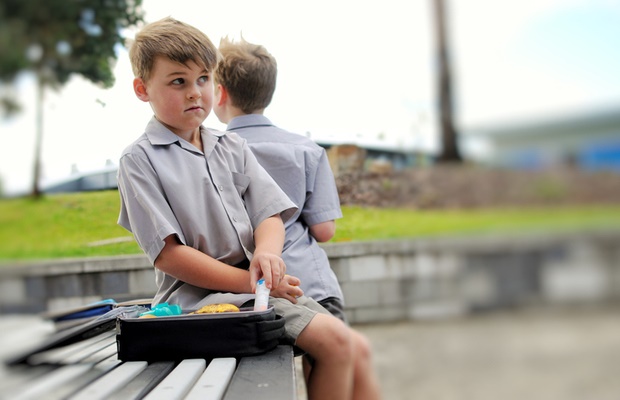
Child with epi-pen in lunchbox

5. Dealing with emergencies

Whether you are a parent wishing to get actively involved at your child’s school as a chaperone; always hosting children at your house for play-dates and sleepovers; transporting children to sport days; or are a teacher yourself, this article may come in handy in case of any emergency. Be equipped to help a child, or even save a life.

Image credit: iStock

NEXT ON HEALTH24X

Share Button

Health24.com | Getting flu shot annually won’t undermine its effectiveness in kids

Does getting a flu shot every year diminish its power to protect children?

Absolutely not, say researchers, who found that last year’s shot will not in any way reduce the flu-fighting strength of this year’s shot.

Each flu season is unpredictable

The conclusion follows three years spent monitoring flu vaccine effectiveness among nearly 3 400 children aged two to 17. The researchers said the findings strongly support current recommendations that children get vaccinated against the flu every year.

“Even healthy children can become severely ill and die from the flu,” warned study author Huong McLean. She is a research scientist with the Center for Clinical Epidemiology and Population Health at the Marshfield Clinic Research Institute in Wisconsin.

What’s more, “the timing and severity of each flu season is unpredictable,” said McLean. “The number of children in the US who die from the flu each season varies from about 37 to over 170.” In fact, the flu has already claimed the life of one child in Florida this year, she noted.

As to the notion that yearly shots might somehow be overkill, the study clearly demonstrated that “prior vaccination was not associated with reduced vaccine effectiveness,” McLean said.

So, she added, “Getting the flu vaccine every year is the single best way to protect against the flu.”

The study findings were published online in JAMA Network Open.

Reduced risk of dying

Earlier this autumn, data released from the US Centers for Disease Control and Prevention revealed that last year’s flu season took the lives of an estimated 80 000 Americans, 183 of them children. Those figures represent the highest flu death toll in 40 years.

The CDC recommends that all Americans aged six months and older get a flu vaccine on a yearly basis, with exceptions made only for those who have allergies to one or more ingredients found in the vaccines, or for those with a history of a serious paralyzing illness known as Guillain-Barre syndrome.

Flu shot

As for the shot’s overall power to protect, getting a flu shot reduces a child’s risk of dying from influenza by more than half (51%), according to the CDC. That reflects data covering four flu seasons, stretching from 2010 to 2014.

For the latest investigation, about half the paediatric participants (at an average age of almost seven) were given one of two types of flu shots in 2013: either the live-attenuated influenza vaccine (LAIV), or the inactivated influenza vaccine (IIV).

Ultimately, the team observed that children who had also been vaccinated the year before (2012) ended up with stronger LAIV protection against one type of flu (H3N2) in 2013, compared with those who hadn’t been vaccinated in the prior year.

LAIV protection against another flu type (H1N1) was not affected one way or the other by prior vaccination histories, according to the report.

Safe for children and adults

And those children who had gotten a flu shot the prior year (2012) saw no impact whatsoever on the protective strength of their 2013 IIV shot, with respect to both types of flu.

The same flu shot-effectiveness pattern continued to unfold over the next two flu seasons, the investigators found.

While encouraging parents to talk to their paediatrician if they have any questions or concerns, McLean stressed that “the flu vaccine is safe for children and adults”.

And because it takes a couple of weeks for protection to take hold after getting a shot, she noted that “parents should have their children vaccinated as soon as possible, so they are protected before the flu season starts”.

Dr Alicia Fry is chief of the CDC’s influenza division’s epidemiology and prevention branch. She said that the latest study is one of only a few to specifically look at year-after-year flu vaccine power among children.

The findings “are reassuring and support current influenza vaccination policy,” Fry said.

“Getting a flu vaccine has been shown to be lifesaving in children. CDC recommends that yearly flu vaccination remains the first and most important step in protecting against flu and its complications,” Fry added.

Image credit: iStock

Share Button

Health24.com | Sleepless nights could make morning pastries tougher to resist

There’s a reason that glazed donut might seem even more enticing if you’re sleep-deprived: A new study suggests that even one night of lost slumber increases the desirability of junk foods.

But the culprit doesn’t appear to be an increase in ghrelin – the so-called “hunger hormone” – which has been implicated in prior research focusing on sleep deprivation and poor food choices.

A neural mechanism

“Our results show that the idea that sleep deprivation leads to poor food choices because of a hormonal dysregulation is probably too simple,” said study author Jan Peters. He’s a professor of biological psychology at University of Cologne in Germany.

“We know from many previous studies that reduced sleep increases obesity risk and also that people tend to get less and less sleep,” Peters added. “Our results now show a neural mechanism that might contribute to the association between reduced sleep and weight gain.”

One in three American adults doesn’t get enough sleep on a regular basis, according to the US Centers for Disease Control and Prevention. Getting less than the recommended seven hours each night is linked to increased risks for obesity, diabetes, high blood pressure, heart disease and stroke, the CDC says.

For the study, Peters and his team analysed 32 healthy, young, nonsmoking men of normal weight. They took blood samples and performed functional MRIs after the participants had a normal night of sleep at home and also a night where they were kept awake in a laboratory. On both nights, the men ate a standardised dinner.

The next morning, participants chose between snack food and trinkets (non-food items) during a decision-making task. It showed they were willing to spend more money on food items only after a night of sleep deprivation. The men’s self-rated hunger levels were similar after both nights.

An important message

After a night of lost sleep, the participants’ brain images showed increased activity in a circuit between the amygdala and hypothalamus, which is involved in food intake. This suggests sleep loss increased the desirability of food compared to non-food rewards, Peters said.

Connie Diekman is director of university nutrition at Washington University in St. Louis and wasn’t involved in the new research. She said she was somewhat surprised changing hormone levels weren’t shown to be linked to participants’ poor food choices, but that the study wasn’t able to determine cause and effect.

Despite the study’s limitations, Diekman said, it did provide an important message: “It might help people realize that quantity and quality of sleep is key to your health and the behaviours you choose related to health.

“The benefit of the outcome of the study is it does put some of the responsibility in people’s laps, as opposed to a metabolic trigger that allows people to say, ‘Oh, it’s not my fault,'” she said.

The study was published in the Journal of Neuroscience.

Image credit: iStock

Share Button

Diabulimia: ‘I’ve got my life and I’ve got my feet’

Becky Rudkin explains what it’s like having diabulimia as funding is given for research into the condition.

Share Button

Missed GP appointments ‘cost NHS England £216m’

Officials urge patients to cancel consultations to free up doctors amid rising demand for services.

Share Button

Children ‘exceed recommended sugar limit by age 10’

Ten-year-olds in the UK have already consumed 18 years’ worth of sugar, says Public Health England.

Share Button

The firm whose staff are all autistic

A California father set up a company where his sons could work – and now employs more than 150 people.

Share Button

New Horizons successfully explores Ultima Thule

NASA’s New Horizons spacecraft flew past Ultima Thule in the early hours of New Year’s Day, ushering in the era of exploration from the enigmatic Kuiper Belt, a region of primordial objects that holds keys to understanding the origins of the solar system.

“Congratulations to NASA’s New Horizons team, Johns Hopkins Applied Physics Laboratory and the Southwest Research Institute for making history yet again. In addition to being the first to explore Pluto, today New Horizons flew by the most distant object ever visited by a spacecraft and became the first to directly explore an object that holds remnants from the birth of our solar system,” said NASA Administrator Jim Bridenstine. “This is what leadership in space exploration is all about.”

Signals confirming the spacecraft is healthy and had filled its digital recorders with science data on Ultima Thule reached the mission operations center at the Johns Hopkins Applied Physics Laboratory (APL) today at 10:29 a.m. EST, almost exactly 10 hours after New Horizons’ closest approach to the object.

“New Horizons performed as planned today, conducting the farthest exploration of any world in history — 4 billion miles from the Sun,” said Principal Investigator Alan Stern, of the Southwest Research Institute in Boulder, Colorado. “The data we have look fantastic and we’re already learning about Ultima from up close. From here out the data will just get better and better!”

Images taken during the spacecraft’s approach — which brought New Horizons to within just 2,200 miles (3,500 kilometers) of Ultima at 12:33 a.m. EST — revealed that the Kuiper Belt object may have a shape similar to a bowling pin, spinning end over end, with dimensions of approximately 20 by 10 miles (32 by 16 kilometers). Another possibility is Ultima could be two objects orbiting each other. Flyby data have already solved one of Ultima’s mysteries, showing that the Kuiper Belt object is spinning like a propeller with the axis pointing approximately toward New Horizons. This explains why, in earlier images taken before Ultima was resolved, its brightness didn’t appear to vary as it rotated. The team has still not determined the rotation period.

As the science data began its initial return to Earth, mission team members and leadership reveled in the excitement of the first exploration of this distant region of space.

“New Horizons holds a dear place in our hearts as an intrepid and persistent little explorer, as well as a great photographer,” said Johns Hopkins Applied Physics Laboratory Director Ralph Semmel. “This flyby marks a first for all of us — APL, NASA, the nation and the world — and it is a great credit to the bold team of scientists and engineers who brought us to this point.”

“Reaching Ultima Thule from 4 billion miles away is an incredible achievement. This is exploration at its finest,” said Adam L. Hamilton, president and CEO of the Southwest Research Institute in San Antonio. “Kudos to the science team and mission partners for starting the textbooks on Pluto and the Kuiper Belt. We’re looking forward to seeing the next chapter.”

The New Horizons spacecraft will continue downloading images and other data in the days and months ahead, completing the return of all science data over the next 20 months. When New Horizons launched in January 2006, George W. Bush was in the White House, Twitter had just been launched and Time Magazine’s Person of the Year was “you — all the worldwide web users.” Nine years into its journey, the spacecraft began its exploration of the Kuiper Belt with a flyby of Pluto and its moons. Almost 13 years after the launch, the spacecraft will continue its exploration of the Kuiper Belt until at least 2021. Team members plan to propose more Kuiper Belt exploration.

The Johns Hopkins Applied Physics Laboratory in Laurel, Maryland, designed, built and operates the New Horizons spacecraft, and manages the mission for NASA’s Science Mission Directorate. The Southwest Research Institute, based in San Antonio, leads the science team, payload operations and encounter science planning. New Horizons is part of the New Frontiers Program managed by NASA’s Marshall Space Flight Center in Huntsville, Alabama. Follow the New Horizons mission on Twitter and use the hashtags #UltimaThule, #UltimaFlyby and #askNewHorizons to join the conversation. Live updates and links to mission information are also available on http://pluto.jhuapl.edu and www.nasa.gov.

Share Button