Health24.com | Saunas seem to do a heart good, research shows

Love your time in the local sauna? Your heart may love it, too.

New research from sauna-loving Finland suggests that for people aged 50 and older, saunas may lower their odds of risk of dying from heart disease.

Specifically, just 5% of Finns in the study who spent more than 45 minutes in a sauna each week died of heart disease over the 15-year study period, compared to 10% of those who spent less that 15 minutes a week in saunas, the researchers said.

Of course, the study couldn’t prove cause-and-effect – it’s possible that sauna-loving folk have other heart-healthy habits that might explain the findings.

Still, “there are several possible reasons why sauna use may decrease the risk of death due to cardiovascular disease,” said study co-author Dr Jari Laukkanen, head of cardiology at the University of Eastern Finland. His team published its findings November 28 in the journal BMC Medicine.

“Our research team has shown in previous studies that high sauna use is associated with lower blood pressure,” he noted in a journal news release. “Additionally, sauna use is known to trigger an increase in heart rate equal to that seen in low- to moderate-intensity physical exercise.”

Could be helpful

One US expert who looked over the findings agreed that heat can often be therapeutic to the human body, but the sauna experience might differ a bit in America.

“The greatest benefit [in the study] was observed in individuals who took 4-7 saunas per week, a frequency that Americans are unlikely to achieve,” noted Dr Cindy Grines, who directs cardiology at Long Island Jewish Medical Center in New Hyde Park, New York.

“In addition, this study used dry heat, and whether the results are similar with steam baths or hot tubs is not known,” she said.

Laukkanen’s team agreed that because the data came from one area in Finland, the findings might not apply to other populations.

The study relied on data from nearly 1 700 Finnish men and women. Participants were asked about their use of saunas, and these data were compared with deaths from cardiovascular disease. Data for the study were collected between 1998 and 2015 and the average follow-up was 15 years.

Frequency of sauna use did seem tied to heart health. Among people who used a sauna four to seven times a week, 3%t died from heart disease over 15 years, but that number rose to 10% for those who used the sauna just once a week, the study found.

Dr David Friedman is chief of heart failure services at Long Island Jewish Valley Stream Hospital in Valley Stream, New York. He said that it’s tough to draw firm conclusions from the study, but the findings that sauna use “could be a helpful additional strategy” for heart health, along with improved diet and more exercise.

But another cardiologist stressed that Americans shouldn’t begin think of saunas as substitutes for exercise.

“Moderate to high intensity exercise has a cardioprotective effect,” explained Dr Satjit Bhusri, who practices at Lenox Hill Hospital in New York City. The new findings don’t necessarily mean that “everyone should spend the day at the spa [instead],” he said.

Image credit: iStock

Share Button

Health24.com | An app, your fingernail – and anaemia screening is done

Checking for low haemoglobin in the blood – otherwise known as anaemia – usually means drawing blood for testing.

But scientists say they’ve developed a wireless smartphone app that does the same by “reading” a quick photo of your fingernail.

Fatigue, paleness and heart problems

The app converts fingernail colours into quick readings of blood haemoglobin levels, according to researchers at Emory University in Atlanta. They said the technology could be used by anyone at any time, but its use right now is limited to screening, not a formal diagnosis of anaemia.

Anaemia is a blood condition affecting two billion people worldwide. If untreated, it can lead to fatigue, paleness and heart problems.

Typical methods of screening for anaemia “require external equipment, and represent trade-offs between invasiveness, cost and accuracy”, lead researcher Dr Wilbur Lam, associate professor of paediatrics, explained in an Emory news release.

But the new app has an accuracy that’s “on par with currently available point-of-care tests, without the need to draw blood,” Lam said.

The investigators believe the app could be useful for screening pregnant women, women with abnormal menstrual bleeding, or runners and other athletes. Its simplicity also means it could help people in developing countries.

The app could be available for download as soon as March–May 2019, the researchers said.

Perfect test subject

One member of the development team, Rob Mannino, had a personal stake in the technology’s success. The former biomedical engineering graduate student has an inherited blood disorder called beta-thalassemia.

“Treatment for my disease requires monthly blood transfusions,” Mannino explained in the news release. “My doctors would test my haemoglobin levels more if they could, but it’s a hassle for me to get to the hospital in between transfusions to have this blood test.

“Instead, my doctors currently have to just estimate when I’m going to need a transfusion, based on my haemoglobin level trends.”

In the new study, published in Nature Communications, Lam’s team used data on 237 people – some anaemic, some not – to develop an algorithm that converted fingernail colour to represent blood haemoglobin levels.

Perfect initial test subject

It was then tested on 100 patients and proved highly accurate in people with both dark and light skin tones, the research team said. That’s because the nail bed does not contain melanin, which gives skin its colour.

The app should enable patients with chronic anaemia to monitor themselves to know when they need to adjust their therapies or receive transfusions. This could reduce side effects or complications of having transfusions too early or too late, Lam’s team said.

Mannino’s experience proved integral to the research.

“This whole project couldn’t have been done by anyone but Rob,” Lam said. “He took pictures of himself before and after transfusions as his haemoglobin levels were changing, which enabled him to constantly refine and tweak his technology on himself in a very efficient manner.

“So essentially, he was his own perfect initial test subject with each iteration of the app.”

Research ongoing

One doctor who often treats anaemia in children was optimistic about the new technology, with one caveat.

Dr Michael Grosso directs paediatrics at Huntington Hospital in Huntington, New York. He agreed that “the availability of a rapid, accurate and non-invasive anaemia screening test could have significant benefits”.

But he was concerned that the app might miss more subtle forms of anaemia.

“It turns out that mild iron deficiency can affect the body without triggering anaemia, and children in that situation would be missed by the non-invasive test,” Grosso said.

Algorithm gets smarter

“So, the smartphone test definitely falls short of the tried-and-true blood count, but it is better than no test at all.”

For their part, Lam and colleagues said further research, conducted with a variety of patient types, is ongoing. That means the app’s sensitivity and accuracy should improve with time.

“This is just a snapshot of the accuracy right now,” Lam said. “The algorithm gets smarter with every patient enrolled.”

The research was funded in part by the US National Science Foundation and the US National Institutes of Health. Lam and Mannino have filed a patent application for the anaemia app, and will have financial interest in its success.

Image credit: iStock

NEXT ON HEALTH24X

Share Button

Teenage victims ‘more likely to self-harm’

Schemes to stop adolescents becoming victims may lower the likelihood of them self-harming, a study says.

Share Button

Sun-soaking device turns water into superheated steam

MIT engineers have built a device that soaks up enough heat from the sun to boil water and produce “superheated” steam hotter than 100 degrees Celsius, without any expensive optics.

On a sunny day, the structure can passively pump out steam hot enough to sterilize medical equipment, as well as to use in cooking and cleaning. The steam may also supply heat to industrial processes, or it could be collected and condensed to produce desalinated, distilled drinking water.

The researchers previously developed a sponge-like structure that floated in a container of water and turned the water it absorbed into steam. But a big concern is that contaminants in the water caused the structure to degrade over time. The new device is designed to be suspended over the water, to avoid any possible contamination.

The suspended device is about the size and thickness of a small digital tablet or e-reader, and is structured like a sandwich: The top layer is made from a material that efficiently absorbs the sun’s heat, while the bottom layer efficiently emits that heat to the water below. Once the water reaches the boiling point (100 C), it releases steam that rises back up into the device, where it is funneled through the middle layer — a foam-like material that further heats the steam above the boiling point, before it’s pumped out through a single tube.

“It’s a completely passive system — you just leave it outside to absorb sunlight,” says Thomas Cooper, assistant professor of mechanical engineering at York University, who led the work as a postdoc at MIT. “You could scale this up to something that could be used in remote climates to generate enough drinking water for a family, or sterilize equipment for one operating room.”

The team’s results are detailed in a paper to be published in Nature Communications. The study includes researchers from the lab of Gang Chen, the Carl Richard Soderberg Professor of Power Engineering at MIT.

A clever combination

In 2014, Chen’s group reported the first demonstration of a simple, solar-driven steam generator, in the form of a graphite-covered carbon foam that floats on water. This structure absorbs and localizes the sun’s heat to the water’s surface (the heat would otherwise penetrate down through the water). Since then, his group and others have looked to improve the efficiency of the design with materials of varying solar-absorbing properties. But almost every device has been designed to float directly on water, and they have all run into the problem of contamination, as their surfaces come into contact with salt and other impurities in water.

The team decided to design a device that instead is suspended above water. The device is structured to absorb short-wavelength solar energy, which in turn heats up the device, causing it to reradiate this heat, in the form of longer-wavelength infrared radiation, to the water below. Interestingly, the researchers note that infrared wavelengths are more readily absorbed by water, versus solar wavelengths, which would simply pass right through.

For the device’s top layer, they chose a metal ceramic composite that is a highly efficient solar absorber. They coated the structure’s bottom layer with a material that easily and efficiently emits infared heat. Between these two materials, they sandwiched a layer of reticulated carbon foam — essentially, a sponge-like material studded with winding tunnels and pores, which retains the sun’s incoming heat and can further heat up the steam rising back up through the foam. The researchers also attached a small outlet tube to one end of the foam, through which all the steam can exit and be easily collected.

Finally, they placed the device over a basin of water and surrounded the entire setup with a polymer enclosure to prevent heat from escaping.

“It’s this clever engineering of different materials and how they’re arranged that allows us to achieve reasonably high efficiencies with this noncontact arrangement,” Cooper says.

Full steam ahead

The researchers first tested the structure by running experiments in the lab, using a solar simulator that mimics the characteristics of natural sunlight at varying, controlled intensities. They found that the structure was able to heat a small basin of water to the boiling point and produce superheated steam, at 122 C, under conditions that simulated the sunlight produced on a clear, sunny day. When the researchers increased this solar intensity by 1.7 times, they found the device produced even hotter steam, at 144 C.

On Oct. 21, 2017, they tested the device on the roof of MIT’s Building 1, under ambient conditions. The day was clear and bright, and to increase the sun’s intensity further, the researchers constructed a simple solar concentrator — a curved mirror that helps to collect and redirect more sunlight onto the device, thus raising the incoming solar flux, similar to the way a magnifying glass can be used to concentrate a sun’s beam to heat up a patch of pavement.

With this added shielding, the structure produced steam in excess of 146 C over the course of 3.5 hours. In subsequent experiments, the team was able to produce steam from sea water, without contaminating the surface of the device with salt crystals. In another set of experiments, they were also able to collect and condense the steam in a flask to produce pure, distilled water.

Chen says that, in addition to overcoming the challenges of contamination, the device’s design enables steam to be collected at a single point, in a concentrated stream, whereas previous designs produced more dilute spray.

“This design really solves the fouling problem and the steam collection problem,” Chen says. “Now we’re looking to make this more efficient and improve the system. There are different opportunities, and we’re looking at what are the best options to pursue.”

Share Button

Royal Cornwall Hospital on Opel 4 highest alert for 134 days

A woman’s hysterectomy was postponed four times at a hospital experiencing extreme pressures.

Share Button

New models sense human trust in smart machines

New “classification models” sense how well humans trust intelligent machines they collaborate with, a step toward improving the quality of interactions and teamwork.

The long-term goal of the overall field of research is to design intelligent machines capable of changing their behavior to enhance human trust in them. The new models were developed in research led by assistant professor Neera Jain and associate professor Tahira Reid, in Purdue University’s School of Mechanical Engineering.

“Intelligent machines, and more broadly, intelligent systems are becoming increasingly common in the everyday lives of humans,” Jain said. “As humans are increasingly required to interact with intelligent systems, trust becomes an important factor for synergistic interactions.”

For example, aircraft pilots and industrial workers routinely interact with automated systems. Humans will sometimes override these intelligent machines unnecessarily if they think the system is faltering.

“It is well established that human trust is central to successful interactions between humans and machines,” Reid said.

The researchers have developed two types of “classifier-based empirical trust sensor models,” a step toward improving trust between humans and intelligent machines.

A YouTube video is available at https://www.youtube.com/watch?v=Mucl6pAgEQg.

The work aligns with Purdue’s Giant Leaps celebration, acknowledging the university’s global advancements made in AI, algorithms and automation as part of Purdue’s 150th anniversary. This is one of the four themes of the yearlong celebration’s Ideas Festival, designed to showcase Purdue as an intellectual center solving real-world issues.

The models use two techniques that provide data to gauge trust: electroencephalography and galvanic skin response. The first records brainwave patterns, and the second monitors changes in the electrical characteristics of the skin, providing psychophysiological “feature sets” correlated with trust.

Forty-five human subjects donned wireless EEG headsets and wore a device on one hand to measure galvanic skin response.

One of the new models, a “general trust sensor model,” uses the same set of psychophysiological features for all 45 participants. The other model is customized for each human subject, resulting in improved mean accuracy but at the expense of an increase in training time. The two models had a mean accuracy of 71.22 percent, and 78.55 percent, respectively.

It is the first time EEG measurements have been used to gauge trust in real time, or without delay.

“We are using these data in a very new way,” Jain said. “We are looking at it in sort of a continuous stream as opposed to looking at brain waves after a specific trigger or event.”

Findings are detailed in a research paper appearing in a special issue of the Association for Computing Machinery’s Transactions on Interactive Intelligent Systems. The journal’s special issue is titled “Trust and Influence in Intelligent Human-Machine Interaction.” The paper was authored by mechanical engineering graduate student Kumar Akash; former graduate student Wan-Lin Hu, who is now a postdoctoral research associate at Stanford University; Jain and Reid.

“We are interested in using feedback-control principles to design machines that are capable of responding to changes in human trust level in real time to build and manage trust in the human-machine relationship,” Jain said. “In order to do this, we require a sensor for estimating human trust level, again in real-time. The results presented in this paper show that psychophysiological measurements could be used to do this.”

The issue of human trust in machines is important for the efficient operation of “human-agent collectives.”

“The future will be built around human-agent collectives that will require efficient and successful coordination and collaboration between humans and machines,” Jain said. “Say there is a swarm of robots assisting a rescue team during a natural disaster. In our work we are dealing with just one human and one machine, but ultimately we hope to scale up to teams of humans and machines.”

Algorithms have been introduced to automate various processes.

“But we still have humans there who monitor what’s going on,” Jain said. “There is usually an override feature, where if they think something isn’t right they can take back control.”

Sometimes this action isn’t warranted.

“You have situations in which humans may not understand what is happening so they don’t trust the system to do the right thing,” Reid said. “So they take back control even when they really shouldn’t.”

In some cases, for example in the case of pilots overriding the autopilot, taking back control might actually hinder safe operation of the aircraft, causing accidents.

“A first step toward designing intelligent machines that are capable of building and maintaining trust with humans is the design of a sensor that will enable machines to estimate human trust level in real time,” Jain said.

To validate their method, 581 online participants were asked to operate a driving simulation in which a computer identified road obstacles. In some scenarios, the computer correctly identified obstacles 100 percent of the time, whereas in other scenarios the computer incorrectly identified the obstacles 50 percent of the time.

“So, in some cases it would tell you there is an obstacle, so you hit the brakes and avoid an accident, but in other cases it would incorrectly tell you an obstacle exists when there was none, so you hit the breaks for no reason,” Reid said.

The testing allowed the researchers to identify psychophysiological features that are correlated to human trust in intelligent systems, and to build a trust sensor model accordingly. “We hypothesized that the trust level would be high in reliable trials and be low in faulty trials, and we validated this hypothesis using responses collected from 581 online participants,” she said.

The results validated that the method effectively induced trust and distrust in the intelligent machine.

“In order to estimate trust in real time, we require the ability to continuously extract and evaluate key psychophysiological measurements,” Jain said. “This work represents the first use of real-time psychophysiological measurements for the development of a human trust sensor.”

The EEG headset records signals over nine channels, each channel picking up different parts of the brain.

“Everyone’s brainwaves are different, so you need to make sure you are building a classifier that works for all humans.”

For autonomous systems, human trust can be classified into three categories: dispositional, situational, and learned.

Dispositional trust refers to the component of trust that is dependent on demographics such as gender and culture, which carry potential biases.

“We know there are probably nuanced differences that should be taken into consideration,” Reid said. “Women trust differently than men, for example, and trust also may be affected by differences in age and nationality.”

Situational trust may be affected by a task’s level of risk or difficulty, while learned is based on the human’s past experience with autonomous systems.

The models they developed are called classification algorithms.

“The idea is to be able to use these models to classify when someone is likely feeling trusting versus likely feeling distrusting,” she said.

Jain and Reid have also investigated dispositional trust to account for gender and cultural differences, as well as dynamic models able to predict how trust will change in the future based on the data.


Share Button

Taming turbulence: Seeking to make complex simulations a breeze

For scientists wrestling with problems as diverse as containing superhot plasma in a fusion reactor, improving the accuracy of weather forecasts, or probing the unexplained dynamics of a distant galaxy, turbulence-spawning shear flow is a serious complicating factor.

Put simply, shear flow occurs when two fluids — where fluids are a liquid, a gas or a plasma (the amorphous superhot gas that makes up stars like our sun or that occurs in a fusion device) — pass by one another such as when wind flows over a lake or hot gas jets from a galaxy. The turbulent chaos that occurs as a result of the interacting fluids can be exceedingly difficult to recreate in the numerical models scientists use to describe and understand a wide range of phenomena.

Shear, for instance, is a confounding factor for critical applied problems such as predicting the diffusion of smoke from massive wildfires. Smoke from fires such as those that recently occurred in California can be widely dispersed thousands of miles from the source and contribute to problems of air quality.

“These models are really helpful in understanding systems where the flow is fast,” says Adrian Fraser, a University of Wisconsin-Madison graduate student in physics and the lead author of a study published Monday, Dec. 10, in the journal Physics of Plasmas.

But even using the world’s most powerful supercomputers in a show of brute force, certain phenomena are too complex and dynamic to be reliably recreated in silico.

Scientists have tried to get around the problem by simplifying and parsing their models to look at elements of a system in the hope they can be reassembled to account for the whole. But in doing so, Fraser notes, researchers may have overlooked a common collective effect that not only has an influence on the dynamics of a system, but, according to the new research, seems to be a convenient handle for greatly simplifying the digital recreation of phenomena such as the spread of heat and chemicals in a system — problems that now overwhelm even the most powerful supercomputers.

Using those state-of-the-art supercomputers, Fraser’s team, including UW-Madison physics professors Paul Terry and Ellen Zweibel along with MJ Pueschel of the University of Texas, looked at how turbulence plays out over long periods of time when its motions include a component that normally dies away very quickly. Looking at the system in detail, the researchers observed that this seemingly transient component is amplified over time and exerts greater influence than was known.

“This is the one collective motion that had been assumed not to matter in these systems. We showed that it does matter,” says Fraser. “And by noting that, we were able to dramatically improve existing models for how shear-flow turbulence changes in different systems.”

Most previous studies focused on representing motions with components that do not die away because they are instead directly driven by the shear.

Measuring how heat or dye diffuses in a stationary fluid is straightforward, Fraser explains, but “if the fluid is turbulent it is really difficult to figure out how the dye or heat diffuses from one part of the fluid to another part because of all the complicated motions that occur in turbulence.”

By representing the system with both growing and decaying motions, it is easier to see the whole picture and greatly simplify the system for modeling.

“The end result is a simple model that predicts results that are very consistent with the massive simulations we performed,” says Fraser, noting that previously intractable problems for designing fusion experiments, improving weather models, and understanding astrophysical phenomena such as star formation will be more easily addressed without the need for expensive supercomputers.

Vyacheslav Lukin, program director for Plasma Physics and Accelerator Science at the National Science Foundation, says the new study will help the research community continue to resolve complex plasma physics problems. “Further progress in accurately modeling large-scale plasma systems critically depends on our ability to combine analytical methods with high fidelity direct numerical simulations, and these new results should help us to make another step in that direction.”

Story Source:

Materials provided by University of Wisconsin-Madison. Original written by Terry Devitt. Note: Content may be edited for style and length.

Share Button

Cervical screening error: More women affected

An additional 3,591 women have not received information after a failure to send out letters, says Capita.

Share Button

Ex-minister Norman Lamb urges cannabis legalisation

Norman Lamb calls for government regulation of the production, distribution and sale of cannabis.

Share Button

Health24.com | 7 tips for travelling with allergies

Whether it’s a seasonal allergy, skin allergy or food allergy, the symptoms can be enough to make you feel miserable. If you are travelling over the festive season, there are ways to stop the most common allergies from ruining your trip.

1. Check with your doctor

Are you suffering from seasonal allergies and heading to the Northern Hemisphere or a part of the country where humidity levels might be different? The change in air pressure or air quality can trigger seasonal allergies if you are prone to hay fever or sinusitis. A respiratory allergy carries the risk of turning into an infection, which may make you even sicker and require antibiotics.

Talk to your doctor to adapt your treatment or to prescribe you something before you head off on your trip. If you need antihistamines, you need to start taking these well in advance so that they can build up in your system.

Woman visiting doctor

2. Take control of your medication

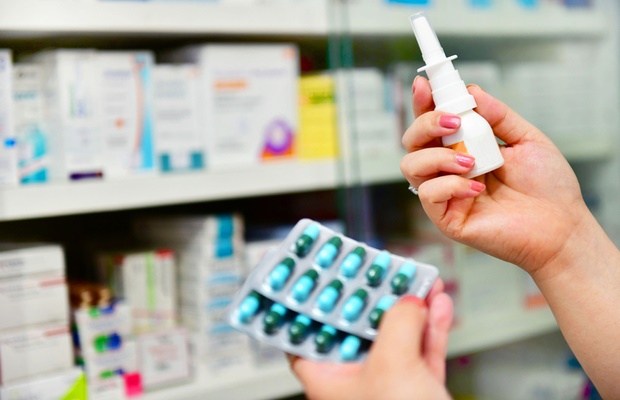
Make sure you have enough of all the medication you may need. According to Food Allergy Research and Education it’s also advisable to check your airline’s policy on travelling with certain medications on board. Have any treatment plan or anaphylaxis plan you might be following (in case of a food allergy) with you. Keep all medication in their original packaging so that they are clear for security officials to inspect at airline security check-in points.

shopping for medication at pharmacy

3. Bring your own pillow

If you use dust-proof or allergen-proof pillows at home, take these with you as accommodation bedding may include allergy-triggering materials.

woman sleeping on white pillow

4. Research (and communicate)

If you suffer from food allergies, research all the restaurants and food outlets in the area you are traveling to as this can help you plan ahead. You can also contact the restaurants where you have reservations to let them know that you have a food allergy so that they can prepare alternatives for you.

Woman taking booking at restaurant

5. Pack snacks

Don’t take a risk with airline food if you have a specific food allergy. You can either call ahead to order a suitable meal option, or you can pack your own “safe” snacks to enjoy on board. Once again, you can check the airline’s policies in advance if you’re unsure of any rules and regulations.

airplane food

6. Download a suitable weather app

A reliable, complete weather app will help you plan ahead by knowing what the pollen count and humidity levels will be. This will help you take the necessary precautions.

weather app

7. Don’t use hotel toiletries

Do you have skin allergies? Take travel-size versions of your own safe toiletries or decant products into travel-size plastic bottles to avoid using the samples you would find in hotel bathrooms. These products are often heavily perfumed and not formulated for allergy-prone skin.

woman using makeup remover

Image credits: iStock

Share Button