Mike Nesbitt said a plan has been developed, but not yet been finalised, and will be published on Thursday.


Mike Nesbitt said a plan has been developed, but not yet been finalised, and will be published on Thursday.

An international group of researchers led by the Doñana Biological Station (EBD-CSIC) has identified a previously unknown species of fossilized insect from the Jurassic period in Australia, estimated to be about 151 million years old. This discovery marks the oldest known member of the Chironomidae family found in the Southern Hemisphere. These non-biting midges typically live in freshwater environments. The fossil reveals a remarkable evolutionary feature: a structure that likely helped the insect attach securely to rocks. Until now, such an anchoring mechanism had only been documented in marine organisms.
The fossil was uncovered in the Talbragar fish beds in New South Wales. The study, published in the journal Gondwana Research, involved experts from the Australian Museum Research Institute, the University of New South Wales, the University of Munich, and Massey University in New Zealand.
The fly from the stagnant waters
“This fossil, which is the oldest registered find in the Southern Hemisphere, indicates that this group of freshwater animals might have originated on the southern supercontinent of Gondwana,” explains Viktor Baranov, a researcher at the Doñana Biological Station and first author of the study.
The newly identified species was named Telmatomyia talbragarica, meaning “fly from the stagnant waters,” a nod to the lake-like setting of the Talbragar region.
Researchers examined six fossilized specimens, including pupae and emerging adults, all showing the presence of a terminal disc. This structure, known to function in environments affected by tides, was once believed to be limited to marine species. However, sediment and fossil evidence from Talbragar indicate that the area was once a freshwater habitat, demonstrating the surprising adaptability (phenotypic plasticity) of chironomids.
Rethinking the origins of the family
The Podonominae group has long served as a valuable model for studying how species are distributed across the planet and how biodiversity arises over time.
Earlier theories suggested that Podonominae originated in northern Gondwana before spreading northward into Laurasia, the ancient landmass that included today’s Northern Hemisphere continents. Their fossil record, however, is limited, partly because of preservation challenges and a lack of studies focusing on Southern Hemisphere specimens. Later discoveries of older fossils in Eurasia, dating back to the Jurassic, prompted some scientists to propose a Laurasian origin instead.
The new findings challenge that view, offering strong evidence that the Podonominae subfamily most likely began in the Southern Hemisphere and later expanded worldwide.
Today, Podonominae species are found mostly in the Southern Hemisphere. Their scattered distribution across South America, Australia, South Africa, and New Zealand is a classic case of vicariance — a process in which natural barriers such as mountains or rivers divide a population, forcing each group to evolve independently and form new species. Swedish entomologist Lars Brundin first proposed in 1966 that the breakup of the ancient supercontinent Gondwana triggered this evolutionary separation.
Limitations due to the scarcity of fossils in the Southern Hemisphere
While this discovery addresses a significant gap in the lineage’s fossil record, a comprehensive understanding of this group’s evolutionary history is still limited by the lack of Southern Hemisphere fossils. The majority of known Podonominae fossils originate from the Northern Hemisphere, with only two prior exceptions documented from the Southern Hemisphere: an Eocene specimen from Australia and a Paleocene record from India.
There is a strong bias towards finding and studying fossils in the Northern Hemisphere. Because of this we end up making incorrect assumptions about where groups originated,” explains Matthew McCurry, palaeontologist from the Australian Museum and The University of New South Wales.
Professor in Massey University Steve Trewick claims, “there are long-standing questions about the way Southern Hemisphere biotas formed and changed through geological time. Fossils species of tiny, delicate freshwater insects like the Talbragar fly are rare and help us interpret the history of life on our planet.”
The analysis of the fossilized specimens, combined with genomics, will help determine whether the dispersal of these insects after the breakup of Gondwana was primarily passive or active. The resulting data will certainly be of value for comprehending and conserving modern-day biodiversity.
Failings in Colin Flatt’s care in the final months of his life are laid bare in a new report.
New research suggests singing can be clinically effective at treating the symptoms and cost effective for the NHS.
An inquest into Maria Morris’s death found it was accidental, but her family still have questions over what happened the night she died.
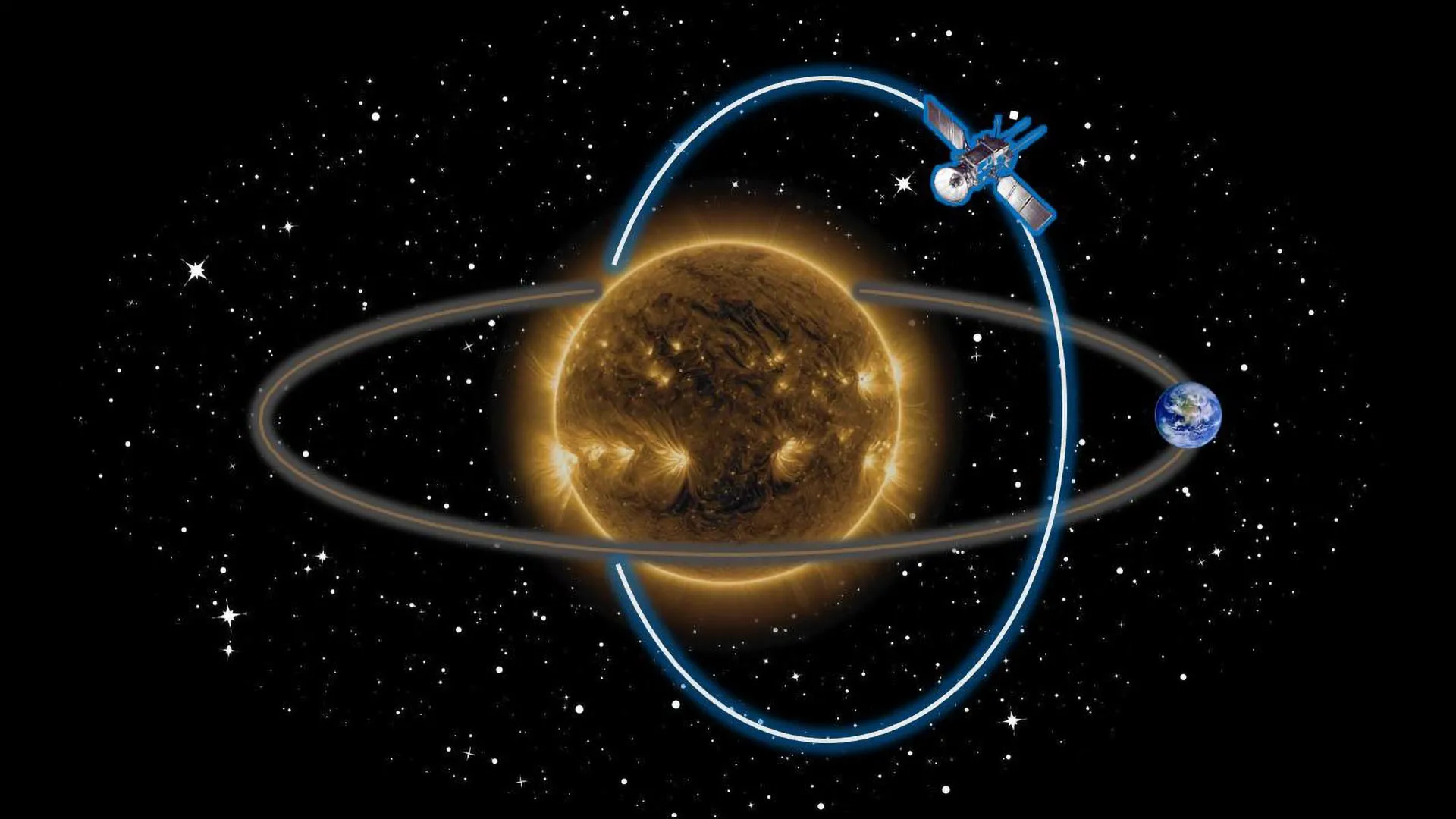
The Sun’s polar regions remain one of the least explored areas in solar science. Space-based observatories and ground telescopes have given us extraordinary images of the Sun’s surface, atmosphere, and magnetic fields, but nearly all of those observations come from within the ecliptic plane — the narrow zone where Earth and most other planets orbit. This viewing angle limits what scientists can see of the Sun’s high-latitude poles. Yet these regions are crucial, as their magnetic fields and dynamic activity help shape the solar magnetic cycle and supply the mass and energy that feed the fast solar wind, influencing solar behavior and driving space weather throughout the solar system.
Why the Poles Matter
At first glance, the Sun’s poles seem calm compared to the active mid-latitudes around ±35°, where sunspots, solar flares, and coronal mass ejections (CMEs) dominate. But appearances are deceiving. The magnetic fields at the poles are vital to the Sun’s global dynamo process and may act as “seed fields” that shape the next solar cycle, defining the overall solar magnetic structure. Data from the Ulysses spacecraft showed that the fast solar wind originates mainly from vast coronal holes near the poles. Understanding these regions is therefore key to answering three of the most important questions in solar physics:
1. How does the solar dynamo operate and drive the magnetic cycle?
The Sun’s magnetic cycle is a repeating pattern that lasts about 11 years, marked by fluctuations in sunspot numbers and a complete reversal of the Sun’s magnetic poles. This process is driven by a complex dynamo mechanism powered by the Sun’s internal motion. Differential rotation produces magnetic activity, while meridional circulation carries magnetic flux toward the poles. However, decades of helioseismic studies have revealed conflicting information about how these flows behave deep inside the convection zone. Some evidence even points to poleward flows at the base of the zone, challenging traditional dynamo theories. Observations from high latitudes are needed to clarify these internal flow patterns and refine existing models.
2. What powers the fast solar wind?
The fast solar wind — a supersonic stream of charged particles — originates mainly in the Sun’s polar coronal holes and fills most of the heliosphere, shaping conditions in interplanetary space. Yet scientists still do not fully understand how it begins. Does it emerge from dense plumes inside the coronal holes, or from the more diffuse regions between them? Are magnetic reconnection events, wave interactions, or both responsible for accelerating the flow? Only direct imaging of the poles and in-situ measurements can resolve these long-standing questions.
3. How do space weather events spread through the solar system?
Space weather refers to changes in the solar wind and solar eruptions that disturb the space environment. Extreme events such as powerful flares and CMEs can trigger geomagnetic and ionospheric storms on Earth, creating dazzling auroras but also threatening satellites, communication systems, and power grids. To improve forecasts, researchers must follow how solar material and magnetic structures evolve across the Sun and through space, not just from the limited perspective of Earth’s orbital plane. Observing from outside the ecliptic would provide a crucial top-down view, helping scientists trace how CMEs and other disturbances travel through the solar system.
Past Efforts
Scientists have long recognized the importance of solar polar observations. The Ulysses mission, launched in 1990, was the first spacecraft to leave the ecliptic plane and sample the solar wind over the poles. Its in-situ instruments confirmed key properties of the fast solar wind but lacked imaging capability. More recently, the European Space Agency’s Solar Orbiter has been gradually moving out of the ecliptic plane and is expected to reach latitudes of around 34° in a few years. While this represents a remarkable progress, it still falls far short of the vantage needed for a true polar view.
A number of ambitious mission concepts have been proposed over the past decades, including the Solar Polar Imager (SPI), the POLAR Investigation of the Sun (POLARIS), the Solar Polar ORbit Telescope (SPORT), the Solaris mission, and the High Inclination Solar Mission (HISM). Some envisioned using advanced propulsion such as solar sails to reach high inclinations. Others relied on gravity assists to incrementally tilt their orbits. Each of these missions would carry both remote-sensing and in-situ instruments to image the Sun’s poles and measure key physical parameters above the poles.
The SPO Mission
The Solar Polar-orbit Observatory (SPO) is designed specifically to overcome the limitations of past and current missions. Scheduled for launch in January 2029, SPO will use a Jupiter gravity assist (JGA) to bend its trajectory out of the ecliptic plane. After several Earth flybys and a carefully planned encounter with Jupiter, the spacecraft will settle into a 1.5-year orbit with a perihelion of about 1 AU and an inclination of up to 75°. In its extended mission, SPO could climb to 80°, offering the most direct view of the poles ever achieved.
The 15-year lifetime of the mission (including an 7-year extended mission period) will allow it to cover both solar minimum and maximum, including the crucial period around 2035 when the next solar maximum and expected polar magnetic field reversal will occur. During the whole lifetime, SPO will repeatedly pass over both poles, with extended high-latitude observation windows lasting more than 1000 days.
The SPO mission aims at breakthroughs on the three scientific questions mentioned above. To meet its ambitious objectives, SPO will carry a suite of several remote-sensing and in-situ instruments. Together, they will provide a comprehensive view of the Sun’s poles. The remote-sensing instruments include the Magnetic and Helioseismic Imager (MHI) to measure magnetic fields and plasma flows at the surface, the Extreme Ultraviolet Telescope (EUT) and the X-ray Imaging Telescope (XIT) to capture dynamic events in the solar upper atmosphere, the VISible-light CORonagraph (VISCOR) and the Very Large Angle CORonagraph (VLACOR) to track the solar corona and solar wind streams out to 45 solar radii (at 1 AU). The in-situ package includes a magnetometer and particle detectors to sample the solar wind and interplanetary magnetic field directly. By combining these observations, SPO will not only capture images of the poles for the first time but also connect them to the flows of plasma and magnetic energy that shape the heliosphere.
SPO will not operate in isolation. It is expected to work in concert with a growing fleet of solar missions. These include the STEREO Mission, the Hinode satellite, the Solar Dynamics Observatory (SDO), the Interface Region Imaging Spectrograph (IRIS), the Advanced Space-based Solar Observatory (ASO-S), the Solar Orbiter, the Aditya-L1 mission, the PUNCH mission, as well as the upcoming L5 missions (e.g., ESA’s Vigil mission and China’s LAVSO mission). Together, these assets will form an unprecedented observational network. SPO’s polar vantage will provide the missing piece, enabling nearly global 4π coverage of the Sun for the first time in human history.
Looking Ahead
The Sun is our nearest star, yet much about it remains unknown. The upcoming Solar Polar-orbit Observatory (SPO) mission is expected to change that by giving scientists an unprecedented look at the Sun’s polar regions. These areas, which have long been hidden from direct view, will soon be observed in detail, offering new insight into the forces that shape our star and sustain life on Earth.
The importance of SPO goes far beyond pure scientific curiosity. By improving knowledge of the solar dynamo, the mission could lead to more accurate predictions of the solar cycle and, in turn, more reliable space weather forecasts. Understanding how the fast solar wind forms and behaves will also refine models of the heliosphere, which is vital for spacecraft engineering and astronaut safety. Most significantly, advances in tracking solar activity could strengthen our ability to safeguard critical technologies, including navigation and communication satellites, aviation systems, and power grids on Earth.
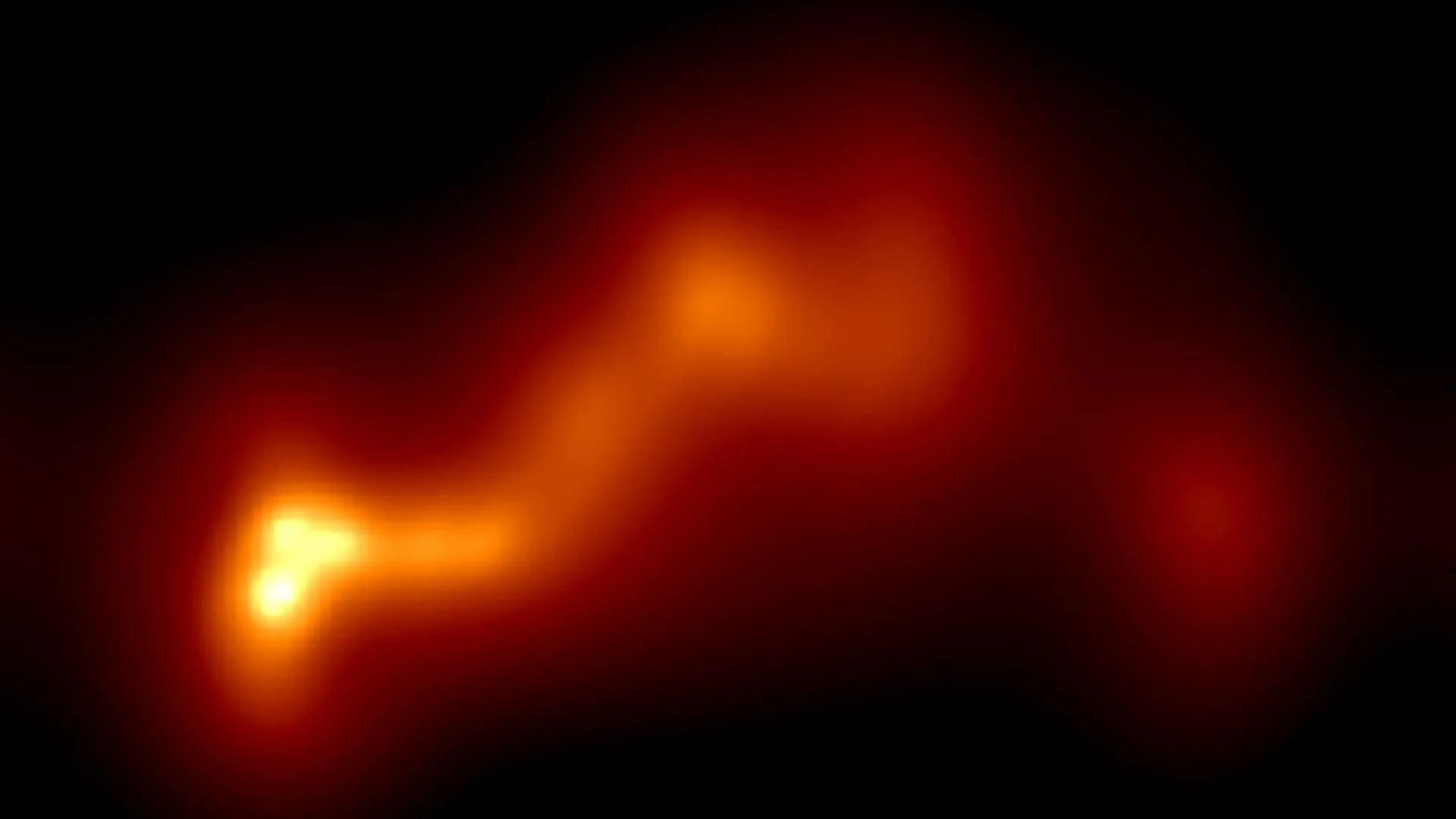
For more than a century and a half, astronomers have been captivated by the distant galaxy OJ 287, located about five billion light years from Earth. Its puzzling variations in brightness have long hinted that two enormous black holes may be orbiting and merging at its center. Now, an international team led by Dr. Efthalia Traianou of Heidelberg University has captured a highly detailed image of the galaxy’s core, revealing features never seen before. Using a space-based radio telescope, the researchers produced an image that uncovers a sharply curved section of a plasma jet streaming from the galaxy’s center, offering fresh insight into the extreme environments surrounding supermassive black holes.
OJ 287 is classified as a blazar, a type of active galaxy known for its intense energy and brightness. At its heart lies a supermassive black hole that draws in matter from nearby space and propels some of it outward in colossal plasma jets filled with radiation, heat, magnetic fields, and heavy particles. “We have never before observed a structure in the OJ 287 galaxy at the level of detail seen in the new image,” said Dr. Traianou, a postdoctoral researcher working with Dr. Roman Gold at Heidelberg University’s Interdisciplinary Center for Scientific Computing.
The image penetrates deeply into the galaxy’s center, revealing a sharply bent, ribbon-like jet structure and providing clues about the plasma’s composition and motion. Some areas reach temperatures of around ten trillion degrees Kelvin, showing just how much energy is being released near the black hole. The scientists also detected a new shock wave forming and colliding along the jet, which they linked to trillion-electron-volt energy levels observed in an unusual gamma-ray signal detected in 2017.
To obtain this remarkable view, the researchers used a ground-space radio interferometer that combined a radio telescope in Earth’s orbit (the ten-meter antenna of the RadioAstron mission aboard the Spektr-R satellite) with 27 ground-based observatories around the world. By linking signals from these observatories, they effectively created a virtual telescope five times wider than Earth’s diameter. The extraordinary resolution of the resulting image comes from measuring how light waves overlap, taking full advantage of the wave properties of light itself.
The interferometric image underpins the assumption that a binary supermassive black hole is located inside galaxy OJ 287. It also provides important information on how the movements of such black holes influence the form and orientation of the plasma jets emitted. “Its special properties make the galaxy an ideal candidate for further research into merging black holes and the associated gravitational waves,” states Efthalia Traianou.
Institutions from Germany, Italy, Russia, Spain, South Korea, and the US all contributed to the research. It was supported by various research and funding institutions. The research results were published in the journal Astronomy & Astrophysics.
The former PM is among those in favour of targeted screening for men most at risk, but some medical experts are sceptical.
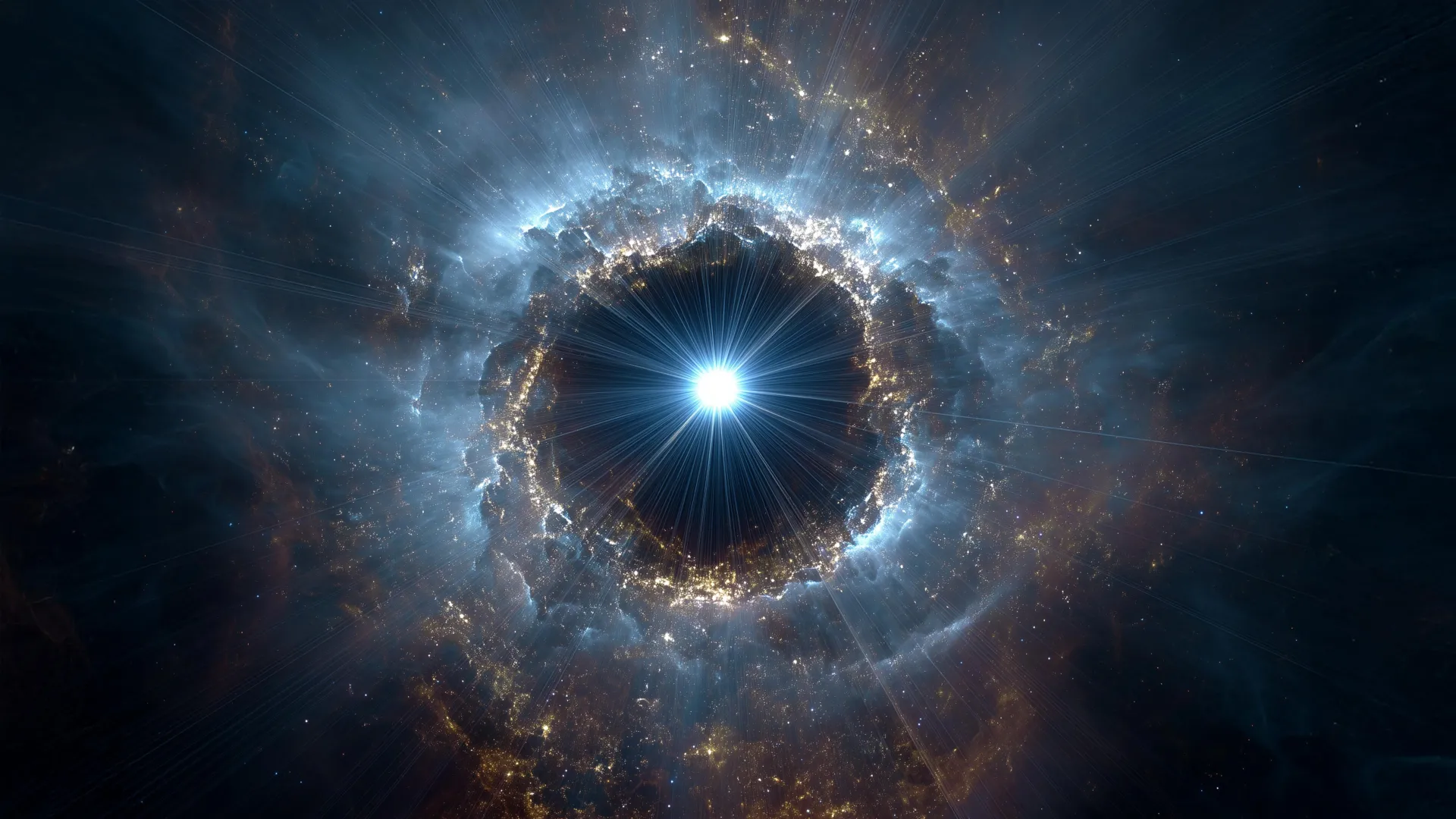
In the early universe, a few hundred million years after the Big Bang, the first stars emerged from vast, untouched clouds of hydrogen and helium. Recent observations from the James Webb Space Telescope (JWST) suggest that some of these early stars may have been unlike the familiar (nuclear fusion-powered) stars that astronomers have studied for centuries. A new study led by Cosmin Ilie of Colgate University, together with Shafaat Mahmud (Colgate ’26), Jillian Paulin (Colgate ’23) at the University of Pennsylvania, and Katherine Freese at The University of Texas at Austin, has identified four extremely distant objects whose appearance and spectral signatures match what scientists expect from supermassive dark stars.
“Supermassive dark stars are extremely bright, giant, yet puffy clouds made primarily out of hydrogen and helium, which are supported against gravitational collapse by the minute amounts of self-annihilating dark matter inside them,” Ilie said. Supermassive dark stars and their black hole remnants could be key to solving two recent astronomical puzzles: i. the larger than expected extremely bright, yet compact, very distant galaxies observed with JWST, and ii. the origin of the supermassive black holes powering the most distant quasars observed.
Katherine Freese first proposed the idea of dark stars with Doug Spolyar and Paolo Gondolo, publishing their initial peer-reviewed paper on the concept in Physical Review Letters in 2008. That study outlined how dark stars might grow and eventually collapse into supermassive black holes in the early universe. In 2010, Freese, Ilie, Spolyar, and their collaborators expanded on the theory in The Astrophysical Journal, describing two possible processes that could allow dark stars to reach immense sizes and predicting that they could seed the black holes found in the earliest quasars known to exist.
Dark matter is thought to make up roughly a quarter of the universe, yet its nature remains one of science’s greatest mysteries. Researchers believe it is composed of a still-undetected type of elementary particle. Decades of experiments have searched for these particles, but so far without success. One leading possibility involves Weakly Interacting Massive Particles (WIMPs). When two WIMPs collide, they are expected to annihilate each other, releasing energy that could heat collapsing hydrogen clouds and cause them to shine as brilliant dark stars.
Conditions a few hundred million years after the Big Bang, within dense regions called dark matter halos, appear to have been ideal for forming such stars. These regions are also where the first generation of normal stars was expected to appear.
“For the first time we have identified spectroscopic supermassive dark star candidates in JWST, including the earliest objects at redshift 14, only 300 Myr after the Big Bang,” said Freese, the Jeff and Gail Kodosky Endowed Chair in Physics and director of the Weinberg Institute and Texas Center for Cosmology and Astroparticle Physics at UT Austin. “Weighing a million times as much as the Sun, such early dark stars are important not only in teaching us about dark matter but also as precursors to the early supermassive black holes seen in JWST that are otherwise so difficult to explain.”
In a 2023 PNAS study by Ilie, Paulin, and Freese, the first supermassive dark star candidates (JADES-GS-z13-0, JADES-GS-z12-0, and JADES-GS-z11-0) were identified using photometric data from JWST’s NIRCam instrument. Since then, spectra from JWST’s NIRSpec instrument became available for those, and a few other extremely distant objects. The team, which now also includes Shafaat Mahmud analyzed the spectra and morphology of four of the most distant objects ever observed (including two candidates from the 2023 study): JADES-GS-z14-0, JADES-GS-z14-1, JADES-GS-13-0, and JADES-GS-z11-0 and found that each of them is consistent with a supermassive dark star interpretation.
JADES-GS-z14-1 is not resolved, meaning it is consistent with a point source, such as a very distant supermassive star would be. The other three are extremely compact, and can be modeled by supermassive dark stars powering a nebula (i.e. ionized H and He gas surrounding the star). Each of the four objects analyzed in this study is also consistent with a galaxy interpretation, as shown in the literature. Dark stars have a smoking gun signature, an absorption feature at 1640 Angstrom, due to the large amounts of singly ionized helium in their atmospheres. And in fact, one of the four objects analyzed shows signs of this feature.
“One of the most exciting moments during this research was when we found the 1640 Angstrom absorption dip in the spectrum of JADES-GS-z14-0. While the signal to noise ratio of this feature is relatively low (S/N~2), it is for the first time we found a potential smoking gun signature of a dark star. Which, in itself, is remarkable,” Ilie said.
Astronomers using the Atacama Large Millimeter/submillimeter Array (ALMA) measured the spectrum of the same object, revealing the presence of oxygen, via a nebular emission line. Researchers said that if both spectral features are confirmed, the object cannot be an isolated dark star, but rather may be a dark star embedded in a metal rich environment. This could be the outcome of a merger, where a dark matter halo hosting a dark star merges with a galaxy. Alternatively, dark stars and regular stars could have formed in the same host halo, as the researchers now realized it is possible.
The identification of supermassive dark stars would open up the possibility of learning about the dark matter particle based on the observed properties of those objects, and would establish a new field of astronomy: the study of dark matter-powered stars. This published PNAS research is a key step in this direction.
Funding Acknowledgments: This research was made possible by generous funding from the following agencies: Colgate University Research Council, The Picker Interdisciplinary Sciences Institute, the U.S. Department of Energy’s Office of High Energy Physics program, Swedish Research Council, LSST Discovery Alliance, the Brinson Foundation, the WoodNext Foundation, and the Research Corporation for Science Advancement Foundation.
Cameron McGerr lost both his parents and is campaigning to have life-saving first aid taught in schools.
