Meta-surface corrects for chromatic aberrations across all kinds of lenses

Today’s optical systems — from smartphone cameras to cutting-edge microscopes — use technology that hasn’t changed much since the mid-1700s. Compound lenses, invented around 1730, correct the chromatic aberrations that cause lenses to focus different wavelengths of light in different spots. While effective, these multi-material lenses are bulky, expensive, and require precision polishing or molding and very careful optical alignment. Now, a group of researchers at the Harvard John A. Paulson School of Engineering and Applied Sciences (SEAS) is asking: Isn’t it time for an upgrade?

SEAS researchers have developed a so-called metacorrector, a single-layer surface of nanostructures that can correct chromatic aberrations across the visible spectrum and can be incorporated into commercial optical systems, from simple lenses to high-end microscopes. The metacorrector eliminated chromatic aberrations in a commercial lens across the entire visible light spectrum. The device also works for the super-complex objectives with as many as 14 conventional lenses, used in high-resolution microscopes.

The research is described in Nano Letters.

“Our metacorrector technology can work in tandem with traditional refractive optical components to improve performance while significantly reducing the complexity and footprint of the system, for a wide range of high-volume applications” said Federico Capasso, the Robert L. Wallace Professor of Applied Physics and Vinton Hayes Senior Research Fellow in Electrical Engineering at SEAS and senior author of the paper.

In previous research, Capasso and his team demonstrated that metasurfaces, arrays of nanopillars spaced less than a wavelength apart, can be used to manipulate the phase, amplitude and polarization of light and enable new, ultra-compact optical devices, including flat lenses. This research uses the same principles to tune and control the effective refractive index of each nanopillar so that all wavelengths are brought by the metacorrector to the same focal point.

“You can imagine light as different packets being delivered at different speeds as it propagates in the nanopillars. We have designed the nanopillars so that all these packets arrive at the focal spot at the same time and with the same temporal width,” said Wei Ting Chen, a Research Associate in Applied Physics at SEAS and first author of the paper.

“Using metacorrectors is fundamentally different from conventional methods of aberration correction, such as cascading refractive optical components or using diffractive elements, since it involves nanostructure engineering,” said Alexander Zhu, a graduate student at SEAS and co-author of the study. “This means we can go beyond the material limitations of lenses and have much better performances.”

Next, the researchers aim to increase efficiency for high-end and miniature optical devices.

Harvard’s Office of Technology Development has protected the intellectual property relating to this project and is exploring commercialization opportunities.

Story Source:

Materials provided by Harvard John A. Paulson School of Engineering and Applied Sciences. Original written by Leah Burrows. Note: Content may be edited for style and length.

Share Button

Hungry ticks work harder to find you

Ticks are hardy little brutes that can go as long as a year without a meal.

Now scientists at the University of Cincinnati say the hungrier ticks are, the harder they try to find you or other hosts. The findings could have implications for the spread of tick-borne disease such as Lyme or Rocky Mountain Spotted Fever.

“Starved ticks are more likely to look for a host,” said Andrew Rosendale, lead author of the study and UC adjunct assistant professor of biology. “Other studies have found that starved ticks take larger blood meals. They’re attached to the host longer, which provides a greater opportunity to transmit diseases.”

The study was published in the journal Molecular Ecology.

Ticks drink blood as larvae, nymphs and adults but spend most of their lives on the ground in tall grass, patiently biding their time for a victim and presumably ignoring their rumbling stomachs.

Finding a suitable animal upon which to feed is hard, so ticks must be prepared to wait. And wait. Rosendale, who also works as assistant professor at Mount St. Joseph University, said being able to go long periods without a meal is a tick’s superpower.

Biologists in UC’s McMicken College of Arts and Sciences studied the changing gene expression and physiology of lab-raised dog ticks that were subjected to more than 36 weeks of starvation.

Studies have found that starving animals often take bigger risks, such as hunting more dangerous prey or exposing themselves to predators to forage for food. UC’s research suggests ticks are no exception.

In the wild, adult ticks explore the undergrowth and climb tall grass. They reach out with the claws on their forelegs, a behavior called questing, to snag an animal’s fur or your denim jeans. Then they burrow into their hosts with mouthparts shaped like ratchets that keep them in place.

In the lab, UC researchers stimulated the ticks’ questing behavior by breathing into identical glass cylinders. (Ticks can sense carbon dioxide so they know when a possible meal is close at hand.) Biologists recorded differences in activity between just-fed ticks and starving ones. They found that starved ticks had higher activity levels and increased questing behavior than recently fed ones.

Starved ticks also had marked changes in their physiology and gene expression.

Ticks can go so long between meals because of their slow metabolism.

“In the absence of any host cues, they go into a dormant state where they don’t move around a lot,” UC biology professor Joshua Benoit said.

This helps conserve energy for the ticks’ preferred wait-and-see ambush strategy.

But after three months without food, a tick’s metabolism actually increases significantly — by as much as 100 percent — and remains at this higher rate for weeks in association with its increased activity. In fact, some researchers collect ticks in the wild by placing dry ice in the woods to entice them with the sublimation of carbon dioxide.

Likewise, UC biologists found that genes related to immunity were activated by starvation, which could be another survival mechanism. Animals that feed on blood must have a immune system capable of fighting bacteria and other microorganisms. By activating genes associated with immunity, ticks might be preparing for an imminent meal.

More strangely, UC biologists found that genes associated with a starved tick’s salivary glands were activated. Saliva is known to help ticks drink more blood more quickly, a useful ability when you’re clinging precariously to a moving animal in thick brush. The sticky saliva also helps cement the tick to the host.

“The more they were starved, the more they were priming themselves for that next blood meal,” Rosendale said.

The study was funded by the U.S. Department of Agriculture, UC’s Faculty Development Research Grant and the National Science Foundation. UC graduate Megan Dunlevy and Marshall McCue of the metabolic measurement firm Sable Systems International contributed to the study.

UC is tracking tick populations at its Center for Field Studies and in several forests in the Great Parks of Hamilton County, Ohio. Benoit and Rosendale have collaborated on several other tick studies.

Tick larvae feed mostly on mice and rabbits they find close to the ground. Nymphs and adults feed on larger mammals they reach by climbing up tall blades of grass. Benoit said ticks typically do not climb up trees or drop onto animals from the tree canopy. So if you find a tick on your head, it likely climbed up from your legs or waist.

Ticks are susceptible to temperature and humidity. Even short bouts of dehydration can shorten a tick’s lifespan considerably in the wild. But Rosendale said ticks are expanding their territories to exploit new habitat made available by climate change.

Ticks are especially problematic for wildlife such as moose that live in regions where the cold historically kept parasite numbers in check. Infested animals are sometimes called “ghost moose” because they rub off their dark fur to remove ticks.

“We’ve studied the moose tick as well in our lab. Moose are particularly susceptible because they’re not good at grooming themselves of ticks. They can be infested with thousands and thousands of ticks, so much so that they can die from blood loss,” Rosendale said.

While ticks might make a short list of most-reviled creatures, Benoit said they serve an important ecological role.

“People want to think of parasites as being awful things. But in ecosystems they’re important regulators in keeping populations in check. They transmit diseases that will kill deer, rabbits or mice,” Benoit said.

“Ecosystems are [delicate] networks. So eliminating a parasite could have major implications,” he said. “Two years of rabbit reproduction is a lot of rabbits.”

The earliest ticks recorded are more than 90 million years old and fed on dinosaurs. Benoit said there is something almost admirable about a natural design that has been perfected by evolution.

“Biologically, they’re interesting,” Benoit said. “They’re perfectly adapted to one thing: survival.”

Share Button

Health24.com | Here’s why you should be having sex in the morning

Most nights, after a long day at work, all you want to do is flop into bed and go to sleep. But in the morning, with the sunlight streaming in through the window – with the world at your fingertips – a round of sex seems like a mighty fine idea.

Read more: Spice up your sex life with these flavoured condoms and lube

If you love morning sex, you’re not alone. In 2015, the sex toy company Lovehoney surveyed 2 300 adults about when they preferred to bone. Men tended to crave sex between 6 and 9am, with “peak horniness” occurring at 7:54am. (The opposite was true for women, who said they preferred to have sex between 11pm and 2am.)

Morning sex is awesome, and not just because it feels great. Here’s why you should consider getting down the moment you get up.

Morning sex makes you more productive

In a 2018 survey, Mattress Advisor asked nearly 1 000 adults who lived with a partner about their attitudes toward morning sex. More than half of the men – 53% – said a morning romp made them more productive during the day.

Read more: Do you feel sad after sex? This is why and what you can do about it

Guys on Reddit agreed. On a thread that asked men why they preferred morning sex, one user said, “It gets me out of bed… I feel like I can totally tackle the day and be productive if I get laid in the morning.”

Morning sex can help beat morning stress

Sex floods your body with oxytocin, a stress-relieving hormone that makes you feel relaxed and happy. Not a bad way to kick off a tough day at work. For an extra dose of stress relief, make time for a little cuddling before you get out of bed and hit the shower.

“Oxytocin can be released not only during masturbation and intercourse, but also during close touching,” Dr Debby Herbenick, a sex researcher at Indiana University, previously told Men’s Health.

Read more: Take these 4 sex positions from average to amazing with these workouts

Your testosterone levels are higher

The morning is when your testosterone levels are highest, which means your sex drive is higher, too. Sex is significantly better when you’re already ready and raring to go.

What if my partner doesn’t like morning sex?

You may love morning sex, but there’s a chance your partner doesn’t feel the same way. In that 2015 Lovehoney survey, 33% of men and 44% of women said they’d had past relationships suffer due to differing sex drives.

Read more: Game night with a twist: 6 adult games to spice up your sex life

See if you and your partner can find a compromise – that’s what relationships are all about, right? Split your sex sessions between morning and evening, so both parties get to capitalise on their respective “peak horniness” periods. You could also save your morning romps for the weekends, when you don’t have to wake up as early, and nobody’s stressed about getting to work on time.

Originally published on menshealth.com

Image credit: iStock

Share Button

Source of 2015 Southeast Asia smoke cloud found

Smoke from widespread fires in Indonesia in the summer and fall of 2015 hung heavily over major urban centers in Southeast Asia, causing adverse health effects for millions of people. The afflicted could not have known that the polluted air they were breathing contained carbon from plants that were alive during the Middle Ages.

During the prolonged conflagration, which was triggered by an El Nino-driven drought, scientists collected smoke particles on the campus of the National University of Singapore and sent the samples to their colleagues at the University of California, Irvine. UCI’s researchers dated the isotopes of the particles’ carbon atoms, finding them to have an average age of 800 years.

Combining this analysis with atmospheric modeling of the wind-driven movement of smoke plumes in fall 2015, the team sleuthed out the source of the harmful cloud: smoldering peat on the islands of Borneo and Sumatra. The findings were published today in Proceedings of the National Academy of Sciences.

“Our research shows that almost all of the smoke emissions originated from the burning of Holocene-aged peat,” said first author Elizabeth Wiggins, a postdoctoral research fellow at NASA’s Langley Research Center who led the study as a Ph.D. candidate in Earth system science at UCI, graduating in 2018. “Although this peat has functioned as a massive terrestrial carbon storage reservoir over the last several thousand years, it is now a significant source of carbon to the atmosphere.”

The scientists’ work provides independent confirmation that Indonesian peats were the flashpoint of the blazes, highlighting the role of humans in the environmental catastrophe.

“These are the first direct measurements showing the smoke originated from combustion of peat layers that are hundreds to thousands of years old,” said study co-author James Randerson, UCI’s Ralph J. & Carol M. Cicerone Chair in Earth System Science. “Farmers drain the peats because waterlogged soils are bad for growing oil palms and other crops, and they seek to burn off surface layers to get to the mineral soil below.”

Indonesia’s peatlands, which hold as much carbon as all of the living biomass of the Amazon rainforest, according to Randerson, had been left alone for millennia, serving mainly as habitat for rare species such as orangutans and Sumatran tigers. In recent decades, expansion of agriculture in remote southern Borneo and uninhabited parts of Sumatra has led to the degradation of these critically important ecosystems.

“This was all human-driven,” Randerson said. “Such fires help a small part of the population, but the costs for people far away in other cities in the region are enormous.”

Co-author Claudia Czimczik, UCI associate professor of Earth system science, said that the peatlands are “doing us a favor” if left unperturbed. “These peats, in general, perform a lot of valuable services for people in the region and also for the climate,” she said. “They store carbon that otherwise would be in the atmosphere, and they can contain a lot of water during excess rainfall and help prevent flooding.”

Czimczik also pointed to the importance of finding better ways to manage these ecosystems.

“We need to identify more sustainable agricultural solutions in which we preserve tropical forests and peatlands to maintain all of these benefits while at the same time enhancing food security,” she said.

Story Source:

Materials provided by University of California – Irvine. Note: Content may be edited for style and length.

Share Button

Health24.com | How bad is your hearing loss?

People often assume that hearing loss only affects older people, but the reality is that it can affect anyone and at any age.

If you are finding it hard to follow conversations in noisy environments or have to constantly ask people to repeat themselves, or your family regularly complains that the TV is too loud, it might be time to book a hearing test. 

Degrees of hearing loss

After you’ve had a hearing test, which takes between 60 and 90 minutes, your audiologist might tell you that your degree of hearing loss is mild, moderate, severe or profound. But what exactly does that mean? The Better Hearing Institute gives a brief explanation of each degree:

Mild: It’s the most common and under-diagnosed degree of hearing loss, the institute says. It means you probably have trouble hearing sounds that are less than 40 decibels, such as a whisper, rustling leaves or the sound of normal breathing. You may have trouble hearing others in noisy environments or higher-pitched sounds.

Moderate: In addition to the sounds described above, you may have trouble hearing sounds in the 40- to 60-decibel range, such as those typical of a quiet office. You probably have trouble keeping up with most conversations without the use of hearing aids.

Severe: You probably have trouble hearing sounds up to 80 decibels, such as those of a vacuum cleaner or hair dryer.

Profound: You probably can’t hear sounds above 80 decibels, such as a lawn mower, food blender or motorcycle.

So how often do I need to have a hearing test?

Hearing loss often happens so gradually you might not even realise there is a problem. The Association of Independent Hearing Healthcare Professionals says you should go for regular hearing tests and recommends the following:

  • 18 to 45 years old: every five years
  • 45 to 60 years old: every three years
  • 60 years and older: every two years

Image credit: iStock 

Share Button

Sugar tax on soft drinks raises £154m

Income from the levy, which began in April, is on track to meet the estimate of £240m.

Share Button

Health24.com | What bacteria can cause trouble in your mouth?

The average person has anything between 20 and 100 billion bacteria in their mouth, which is more than the entire human population.

According to researchers, there are more than 700 different kinds of bacteria that can live in the human mouth.

An array of oral diseases

The concept of bacteria in your mouth might not sound very attractive, and while it is true that certain bacteria are responsible for causing disease, not all bacteria are bad – some are actually involved in keeping you healthy. In fact, according to Scientific American, avoiding halitosis (bad breath) requires the right balance of oral microbes in your mouth.

It is important to have enough good bacteria in your mouth as they keep the bad ones in check by producing proteins that control their growth. Most of the bacteria found in your mouth reside in plaque, the sticky film that covers the surface of your teeth.

The most common oral problems people suffer from are:

  • Plaque retention
  • Tooth decay
  • Periodontal disease
  • Mouth ulcers
  • Cavities
  • Teeth discolouration
  • Halitosis (bad breath)

Certain foods favour good bacteria that prevent tooth decay and oral disease, while other foods support bad bacteria that can cause an array of oral diseases. Of all the different types of bacteria found in the mouth, fortunately only a few are harmful. As mentioned above, it is crucial to keep a balance between the good and bad bacteria.

Some of the good bacteria are:

  • Streptococcus salivarius is found naturally in the mouth. It has anti-microbial properties that can naturally reduce cariogenic and periodontal disease in the mouth.
  • A12 microbe bacteria can help fight cavities. They can, for example, disrupt Streptoccus mutans’ ability to produce plaque on the teeth.
  • Lactobacillus bacteria show a significant ability to inhibit the growth of oral streptococcus mutans and Candida albicans.

The main bad guys are:

  • Streptococcus mutans, commonly found in the mouth, is a significant contributor to tooth decay. It feeds on sugars and produces an acidic environment in the mouth.
  • Porphyromonas gingivalis, which when found in the mouth is generally the cause of periodontitis, an infection of the gum. This can result in the loss of teeth.
  • Anaerobic bacteria. Bad breath is mainly caused by Gram-negative bacteria. The species that cause bad breath are: Treponema denticola, Porphyromonas gingivalis, Tannerella forsythensis, Porphyromonas endodontalis, Prevotella intermedia and Eubacterium. These bacteria produce volatile sulphur compounds that can create really bad smelling breath.

Gum disease linked to cancer

According to a previous Health24 article, oral health problems can pose a threat to your general wellbeing. For example, it has been suggested that people with periodontal disease are twice as likely to suffer from coronary artery disease than those not afflicted by this condition.

A recent study, led by The Lancet Oncology, confirms the link between gum disease and a number of cancers. The study reveals that even the presence of moderate gum disease can increase the risk of cancer by 14%. Although the link between cancer and gum disease is still being investigated, it is certain that pathogenic bacteria, caused by gum disease, can make their way into the blood and may lead to a decrease in the body’s immune response.

Here are seven tips that will help keep your mouth and body healthy:

1. Don’t smoke.
2. Eat foods that are rich in minerals and vitamins.
3. Avoid sugary, sticky snacks, which can encourage plaque growth.
4. Brush your teeth after every meal and before going to bed.
5. Floss at least once a day.
6. Go for regular dental checkups.
7. Visit your dentist if your gums are bleeding or swollen.

Image credit: iStock

Share Button

The hospitals that fail to treat patients on time

Nearly one in five local hospital services have failed to hit their key waiting time targets for a whole year.

Share Button

Health24.com | Man reveals how he lost 76kg after his girlfriend cheated on him

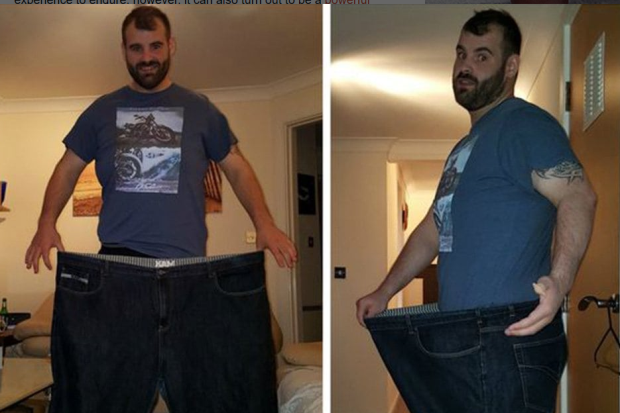
Getting cheated on by your significant other is a heart-wrenching experience to endure; however, it can also turn out to be a powerful motivator, as this Englishman, Mike Vaughn, has come to discover.

Read more: Not only am I 20kg lighter, but I’m mentally, physically and emotionally stronger

‘Motivation to really improve my life’

Vaughn, who at his heaviest weighed a little over 200kg, was struggling with his goal to lose weight, or even control it. Then, the hammer fell: His girlfriend had been cheating on him, to boot. Despite the devastating setback, though, Vaughn steeled his resolve and put in the work to lose weight.

Read more: This man’s transformation saw him lose over 90kg to join the army

“My life could have gone in one of two ways,” he told the Daily Mail. “Go back into a depression and comfort eat and go back to square one, or use it as motivation to really improve my life. I wasn’t going to let something like that destroy everything I had worked for, I would use it to spur me on and I did.”

Read more: What you eat could be causing your depression

Since then, he’s changed his diet, committed to his fitness, and has seen major results: In fact, he’s now lost 76 kg and he’s still continuing to lose weight.

Exercise ‘boot camp’

“I put everything into my diet and training, and I can honestly say now I’ve never been happier,” he said. “Since then, I’ve found the consistency that I needed so much. Her cheating was a blessing in disguise.”

Read more: How to lose that first kilogram

Vaughn completely overhauled his diet by cutting out chips, cold drinks, burgers, and pizza; instead replacing them with water, salads and regular servings of eggs, fish, and vegetables. But he first started to lose weight when, with the recommendation of a friend, he took part in a six-week exercise “boot camp”. From there, he joined a nearby gym, where he became a member of a group personal training programme. Since then, his heartbreaking story has culminated in a happy, healthy ending.

Your personal weight loss journey doesn’t need to begin with romantic misfortune, though. Try the Men’s Health’s Belly Off Guide to transform your life and body today.

Originally published on menshealth.com

Image credit: Men’s Health

Share Button

Health24.com | Is crowdfunding too often used for bogus treatments?

Crowdfunding pleas for dubious or potentially unsafe medical treatments are increasingly common, and raised nearly $7m on social media in two years, researchers report.

An ill patient pleading for naturopathic cancer treatments or hyperbaric oxygen therapy can be hard to resist. Ditto a parent seeking antibiotics for their child for chronic Lyme disease.

None of these treatments are proven to be of value, experts note.

A ‘huge trend’

But this new study illustrates a grave “potential for misinformation and ‘fake news’ to spread,” said Dr Vineet Arora, a professor of medicine at the University of Chicago.

The report warns that many Americans use crowdfunding websites such as GoFundMe to perform end-runs around their doctors and insurance carriers in order to finance medical procedures that can be untested, ineffective and/or potentially dangerous.

“It’s a huge trend,” said study lead author Dr Ford Vox, a brain injury specialist at the Shepherd Center in Atlanta.

Vox and his colleagues reviewed medical postings from November 2015 until December 2017 on four American and Canadian crowdfunding sites: GoFundMe, YouCaring, CrowdRise and FundRazr.

They zeroed in on campaigns for five medically unsupported “treatments” in eight countries: homeopathy or naturopathy for cancer; hyperbaric (atmospherically pressurized) oxygen therapy for brain trauma; stem cell therapy for brain injuries; stem cell therapy for spinal cord injuries, and long-term antibiotic therapy for chronic Lyme disease.

Unregulated market

Despite a lack of evidence supporting these therapies, researchers found that more than 1 000 campaigns raised more than $6.7 million. Ninety-eight percent of the postings appeared on GoFundMe, and the cumulative goal was to raise more than $27 million.

At the high end, nearly 500 funding pleas for homeopathic/naturopathic cancer treatments took in more than $3.4 million, the researchers found.

Nearly 200 campaigns for hyperbaric oxygen therapy raised about $785,000. Requests to fund stem cell therapy for brain and spinal cord injuries drew more than $1.8 million. And controversial long-term antibiotic therapy for Lyme disease raised about $689,000.

Those numbers, said Vox, reflect the rise of an “explosive” and unregulated market for accessing treatments that are neither safe nor effective. “Ultimately, there is a lot of legal but bad medicine out there,” he added.

Assuming the money went where it was promised to go, donors “indirectly contributed millions of dollars to practitioners to deliver dubious, possibly unsafe care,” Vox and his research team wrote in a letter published in Journal of the American Medical Association.

Potential downside

Vox and others agree there are plenty of legitimate medical crowdfunding requests.

But medical crowdfunding “erodes public trust in the medical and scientific enterprise, if it brings attention to treatments that are not supported by science,” said Arora, who wasn’t involved in the study. “This erosion can also make it harder to advance trust when treatments are [effective].”

Vox said crowdfunding sites “need to recognise the potential downside and accept a certain level of responsibility.” He suggested they work with the academic and bioethics community to determine how best to move forward.

Arora added that “the public has a right to unbiased and accurate information about both the proven risk and benefit of medical treatments”. Ensuring that, she said, may require new regulations.

Image credit: iStock

NEXT ON HEALTH24X

Share Button