A new report says there’s no link between lack of sleep and early death, but does that come as any comfort?


A new report says there’s no link between lack of sleep and early death, but does that come as any comfort?
Surgeons issue a warning as more young people suffer injuries performing stunts for social media.
Patients and GPs have been frustrated by shortages caused by the staggered supply of the new vaccine.
Researchers at the University of New Hampshire have captured a difficult-to-view singular event involving “magnetic reconnection” — the process by which sparse particles and energy around Earth collide producing a quick but mighty explosion — in the Earth’s magnetotail, the magnetic environment that trails behind the planet.
Magnetic reconnection has remained a bit of a mystery to scientists. They know it exists and have documented the effects that the energy explosions can have — sparking auroras and possibly wreaking havoc on power grids in the case of extremely large events — but they haven’t completely understood the details. In a study published in the journal Science, the scientists outline the first views of the critical details of how this energy conversion process works in the Earth’s magnetotail.
“This was a remarkable event,” said Roy Torbert of the Space Science Center at UNH and deputy principal investigator for NASA’s Magnetospheric Multiscale mission, or MMS. “We have long known that it occurs in two types of regimes: asymmetric and symmetric but this is the first time we have seen a symmetric process.”
Magnetic reconnection occurs around Earth every day due to magnetic field lines twisting and reconnecting. It happens in different ways in different places, with different effects. Particles in highly ionized gases, called plasmas, can be converted and cause a single powerful explosion, just a fraction of a second long, that can lead to strong streams of electrons flying away at supersonic speeds. The view, which was detected as part of the scientists’ work on the MMS mission, had enough resolution to reveal its differences from other reconnection regimes around the planet like the asymmetric process found in the magnetopause around Earth which is closer to the sun.
“This is important because the more we know and understand about these reconnections,” said Torbert, “the more we can prepare for extreme events that are possible from reconnections around the Earth or anywhere in the universe.”
Magnetic reconnection also happens on the sun and across the universe — in all cases forcefully shooting out particles and driving much of the change we see in dynamic space environments — so learning about it around Earth also helps us understand reconnection in other places in the universe which cannot be reached by spacecraft. The more we understand about different types of magnetic reconnection, the more we can piece together what such explosions might look like elsewhere.
For the first reported asymmetrical event on October 16, 2015, and now this symmetrical event on July 11, 2017, NASA’s MMS mission made history by flying through magnetic reconnection events near the Earth. The four MMS spacecrafts launched from a single rocket were only inside the events for a few seconds, but the instruments which UNH researchers helped to develop were able to gather data at an unprecedented speed of one hundred times faster than ever before. As a result, for the first time, scientists could track the way the magnetic fields changed, new electric fields presented, as well as the speeds and direction of the various charged particles.
Story Source:
Materials provided by University of New Hampshire. Note: Content may be edited for style and length.

Genetically engineered microbes such as bacteria and yeasts have long been used as living factories to produce drugs and fine chemicals. More recently, researchers have started to combine bacteria with semiconductor technology that, similar to solar panels on the roof of a house, harvests energy from light and, when coupled to the microbes’ surface, can boost their biosynthetic potential.
The first “biological-inorganic hybrid systems” (biohybrids) mostly focused on the fixation of atmospheric carbon dioxide and the production of alternative energies, and although promising, they also revealed key challenges. For example, semiconductors, which are made from toxic metals, thus far are assembled directly on bacterial cells and often harm them in the process. In addition, the initial focus on carbon-fixing microbes has limited the range of products to relatively simple molecules; if biohybrids could be created based on microorganisms equipped with more complex metabolisms, it would open new paths for the production of a much larger range of chemicals useful for many applications.
Now, in a study in Science, a multidisciplinary team led by Core Faculty member Neel Joshi and Postdoctoral Fellows Junling Guo and Miguel Suástegui at Harvard’s Wyss Institute for Biologically Inspired Engineering and John A. Paulson School of Engineering and Applied Sciences (SEAS) presents a highly adaptable solution to these challenges.
“While our strategy conceptually builds on earlier bacterial biohybrid systems that were engineered by our collaborator Daniel Nocera and others, we expanded the concept to yeast — an organism that is already an industrial workhorse and is genetically easy to manipulate — with a modular semiconductor component that provides biochemical energy to yeast’s metabolic machinery without being toxic,” said Joshi, Ph.D., who is a Core Faculty member at the Wyss Institute and Associate Professor at SEAS. Co-author Nocera is the Patterson Rockwood Professor of Energy at Harvard University. As a result of the combined manipulations, yeasts’ ability to produce shikimic acid, an important precursor of the anti-viral drug Tamiflu, several other medicines, nutraceuticals, and fine chemicals, was significantly enhanced.
The baker’s yeast Saccharomyces cerevisiae naturally produces shikimic acid to generate some of its building blocks for the synthesis of proteins and other biomolecules. However, by genetically modifying the yeast’s central metabolism, the researchers enabled the cells to funnel more of the carbon atoms that their main nutrient source, the sugar glucose, contains into the pathway that produces shikimic acid and prevent the loss of carbon to alternative pathways by disrupting one of them.
“In principle, the increased ‘carbon flux’ towards shikimic acid should lead to higher product levels, but in normal yeast cells, the alternative pathway that we disrupted to increase yields, importantly, also provides the energy needed to fuel the final step of shikimic acid production,” said co-first author Miguel Suástegui, Ph.D., a chemical engineer and former Postdoctoral Fellow in Joshi’s team and now Scientist at Joyn Bio LLC. To boost the more carbon-effective but energy-depleted engineered shikimic acid pathway, “we hypothesized that we could generate the relevant energy-carrying molecule NADPH instead in a biohybrid approach with light-harvesting semiconductors.”
Toward this goal, Suástegui collaborated with Junling Guo, Ph.D., the study’s other co-corresponding and co-first author and presently a Postdoctoral Fellow with experience in chemistry and materials science in Joshi’s lab. They designed a strategy that uses indium phosphide as a semiconductor material. “To make the semiconductor component truly modular and non-toxic, we coated indium phosphide nanoparticles with a natural polyphenol-based “glue,” which allowed us to attach them to the surface of yeast cells while at the same time insulating the cells from the metal’s toxicity,” said Guo.
When tethered to the cell surface and illuminated, the semiconductor nanoparticles harvest electrons (energy) from light and hand them over to the yeast cells, which shuttle them across their cell walls into their cytoplasm. There the electrons elevate the levels of NADPH molecules, which now can fuel shikimic acid biosynthesis. “The yeast biohybrid cells, when kept in the dark, mostly produced simpler organic molecules such as glycerol and ethanol; but when exposed to light, they readily switched into shikimic acid production mode with an 11-fold increase in product levels, showing us that the energy transfer from light into the cell works very efficiently,” said Joshi.
“This scalable approach creates an entirely new design space for future biohybrid technologies. In future efforts, the nature of semiconductors and the type of genetically engineered yeast cells can be varied in a plug-and-play fashion to expand the type of manufacturing processes and range of bioproducts,” said Guo.
“The creation of light-harvesting, living cellular devices could fundamentally change the way we interact with our natural environment and allow us to be more creative and effective in the design and production of energy, medicines and chemical commodities,” said Wyss Institute Founding Director Donald Ingber, M.D., Ph.D., who is also the Judah Folkman Professor of Vascular Biology at HMS and the Vascular Biology Program at Boston Children’s Hospital, as well as Professor of Bioengineering at SEAS.

Inspired by the extraordinary characteristics of polar bear fur, lotus leaves and gecko feet, engineering researchers have developed a new way to make arrays of nanofibers that could bring us coatings that are sticky, repellent, insulating or light emitting, among other possibilities.
“This is so removed from anything I’ve ever seen that I would have thought it was impossible,” said Joerg Lahann, a professor of chemical engineering at the University of Michigan and senior author of the study in the journal Science.
Researchers at U-M and the University of Wisconsin made the somewhat serendipitous discovery, which revealed a new and powerful method for making arrays of fibers that are hundreds of times thinner than a human hair.
Polar bear hairs are structured to let light in while keeping heat from escaping. Water-repelling lotus leaves are coated with arrays of microscopic waxy tubules. And the nanoscale hairs on the bottoms of gravity-defying gecko feet get so close to other surfaces that atomic forces of attraction come into play. Researchers looking to mimic these superpowers and more have needed a way to create the minuscule arrays that do the work.
“Fundamentally, this is a completely different way of making nanofiber arrays,” Lahann said.
The researchers have shown that their nanofibers repelled water like lotus leaves. They grew straight and curved fibers and tested how they stuck together like Velcro — finding that clockwise and counterclockwise twisted fibers knitted together more tightly than two arrays of straight fibers.
They also experimented with optical properties, making a material that glowed. They believe it will be possible to make a structure that works like polar bear fur, with individual fibers structured to channel light.
But molecular carpets weren’t the original plan. Lahann’s group was working with that of Nicholas Abbott, at the time a professor of chemical engineering at UW-Madison, to put thin films of chain-like molecules, called polymers, on top of liquid crystals. Liquid crystals are best known for their use in displays such as televisions and computer screens. They were trying to make sensors that could detect single molecules.
Lahann brought the expertise in producing thin films while Abbott led the design and production of the liquid crystals. In typical experiments, Lahann’s group evaporates single links in the chain and coaxes them to condense onto surfaces. But the thin polymer films sometimes didn’t materialize as expected.
“The discovery reinforces my view that the best advances in science and engineering occur when things don’t go as planned,” Abbott said. “You just have to be alert and view failed experiments as opportunities.”
Instead of coating the top of the liquid crystal, the links slipped into the fluid and connected with each other on the glass slide. The liquid crystal then guided the shapes of the nanofibers growing up from the bottom, creating nanoscale carpets.
“A liquid crystal is a relatively disordered fluid, yet it can template the formation of nanofibers with remarkably well-defined lengths and diameters,” Abbott said.
And they didn’t only make straight strands. Depending on the liquid crystal, they could generate curved fibers, like microscopic bananas or staircases.
“We have a lot of control over the chemistry, the type of fibers, the architecture of the fibers and how we deposit them,” Lahann said. “This really adds a lot of complexity to the way we can engineer surfaces now; not just with thin two-dimensional films but in three dimensions.”
Story Source:
Materials provided by University of Michigan. Note: Content may be edited for style and length.


Pain during sex isn’t uncommon. It can range from a bothersome twinge that throws off your groove, to a more intense condition that becomes completely debilitating. If you’re dealing with below-the-belt discomfort, one reason might be something called vulvodynia, a chronic condition.
Vulvodynia generally causes burning, irritation or pain, and tends to affect women ages 18 to 25. It can cause specific pain – confined to the opening right around the vagina, or even the clitoris – while other women experience a more generalised aching of the vagina. Many women with the condition say it feels like “having acid poured on my skin” and “feeling a constant knife-like pain”. (Ouch.)
But what is vulvodynia exactly? “It’s essentially inflammation of the vulva – the opening of your vagina,” says Dr Leah Millheiser, director of the female sexual medicine program at Stanford University. “That’s an area of the body that has many nerve endings and sometimes those nerve endings don’t fire the right way. What that can lead to for many women is a sort of generalised burning or irritation.”
Read more: Are you experiencing painful sex? You could have dyspareunia
There’s two different categories of the condition, says Dr Millheiser. “It can be either provoked, meaning you touch the area and the pain starts, or it can be unprovoked, which means you could be lying in bed and have this burning pain for no reason.”
Dr Millheiser notes that although vulvodynia is actually pretty common, no one talks about it, so many women are left in the dark about what’s going on with all that pain down there. If you think you may have vulvodynia, here’s what you need to know about the condition, and how to deal if it’s messing with your lady parts.
Read more: These two treatments will change your life if you experience painful sex
What’s the cause?
So what causes the redness and chronic burning or pain when you’re touched? The answer isn’t so simple.
“The first question I ask is do you use birth control pills or have a Nuva ring,” says Dr Millheiser. “Women who started the pill before the age of 16 are nine times more likely to develop provoked vulvodynia than women who have never taken the pill.”
Why? Birth control alters the levels of oestrogen and testosterone in your body, which can be a cause of vulvar pain.
Environmental factors can also be to blame. If you have sensitive skin (like if your skin freaks out when you try a new cleanser) your vagina is probably extra sensitive, says Dr Millheiser. Scented pantyliners, soaps, lubes and even detergents can all cause irritation down there.
Vulvodynia can also be caused by a nervous system disorder. “Interestingly we see a lot of women who have interstitial cystitis (also called painful bladder syndrome), who also have vulvodynia because it has to do with abnormal nerve function in that area,” Dr Millheiser says.
Read more: 12 reasons why you’re experiencing painful sex
How is it treated?
If you’re on the pill, switching to an IUD might be your first move. If vulvodynia is getting in the way of your sex life or relationship, that’s an issue, says Dr Millheiser.
Secondly, try ruling out environmental issues by switching to perfume-free soaps, detergents and period products. Your doctor might also suggest taking a break from wearing tight jeans or workout leggings – extra rubbing down there can exacerbate the problem.
Switching up your diet might also solve the issue. Cutting down on oxalates (foods like spinach, nut butters, potatoes) has been linked to zapping symptoms of vulvodynia, according to the Vulval Pain Society.
Beyond that, steroid creams and oral medications can be used to help curb the painful symptoms.
Read more: These are the three symptoms of vaginismus, a painful sex disorder
What should I do if I’m having vaginal pain?
“Not all women will get this – you have to have a genetic predisposition – but it is quite common,” says Dr Millheiser. “Women experience vulvodynia differently. There are women who’ve learnt to deal with it and push through, and there are women for whom it’s completely debilitating.”
Step one: Talk to your gynae about any pain, irritation or burning – during sex or otherwise – STAT. “If you’re experiencing new onset vulvar pain or burning you need to be evaluated by your doctor because you need to be ruled out for a yeast infection or herpes,” says Dr Milleheiser. “If you’re avoiding sex and relationships because of pain, that’s where it’s really important to come in and seek help.”
Vulvodynia unfortunately becomes a chronic issue for many women, she adds, so if it’s not getting any better, it may be time to go beyond your regular gynae and see someone who specialises in vulvar health. In many cities, these docs can be found at university medical centres. Your gynae can also refer you to a specialist.
Looking for more? Here are four things you should never put up your vagina.
This article was originally published on www.womenshealthmag.com

Whether it’s stress, the taste or just habit, there are various reasons why people continue to smoke cigarettes. These triggers make it harder to kick the habit and to quit for good.
There are physical factors which make people crave nicotine, but there is definitely also a correlation between cravings and certain situations according to research.
When you are able to identify what urges you to smoke, you can better fight the craving. Here are some of the most common triggers and what you can do to fight them.
The different triggers can be divided into four groups:
1. During stressful situations
Why it’s a trigger: Smoking can help you to cope with a stressful situation. Smoking is strongly associated with taking a break. Nicotine also provides a calm feeling – but know that it an illusion. As nicotine enters your bloodstream, your heart rate spikes – the sense of calmness is created by the release of dopamine.
Solution: Know that you can take a breather without actually lighting up a cigarette. Instead of going outside simply to smoke, rather go for a brisk walk around the block. Think about other things in your life that make you relax – maybe there’s a hobby, such as drawing or painting, that you can take up instead of smoking.

2. Coffee
Why it’s a trigger: The idea of that first cup of morning coffee, paired with a cigarette, sounds amazing. A study showed that cigarettes may enhance the taste of coffee, making this combo even more appealing. “The conventional wisdom has been that there’s something about the combination of nicotine and caffeine that smokers like,” says lead author of the study, Duke University’s Joseph McClernon, PhD.
Solution: We are not suggestion that you give up coffee as well, but do acknowledge and change the coffee habits that lead to smoking – go to a different coffee shop, drink a different variety of coffee, start drinking coffee at your desk rather than nipping down to the coffee shop on the corner.

3. Alcohol
Why it’s a trigger: A cigarette may seem more appealing to you after a glass of wine with friends. This can partly be because your inhibitions are lowered and you are more likely to give in to smoke, especially if you are a social smoker.
Solution: Drink less, or drink mindfully while you are trying to quit, as it may be easier to light up that cigarette while you are feeling a bit tipsy. When your body has become used to reduced nicotine levels that second drink won’t be as likely to jeopardise your efforts to quit.

4. After a meal
Why it’s a trigger: Many people tend to smoke after a delicious meal. People are likely to feel more satisfied if they end off a meal with a cigarette.
Solution: Take a couple of deep breaths, go for a brisk walk or chew gum after a meal to take your mind off those cigarette cravings.

5. A certain social setting or a group of friends
Why it’s a trigger: Some people smoke only in certain social settings – whether it’s in a noisy club or with a group of friends – and this is often associated with alcohol. Even if you tell yourself that you are only a social smoker, every cigarette increases your risk of heart disease and stroke.
Solution: Think of why you smoke in that specific social setting and plan how you would handle not smoking in that situation. Keep your hands busy, talk to other people in the group, or just walk around.

Image credit: iStock

NEXT ON HEALTH24X

Ringworm can be pretty annoying. It will cause your skin to itch and flake, which is irritating and unsightly. Ringworm is common in children, but adults can get it too.
The skin condition is caused by a keratin-eating fungus and its name comes from the ring-like appearance of the rash.
Ringworm can be picked up pretty much anywhere as the fungus is highly contagious.
There are various anti-bacterial and anti-fungal creams that you can use to tackle ringworm, but if you want to try something more natural and home-made, there are some great home remedies you can try.

Tea tree oil
Tea tree oil is the superhero of natural antibacterial and antifungal treatments. Native to Australia, tea tree oil comes from the Melaleuca alternifolia tree. Its anti-fungal properties make it a great ingredient to combat ringworm.
Dilute a few drops of the oil in water. Then dab some onto a cotton ball and apply to the affected area. Do this two to three times a day.

Aloe vera
Much like tea tree oil, aloe vera is renowned for its antibacterial and antiseptic properties. There is an abundance of studies backing the healing properties of this plant. This succulent stores all of its goodness in its leaves. So, if you’re dealing with ringworm, break off a piece of a leaf and rub it on the fungus. If you’re not lucky enough to have this natural doctor in your backyard, you can always buy some aloe vera gel at a health store.
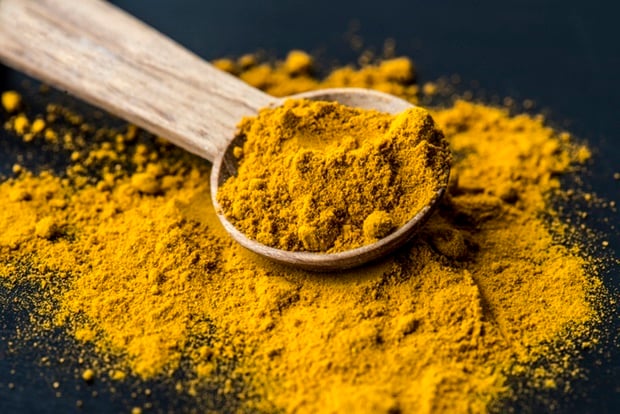
Turmeric
Turmeric is currently in the spotlight. You can find it everywhere, from face masks to arthritis remedies. As a member of the ginger family, this yellow plant has been used for years in various dishes, but people are now looking to it for its incredible healing properties.
To help get rid of ringworm, mix about half a teaspoon of turmeric with some coconut oil. Once it’s mixed well, apply it on the infected skin.
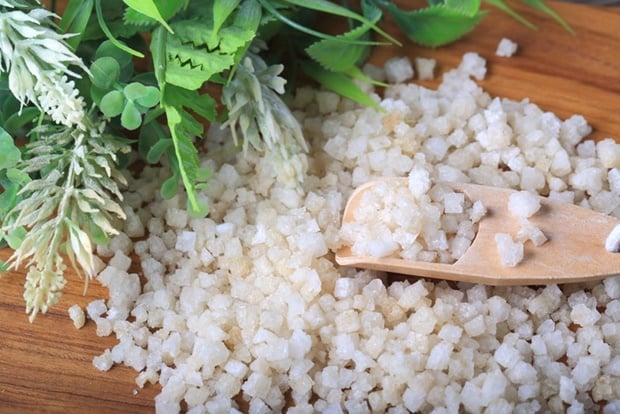
Epsom salt
Mix some Epsom salt with warm water and you’ll have yourself a great natural exfoliant and antifungal treatment. Comprised of magnesium and sulphate, Epsom salt is great at removing any moisture that the fungus might be thriving on, while treating the infection at the same time.
You’ll need about a ¼ cup of Epsom salt and a cup of warm water. Apply regularly and generously.

Eucalyptus oil
The Australians might be on to something… Eucalyptus oil is a great natural way to treat pesky fungal infections. The oil is great for your skin and its anti-inflammatory and antimicrobial properties will kill the fungus – plus it has a wonderful fresh smell.
Add a few drops of eucalyptus oil to some warm water and apply to the affected area.
When to see the doctor
If the ringworm does not clear up in two weeks, or appears to be getting worse – i.e. blisters develop or it starts to spread to other parts of your body, you should consult your GP.
Image credit: iStock


The announcement comes the day after an “appalling” cervical-screening blunder hits more than 40,000 women.
