Health24.com | This is how to get rid of shin splints for good

It feels like you should be handed an award when you decide to step up your running game (hello, you just dominated 10 whole kays!).

In reality, you might just be left with some nasty shin splints – especially if you go all in too soon.

“It’s one of the most common things I see in my office,” says Dr Jordan Metzl, a sports medicine doctor and author of Running Strong.

Read more: Prevent injuries from happening when you run with these five moves

Pesky shin splints occur when the muscles, tendons and bone tissue around your tibia become inflamed during repetitive movements like running, according to the American Academy of Orthopaedic Surgeons. The pain along your shinbone may be sharp or throbbing. “You know you have it if, when you push on your shinbone after a run, it’s sore,” says Dr Metzl. Another tip-off: The pain is causing you to change your stride.

(One note: If there’s no pain when you touch the bone, but there’s tightness when you run, that could be what’s called exertional compartment syndrome, which is something else entirely and requires a doctor visit.)

Read more: We tested affordable running shoes for under R400… and they work!

Why the heck did I get shin splints?

Most likely, you ramped up the mileage too quickly, which can irritate the shinbone, says Dr Metzl.

Transitioning from treadmill to outdoor running or not wearing the right shoes can also contribute to shin splints, says Nicole Hengels, a certified strength and conditioning specialist (C.S.C.S.), and marathon runner.

Ditto if you do a lot of road running, says Dr Jessalynn Adam, attending physician in sports medicine at the US Mercy Medical Center. Roads tend to have a slope near the side (where you run) to help water runoff, but it also means you’re running on an uneven surface – and that can set you up for shin splints.

Read more: What exactly is cryotherapy – and can it really heal injuries?

Shin splints may also be indicative that something is off with your running mechanics. “Most commonly, a runner’s feet are flat and rolling in,” says Dr Metzl. This is known as pronating. Or, your running stride is too long. “You might feel like you’re running like a gazelle, but this puts more loading force on shins,” he says.

Your bone density may also be low, says Dr Metzl. This can be caused by genetics, dietary problems (if you don’t get enough calcium or vitamin D) or hormonal issues.

Can I prevent shin pain?

If you’re a beginner or you’re training for a race, increasing mileage slowly will help prevent shin splints, says Dr Rachel Triche, sports medicine specialist, orthopaedic foot and ankle surgeon.

“You want to cross-train at the same time to make sure you’re not doing too much, too soon,” she says, which means activities like biking, swimming strength training. And, as a general rule, don’t increase your mileage more than 10% each week.

More than that, you’ve got to correct your running mechanics – otherwise, it’s pretty much guaranteed those shin splints will come back to haunt you. “Staying off your feet will fix the pain, but not the cause,” says Dr Metzl.

Read more: Hip pain is becoming an epidemic among young, fit women

Still, correcting your form is easier said than done. Going to a sports doctor before you jump into serious running is your best bet. You might need arch support for flat feet. Or, you may need a strength routine to target your hips and butt muscles, which will help take force off the shinbone as you run. You can also head to your local speciality running store for a gait analysis, Dr Adam says. “They’ll give you form suggestions and recommend particular running shoes that can help,” she adds.

How do I get rid of shin splints?

Don’t just “tough it out.” You may be tempted to grin and bear it. But that would be a big mistake. Running through the pain can cause a stress fracture, turning what should be three weeks of recovery into something that takes months to heal, says Dr Metzl. Your first move after feeling pain should be to see your doctor for a diagnosis.

Try some “relative resting.” Dr Metzl recommends taking a break for at least two weeks. Swap running for biking or swimming, as a low-impact way to keep up your cardio fitness while you work with a doctor to figure out what’s going on. You may also want to combine this time off with physical therapy, based on your doc’s recommendation.

Treat the area. You can try to improve healing by icing tender areas – 20 minutes on, 20 minutes off, recommends the American Academy of Orthopedic Surgeons. You can also take an OTC anti-inflammatory medication after you run if it’s really killing you, Dr Triche says. (But yeah, if it’s that bad, maybe just rest?)

Read more: Hip flexor pain is basically the worst – but you can fix it

Get the right gear. Finding the right pair of running shoes for your body and fitness goals is key.

Ease back in, don’t jump. When you think your shins are ready for it, you’ll want to slowly transition back into your running routine, Dr Triche says. “If you go back and it hurts, you’ll need to back off again,” she adds.

Check in with a professional. If it feels like you’ve been dealing with shin splints forever and they’re not getting better, head back to the doctor, Dr Adam says. You may need physical therapy to try to correct your gait and get you back into the game.

“Remember that for most of us, our goal is to remain a lifelong runner,” says Hengels. “Make sure you are healthy first and focus on the finish line second.”

This article was originally published on www.womenshealthmag.com

Image credit: iStock 

NEXT ON HEALTH24X

Share Button

Glowing chemical ‘could aid brain cancer surgery’

A chemical that makes brain tumours glow could help surgeons safely remove brain cancer, a study suggests.

Share Button

Adoptions fall by 62% as IVF success rises

Since the first “test-tube baby” was born in 1978, adoptions in England and Wales have fallen by 62%.

Share Button

Health24.com | 7 things you should really know about having sex in water

Underwater sex sounds pretty epic, right? I mean, there are so many hot, iconic movie scenes that involve sex in water, so…

But yeah, water sex is one of those things that looks way, way better on screen than it actually is in real life. There are just a few issues you should know about…

1. It’s not sterile.

Sure, you’re probably not getting freaky in a hospital-grade bed anyway, but bodies of water can carry some pretty gross bacteria like E.coli and salmonella. That includes pools and hot tubs with improper pH levels, rivers, lakes, oceans, etc.

“There is a chance that you are pushing bacteria or other germs into the vaginal canal and into your body,” says women’s health expert Dr Jennifer Wider.

Read more: Sex toys you didn’t know you could get at your local pharmacy

2. You can get seriously dry down there.

It seems like water would be an awesome lube – after all, it’s wet. But not so fast. “Water is not a good lubricant at all,” says gynaecologist Dr Jessica Shepherd.

Not only that, it can wash away the natural lubricant your body makes and dry you out, she says. As a result, it may be harder for you to stay as wet (and comfortable) during sex in water than on dry land.

3. You could be setting yourself up for vaginal tearing.

That lack of lube can be a problem and may even lead to increased friction in your vagina, Dr Shepherd says. And we’re not talking about the good kind of friction. Think more vaginal micro-tears, Dr Wider says. Also keep this in mind: If your partner is wearing a condom, more friction increases the odds the condom will tear, she points out.

Read more: This discreet, wearable vibrator will give you a sneaky orgasm surprise

4. You could get a UTI.

Remember all that bacteria that’s hanging out in water? Well, it can also get pushed into your urethra (the small opening that pee comes out of) during sex, raising your risk of developing a urinary tract infection (UTI), Dr Wider says.

5. Your yeast infection risk can go up.

This just gets better and better, right? Having sex in any body of water can increase your yeast infection risk, and chlorine in particular is tricky because it can irritate your vagina and disrupt the delicate pH down there. “Anything that disrupts the pH can increase the risk of yeast infections,” Dr Shepherd says.

Read more: Treat yo’self – here are 5 sex toys to gift yourself this week

6. You’re at a higher risk for STIs.

Sorry, but water doesn’t have magical STI-cleansing properties, unfortunately. Given that it’s kind of tricky to use a condom underwater, and especially hard to use one properly, this is pretty problematic. Another important thing to keep in mind, per Dr Wider, those aforementioned vaginal tears can up your risk of getting an STI, too.

7. Yup, you can still get pregnant.

If someone happens to ejaculate in a pool or other body of water where you’re swimming, you’re not going to become pregnant, Dr Wider says (that’s just an urban legend). But if you’re having penetrative sex and your partner ejaculates inside you then, yeah, you can get pregnant.

“Conception can still occur while having sex in the water, so do not count it as a form on contraception,” Dr Shepherd says.

All that said, if you have sex in water once or twice, your vagina isn’t going to shrivel up and die. Just keep in mind that there are some risks.

This article was originally published on www.womenshealthmag.com

Image credit: iStock 

NEXT ON HEALTH24X

Share Button

Health24.com | These are the 20 best healthy snacks for weight loss

If you’ve ever snacked your way through a jar of peanut butter in a day, you’re probably pretty convinced that snacking is your worst enemy when it comes to weight loss. But yeah, no. Snacks (you know, the healthy, well-portioned kind) can help ensure you don’t get so damn hungry you just say “screw it!” and give up on your whole diet.

Still, whipping up your own perfectly portioned snack is way easier said than done. (Honestly, who knew a serving or peanut butter was only two measly tablespoons?) Make things a whole lot easier on yourself and whip up these nutritionist-approved best healthy snacks for weight-loss snacks instead.

1. Trail mix

“My ideal healthy snack combines a little of each of the macronutrients – protein, carbohydrates and fats,” says dietitian Kath Younger. “I love to rely on the combination of nuts and fruits, either fresh fruit or dried fruit for a longer shelf life. A small handful of trail mix is one of my favourite snacks that won’t spoil my appetite for my next meal.”

Make it: Combine equal parts unsweetened dried fruit and unsalted roasted nuts (sorry, no M&Ms this time). Reach for 1/4 cup of the mixture when you need a boost.

Per serving: 682kJ, 9g fat (1 g saturated), 19g carbs, 13g sugar, 3mg sodium, 2g fibre, 5g protein.

Healthy Homemade Superfood Trail Mix with Nuts and

Read more: 7 healthy snacks all peanut butter fans will love

2. Yoghurt with nuts and berries

Younger adds a sprinkle of nuts to protein-rich fat-free yoghurt for some satiating healthy fats. A small handful of berries or another chopped fruit will add texture and sweetness, plus filling fibre. It might sound basic, but it’s a classic snack for a reason.

Make it: Combine 1/2 cup Greek yoghurt, two tablespoons chopped nuts, and 1/2 cup berries in a bowl.

Per serving: 858kJ, 11g fat (0g saturated), 13g carbs, 7g sugar, 43mg sodium, 1g fibre, 16g protein

Yogurt with blueberries, kiwi, spinach, almonds, c

3. Sliced tomato with a sprinkle of feta and olive oil

This savoury dish will make your taste buds happy. Tomatoes pack umami flavour, while feta adds tang and a little bit of salt.

Make it: Slice one medium tomato (or slice up 1/2 cup of cherry tomatoes), and top with 28g feta and 1 teaspoon olive oil.

Per serving: 5 56kJ, 11g fat (5g saturated), 5g carbs, 4g sugar, 265mg sodium, 1g fibre, 5g protein

Tomato and Feta Salad with Freshly Chopped Basil

Read more: 5 healthy snacks when all you want is a packet of chips

4. Shrimp and cocktail sauce

Shrimps are a great source of lean protein, and it’s easy to find them pre-cooked in any supermarket. (Plus, it makes snack time feel way fancier!)

Make it: Combine eight cooked, peeled, deveined shrimps with 1/4 cup cocktail sauce for dipping.

Per serving: 527kJ, 1g fat (5g saturated), 16g carbs, 4g sugar, 432mg sodium, 1g fibre, 14g protein

rows of shrimp cocktails at a restaurant in Califo

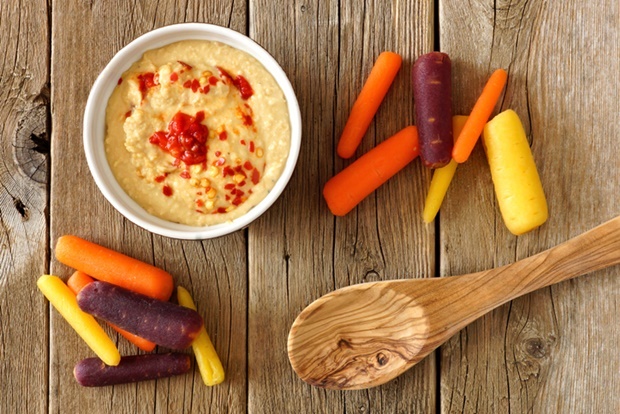
5. Baby carrots with hummus

Carrots and hummus are a great snack as is, but adding a sprinkle of seasoning will make your taste buds extra happy.

Make it: Sprinkle one teaspoon of seasoning on top of 1/4 cup of regular hummus. Eat with one cup of baby carrots.

Per serving: 987kJ, 12g fat (5g saturated), 27g carbs, 12g sugar, 416mg sodium, 10g fibre, 6g protein

Baby rainbow carrots with hummus dip and spoon, ov


6. ‘Banana split’

Dietitian Robin Plotkin suggests a healthy version of the classic dessert by halving a banana, then topping it with yoghurt and nuts. It’s a delicious combo of carbs, protein and healthy fat – more importantly, it’s super-fun to eat.

Make it: Slice a small banana in half vertically. Top the open banana face with 1/4 cup non-fat Greek yoghurt and two tablespoons of chopped walnuts.

Per serving: 1 013kJ, 10g fat (1g saturated), 33g carbs, 18g sugar, 23mg sodium, 4g fibre, 10g protein

Summer fruit berry breakfast. Healthy banana split

Read more: 5 healthy snacks that taste like sin but will keep you trim

7. Egg on toast

This healthy snack is great for breakfast lovers – it’s as satisfying as a meal, but the slightly smaller portion size won’t weigh you down. Plotkin recommends using hard-boiled eggs for convenience, which you can make ahead or buy. If you have access to a stove, you can also opt for a scrambled or fried egg.

Make it: Toast a slice of whole-grain toast. Top with one egg, cooked to your preference.

Per serving: 761kJ, 6g fat (2g saturated), 20g carbs, 4g sugar, 221mg sodium, 3g fibre, 11g protein

Scrambled eggs and mushrooms on wholewheat toast.


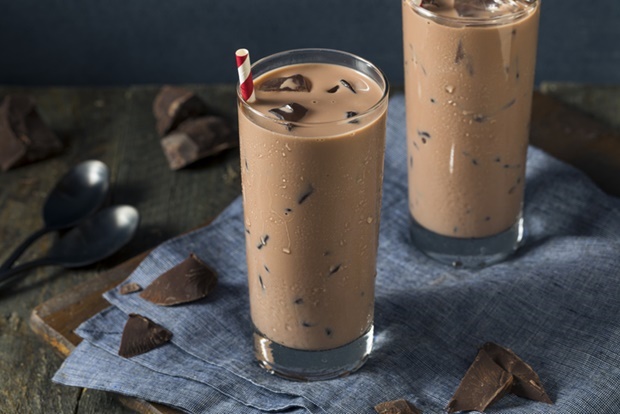
8. Chocolate milk

This might seem like just something for kids, but it legit is a pretty great snack – especially for replenishing post-workout thanks to the simple carbs from the chocolate and the milk’s lactose.

Make it: Stir one tablespoon chocolate syrup into one cup of 2% milk.

Per serving: 728kJ, 5g fat (3g saturated), 25g carbs, 21g sugar, 134mg sodium, 1g fibre, 8g protein

Cold Refreshing Iced Hot Chocolate Milk with Ice

9. White beans and olive tapenade

“Lately, I’ve been obsessed with Kalamata olive tapenade,” says dietitian Kendra Tolbert. “It’s a great combo of fibre, fat, protein and resistant starch that’ll keep you full and satisfied.” Tolbert eats it by the spoonful, but you can also scoop it up with a few whole-grain pita chips or cucumber slices.

Make it: Mix one teaspoon tapenade with 1/2 cup canned white beans (drained and rinsed).

Per serving: 728kJ, 4g fat (0g saturated), 20g carbs, 1g sugar, 121mg sodium, 6g fibre, 6g protein

Homemade Mixed Olive Tapenade on Whole Wheat Crost


Read more: 
These 3 post-workout snacks will help you refuel the right way

10. Dates and pistachios

“It’s the usual fruit and nuts combo, but a little more sophisticated,” says Tolbert. Dates have a honey-like sweetness, which combines with the strong flavour of pistachios into a snack that feels like dessert.

Make it: Combine two pitted dates with two tablespoons pistachios.

Per serving: 891kJ, 7g fat (1g saturated), 40g carbs, 33g sugar, 35mg sodium, 5g fibre, 4g protein

Matcha date cashew coconut pistachio energy balls

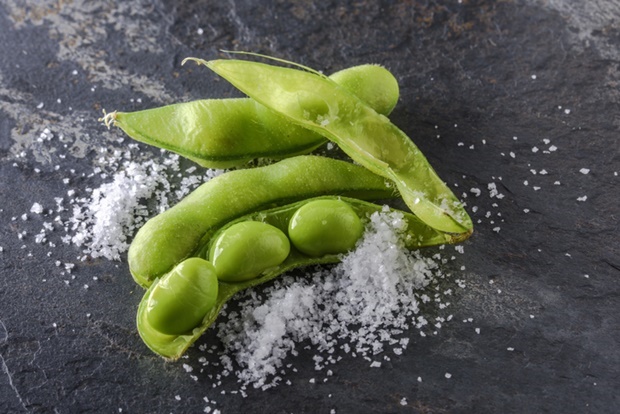
11. Edamame with sea salt

Plotkin loves sprinkling edamame, in its shell or out, with a bit of sea salt. In addition to plant-based protein, you get fibre and a good dose of potassium.

Make it: Drizzle 1/2 cup shelled edamame with one teaspoon olive oil and a pinch of sea salt.

Per serving: 586kJ, 8g fat (1g saturated), 8g carbs, 2g sugar, 481mg sodium, 1g fibre, 8g protein

Edamame close up

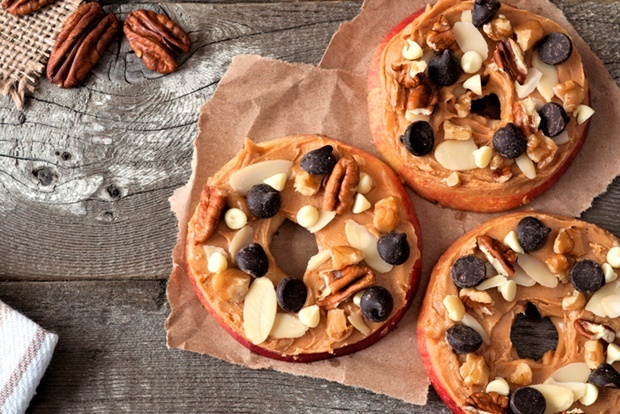
12. PB-chocolate apple ‘nachos’

This sounds crazy-indulgent, but it’s actually a well-balanced snack, says Plotkin. You’ll get protein and lots of fibre, which will help slow the digestion of the little bit of added sugar from dark chocolate (preventing a mid-afternoon crash).

Make it: Thinly slice a medium apple, then drizzle them with one tablespoon natural peanut butter and 15g melted dark chocolate.

Per serving: 1 058kJ, 13g fat (4g saturated), 35g carbs, 25g sugar, 74mg sodium, 7g fibre, 4g protein

Apple rounds with peanut butter, chocolate chips a

Read more: The 3 best booster snacks that’ll power you through any workout

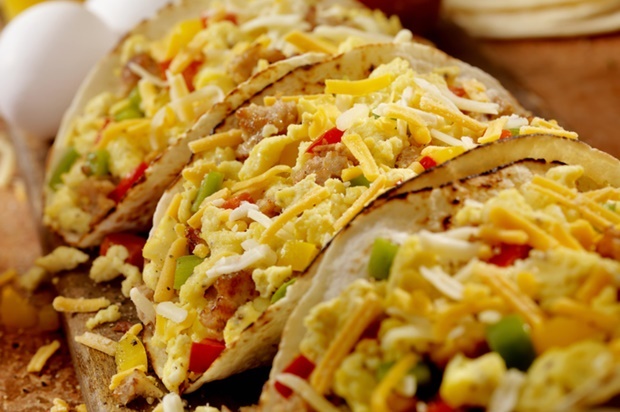
13. Microwave egg taco

Get creative with your microwave and make a tasty snack with enough protein to carry you to your next meal.

Make it: “Crack one egg into a microwave-safe mug and cook for 90 seconds,” says Plotkin. Immediately stir in 15g shredded cheddar, then serve inside a small whole-wheat tortilla.

Per serving: 761kJ, 10g fat (5g saturated), 11g carbs, 1g sugar, 360mg sodium, 3g fibre, 11g protein

Soft Breakfast Taco with Scrambled Eggs, Sausage,P

14. Roasted chickpeas

“If you’re craving something salty and crunchy, roasted beans are a much better option than chips thanks to their combo of protein and fibre, says dietitian Jessica Levinson.

Make it: Rinse and drain a can of chickpeas, then toss them with 1 1/2 tablespoons olive oil, salt, pepper and whatever spice you want. Roast at 205°C for 30 minutes. Let it cool slightly and then eat. One batch makes three servings.

Per serving: 669kJ, 8g fat (1g saturated), 17g carbs, 2g sugar, 292mg sodium, 4g fibre, 5g protein

Traditional Indian cuisine. Roasted spicy chickpea

15. Almond butter crackers

“Peanut butter crackers serve as a quick option for people on the run, but the pre-packaged snack can have many hidden ingredients and kilojoules,” says dietitian Shamera Robinson. DIY it instead.

Make it: Spread one tablespoon almond butter (or any nut or seed butter) between 28g whole-grain crackers.

Per serving: 974kJ, 12g fat (2g saturated), 23g carbs, 2g sugar, 227g sodium, 5g fibre, 8g protein

Almond butter in bowl with crackers on wooden tabl

Read more: 3 protein-packed snacks you can make in minutes

16. Homemade popcorn

“Popcorn is a great snack to fill up on,” says Robinson, thanks to all the fibre. And you don’t have to stick with the plain stuff, either. “Try sprinkling garlic powder and dried rosemary (or Italian seasoning) for extra flavour,” suggests Robinson.

Make it: Pop three tablespoons of popcorn kernels in 1/2 tablespoon canola oil in a large saucepan on the stove. Top with your favourite herbs or spices.

Per serving: 674kJ, 6g fat (1g saturated), 28g carbs, 0g sugar, 15mg sodium, 5g fibre, 4g protein

An overhead studio shot of a saucepan filled with

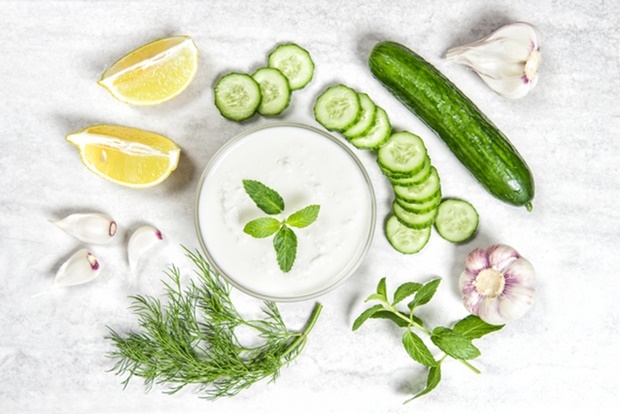
17. DIY tzatziki dip with veggies

Greek yoghurt is a great high-protein snack that is usually sweet. However, you can easily turn that into a savoury snack by making tzatziki.

Make it: Add grated cucumber, salt, pepper, crushed garlic and lemon juice to 1/2 cup low-fat Greek yoghurt. Use one cup carrot or cucumber sticks for dipping.

Per serving: 594 kJ, 3g fat (1g saturated), 18g carbs, 9g sugar, 395mg sodium, 4g fibre, 9g protein

Tzatziki sauce ingredients. Yoghurt, herbs and veg

18. Cottage cheese with almonds and honey

“This creamy-crunchy-sweet combo is second to none,” says Robinson. The cottage cheese is rich in protein, while almonds add crunch and healthy fats. And a hint of honey makes things sweet without going overboard on added sugar.

Make it: Top 1/2 cup low-fat cottage cheese with two tablespoons slivered almonds and one teaspoon honey.

Per serving: 820 kJ, 10g fat (2g saturated), 12g carbs, 10g sugar, 363mg sodium, 2g fibre, 17g protein

Bowl of cottage cheese and a jar of sour cream wit

Read more: 3 delicious snacks that are great for your gut

19. Biltong with raisins

“The ideal snack is portable and packed with satisfying lean protein,” says dietitian Nicole Rodriguez. Biltong fits the bill, and most brands pack a good amount of protein for less kilojoules. Look for lower salt varieties. Pair with raisins for some energising carbs and filling fibre.

Make it: Combine 28g biltong with two tablespoons raisins.

Per serving: 615kJ, 1g fat (1g saturated), 19g carbs, 3g sugar, 390mg sodium, 1g fibre, 15g protein

Sliced biltong - South African dry meat snack; can


20. Pear and stringy cheese

If you love fancy cheese plates for their combination of sweet, salty, and creamy flavours, you’ll love this less-fussy snack. Pears have natural sugar and lots of fibre, while stringy cheese (you can get it at Woolies) is an easy way to get some satiating fat and protein in on the go.

Make it: Slice one medium pear. Eat with one low-fat stringy cheese.

Per serving: 761kJ, 6g fat (4g saturated), 27g carbs, 17g sugar, 172mg sodium, 6g fibre, 8g protein

French cuisine. Still life, close up. Camembert ch

This article was originally published on www.womenshealthmag.com

Image credit: iStock

NEXT ON HEALTH24X

Share Button

Health24.com | 61 small habits you can change to lose weight

A few years ago, one of my friends stepped on the scale and was horrified by the result. He’d somehow managed to pack 9kg of flab onto his previously skinny frame. When he looked in the mirror, he saw a fat guy staring back. He decided to make a change, quick. Here are the habits he changed in order to lose weight

Read more: This man gave up junk food and lost 31kg

That day, he gave up his beloved soda. He was only drinking two or three bottles a day, but over the course of six months, he dropped those 9kgs.It was a small change to his lifestyle – no big deal, really. And yet, it had a massive impact on his health and his body.

My point: Making small decisions each day can result in big-time fat loss.

Below are dozens of simple ways to lose weight. Start with one – today! – and watch the weight begin to melt away. Trust me, this is going to be easier than you think.

Read more: 4 mistakes you’re making that are causing you to gain weight

1. Have a clear goal. It should be one that anyone in the world can measure and understand.

2. Drink tea. Research suggests that those who drink tea – black, green or white, as long as it’s from real tea versus herbal tea – have lower BMIs and less body fat than those who don’t consume tea.

Human hands holding cup of tea with thyme herb and

3. Eat cayenne pepper. A study published in the British Journal of Nutrition showed that when compared to placebo, capsaicin – the active ingredient in cayenne – increased fat burning.

4. Decrease/eliminate processed carbs. They do nothing for you outside of creating a favourable environment for gaining fat.

5. Eat more veggies. They fill you up, without providing many kilojoules. Just avoid the high-kilojoule dressings.

6. Eat more fruit. No one ever gained weight from eating more fruit. And that includes the so-called “high sugar” fruits like bananas and melons.

7. Lift weights. Heavy weights. Build more muscle, burn more kilojoules.

8. Cut down rest time between sets. This will keep your heart rate elevated, causing an increase in kilojoules burned.

9. Do intervals. Study after study after study continues to show intervals are more effective and time efficient than longer activity performed at a lower intensity.

10. Eat more protein. Replacing refined carbohydrates with lean protein will not only help satiate you, but will also increase your metabolism – through something called the thermic effect of food.

Read more: Learn how to make protein ice cream

11. Eat protein more frequently. It’s important to also time your intake so you’re eating protein regularly throughout the day – not just in one lump sum, like most do at dinner. Every meal and snack should include some protein.

12. Supplement with fish oil. A study published in Lipids fed mice diets enhanced EPA and DHA – a.k.a. fish oil. The researchers learnt that the mice fed diets higher in omega-3 fats had significantly less accumulation of body fat. Other studies have shown similar results.

Cod liver oil omega 3 gel capsules

13. Do full body exercises. Think: Squats, deadlifts, chin-ups and pushups. You’ll get more bang for your buck out of each workout.

14. Cycle your carb intake based on your activity level. Sure, carbs are important. But on the days you don’t work out, you simply don’t need as many compared to the days you exercise hard. Rule of thumb: The more active you are, the more carbs you can eat, and vice versa.

15. Start your meals with a salad. Salad will provide some bulk to help fill you up – so that you eat less kilojoules overall.

16. Don’t forget the fibre. Think of fibre like a sponge; it absorbs water and makes you feel full.

17. Drink water. Professor Dr Brenda Davy and her team from Virginia Tech University found that giving people two cups of water before each meal resulted in greater weight loss after 12 weeks. The reason? It helps fill you up.

18. Add beans to your salads. It’s a nice way to add some additional fibre, protein and healthy carbs.

19. Replace one meal a day with a large salad and lean protein. This is a simple way to instantly improve your diet.

20. Keep a food journal. There’s no better way to track what you’re putting in your mouth.

Read more: Do you skip your lunch break? Then you’re losing out on R500 000

21. Watch your portions. Avoid the buffet line and never supersize. Instead make sure you’re following what the nutrition label recommends for a serving.

22. Switch to kilojoule-free drinks. All kilojoules count, whether they’re liquid or solid. So unless it’s low-fat milk, opt for tea or water. Or something I was introduced to in the Netherlands – large bunches of mint, lemon and hot water.

23. Weigh yourself. Studies show daily weigh-ins help enhance weight loss efforts. Don’t live and die by the number. And, of course, a scale doesn’t decipher between fat and lean body mass, but it can still be of benefit to keep things “in check”.

24. Eat whole eggs. Daily. A study published a couple years ago showed that those who ate whole eggs versus a bagel for breakfast ate less at the next meal. A similar study showed eating whole eggs increases HDL (good) cholesterol.

25. Eat breakfast. A review published in the American Journal of Clinical Nutrition showed that those who eat breakfast are more successful with long-term weight maintenance. Other research has shown the same for weight loss. Grab hardboiled eggs, scrambled eggs, Greek yoghurt, a piece of fruit and handful of nuts, or make a smoothie. It doesn’t have to be fancy.

Breakfast served with coffee, orange juice, croiss

26. Eat the bulk of your meals in the A.M. Then eat progressively less throughout the day. A study published in the Journal of Nutrition showed that eating most of your kilojoules earlier in the day positively influences weight changes.

27. To burn more kilojoules, stay upright. This means not sitting in front of a computer, TV, phone, etc., all day long. Stand and you’ll burn more and be more productive.

28. Use the stairs. That’s right: Skip the escalator and elevator. This won’t make or break success, but every little bit helps.

29. Eat low-energy, dense foods. These are foods that are high in water and lower in calories, such as fruit, veggies, soups and salads. Studies at Penn State University have shown that the inclusion of these foods helps individuals eat less total kilojoules overall.

30. Don’t grocery shop hungry. If you do, you’ll buy everything in the aisle – instead of sticking to your list. And most of the time, the foods you buy when hungry will the kinds that sabotage your weight-loss efforts.

Read more: 10 easy ways to lose weight without starving yourself

31. Replace side dishes with steamed veggies. Restaurants will often allow you to substitute the fries or chips with steamed veggies. All you have to do is ask.

32. Bake, don’t fry. It’s pretty simple really. Ditch the pans and turn on that oven.

33. Use the fat-burner in your backyard: Your grill. And as South Africans we love a good braai. Just skip the garlic bread and go for a tasty salad as a side instead.

34. Order dressing on the side. But here’s the bigger secret: Dip your fork in dressing, and then in the salad. This saves a ton more dressing than if one was to order it on the side, and then pour the entire cup on the salad anyway. Fewer kilojoules equal less weight.

35. In the airport: Carry your luggage, don’t roll it. Again, not a deal breaker in terms of success – just another way to increase energy expenditure.

36. Skip the “Venti lattes” and opt for plain coffee. (Or better yet, tea.) Those extra-large “designer” coffees can pack a belly-inflating 2 000 or more kilojoules per serving!

37. Embrace oats. Plain rolled oats will help fill you up more than the high sugar breakfast counterparts. Moreover, one serving provides a lot less kilojoules than the sugar-coated alternatives.

38. Fidget. A study published in the journal Science showed that those who fidgeted more often – for example, changed their posture frequently – weighed less than those who didn’t. This extra movement was termed NEAT (non-exercise activity thermogenesis).

39. Laugh often. A study presented at the European Congress on Obesity found those who laughed hard for approximately 10 to 15 minutes each day burned an additional 40 to 160 kilojoules per day. Multiply that by 365 and those kilojoules can add up!

40. Leave something on your plate at the end of the meal. Every little bit counts.

Read more: The 4 mistakes that are making you fat 

41. When out to eat, split a meal. The portions are usually big enough to feed a family.

42. Skip dessert. Come on, you know you need to and chances are you aren’t even hungry when you reach for that sweet treat.

43. Don’t socialise around the food tables at parties. You’re more likely to munch mindlessly, even though you may not be hungry.

44. Don’t eat your kid’s leftovers. Every little bit of food adds up, including what we call “BLTs” (bites, licks and tastes).

45. Keep chips, dips and other high fat junk foods out of the house. It’s not about willpower; it’s about being realistic.

46. If you have a dog, take him for a walk. It’s better for both him and you than just letting him out the back. (Bonus: He’ll love you even more!)

Morning in the city. Young man walking with his do

47. If you don’t have a pet, offer to walk a neighbour’s dog. Make friends; lose weight.

48. Use smaller plates and bowls. There will be less room for you to fill up and it makes less food seems like more.

49. Skip buffets. It’s a foregone conclusion: If you don’t, you’ll feel like you have to get your money’s worth and overeat.

50. Slow down. It takes approximately 15 to 20 minutes for your stomach to sense it’s full. If you wolf down your food like a starving dog, you’ll likely out-eat your hunger.

Read more: Eat this high-calorie food at least once a week to stay lean

51. Decrease your food intake by 400 kilojoules per day. Theoretically this translates to losing nearly 450g per month (450g = 14 600 kilojoules) – with hardly any effort.

52. Buy a pedometer and accumulate at least 10 000 steps each day. It seems like everybody is doing it so why shouldn’t you too?

53. When possible, walk or bike to do your errands. The added bonus? You’ll save on petrol too.

54. Don’t buy in bulk. The more that is there, the more that you’ll eat.

55. Plan ahead. If you fail to plan, you plan to fail.

56. Keep some healthy snacks – like nuts – in your glove compartment so you’re prepared at all times.

57. Take before pictures. Studies have shown that those who take weight-loss progress pics lose more weight than those who don’t.

58. Get new friends. If your friends prefer pizza, wings, nachos and beer on a regular basis, find friends who are like-minded and want to be healthy. Research has suggested that friends enhance (or can hurt) success.

59. Put yourself first. Many people (women in particular) put everyone else ahead of themselves and let their health fall by the side.

60. Remember: It’s not all or nothing. If you fall off the bandwagon, jump right back on. Don’t let yourself continue to fall until all progress has been lost.

61. Wake up early to exercise. You’re more likely to get it done if you don’t wait until after work.

This article was originally published on www.menshealth.com

Image credit: iStock 

NEXT ON HEALTH24X

Share Button

Ozone hole modest despite optimum conditions for ozone depletion

The ozone hole that forms in the upper atmosphere over Antarctica each September was slightly above average size in 2018, NOAA and NASA scientists reported today.

Colder-than-average temperatures in the Antarctic stratosphere created ideal conditions for destroying ozone this year, but declining levels of ozone-depleting chemicals prevented the hole from as being as large as it would have been 20 years ago.

“Chlorine levels in the Antarctic stratosphere have fallen about 11 percent from the peak year in 2000,” said Paul A. Newman, chief scientist for Earth Sciences at NASA’s Goddard Space Flight Center in Greenbelt, Maryland. “This year’s colder temperatures would have given us a much larger ozone hole if chlorine was still at levels we saw back in the year 2000.”

According to NASA, the annual ozone hole reached an average area coverage of 8.83 million square miles (22.9 square kilometers) in 2018, almost three times the size of the contiguous United States. It ranks 13th largest out of 40 years of NASA satellite observations. Nations of the world began phasing out the use of ozone-depleting substances in 1987 under an international treaty known as the Montreal Protocol.

The 2018 ozone hole was strongly influenced by a stable and cold Antarctic vortex — the stratospheric low pressure system that flows clockwise in the atmosphere above Antarctica. These colder conditions — among the coldest since 1979 — helped support formation of more polar stratospheric clouds, whose cloud particles activate ozone-destroying forms of chlorine and bromine compounds.

In 2016 and 2017, warmer temperatures in September limited the formation of polar stratospheric clouds and slowed the ozone hole’s growth. In 2017, the ozone hole reached a size of 7.6 million square miles (19.7 square kilometers) before starting to recover. In 2016, the hole grew to 8 million square miles (20.7 square kilometers).

However, the current ozone hole area is still large compared to the 1980s, when the depletion of the ozone layer above Antarctica was first detected. Atmospheric levels of human-made ozone-depleting substances increased up to the year 2000. Since then, they have slowly declined but remain high enough to produce significant ozone loss.

NOAA scientists said colder temperatures in 2018 allowed for near-complete elimination of ozone in a deep, 3.1-mile (5-kilometer) layer over the South Pole. This layer is where the active chemical depletion of ozone occurs on polar stratospheric clouds. The amount of ozone over the South Pole reached a minimum of 104 Dobson units on Oct. 12 — making it the 12th lowest year out of 33 years of NOAA ozonesonde measurements at the South Pole, according to NOAA scientist Bryan Johnson.

“Even with this year’s optimum conditions, ozone loss was less severe in the upper altitude layers, which is what we would expect given the declining chlorine concentrations we’re seeing in the stratosphere,” Johnson said.

A Dobson unit is the standard measurement for the total amount of ozone in the atmosphere above a point on Earth’s surface, and it represents the number of ozone molecules required to create a layer of pure ozone 0.01 millimeters thick at a temperature of 32 degrees Fahrenheit (0 degrees Celsius) at an atmospheric pressure equivalent to Earth’s surface. A value of 104 Dobson units would be a layer that is 1.04 millimeters thick at the surface, less than the thickness of a dime.

Prior to the emergence of the Antarctic ozone hole in the 1970s, the average amount of ozone above the South Pole in September and October ranged from 250 to 350 Dobson units.

What is ozone and why does it matter?

Ozone comprises three oxygen atoms and is highly reactive with other chemicals. In the stratosphere, roughly 7 to 25 miles (about 11 to 40 kilometers) above Earth’s surface, a layer of ozone acts like sunscreen, shielding the planet from ultraviolet radiation that can cause skin cancer and cataracts, suppress immune systems and damage plants. Ozone can also be created by photochemical reactions between the Sun and pollution from vehicle emissions and other sources, forming harmful smog in the lower atmosphere.

NASA and NOAA use three complementary instrumental methods to monitor the growth and breakup of the ozone hole each year. Satellite instruments like the Ozone Monitoring Instrument on NASA’s Aura satellite and the Ozone Mapping Profiler Suite on the NASA-NOAA Suomi National Polar-orbiting Partnership satellite measure ozone across large areas from space. The Aura satellite’s Microwave Limb Sounder also measures certain chlorine-containing gases, providing estimates of total chlorine levels.

The total amount of ozone in the atmosphere is exceedingly small. All of the ozone in a column of the atmosphere extending from the ground to space would be 300 Dobson units, approximately the thickness of two pennies stacked one on top of the other.

NOAA scientists monitor the thickness of the ozone layer and its vertical distribution above the South Pole by regularly releasing weather balloons carrying ozone-measuring “sondes” up to 21 miles (~34 kilometers) in altitude, and with a ground-based instrument called a Dobson spectrophotometer.

Share Button

Spaced-out nanotwins make for stronger metals

Researchers from Brown University and the Institute of Metals Research at the Chinese Academy of Sciences have found a new way to use nanotwins — tiny linear boundaries in a metal’s atomic lattice that have identical crystalline structures on either side — to make stronger metals.

In a paper in the journal Science, the researchers show that varying the spacing between twin boundaries, as opposed to maintaining consistent spacing throughout, produces dramatic improvements in a metal’s strength and rate of work hardening — the extent to which a metal strengthens when deformed.

Huajian Gao, a professor in Brown’s School of Engineering who co-led the work, says the research could point toward new manufacturing techniques for high-performance materials.

“This work deals with what’s known as a gradient material, meaning a material in which there’s some gradual variation in its internal makeup,” Gao said. “Gradient materials are a hot research area because they often have desirable properties compared to homogeneous materials. In this case, we wanted to see if a gradient in nanotwin spacing produced new properties.”

Gao and his colleagues have already shown that nanotwins themselves can improve material performance. Nanotwinned copper, for example, has shown to be significantly stronger than standard copper, with an unusually high resistance to fatigue. But this is the first study to test the effects of variable nanotwin spacing.

Gao and his colleagues created copper samples using four distinct components, each with different nanotwin boundary spacing. Spacings ranging from 29 nanometers between boundaries to 72 nanometers. The copper samples were comprised of different combinations of the four components arranged in different orders across the thickness of the sample. The researchers then tested the strength of each composite sample, as well as the strength of each of the four components.

The tests showed that all of the composites were stronger than the average strength of the four components from which they were made. Remarkably, one of the composites was actually stronger than the strongest of its constituent components.

“To give an analogy, we think of a chain as being only as strong as its weakest link,” Gao said. “But here, we have a situation in which our chain is actually stronger than its strongest link, which is really quite amazing.”

Other tests showed that the composites also had higher rates of work hardening than the average of their constituent components.

To understand the mechanism behind these increases in performance, the researchers used computer simulations of their samples’ atomic structure under strain. At the atomic level, metals respond to strain through the motion of dislocations — line defects in the crystalline structure where atoms are pushed out of place. The way in which those dislocations grow and interact with each other is what determines a metal’s strength.

The simulations revealed that the density of dislocations is much higher in the gradient copper than in a normal metal.

“We found a unique type of dislocation we call bundles of concentrated dislocations, which lead to dislocations an order of magnitude denser than normal,” Gao said. “This type of dislocation doesn’t occur in other materials and it’s why this gradient copper is so strong.”

Gao said that while the research team used copper for this study, nanotwins can be produced in other metals as well. So it’s possible that nanotwin gradients could improve the properties of other metals.

“We’re hoping that these findings will motivate people to experiment with twin gradients in other types of materials,” Gao said.

Other authors on the study were Zhao Cheng, Haofei Zhou, Qiuhong Lu and Lei Lu. The research was funded by the U.S. National Science Foundation and National Natural Science Foundation of China.

Story Source:

Materials provided by Brown University. Note: Content may be edited for style and length.

Share Button

Tying the knot: New DNA nanostructures

Knots are indispensable tools for such human activities as sailing, fishing and rock climbing, (not to mention, tying shoes). But tying a knot in a lacelike strand of DNA, measuring just billionths of a meter in length, requires patience and highly specialized expertise.

Hao Yan, a researcher at ASU, is a practiced hand in this delicate and exotic field, operating at the crossroads of nanotechnology and fine art.

In new research appearing in the journal Nature Communications, Yan and his colleagues Fei Zhang, Xiaodong Qi and others describe a method for coaxing segments of single-stranded DNA into complex 2- and 3D knotted structures.

The results represent an important advance in the fast-paced field of DNA nanotechnology, in which the molecule of life is used as a structural building material for a vast array of tiny configurations. Among these are miniscule robotic devices, photonic applications, drug delivery systems, logic gates, as well as diagnostic and therapeutic applications.

“The knotted DNA structures demonstrated in this work exhibit unprecedented topological complexity, far beyond what has been achieved before using single stranded folding,” Yan says. “Indeed, it is not only amazing but also surprising that the single-stranded DNA and RNA can thread through its own chains and find a way to form such highly knotted structures, given the fact that the single strand has to weave through so many tangles.”

Yan directs the Biodesign Center for Molecular Design and Biomimetics and is the Martin D. Glick Distinguished Professor in the School of Molecular Sciences at ASU.

Bringing DNA into the fold

The new study involves innovations in the field of DNA origami, which, as the name implies, uses nucleic acids like DNA and RNA to fold and self-assemble into complex forms. This occurs when complementary nucleotide bases in DNA’s 4-letter alphabet come in contact and bind, according to a strict regimen: C bases always pair with G and A bases always pair with T.

In nature, strings of nucleic acids provide the code needed to make complex proteins. This basic biology provides the underpinning for all earthly life. Taking advantage of the simple base-pairing properties of DNA, it is possible to design structures that will self-assemble in the lab. The method has been applied to both single-stranded and double-stranded DNA forms, resulting in nanostructures of increasing complexity and sophistication.

While DNA origami has made startling advances since its inception, one technical innovation has been vexingly difficult to achieve. Until now, creating complex knotted structures in DNA in a predictable and programmable way has eluded researchers.

The new work overcomes this hurdle, establishing precise design rules that permit single-stranded segments of DNA (or RNA) ranging from 1800-7500 nucleotides to form knot-like nanostructures with crossing numbers (where the DNA strand weaves in and out of its own length) ranging from 9 to 57.

The group further demonstrated that these nucleic acid nanostructures can be replicated and amplified, both under laboratory conditions and within living systems.

Nature’s knots

Knotted structures, like those Yan has fabricated, (but much simpler than the synthetic ones), have correlates in the natural world. They have been observed in DNA and proteins and generally form during replication and transcription, (when a DNA sequence is copied into messenger RNA). They can also occur in the genomes of phages — viruses that infect bacterial cells.

Nevertheless, the construction of molecular knots at the nanometer scale, displaying well-defined and consistent geometries requires enormous control and precision. As it happens, nucleic acids like DNA are ideal for the design and synthesis of such molecular knots.

Previously, lengths of double-stranded DNA have been used for nanoscale constructions, with the addition of short pieces or “staple strands” to fasten resulting structures together. The new study instead uses a single length of DNA designed to wrap around itself in a precise, pre-programmed sequence of steps.

Once the knotted DNA nanostructures successfully assemble themselves, they are imaged using atomic force microscopy. Careful calculation allows the researchers to optimize the folding pathways to produce the highest yield for each synthetic structure. The use of single- rather than double-stranded DNA allows the structures to be produced in abundance at much lower cost.

A single-stranded approach opens the door for the design of nanoarchitectures with specific, well-defined functions, which can be produced through successive rounds of in vitro evolution, where desired attributes are selected for in a repetitive process of refinement. Further, the approach outlined in the new study provides a general platform for the design of molecular structures of increased size and unprecedented complexity, paving the way for advances in nanophotonics, drug delivery, cryo-EM analysis and DNA-based memory storage.

Designer DNA (and RNA)

For one of the initial knot designs the strategy Yan and his colleagues developed involved threading a single strand of DNA or RNA through itself 9 times according to a pre-programmed sequence, demonstrating that the new method is capable of producing intricate geometric shapes that are programmable, replicable and scalable.

The design strategy was subsequently expanded to include single-stranded RNA structures and 3D DNA knots, whose forms were reconstructed using a technique known as cryogenic transmission electron microscopy, confirming their proper folding into the desired shapes.

“One of the challenges in this work is how to increase the assembly yield of highly knotted structures.” Said Fei. Unlike classic DNA nanostructures, the single-stranded knots are less forgiving in terms of precise folding order due to the topological complexity. If a single crossing is misfolded during the process, the error will hardly be self-corrected and most of the misfoldings will remain in the completed structure. “We developed a hierarchical folding strategy to guide the correct formation of knots. We compared the folding efficiency of a knot with 23 crossings by using different folding pathways. The AFM images showed a dramatic increase in the folding yield of well-form structures from 0.9% to 57.9% by applying optimized hierarchical folding pathway.” Fei added.

The design rules used to optimize the folding pathways are based on the number of crossing points, the length of DNA and the number of base pairs in the designed structure. Three primary rules were established. First, linear folding paths were found to be preferable to branched paths. Second, the unfolded section of a DNA strand should not thread through itself in the early stages when the strand is still long. Finally, edges of the desired form that have three crossings should fold before those with two crossings.

Following the design strategy, the team was able to create more complex DNA knots with increasing crossing numbers.

Longer chains of single-stranded DNA pose unique challenges for designing programmed nanostructures due to the increased likelihood of unintended self-complementarity of the bases making up the chain. A DNA knot structure boasting 57 crossed nodes successfully assembled, though with lower yield and less precision. When the crossing number was increased to 67, the yield significantly dropped and the resulting structures, imaged by AFM, showed more errors of assembly.

The study reports the largest DNA knots yet assembled, formed from up to 7.5k bases, featuring the most complicated topologies, with up to 57 crossing regions. The single-stranded DNA sequences can be mass produced in living cells for greater efficiency at lower cost. Ultimately, DNA nanostructures of diverse function may be formed within cells, innovations to be pursued in future work.

Share Button

Molecular virologist fights influenza at the molecular level

Molecular virologist Chad Petit, Ph.D., uses basic science to fight influenza — through experiments at the atomic level.

This includes a deadly poultry influenza virus in China called the H7N9 avian flu virus. Since 2013, H7N9 has infected 1,625 people, killing 623. While not highly contagious for humans, just three mutations could change that, turning H7N9 into the feared Disease X, the term health experts use for the next unknown cause of a worldwide epidemic.

In research to improve influenza therapies against H7N9 and other influenza strains, Petit and his University of Alabama at Birmingham colleagues have detailed the binding site and mechanism of inhibition for two small-molecule experimental inhibitors of influenza viruses. Their report is published in the Journal of Biochemistry,

The two experimental inhibitors studied by Petit, a UAB assistant professor of biochemistry and molecular genetics, are small molecules whose precise mechanism of action was unknown. The inhibitors target the function of a key influenza protein called NS1, which has multiple roles to block the body’s immune response during influenza infection. Thus, NS1 is essential to the survival and adaptability of the influenza virus.

Petit and colleagues used nuclear magnetic resonance, or NMR, spectroscopy to probe interactions of the inhibitors with NS1. They first showed that the inhibitors — called A9 and A22 — interacted with just one of the two independently folded domains of NS1, the NS1 effector domain.

The researchers noted that the structures of both small-molecule inhibitors were very similar to a fragment of a host protein called CPSF30 that the NS1 effector domain binds in order to short-circuit the body’s immune response. Therefore, the researchers hypothesized that A9 and A22 block influenza viral replication and block NS1 function by interfering with the interaction between the NS1 effector domain and CPSF30.

NMR data revealed the particular amino acids of the NS1 effector domain that are involved in inhibitor binding. The researchers — using two significantly different NS1 proteins from distinct influenza strains, including the H7N9 strain — showed that similar sequences of amino acids in the two NS1 proteins were involved in inhibitor binding.

The 1918 “Spanish” flu NS1 protein

Besides the Chinese H7N9 NS1, the other NS1 protein tested was the NS1 effector domain from the 1918 “Spanish” flu, which infected one-third of the world’s population a century ago and killed 50 million to 100 million people.

The UAB researchers then used X-ray crystallography, led by UAB Microbiology assistant professor Todd Green, Ph.D., to determine the three-dimensional structure of the NS1 effector domain from the 1918 “Spanish” flu. This allowed them to map the A9/A22-binding site onto that structure, which confirmed their hypothesis — A9 and A22 interact with the NS1 effector domain hydrophobic pocket that is known to bind the host protein CPSF30.

The crystallography data also showed that the NS1 effector domain is able to dimerize, using an interface different from two other known dimers of the NS1 effector domain. Biological significance of this new dimer form is unknown.

“Altogether, our findings provide strong evidence for the mechanism of action of two anti-influenza compounds that target NS1, and the findings contribute significant structural insights into NS1 that we hope will promote and inform the development and optimization of influenza therapies based on A9 and A22,” Petit said.

The need for novel antiviral compounds is great. Each year, influenza strains kill 250,000 to 500,000 people worldwide, and the virus is noted for quick changes to produce pandemic strains that few people have immunity against. Viral resistance has limited the effectiveness of several earlier antiviral compounds that were developed to treat influenza.

Share Button