Scientists design an antibody based on llama blood that is highly effective against flu strains.


Scientists design an antibody based on llama blood that is highly effective against flu strains.
A perpetually unctuous, self-lubricating latex developed by a team of scientists in Boston could boost the use of condoms, they reported in the journal Royal Society Open Science.
Protective sheaths made with the specially treated membrane take on a slick and slippery quality in the presence of natural bodily fluids, lab experiments showed.
And unlike water- or oil-based lubricants added to commercially available condoms, the hydrophilic — or liquid-loving — latex retains its “slippery sensation” almost indefinitely.
“A majority of participants — 73% — expressed a preference for a condom containing the lubricious coating, agreeing that an inherently slippery condom that remains slippery for a long duration would increase their condom usage,” the study concluded.
Decreasing friction
“Such a coating shows potential to be an effective strategy for decreasing friction-associated pain” — for women and men — “and increasing user satisfaction.”
Condoms prevent pregnancies and the spread of sexually transmitted diseases. Some are made of lambskin but most are synthetic, manufactured from latex or polyurethane.
Without lubricants, however, all of these materials will chaff during “repeated articulations”, the term of art used by the researchers to describe thrusting motions. Added emollients wear off with use.
Discomfort during intercourse and reduced pleasure — noted by 77% of men and 40% of women in a nation-wide survey in the United States — are often cited as reasons for not using condoms at all.
Researchers at Boston University led by Mark Grinstaff addressed these problem by adding a thin polymer coating of moisture-activated molecules that entraps liquid rather than repelling it, as latex does.
Yet to be approved by FDA
The polymer-treated condoms did not affect the latex, and “provides consistently low friction even when subjected to large volumes of water, or 1 000 cycles of articulation,” the study reported.
In touch tests, volunteers expressed a strong preference for condoms that were “inherently slippery” and remained so for a long time.
Because the material has yet to be approved by the US Food and Drug Administration (FDA), the liquid-loving latex has yet to be tested during intercourse.
But more than 90% of the volunteers said they would consider using the coated condoms, and more than half said they would likely use condoms more frequently if the perpetually slippery ones were commercially available.
Image credit: iStock

NEXT ON HEALTH24X

In paper published today in Nature Plants, researchers at the Royal Botanic Gardens, Kew, detail for the first time the scale of threatened species that are unable to be conserved in seed banks. The paper reveals that when looking at threatened species, 36 per cent of ‘critically endangered’ species produce recalcitrant seeds . This means they can’t tolerate the drying process and therefore cannot be frozen, the key process they need to go through to be safely ‘banked’.
In the paper, Kew scientist Dr John Dickie, former Kew scientist Dr Sarah Wyse, and former Director of Science at Kew Prof. Kathy Willis, found that other threatened categories and global tree species list also contain high proportions of species that are unbankable including 35% of ‘vulnerable’ species, 27% of ‘endangered’ species and 33% of all tree species.
This comes after research was published last year that estimated around 8% of the world’s plants produce recalcitrant seeds . Among these species are important UK heritage trees such as oaks, horse chestnuts and sweet chestnuts, as well as worldwide food staples like avocado, cacao, and mango. This latest research reveals that the scale of plants unable to be conserved in seed banks is much higher for threatened species. The issue is particularly severe for tree species, especially those in tropical moist forests where a half of the canopy tree species can be unsuitable for banking.
Seed Banking
Currently, seed banking is the most commonly practiced way of conserving plants outside of their natural habitats. Seed banking works as an ‘insurance policy’ against the extinction of plants in the world — especially for those that are rare, endemic and economically important — so that they can be protected and utilised for the future.
This type of ‘ex-situ’ conservation is preferred for a number of reasons: it allows for the preservation of high levels of genetic diversity at relatively low cost in minimal space and can be kept for comparatively long periods.
However, this doesn’t work for all seeds and this new paper suggests there is a huge knowledge gap of knowing which of the world’s most rare, endemic and economically important plants are not suitable for conservation in seed banks. To estimate for the first time the extent of the problem, Wyse and Dickie developed a set of models to predict the likely seed storage behaviour of species. This analysis has highlighted that the Global Strategy for Plant Conservation (GSPC) target of conserving 75% of the world’s threatened plant species outside of their natural habitat by 2020 is practically impossible.
Cryopreservation
Wyse, Dickie and Willis, argue that alternative techniques are required to achieve the GSPC target, most likely using cryopreservation — a form of preservation using liquid nitrogen which offers a potential long-term storage solution for recalcitrant seeds. In seed banks, seeds are dried and frozen at -20°C whereas cryopreservation involves removing the embryo from the seed and then using liquid nitrogen to freeze it at a much colder temperature of -196°C.
Kew has been championing the use of cryopreservation at its world-famous Millennium Seed Bank (MSB) at Wakehurst for a number of years and outlined it as a key priority for conserving the world’s seeds in Kew’s Collections Strategy published earlier this year. Kew aims to develop a generic protocol for the banking of recalcitrant seeds and to kick-start large-scale use of cryopreservation. As well as allowing ‘unbankable’ species to be stored, cryopreservation also helps to extend the lifespans of orthodox seeds that otherwise have storage lives that are too short at -20°C.
In 2010, Kew scientist Dr Hugh Pritchard and Prof of Botany at CAS Kunming Institute of Botany, De-Zhu Li called for an updated of the Global Strategy for Plant Conservation to outline clear aims for cryopreservation to increase research efforts into the technology. This subsequently didn’t happen and now Kew are urgently calling for cryopreservation to be prioritised as a key conservation tool post 2020 as it’s likely to provide us with the greatest gains in safeguarding ‘unbankable’ species.
John Dickie, Head of Seed & Lab-based Collections at Kew’s Millennium Seed Bank and one of the authors of the paper, says that “Ex-situ conservation of plants is more critical than ever, with many threats to plant populations including climate change, habitat conversion and plant pathogens, we need to make sure we’re doing all we can to conserve the most important and threatened species. As successful as seed banking is for some species, it is not suitable for all seed plants and we need to invest in other ways to safeguard recalcitrant seeds. This paper shows that we need greater international effort to understand and apply alternative techniques like cryopreservation which have the potential to conserve many more species from extinction.”
Story Source:
Materials provided by Royal Botanic Gardens Kew. Note: Content may be edited for style and length.

Yale researchers have found that a type of air pollution is much more complicated than previous studies indicated.
Using high-powered equipment to analyze air samples, the researchers were able to get a detailed look at the molecular makeup of organic aerosols, which have a significant presence in the atmosphere. Posing risks to health and climate, these airborne particles generally fall into two categories: Primary organic aerosols that can form during combustion, such as in car and truck exhaust, and secondary organic aerosols that result from oxidation of organic gases and particles in the air.
For the study, published Nov. 2 in Nature’s Communications Chemistry, the researchers used a combination of liquid chromatography, which separates thousands of compounds in a sample, and a mass spectrometer, which identifies and analyzes those compounds.
“Here, we can actually differentiate molecules that would otherwise appear to be very similar,” said the study’s senior author, Drew Gentner, assistant professor of chemical & environmental engineering. “In past studies, they had less information on molecular identities across the complex mixtures present. With these instruments, we can determine molecular formulas with more accuracy.”
That’s a significant advancement, the researchers note, since knowing what harmful elements are in the air is critical to finding ways to reduce them, added Gentner.
“If you develop an air pollution control policy based on less specific information for organic aerosol, there may be much more variability in the molecular-level composition than you might expect, which could influence aerosol properties and impacts,” said Jenna Ditto, a Ph.D. candidate in Gentner’s lab and lead author of the study.
Collected over three weeks at each site in the summer, samples were taken from a forest in Michigan, and from urban environments in Atlanta and New York City. Most surprising, said the researchers, were the variations they saw in samples taken from the same sites. In most cases, up to 70% of the compounds at a site were distinct from each other in consecutive samples.
Even if certain causes remain constant, the researchers said, a number of factors could be driving the variability. “The different types of compounds emitted from cars and plants could vary from car to car or tree to tree,” Ditto said.
Other factors, such as weather patterns and chemical oxidation conditions can also change. Individually, these variations are usually slight, but they can add up to significant differences, said the researchers.
Building off of this study, the researchers said they expect to analyze the results further to get a better sense of what types of health and climate effects these variabilities may pose.
“There’s a wealth of information in these details for the field to use,” Gentner said. “There’s valuable data that you can capitalize on to understand what’s happening in the whole complex system.”
Story Source:
Materials provided by Yale University. Original written by William Weir. Note: Content may be edited for style and length.

A young couple have been left heartbroken after both their twin boys died from a rare condition that attacked them in the womb.
Caroline Willis (26) and Lee Brightman (30) from Bedfordshire, England, have decided to speak out about their final moments with identical twins Leo and Tyler after they were born at 25 weeks old.
One of the twins, who the couple named Leo, had heart failure and was stillborn, while staff battled to save the other named Tyler, who died 18 days later on May 26
The babies were diagnosed with twin-to-twin transfusion syndrome (TTTS) – a life-threatening condition which causes an imbalance in blood supply between identical twins – just a week after Caroline first complained of crippling stomach pain.
The couple have since accused Stoke Mandeville Hospital of disregarding her symptoms of the condition, something they feel could have saved their babies.
To add further heartbreak the couple, who conceived their twins through IVF as Caroline has polycystic ovaries, are now not eligible for more free fertility treatment as their first round was successful despite losing their twins.
“We walked out of the hospital with two memory boxes instead of carrying two car seats with our babies in,” Caroline said.
“I had a normal pregnancy until 24 weeks when I experienced unusual pains. I knew something wasn’t right,” she explained.
She tried getting an appointment with Stoke Mandeville Hospital after the pain worsened, but was told everything was fine.
“I eventually took myself back as my pain became excruciating. We were then told the twins had TTTS after I had a scan shortly before the birth,” she recalls.

While it’s not clear what caused the conditions, the couple is now trying to raise awareness to help others look out for the symptoms.
Heartbroken dad Lee said, “I could see Leo hadn’t made it. I was trying to maintain my composure for Caroline. To see your son die in front of you is horrendous.
“He was so tiny. To see your little boy wearing a hat for a premature baby that was even too big for him was heartbreaking,” he added.
The twins weighed less than one kilogram when they were born at John Radcliffe Hospital in Oxford.
For the next 18 days Tyler fought for his life surrounded by doctors and nurses until his condition took a turn for the worst.
“I told him that Mummy and Daddy understand if you can’t fight anymore. He didn’t look right at all and I just had this maternal instinct that something wasn’t right,” Caroline said.
“We held him from 3am till 7am. My parents came in and said their goodbyes.”
She adds that they then asked the nurses to remove the ventilator and the baby’s heart carried on beating for an hour before it eventually stopped.
The couple left the hospital to return to their eerily quiet home where they said they shut themselves off from the world.
“It was quiet, although we’d never had them here it was just lonely. I asked my brother to come and clear out everything baby related beforehand,” Lee said.
“We just shut ourselves away and cried,” he added.
Carolyn Morrice, chief nurse at Buckinghamshire Healthcare, responded: “The loss of a child is a profoundly sad time for all concerned, and we offer our sincere condolences to the couple and their family on the loss of their babies. The couple’s consultant has met with them to discuss the care provided.”
Source: Magazine Features

NEXT ON HEALTH24X

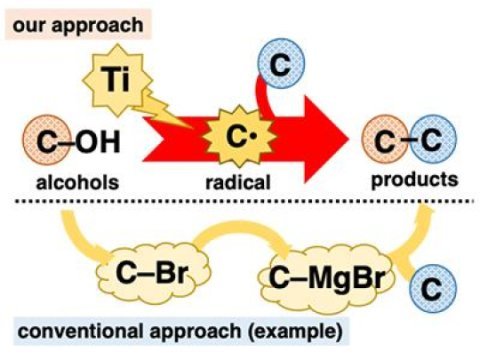
This is a direct use of alcohols for C-C bond formation reactions.
Credit: Kanazawa University

This is a direct use of alcohols for C-C bond formation reactions.
Credit: Kanazawa University
Alcohols play a pivotal role in organic synthesis because they are ubiquitous and can be used in a variety of well-established transformations. However, in C-C bond formation reactions, despite being central to organic synthesis, alcohols are mostly employed in an indirect fashion. Many alcohol-based reactions necessitate tedious pre-transformation of the hydroxy group (C-OH) to other functional groups such as halogens (e.g., C-Br) before C-C bond formation. The development of one-step C-C bond formation reactions using alcohols is highly desirable because it realizes the application of ubiquitous materials without the burden of a multiple step procedure. One way to achieve this goal is to directly convert alcohols to known reactive intermediates that instantly undergo C-C bond formation reactions. We envisioned that we could achieve this using low-valent titanium reagents. Low-valent titanium is a one-electron reductant and a highly oxophilic species. Because of these features, it is expected that low-valent titanium could extract an oxygen atom from alcohol, cleaving the C-O bond in a one-electron reduction to generate the corresponding carbon radical (C* ). The carbon radical is an extremely reactive intermediate that readily undergoes diverse reactions, including C-C bond formation.
Treatment of 2-naphthalenemethanol with a low-valent titanium reagent afforded a mixture of two C-O cleaved products from hydrogenation and dimerization. These reactions themselves were not very useful; however, they were both evidence of the generation of benzyl radical species. With this preliminary result, we expected that adding radical-trapping agents would afford the coupling products between the benzyl radical and trapping agents, interrupting the hydrogenation and dimerization reactions. Indeed, the addition of acrylonitrile as a trapping agent gave the coupling product between the benzyl radical and acrylonitrile as the predominant product. The best result was obtained when the low-valent titanium reagent was prepared from TiCl4(collidine) and manganese powder. This alcohol-based direct C-C bond formation reaction was successfully applied to a series of benzyl alcohol derivatives. Remarkably, both benzyl alcohols with electron-donating and -withdrawing substituents on the aromatic ring were suitable for this reaction. Furthermore, in addition to primary alcohols, secondary and tertiary alcohols were also suitable despite the considerable increase in steric hinderance. Several electron-deficient alkenes other than acrylonitrile were also good reactants. With respect to practicality, this reaction is cost-efficient and easy to conduct, at least on a laboratory scale. TiCl4(collidine) is stable during storage, tolerant to brief exposure to air, and costs only approximately 10 JPY/mmol.
The significance of this method is that it enables direct use of alcohols as carbon radical equivalents. We have linked ubiquitous alcohols with accumulated knowledge about radical reactions. We believe that this work will prompt research into other alcohol-based radical reactions in the near future.
Story Source:
Materials provided by Kanazawa University. Note: Content may be edited for style and length.
Journal Reference:
Cite This Page:
Kanazawa University. “Alcohols as carbon radical precursors.” ScienceDaily. ScienceDaily, 2 November 2018. <www.sciencedaily.com/releases/2018/11/181102095507.htm>.
Kanazawa University. (2018, November 2). Alcohols as carbon radical precursors. ScienceDaily. Retrieved November 2, 2018 from www.sciencedaily.com/releases/2018/11/181102095507.htm
Kanazawa University. “Alcohols as carbon radical precursors.” ScienceDaily. www.sciencedaily.com/releases/2018/11/181102095507.htm (accessed November 2, 2018).

Using advanced genomic techniques, a team of researchers led by Dr Hua (Emily) Ying of The Australian National University (ANU) and Prof David Miller of the ARC Centre of Excellence for Coral Reef Studies (Coral CoE) at James Cook University (JCU), have found that the group of corals classified as “robust,” which includes a number of the brain corals and mushroom corals, have a key physiological advantage over “complex” corals, including common branching corals such as the staghorn coral.
In a new paper published today in the journal Genome Biology, researchers report that “robust” corals possess a unique capacity to generate an “essential” amino acid.
“Amino acids are the building blocks of life,” said lead author Dr Emily Ying of ANU Research School of Biology.
“Amino acids are crucial, for example, in repairing tissue or growing new tissue. But, generating amino acids is energetically costly for animals, so they usually only generate 11 of the 20 required for life. The remaining nine amino acids are called the ‘essential’ amino acids because they must be supplied by the animal’s diet. For corals, this includes tiny drifting animals known as ‘zooplankton.'”
But this is not the only form of sustenance for corals. Through a mutually-beneficial relationship with microalgae known as Symbiodinium, corals are supplied the energy needed to build their hard skeletons.
“Symbiodinium also supplies the coral with some of the ‘essential’ amino acids, making them less dependent on their diet than other animals,” said senior author Prof David Miller of Coral CoE at JCU.
For example, when global warming causes corals to bleach, they expel their resident Symbiodinium and are therefore suddenly fully dependent on their diet to meet this nutritional requirement.
“We now know that ‘robust’ corals can make at least one of the ‘essential’ amino acids without relying on Symbiodinium. This suggests that they may be more resilient, at least in the short term, to bleaching than the ‘complex’ corals such as the branching staghorns,” explained Prof Miller.
Until now, scientists had few clues about why some corals only host a specific Symbiodinium type and others are less particular.
“Our research also suggests that ‘robust’ corals are less choosey about which species of microalgae can take up residence in the coral’s tissue. The ability to host a broader range of Symbiodinium types could facilitate more rapid acclimation to higher temperatures,” said Prof Miller.
Story Source:
Materials provided by ARC Centre of Excellence in Coral Reef Studies. Note: Content may be edited for style and length.

NASA’s Dawn spacecraft has gone silent, ending a historic mission that studied time capsules from the solar system’s earliest chapter.
Dawn missed scheduled communications sessions with NASA’s Deep Space Network on Wednesday, Oct. 31, and Thursday, Nov. 1. After the flight team eliminated other possible causes for the missed communications, mission managers concluded that the spacecraft finally ran out of hydrazine, the fuel that enables the spacecraft to control its pointing. Dawn can no longer keep its antennae trained on Earth to communicate with mission control or turn its solar panels to the Sun to recharge.
The Dawn spacecraft launched 11 years ago to visit the two largest objects in the main asteroid belt. Currently, it’s in orbit around the dwarf planet Ceres, where it will remain for decades.
“Today, we celebrate the end of our Dawn mission — its incredible technical achievements, the vital science it gave us, and the entire team who enabled the spacecraft to make these discoveries,” said Thomas Zurbuchen, associate administrator of NASA’s Science Mission Directorate in Washington. “The astounding images and data that Dawn collected from Vesta and Ceres are critical to understanding the history and evolution of our solar system.”
Dawn launched in 2007 on a journey that put about 4.3 billion miles (6.9 billion kilometers) on its odometer. Propelled by ion engines, the spacecraft achieved many firsts along the way. In 2011, when Dawn arrived at Vesta, the second largest world in the main asteroid belt, the spacecraft became the first to orbit a body in the region between Mars and Jupiter. In 2015, when Dawn went into orbit around Ceres, a dwarf planet that is also the largest world in the asteroid belt, the mission became the first to visit a dwarf planet and go into orbit around two destinations beyond Earth.
“The fact that my car’s license plate frame proclaims, ‘My other vehicle is in the main asteroid belt,’ shows how much pride I take in Dawn,” said Mission Director and Chief Engineer Marc Rayman at NASA’s Jet Propulsion Laboratory. “The demands we put on Dawn were tremendous, but it met the challenge every time. It’s hard to say goodbye to this amazing spaceship, but it’s time.”
The data Dawn beamed back to Earth from its four science experiments enabled scientists to compare two planet-like worlds that evolved very differently. Among its accomplishments, Dawn showed how important location was to the way objects in the early solar system formed and evolved. Dawn also reinforced the idea that dwarf planets could have hosted oceans over a significant part of their history — and potentially still do.
“In many ways, Dawn’s legacy is just beginning,” said Principal Investigator Carol Raymond at JPL. “Dawn’s data sets will be deeply mined by scientists working on how planets grow and differentiate, and when and where life could have formed in our solar system. Ceres and Vesta are important to the study of distant planetary systems, too, as they provide a glimpse of the conditions that may exist around young stars.”
Because Ceres has conditions of interest to scientists who study chemistry that leads to the development of life, NASA follows strict planetary protection protocols for the disposal of the Dawn spacecraft. Dawn will remain in orbit for at least 20 years, and engineers have more than 99 percent confidence the orbit will last for at least 50 years.
So, while the mission plan doesn’t provide the closure of a final, fiery plunge — the way NASA’s Cassini spacecraft ended last year, for example — at least this is certain: Dawn spent every last drop of hydrazine making science observations of Ceres and radioing them back so we could learn more about the solar system we call home.
The Dawn mission is managed by JPL for NASA’s Science Mission Directorate in Washington. Dawn is a project of the directorate’s Discovery Program, managed by NASA’s Marshall Space Flight Center in Huntsville, Alabama. JPL is responsible for overall Dawn mission science. Northrop Grumman in Dulles, Virginia, designed and built the spacecraft. The German Aerospace Center, Max Planck Institute for Solar System Research, Italian Space Agency and Italian National Astrophysical Institute are international partners on the mission team.
Watch the video “Dawn: Mission to Small Worlds,” with NASA Chief Scientist Jim Green, at: https://www.youtube.com/watch?v=JrafypeEhTM
More information about Dawn is available at: https://www.nasa.gov/dawn

Grimsby was the most unhealthy, with Edinburgh topping the healthiest list of 70 major towns and cities.
It is with extreme sadness that we heard about the death of Dr Danie Pauw, our beloved head and founder of Health24, late last week.
His sudden passing, at just 56 years old, has come as a great shock to his family, friends and colleagues, to whom he was such a constant, supportive and loyal presence. Danie was someone who inspired love in people – even when there were differences of opinion.
After qualifying as a medical doctor at Stellenbosch University, Danie worked in Canada and Durban as a general practitioner in the early nineties, after which he founded South Africa’s first telephonic medical information service, Meditel, in 1997.
From this grew Yourhealth.co.za, a consumer health website, which ultimately became Health24.com.
Health24, a joint venture between Danie and Media24/24.com from 2001, was his vision and his passion, and remains his legacy. Health24 is a digital health platform that over the years has provided many users with solid medical information in an accessible and understandable format.
His passion was to use technology to make health information easy to understand. His mantra “There’s a health angle to everything”, formed the basis of many a health writer’s training at this site over the last 18 years.
“He cared so much about the quality and success of the site, and its potential for helping all South Africans learn about their bodies, health, problems and solutions. He could be honestly stubborn about what was needed, and about the need for high standards,” said Danie’s long-time friend and colleague, Health24’s CyberShrink, Professor Michael Simpson.
“He found a unique way of making a special contribution to SA healthcare, using his skills and drive. I’m sure he was a great GP. When we chatted about medical matters his breadth of professional knowledge was unusual and special.
“In a way he became a mega-doc, serving the country and beyond,” Prof Simpson said.
He was open-minded and not afraid to take risks – he let his writers do new and exciting things, sometimes on the very edges of the health field, thereby encouraging the professional development of many of those working under him. He had passion for his cause, and was an inspirational speaker – he could make anything seem possible.
Danie, for his medical background, loved the creative process of content creation and could spend hours sifting through images, labouring over finding the perfect word and searching for interesting ways to create quality content.
For those who knew him well, he had a quirky sense of humour, and would often find humour in the strangest places – which he didn’t mind sharing!
Danie was a rare individual in the corporate world in that he took people at face value – something which says much about his character. He was a good person to have in your corner.
And that’s just it – he was a truly good person, kind, fair, egalitarian and compassionate; sometimes much more so to others than to himself.
“Communicating with a range of people who have worked with him, something many of them said is that he had changed their life; that he had given them a chance even when they didn’t have obvious qualifications, and let them develop and show the skill he recognised in them,” said Prof Simpson.
“In Danie, we have lost such a good friend and just a really good man. Yes, he was an effective administrator and creator, a good doctor, on the small and large scale. But he was more than merely respected; he was also loved, and that is much more rare, in any sort of business.”
Danie was someone who touched the lives of everyone with whom he came into contact and he, his passion and enthusiasm, will be sorely missed by those who knew him – and by the millions of users whose lives he ultimately affected without their being directly aware of it. Danie was truly one of life’s genuinely good people.
He is survived by his parents, Dr John and Leonie Pauw, formerly from Durban, and now living in Cape Town, and his sisters Ilse, Heidi-Lee and Liesel van Niekerk, all from Cape Town.
Rest in peace, Danie.

NEXT ON HEALTH24X

