Getting the most out of atmospheric data analysis

New-particle formation in the atmosphere provides the nucleation centres required for the formation of clouds, making it an important process for understanding climate. Efforts to investigate the complex balance of chemistry and physics that leads to new-particle formation have resulted in the acquisition of very large data sets. A team of researchers based at a number of centers, including Kanazawa University, has developed a mutual information approach to interpreting atmospheric data collected over an 18-year period at the SMEAR II station in Hyytiälä, Finland. Their findings were published in Atmospheric Chemistry and Physics.

The study, an extension of previous data mining work that was carried out on measurements acquired at the same station, uses an additional 10 years of data, which is expected to enhance the reliability of the results and accuracy of the conclusions. In contrast to the previous studies that used data mining methods based on clustering and classification, the new approach looked at the mutual information between observed new-particle formation events and a variety of measured variables. The method was shown to be powerful and computationally light, highlighting its potential as a useful tool.

“The conclusions reached using our analysis were found to agree with previous findings; however, the analysis was achieved without supervision and did not require a deep understanding of the physics,” study coauthor Adam Foster says. “Previous studies have required involved field, lab, and theory work, so being able to get to where we have through data analysis is a very positive step for future studies.”

The work showed that new-particle formation was strongly correlated with water content and sulfuric acid concentration, as well as other factors such as temperature, relative humidity, condensation sink (how quickly molecules and small particles condense onto existing particles), and radiation.

“We hope that the method will provide a robust first option for analyzing atmospheric data sets,” says Foster. “We aim to extend our approach to data sets from other SMEAR stations, as well as to use it to investigate different phenomena and their influences.”

These findings are expected to be implemented widely in the field of atmospheric science. It is hoped that the effect of other variables such as volatile organic compounds and aerosol particles below 3 nm can be assessed using the reported approach.

Story Source:

Materials provided by Kanazawa University. Note: Content may be edited for style and length.

Share Button

Brainwave activity reveals potential biomarker for autism in children

Autism spectrum disorder (ASD) is a neurodevelopmental disorder that can impair communication ability, socialization, and verbal and motor skills. It generally starts in early childhood and is diagnosed through behavior observation. This means of assessment can be imprecise, which is especially problematic when early identification is vital for developmental follow up. A strong need exists for objective and measurable clinical indicators, known as biomarkers.

Now, a team of researchers at Kanazawa University in Japan have made an important step towards identifying a biomarker based on motor-related brain activity. Their work followed on from the key hypothesis that autism results from an excitatory and inhibitory imbalance in the brain, which is associated with repetitive brainwaves called gamma oscillations. A reduction in this type of brain activity has been seen during visual, auditory, and tactile stimulation in individuals with ASD.

The researchers set out to further explore motor-induced gamma oscillations in children with ASD, and recently reported their findings in The Journal of Neuroscience.

They formed two groups of children who were 5-7 years old. Those in the first group were conventionally diagnosed with ASD, while the second group was made up of children classed as developing typically. The children each performed a video-game-like task where they had to press a button with their right finger, while in a relaxed environment. Magnetoencephalography, which records magnetic activity from neurons, was used to monitor the children’s brainwaves during the task.

“We measured the button response time, motor-evoked magnetic fields, and motor-related gamma oscillations,” study corresponding author Mitsuru Kikuchi says. “As found in other studies, the ASD children’s response time was slightly slower and the amplitude in their magnetic fields was a bit decreased. The gamma oscillations were where we saw significant and interesting differences.”

There was a considerably lower peak frequency of the gamma oscillations in the ASD group. A lower peak frequency of motor-related gamma oscillations also signaled low concentration of the inhibitory neurotransmitter GABA, which has also been found associated with ASD. The findings additionally suggest delayed development of motor control in young children with ASD. Collectively the behavioral performance and brainwave findings offer promise for ASD diagnosis.

“Early diagnosis of ASD is highly important so that we can actively manage the disorder as soon as possible,” first author Kyung-min An says. “These findings may prove to be extremely useful in helping us understand the neurophysiological mechanism behind social and motor control development in children with ASD. Using magnetoencephalography in this way gives us a noninvasive and quantifiable biomarker, which is something we are in great need of.”

Story Source:

Materials provided by Kanazawa University. Note: Content may be edited for style and length.

Share Button

Helping kids cope with the fear of medical treatment

Hi-tech gadgets are helping sick children express their feelings and soothe their fears.

Share Button

New ‘Trojan horse’ antibiotic promising

It uses a clever trick to sneak inside bacteria in order to kill the bugs.

Share Button

Whiskers, surface growth and dendrites in lithium batteries

As our love of gadgets grows, so do demands for longer lasting batteries. But there’s a problem.

To make a longer-lasting battery, it needs to be bigger, and bigger isn’t better when it comes to cell phones or electric cars — not to mention pacemakers.

Lithium ion batteries already have a less-than-stellar reputation: think exploding cell phones or fires on airplanes. Beyond these existing problems, when researchers attempt to shrink these batteries without compromising the performance, the results are even more unstable and prone to short-circuiting; engineers have not been able to move past these issues.

Researchers at Washington University in St. Louis have new insights into the cause — or causes — of these issues, paving the way for smaller, safer, more energy-dense batteries. The result of their work has recently been published online in the journal Joule.

Peng Bai, assistant professor in the School of Engineering & Applied Science, has identified three key current boundaries when it comes to these energy-dense lithium metal batteries. It turns out, engineers had been looking for one solution to what turns out to be three problems.

A lithium ion battery is made of three layers: one layer of low-voltage material (graphite) called the anode; one of high-voltage material (lithium cobalt oxide) called the cathode; and a layer of porous plastic which separates the two.

The separator is wetted by a liquid called an electrolyte. When the battery discharges, lithium ions empty out of the anode, passing through the liquid electrolyte, and move into the cathode. The process is reversed as the battery charges.

“With half of the lithium-ion-hosting electrode materials empty at all times,” Bai said, “you are wasting half of your space.”

Engineers have known that they could build a more energy-dense battery (a smaller battery with a similar output capabilities) by discarding some of the dead weight that comes with half of the host materials always being empty. They have been minimally successful by removing the graphite anode, then reducing the lithium ions with electrons during recharge, a process which forms a thin plating of lithium metal.

“The problem is that the lithium metal plating is not uniform,” Bai said. “It can grow ‘fingers.’ “

Researchers have referred to these fingers as “dendrites.” As they spread from the lithium metal plating, they can penetrate the separator in the battery, leading to a short circuit.

But not all “fingers” are the same. “If you call them all dendrites, you’re looking for one solution to solve actually three problems, which is impossible,” Bai said. “That’s why after so many years this problem has never been solved.”

His team has identified three distinct types of fingers, or growth modes, in these lithium metal anodes. They also outline at which current each growth mode appears.

“If you use very high current, it builds at the tip to produce a treelike structure,” Bai said. Those are “true dendrites.”

Below the lower limit you have whiskers growing from the root.

And within those two limits there exists the dynamic transition from whiskers to dendrites, which Bai calls “surface growth.”

These growths are all related to the competing reactions in the region between the liquid electrolyte and the metal deposits.

The study found that a nanoporous ceramic separator can block whiskers up to a certain current density, after which surface growths can slowly penetrate the separator. With a strong enough current, “true dendrites” form, which can easily and very quickly penetrate the separator to short the battery.

At this point, Bai said, “our unique transparent cell revealed that the voltage of battery could look quite normal, even though the separator has been penetrated by a lithium metal filament. Without seeing what is happening inside, you could be easily fooled by the seemingly reasonable voltage, but, really, your battery has already failed.”

In order to build a safe, efficient, reliable battery with a lithium metal anode, the three growth modes need to be controlled by three different methods.

This will be a challenge considering consumers want batteries that can store more energy, and at the same time want them to be charged more quickly. The combination of these two inevitably yields a higher and higher charging current, which may exceed one of the critical currents identified by Bai’s team.

And, batteries can degrade. When they do, the critical currents identified for the fresh battery no longer apply; the threshold becomes lower. At that point, given the same fast charge current, there’s a higher likelihood that the battery will short.

“Battery operation is highly dynamic, in a very wide range of currents. Yet its disposition varies dramatically along the cycle life” Bai said. “That is why this becomes necessary.”

Share Button

Relationship between tremors, water at the Cascadia margin

The earthquakes are so small and deep that someone standing in Seattle would never feel them. In fact, until the early 2000s, nobody knew they happened at all. Now, scientists at Rice University have unearthed details about the structure of Earth where these tiny tremors occur.

Rice postdoctoral researcher and seismologist Jonathan Delph and Earth scientists Fenglin Niu and Alan Levander make a case for the incursion of fluid related to slippage deep inside the Cascadia margin off the Pacific Northwest’s coast.

Their paper, which appears in the American Geophysical Union journal Geophysical Research Letters, links fluids escaping from deep subduction to the frequent shakes that Delph said happen in relative slow motion when compared to the sudden, violent jolts occasionally felt by Southern Californians at the southern end of the west coast.

“These aren’t large, instantaneous events like a typical earthquake,” Delph said. “They’re seismically small, but there’s a lot of them and they are part of the slow-slip type of earthquake that can last for weeks instead of seconds.”

Delph’s paper is the first to show variations in the scale and extent of fluids that come from dehydrating minerals and how they relate to these low-velocity quakes. “We are finally at the point where we can address the incredible amount of research that’s been done in the Pacific Northwest and try to bring it all together,” he said. “The result is a better understanding of how the seismic velocity structure of the margin relates to other geologic and tectonic observations.”

The North American plate and Juan de Fuca plate, a small remnant of a much larger tectonic plate that used to subduct beneath North America, meet at the Cascadia subduction zone, which extends from the coast of northern California well into Canada. As the Juan de Fuca plate moves to the northeast, it sinks below the North American plate.

Delph said fluids released from minerals as they heat up at depths of 30 to 80 kilometers propagate upward along the boundary of the plates in the northern and southern portions of the margin, and get trapped in sediments that are subducting beneath the Cascadia margin.

“This underthrust sedimentary material is being stuck onto the bottom of the North American plate,” he said. “This can allow fluids to infiltrate. We don’t know why, exactly, but it correlates well with the spatial variations in tremor density we observe. We’re starting to understand the structure of the margin where these tremors are more prevalent.”

Delph’s research is based on extensive seismic records gathered over decades and housed at the National Science Foundation-backed IRIS seismic data repository, an institutional collaboration to make seismic data available to the public.

“We didn’t know these tremors existed until the early 2000s, when they were correlated with small changes in the direction of GPS stations at the surface,” he said. “They’re extremely difficult to spot. Basically, they don’t look like earthquakes. They look like periods of higher noise on seismometers.

“We needed high-accuracy GPS and seismometer measurements to see that these tremors accompany changes in GPS motion,” Delph said. “We know from GPS records that some parts of the Pacific Northwest coast change direction over a period of weeks. That correlates with high-noise ‘tremor’ signals we see in the seismometers. We call these slow-slip events because they slip for much longer than traditional earthquakes, at much slower speeds.”

He said the phenomenon isn’t present in all subduction zones. “This process is pretty constrained to what we call ‘hot subduction zones,’ where the subducting plate is relatively young and therefore warm,” Delph said. “This allows for minerals that carry water to dehydrate at shallower depths.

“In ‘colder’ subduction zones, like central Chile or the Tohoku region of Japan, we don’t see these tremors as much, and we think this is because minerals don’t release their water until they’re at greater depths,” he said. “The Cascadia subduction zone seems to behave quite differently than these colder subduction zones, which generate large earthquakes more frequently than Cascadia. This could be related in some way to these slow-slip earthquakes, which can release as much energy as a magnitude 7 earthquake over their duration. This is an ongoing area of research.”

Story Source:

Materials provided by Rice University. Original written by Mike Williams. Note: Content may be edited for style and length.

Share Button

New species of ‘missing link’ between dinosaurs and birds identified

Known as the ‘Icon of Evolution’ and ‘the missing link’ between dinosaurs and birds, Archaeopteryx has become one of the most famous fossil discoveries in Palaeontology.

Now, as part of an international team of scientists, researchers at The University of Manchester have identified a new species of Archaeopteryx that is closer to modern birds in evolutionary terms.

Dr John Nudds, from the University’s School of Earth and Environmental Sciences, and the team have been re-examining one of the only 12 known specimens by carrying out the first ever synchrotron examination, a form of 3D X-ray analysis, of an Archaeopteryx.

Thanks to this new insight, the team says that this individual Archaeopteryx fossil, known as ‘specimen number eight’, is physically much closer to a modern bird than it is to a reptile. Therefore, it is evolutionary distinctive and different enough to be described as a new species — Archaeopteryx albersdoerferi.

The research, which is being published in journal Historical Biology, says that some of the differing skeletal characteristics of Archaeopteryx albersdoerferi include the fusion of cranial bones, different pectoral girdle (chest) and wing elements, and a reinforced configuration of carpals and metacarpals (hand) bones.

These characteristics are seen more in modern flying birds and are not found in the older Archaeopteryx lithographica species, which more resembles reptiles and dinosaurs.

Specimen number eight is the youngest of all the 12 known specimens by approximately half a million years. This age difference in comparison to the other specimens is a key factor in describing it as a new species.

Dr Nudds explains: “By digitally dissecting the fossil we found that this specimen differed from all of the others. It possessed skeletal adaptations which would have resulted in much more efficient flight. In a nutshell we have discovered what Archaeopteryx lithographica evolved into — i.e. a more advanced bird, better adapted to flying — and we have described this as a new species of Archaeopteryx.”

Archaeopteryx was first described as the ‘missing link’ between reptiles and birds in 1861 — and is now regarded as the link between dinosaurs and birds. Only 12 specimens have ever been found and all are from the late Jurassic of Bavaria, now Germany, dating back approximately 150 million years.

Lead author, Dr Martin Kundrát, from the University of Pavol Jozef Šafárik, Slovakia, said: “This is the first time that numerous bones and teeth of Archaeopteryx were viewed from all aspects including exposure of their inner structure. The use of synchrotron microtomography was the only way to study the specimen as it is heavily compressed with many fragmented bones partly or completely hidden in limestone.”

Dr Nudds added: “Whenever a missing link is discovered, this merely creates two further missing links — what came before, and what came after! What came before was discovered in 1996 with the feathered dinosaurs in China. Our new species is what came after. It confirms Archaeopteryx as the first bird, and not just one of a number of feathered theropod dinosaurs, which some authors have suggested recently. You could say that it puts Archaeopteryx back on its perch as the first bird!”

Story Source:

Materials provided by The University of Manchester. Note: Content may be edited for style and length.

Share Button

Rise in women having induced labours, NHS figures show

More older and overweight women giving birth is behind the trend, doctors say.

Share Button

Health24.com | 18 ways to stop feeling so damn bloated all the time

One day you’re pulling on your distressed denim with ease; the next you’re wrestling with your zipper, and wondering why the jeans you wore yesterday don’t fit anymore.

The good news: You’re likely just bloated and it happens to literally everyone. It’s totally preventable or even fixable – although it’s not like having a headache and popping some ibuprofen. Still, there are some super-simple remedies for how to reduce bloating ASAP, so you don’t have to give up jeans forever in lieu of your stretchiest pair of leggings.

1. Fill up on probiotics

Some over-the-counter probiotic supplements can cause gas, bloating, or other GI symptoms, but chowing down on real foods packed with this healthy gut bacteria can be beneficial, says Courtney Schuchmann, a dietitian at the University of Chicago Medicine.

“Yoghurt is one of the easiest ways to get probiotics in your diet,” she adds. “You can also eat fermented vegetables, like sauerkraut, or things like kombucha and kefir – but be cautious, because those products may also contain a lot of sugar, which can be counterproductive for GI health.”

Read more: 9 foods that are secretly making you super-boated

2. Stay hydrated

You’ve absolutely been told before that you should be drinking more water, but this is especially true if you find yourself bloated all the time.

Drinking water will soften your stools, which makes them easier to pass and reduces bloating in the form of gas and constipation, says Dr Matthew Bechtold, a gastroenterologist at University of Missouri Health Care. Good hydration also increases the mucous secretions in your bowels and your overall bowel motility… so drink up!

3. Watch your sodium intake

If you’re feeling bloated after an especially salty meal, you can blame the sodium – too much of it in your diet causes your kidneys to retain water.

The good news is that cutting back on sodium helps your kidneys flush out all that excess water in your body, says Dr Bechtold, which will help you lose the puffiness.

He recommends choosing fresh meats and produce over the prepackaged kinds, putting down the salt shaker at dinner in favour of flavourful spices, preparing your own meals at home instead of dining out, and reading food labels closely for sodium content. And just so you know: The Food and Drug Administration recommends consuming no more than 2 300 milligrams of sodium per day (that’s just one teaspoon of salt, FYI).

4. Add more potassium into your diet

Speaking of how sodium can make you retain water, if you’re regretting those French fries you ordered at lunch, try snacking on a potassium-rich banana to combat bloat.

“Potassium can help the kidneys get rid of salt, which may help with water retention,” says Dr Bechtold. If bananas aren’t your thing, oranges and strawberries are also good sources of potassium.

5. Don’t skip the skin on fruits

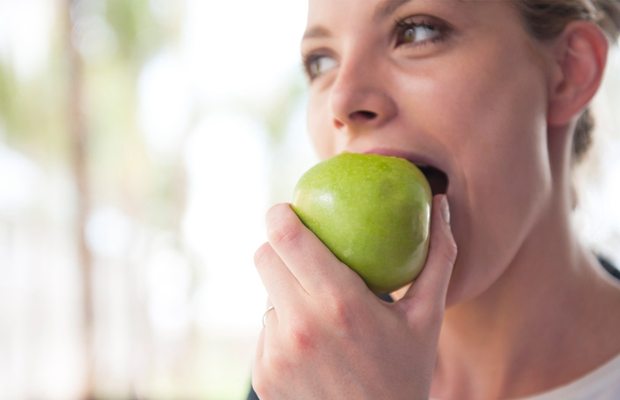
Put down the fruit peeler. In fruits like apples and pears, the skin is where you find insoluble fibre, a.k.a. the kind of fibre that aids digestion by keeping things moving through your bowels. Munching on these fruits with the skin intact, says Schuchmann, can help increase stool bulk and give you more regular bowel movements.

apple, woman, green, food, vegetable, health, diet

Read more: 12 reasons why you’re suddenly so bloated

6. Cool it on the carbonated drinks

I know, it’s amazing, but there’s a side effect to all that no-cal sipping you’ve been doing at your desk every day: It could be causing belly bloat.

“Carbonated beverages may add air in the GI tract,” says Dr Bechtold. “The more air that is trapped, the more bloating [you’ll have].” Replace some of your sparkling water with the flat bottled or tap kind, and see if there’s any improvement.

7. Work up a (light) sweat

You don’t have to go for a 10km run every day, but fitting in some regular physical activity might keep things moving more smoothly in your tummy.

According to Dr Bechtold, there are two reasons why a short walk-especially after eating a big meal-can significantly reduce bloating. First, exercise increases the motility of your colon, which reduces the amount of time your stool sits in your belly making gas. Secondly, exercise increases your heart and respiratory rates, which also increases blood flow to the guts; this encourages your bowel muscles to work harder to push stool out.

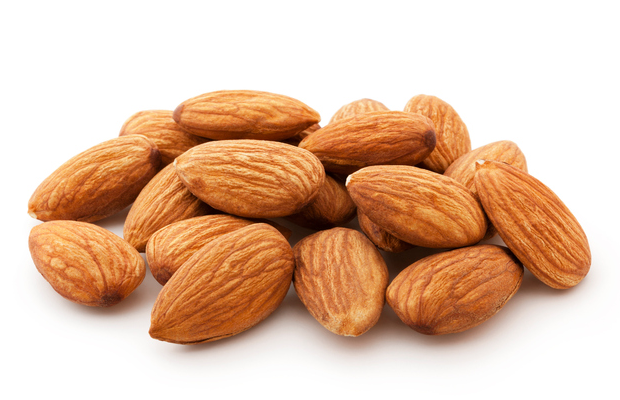
8. Swap your pistachios or cashews for almonds

Nuts are full of healthy fats that fill you up, right? Well, yes, but depending on the kind of nut, they may also be full of a certain kind of carbohydrate (fermentable oligosaccharides, disaccharides, monosaccharides and polyols, or FODMAPs for short) that your stomach can’t fully digest – which leads to your colon producing more gas that will leave you bloated.

If you’re a fan of pistachios and cashews, Schuchmann suggests swapping them out for almonds, walnuts or pecans, all of which are lower in FODMAPs and gentler on the stomach. As an added bonus, almonds are also a good source of protein and omega-3s.

almonds, nuts, food, health, diet, nutrition

Read more: How to ‘shrink’ your tummy in just 24 hours

9. Give yourself a stomach massage

If you don’t want to make any dietary changes to beat your bloat, you could try your hand at some amateur abdominal massage, which Dr Bechtold says is a safe way to help clear constipation.

According to Dr Bechtold, a basic massage will involve moving your fingertips in a circular motion over the abdomen, starting on your lower right side and traveling clockwise up to your rib cage, then across and down to your pelvis.

10. Don’t overdo it on the broccoli

I’m not here to tell you to eat less vegetables, but if you’re going to town on some of your nutritious faves – like broccoli and cauliflower – they could actually be the source of your woes.

These cruciferous veggies are high in a sugar called raffinose, says Dr Bechtold, which doesn’t break down super easily in your GI tract.

Luckily, you don’t have to swear off those mini trees for good. Schuchmann says it’s just a matter of finding your threshold: Some people can tolerate one cup of broccoli at a time, others more or less. You may also have better luck eating cooked broccoli versus crunching raw florets.

11. Swap your brown rice for white

Brown rice is generally considered to be healthier than white, but white rice may be gentler on sensitive stomachs. “Brown rice contains much more fibre than white rice [and that] acts as a food source for colonic bacteria,” says Dr Bechtold.

When colonic bacteria have a lot to dine on, it produces gas, which – you guessed it – causes bloating. To reap the health benefits of brown rice without maxing out your stomach, try mixing equal parts of brown and white rice together.

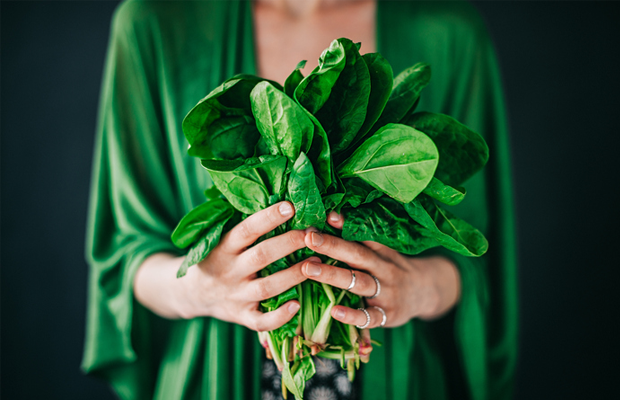
12. Always look for ways to get your leafy greens

Since leafy green vegetables, like kale and spinach, are a good source of insoluble fibre, they help your colon produce stool, thereby reducing gas and bloating, says Dr Bechtold.

These veggies are also low in kilojoules, so they’re pretty versatile: You can eat them raw in salads or incorporate them into your soups, stews, eggs, smoothies, sandwiches and tacos without adding a lot of kilojoules to your meal.

spinach, green, bunch, food, vegetable, health, di


13. Aim for a few small meals each day

If you’re waiting several hours between meals, you’ll end up ravenous when it’s time to eat again and that might result in overeating.

Dr Bechtold explains that overeating causes the stomach to both look and feel larger than normal (hello, food baby!), but eating several small meals over the course of the day can prevent that awkward distended belly.

14. Drink lemon water in the morning

Lemons are one of nature’s best bodily waste removers, according to Dr Bechtold, who says they work as a subtle laxative to move stool out of the colon as well as a diuretic to flush out your kidneys. So they may keep you from getting constipated and retaining water – two major sources of bloating.

Add a wedge of lemon to eight ounces (236.5ml) of warm water every morning before breakfast to reap the benefits.

15. Consider cutting back on dairy

“In patients with lactose intolerance, lactose is inadequately digested and acts as a food source to bacteria in the colon, producing more gas and that bloating sensation,” says Dr Bechtold.

Since dairy products contain lactose, avoiding dairy is the best route to less bloat for people who are lactose intolerant in any way.

16. Choose grilled, broiled or baked chicken over fried

Obviously fried chicken is delicious, but it should be more of an exception, not a rule: Fried food is tougher on your stomach and may be to blame for all your gas and bloating.

“Fried versions of food typically absorb more of the fat [they’re cooked with],” says Schuchmann. “That can cause GI distress.” As often as possible, opt for meat and seafood that’s grilled, broiled or baked rather than fried.

17. Go ahead, drink your coffee

Coffee drinkers, rejoice: According to Schuchmann, black coffee can keep your bowel movements regular. The connection is mostly anecdotal at this point, but lots of people feel the urge to run to the bathroom pretty soon after their morning cup of Joe, so if it works for you, stick with it. (Just be sure you don’t overdo it on sugar-laden milk or creamers, which might negate some of the GI benefits.)

If you’re not a coffee fan, Schuchmann says herbal teas are a good way to get the all-important hydration your colon needs to keep things moving.

woman drinking coffee outdoors


18. Ditch the artificial sweeteners and go for the real thing

FYI: Any ingredient that ends in the letters “-ol” – erythritol, sorbitol, and xylitol – is an artificial sweetener, and it is probably making you bloated.

These chemicals are called sugar alcohols, and they’re found in tons of sugar-free snacks, like candies and gums, as well as in many of the dressings, beverages, and condiments you eat every day. They’re also hard for your stomach to properly digest, so they create gas and GI problems (like bloating!). Stick to small servings of real sugar if you don’t want to totally cut out the sweet stuff.

This article was originally published by www.womenshealthmag.com

 Image credit: iStock

Share Button

Health24.com | Struggling to build muscle? These 4 unusual tips will help

Follow these four tips to enhance your muscle building.

1. Do isometric exercises

To look shredded like a bodybuilder, put your training on hold: Isometric exercises can make the blood vessels feeding your muscles stand out, according to a British study.

Read more: The back test to see how strong you really are

Men who did isometric exercises, which involve performing part of an exercise without movement – like holding the midway point of a biceps curl – increased the size of their arteries by 11%. What’s more, their blood pressure dropped.

The researchers understand that the exercises increased the nitric oxide in the participants’ blood. Do four sets of two-minute holds, three times a week, for eight weeks.

2. Soak up some sun

Sunlight is strong! Vitamin D may be the secret to big muscles, says a study in Medicine & Science in Sports & Exercise. Scientists found that people with higher blood levels of vitamin D tend to have stronger upper and lower body muscles.

Read more: 3 workout tips that will save you time and get you gains faster

“The vitamin acts like a hormone. It might affect testosterone,” says Dr Paul Thompson, lead author of the study. Most adults need 600 IU of vitamin D daily.

3. Jiggle

Time to jiggle: Research from the Journal of Strength and Conditioning Research has shown that exercising on a vibrating platform can enhance your upper body workout. So if you’re looking to tone your arms or chest, sign up for a Powerplate class at your local Virgin Active.

Read more: The ultimate workout playlist to boost performance from six personal trainers

But remember, this study concluded that exercising on a vibrating platform would only increase your upper body workout, a vibrating platform was shown to have no effect on lower body exercises.

4. Choose your gym buddy wisely

Harsh reality: Watching someone suffer through a workout can kill your motivation, according Canadian researchers. When people watched just seven minutes of contestants struggling with exercise on the reality TV show The Biggest Loser, they showed little desire to hit the gym afterwards.

Read more: Four moves that you must try to build muscle

Bottom line: Keep a positive attitude and focus on your own routine.

This article was originally published on www.mh.co.za

Image credit: iStock

Share Button