The Food Standards Agency says hundreds of people have become ill after eating the undercooked meat.


The Food Standards Agency says hundreds of people have become ill after eating the undercooked meat.
Regularly checking your vagina should be an important part of your self-care routine. Anything out of the ordinary can end up being uncomfortable, painful or downright embarrassing, making it vital to talk to your doctor or gynaecologist if you suspect something is wrong.
You might want to ensure things are clean down there, especially during the warmer months. It is, however, important to bear in mind that the vagina is self-cleaning.
A specific pH balance
Why is there then such a huge market for feminine hygiene products such as feminine washes, wipes and gels when it is a misconception that any secretion or discharge from the vagina is “dirty”? It may be because advertisers and marketers of these feminine products have been subtly pushing the need always to be “fresh” for decades.
While it’s normal for the vagina to sometimes have a slight odour, using any scented products as part of your hygiene regiment is a bad idea. The vagina has a specific pH balance, and anything that throws this off can make it prone to infections.
Washing with water and plain soap with a balanced pH level should be all it takes to keep the vagina clean and healthy.
According to Dr Hailey MacNear, an obstetrician and gynaecologist at Folsom OBGYN in the USA, less is most certainly more when it comes to vaginal hygiene. “The vagina is a delicate ecosystem and problems can arise if there is a shift in the balance. The vagina is meant to be a self-cleaning system and many organisms already live in the vagina and are kept at healthy levels by coexisting with other organisms.”
Bacterial vaginosis
A study published in the International Journal of Innovative Research and Development states that anything that upsets the balance of the vaginal environment can cause overgrowth of otherwise normal microbes, such as Candida albicans, to cause vaginal infections.
When the environment of the vagina is disturbed, it can also lead to the growth of potentially pathogenic microbes, which will overshadow the good bacteria.
According to a paper presented at the University of Kent, many studies have pointed out that there is a significant correlation between the use of feminine washes and vaginal infections.
This paper highlights a specific study that showed that the use of scented and antiseptic products was more common in women with bacterial vaginosis. This infection was three times more common in women who regularly used products on their vulvar and vaginal regions.
Choose wisely
Not all feminine hygiene products are the same, and many of them are now made without surfactants like ammonium lauryl sulphate and sodium lauryl sulphate.
Brands with milder ingredients and better formulation have been shown to reduce the number of harmful pathogens, decreasing the risk of infection without affecting the surrounding beneficial bacteria.
Some safe practices
Here are some tips for practising safe vaginal hygiene:
Image credit: iStock


There are four common myths about breast cancer that can affect prevention and treatment of the most common type of cancer in women, an oncologist says.
The first is believing you’re not at risk because no one in your family has cancer.
“Less than 10% of breast cancers are linked to genetics or linked to genes that you get from your family,” said Dr. Parvin Peddi, an oncologist at the University of California, Los Angeles.
“So just because no one in your family has breast cancer does not mean you cannot get it,” Peddi said in an UCLA news release. “In fact, more than 90% of breast cancers are not linked to any family history whatsoever.”
Another myth is that sugar causes breast cancer.
“While simple carbohydrates are not good for anyone, sugar does not cause breast cancer or any other cancer in particular,” Peddi said. “Therefore, there’s no reason to completely eliminate sugar from your diet.”
However, to reduce cancer risk, women should eat mostly vegetables, fruits and whole grains and reduce consumption of red meats, processed meats and sweets, the American Cancer Society recommends.
A third myth is that there’s nothing women can do to reduce their risk of breast cancer.
“Actually, exercise, maintaining good body weight and limiting the intake of alcohol all have been linked to decreased risk of breast cancer,” Peddi said.
Finally, some people mistakenly believe early detection of breast cancer won’t change a patient’s diagnosis.
“When patients come to my clinic with early breast cancer, I can actually help cure them of the disease. When the cancer is discovered at a later stage, the chances of a cure are much less achievable,” Peddi said.
“So it does make a difference to get your mammograms on time as recommended, to help catch the disease at an early stage,” she said.
The US Preventive Services Task Force suggests women begin having mammograms at age 50, while the American Cancer Society recommends starting at age 45.
Image credit: iStock


Philip Morris says its campaign is “an important next step” in its aim to stop selling cigarettes.
Combining a drug with hormone therapy may extend the lives of some women with advanced breast cancer.
Victims of the NHS scandal have written to the health secretary asking for an immediate increase in support.
Turns out the old saying “it ain’t over till it’s over” is true – at least when it comes to your sex life.
The National Poll On Healthy Aging, conducted by the University of Michigan, asked 1 002 adults between the ages of 65 and 80 about their sex lives. According to the results, 40% said they were currently sexually active. And among the three-quarters who have a romantic partner, 54% are getting busy.
And they’re not just going through the motions, either: When asked if they are satisfied with their current sex life, 73% of seniors polled answered with a thumbs up.
Read more: “I married a man 26 years older – and my sex life is amazing”
“This survey just confirms that the need for and interest in sexual intimacy doesn’t stop at a certain age,” Dr Alison Bryant, senior vice president of research for AARP said in a press release. (Which honestly, Blanche from Golden Girls has been telling us since 1985…)
The survey also revealed that healthy seniors were more sexually active compared to those with “fair” or “poor” health (45 versus 22%). Let that inspire you to continue eating your veggies and waking up for your morning run!
Read more: This is exactly how your weight affects your sex life
Both sexes mostly agreed that sex is an important part of a relationship – 84% of men and 69% of women.
That said, there seems to be a bit of a gender gap when it comes to senior sex, and it doesn’t favour the ladies. In the survey, half of men aged 65 to 80 were extremely or very interested in sex compared with just 12% of women in the same age range. Also, women were less likely than men to be sexually active – 31% compared with 51% of men.
But there’s a silver lining: When it came to sexual satisfaction, women were more likely to be extremely or very satisfied. Long live your steamy sex life!
This article was originally published on www.womenshealthmag.com
Image credit: iStock

NEXT ON HEALTH24X


Want to avoid a botched bench press? If you insist on going solo at the bench, remove the collars from the bar. The risk of having to re-rack the bar if the weights slip is eclipsed by the potential benefit of saving your rib cage when your muscles give out.
Read more: 5 epic bench press fails
If you do find yourself failing, use your remaining strength to carefully lower the bar to your chest – but don’t let it rest there, or else you may injure your ribs.
Keep as much upward pressure going as you can so you aren’t crushed.
Inch your dominant hand toward the end of the barbell so that the weight gradually slides off the opposite end.
Read more: You need to do this exercise if you bench press a lot
As the one side of the bar dumps the weight, the unevenly weighted bar will quickly make the weights on the other side dump off as well.
Keep a firm grasp on the bar so it doesn’t rocket skyward.
Push the empty bar to the rack and breathe a sigh of relief.
Read more: You can use a bench to build bolder shoulders. Here’s how to do it
Next time you approach the bench, ask for a spotter! You don’t want to end up like this guy:
<sup><br _moz_dirty=”” /></sup>
This article was originally published onwww.mh.co.za
Image credit: iStock

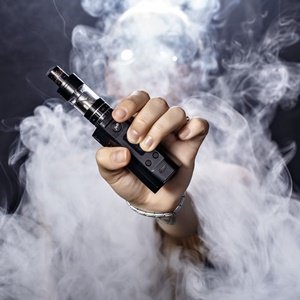
Smoking electronic cigarettes could slow the healing of skin wounds as much as regular cigarettes, according to a new study on rats.
“Based on our findings, e-cigarettes are not a safe alternative to traditional cigarettes as it relates to timely wound healing,” said study corresponding author Dr Jeffrey Spiegel. He’s chief of facial plastic surgery at Boston Medical Center.
It’s long been known that smoking regular cigarettes impairs wound healing, and surgery patients are advised to avoid smoking for several months before an elective operation.
Some smokers believe e-cigarettes are safer than regular smokes. But there has been little research into whether that’s really the case, particularly following an operation.
In this study, laboratory tests on rats showed that both e-cigarettes and regular cigarettes resulted in increased tissue death, which delays wound healing.
“Providers, and patients, need to understand the risks of both types of smoking so that they can make the best decision to keep the patient as safe as possible before and after surgery,” Spiegel said in a medical center news release.
The results were published October 18 in the journal JAMA Facial Plastic Surgery.
The researchers admit that there is a paucity of clinical evidence in humans, and that further studies are warranted
Research involving animals may not provide the same results in humans.
Image credit: iStock

Life happens – you leave your car lights on and the battery dies, you “accidentally” pop a zit or forget your laundry in the rain. These things happen to everyone, like dozing off while watching another episode of Keeping Up With The Kardashians.
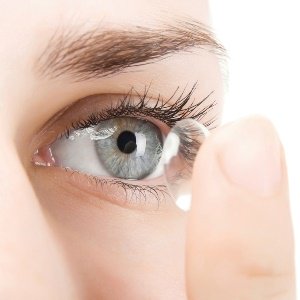
But what’s worse, you could have dozed off with your contacts in. One man did and lost his sight in one eye. And that got us thinking, how safe is it to sleep with your contact lenses in?
MH chatted to Andre Horn, senior optometrist and managing director of Mellins i-Style, to set the record straight. “Some wearers do this more often than others but it’s not a good idea,” says Horn.
The science is simple
“When you sleep with your contact lenses in, your corneas don’t get enough oxygen as the contact lens, which fits snugly over the surface of the cornea, acts as a barrier between the closed eyelid and the cornea.”
The science is simple, when you’re awake, by blinking your cornea receives oxygen from the air. However, because no blinking is done while asleep, no oxygen is received.
Clinical spokesperson for the American Academy of Ophthalmology, Dr Thomas Steinemann says the lack of oxygen can have some serious effects on the cornea. “Without oxygen, the cornea swells up – not a cartoonish, popping-out-of-your-head amount, but enough so that gaps appear between the eye’s surface cells, where bacteria can sneak in. These bacteria may increase your risk of eye infection by nearly seven-fold.”
According to Greatist, because the eye doesn’t have the body’s same immune system protection, things can turn bad fast. When sleeping, the body restores and rejuvenates itself, and the cornea is lubricated and nourished simultaneously. A process that a contact lens interferes with.
And according to Horn, “Another concern is keratitis, which is inflammation of the cornea. This occurs when contact lenses aren’t removed before bedtime. Even contact lenses that have extended wear should be removed regularly, at least once a week, to lessen the chances of corneal infection.”
How do you know if you have an infection?
“If you experience decreased vision, redness, watering and discharge, you may have an infection,” says the Cleveland Clinic. “If removing a lens doesn’t help the irritation, it’s time to visit an eye doctor – and don’t forget to bring the problematic lens, too.”
Andre Horn’s bottom line:
“As a rule, you should therefore never sleep with your contact lenses in.”
This article was originally published on www.mh.co.za
Image credit: iStock

