People with terminal illnesses share their experiences of talking about death.


People with terminal illnesses share their experiences of talking about death.
A newly discovered toxin that some bacteria deploy to fend off competing bacteria stands out from others in the battle for microbial domination. While many deadly substances have been identified among bacteria, this previously unknown toxin behaves in a familiar way.
“What is special about this toxin,” noted UW Medicine microbiologist Brook Peterson, “is that it acts by the same biochemical mechanism as some infamous toxins employed by human pathogens, which evolved much later than the toxins bacteria use against each other.”
These include the diphtheria, pertussis and cholera toxins. These toxins use similar biochemical mechanisms to impair vital proteins inside host cells For example, the profuse diarrhea that occurs in cholera is a direct result of how its toxin forces cells in the gut to expel too much water and salt by interfering with internal signals. Although bacteria don’t get diarrhea, a look under the microscope shows that they do get visibly sick while they are succumbing to the recently identified toxin, named Tre1.
Peterson is a research scientist in the laboratory of Joseph Mougous, professor of microbiology and biochemistry at the University of Washington School of Medicine in Seattle.
For this work on bacterial skirmishes, they studied Serratia proteamaculans. Some strains of this ubiquitous bacteria promote plant growth or live inside tree roots. Some strains inhabit the digestive tract of insects and other animals, and others spoil meat or seafood.
Peterson was one of the senior researchers on the project team that uncovered the new toxin and outlined how bacteria deploy this weapon.
The group also found out how some of the bacteria were protected from poisoning themselves. The findings are published today in the journal Cell.
Far from being a calm collection of one-cell organisms, bacterial struggle with each other for life-sustaining resources, and avail themselves of a variety of powerful antagonists. One survival method is to reduce overcrowding in their microbial colonies.
“The toxin we have discovered targets a protein, called FtsZ, that is essential for cells to divide,” Peterson explained. When this protein is blocked, the intoxicated cells grow longer and longer, she said, and eventually split open.
How do some of the bacterial save themselves from their own deadly intentions? The researchers observed that they have an unusual safeguard. These bacteria produce a protein that acts as an enzyme to reverse, almost like an antidote, the modifications that the toxin had instigated.
“This protein protects the bacterium from both the toxin it produces itself,” Peterson noted, “and from toxins that function by the same mechanism but made by other species.”
“Our findings,” the team wrote in the Cell paper, “reveal how an interbacterial arms race has produced a unique solution for safeguarding the integrity of the bacterial cell division machinery…” This protective mechanism confers broad immunity to a variety of toxins.
This inside look at the chemical warfare and biodefense strategies among bacteria in their own communities also provides new insights into the infections that trouble multicellular organisms, including people.
Interbacterial fighting might also be responsible for encouraging the formation of new, more effective toxins and thereby contribute to the emergence of bacterial diseases.
“Research such as this can offer clues to the evolutionary origins of the potent toxins that bacterial pathogens use to cause disease,” Peterson observed. “It also provides a fascinating example of the complex strategies bacteria employ in their constant battle for survival with their microbial neighbors.” The hostile encounters between bacterial, and their ancestral antibacterial toxins, predate the appearance on the Earth of more complex life forms

What causes Alzheimer’s disease? The answer could be right under our noses, says leading expert Professor Ruth Itzhaki. Her latest paper presents a lifetime of research evidence that the herpes virus responsible for cold sores can also cause Alzheimer’s — and new data which show antiviral drugs drastically reduce risk of senile dementia in patients with severe herpes infections. The review in Frontiers in Ageing Neuroscience raises the tantalizing prospect of a simple, effective preventive treatment for one of humanity’s costliest disorders.
The HSV1 theory of Alzheimer’s disease
Herpes viruses are the dreaded ‘gift that keeps on giving’. They remain lifelong in our neurons and immune cells, reactivating and resurfacing in characteristic blisters when we’re run down by stress or illness. Most people are infected by Herpes Simplex Virus 1 (HSV1) by the time they reach old age.
But what happens to infected neurons in our brain during this reactivation?
“HSV1 could account for 50% or more of Alzheimer’s disease cases,” says Professor Itzhaki, who has spent over 25 years at the University of Manchester investigating a potential link.
HSV1 is better known as the cause of cold sores. Itzhaki has shown previously that cold sores occur more frequently in carriers of APOE-ε4 — a gene variant that confers increased risk of Alzheimer’s.
“Our theory is that in APOE-ε4 carriers, reactivation is more frequent or more harmful in HSV1-infected brain cells, which as a result accumulate damage that culminates in development of Alzheimer’s.”
Proving the theory
Few countries collect the population data required to test this theory — for example, to find out whether antiviral treatments reduce dementia risk.
In Taiwan however, researchers have done just that. There, 99.9% of the population is enrolled in a National Health Insurance Research Database, which is being extensively mined for information on microbial infections and disease. In 2017-2018 three studies were published describing Taiwanese data on the development of senile dementia — of which Alzheimer’s is the main cause — and the treatment of patients with marked overt signs of infection with HSV or varicella zoster virus (VZV, the chickenpox virus).
“The striking results include evidence that the risk of senile dementia is much greater in those who are infected with HSV, and that anti-herpes antiviral treatment causes a dramatic decrease in number of those subjects severely affected by HSV1 who later develop dementia.”
Previous findings from Itzhaki’s own research group provide a mechanistic link which supports these epidemiological findings. They found that HSV1 causes protein deposits characteristic of Alzheimer’s: ‘plaques’ between neurons, and ‘tangles’ inside of them.
“Viral DNA is located very specifically within plaques in postmortem brain tissue from Alzheimer’s sufferers. The main proteins of both plaques and tangles accumulate also in HSV1-infected cell cultures — and antiviral drugs can prevent this.”
Towards a cure
“It should be stressed that the results of these Taiwanese studies apply only to severe HSV1 (or VZV) infections, which are rare,” admits Itzhaki. “Ideally, we would study dementia rates amongst people who have suffered mild HSV1 infection, including herpes labialis (cold sores) or mild genital herpes, but these are far less likely to be documented.”
Although further work is needed to confirm and define a causal link between HSV1 infection and Alzheimer’s, Itzhaki is enthusiastic about the treatment prospects.
“Considering that over 150 publications strongly support an HSV1 role in Alzheimer’s, these Taiwan findings greatly justify usage of antiherpes antivirals — which are safe and well-tolerated — to treat Alzheimer’s disease.
“They also incentivize development of an HSV1 vaccine, which would likely be the most effective treatment.”
This echoes the growing use worldwide of human papillomavirus (HPV) vaccination to prevent cervical cancer — another virus-disease link which emerged in a similar process of research.
Story Source:
Materials provided by Frontiers. Note: Content may be edited for style and length.

Most of us would acknowledge that family members often resemble one another, particularly in the face. Indeed, humans are good at picking out pairs of close relatives amongst the faces of unfamiliar adults. We are also more likely to trust and help hypothetical partners whose faces have been subtly manipulated to resemble our own in computer experiments. Furthermore, in natural populations perceived facial similarity can have important consequences in terms of whether fathers invest in or discriminate against their putative children. At what point in the lifespan does the relevant facial information become discernible? This is important to resolving whether there are evolutionary pressures for paternity to be concealed (to avoid withdrawal of care or even infanticide, if a male perceives he is unrelated to the child) or, alternatively, for advertising one’s paternity in order to encourage parental investment. Results of studies examining the faces of newborns have been inconclusive, but there is evidence that by mid-childhood individuals can, on average, be matched to their parents.
Other primates, such as macaques and baboons, face a similar problem. As both males and females typically mate with multiple partners during a female’s conceptive period, and males transfer between several social groups over their lifetime, individuals are often faced with situations where they encounter an unfamiliar conspecific which may, nevertheless, be their own relative. Recognizing these individuals as kin can generate evolutionary benefits, for example by directing preferential treatment towards relatives and optimizing mate choice decisions so as to avoid reproducing with close relatives. Evidence is accumulating in several primate species that individuals behaviourally discriminate not only maternal but also paternal kin, and that phenotypic cues exist (such as visual, vocal or olfactory similarities between relatives) which might enable this. Virtually nothing is known about when such cues might first appear or become detectable by others.
To address this question the authors of a recent study — published in the journal Proceedings of the Royal Society B — presented experienced human raters (scientists working with nonhuman primates, and trained primate caretakers) at the Max Planck Institute for Evolutionary Anthropology in Leipzig and the German Primate Center in Göttingen with digital images of rhesus macaque faces collected from a free-ranging population at Cayo Santiago, Puerto Rico. This computer-based technique relies on known similarities in the visual system and face-processing mechanisms of humans and rhesus macaques. The authors had already demonstrated that humans can detect parent-offspring resemblances between macaques under these conditions — at least in adult faces.
Now presented with macaque faces that differed in age, the study participants were unable to identify which of two infants belonged to a target parent, but became more and more successful at correctly matching sons and daughters with their parents with increasing age of the offspring. As predicted, they first consistently succeeded at the task at an offspring age just before puberty — i.e. with macaques old enough to no longer be highly vulnerable to aggression or infanticide by unrelated adults, but before the age at which information on relatedness first becomes useful in influencing their mate choice decisions. “We were able to rule out the possibility that this age-effect was simply due to human raters being unable to distinguish individual macaques onscreen when the animals pictured are very young. In fact, they were very good at that. Rather, it seems to be information specifically about kinship that changes with age,” says Anahita Kazem, the first author. “One might think it is unsurprising that individuals become more similar to their parents as they age, given that facial features may be heritable. There’s some merit to that. This doesn’t change the fact that, functionally, if information on kinship is not present (or is not detectable) in infant faces, the ambiguity this creates about paternity means that potentially unrelated males should be cautious about discriminating against them.”
This is the first demonstration that an endogenous visual cue to relatedness becomes more detectable as individuals mature, in any non-human species. “Our research shows that cues to paternity (and maternity) are present in macaque faces. Our group has also demonstrated that the monkeys at our field site spontaneously detect this facial information under natural conditions,” comments Anja Widdig, senior author. “A key question for the future is to find out whether this visual information is actually used by monkeys, and whether the fitness benefits of being identified as kin versus non-kin differ across life stages.”
Story Source:
Materials provided by Max Planck Institute for Evolutionary Anthropology. Note: Content may be edited for style and length.

Single-molecule magnets are molecules capable of remembering the direction of a magnetic field that has been applied to them over relatively long periods of time once the magnetic field is switched off. Thus, one can “write” information into molecules. Single-molecule magnets have potential applications, for example, as high-density digital storage media and as parts of microprocessors in quantum computers. Practical applications have, however, been greatly hindered by the fact that single-molecule magnets are operational only at extremely low temperatures. Their intrinsic memory properties often vanish if they are heated more than a few degrees above absolute zero (-273°C); therefore, single-molecule magnets can be only studied under laboratory conditions by cooling them with liquid helium.
More favorable conditions for technological applications
Researchers have now, for the first time, managed to synthesize and characterize a single-molecule magnet which retains its memory properties above the temperature of liquid helium (-196°C). The magnet can be called the first high-temperature single-molecule magnet.
– When considering our everyday life, liquid nitrogen is extremely cold. However, compared to liquid helium, which has so far been required to study single-molecule magnets, the liquid nitrogen temperature is a huge leap upwards. Liquid nitrogen is more than 300 times cheaper than liquid helium and much more readily available, enabling technological applications. Therefore, the research constitutes an important scientific milestone, describes postdoctoral researcher Akseli Mansikkamäki from the Department of Chemistry of the University of Jyväskylä.
New insights from computations
The new dysprosium metallocene compound is the culmination of several years of research. The project has required the development of new approaches in organometallic lanthanide chemistry and deep insights of the relationship between the microscopic electronic structure and magnetic properties of the studied systems.
The research also provides new insights and guidelines how to further improve the magnetic properties of single-molecule magnets and how to bring technological applications closer to reality.
Story Source:
Materials provided by University of Jyväskylä – Jyväskylän yliopisto. Note: Content may be edited for style and length.

NHS talking therapy service is failing patients in one in seven areas of England, BBC analysis shows.
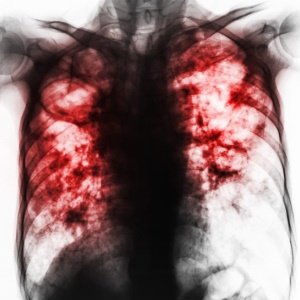
People with the chronic lung disease known as COPD often get chest CT scans so that doctors can look inside their lungs.
A new study is advising physicians to also take a careful look at the heart while they’re at it.
Smoke weakens lungs
Patients with advanced chronic obstructive pulmonary disease, or COPD, who have high levels of calcium buildup inside the arteries of their heart are almost three times more likely to die from any cause than those who do not have any calcium buildup.
The new research was published in the American Heart Association’s journal Circulation.
The primary cause of COPD is cigarette smoking. Over time the smoke weakens the lungs, forcing the heart to work harder, and more inefficiently, to pump blood through the body. Studies have found that smokers are more likely to die from heart disease than from lung cancer.
Researchers in this new study looked at data for 6 842 smokers who had CT scans of their lungs, images that also include detailed pictures of their heart. They measured coronary artery calcium in each scan and found a direct relationship between the level of calcified coronary plaque – the fatty buildup in arteries often associated with heart disease – and death from any cause in the subsequent years the patients were monitored.
“We found that those participants who had higher levels of coronary calcification, or plaque in their heart, were more likely to die over the next seven years or so,” said Dr Matthew Budoff, lead author of the study and a cardiologist at the Los Angeles Biomedical Research Institute. Among COPD patients with the highest levels of coronary artery calcium, 24.4% died compared with 8.4% of those with no calcium buildup.
Terrific therapies
The study could help shed light on the need for people with COPD to pay closer attention to their heart while they take steps to treat their lung illness, said Dr Irving Kron, a cardiothoracic surgeon and the interim dean at the University of Arizona’s College of Medicine-Tucson.
“If you have chronic lung disease from smoking, you have a pretty good chance of having heart disease as well, and that’s going to be more lethal to you than the lung disease,” said Kron, who was not involved in the study.
“We have so much in the way of both prevention and intervention (for heart disease) these days,” he said, stressing that recognition and acting on that awareness are key. “As long as you deal with it, you’re probably going to be OK. There are terrific therapies now to keep you going forever.”
An estimated 19 million routine chest CT scans are done annually, so adding a cardiovascular screening at the same time could be done “without additional radiation, cost, or participant burden”, according to the study.
Heavy smokers or COPD patients are “probably already getting a CT scan,” Budoff said, but most radiologists don’t automatically seek out signs of coronary artery calcium.
“We’re trying to increase awareness to say, ‘Look, it’s already on the picture.’ So while they are getting CTs of their lungs, on the scan will be a picture of their heart, so they could get two for the price of one,” he said.
Image credit: iStock

They shouldn’t shy away when patients want to talk about the end of their lives, a report says.
How do we know if children are misbehaving or mentally ill?
With a body the size of a fist and wings that span more than a foot, the big brown bat must gorge on 6,000 to 8,000 bugs a night to maintain its stature. This mighty appetite can be a boon to farmers battling crop-eating pests.
But few types of bats live on American farms. That’s because the current practice of monoculture — dedicating large swathes of land to a single crop — doesn’t give the bats many places to land or to nest.
Diversifying working lands — including farmland, rangeland and forests — may be key to preserving biodiversity in the face of climate change, says a new review paper published this week in Science by conservation biologists at the University of California, Berkeley.
Diversification could be as simple as adding trees or hedgerows along the edges of fields, giving animals like birds, bats and insects places to live, or as complex as incorporating a patchwork of fields, orchards, pasture and flowers into a single working farm.
These changes could extend the habitat of critters like bats, but also much larger creatures like bears, elk and other wildlife, outside the boundaries of parks and other protected areas, while creating more sustainable, and potentially more productive, working lands.
“Protected areas are extremely important, but we can’t rely on those on their own to prevent the pending sixth mass extinction,” said study co-author Adina Merenlender, a Cooperative Extension Specialist in the Department of Environmental Science, Policy and Management at UC Berkeley. “This is even more true in the face of climate change, because species will need to move around to adapt to shifts in temperature and climate.”
Maintaining even small pieces of the original landscape — even a single tree- can help conserve the original diversity of species, Merenlender said.
Clearing oak woodlands and shrublands to establish large vineyards hits many native species hard. Animals that are well adapted to urban and agricultural areas, such as mockingbirds, house finches and free-tail bats, continue to flourish, while animals that are more sensitive to disturbance, like acorn woodpeckers, orange-crowned warblers and big brown bats, begin to drop away.
“If you can leave shrubs, trees and flowering plants, the habitat suitability — not just for sensitive birds but also for other vertebrates — goes way up,” Merenlender said. This is true not only in California’s vineyards, but on working lands around the world.
Incorporating natural vegetation makes the farm more hospitable to more creatures, while reducing the use of environmentally degrading chemicals like herbicides, pesticides and human-made fertilizer.
The ideal farming landscape includes woodland pastures and vegetable plots bumping up against orchards and small fields, said Claire Kremen, a professor in the Department of Environmental Science, Policy and Management.
Integrating livestock produces manure which can fertilize the crops, while those same crops produce feed for livestock. Birds and bats provide pest control, and bees boost crop production by pollinating plants.
“It is possible for these working landscapes to support biodiversity but also be productive and profitable,” Kremen said. “And ultimately, this is where we have to go. We just can’t keep mining our soils for their fertility and polluting our streams — in the end, this will diminish our capacity to continue producing the food that we need. Instead, we must pay attention to the species, from microbes to mammals, that supply us with critical services, like pollination, pest control and nutrient cycling”
“We have some amazing diversified farms, sustainably managed forests and species-rich rangelands here in California that exemplify working lands for conservation around the world,” Merenlender said. “We are calling for a scaling up of this approach around the world, and to do that we champion community-based action and more supportive polices” Kremen concludes.

