Pupils in England’s poorest areas are four times more likely to be severely obese, the latest data shows.


Pupils in England’s poorest areas are four times more likely to be severely obese, the latest data shows.
Carrying a little extra weight is one thing but when you are classified as obese, you put yourself at risk for many health conditions.
According to the World Health Organization (WHO), these are some of the conditions linked to obesity:
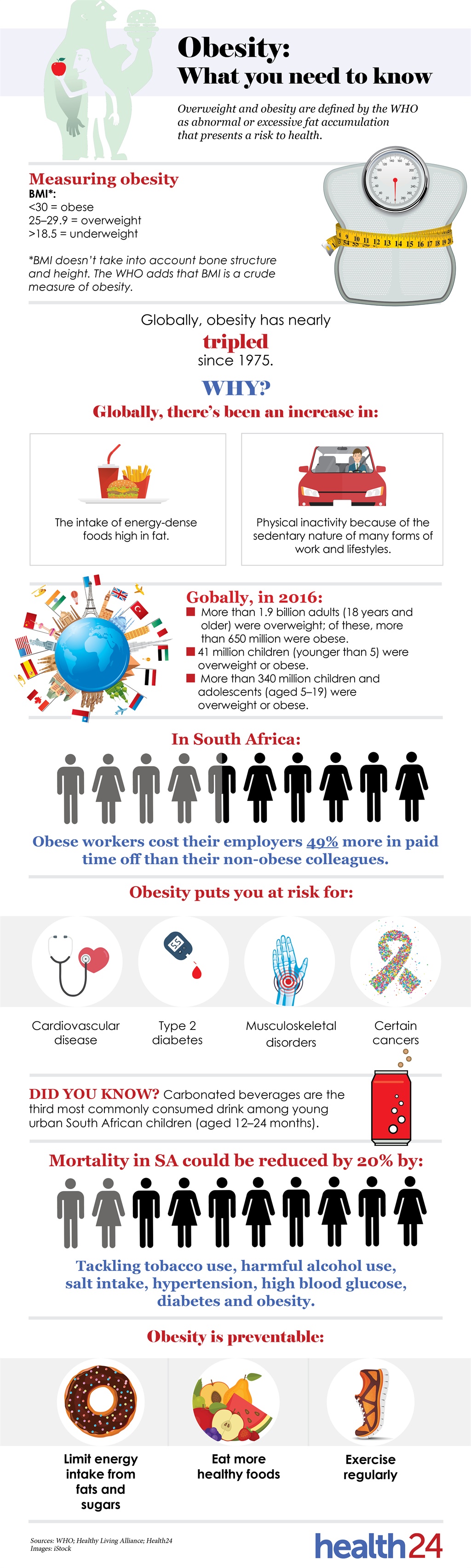
Fortunately, obesity is preventable by following a healthy diet and exercising regularly. We’ve put together an infographic highlighting the important stats and facts around obesity.

NEXT ON HEALTH24X

Health workers in England who decline the jab may be moved away from working with vulnerable patients.
They get twice as many colds as adults but there’s no magic cure – or is there?
Regulator says harder in England to get care from hospitals, care services and mental health units.
Hurricane Michael plowed into the Florida panhandle Wednesday, Oct. 10, as a major Category 4 storm — the strongest hurricane ever to hit that region. Many NASA instruments are keeping tabs on Michael from space, including the Atmospheric Infrared Sounder (AIRS) and the Multi-angle Imaging SpectroRadiometer (MISR).
The first image, taken by AIRS, shows Hurricane Michael just off the west coast of Florida on Oct. 10 in the early morning hours local time. The large purple area indicates very cold clouds at about -90°F (-68°C) carried high into the atmosphere by deep thunderstorms. These storm clouds are associated with heavy rainfall. The eye, which is much warmer than the surrounding clouds, appears in green. The red areas moving away from the storm indicate temperatures of around 60°F (15°C), typical of the surface of Earth at night. These red areas are mostly cloud-free.
MISR carries nine cameras fixed at different angles, each of which viewed Michael over the course of approximately seven minutes when it was just off Florida’s west coast on Tuesday, Oct. 9.
Images from the nine views are used to calculate the height of the cloud tops, and the motion of the clouds between the views provides information on wind speed and direction. This first MISR image shows the view from the central, downward-pointing camera (left), the calculated cloud-top heights (middle) and wind velocity arrows (right) superimposed on top. The length of the arrows is proportional to wind speed, and the colors show the altitude of the cloud tops in kilometers.
MISR’s stereo anaglyph shows a three-dimensional view of Michael that combines two of MISR’s camera angles. Using 3D red-blue glasses, you can see a number of bright “clumps.” These clumps, called “vortical hot spots,” are groups of strong thunderstorms embedded in the larger circulation of the hurricane. They indicate the rapid transport of heat energy from the ocean surface into the storm and usually occur when a hurricane intensifies quickly.
The National Hurricane Center clocked Michael’s sustained wind speed at 150 mph (240 kph) just before noon local time on Wednesday, Oct. 10. It is expected to bring strong winds, storm surges and heavy rainfall to much of the southeast.
AIRS, in conjunction with the Advanced Microwave Sounding Unit (AMSU), senses emitted infrared and microwave radiation from Earth to provide a three-dimensional look at Earth’s weather and climate. Working in tandem, the two instruments make simultaneous observations down to Earth’s surface, even in the presence of heavy clouds. With more than 2,000 channels sensing different regions of the atmosphere, the system creates a global, three-dimensional map of atmospheric temperature and humidity, cloud amounts and heights, greenhouse gas concentrations, and many other atmospheric phenomena. Launched into Earth orbit in 2002, the AIRS and AMSU instruments fly onboard NASA’s Aqua spacecraft and are managed by NASA’s Jet Propulsion Laboratory, a division of Caltech, in Pasadena, California.
MISR was built and is managed by JPL for NASA’s Science Mission Directorate in Washington. The instrument flies aboard the Terra satellite, which is managed by NASA’s Goddard Space Flight Center in Greenbelt, Maryland. The MISR data were obtained from the NASA Langley Research Center Atmospheric Science Data Center in Hampton, Virginia.
More information about AIRS is available here: https://airs.jpl.nasa.gov/
More information on MISR is available here: https://misr.jpl.nasa.gov/
Story Source:
Materials provided by NASA/Jet Propulsion Laboratory. Note: Content may be edited for style and length.

Researchers have revealed the structure of an essential immune protein, creating future possibilities to develop more effective medicines for a range of illnesses from cancer to neurological diseases. University of Tokyo researchers made this discovery with computerized image analysis and modern electron microscope imaging.
Researchers verified the structure of natural immunoglobulin M (IgM) protein, an important part of the immune system, using mouse and human versions of the protein. IgM is now understood to be shaped like an incomplete hexagon, or a pentagon with a wedge-shaped gap.
“We’ll have to revise the textbooks,” said Professor Toru Miyazaki, the leader of the laboratory where the IgM structure was identified at the Graduate School of Medicine.
IgM is the first immune system protein that develops in the human fetus and remains the first responder to pathogens throughout life. The structure of IgM was first identified in 1969 as a “five-pointed, star-shaped table” and updated in 2009 to be a five-sided dome or “mushroom cap.”
“The original IgM model was made by looking at a few individual molecules by hand with what today we think is a low-resolution microscope. Now we have clearer pictures and the computer can examine thousands of individual IgM molecules,” said Miyazaki.
The 2018 discovery of the incomplete hexagon was actually a secondary interest for Miyazaki, originally a medical doctor who has built his research career studying a different protein called apoptosis inhibitor of macrophage (AIM).
Since identifying the correct shape of IgM, researchers now understand that inactive AIM is nestled inside the gap of the IgM incomplete hexagon. The structural connection between IgM and AIM means that drugs with the ability to regulate the release of AIM could be used to create AIM-based disease therapies.
“We can think of AIM as a fighter jet and IgM as the aircraft carrier ship. When other molecules activate the immune system, IgM releases AIM. The much smaller AIM protein goes around the body to clear away damaged cells and prevent disease,” said Miyazaki.
Miyazaki identified AIM in 1999 while working at the Basel Institute for Immunology Institute in Switzerland. Its small size means AIM is easily eliminated from the body by the kidneys and excreted in urine, so staying bound within the larger IgM protects AIM from being removed before it is needed.
AIM is a common molecule in the bloodstream, but it is only active when the body develops a disease. AIM is known to be important for preventing obesity, fatty liver disease, hepatocellular carcinoma (liver cancer), multiple sclerosis (MS), fungus-induced peritonitis (inflammation of the abdominal wall membrane), and acute kidney injury.
The incomplete hexagon structure is still only a 2D understanding of IgM structure. Miyazaki and his team continue to do additional analysis and hope to report the 3D structure of IgM soon.
Story Source:
Materials provided by University of Tokyo. Note: Content may be edited for style and length.

A paper published in Nature Communications by Sufei Shi, assistant professor of chemical and biological engineering at Rensselaer, increases our understanding of how light interacts with atomically thin semiconductors and creates unique excitonic complex particles, multiple electrons, and holes strongly bound together. These particles possess a new quantum degree of freedom, called “valley spin.” The “valley spin” is similar to the spin of electrons, which has been extensively used in information storage such as hard drives and is also a promising candidate for quantum computing.
The paper, titled “Revealing the biexciton and trion-exciton complexes in BN encapsulated WSe2,” was published in the Sept. 13, 2018, edition of Nature Communications. Results of this research could lead to novel applications in electronic and optoelectronic devices, such as solar energy harvesting, new types of lasers, and quantum sensing.
Shi’s research focuses on low dimensional quantum materials and their quantum effects, with a particular interest in materials with strong light-matter interactions. These materials include graphene, transitional metal dichacogenides (TMDs), such as tungsten diselenide (WSe2), and topological insulators.
TMDs represent a new class of atomically thin semiconductors with superior optical and optoelectronic properties. Optical excitation on the two-dimensional single-layer TMDs will generate a strongly bound electron-hole pair called an exciton, instead of freely moving electrons and holes as in traditional bulk semiconductors. This is due to the giant binding energy in monolayer TMDs, which is orders of magnitude larger than that of conventional semiconductors. As a result, the exciton can survive at room temperature and can thus be used for application of excitonic devices.
As the density of the exciton increases, more electrons and holes pair together, forming four-particle and even five-particle excitonic complexes. An understanding of the many-particle excitonic complexes not only gives rise to a fundamental understanding of the light-matter interaction in two dimensions, it also leads to novel applications, since the many-particle excitonic complexes maintain the “valley spin” properties better than the exciton. However, despite recent developments in the understanding of excitons and trions in TMDs, said Shi, an unambiguous measure of the biexciton-binding energy has remained elusive.
“Now, for the first time, we have revealed the true biexciton state, a unique four-particle complex responding to light,” said Shi. “We also revealed the nature of the charged biexciton, a five-particle complex.”
At Rensselaer, Shi’s team has developed a way to build an extremely clean sample to reveal this unique light-matter interaction. The device was built by stacking multiple atomically thin materials together, including graphene, boron nitride (BN), and WSe2, through van der Waals (vdW) interaction, representing the state-of-the-art fabrication technique of two-dimensional materials.
This work was performed in collaboration with the National High Magnetic Field Laboratory in Tallahasee, Florida, and researchers at the National Institute for Materials Science in Japan, as well as with Shengbai Zhang, the Kodosky Constellation Professor in the Department of Physics, Applied Physics, and Astronomy at Rensselaer, whose work played a critical role in developing a theoretical understanding of the biexciton.
The results of this research could potentially lead to robust many-particle optical physics, and illustrate possible novel applications based on 2D semiconductors, Shi said. Shi has received funding from the Air Force Office of Scientific Research. Zhang was supported by the Department of Energy, Office of Science.

Exactly a year after the start of the arbitration hearings that sought justice for the families of the dead Life Esidimeni patients, the esteemed The Lancet medical journal has released a global mental health report condemning the local disaster as “tragic”.
“In 2016, a tragic case occurred in South Africa when the Gauteng Department of Health stopped funding a large 2000 bed facility and allowed the dis¬charge of vulnerable people with psychosocial disability into unlicensed community residential facilities, leading to the death of over 140 people,” noted the 46-page report which brought together global mental health experts, advocates and mental health users.
Penned by the Lancet Commission on Mental Health, the report highlighted that people living with mental illnesses still routinely suffer “gross human rights violations” including “torture”.
According to the report, mental disorders are rising in every single country in the world and will cost the world’s economy $16 trillion by 2030.
Today [October 10] marks World Mental Health Day, and the report notes that young people bear “the brunt of the burden of mental ill health”.
Half of all mental illness starts by the age of 14 with most cases undetected and untreated, according to the World Health Organisation’s (WHO).
Globally, “depression is one of the leading causes of illness and disability among adolescents” with suicide being the third leading cause of death in 15 to 19-year-olds, noted the WHO. Among 15 to 29-year-olds, suicide jumps to second place.
More than 90% of these suicides occur in in low- or middle-income countries.
According to the South African Depression and Anxiety Group (SADAG), almost one in five teens have considered suicide and they have had reports of suicides in children as young as six years old.
“The youth are not equipped with enough coping skills or support structures to handle the kind of problems that they have to deal with every day,” said SADAG’s Cassey Chambers.
The organisation is particularly concerned about the upcoming matric and university examinations, a time where suicide attempts are at their highest.
Along with highlighting mental illness in young people, the Lancet report recommended government’s be held accountable and approach mental health from a human rights basis.
“The Commission calls out the shameful and shocking treatment of people with mental ill health around the world,” said Dr Richard Horton, Editor-in-Chief of The Lancet.
While the Commission’s report recommended “a wholescale shift to community-based care”, it should not be implemented in the negligent and torturous manner of the Life Esidimeni move.
Professor Vikram Patel, one of the Commission’s editors, said that mental health “is the foundation of human capability that makes each life worthwhile and meaningful”.
“Anyone who cares about poverty, education, social cohesion or economic progress should work to improve mental health, putting the vast knowledge we have on promotion, prevention and care into action,” said Patel.
– Health-e News

NEXT ON HEALTH24X

Mental health can affect anyone at any age. According to the World Health Organization (WHO), half of all mental illness begins by the age of 14, but many cases will go undetected and untreated. They say, “In terms of the burden of the disease among adolescents, depression is the third leading cause. Suicide is the second leading cause of death among 15-29-year-olds.”
Local statistics
In South Africa, the South African Depression and Anxiety Group (SADAG) reports:
In 2018, there have been numerous reports of university students who committed suicide because they were unable to cope with the pressures they faced. SADAG says that university students may experience depression, stress and anxiety on a daily basis without realising they are suffering from a mental illness.
“Unfortunately this has led to many suicides, which we can’t afford as a caring society. World Mental Health Day is important in spotlighting mental illness and promoting mental wellness for the student population, which is a growing vulnerable group,” clinical psychologist and SADAG board member Zamo Mbele said in a press release.
“From the hundreds of calls that SADAG receives every day, children, teens and young adults are dealing with many problems they feel they can’t handle,” says SADAG operations director Cassey Chambers. Main triggers include relationship problems, family issues, abuse, loss or grief and trauma, while other contributing factors include exam stress, substance abuse, bullying, learning difficulties, financial issues and chronic illness. “The youth are not equipped with enough coping skills or support structures to handle the kind of problems that they have to deal with every day.”
Here are four articles about mental illness in the youth you should read today:
1. Instagram may lead to teen depression
A study found that while Instagram may lead to closer bonds with friends, it may also have adverse effects.

2. Three mental disorders that may affect your children
As the new term begins and children are heading off to school or university, it’s vital that you recognise the warning signs of mental disorders.

3. Investigators found that exercise may lower depression risk in kids
Research has found that kids who get regular moderate-to-vigorous exercise were less likely to develop depression.

4. Five-year-olds at risk of suicide
Although it’s rare for young children to die by suicide, adults need to realise that school-age children as young as five kill themselves, according to a startling new study.

Image credit: iStock