PCB pollution threatens to wipe out killer whales

More than forty years after the first initiatives were taken to ban the use of PCBs, the chemical pollutants remain a deadly threat to animals at the top of the food chain. A new study, just published in the journal Science, shows that the current concentrations of PCBs can lead to the disappearance of half of the world’s populations of killer whales from the most heavily contaminated areas within a period of just 30-50 years.

Killer whales (Orcinus orca) form the last link in a long food chain and are among the mammals with the highest level of PCBs (polychlorinated biphenyls) in their tissue. Researchers have measured values as high as 1300 milligrams per kilo in the fatty tissue (blubber) of killer whales. For comparison, a large number of studies show that animals with PCB levels as low as 50 milligrams per kilo of tissue may show signs of infertility and severe impacts on the immune system.

Together with colleagues from a wide range of international universities and research institutions, researchers from Aarhus University have documented that the number of killer whales is rapidly declining in 10 out of the 19 killer whale populations investigated and that the species may disappear entirely from several areas within a few decades.

Killer whales are particularly threatened in heavily contaminated areas like the waters near Brazil, the Strait of Gibraltar and around the UK. Around the British Isles, the researchers estimate that the remaining population counts less than 10 killer whales. Also along the east coast of Greenland, killer whales are effected due to the high consumption of sea mammals like seals.

PCBs accumulate in the food chain

The killer whale is one of the most widespread mammals on Earth and is found in all of the world’s oceans from pole to pole. But today, only the populations living in the least polluted areas possess a large number of individuals.

Overfishing and man-made noise may also affect the health of the animals, but PCBs particularly can have a dramatic effect on the reproduction and immune system of the killer whales.

Killer whales whose diet includes, among other items, seals and large fish such as tuna and sharks critical accumulate PCBs and other pollutants stored at successive levels of the food chain. It is these populations of killer whales that have the highest PCB concentrations and it is these populations that are at the highest risk of population collapse. Killer whales that primarily feed on small-sized fish such as herring and mackerel have a significantly lower content of PCBs and are thus at lower risk of effects.

PCBs have been used around the world since the 1930s. More than one million tonnes of PCBs were produced and used in, among other things, electrical components and plastics. Together with DDT and other organic pesticides — PCBs have spread around the global oceans.

Through the 1970s and 1980s, PCBs were banned in several countries and in 2004, through the Stockholm Convention, more than 90 countries have committed themselves to phase out and dispose of the large stocks of PCBs.

PCBs are only slowly decomposed in the environment. Moreover, PCBs are passed down from the mother orca to its offspring through the mother’s fat-rich milk. This means that the hazardous substances remain in the bodies of the animals, instead of being released into the environment where they eventually deposit or degrade.

Global investigation of killer whales

“We know that PCBs deform the reproductive organs of animals such as polar bears. It was therefore only natural to examine the impact of PCBs on the scarce populations of killer whales around the world,” says Professor Rune Dietz from the Department of Bioscience and Arctic Research Centre, Aarhus University, who initiated the killer whale studies and is co-author of the article.

The research group, which includes participants from the United States, Canada, England, Greenland, Iceland and Denmark, reviewed all the existing literature and compared all data with their own most recent results. This provided information about PCB levels in more than 350 individual killer whales around the globe — the largest number of killer whales ever studied.

Applying models, the researchers then predicted the effects of PCBs on the number of offspring as well as on the immune system and mortality of the killer whale over a period of 100 years.

More than 50% of the populations under threat

“The findings are surprising. We see that over half of the studied killer whales populations around the globe are severely affected by PCBs” says postdoc Jean-Pierre Desforges from Aarhus University, who led the investigations.

The effects result in fewer and fewer animals over time in these populations. The situation is worst in the oceans around Brazil, the Strait of Gibraltar, the northeast Pacific and around the UK. Here, the models show that the populations have virtually been halved during the half century where PCBs have been present.

“In these areas, we rarely observe newborn killer whales,” says Ailsa Hall, who together with Bernie McConnell developed the models used by Sea Mammal Research Unit in Scotland.

“As the effects have been recognized for more than 50 years, it is frightening to see that the models predict a high risk of population collapse in these areas within a period of 30-40 years,” says Jean-Pierre Desforges.

A female killer whale may live for 60-70 years, and although the world took its first steps to phase out PCBs more than 40 years ago, killer whales still have high levels of PCBs in their bodies.

“This suggests that the efforts have not been effective enough to avoid the accumulation of PCBs in high trophic level species that live as long as the killer whale does. There is therefore an urgent need for further initiatives than those under the Stockholm Convention,” concludes Paul D. Jepson, Institute of Zoology, Zoological Society of London, England, who is another killer whale expert and co-author of the article.

In the oceans around the Faroe Islands, Iceland, Norway, Alaska and the Antarctic, the prospects are not so gloomy. Here, killer whale populations grow and the models predict that they will continue to do so throughout the next century.

Share Button

Large stretches of coral reefs can be rehabilitated

Even after being severely damaged by blast fishing and coral mining, coral reefs can be rehabilitated over large scales using a relatively inexpensive technique, according to a study led by the University of California, Davis, in partnership with Mars Symbioscience.

For the study, published this week in the journal Restoration Ecology, researchers installed 11,000 small, hexagonal structures called “spiders” across 5 acres of reef in the center of Indonesia’s Coral Triangle. Coral diversity is the highest on Earth in that region but is threatened by human activity, including overfishing, pollution and climate change.

Between 2013 and 2015, researchers attached coral fragments to the structures, which also stabilized rubble and allowed for water to flow through freely.

A CORAL SUCCESS STORY

Live coral cover on the structures increased from less than 10 percent to more than 60 percent. This was more than what was reported for reefs in many other areas of the Coral Triangle, at a cost of about $25 per square meter.

“Coral reef rehabilitation and restoration efforts are rapidly increasing around the world, but there are few large-scale examples of successful projects,” said corresponding author Christine Sur, who was a UC Davis graduate student at the time of the study. “Our study demonstrates a cost-effective, scalable method that can inform other coral reef restoration efforts aimed at reducing the global decline of these valuable and unique ecosystems.”

Of particular surprise, while massive coral bleaching decimated other parts of the world between 2014 and 2016, bleaching in the rehabilitation area was less than 5 percent, despite warm water conditions known to stress corals.

A SCIENTIST’S LEGACY

The study is one of the last publications led by Susan Williams, a professor and marine biologist with the UC Davis Bodega Marine Laboratory and Department of Evolution and Ecology who passed away in April 2018.

“Collaboration played a key role in the study’s outcome,” said corresponding author Jordan Hollarsmith, a doctoral candidate in the UC Davis Graduate Group in Ecology at Bodega Marine Laboratory. “Dr. Williams’ dedication to building true partnerships between industry, local scientists and the people who live by the reefs she worked to rebuild was critical to this project’s success.”

Mars Symbioscience, a business segment of Mars, Incorporated, initiated the project in 2013 in collaboration with local residents on the islands.

“This research is an important step in demonstrating how coral can be restored to a higher degree of cover quite quickly and at a relatively low cost,” said Frank Mars, vice president of Mars Sustainable Solutions. “Healthy coral reef ecosystems provide natural coastal protection and are the foundation for many local fisheries, as well as jobs for tourism. They also play a critical role in the Mars supply chain as they provide food security and work for the families and communities we rely on to grow the raw materials we use in our brands around the world. For Mars, helping restore coral reefs is not only a business issue, it’s also the right thing to do to ensure the planet, people, and communities that rely on them are healthy and thriving.”

BUYING TIME TO REVERSE THE DECLINE

Coral reefs are declining worldwide. Reversing their decline will require fully addressing climate change and other human impacts, the study said. For instance, illegal fishing, lack of island sanitation systems, threatened seagrass communities and marine debris such as plastic pollution are common issues in Indonesia and many tropical environments. People living in small island communities in this region also have few alternatives to fishing livelihoods and often lack access to education about the ocean environment.

In the meantime, the “spider” technique and restoration projects offer a way to rehabilitate large swaths of coral reefs and the communities that depend on them, giving the reefs a chance to adapt or acclimate to worsening ocean conditions.

Share Button

Health24.com | Build your beach body in a month with this workout

The truth: your summer body is not just a few workouts away. You’ll need to take the slow-and-steady approach.

DIRECTIONS: Train three times a week – Day 1, Day 2 and Day 3. Complete each day’s designated three-move exercise circuit and follow up with its designated three-move conditioning circuit. (Find directions for the conditioning circuits at the end of this article.) Do the “C” moves at tempo: On each rep, take 3 seconds to lower the weight and 1 second to raise it; then hold for 2 seconds. Do 3 sets of 6 reps for all “C” moves the first week; add 1 set each week.

Day 1: Pulling

1A – Lying Windmill: Lie on your right side, legs straight. Bend your left leg across your body and extend both arms straight out on your right side. This is the starting position. With your right shoulder and hip planted, rotate your left arm up and behind you. That’s 1 rep; do 2 sets of 10 per side.

1B – Scapular Pull-up: Hang from a bar as if you’re about to do a pull-up, and shrug your shoulders slightly; this is the start. Without bending your arms, squeeze your shoulder blades together; your upper body should rise slightly. Return to the starting position. That’s 1 rep; do 2 sets of 10.

1c – Tall Kneeling Curl: Kneel with your thighs perpendicular to the floor and hold medium-weight dumbbells at your sides, your palms facing in. This is the starting position. Curl both dumbbells upward, squeezing your biceps, glutes and core; then return to the start. That’s 1 rep.

Read more: Want to get stronger? Stop ignoring these muscles in your workout

Day 2: Legs

2A – 90-90 Stretch: Sit on the floor with your left leg directly in front of you, knee bent 90 degrees. Put your right leg behind you; bend that knee 90 degrees. This is the start. Lower your chest towards your left thigh. Hold for 60 seconds; release. Return to the start. Repeat on the other side.

2B – Lateral Squat: Assume a wide stance, feet pointed forwards. This is the starting position. Shift your weight to the right as you bend that knee; lower until you can’t keep your shin perpendicular to the floor. Return to the start; repeat on the other side. That’s 1 rep; do 2 sets of 10.

2C – Dumbbell Deadlift: Stand holding heavy dumbbells at your sides, knees slightly bent. Push your hips back and lower your torso until you feel a stretch in your hamstrings. Keep the weights close to your legs as you lower. Return to standing, squeezing your glutes as you do. That’s 1 rep.

Day 3: Pushing

3A – Shoulder Stretch: Sit with your arms extended behind you, shoulder-width apart, elbows locked, palms on the floor, knees bent, and feet together. Plant your palms and gradually slide your butt forward, stopping the moment you feel shoulder tightness. Hold for 60 seconds.

Read more: The 4 best ways to stretch in order to avoid injuries

3B – Incline Cuban: Lie with your chest on an incline bench holding 2.5kg plates, arms hanging naturally. This is the starting position. Bend your elbows 90 degrees, raising them to shoulder height. Rotate your forearms upwards, raising the weights until they’re parallel with the floor. Reverse the movements. That’s 1 rep; do 2 sets of 10.

 3C – Dumbbell Bench Press: Lie on a bench holding medium-weight dumbbells above your shoulders, arms straight. Bend at your elbows to lower the dumbbells. Pause. Push back up. That’s 1 rep.

Read more: This guy went from fat to fitness model in just four months

This article was originally published on www.mh.co.za

Image credit: iStock 

NEXT ON HEALTH24X

Share Button

Dental patients in Wales ‘face 90-mile trip’

A union claims the number of people treated by NHS dentists is capped so some have to travel further.

Share Button

Ledumahadi mafube: South Africa’s new jurassic giant

A new species of a giant dinosaur has been found in South Africa’s Free State Province. The plant-eating dinosaur, named Ledumahadi mafube, weighed 12 tonnes and stood about four metres high at the hips. Ledumahadi mafube was the largest land animal alive on Earth when it lived, nearly 200 million years ago. It was roughly double the size of a large African elephant.

A team of international scientists, led by University of the Witwatersrand (Wits) palaeontologist Professor Jonah Choiniere, described the new species in the journal Current Biology today.

The dinosaur’s name is Sesotho for “a giant thunderclap at dawn” (Sesotho is one of South Africa’s 11 official languages and an indigenous language in the area where the dinosaur was found).

“The name reflects the great size of the animal as well as the fact that its lineage appeared at the origins of sauropod dinosaurs,” said Choiniere. “It honours both the recent and ancient heritage of southern Africa.”

Ledumahadi mafube is one of the closest relatives of sauropod dinosaurs. Sauropods, weighing up to 60 tonnes, include well-known species like Brontosaurus. All sauropods ate plants and stood on four legs, with a posture like modern elephants. Ledumahadi evolved its giant size independently from sauropods, and although it stood on four legs, its forelimbs would have been more crouched. This caused the scientific team to consider Ledumahadi an evolutionary “experiment” with giant body size.

Ledumahadi‘s fossil tells a fascinating story not only of its individual life history, but also the geographic history of where it lived, and of the evolutionary history of sauropod dinosaurs.

“The first thing that struck me about this animal is the incredible robustness of the limb bones,” says lead author, Dr Blair McPhee. “It was of similar size to the gigantic sauropod dinosaurs, but whereas the arms and legs of those animals are typically quite slender, Ledumahadi‘s are incredibly thick. To me this indicated that the path towards gigantism in sauropodomorphs was far from straightforward, and that the way that these animals solved the usual problems of life, such as eating and moving, was much more dynamic within the group than previously thought.”

The research team developed a new method, using measurements from the “arms” and “legs” to show that Ledumahadi walked on all fours, like the later sauropod dinosaurs, but unlike many other members of its own group alive at its time such as Massospondylus. The team also showed that many earlier relatives of sauropods stood on all fours, that this body posture evolved more than once, and that it appeared earlier than scientists previously thought.

“Many giant dinosaurs walked on four legs but had ancestors that walked on two legs. Scientists want to know about this evolutionary change, but amazingly, no-one came up with a simple method to tell how each dinosaur walked, until now,” says Dr Roger Benson.

By analysing the fossil’s bone tissue through osteohistological analysis, Dr Jennifer Botha-Brink from the South African National Museum in Bloemfontein established the animal’s age.

“We can tell by looking at the fossilised bone microstructure that the animal grew rapidly to adulthood. Closely-spaced, annually deposited growth rings at the periphery show that the growth rate had decreased substantially by the time it died,” says Botha-Brink. This indicates that the animal had reached adulthood.

“It was also interesting to see that the bone tissues display aspects of both basal sauropodomorphs and the more derived sauropods, showing that Ledumahadi represents a transitional stage between these two major groups of dinosaurs.”

Ledumahadi lived in the area around Clarens in South Africa’s Free State Province. This is currently a scenic mountainous area, but looked much different at that time, with a flat, semi-arid landscape and shallow, intermittently dry streambeds.

“We can tell from the properties of the sedimentary rock layers in which the bone fossils are preserved that 200 million years ago most of South Africa looked a lot more like the current region around Musina in the Limpopo Province of South Africa, or South Africa’s central Karoo,” says Dr Emese Bordy.

Ledumahadi is closely related to other gigantic dinosaurs from Argentina that lived at a similar time, which reinforces that the supercontinent of Pangaea was still assembled in the Early Jurassic. “It shows how easily dinosaurs could have walked from Johannesburg to Buenos Aires at that time,” says Choiniere.

South Africa’s Minister of Science and Technology Mmamoloko Kubayi-Ngubane says the discovery of this dinosaur underscores just how important South African palaeontology is to the world.

“Not only does our country hold the Cradle of Humankind, but we also have fossils that help us understand the rise of the gigantic dinosaurs. This is another example of South Africa taking the high road and making scientific breakthroughs of international significance on the basis of its geographic advantage, as it does in astronomy, marine and polar research, indigenous knowledge, and biodiversity,” says Kubayi-Ngubane.

The research team behind Ledumahadi includes South African-based palaeoscientists, Dr Emese Bordy and Dr Jennifer Botha-Brink, from the University of Cape Town and the South African National Museum in Bloemfontein, respectively.

The project also had a strong international component with the collaboration of Professor Roger BJ Benson of Oxford University and Dr Blair McPhee, currently residing in Brazil.

“South Africa employs some of the world’s top palaeontologists and it was a privilege to be able to build a working group with them and leading researchers in the UK,” says Choiniere, who recently emigrated from the USA to South Africa. “Dinosaurs didn’t observe international boundaries and it’s important that our research groups don’t either.”

Video: https://www.youtube.com/watch?v=Q8FHxPocwDM

Share Button

Health24.com | This toddler’s toe is now her finger

A four-year-old toddler has undergone surgery to have a toe removed from her foot and transplanted to her hand, where it’s meant to function as a finger.

Angelique is one of the youngest patients in South Africa to undergo successful microvascular foot-to-hand transfer.

She was born with a condition known as bilateral symbrachydactyly, where there are varying degrees of missing and/or shortened digits (fingers).

The toddler was born without a left hand and only a thumb, with limited use, on her right hand.

Not her first rodeo

Angelique’s parents approached Dr Mark van der Velde for assistance, and at six months of age, she underwent surgery to build up her right middle and ring fingers.

At one year old, a third bone graft was done to the lengthen her thumb, and this helped to give her a very basic, fine-pinch grasp.

Finding the right people for the job

In a statement, van der Velde said that Angelique needed a wider grasp, and because bone grafts don’t grow with the child, he needed help from some of the top paediatric microvascular toe transfer experts.

These experts guided and encouraged van der Velde as he took on the challenge to transfer Angelique’s toe to her hand.

“The difference between a bone graft and a whole toe transfer is that a graft is a single bone without a blood supply, whereas a whole toe comes with a blood supply, nerves, tendons and nail and confers far more length than a graft,” said van der Velde.

A long journey ahead

The procedure took 11 hours and involved four surgeons. The next few months will see Angelique working with occupational therapists to build up strength and mobility, where she should start moving her new finger, along with her bone-lengthened thumb, and grasping larger objects.

Over the past 15 years, South Africa has seen several toe transfers performed on adults who have lost fingers in various accidents, and a toe-to-thumb transfer in a child burn victim was done 10 years ago, but there hasn’t yet been a paediatric toe transfer for a child born without fingers.

Stellar medical staff

Western Cape Minister of Health, Professor Nomafrench Mbombo, said, “The Western Cape Health Department is extremely proud of the quality of work done by our highly trained team of clinicians. They continuously strive to provide outstanding tertiary care for all patients of the Western Cape and beyond. Our clinical team continues to soar, placing the Western Cape Department of Health on the global map by providing these life-changing surgeries.”

Van der Velde added that he is extremely grateful to the Red Cross War Memorial Children’s Hospital staff. “The team consisted of nursing, anaesthetic, intensive care unit, hand therapy staff and fellow plastic and orthopaedic surgeons. Everybody gave their best and their skills proved exemplary,” said van der Velde.

Image: Supplied

NEXT ON HEALTH24X

Share Button

What is monkeypox?

Three people have been infected in the first UK occurrence of the disease, so should people worry?

Share Button

Low-calorie shakes and soup diets ‘recommended for obese’

People lost three times more weight following the liquid diet plans, a study has found.

Share Button

Shropshire baby deaths at Shropshire hospitals to be reviewed

Shrewsbury and Telford NHS Trust will have to provide regulators with details of deaths back to 1998.

Share Button

Health24.com | 20 lesser known facts about hearing

Most of us take our hearing for granted and don’t give it a second thought – until something happens to affect or compromise the status quo.

General facts

Losing our hearing can make us feel isolated and disconnected from the world, which can lead to depression and anxiety.

Hearing loss usually starts by affecting our upper pitches, which means that by middle age our upper range can drop to between 12 000 and 14 000Hz.

The human audible range is dependent on the pitch (high or low) and loudness of sound. We use Hertz (Hz) to measure pitch and decibels (dB) to measure loudness.

As far as pitch is concerned, human hearing starts at about 20Hz and ends at 20 000Hz, but our hearing is most sensitive between 2 000 and 5 000Hz.

When it comes to loudness, we can safely be exposed to sounds ranging from 0 to 85dB. Anything louder than that can eventually damage our hearing.

Here are 20 lesser known facts about hearing:

1. According to the World Health Organization (WHO), around 466 million people worldwide have disabling hearing loss. 

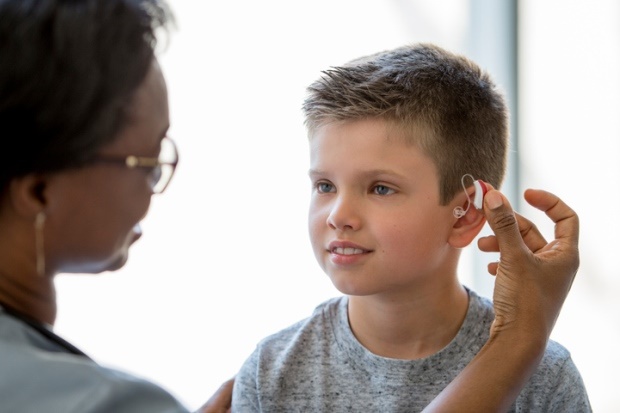
2. Up to three out of every 1 000 children in the USA are born with some hearing loss in one or both ears.

3. More than 90% of deaf children are born to parents with no hearing impairments.

4. Among adults aged 20–69, age is the biggest indicator of hearing loss, with the greatest hearing loss in people from 60 to 69 years old.

5. In the age group 20–69, men are almost twice as likely as women to have hearing loss. 

6. At the end of 2012, approximately 324 200 cochlear implants had been done worldwide. In the USA, approximately 58 000 of these devices have been implanted in adults and 38 000 in children.

7. Among the smallest bones in the human body are the ossicles in the middle ear: The incus, the malleus and the stapes.

8. Your hearing is dependent on small hairs deep inside your ear. If these hairs disappear, you will no longer be able to hear.

9. The biggest cause of loss of hearing is exposure to loud sounds (85 decibels or more).

10. Your hearing can suffer permanent damage after being exposed only once to an extremely loud noise like an explosion or a shotgun blast. 

11. Your ears are never inactive, not even when you’re asleep. Your brain just doesn’t react to the input. 

12. Ears fulfil more than one function; they also help you keep your balance.

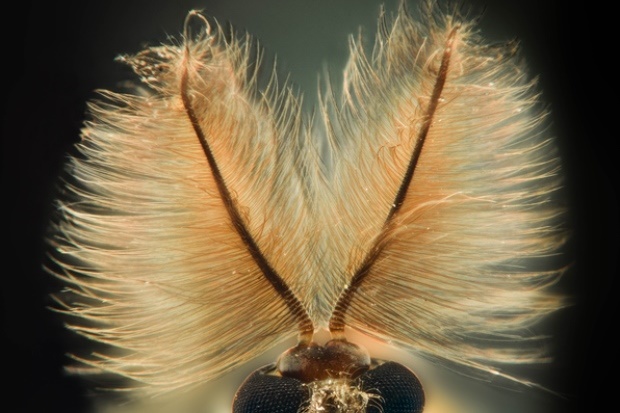
13. Not all living creatures hear with ears. Snakes use jawbones, fish respond to pressure changes and male mosquitoes use antennae.

14. As you get older you become less able to hear high frequencies. Some hairs begin to break down which reduces your ability to hear high frequency sounds.

15. Earwax catches dirt and debris to protect your inner ear. It has a purpose, and unless there’s a reason to remove it, should just be left alone. Excess earwax normally makes its own way out of the ear canal.

16. Dolphins do not have ears. Instead, they rely on eardrums located outside their bodies. They also use sonar, or echolocation, to enhance their already superior hearing abilities.

17. Dogs can hear frequencies way above humans. That’s why they know you’re home long before anyone else.

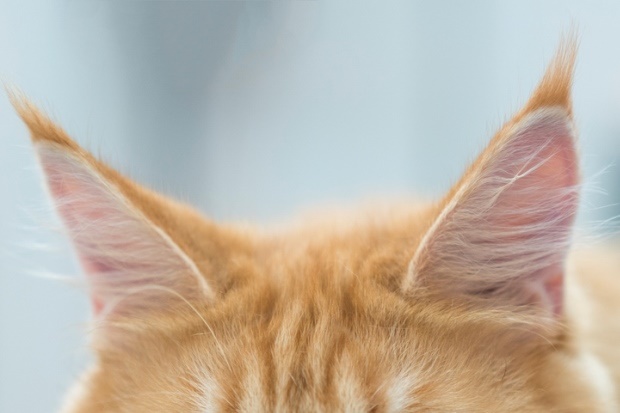
18. Cats are able to hear higher frequencies than both humans and dogs. Cats can hear sounds  almost two octaves higher than we can. Their ear muscles also allow them to rotate their ears up to 180°.

19. Monkeys’ hearing is slightly less acute than that of humans at frequencies below 8 000Hz, but extends up to 45 000Hz, which is an octave above the upper human limit. 

20. Elephants are tuned into frequencies 25 times lower than humans. They can also pick up sounds through their feet and trunks.

Image credit: iStock

Share Button